Week 7 HW: Genetic Circuits Part 2: Neuromorphic Circuits
Assignment Part 1: Intracellular Artificial Neural Networks (IANNs)
- What advantages do IANNs have over traditional genetic circuits, whose input/output behaviors are Boolean functions?
While Booleann circuits produce on/off outputs, IANNs generetae continuous and graded reposnes allowing us to detect subtle changes in input signals. They also can intigrate multiple inputs that are adjustable, making them more flexible and better to mimic natural cellular desicion processes.
- Describe a useful application for an IANN; include a detailed description of input/output behavior, as well as any limitations an IANN might face to achieve your goal.
A useful application of IANNs could be create biosensors or networks to understand toxicity and test shelved or new drugs. One idea could be to create one to sense for early liver damage, where the input such as stress-responsive promoter or specific proteins drive the regulation of X1, which regulates the flourescent reporter X2. IANNs give a graded signal and we can distinguish the level of damage enabling early detection than a binary system. For limitations, there are the limited dynamic range, potential crosstalk between components and the delays from transcription and translation.
- Draw a diagram for an intracellular multilayer perceptron where layer 1 outputs an endoribonuclease that regulates a fluorescent protein output in layer 2.
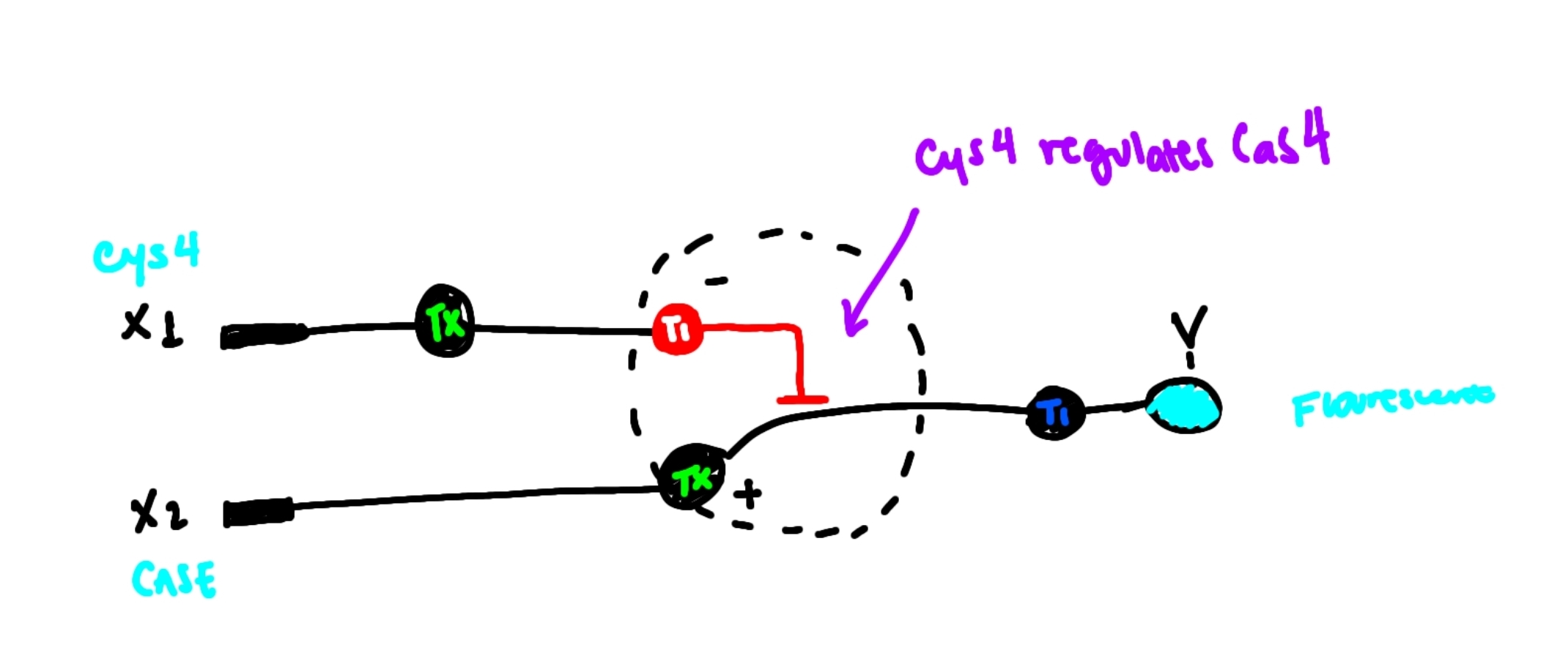
I draw the a perceptron where an input DNA X1 produces Cys4 with regulates CasE in a hidden layer. Cas E controls the expression of the flourescent protein output.
Assignment Part 2: Fungal Materials
- What are some examples of existing fungal materials and what are they used for? What are their advantages and disadvantages over traditional counterparts?
Some examples are the use of mycelium as leather, for ways of sustainable packaging, and its use for building materials like insulattion panels and bricks. Their advantages are sustainable and biodegradable, have a low energy production and they are lightweight and customizable. Some disadvantages are they arent strong as plastics or metals, they are sensitive to moisture and limited structural strength.
- What might you want to genetically engineer fungi to do and why? What are the advantages of doing synthetic biology in fungi as opposed to bacteria?
I would like to genetically engineer fungi to produce advance biomaterials and valuable matabolites to produce pharmaceuticals. Fungi already have complex 3d structures and enzymes that can be used for other uses. Some advantages when compared to bacteria are that they can perform complex protein folding and post translational modifications, can form strucutred materias and have a robust metabolism.
Assignment Part 3: First DNA Twist Order
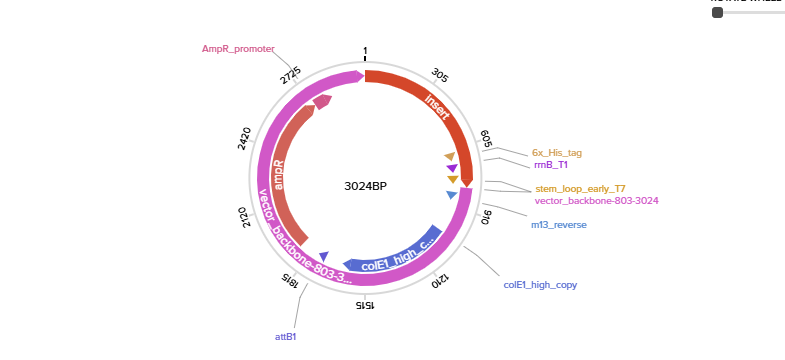
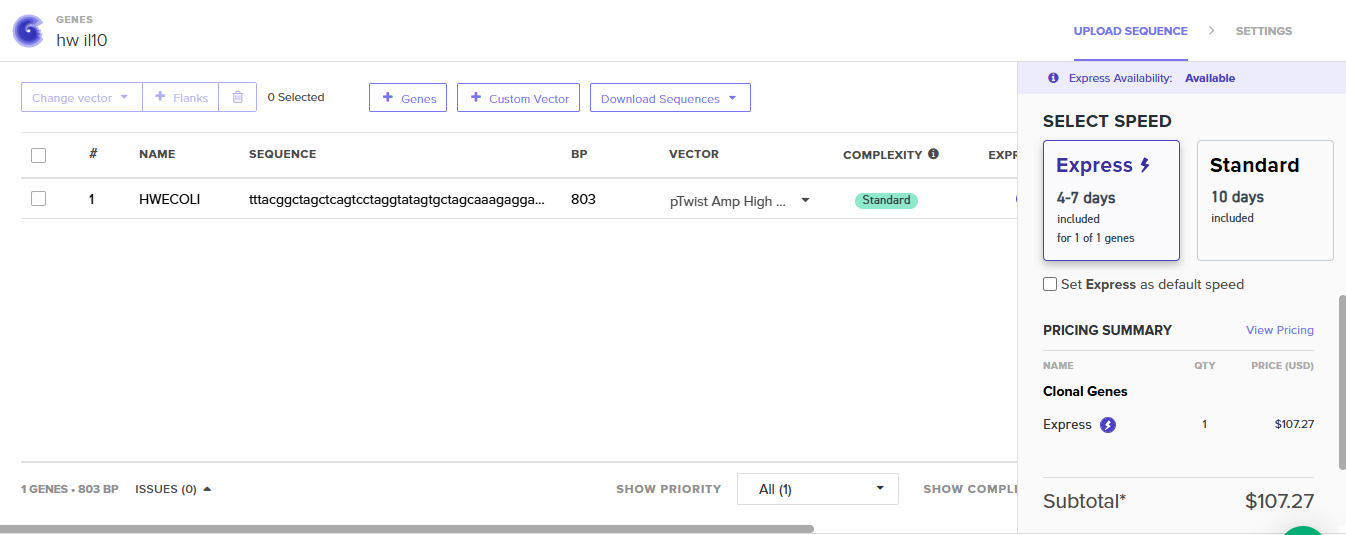
LAB: