Labs

Lab writeups:

  • Week 1 Lab: Introduction to Pipetting and Dilutions

    Overview Date(s): 03/02/26 – 03/03/26 Notes: Reviewed lab materials outlined in ‘Overview’ protocol section (pipette types and tips, tubes, tube holders, and stock reagents) and concentration basics with Kate Carline (William & Mary Node TA). Discussed lab material functions and reviewed the basics of dilution math and pipetting technique. Supporting Picture(s): Part 1: Mixing Color Prepared tubes with red, yellow, and blue food coloring solution Marked 6 tubes with red, yellow, blue, red/yellow, blue/yellow, and red/blue combinations Added 500 uL to each each red, yellow, blue, red/yellow, blue/yellow, and red/blue combination solution tube See above – made combinations by mixing colors See above See above Dispersed concentrations onto wax paper to make design in lieu of petri plate Supporting Part 1 and Part 2 photos below
  • Week 2: DNA Gel Art

    DNA Gel Art Protocol Part 0: Designing My Gel Art / Expected Results and Walkthrough Created a virtual digest in Benchling as a basis for DNA Gel Art (see below) Benchling Virtual Digest (A Hidden Hello) Protocol Part 1a: Preparing a 1% Agarose Electrophoresis Gel Preared a 1% Agarose Electrophoresis Gel (see below)

  • Week 3 Lab: Opentrons Art

    Opentrons Art Lab Part 1: Flourescent Bacteria & Black Agar Script See Flourescent Bacteria & Black Agar Script Colab Notebook Script here 1 2 Part 2: Submission and Running Your Protocol Traveled to William & Mary Node to complete this lab, as well as the Pipetting and DNA Gel Art Labs. During my time working this lab, I:

  • Week 4 Lab: Protein Design Part I

    Lab Information Lab work can be found within the Week 4 HW Assignment in the hyperlink below 1 https://pages.htgaa.org/2026a/jason-ross/homework/week-04-hw-protein-design-part-i/index.html ↩︎

  • Week 5 Lab: Protein Design Part II

    Lab Information Lab work can be found within the Week 5 HW Assignment in the hyperlink below 1 https://pages.htgaa.org/2026a/jason-ross/homework/week-05-hw-protein-design-part-ii/index.html ↩︎

  • Week 6 Lab: Gibson Assembly

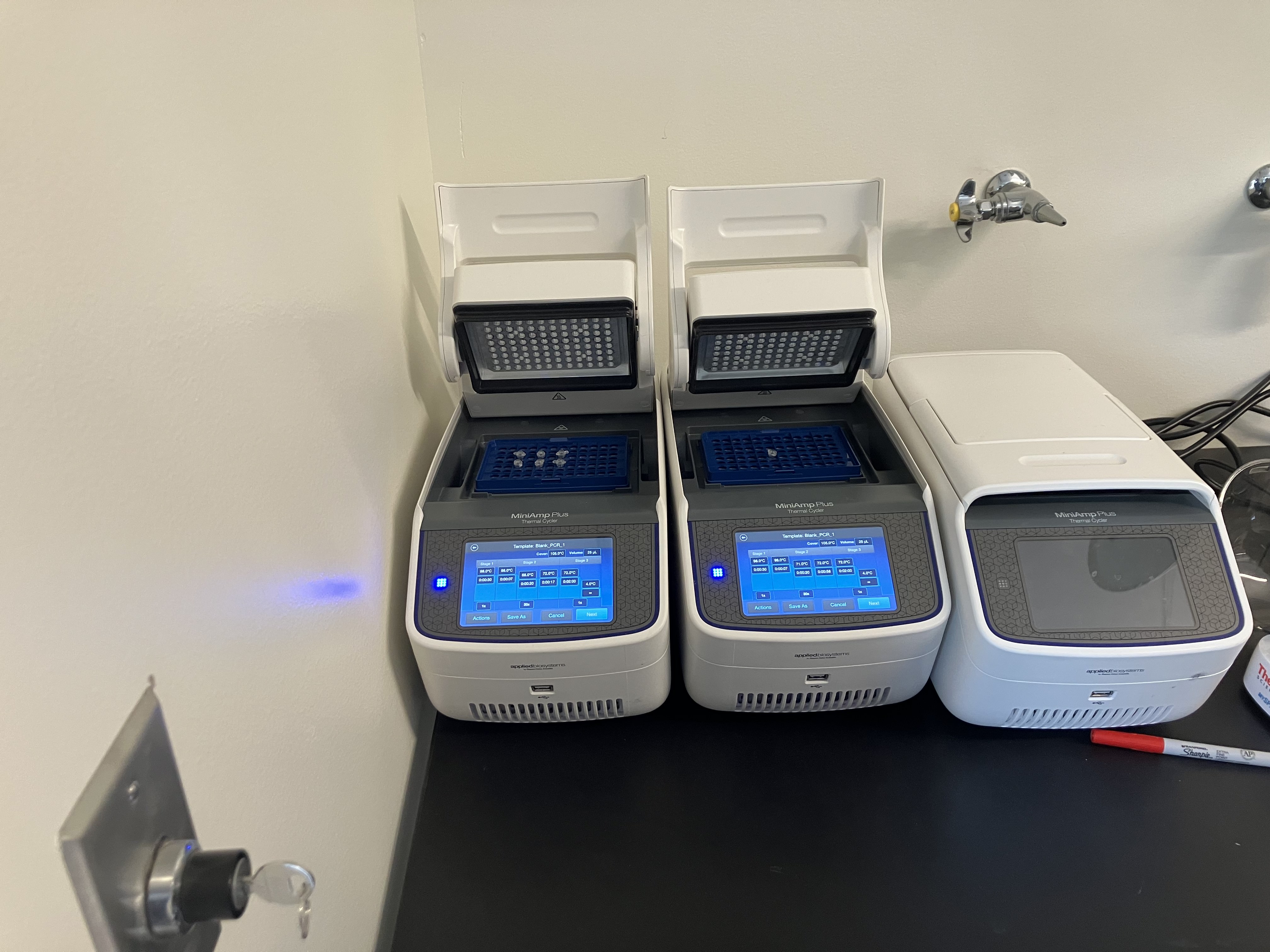
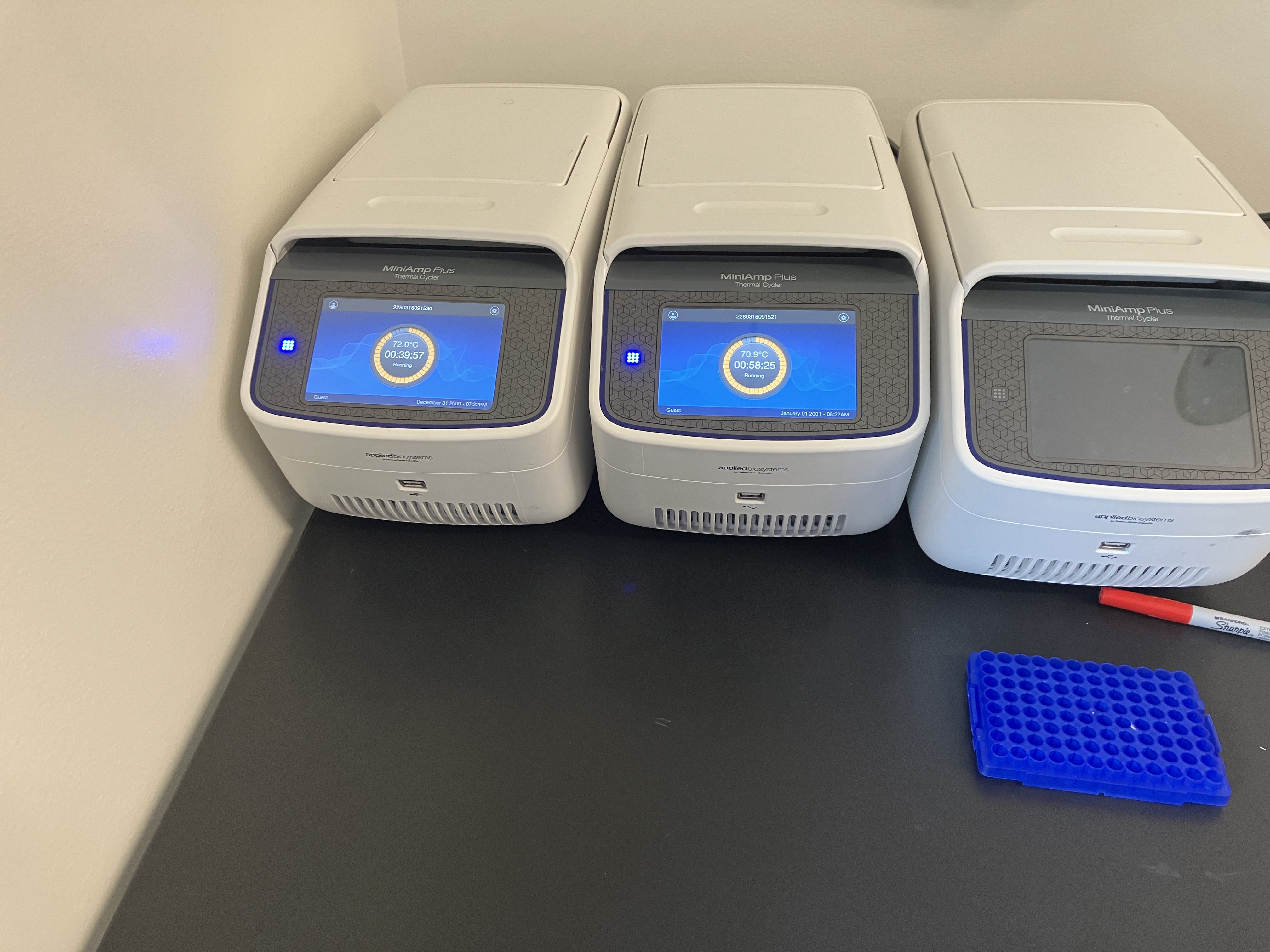
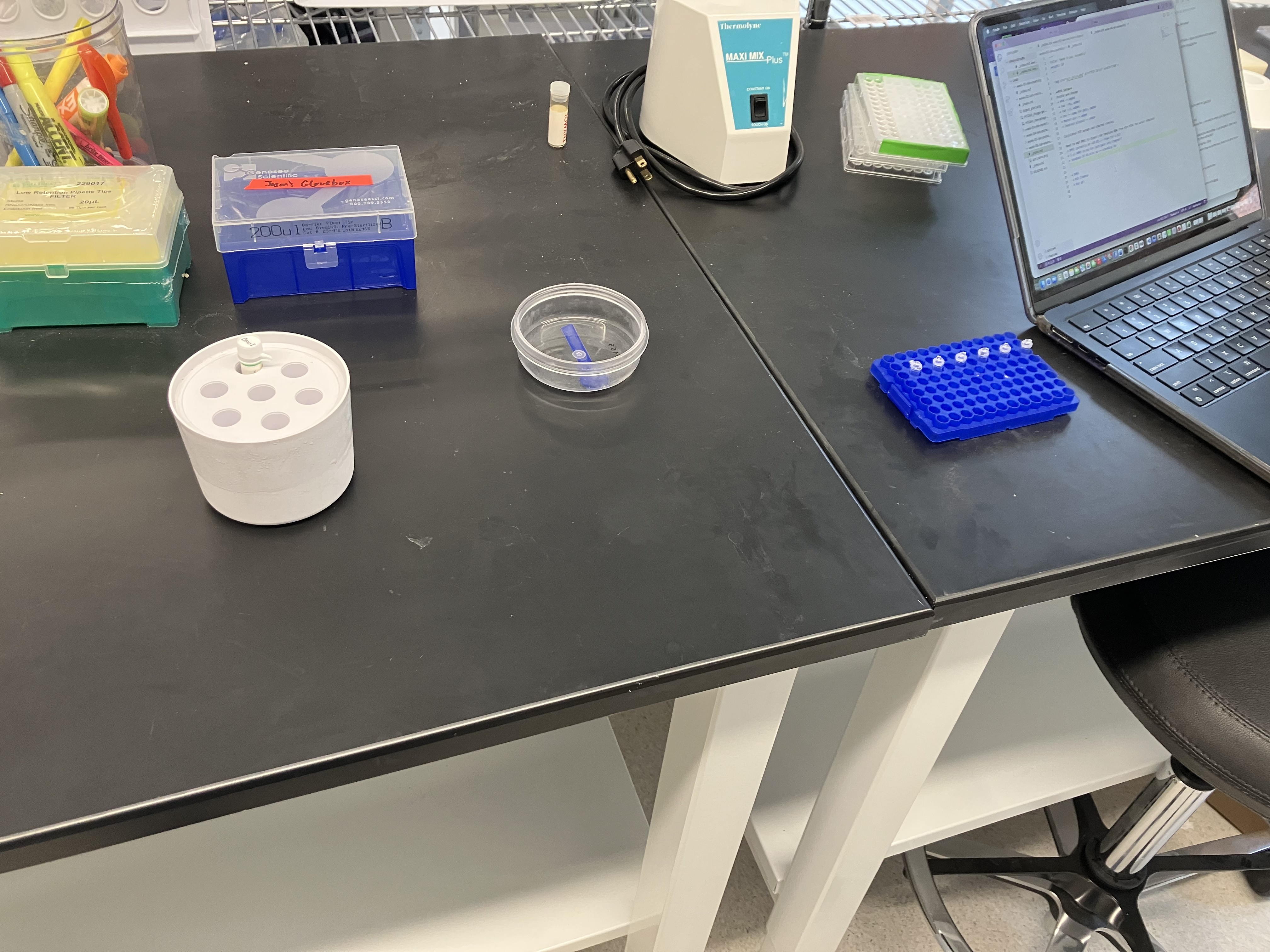
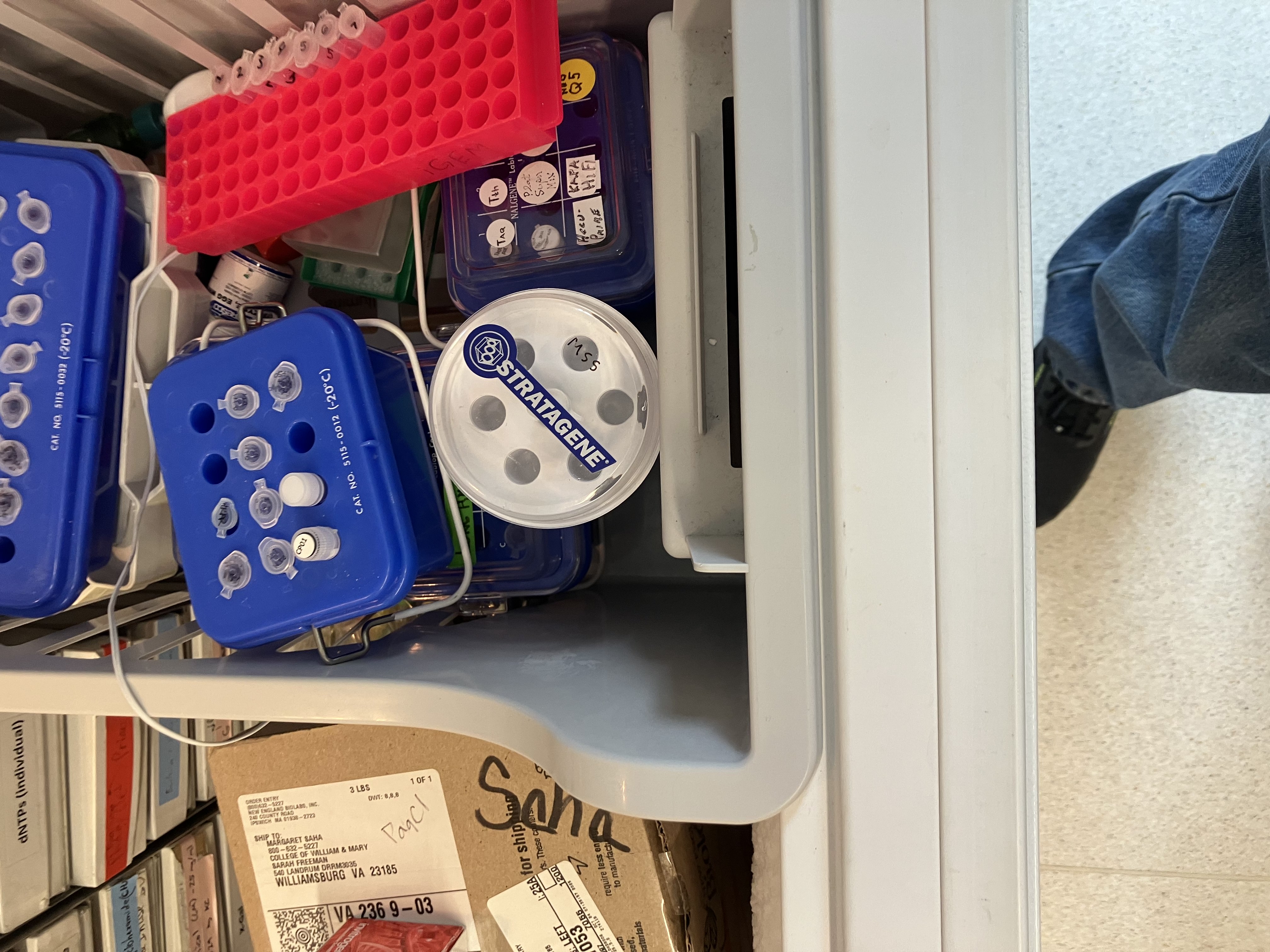
    Gibson Assembly Lab Pre-Lab: Primer and PCR (Part 1 of 3) Read this section and scanned the NuPack software hyperlink Pre-Lab: Gibson Assembly (Part 2 of 3) Read this section Pre-Lab: DpnI Read this section Pre-Lab: Plasmid Transformation Read this section Part 1: Polymerase Chain Reaction (PCR) Prepared PCR (see photos below)

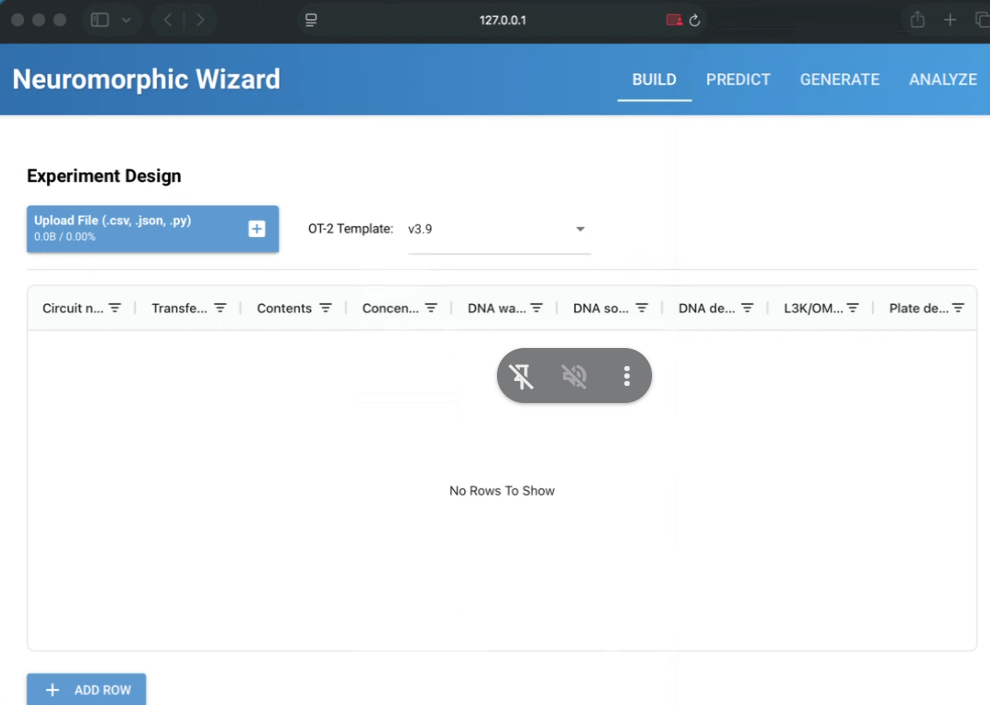
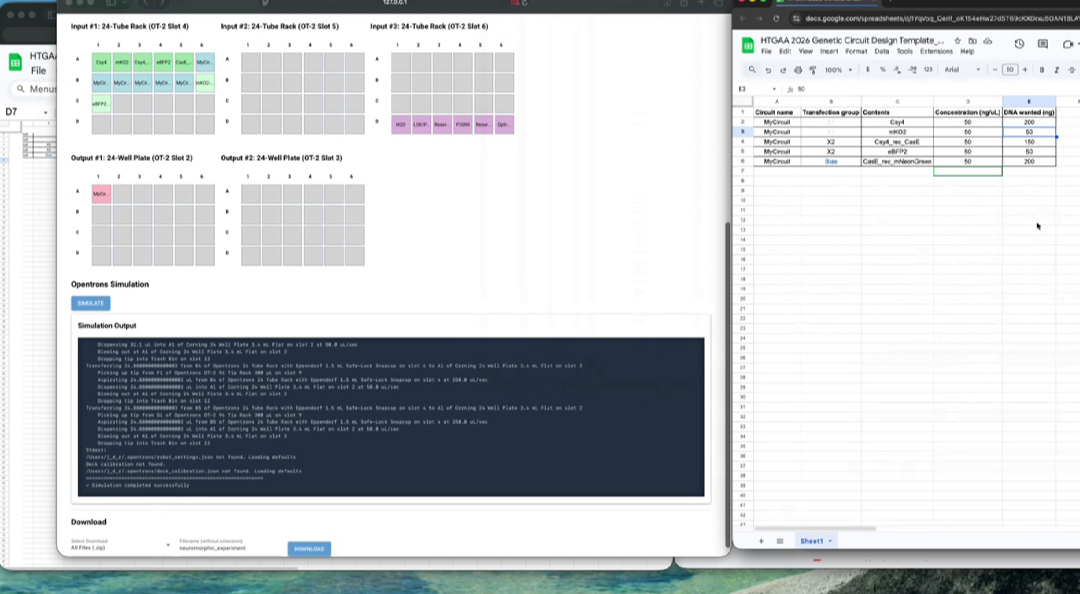
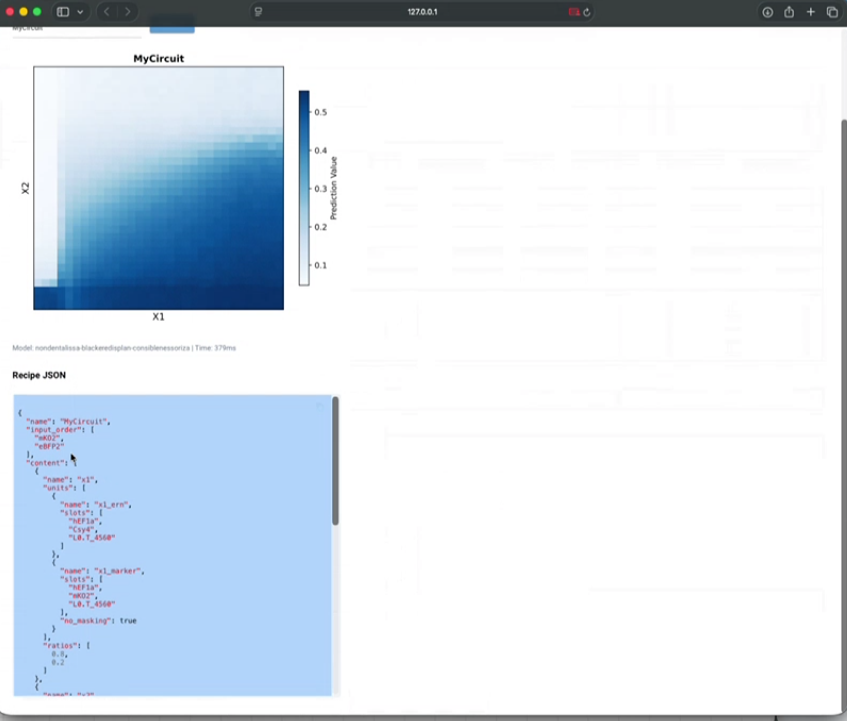
  • Week 7 Lab: Neuromorphic Circuits

    LOREM IPSUM

  • Week 9 Lab: Cell-Free Systems

    LOREM IPSUM

Subsections of Labs

Week 1 Lab: Introduction to Pipetting and Dilutions

Overview

    • Date(s): 03/02/26 – 03/03/26
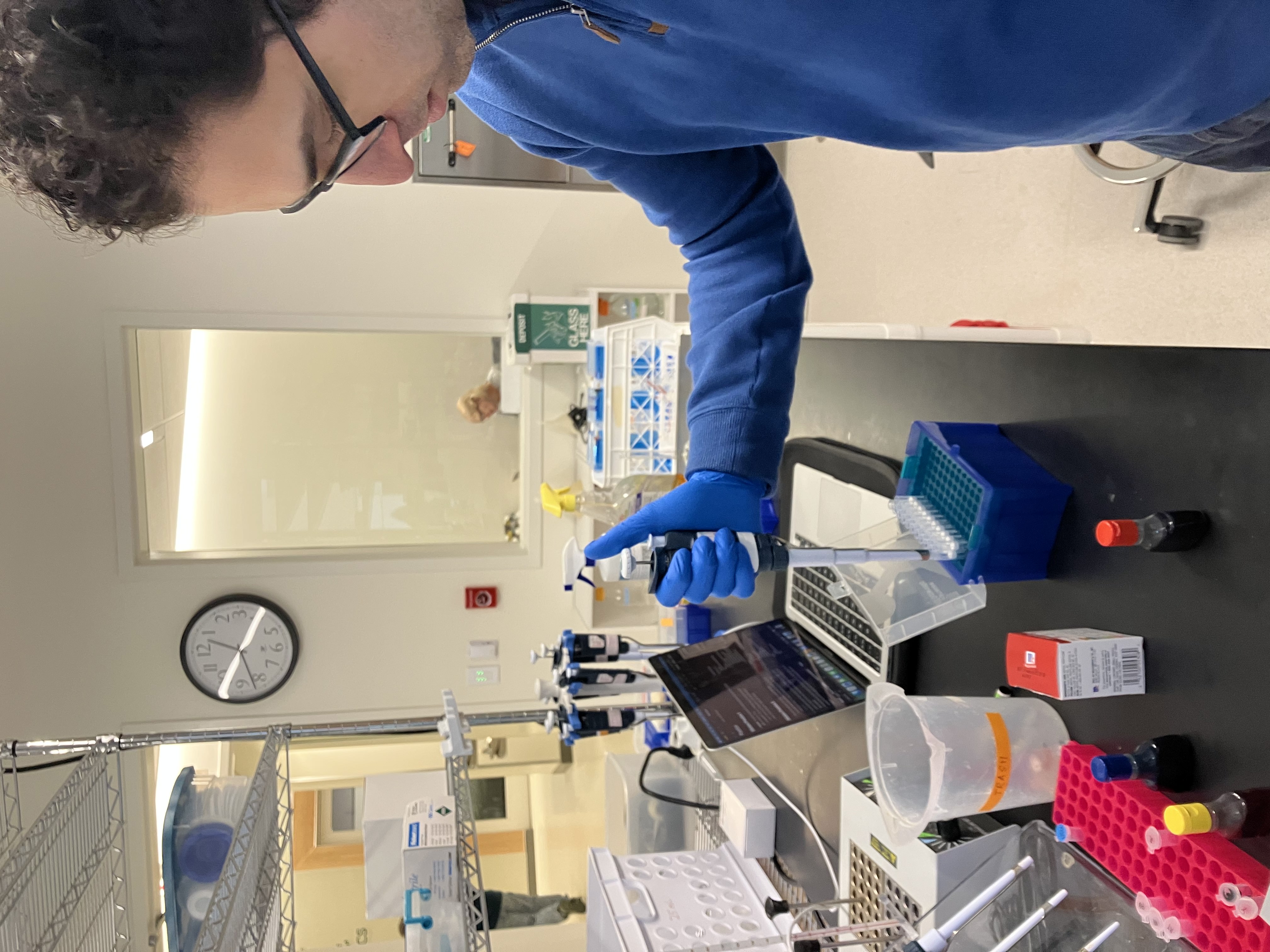
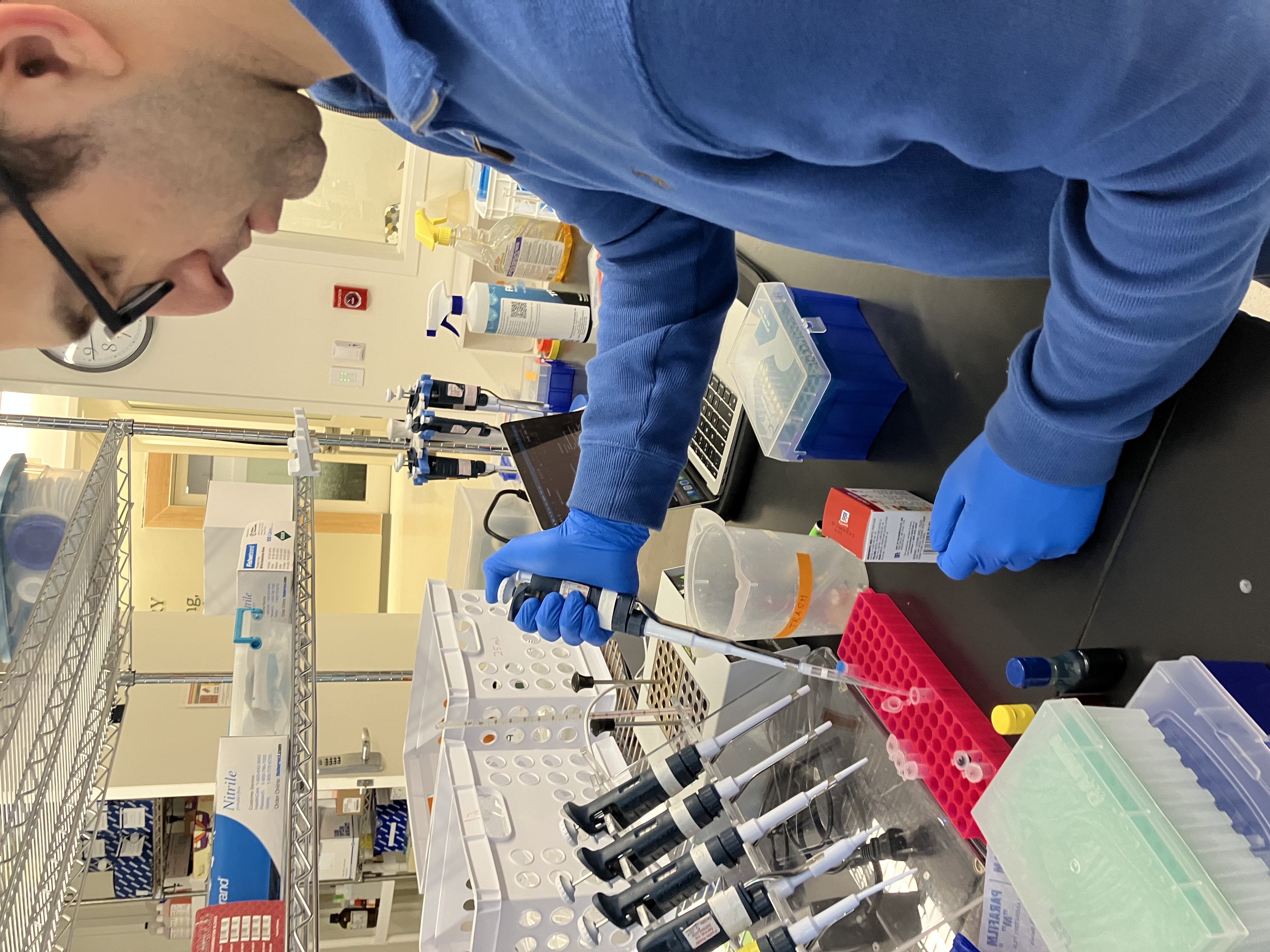
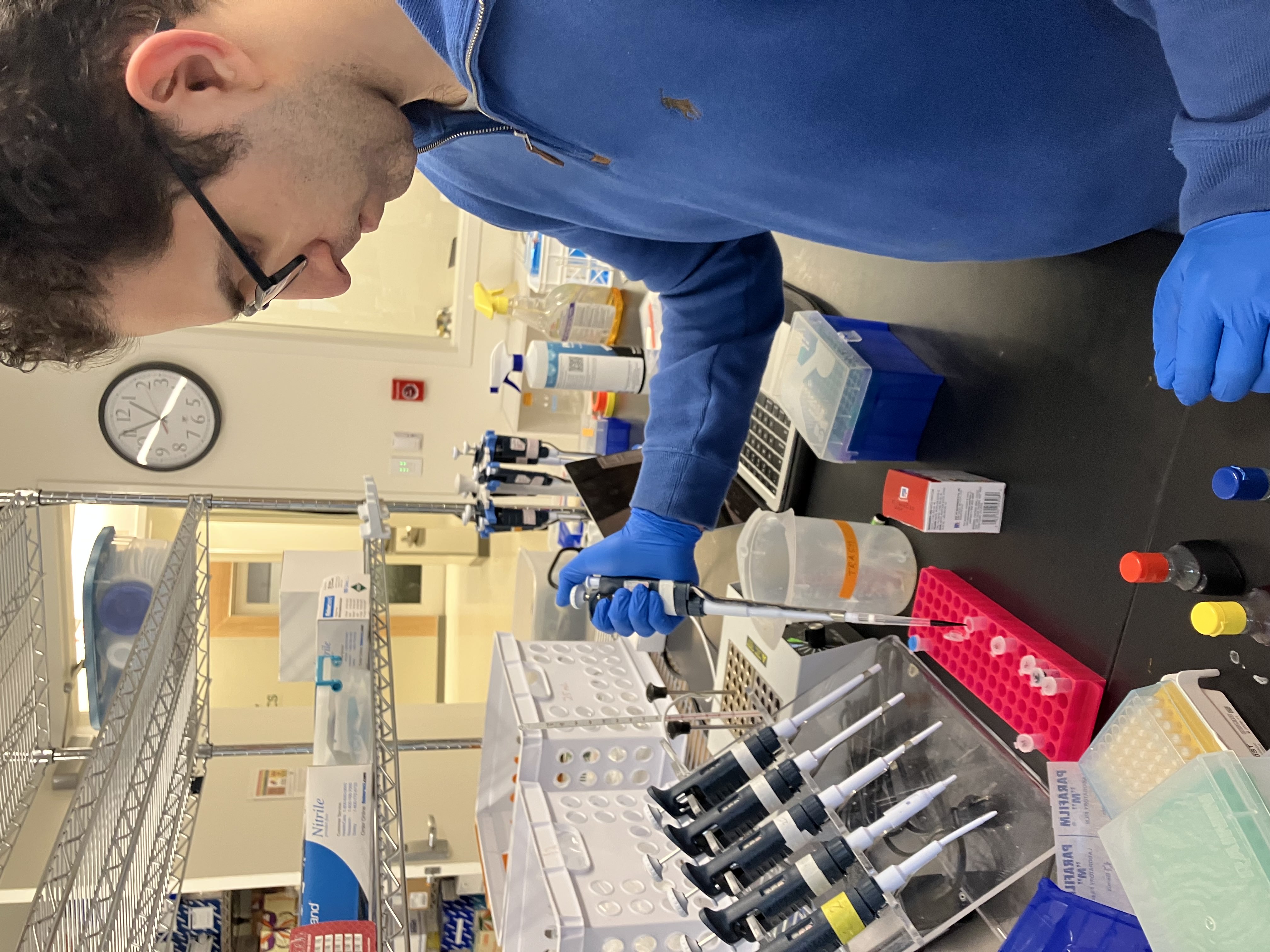
    • Notes: Reviewed lab materials outlined in ‘Overview’ protocol section (pipette types and tips, tubes, tube holders, and stock reagents) and concentration basics with Kate Carline (William & Mary Node TA). Discussed lab material functions and reviewed the basics of dilution math and pipetting technique.
    • Supporting Picture(s):
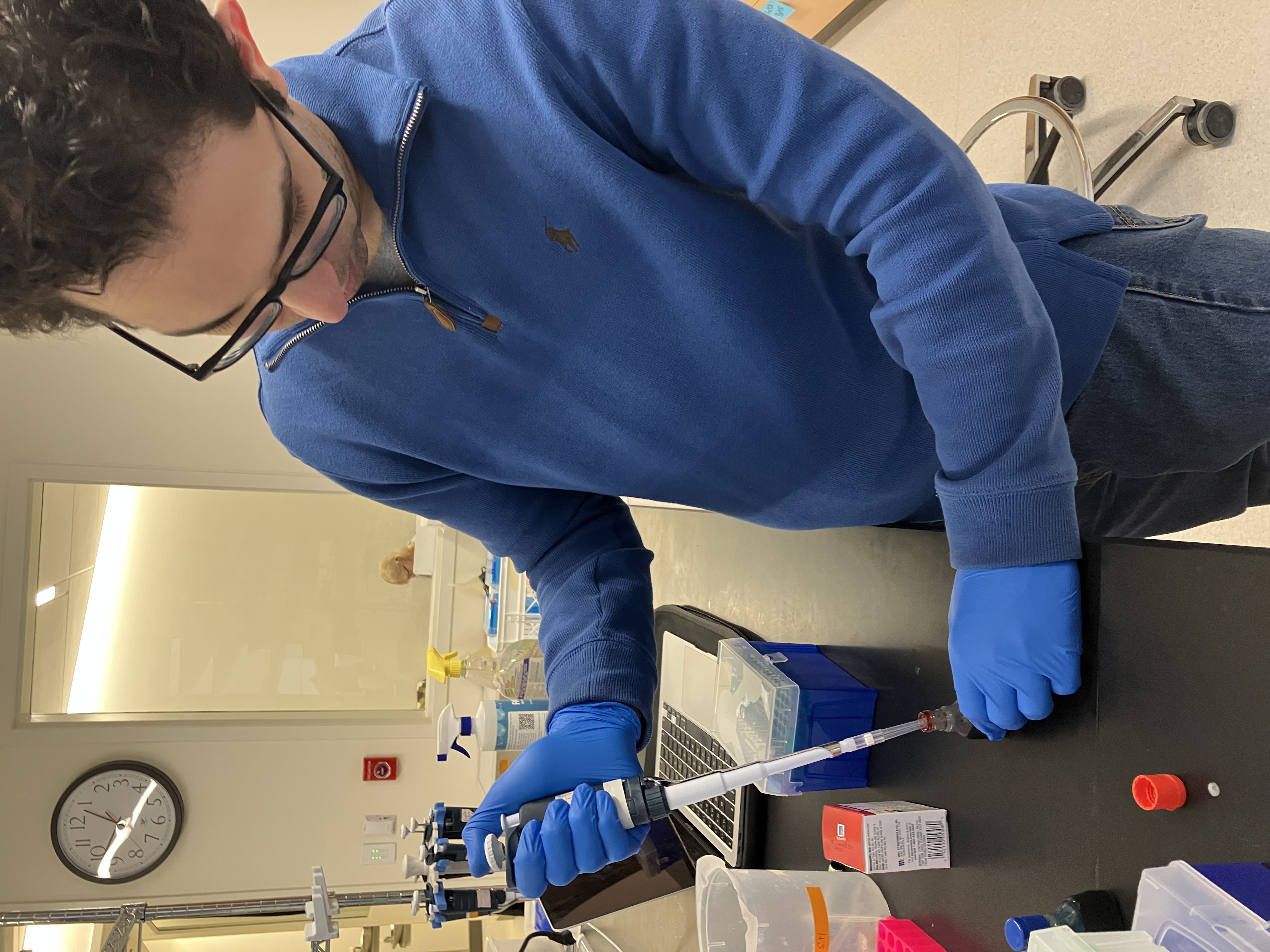
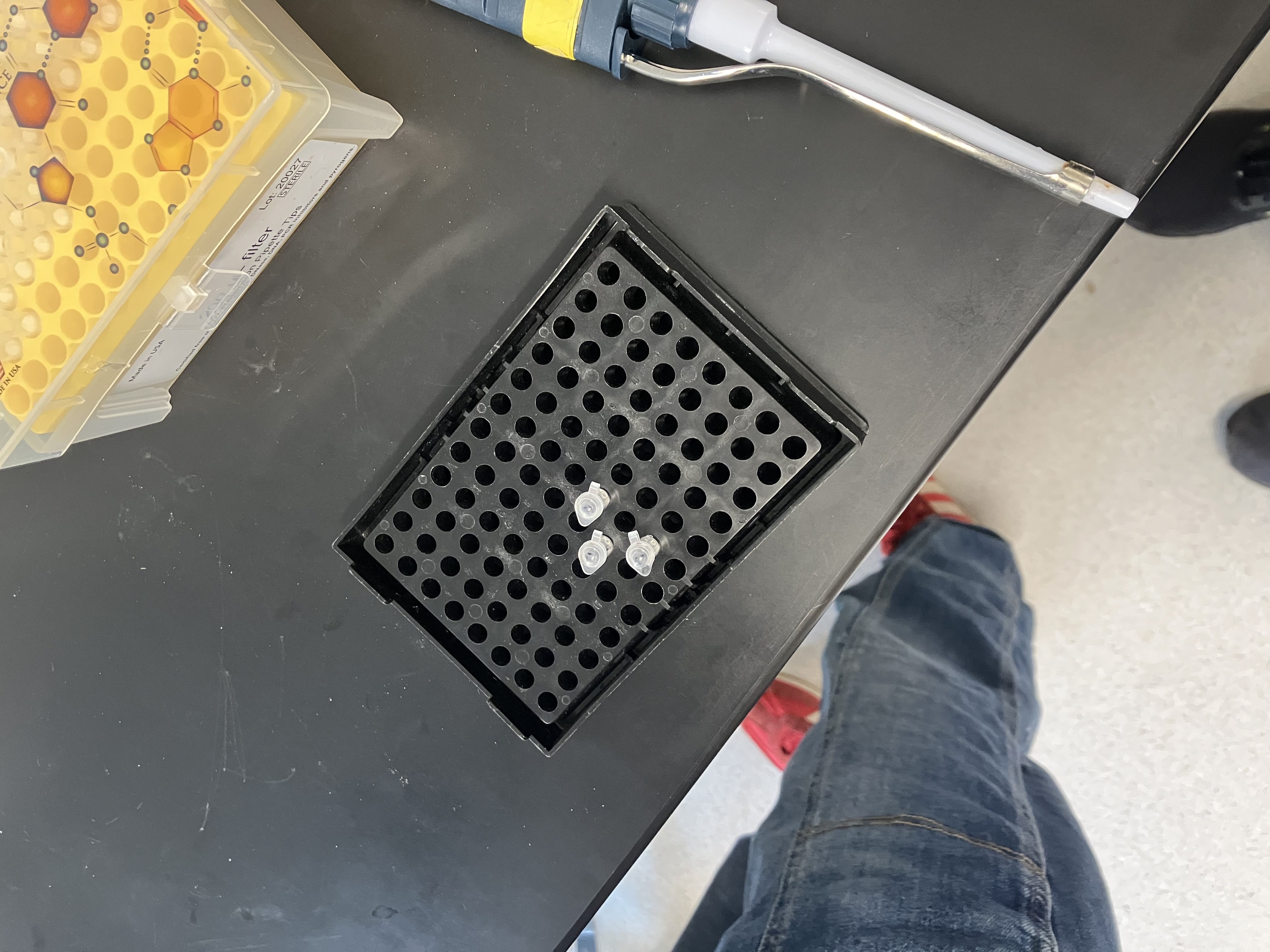
      • Pipetting_Tuesday_10 Pipetting_Tuesday_10

Part 1: Mixing Color

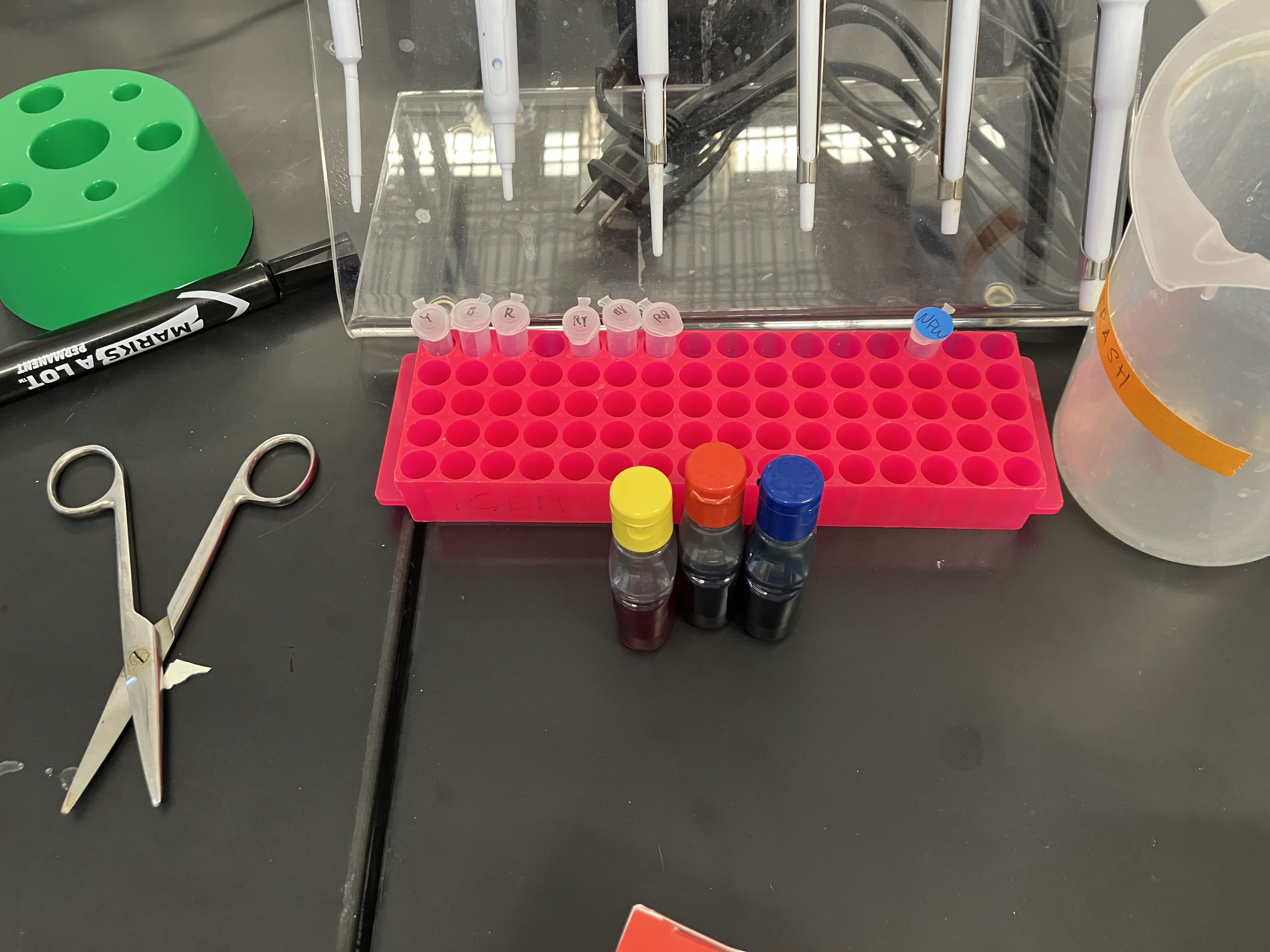
  • Prepared tubes with red, yellow, and blue food coloring solution
  • Marked 6 tubes with red, yellow, blue, red/yellow, blue/yellow, and red/blue combinations
  • Added 500 uL to each each red, yellow, blue, red/yellow, blue/yellow, and red/blue combination solution tube
  • See above – made combinations by mixing colors
  • See above
  • See above
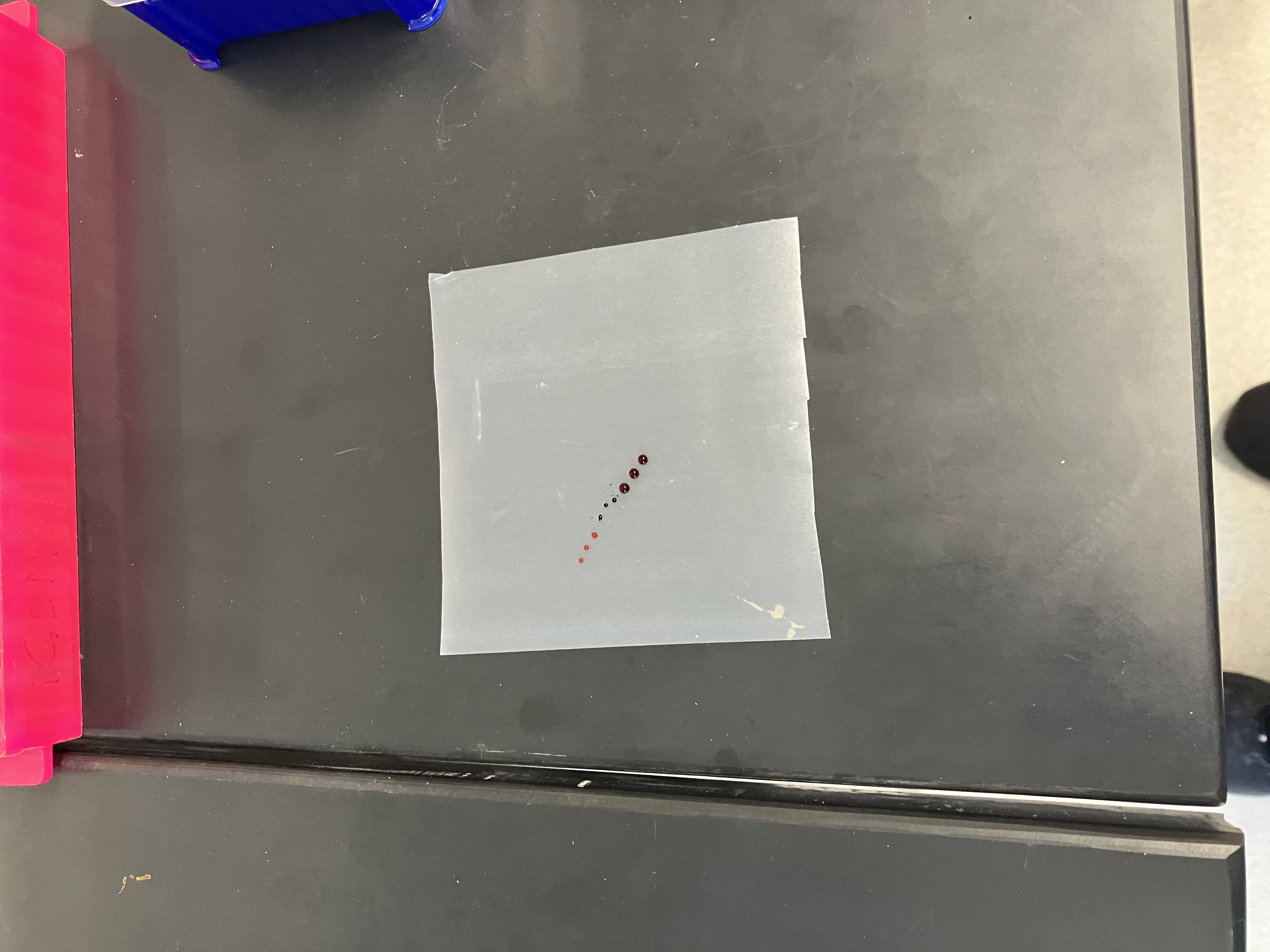
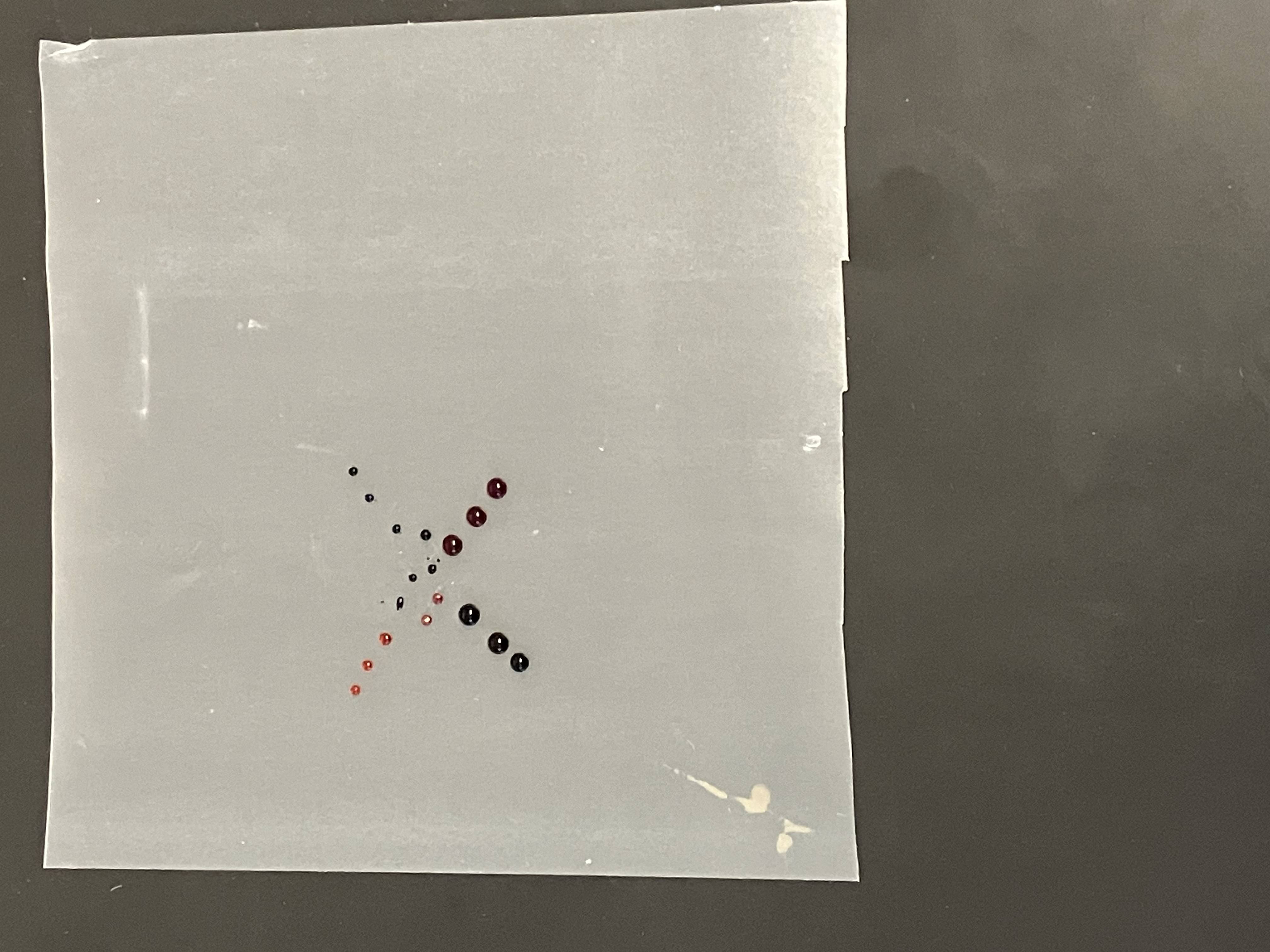
  • Dispersed concentrations onto wax paper to make design in lieu of petri plate
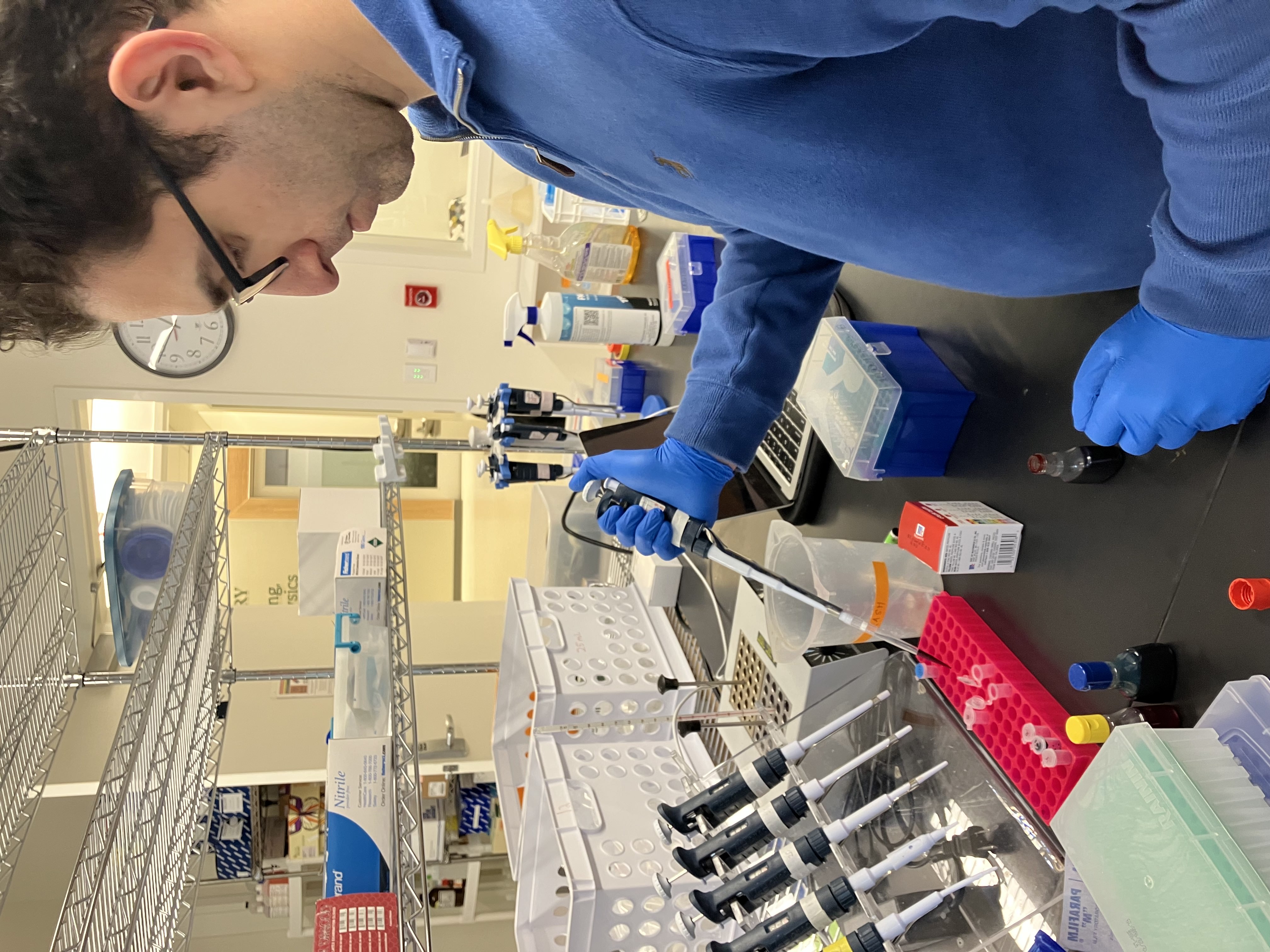
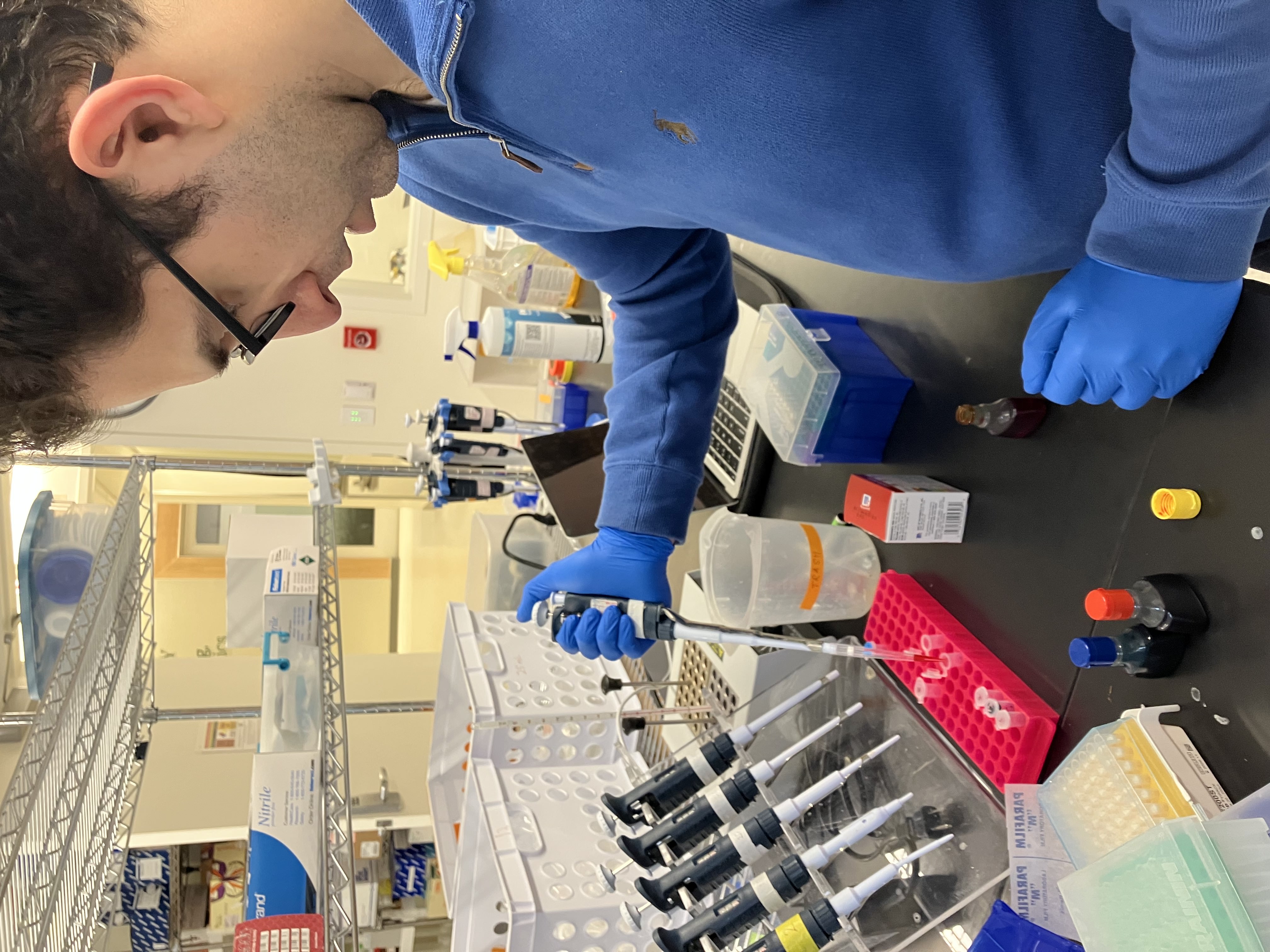
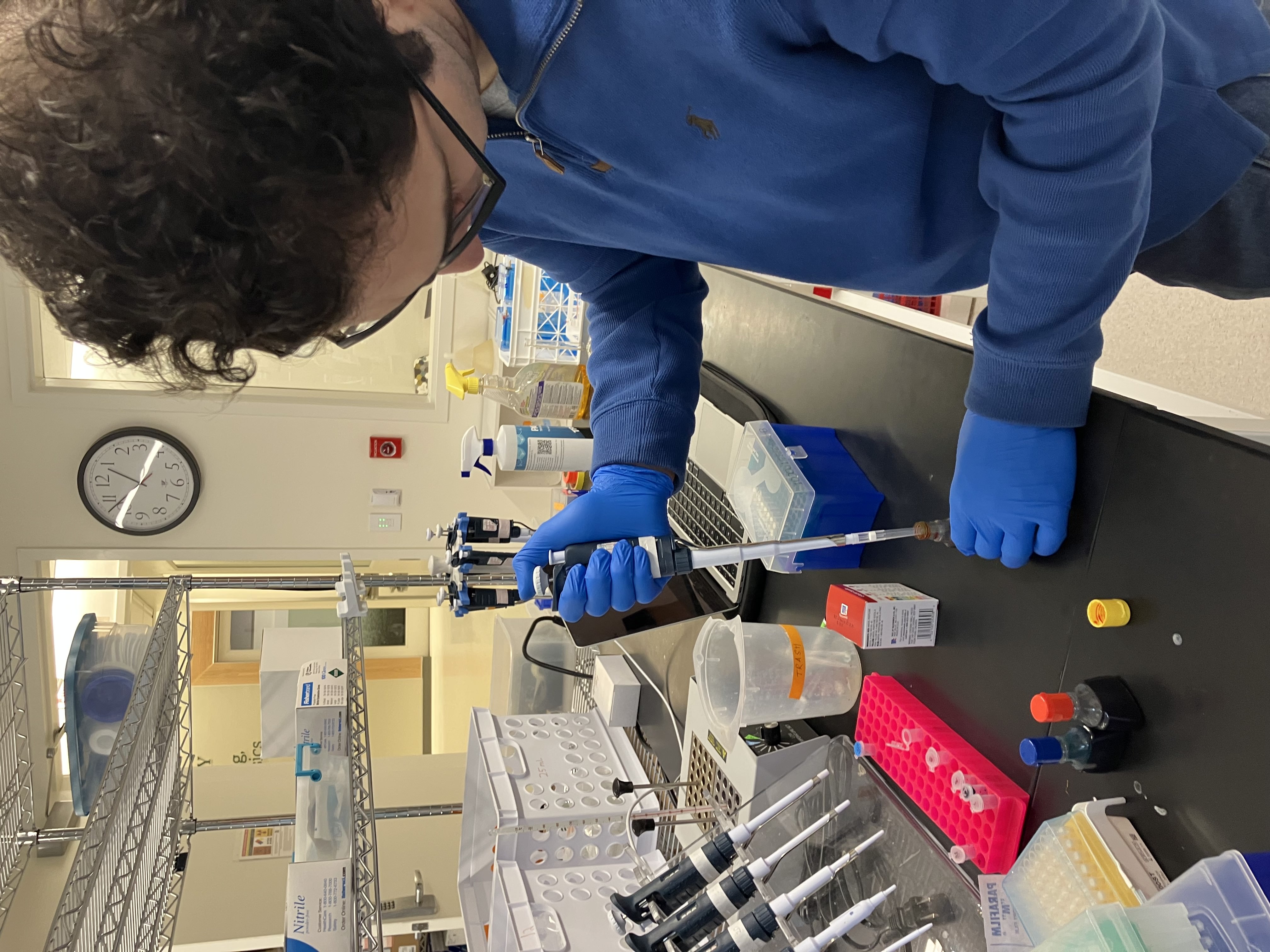
    • Supporting Part 1 and Part 2 photos below

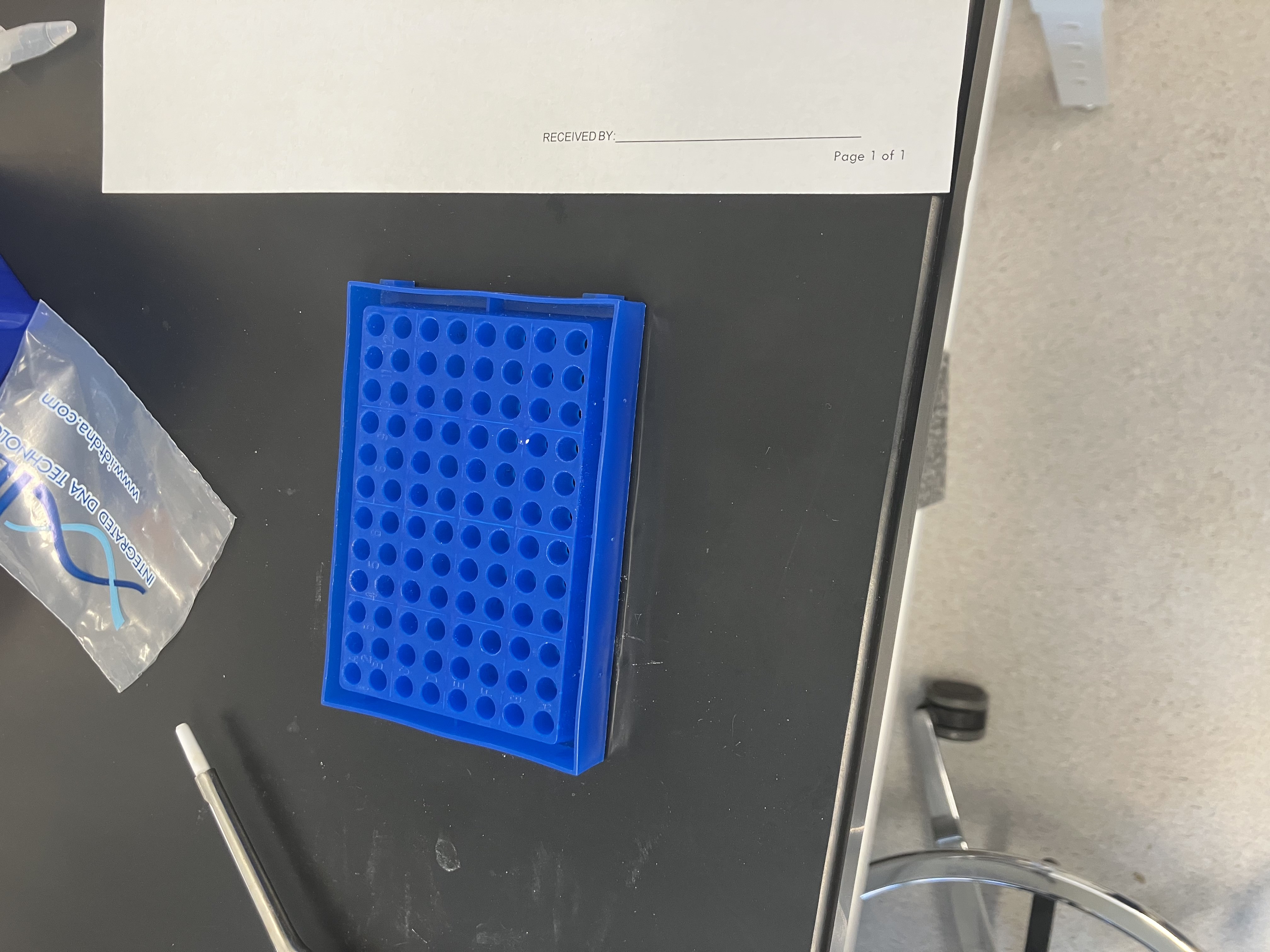
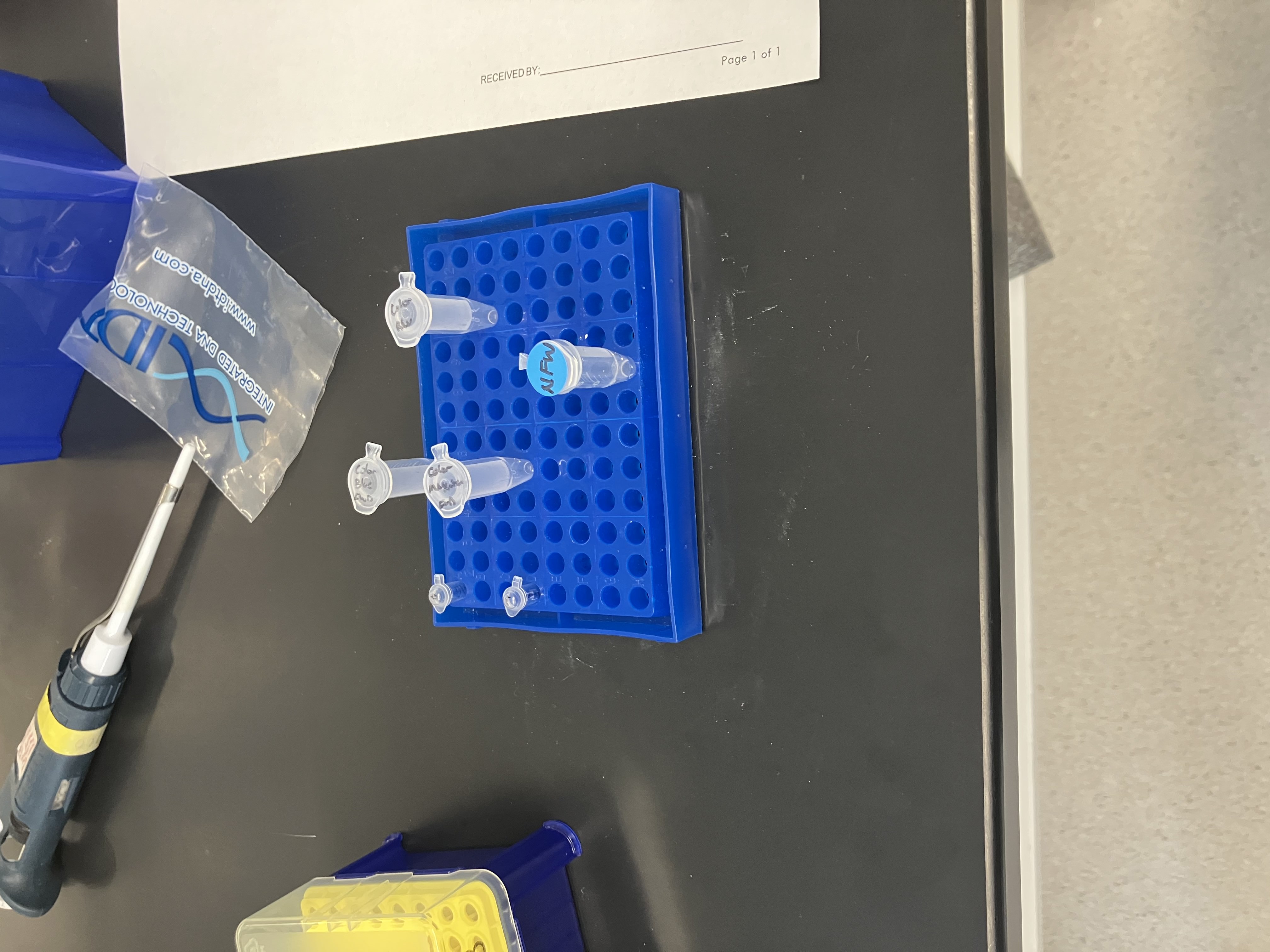
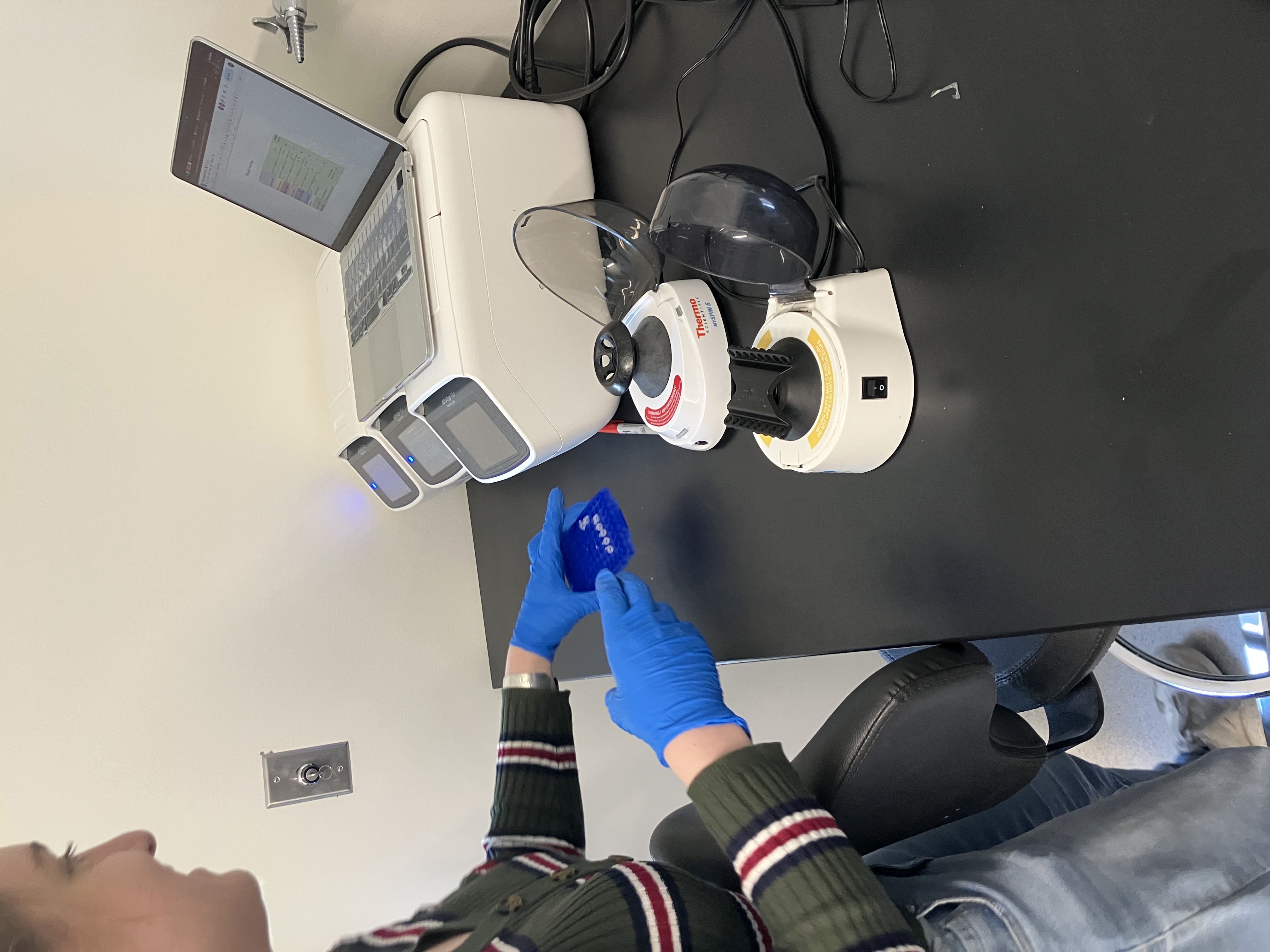
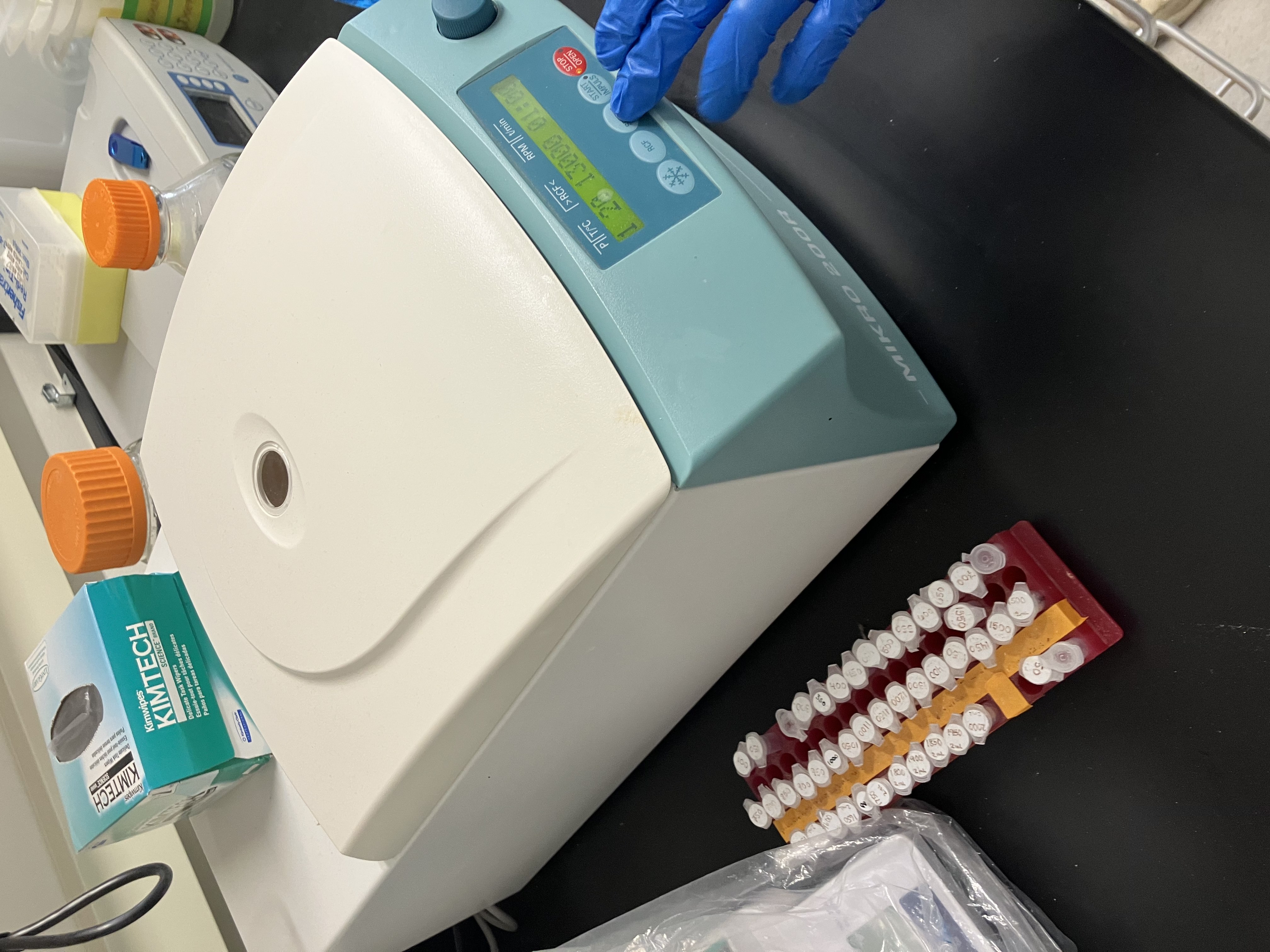
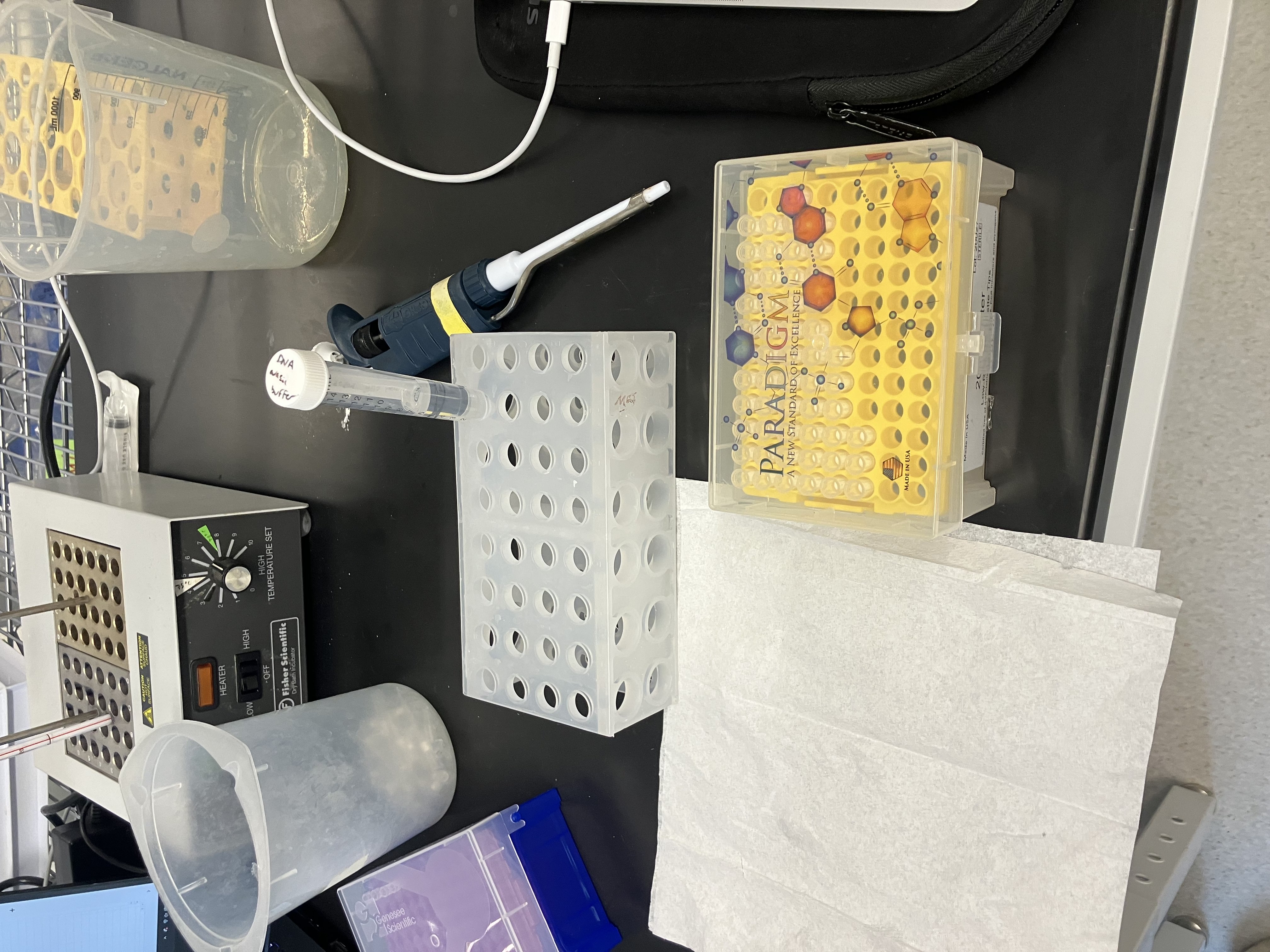
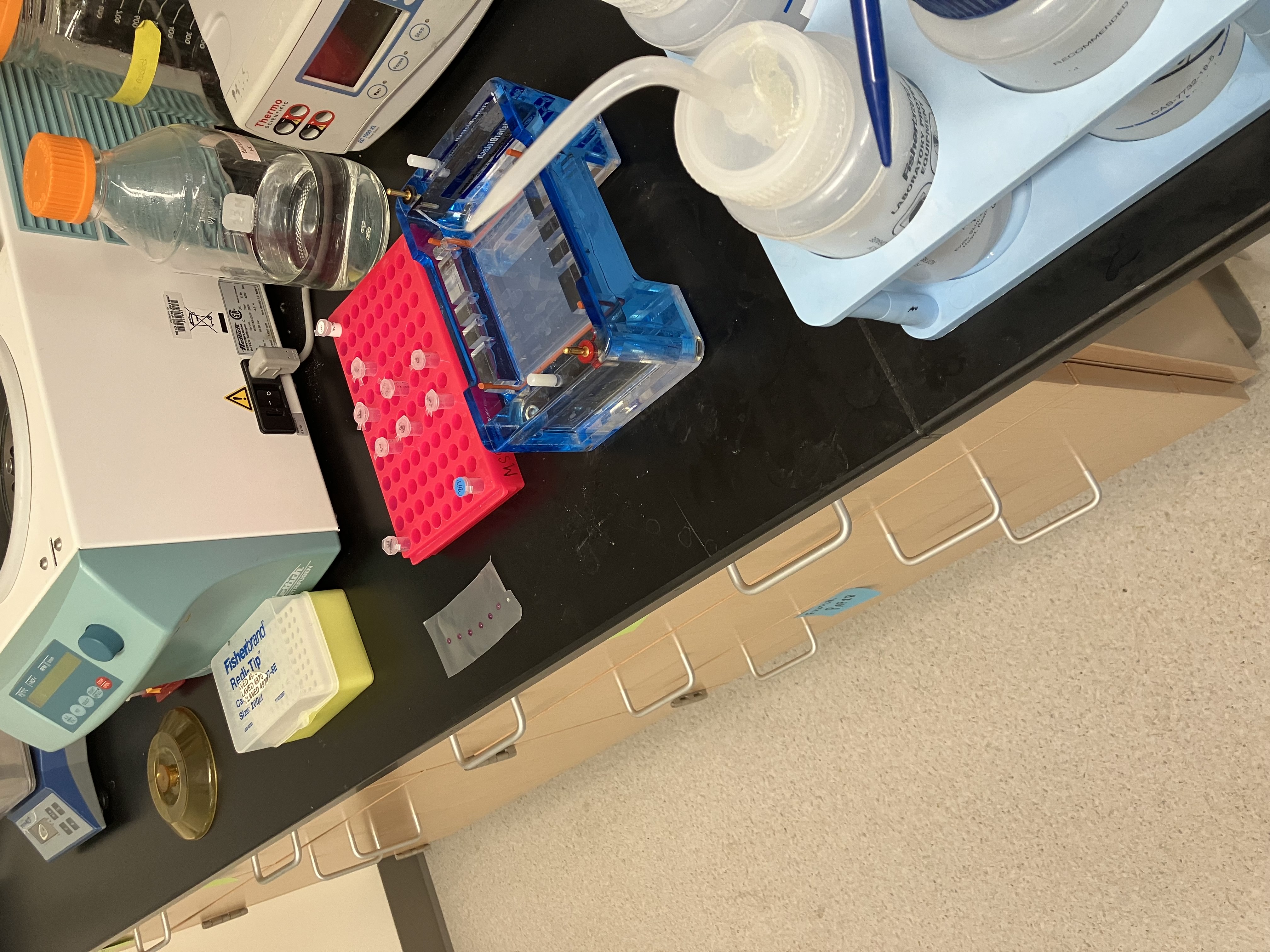
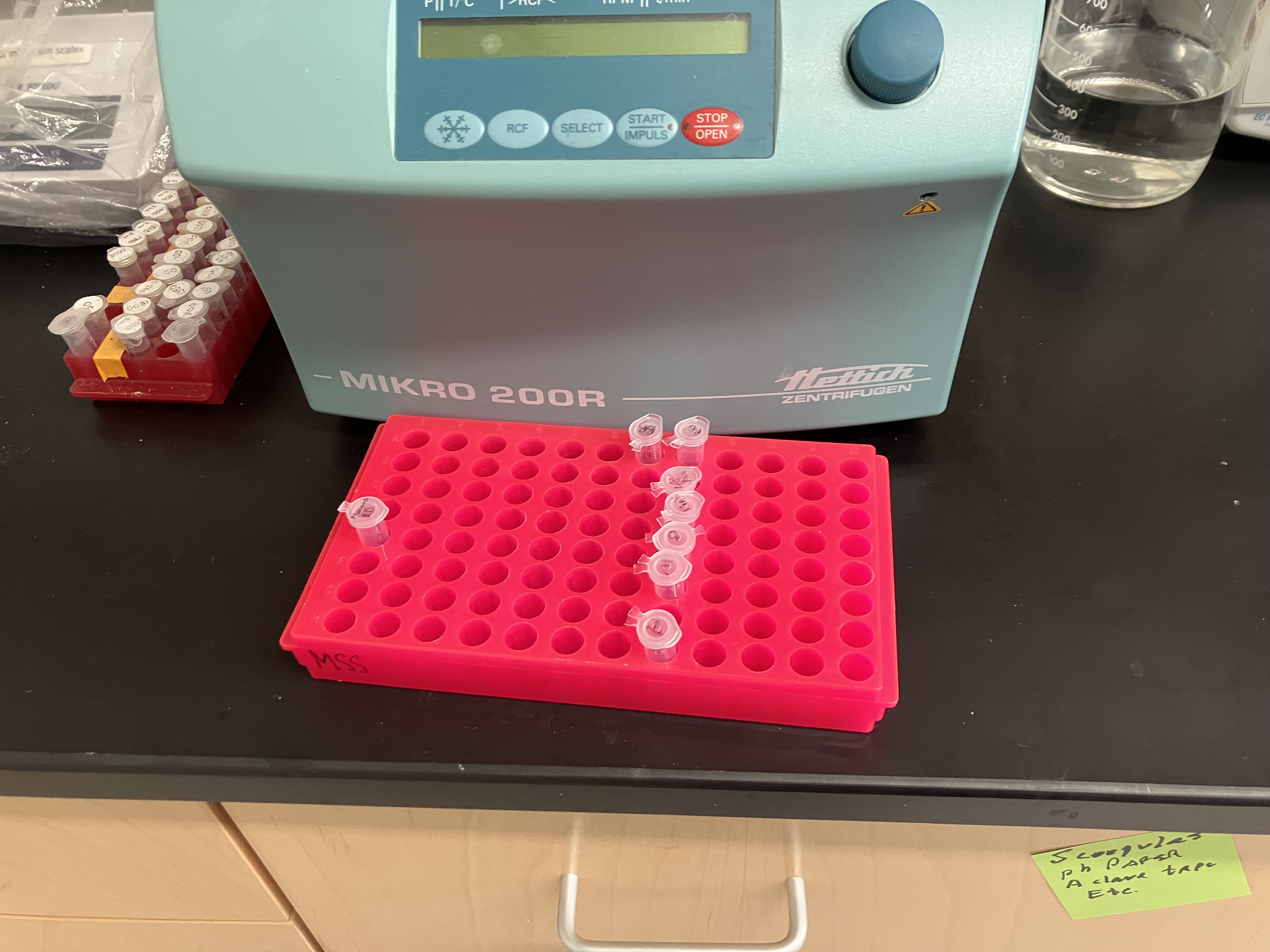
      Pipetting_Mon_1 Pipetting_Mon_1Pipetting_Tuesday_1 Pipetting_Tuesday_1Pipetting_Tuesday_2 Pipetting_Tuesday_2Pipetting_Tuesday_3 Pipetting_Tuesday_3Pipetting_Tuesday_4 Pipetting_Tuesday_4Pipetting_Tuesday_5 Pipetting_Tuesday_5Pipetting_Tuesday_6 Pipetting_Tuesday_6Pipetting_Tuesday_7 Pipetting_Tuesday_7Pipetting_Tuesday_8 Pipetting_Tuesday_8Pipetting_Tuesday_9 Pipetting_Tuesday_9

      Practiced basic pipetting, mixing colors, and performing serial dilution

Part 2: Performing Serial Dilution

  • Performed serial dilutions on MS/food coloring
  • Made a final serial dilution reaction based on the information in the pre-lab
    • See pictures above

Week 2: DNA Gel Art

DNA Gel Art

Protocol Part 0: Designing My Gel Art / Expected Results and Walkthrough

Created a virtual digest in Benchling as a basis for DNA Gel Art (see below)

virtual_digest_sequence_Mycobacterium-phage-Kampy-complete-sequence-51378-bp-including-10-base-3-overhang-CGGCCGGTAA-Cluster-A4_[HiddenHello] virtual_digest_sequence_Mycobacterium-phage-Kampy-complete-sequence-51378-bp-including-10-base-3-overhang-CGGCCGGTAA-Cluster-A4_[HiddenHello]

Benchling Virtual Digest (A Hidden Hello)

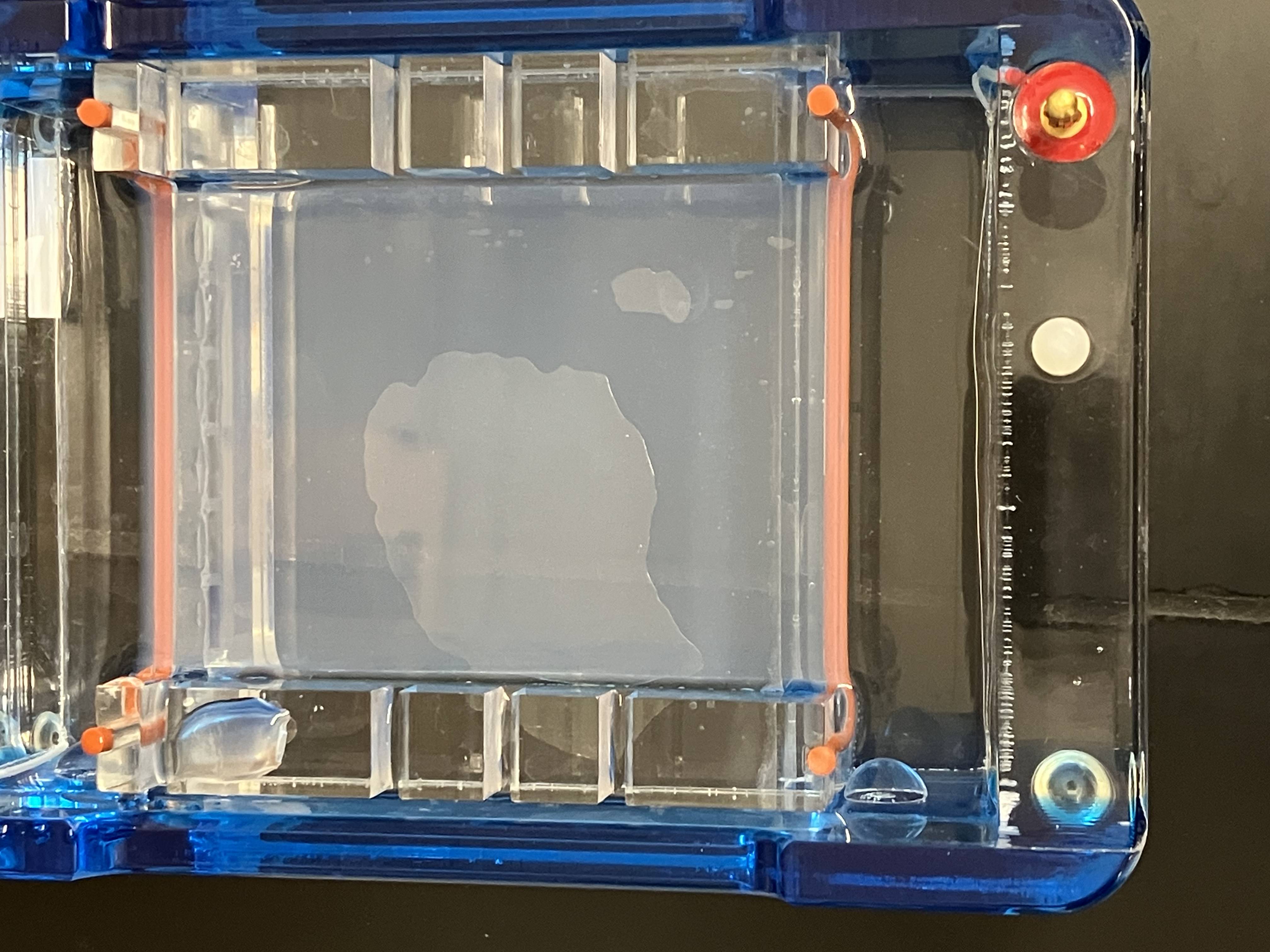
Protocol Part 1a: Preparing a 1% Agarose Electrophoresis Gel

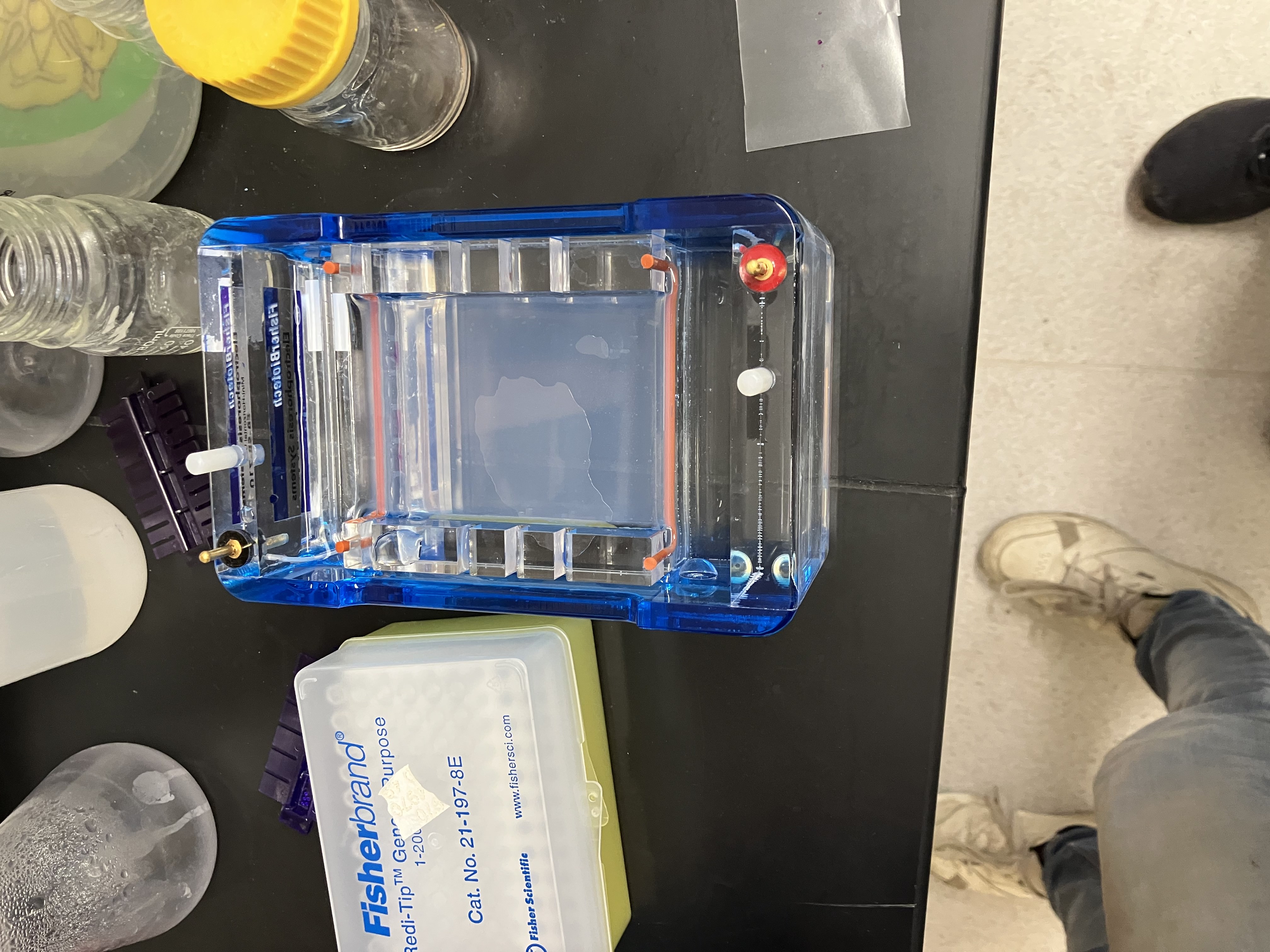
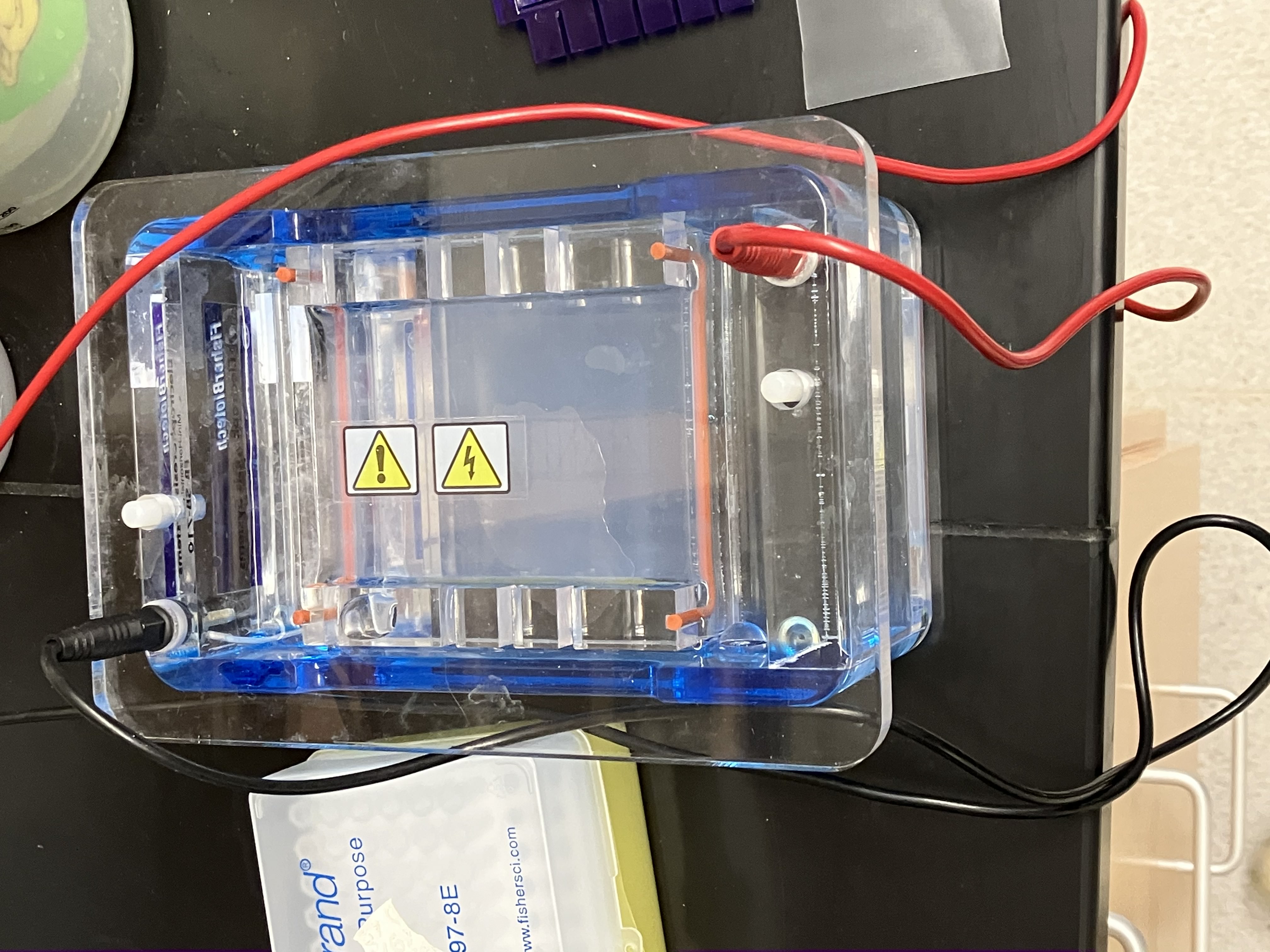
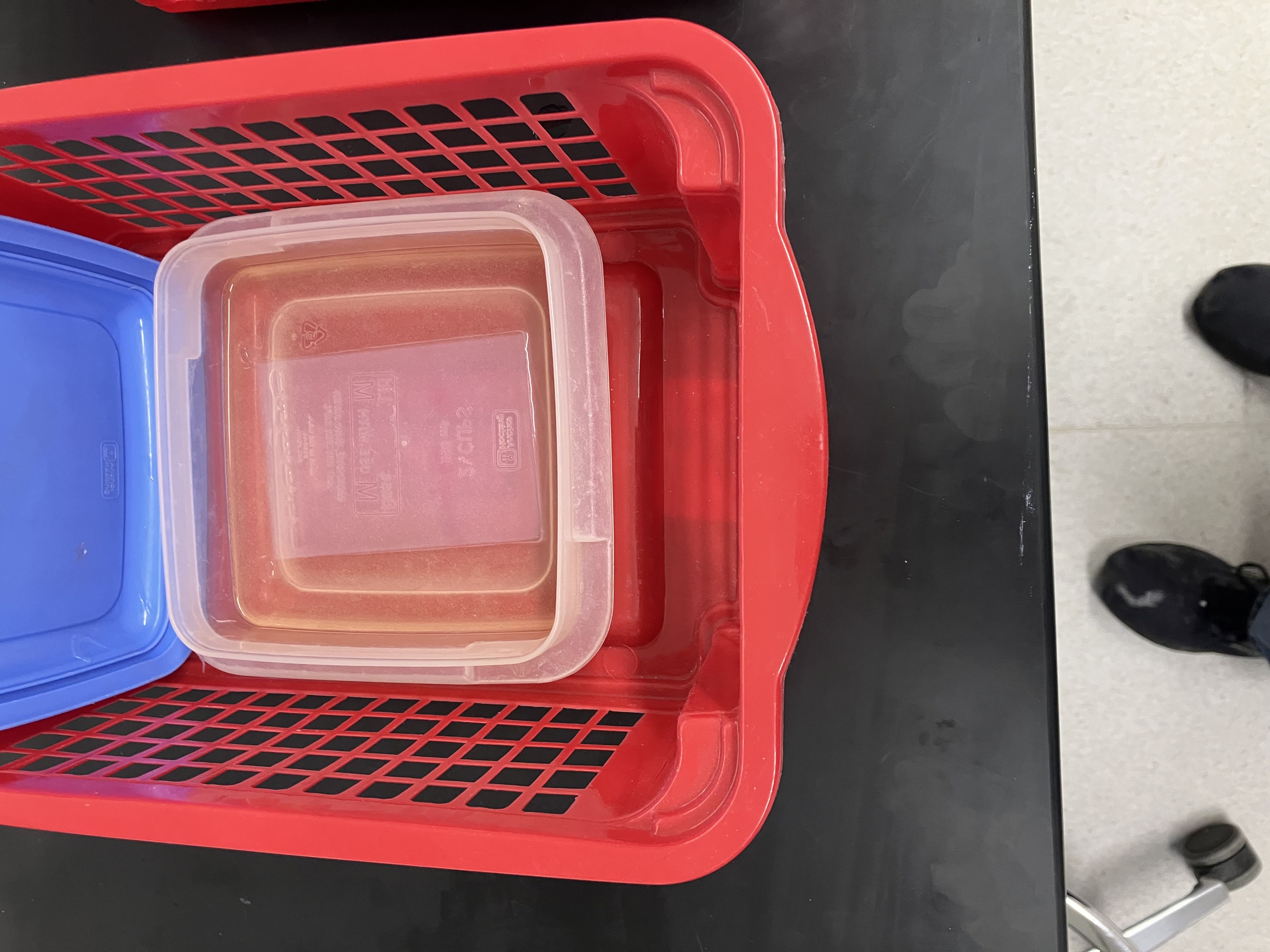
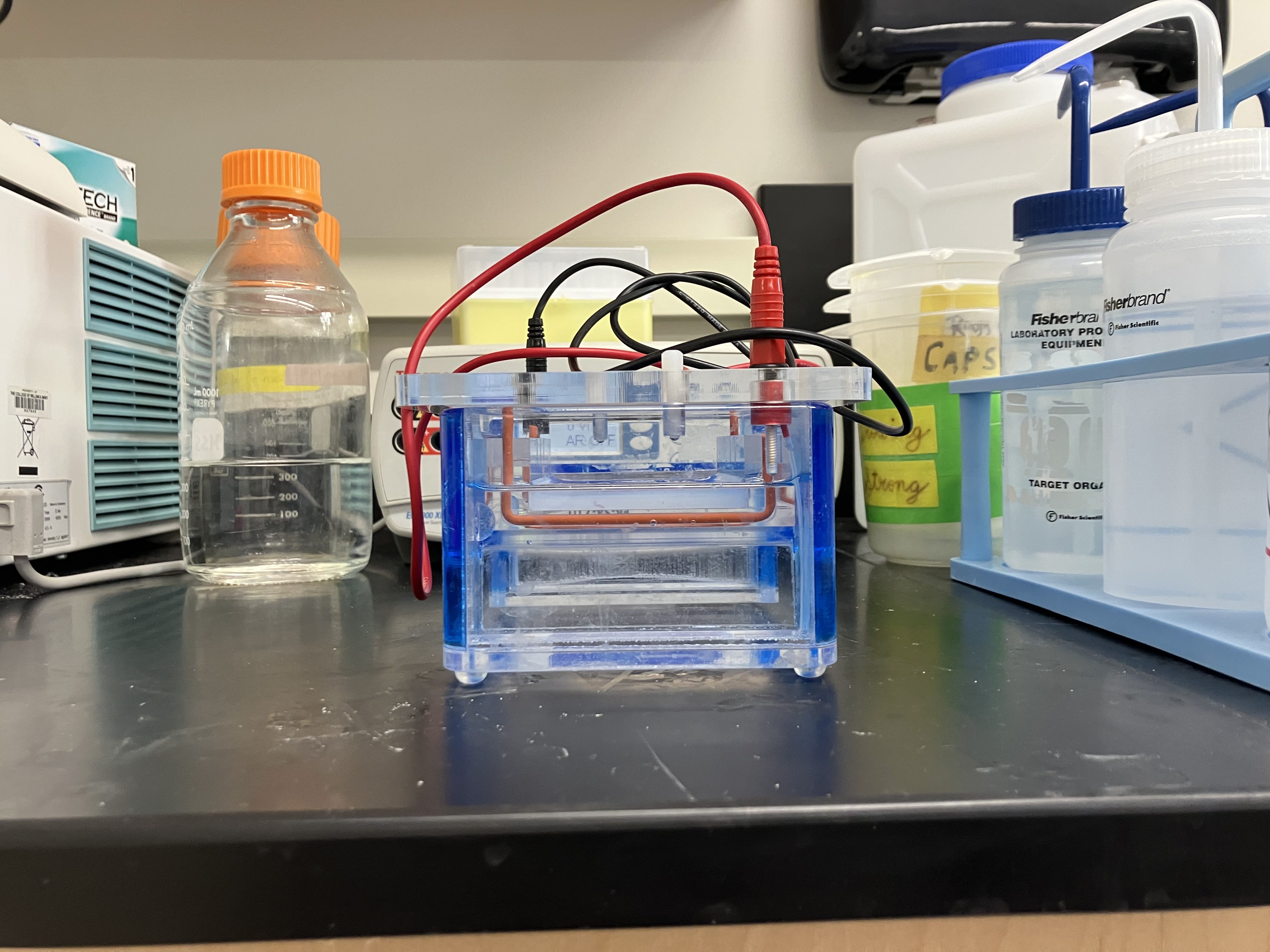
Preared a 1% Agarose Electrophoresis Gel (see below)

DNAGelArt_Tuesday_8 DNAGelArt_Tuesday_8DNAGelArt_Tuesday_10 DNAGelArt_Tuesday_10DNAGelArt_Tuesday_11 DNAGelArt_Tuesday_11

Protocol Part 1a: Restriction Digest

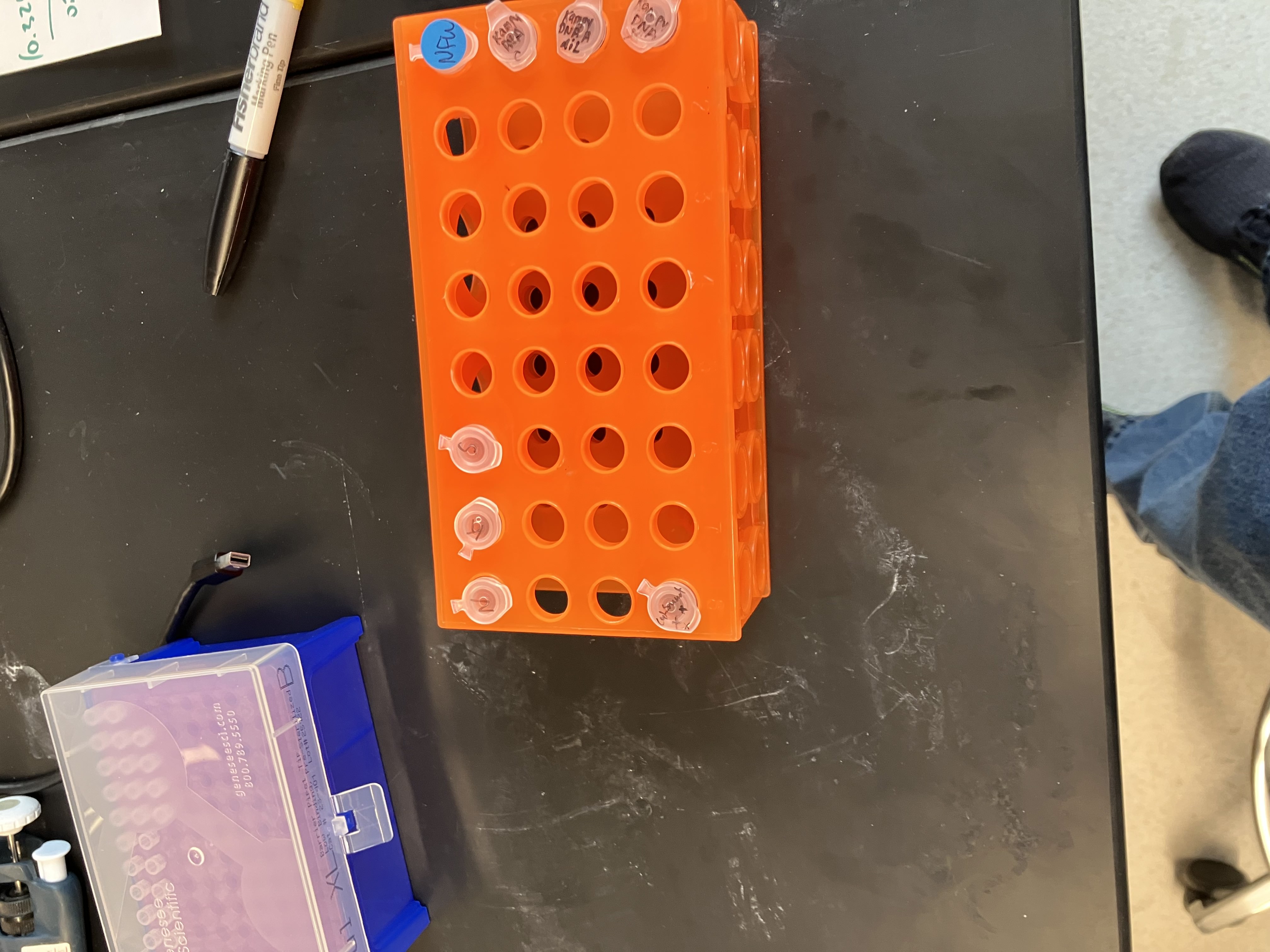
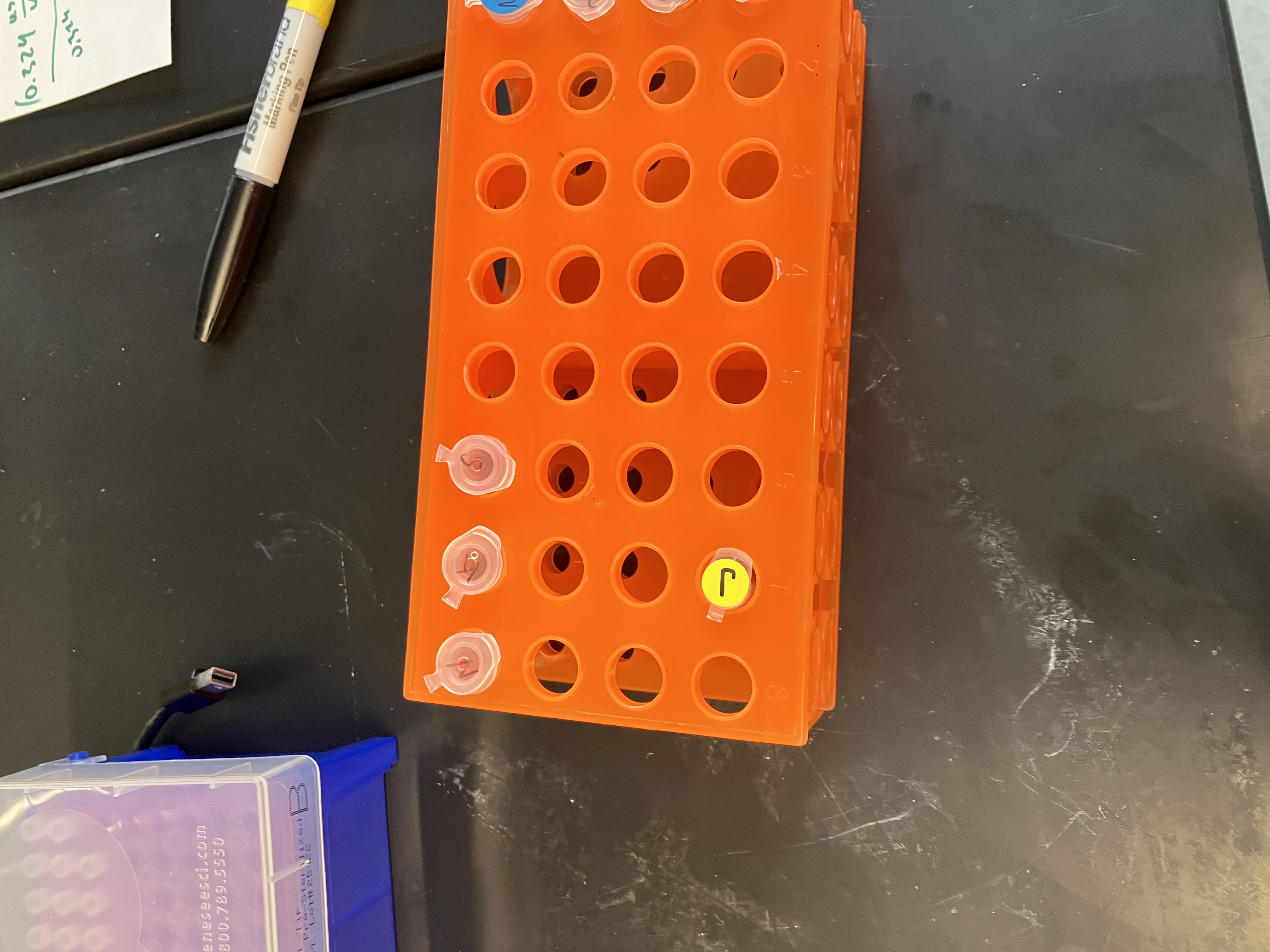
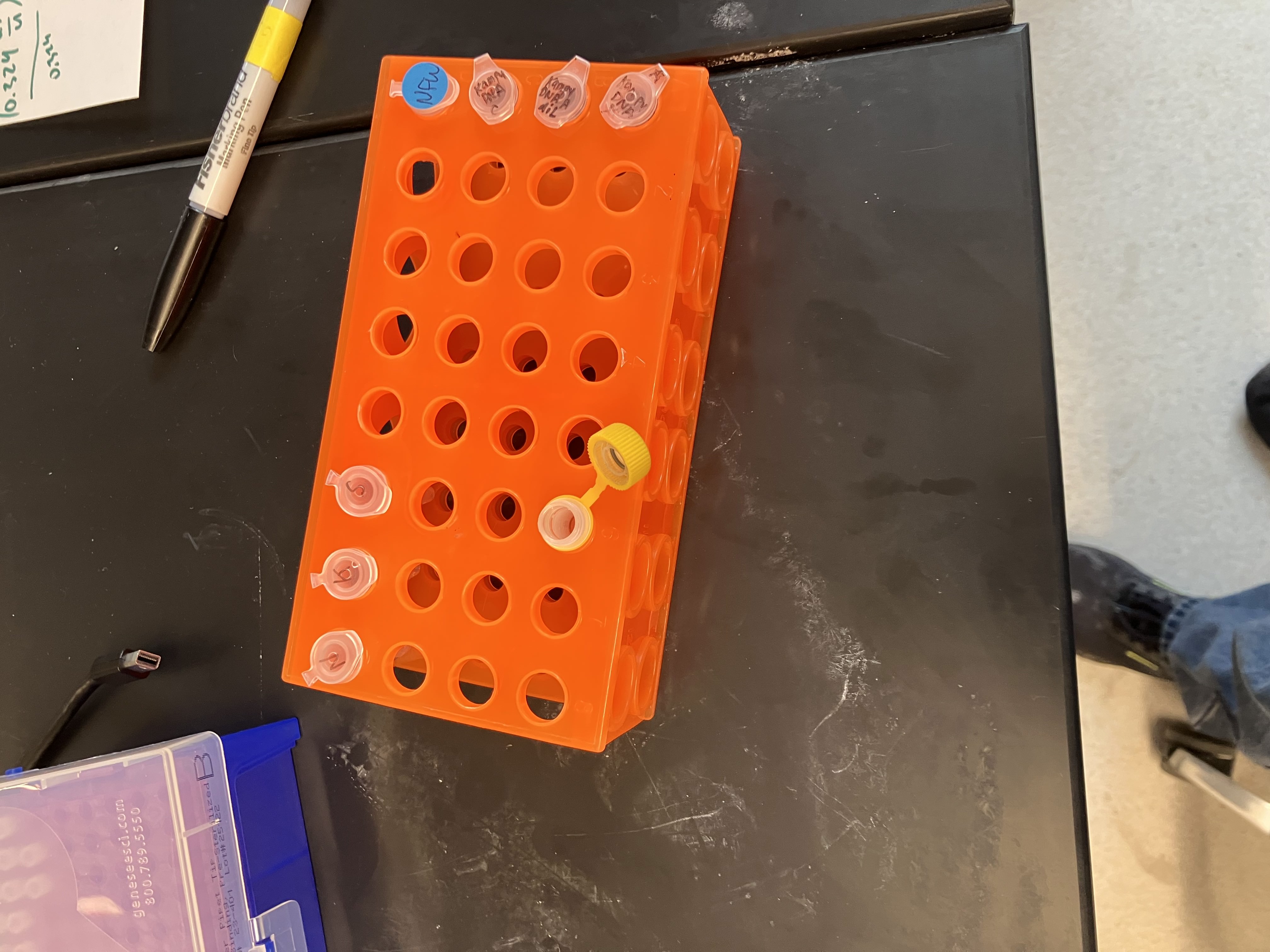
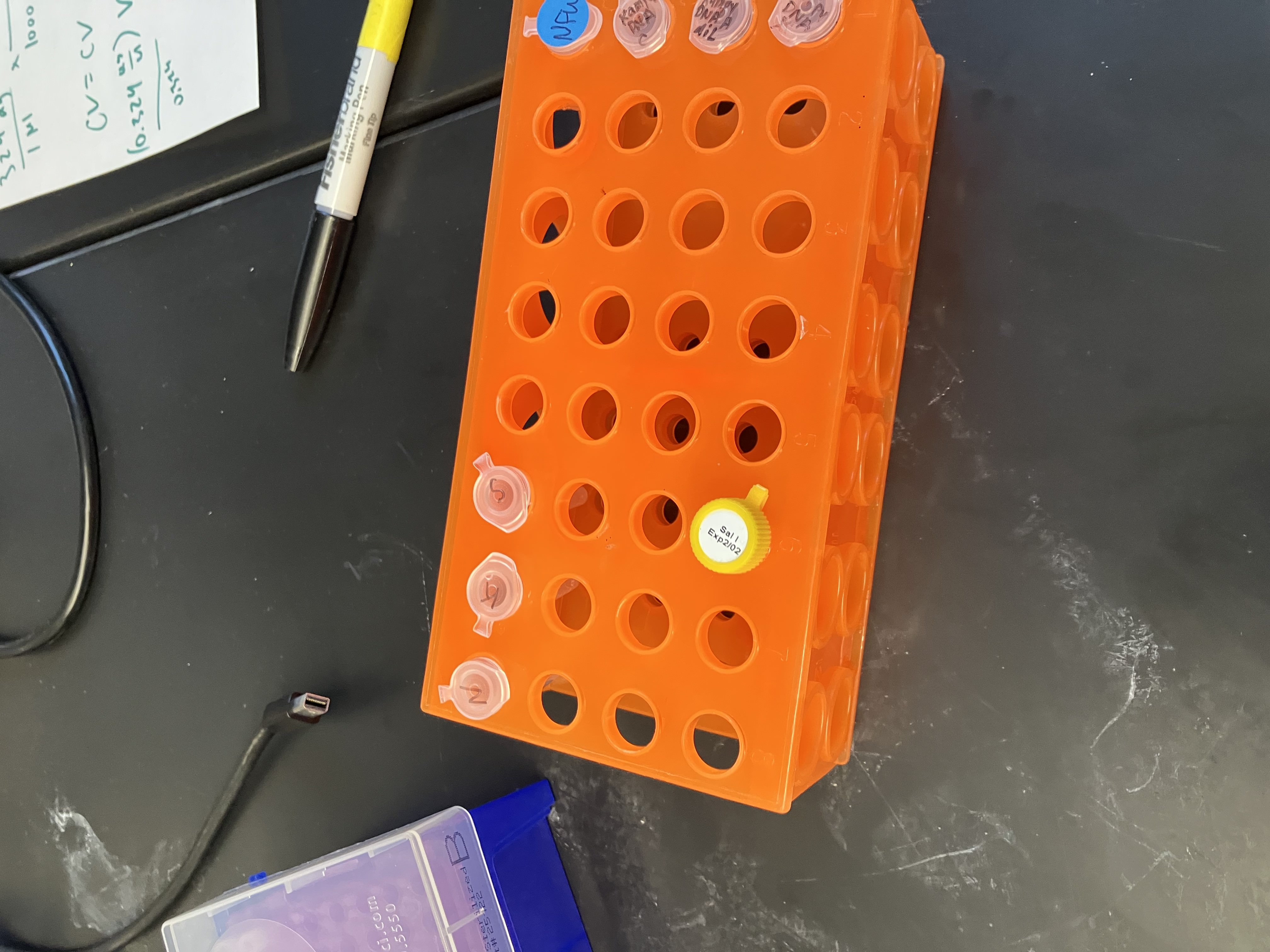
Ran Restriction Digest (see images below)

DNAGelArt_Tuesday_2 DNAGelArt_Tuesday_2DNAGelArt_Tuesday_3 DNAGelArt_Tuesday_3DNAGelArt_Tuesday_4 DNAGelArt_Tuesday_4DNAGelArt_Tuesday_5 DNAGelArt_Tuesday_5

Protocol Part 2: Gel Run

Performed Gel Run (see mp4s below)

output1_GelArt output1_GelArtoutput2_GelArt output2_GelArt

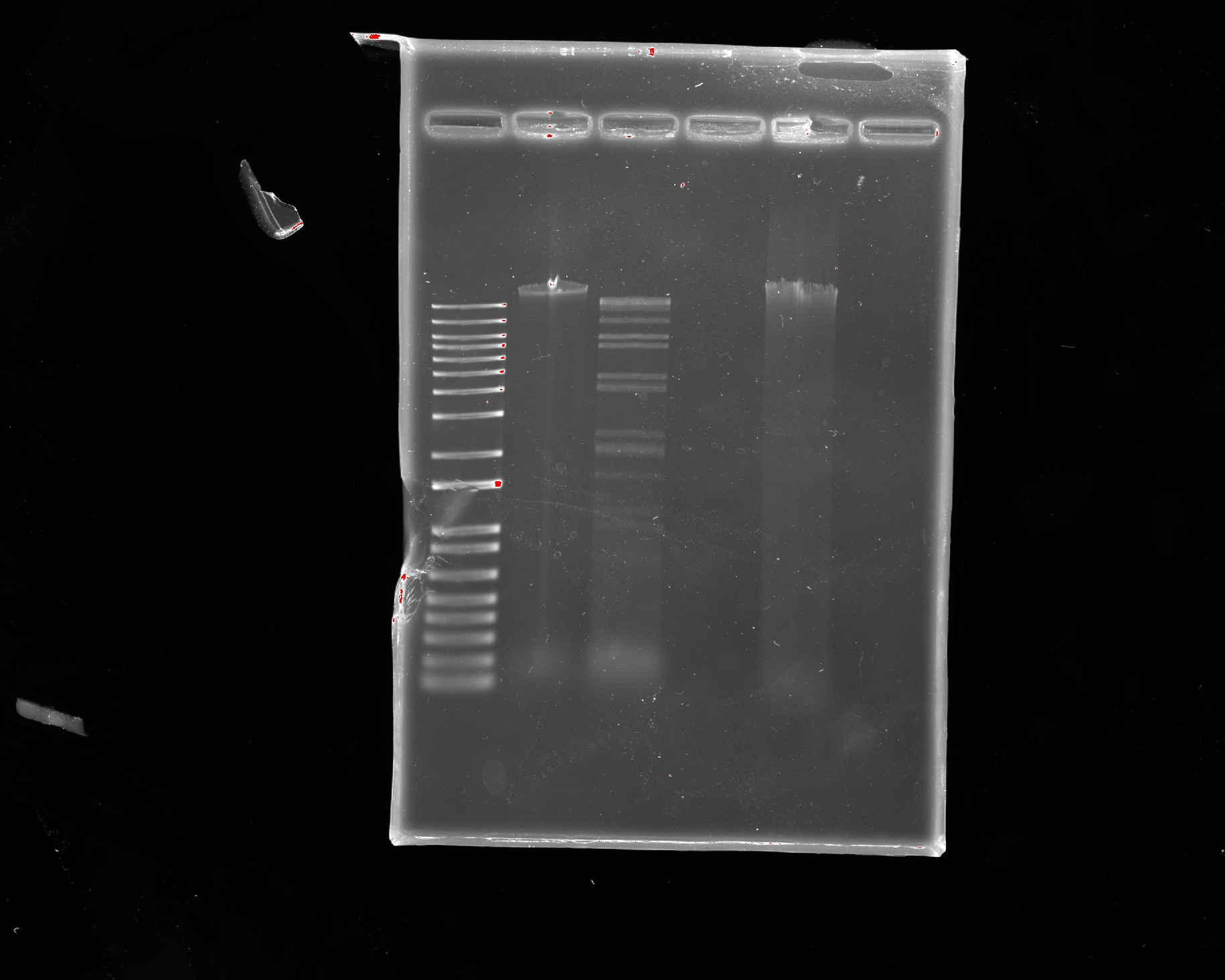
Protocol Part 3: Imaging My Results With a Transilluminator

Took gel and prepared to image results (see below)

DNAGelArt_Tuesday_12 DNAGelArt_Tuesday_12

Final Results

Final result (see below)

DNAGelArt_Tuesday_13 DNAGelArt_Tuesday_13

//

Benchling Protocol Notes (sourced from Wiliam & Mary Node TA, Kate Carline)

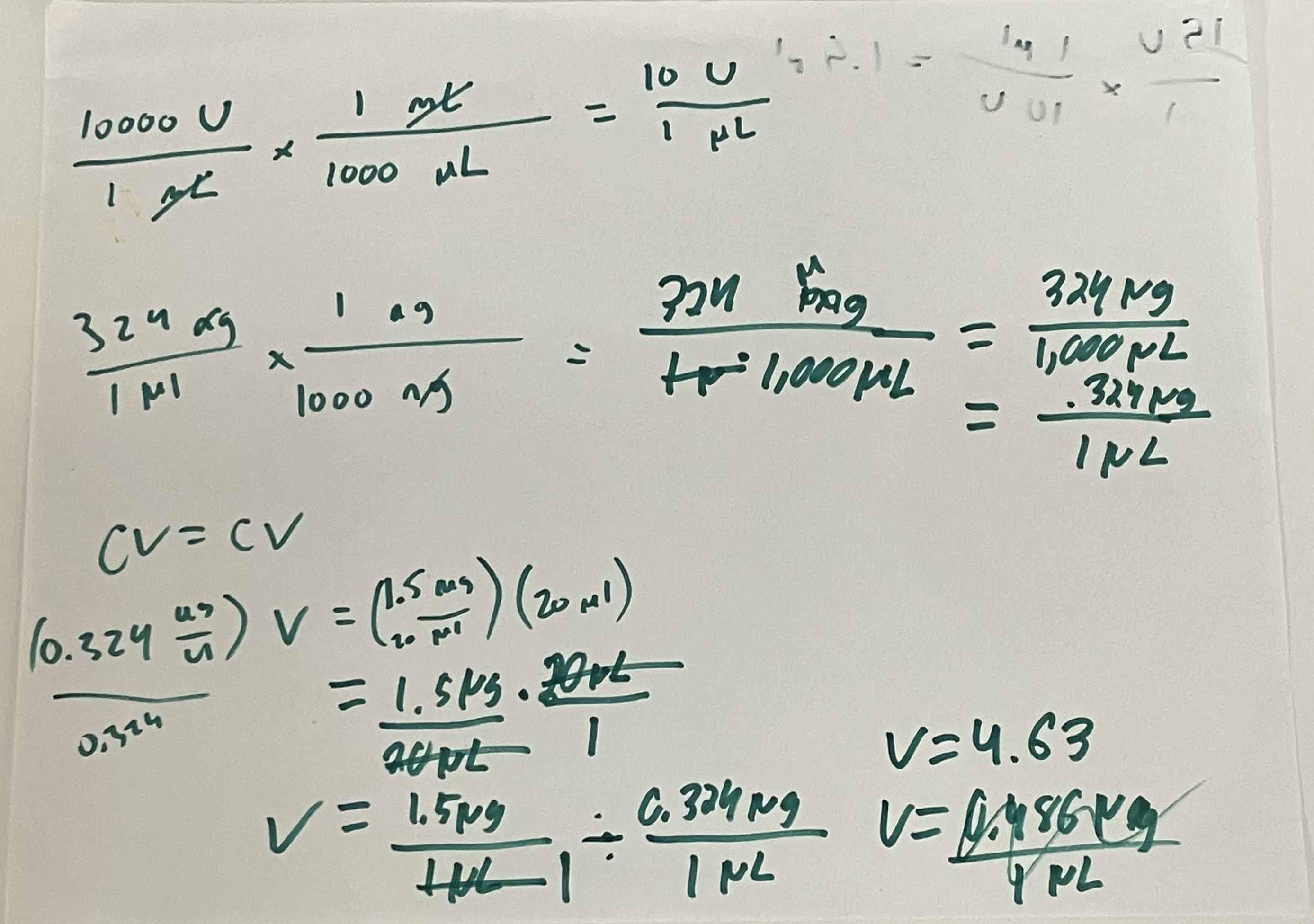
NotI-HF: rCutSmart, incubates at 37C, 20,000 U/ml = 10 U/ul Kpn1 (Promega): Buffer J, incubates at 37C, 12,000 U/ml = 12 U/ul Sal1 (Promega): Buffer D, incubates at 37C. 10,000 U/ml = 20 U/ul

1.5 ug DNA 324 ng/ul of Kampy B 4.62 ul DNA for N and K 141.4 ng/ul Kampy C (Nanodrop after running out of Kampy B) 10.61 ul for S

15 units of enzyme 1.5 uL Not1-HF 1.25 ul Kpn1 0.75 ul Sal1

2 ul of each 10X Buffer

Remaining to 20 ul NFW 11.88 ul Not1 12.13 ul Kpn1 6.64 ul Sal1

Spin down briefly in picofuge

Incubated for 30 min at 37C

1% agarose gel 2 ul dye with 10 ul reaction 40 min 185 mA 150V //

Week 3 Lab: Opentrons Art

Opentrons Art Lab

Part 1: Flourescent Bacteria & Black Agar Script

See Flourescent Bacteria & Black Agar Script Colab Notebook Script here 1 2

Part 2: Submission and Running Your Protocol

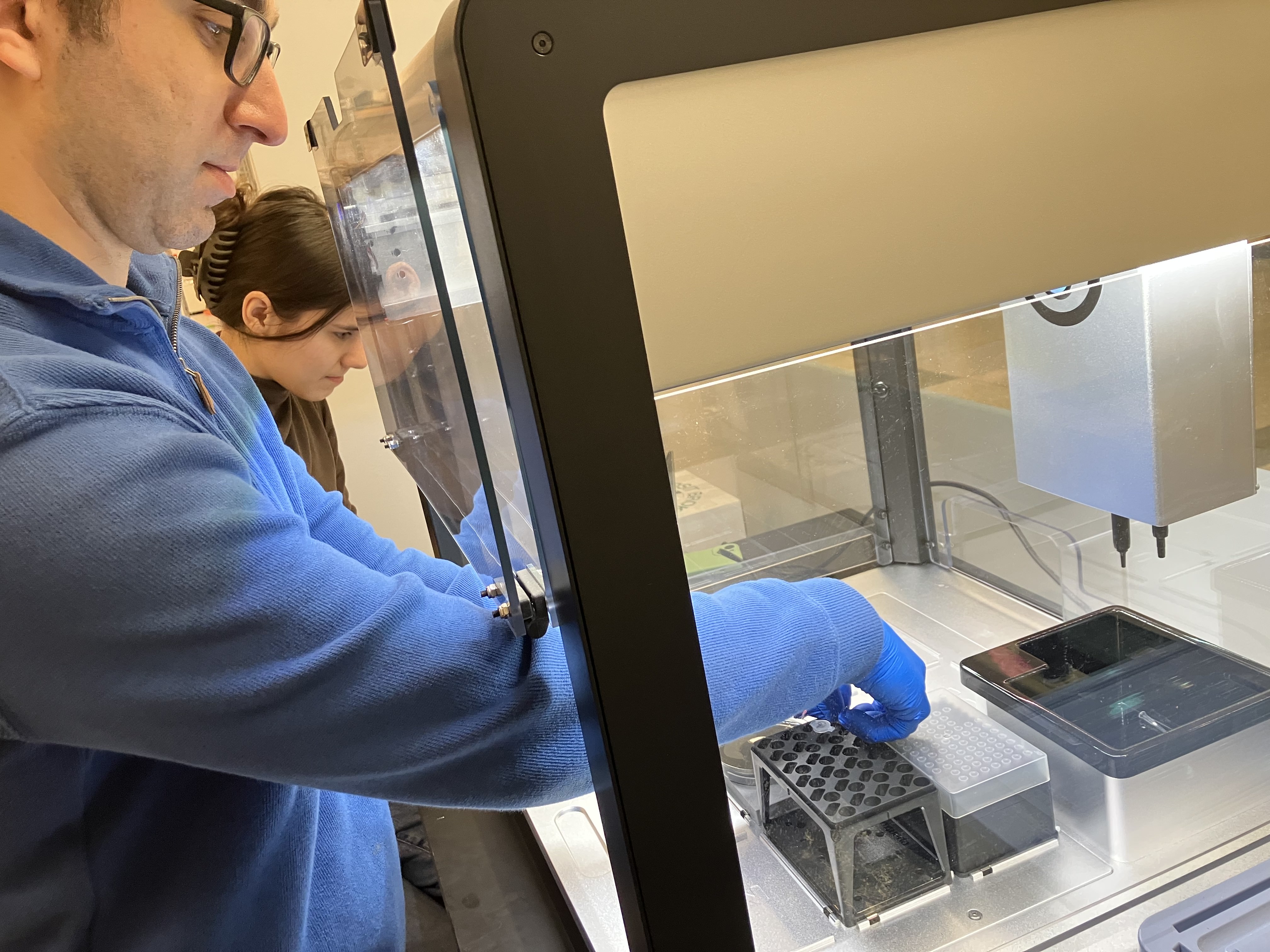
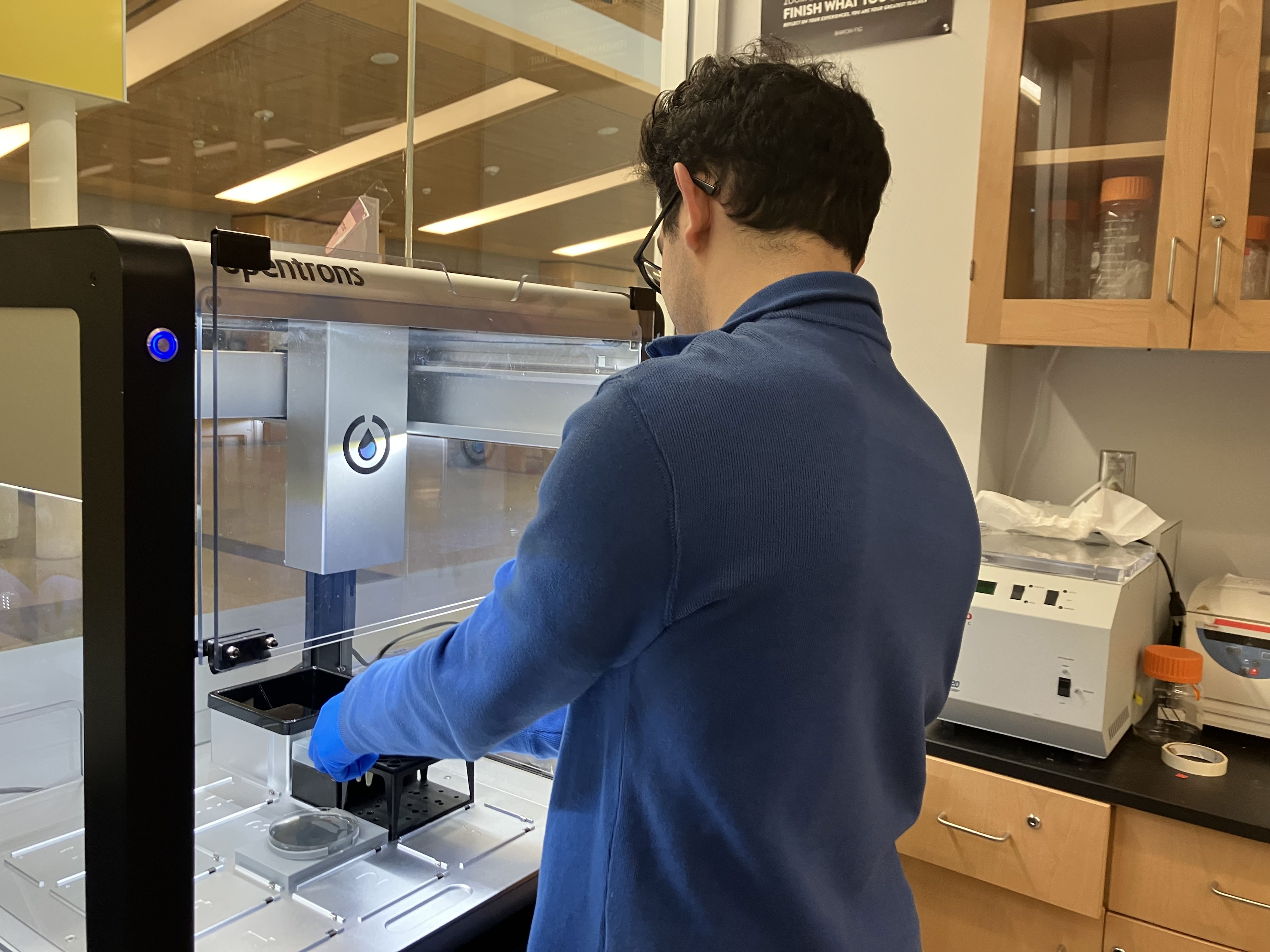
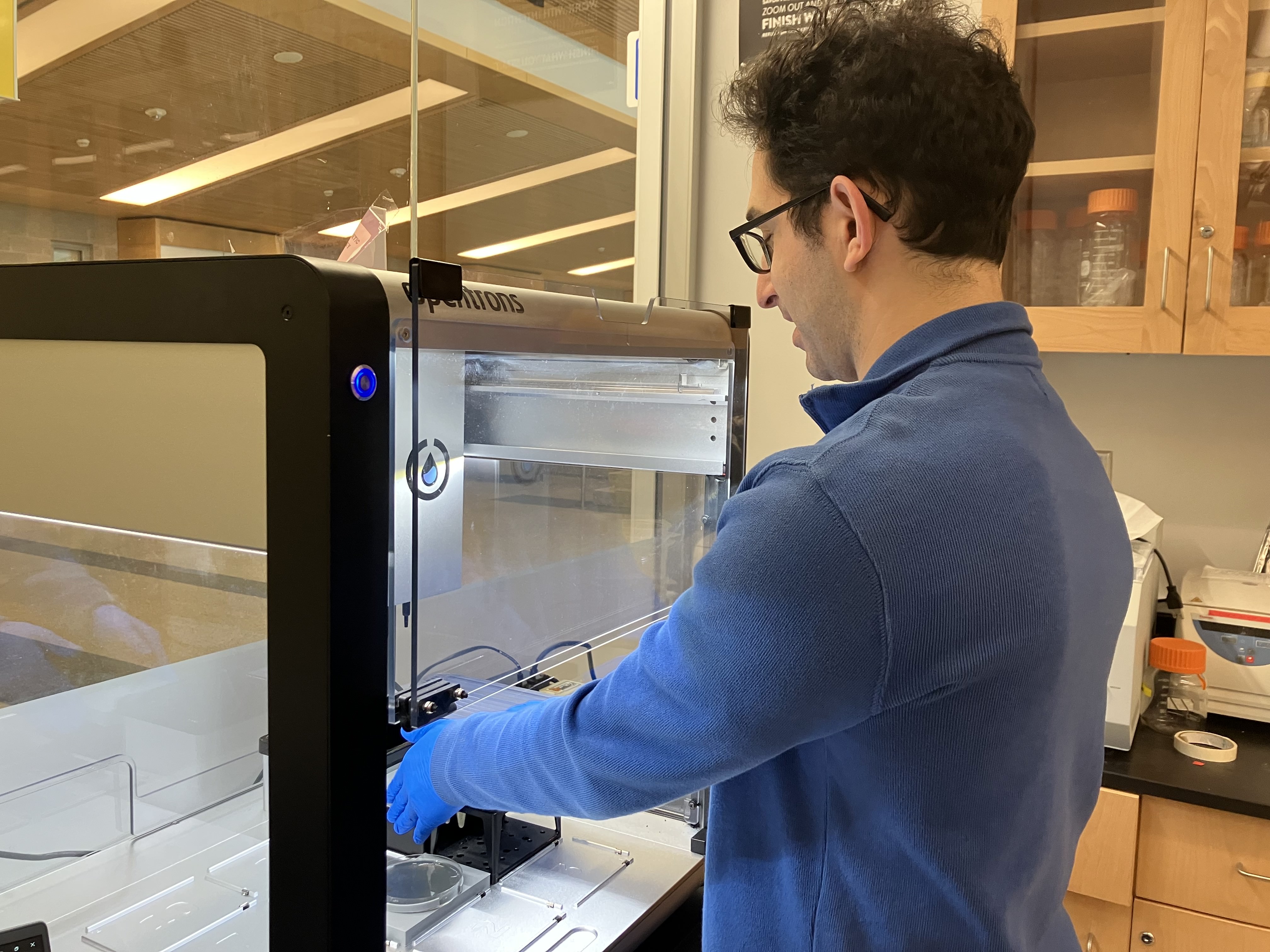
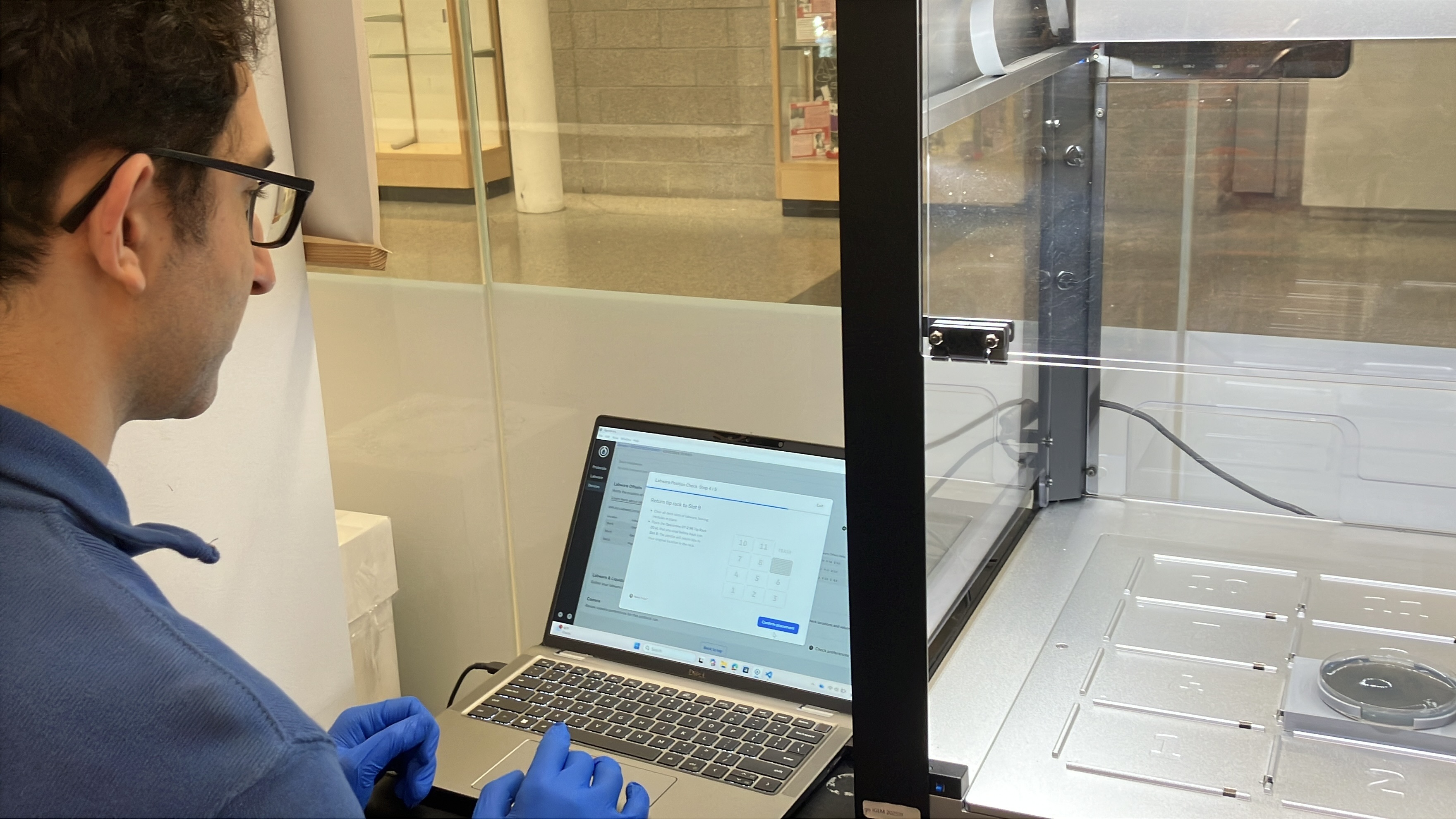
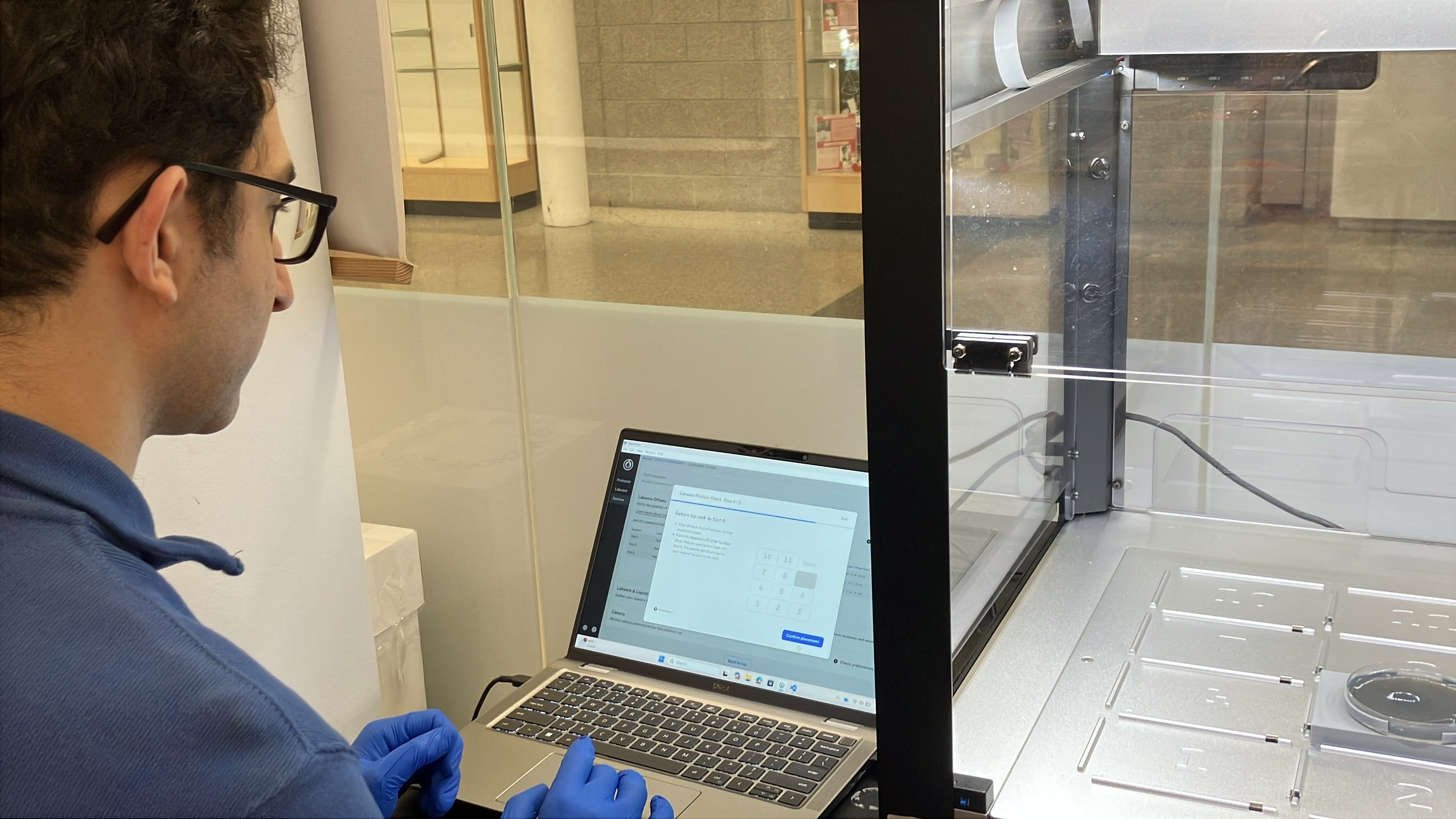
Traveled to William & Mary Node to complete this lab, as well as the Pipetting and DNA Gel Art Labs. During my time working this lab, I:

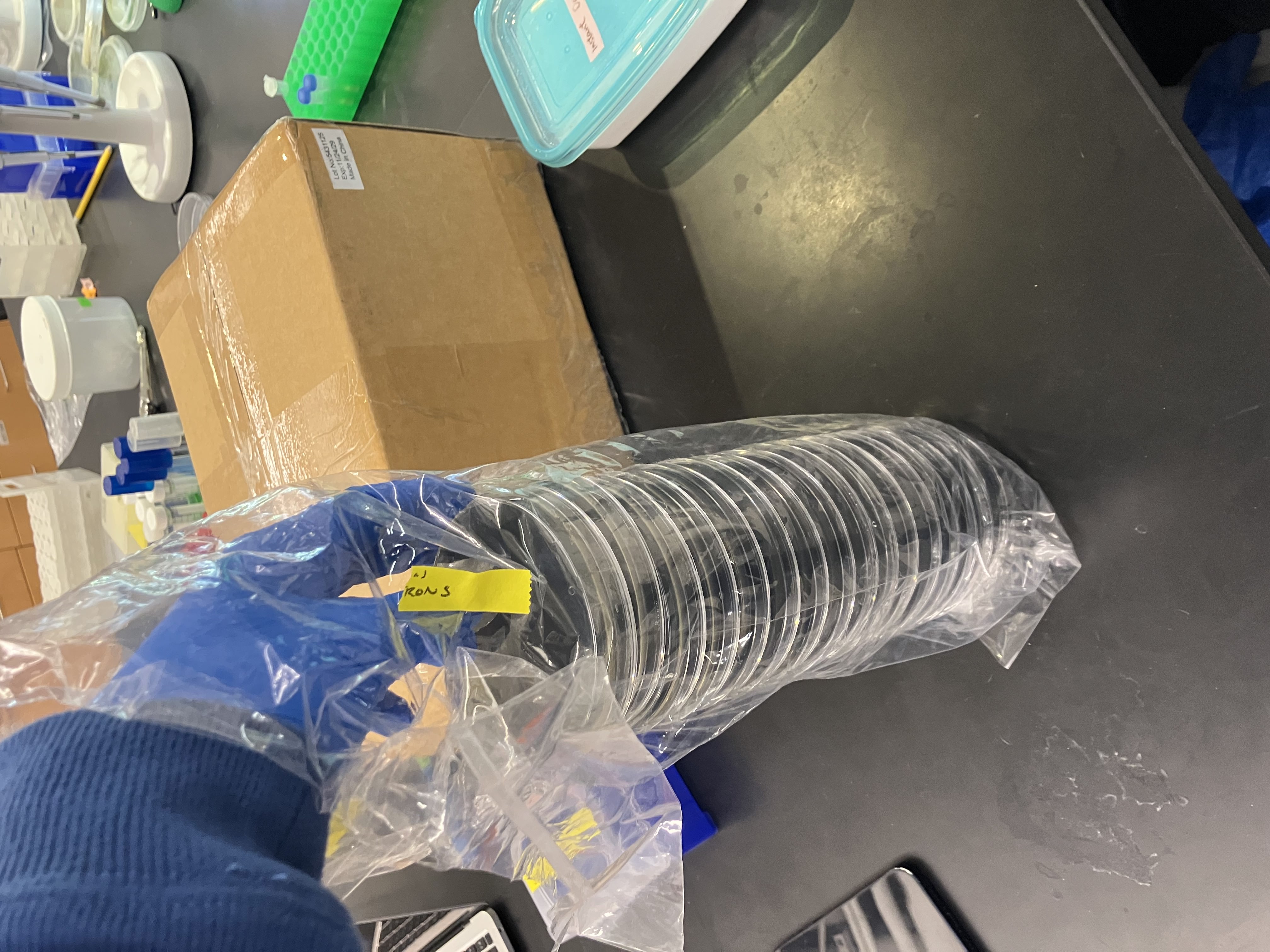
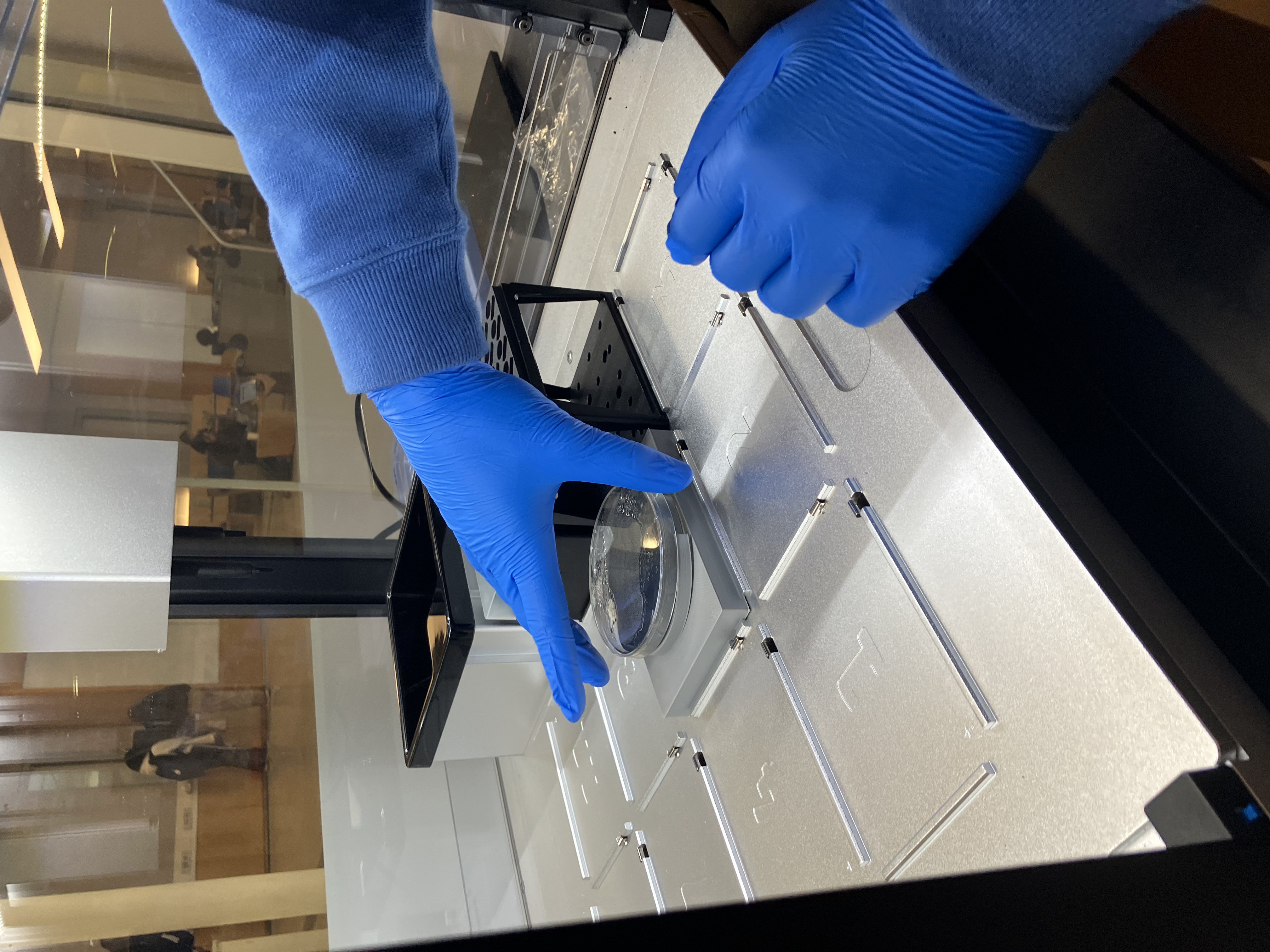
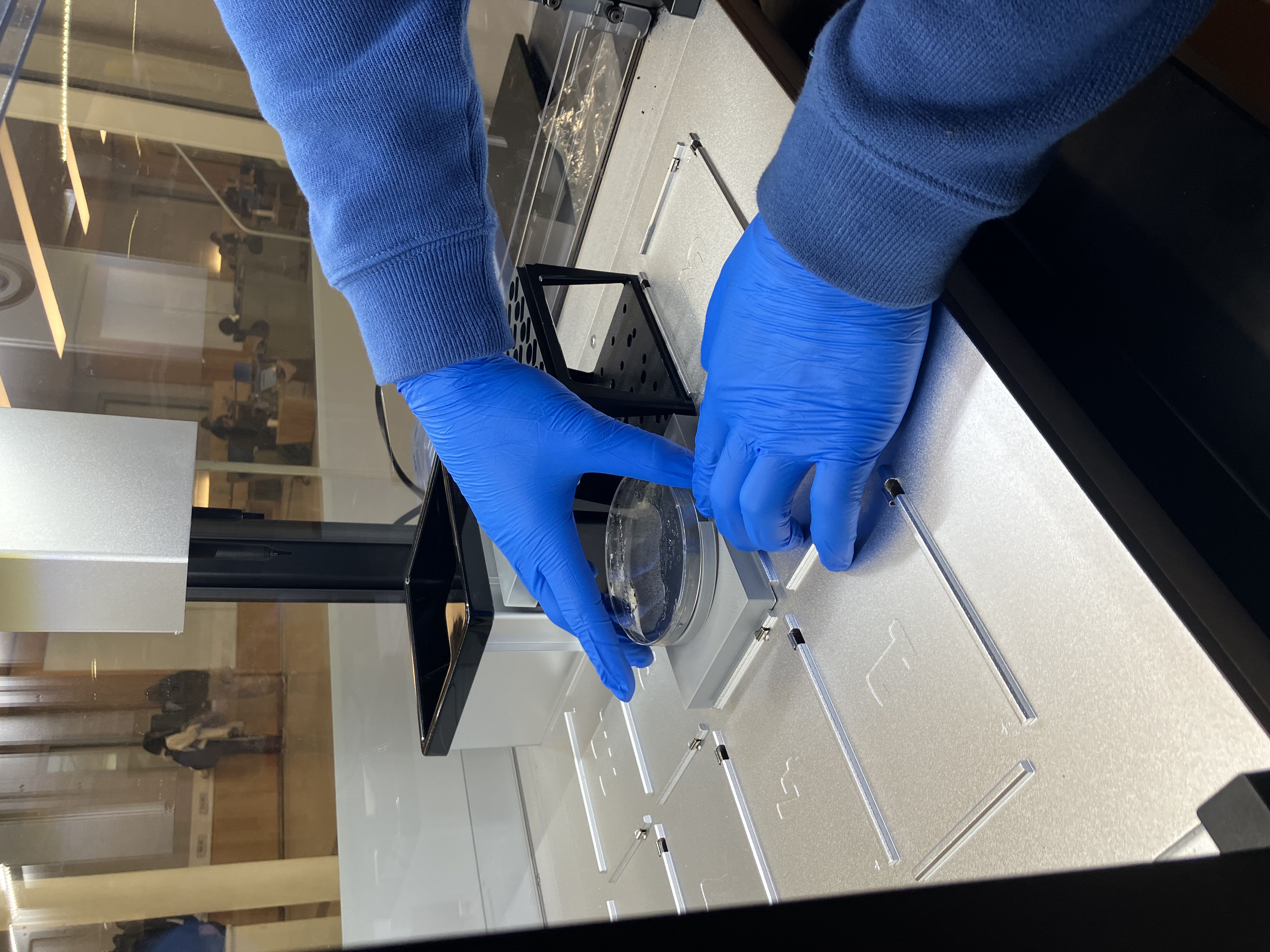
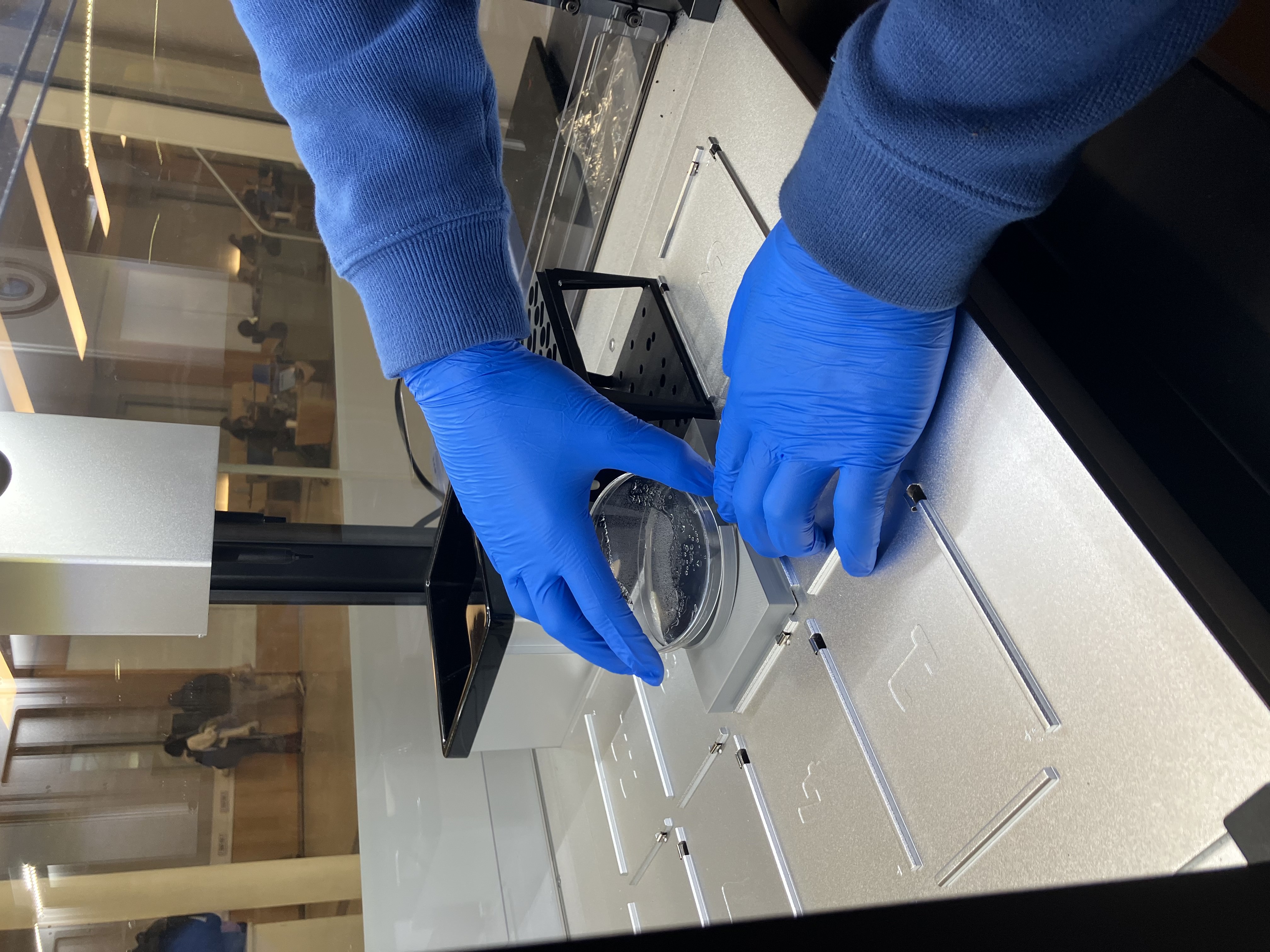
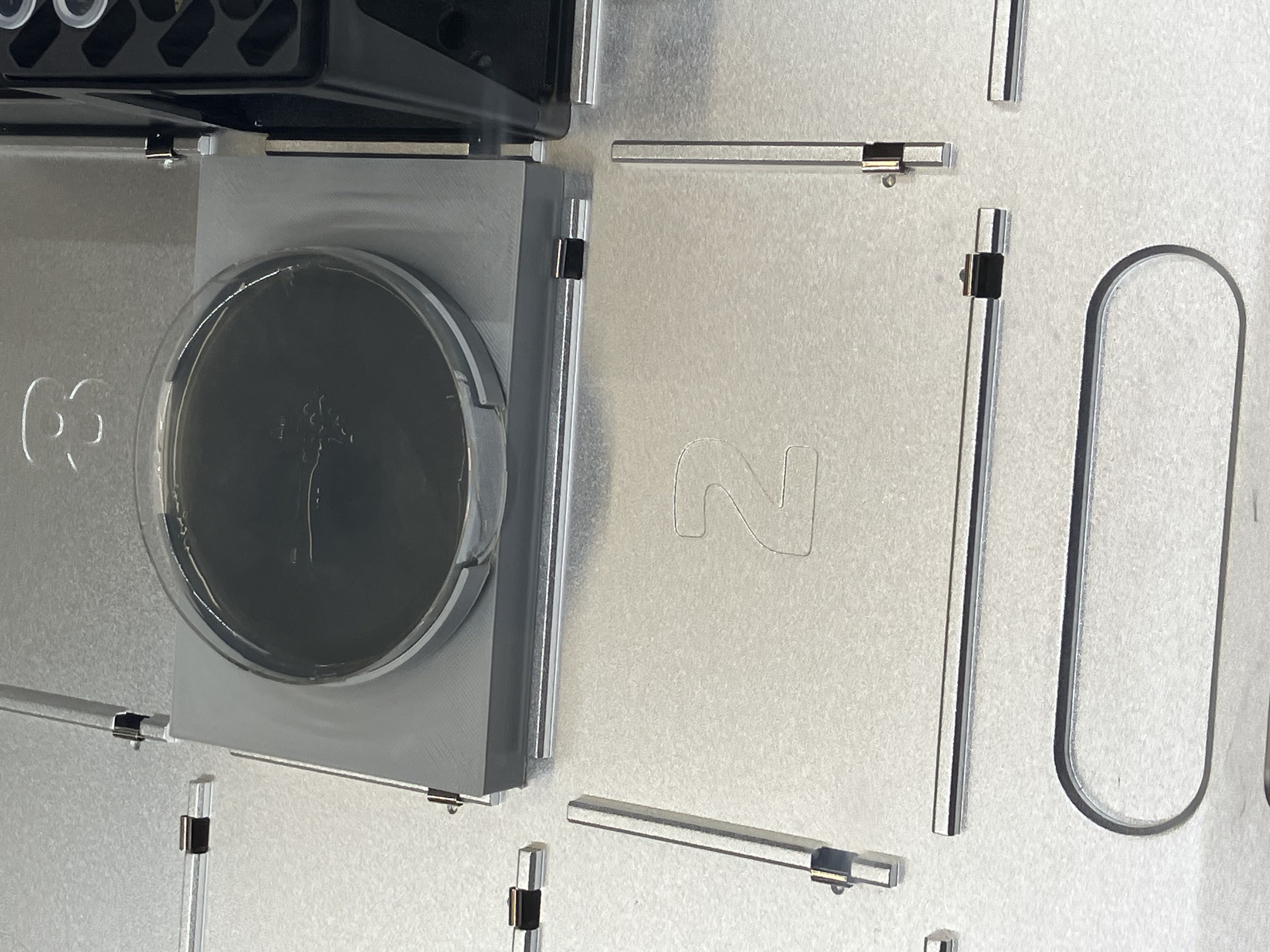
  • Selected plates for the Opentrons robot
  • Operated the Opentrons robot with the help of William & Mary students
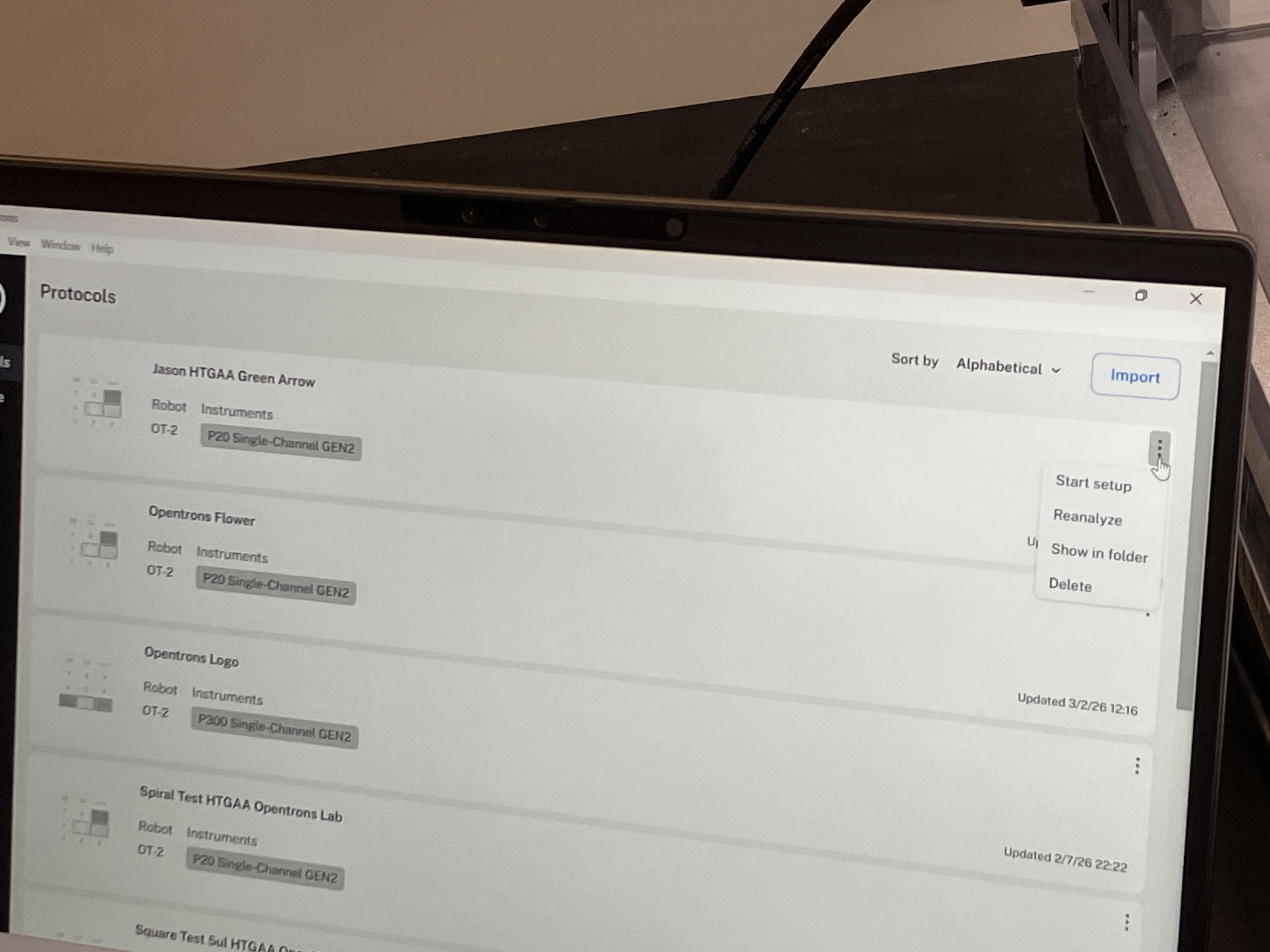
  • Ran my Opentrons code
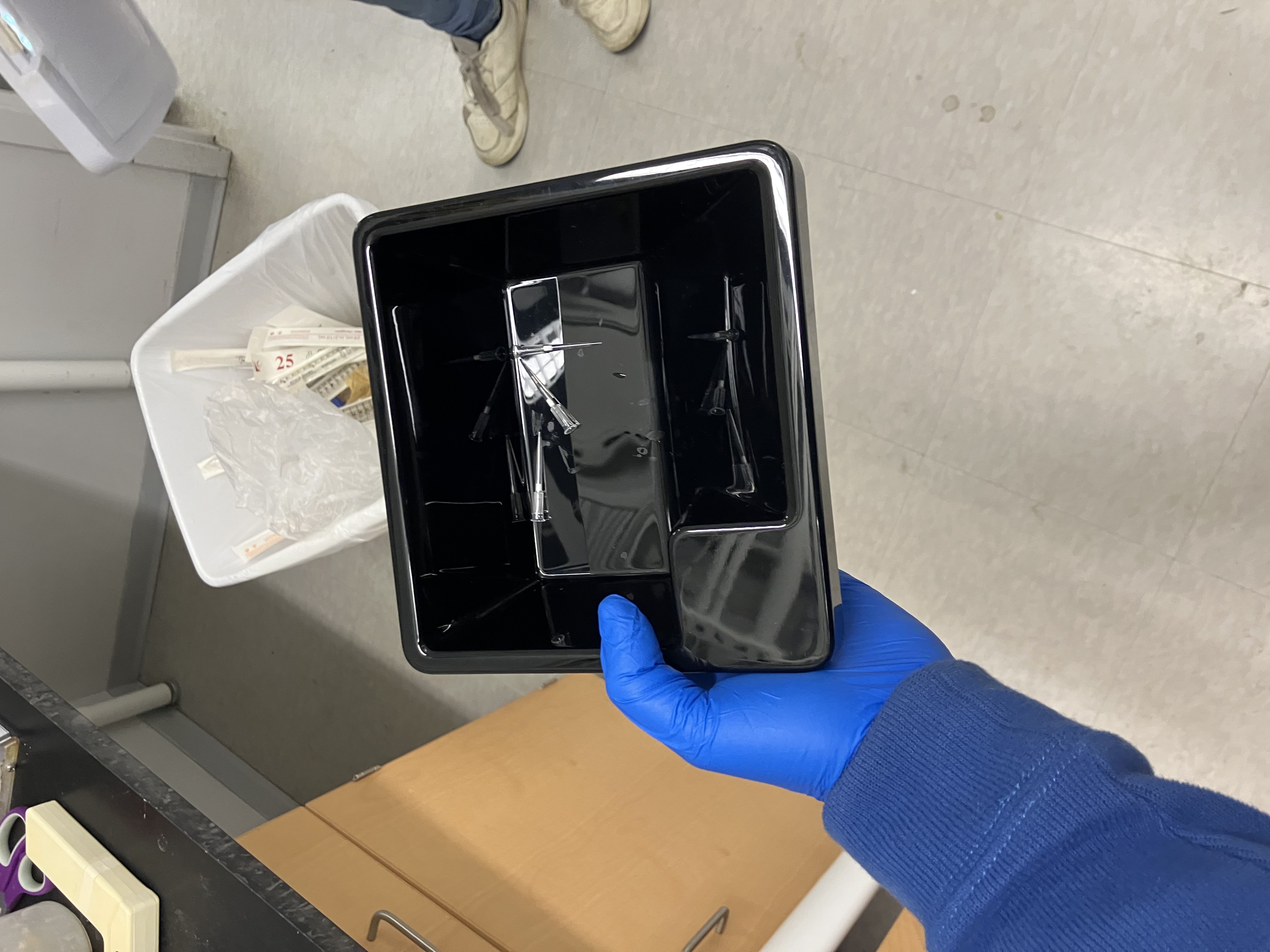
  • Dispensed Opentrons tips

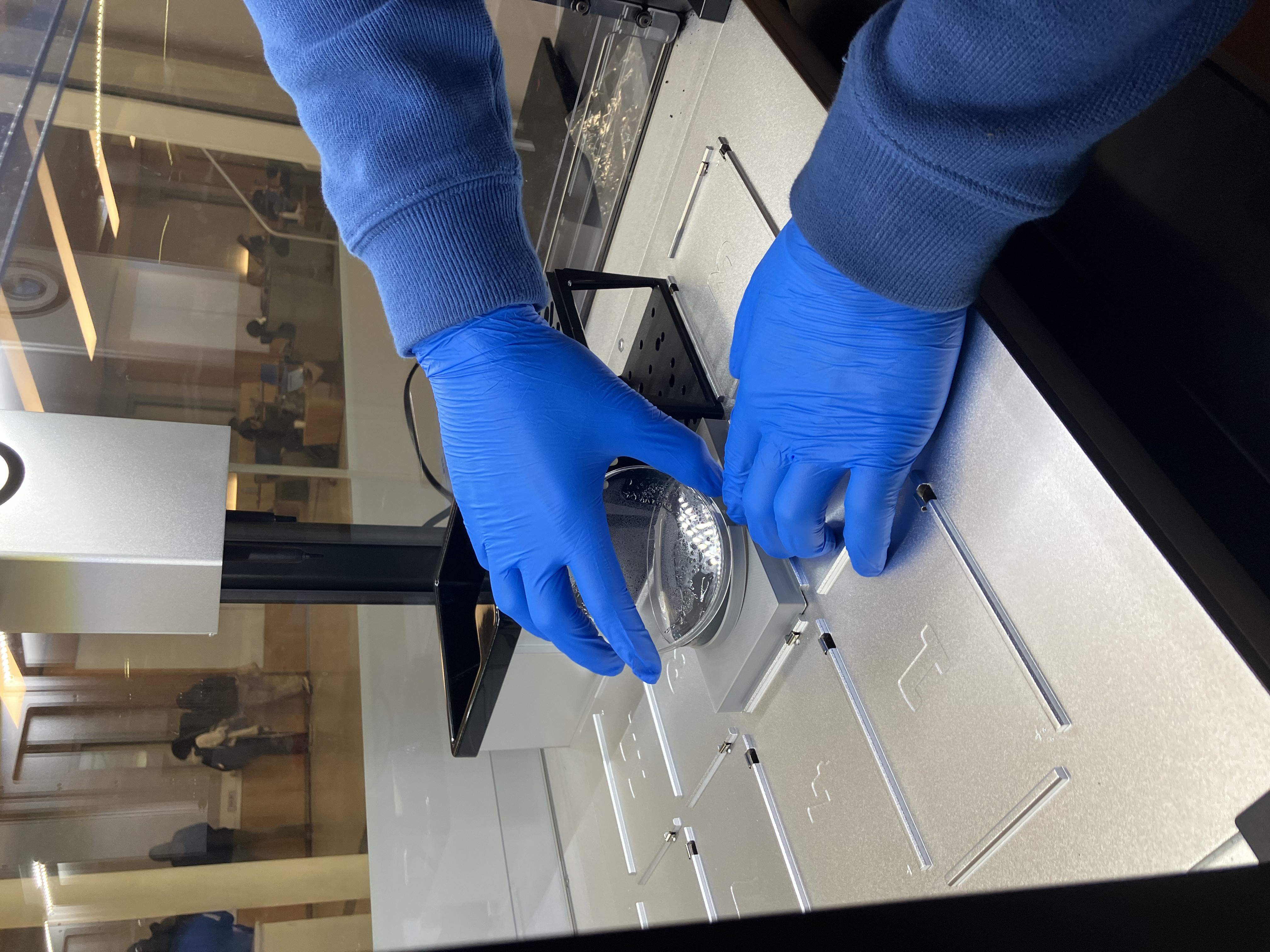
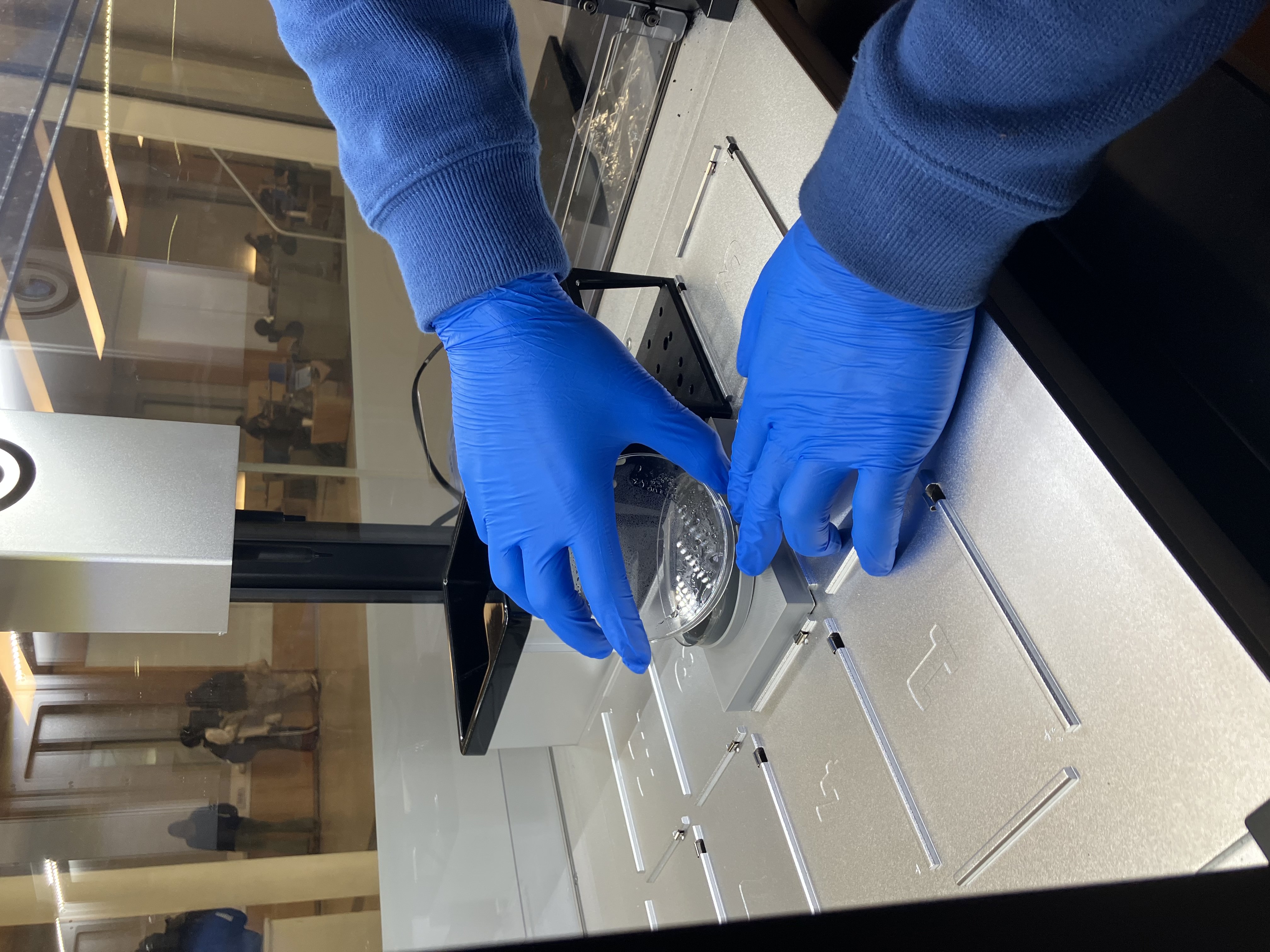
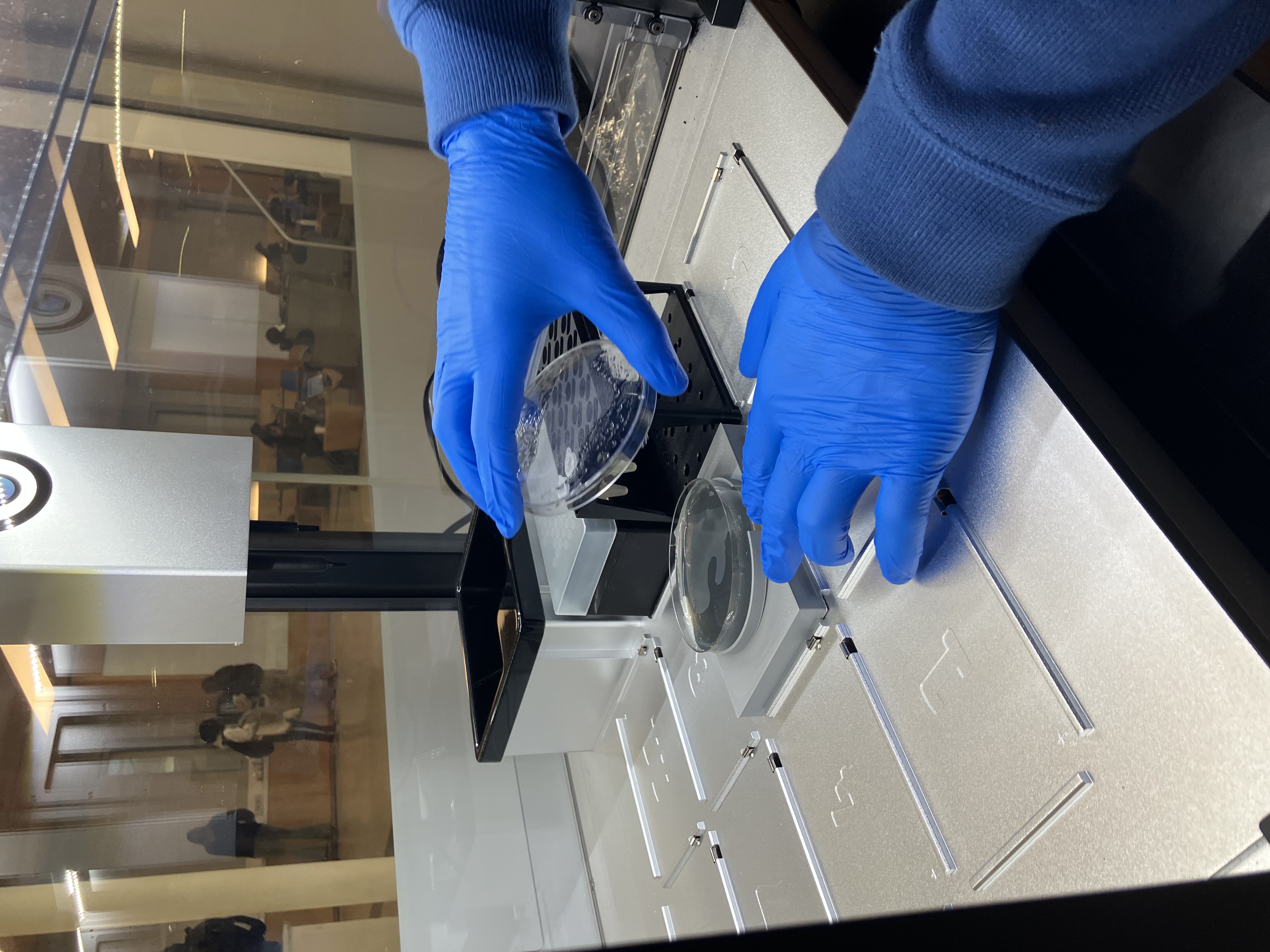
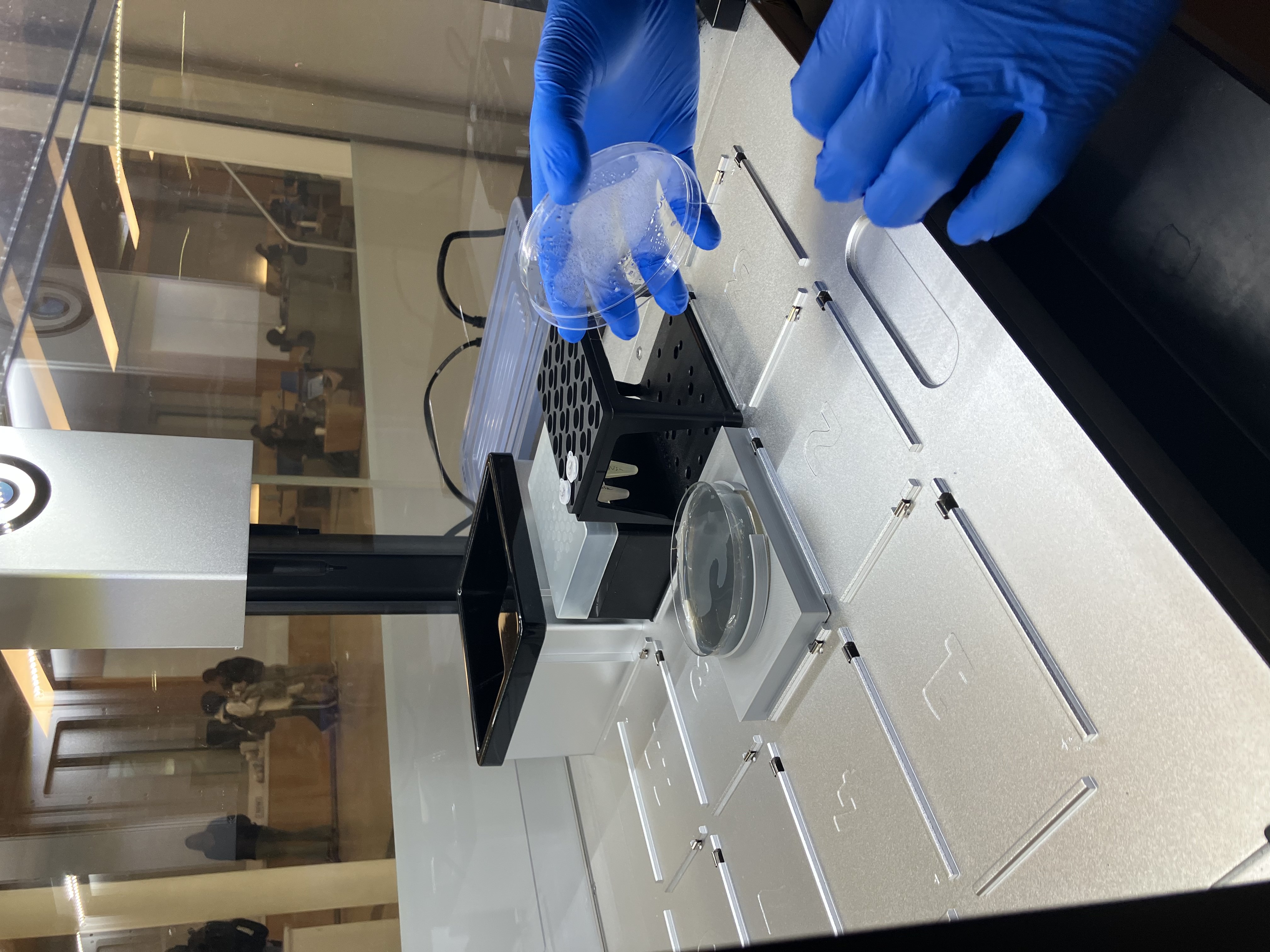
Protocol photos and mp4 video loops shown below:

Opentrons_Monday_1 Opentrons_Monday_1Opentrons_Monday_2 Opentrons_Monday_2Opentrons_Monday_3 Opentrons_Monday_3Opentrons_Monday_4 Opentrons_Monday_4Opentrons_Monday_5 Opentrons_Monday_5Opentrons_Monday_6 Opentrons_Monday_6Opentrons_Monday_7 Opentrons_Monday_7Opentrons_Monday_8 Opentrons_Monday_8Opentrons_Monday_9 Opentrons_Monday_9Opentrons_Monday_10 Opentrons_Monday_10Opentrons_Monday_11 Opentrons_Monday_11Opentrons_Monday_12 Opentrons_Monday_12Opentrons_Monday_13 Opentrons_Monday_13Opentrons_Monday_14 Opentrons_Monday_14Opentrons_Monday_16 Opentrons_Monday_16output2_Opentrons output2_Opentronsoutput1_Opentrons-2 output1_Opentrons-2Opentrons_Monday_17 Opentrons_Monday_17

Part 3: Final Result

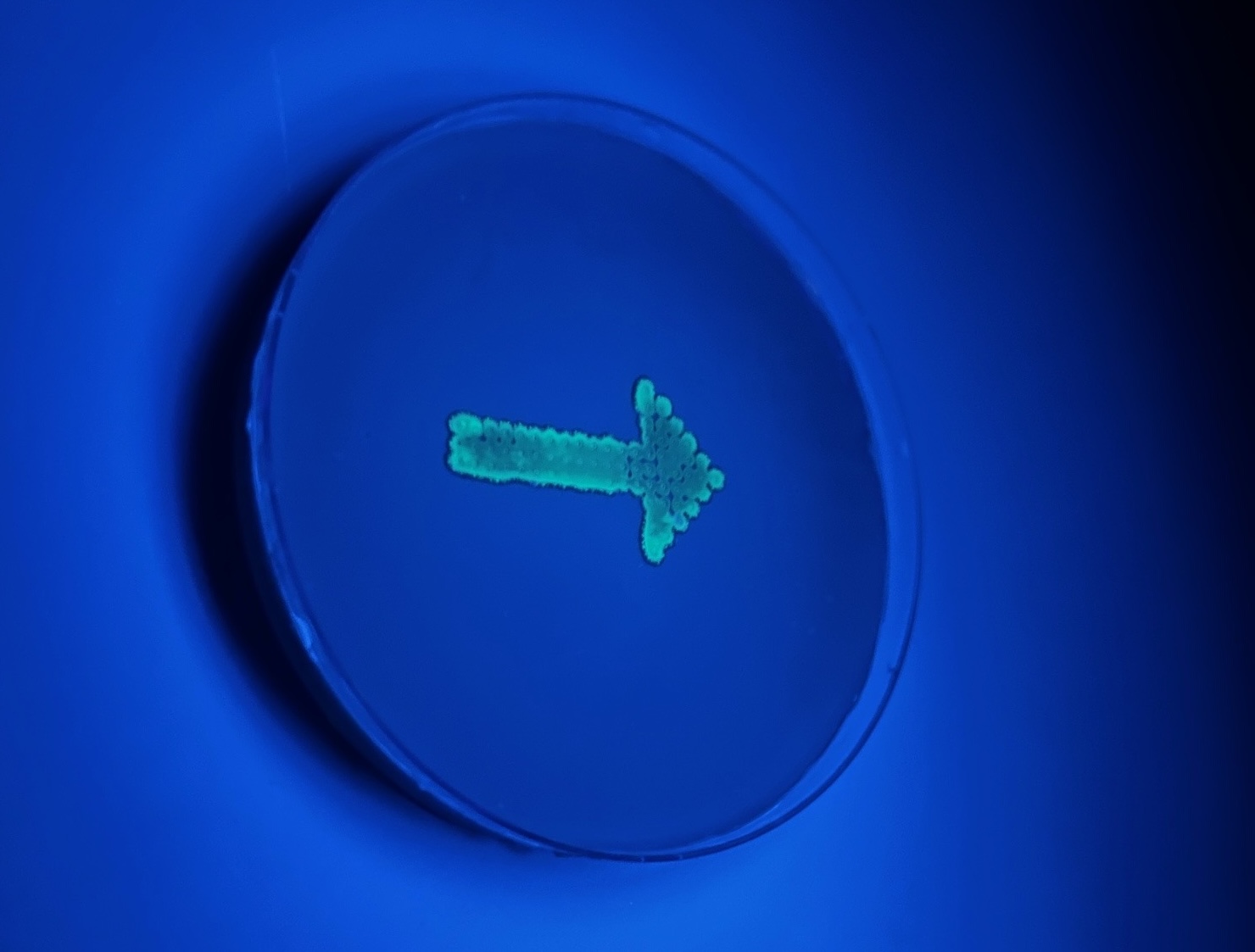
Here’s the final result, showing my Opentrons Art!

IMG_4967 IMG_4967

  1. https://colab.research.google.com/drive/1-pgSJt_aF9MydtG0szxz2YKoogNRLRhH?usp=sharing ↩︎

  2. Gemini was used to help code a good chunk of the Opentrons code. At William & Mary, we did need to re-configure the code slightly to make it work on the Opentrons ↩︎

Week 6 Lab: Gibson Assembly

Gibson Assembly Lab

Pre-Lab: Primer and PCR (Part 1 of 3)

  • Read this section and scanned the NuPack software hyperlink

Pre-Lab: Gibson Assembly (Part 2 of 3)

  • Read this section

Pre-Lab: DpnI

  • Read this section

Pre-Lab: Plasmid Transformation

  • Read this section

Part 1: Polymerase Chain Reaction (PCR)

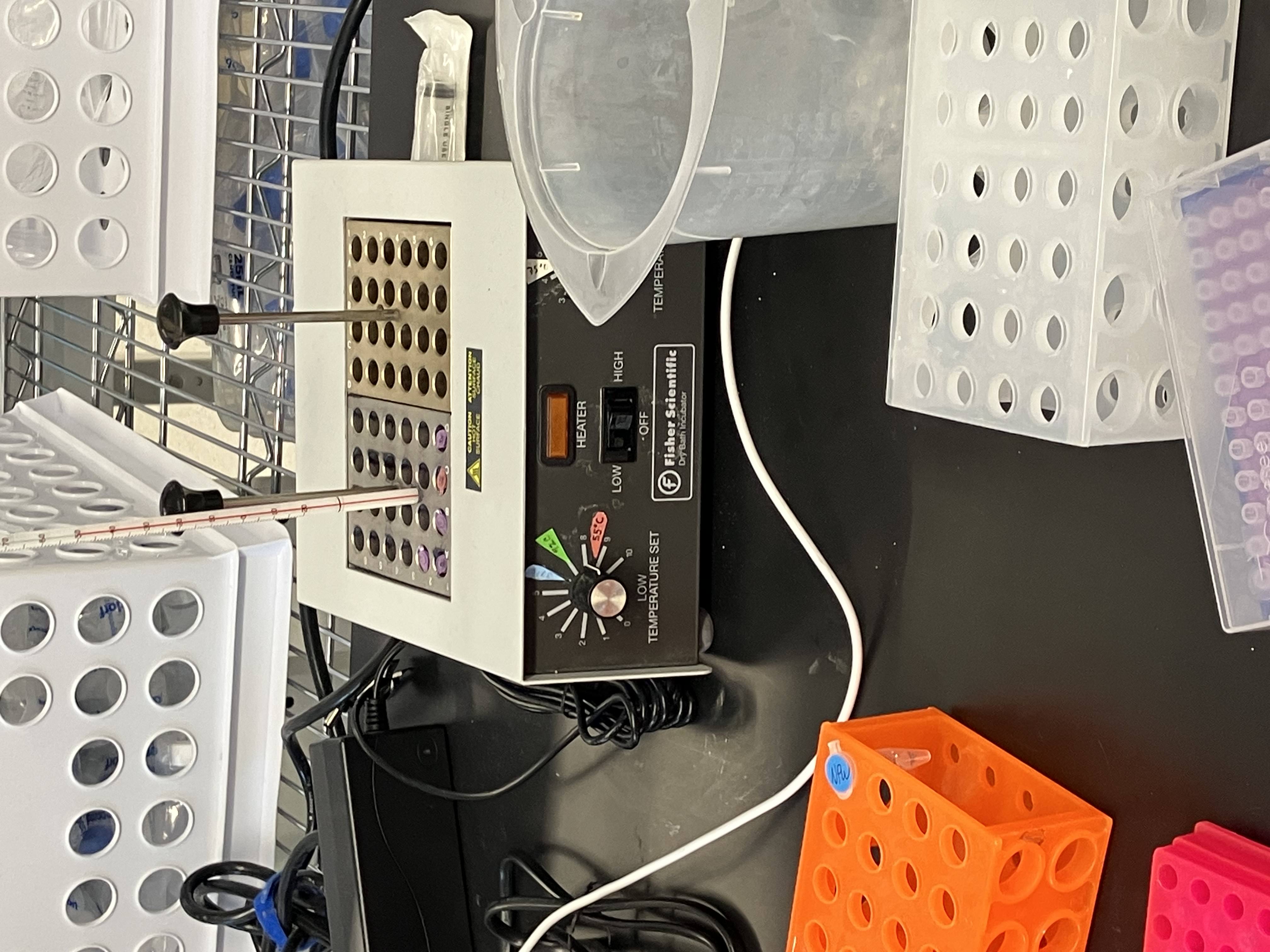
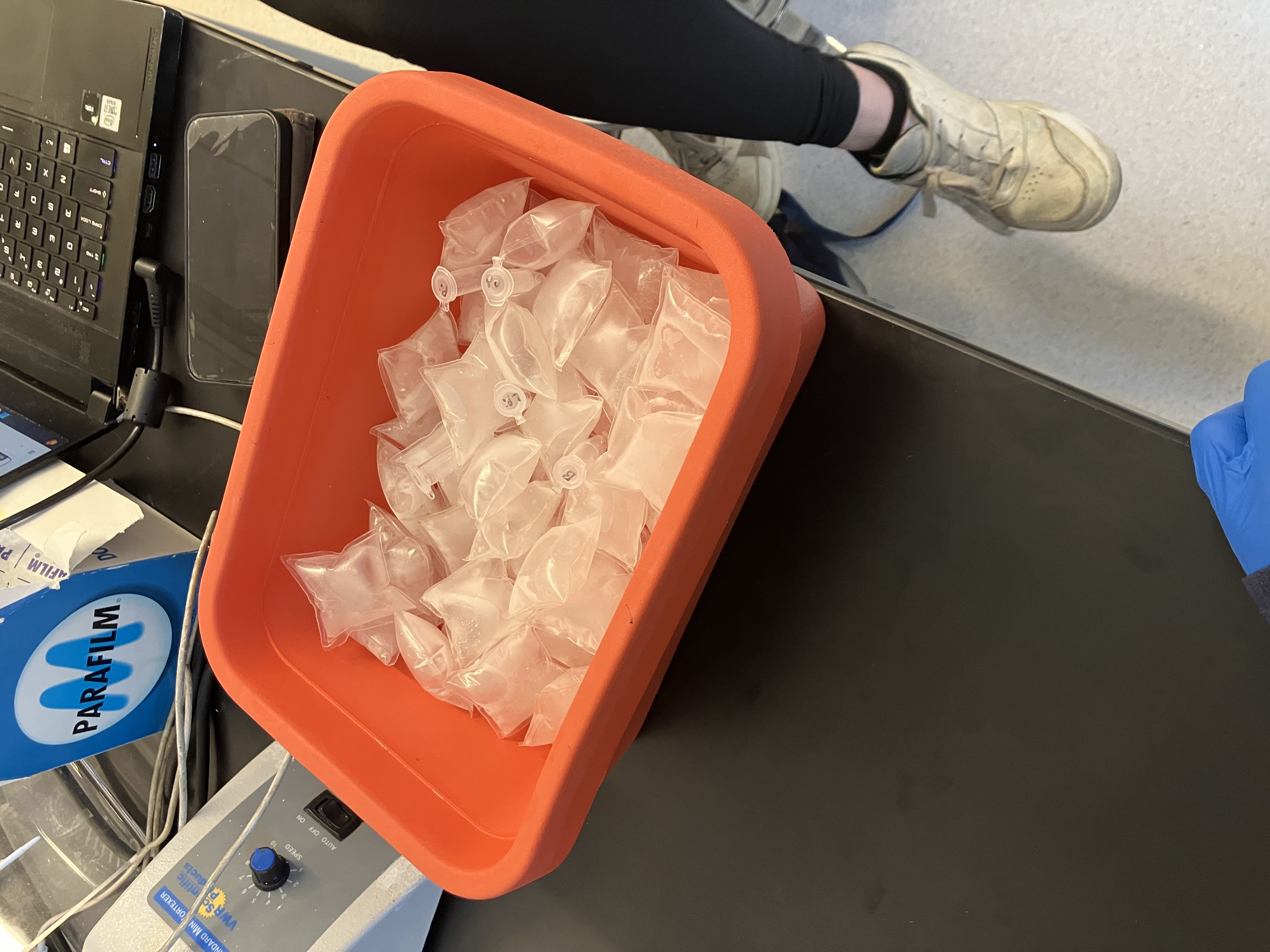
Prepared PCR (see photos below)

GibsonLab_1 GibsonLab_1GibsonLab_2 GibsonLab_2GibsonLab_3 GibsonLab_3GibsonLab_4 GibsonLab_4GibsonLab_5 GibsonLab_5GibsonLab_6 GibsonLab_6GibsonLab_7 GibsonLab_7GibsonLab_8 GibsonLab_8GibsonLab_9 GibsonLab_9GibsonLab_10 GibsonLab_10

Part 1a: DpnI Digest

Completed DpnI Digest (see photos below)

GibsonLab_11 GibsonLab_11GibsonLab_12 GibsonLab_12

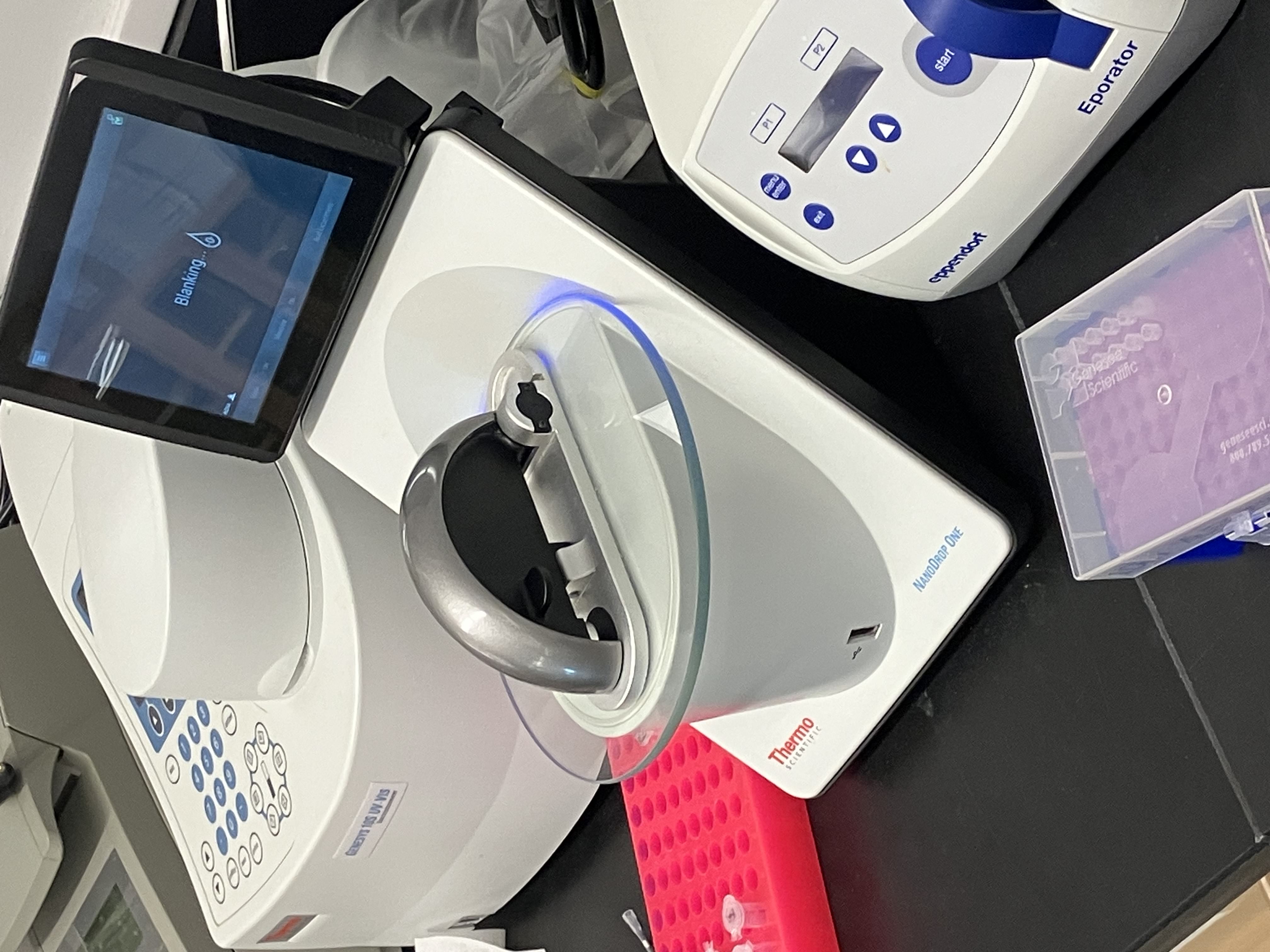
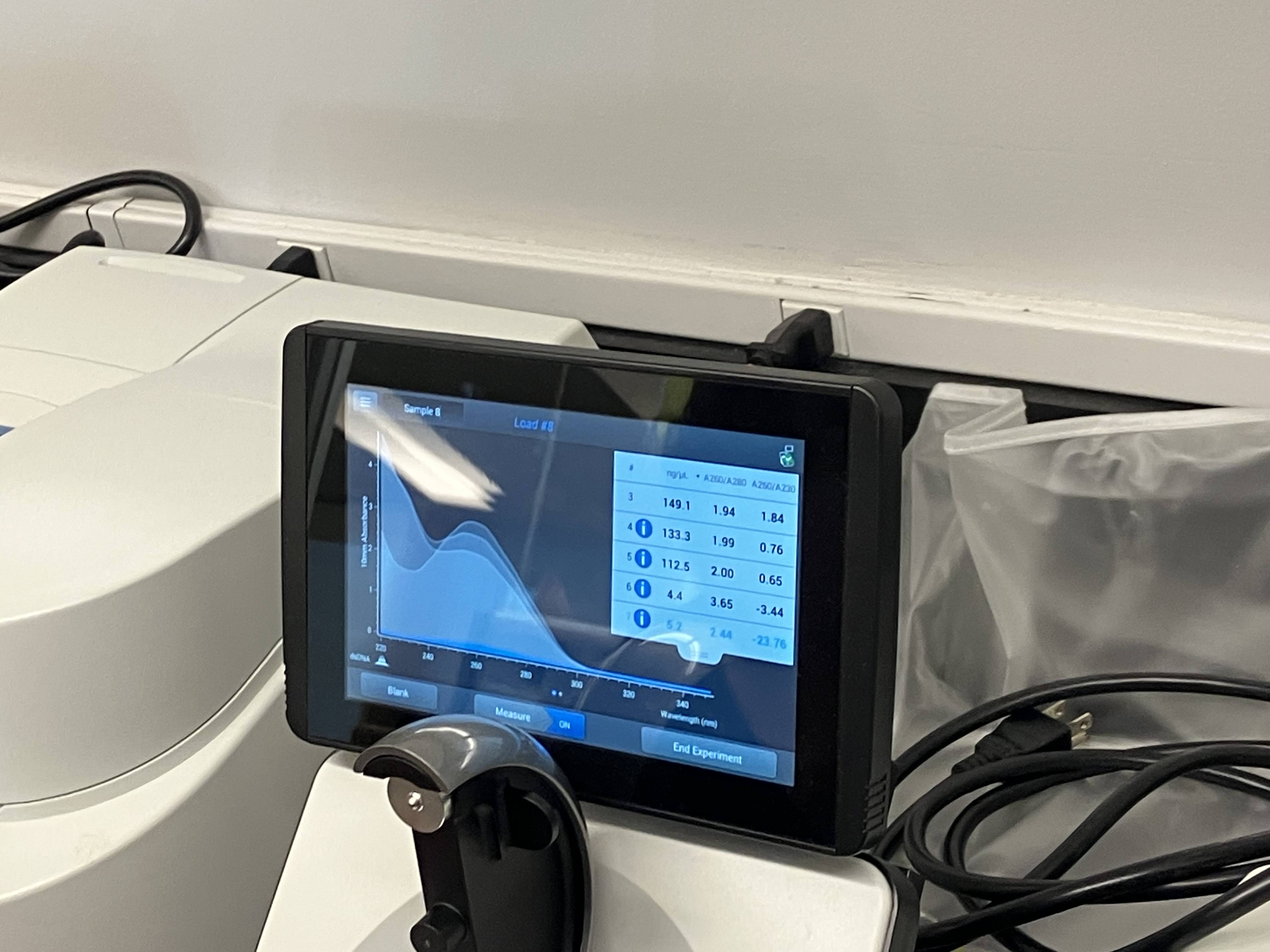
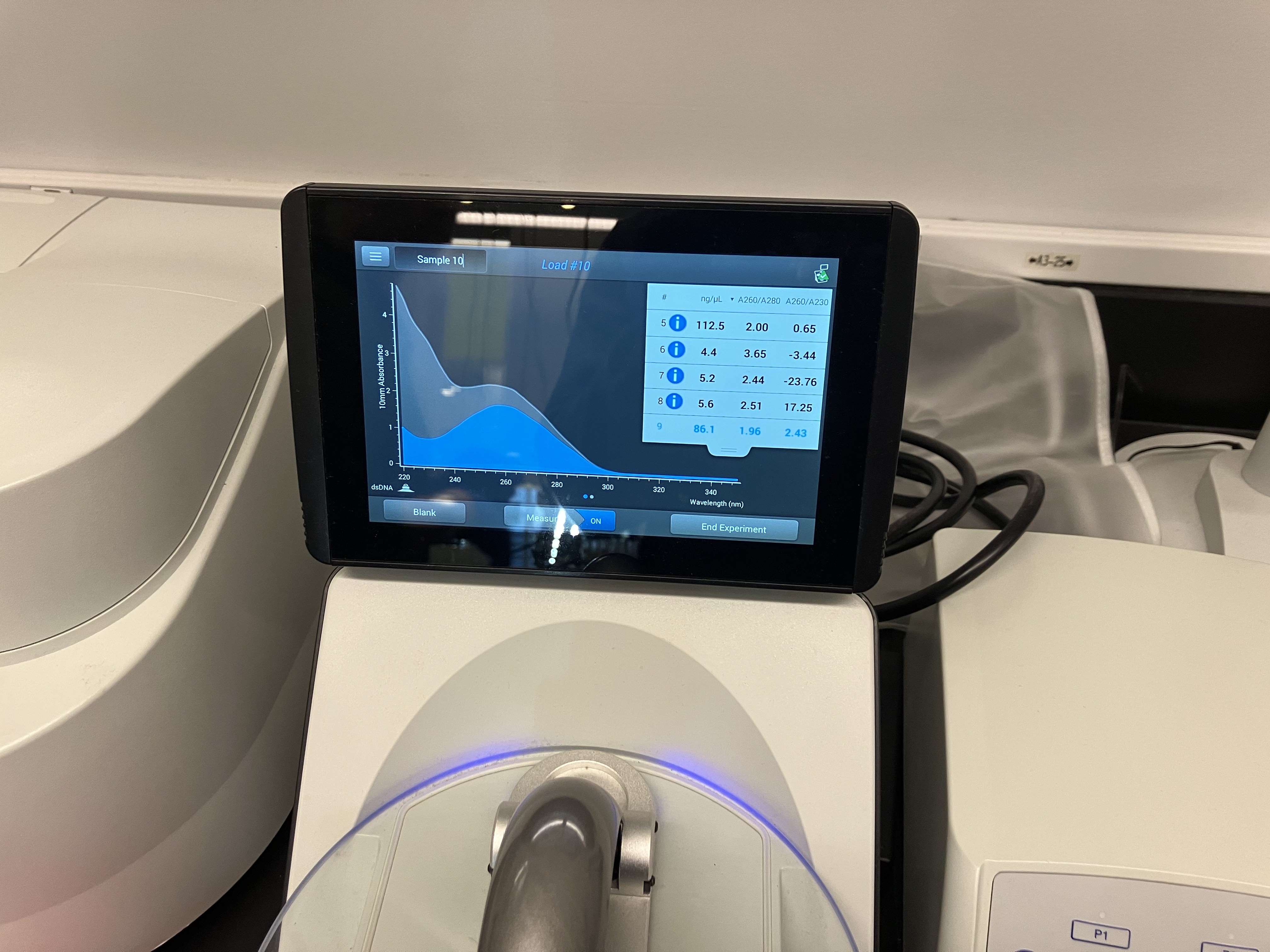
Part 1b: DNA Purification and Quantification

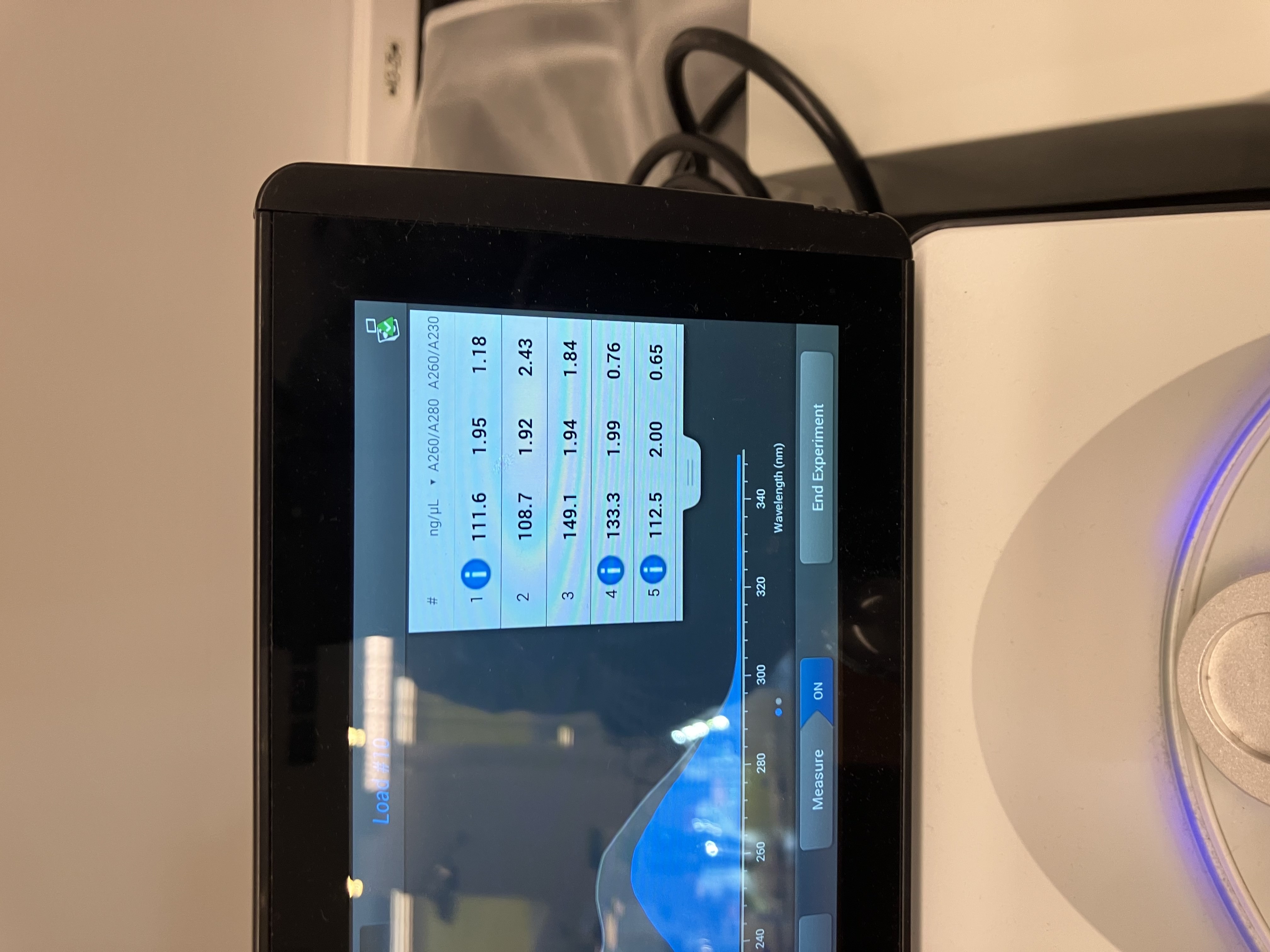
Purified and quantified DNA. It seems at this point that I did something wrong in one of the proceeding protocol stages with my non-Blue chosen color, so instead of proceeding with both colors, I only proceeded with Blue, as the other color did not have an adequate concentration. See photos below for more documentation of this protocol step

GibsonLab_13 GibsonLab_13GibsonLab_14 GibsonLab_14GibsonLab_15 GibsonLab_15GibsonLab_16 GibsonLab_16GibsonLab_17 GibsonLab_17

Part 2a: Gibson Assembly

Completed Gibson Assembly. Incubated reaction per protocol (see photo below)

GibsonLab_18 GibsonLab_18

Part 2b: Transformation

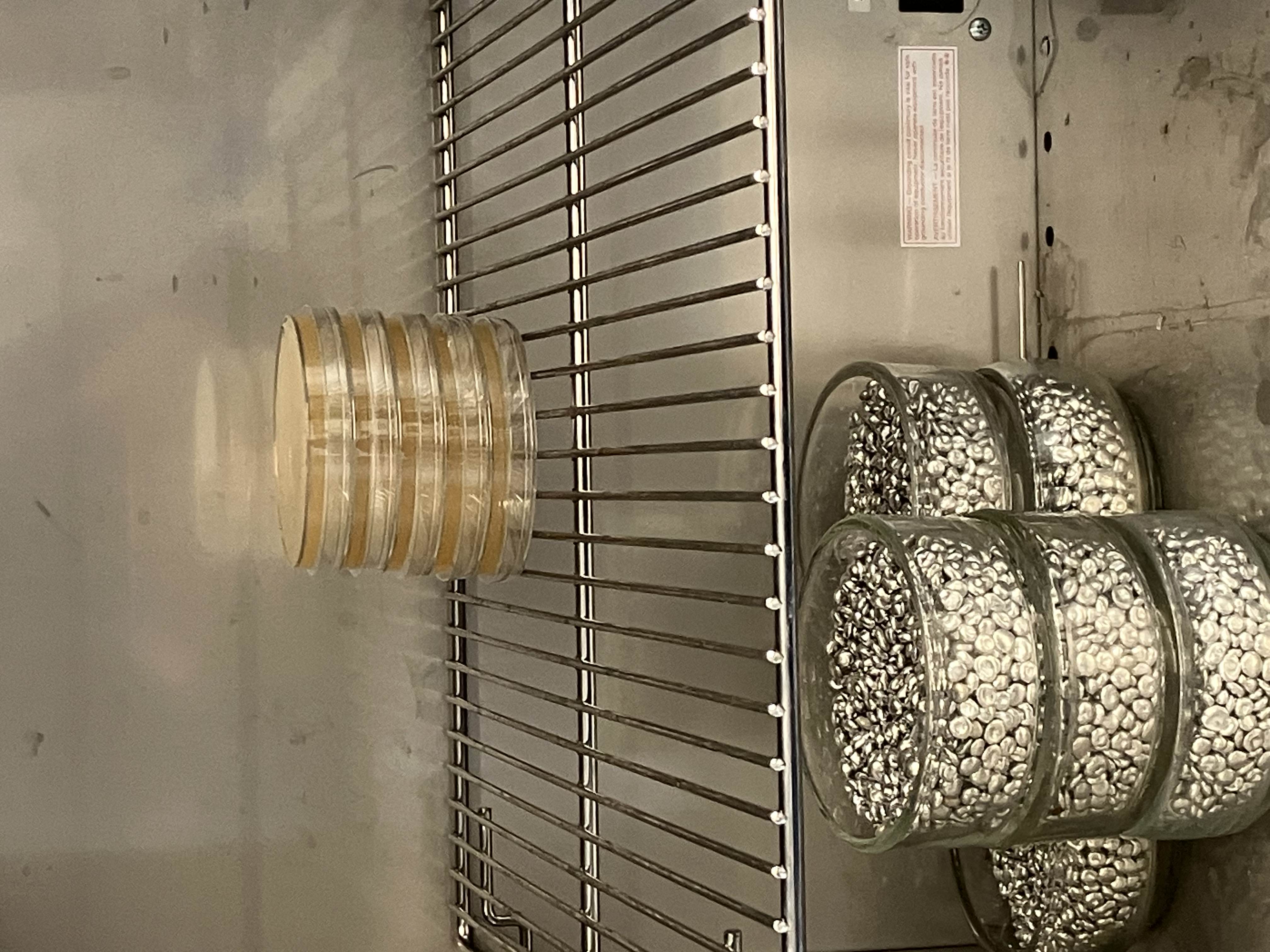
Completed Transformation protocol step

GibsonLab_19 GibsonLab_19GibsonLab_20 GibsonLab_20GibsonLab_21 GibsonLab_21

Final Results

LOREM

//

Supporting prompts for analyzing the lab protocol listed below for reference

Supporting PromptModel
There’s a part of this page that says “After PCR, we treat each reaction with DpnI to eliminate carryover of the original mUAV plasmid.”. That’s Dpnl, not DpnI right? Is it a lower-case l or a capital I?Gemini 2.5 Flash
Remind me what an oligonucleotide is again in simple terms. Keep the response to this prompt short and do NOT hallucinate/make anything upGemini 2.5 Flash
Within the context of this lab, what is a ‘HiFi assembly method’? What is an ‘overhang’? Keep the response to this prompt short and do NOT hallucinate/make anything upGemini 2.5 Flash
How does the ’exonuclease “chews back” one strand of the double-stranded DNA.Gemini 2.5 Flash
I guess I want to understand how this exonuclease works at the chemical level in relatively simple terms. Can you explain that for me? Do NOT hallucinate/make anything up when replying to this promptGemini 2.5 Flash
When the lab refers to ‘Secondary Structures’, what does that mean? Explain in relatively simple terms and do NOT hallucinate/make things upGemini 2.5 Flash
Within the context of this lab, tell me what the ‘pUC19 backbone’ is? What does ‘pUC19’ stand for? Answer this prompt in relatively simple terms, keep the response relatively short, and do NOT hallucinate/make things upGemini 2.5 Flash
Believe when this lab refers to ‘molar ratios’ it means the ratio of molecules to one another. Is this correct or am I mistaken? Do NOT hallucinate when replying to this prompt and answer this prompt in relatively simple termsGemini 2.5 Flash
When the lab states, ‘DpnI recognizes the sequence GATC only when it is methylated’, the ‘GATC’ refers to a Guanine-Adenine-Thyme-Cytosine combination/piece of DNA, and methylation is a chemical process related to said combination/piece of DNA, correct? Do we refer to a 4-letter combination/piece of DNA as a codon, or am I mistaken? Explain in simple terms what methylation is, the actually technical name of this 4-letter combination/piece of DNA, and if there was anything about my thinking/statements so far that’s off. Do NOT hallucinate/make things up when replying to this prompt and keep things relatively simple and short whenever possibleGemini 2.5 Flash
What does the ‘SOC’ in ‘SOC growth media’ stand for? Do NOT hallucinate/make things up when replying to this prompt and answer this prompt in relatively simple termsGemini 2.5 Flash
In the context of this lab, what does ‘uM’ stand for/mean? What does ‘uL’ stand for/mean? Which represents a larger volume? Explain this in relatively simple terms, show me where these terms fit on an overall scale of liqiuid volumes, and do NOT hallucinate/make things up when answering this promptGemini 2.5 Flash
What is ‘silica adsorption’? Do NOT hallucinate/make things up when answering this prompt and keep the answer relatively conciseGemini 2.5 Flash
When the protocol says to ‘gel at ~ 100 mV for 15 min.’, the ‘mV’ being referred to is some type of voltage, correct? Do NOT hallucinate/make things up when answering this promptGemini 2.5 Flash
How does Chloramphenicol relate to amilCP? Are they the same? Clarify this relationship and do so in relatively simple terms and do NOT hallucinate/make things up when doing soGemini 2.5 Flash

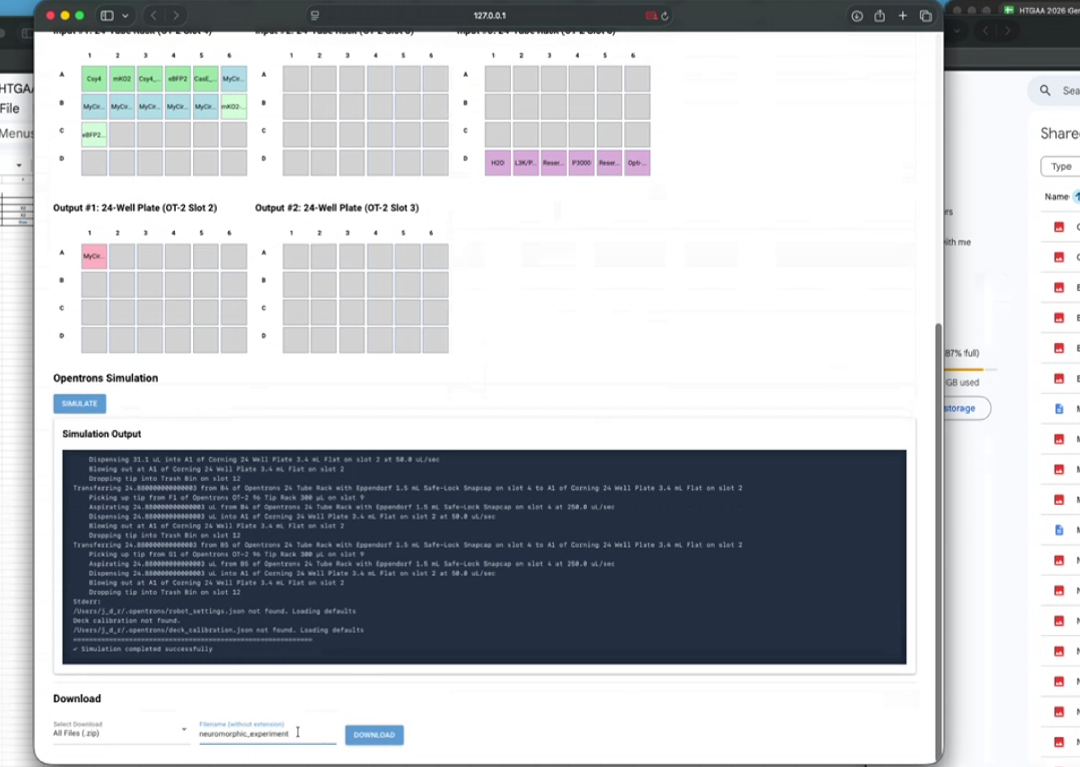
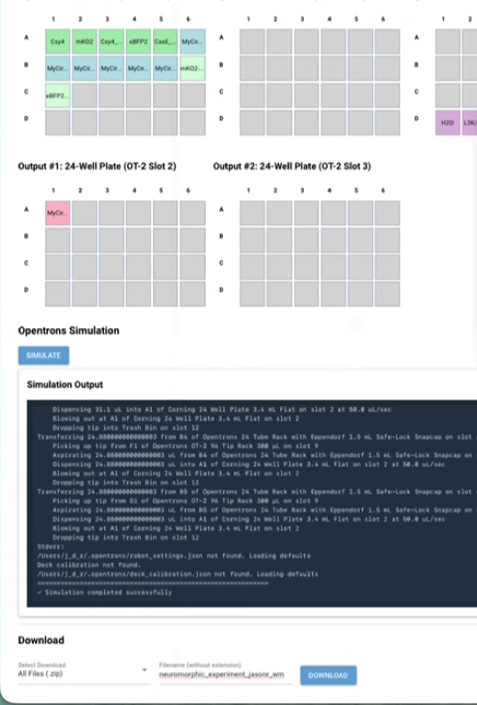
Week 7 Lab: Neuromorphic Circuits

LOREM IPSUM

Week 9 Lab: Cell-Free Systems

LOREM IPSUM