Individual Final Project

AI-guided de novo design of peptides targeting LigA to disrupt adhesion and virulence in Leptospira interrogans
SECTION 1: ABSTRACT
Leptospirosis is a neglected zoonotic disease caused by Leptospira species and remains an important public health concern, particularly in low-resource regions. This project focuses on the LigA protein from Leptospira interrogans, specifically its 11th domain, which is associated with bacterial adhesion and virulence.
The main objective is to design de novo peptides capable of binding to LigA using computational protein engineering tools such as PepMLM and AlphaFold2 Multimer. Selected peptide candidates will later be incorporated into expression constructs designed in Benchling for transformation into E. coli and downstream validation.
Overall, the project aims to establish a low-cost computational and experimental workflow for peptide-based anti-virulence therapies with potential applications against neglected infectious diseases and antimicrobial resistance.
SECTION 2: PROJECT AIMS
Aim 1: Experimental Aim
Design and identify peptide candidates capable of interacting with the 11th domain of the LigA protein using computational tools such as PepMLM and AlphaFold Multimer.
Aim 2: Development Aim
Experimentally evaluate selected peptides through cloning, bacterial expression in E. coli, and preliminary interaction studies with the LigA protein.
Aim 3: Visionary Aim
Develop an accessible and low-cost workflow for peptide-based therapeutic discovery against neglected infectious diseases.
SECTION 3: BACKGROUND
Literature Context
Previous studies identified the LigA protein as an important virulence factor involved in immune evasion and host interaction in leptospirosis [1]. Additionally, recent advances in artificial intelligence have enabled the computational design of peptide binders against protein targets using models such as PepMLM [2].
This project combines both approaches by applying AI-driven peptide engineering to a neglected infectious disease target that currently lacks alternative therapeutic strategies.
Innovation
The project introduces an anti-virulence strategy targeting LigA instead of relying exclusively on antibiotics. It also integrates modern computational tools such as PepMLM, AlphaFold, and Benchling to accelerate peptide discovery while reducing experimental cost and workload.
Impact
Leptospirosis affects more than one million people annually and antimicrobial resistance continues to increase [4], [5]. This project could contribute to alternative therapeutic approaches based on peptide engineering and synthetic biology. Additionally, the proposed workflow could be adapted for other neglected diseases and resistant bacterial pathogens.
Ethical Considerations
The project involves ethical considerations related to biosafety, responsible AI use, and equitable access to biotechnology. Peptide candidates must be carefully evaluated to minimize risks such as toxicity or inaccurate computational predictions.
Furthermore, accessibility and public health impact should remain priorities when developing emerging therapeutic technologies, especially for vulnerable populations affected by neglected infectious diseases.
SECTION 4: EXPERIMENTAL DESIGN, TECHNIQUES, TOOLS, AND TECHNOLOGY
Experimental Plan
Week 1: Computational Analysis
- Retrieve LigA sequences from UniProt and NCBI.
- Identify conserved regions using BLAST, SMART, and InterPro.
- Generate candidate peptides using PepMLM.
Week 2: Structural Validation
- Evaluate peptide-LigA interactions using AlphaFold2 Multimer.
- Visualize complexes in PyMOL.
- Design DNA constructs in Benchling.
Week 3: Peptide Expression
- Synthesize plasmids through Twist Bioscience.
- Transform constructs into E. coli BL21(DE3).
- Induce recombinant peptide expression with IPTG.
Week 4: Purification and Validation
- Purify peptides using IMAC chromatography.
- Validate expression through SDS-PAGE and Western blotting.
Week 5: Binding Assays
- Perform fluorescence-based binding assays with Alexa Fluor 488.
- Analyze binding affinity values using GraphPad Prism or R.
Techniques Relevant to the Project
- Pipetting
- Lab Safety
- Bioethics
- DNA Design
- Gel Electrophoresis
- Databases
- Lab Automation
- Twist Orders
- Protein Design
- PepMLM
- Benchling
- Modeling
- Bioproduction
- Plasmid Prep
- Bacterial Culture
- Quality Control
- Protein Purification
- Restriction Cloning
Selected Techniques
PepMLM was used to generate de novo peptide candidates targeting the LigA protein. Candidate peptides were screened according to predicted affinity and confidence scores.
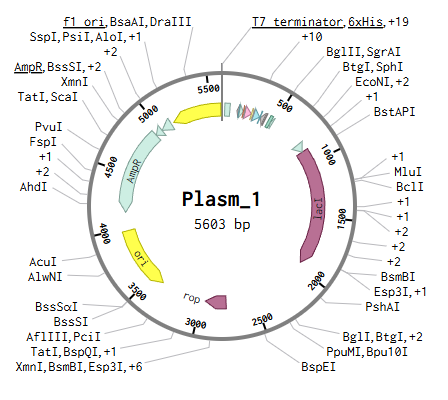
Benchling was utilized to organize DNA construct design, plasmid mapping, sequence analysis, and cloning workflow preparation.
Associated Companies
- Addgene
- Asimov (Kernel)
- Boltz.bio
- Ginkgo Bioworks
- New England Biolabs
- Opentrons
- Thermo Fisher Scientific
- Twist Biosciences
SECTION 5: RESULTS & QUANTITATIVE EXPECTATIONS
Validation Strategy
The first aim of the project was validated through an in silico workflow involving computational peptide design and screening against the LigA protein.
Validation Workflow
The validation workflow included:
- Retrieving the LigA sequence from UniProt.
- Identifying the LigA 11th domain.
- Generating peptide candidates using PepMLM.
- Screening peptides based on confidence and affinity predictions.
- Evaluating peptide-LigA complexes using AlphaFold2 Multimer.
- Visualizing interactions in PyMOL.
Techniques Used
Protein design tools such as PepMLM and AlphaFold were used to generate and analyze peptide candidates. UniProt and iGEM databases provided sequence and biological information, while Benchling supported sequence organization and construct design.
Results Summary
The LigA sequence was obtained from UniProt (ID: C0J1Q2), and the 11th domain was selected for peptide targeting, which is:
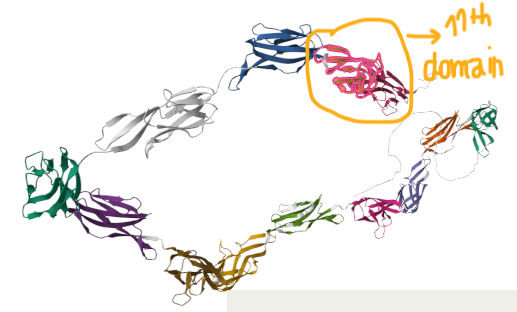
PepMLM generated multiple candidate peptides:
Table 1: PepMLM peptides
| ID | Binder | Perplexity |
|---|---|---|
| 0 | SKPISIIVKDSSSLLKKIKK | 13.214 |
| 1 | KSVVGKISSITGTAKIKKIK | 16.319 |
| 2 | GKSVVSISSDTGSKLLILIS | 22.824 |
| 3 | KPSGSIVSSITTSKAIILLS | 21.513 |
Peptide 0 was selected based on its low perplexity score. AlphaFold modeling produced an iPTM score of 0.64 and a pTM score of 0.69, suggesting a moderate-confidence interaction.
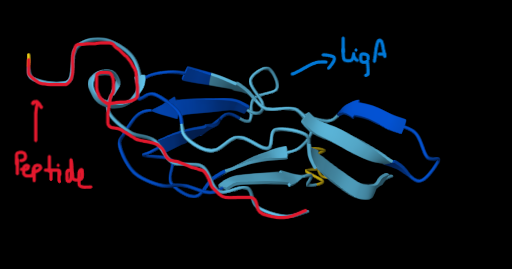
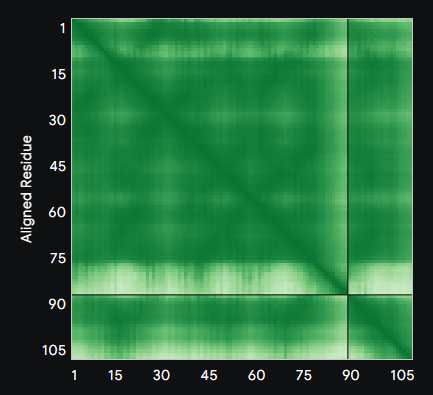
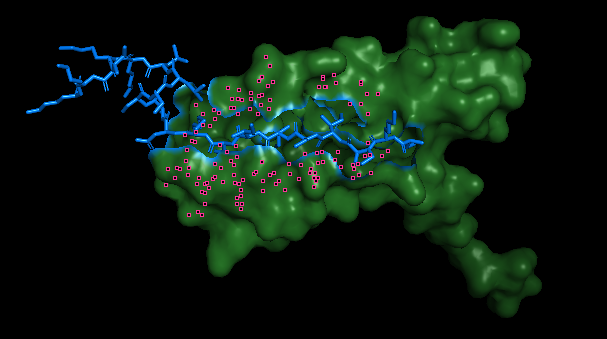
PyMOL visualization identified several residues in close spatial proximity, supporting the feasibility of peptide-LigA binding.
A final expression cassette was designed in Benchling using iGEM biobricks and cloned into the pET-21a(+) plasmid using XhoI and BamHI restriction sites.
Below is the list of the biobricks used:
Table 2: Cassette components
| Part | Biobrick Name | Nucleotide Sequence |
|---|---|---|
| Promoter | BBa_J23100 | TTGACGGCTAGCTCAGTCCTAGGTACAGTGCTAGC |
| RBS | BBa_B0032 | TCACACAGGAAAG |
| Start codon | NA | AUG |
| Sequence | NA | TCAAAACCGATCTCGATTATCGTGAAAGATAGCTCCAGTTTACTGAAAAAGATTAAAAAAAT |
| HisTag | NA | CATCACCATCACCATCAC |
| Stop codon | NA | TAA |
| Terminator | BBa_B0010 | GAAGCTGCTGCAAGAGAAGCTGCAGCTAGGGAGGCTGCAGCTAGGGAGGCTGCTGCAAGA |

Challenges and Limitations
One major challenge was identifying the exact location of LigA domain 11, since literature descriptions were limited. Additional difficulties included interpreting AlphaFold confidence scores and designing cloning workflows with limited prior molecular biology experience.
These limitations were addressed through literature review, database analysis, and computational modeling. Future improvements could include molecular dynamics simulations and experimental in vitro validation.
SECTION 6: ADDITIONAL INFORMATION
References
[1] A. Kumar et al., “Deciphering the role of leptospira surface protein LIGA in modulating the host innate immune response,” Frontiers in Immunology, vol. 12, p. 807775, Dec. 2021, doi: 10.3389/fimmu.2021.807775.
[2] L. T. Chen et al., “Target sequence-conditioned design of peptide binders using masked language modeling,” Nature Biotechnology, Aug. 2025, doi: 10.1038/s41587-025-02761-2.
[3] J. Jumper et al., “Highly accurate protein structure prediction with AlphaFold,” Nature, vol. 596, no. 7873, pp. 583–589, Jul. 2021, doi: 10.1038/s41586-021-03819-2.
[4] K. B. Karpagam and B. Ganesh, “Leptospirosis: a neglected tropical zoonotic infection of public health importance—an updated review,” European Journal of Clinical Microbiology & Infectious Diseases, vol. 39, no. 5, pp. 835–846, Jan. 2020, doi: 10.1007/s10096-019-03797-4.
[5] S. Pineda, J. M. M. Garro, J. E. S. Flórez, S. Agudelo-Pérez, F. P. Monroy, and R. G. P. Sánchez, “Detection of genes related to antibiotic resistance in leptospira,” Tropical Medicine and Infectious Disease, vol. 9, no. 9, p. 203, Sep. 2024, doi: 10.3390/tropicalmed9090203.
[6] Beacon Bio, “Leptospirosis cases in Peru increase to 1045 with five deaths reported; Ministry of Health issues epidemiological alert amid rainfall conditions,” Beacon Bio, 2026. [Online]. Available: https://beaconbio.org/en/report/?reportid=9f425260-15d4-4032-986e-aa2fbd458db0&eventid=72171b38-461c-4b00-a2f8-dd93ed09c811. [Accessed: May 24, 2026].
[7] L. Czaplewski et al., «Alternatives to antibiotics—a pipeline portfolio review», The Lancet Infectious Diseases, vol. 16, n.o 2, pp. 239-251, ene. 2016, doi: 10.1016/s1473-3099(15)00466-1.
Supply List and Budget
Table 3: Supplies and estimated costs
| Category | Item | Cost (USD) |
|---|---|---|
| DNA Synthesis | Twist Bioscience plasmid synthesis | $1,800 |
| Bacterial Expression | E. coli BL21(DE3) cells | $60 |
| Protein Purification | Ni-NTA magnetic beads | $240 |
| Protein Validation | SDS-PAGE and antibodies | ~$900 |
| Binding Assays | Alexa Fluor 488 reagent | $420 |
| Consumables | Pipette tips and plates | ~$476 |
| Equipment Access | Automation and imaging systems | $700 |
| Estimated Total Budget | ~$7,600-$9,000 USD |
Here is the full documentation in case you might want to refer to it