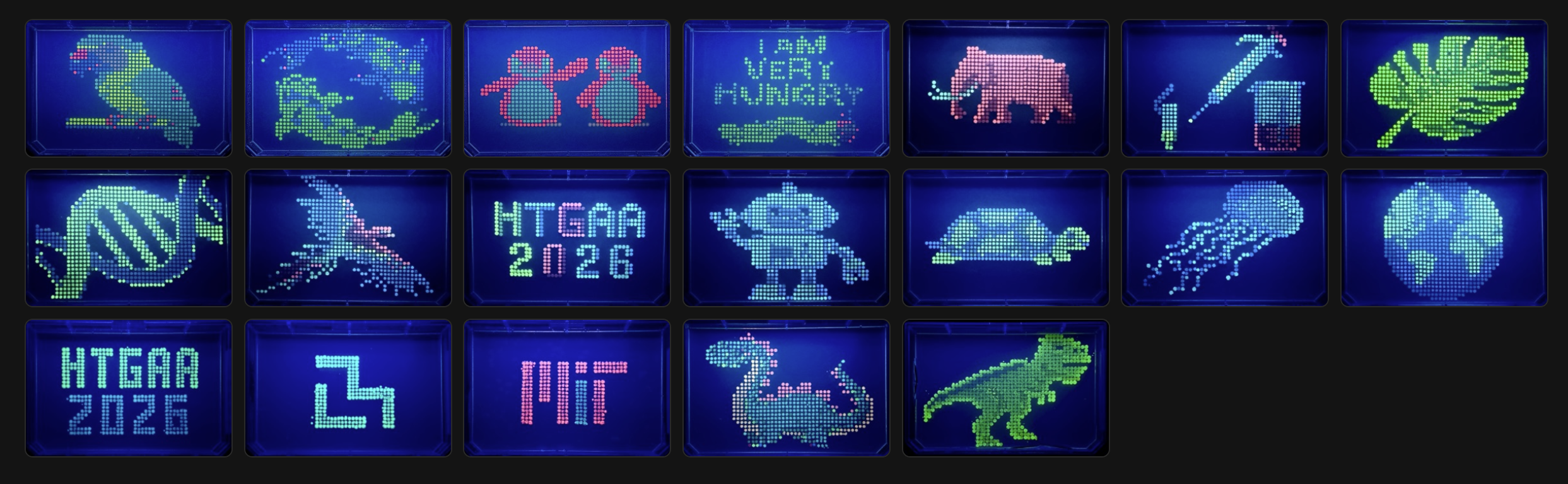
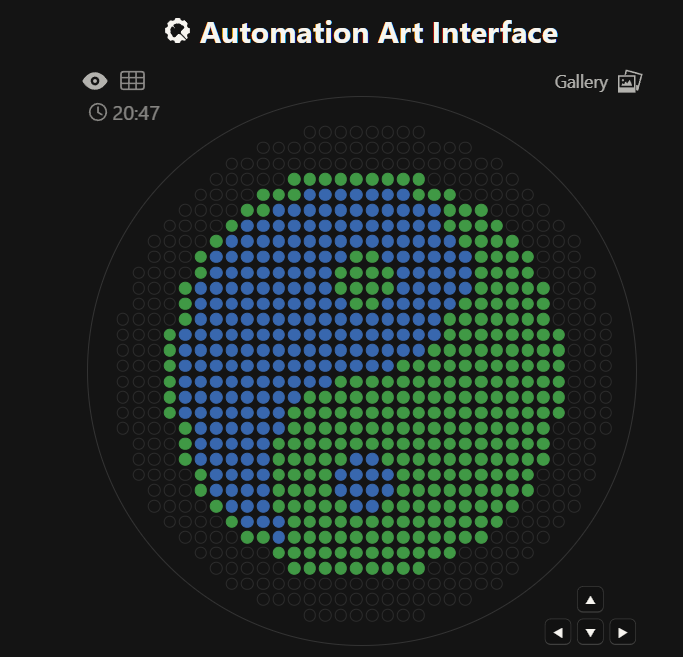
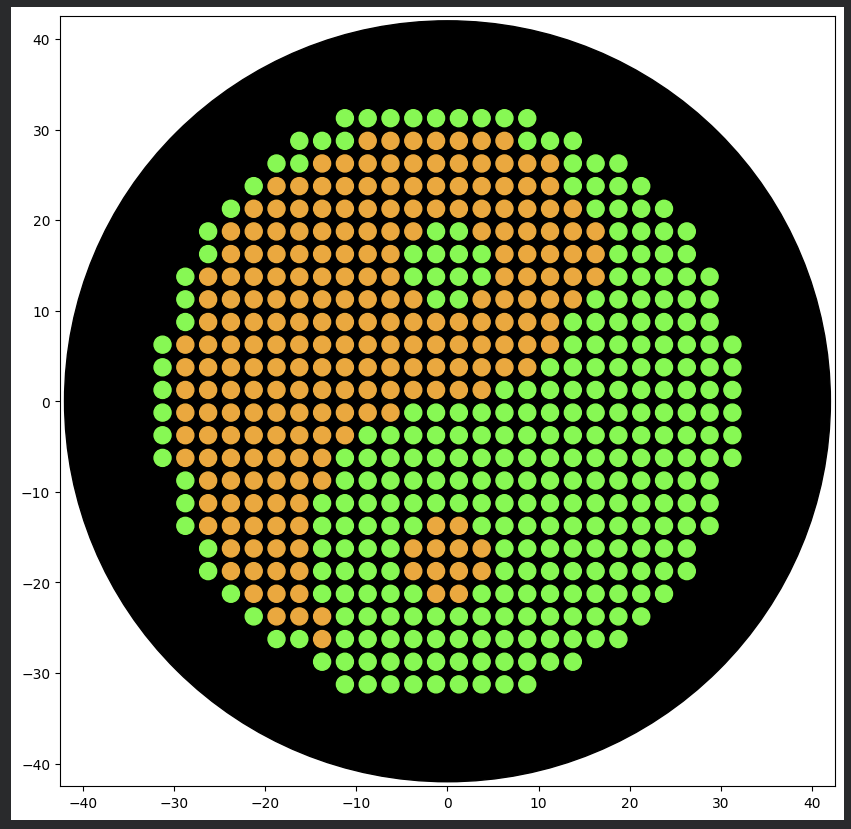
Each coordinate corresponds to a 1.5 µL droplet deposited at a specific XY location relative to the plate center.
Below is the complete script used for the Opentrons simulation and execution.
from opentrons import types

import string

metadata = {
    'protocolName': 'Juan Francisco Larrea - Opentrons Art - HTGAA',
    'author': 'HTGAA',
    'source': 'HTGAA 2026',
    'apiLevel': '2.20'
}

Z_VALUE_AGAR = 2.0
POINT_SIZE = 1.5

mclover3_points = [(-11.25,31.25), (-8.75,31.25), (-6.25,31.25), (-3.75,31.25), (-1.25,31.25), (1.25,31.25), (3.75,31.25), (6.25,31.25), (8.75,31.25), (-16.25,28.75), (-13.75,28.75), (-11.25,28.75), (8.75,28.75), (11.25,28.75), (13.75,28.75), (-18.75,26.25), (-16.25,26.25), (13.75,26.25), (16.25,26.25), (18.75,26.25), (-21.25,23.75), (13.75,23.75), (16.25,23.75), (18.75,23.75), (21.25,23.75), (-23.75,21.25), (16.25,21.25), (18.75,21.25), (21.25,21.25), (23.75,21.25), (-26.25,18.75), (-1.25,18.75), (1.25,18.75), (18.75,18.75), (21.25,18.75), (23.75,18.75), (26.25,18.75), (-26.25,16.25), (-3.75,16.25), (-1.25,16.25), (1.25,16.25), (3.75,16.25), (18.75,16.25), (21.25,16.25), (23.75,16.25), (26.25,16.25), (-28.75,13.75), (-3.75,13.75), (-1.25,13.75), (1.25,13.75), (3.75,13.75), (18.75,13.75), (21.25,13.75), (23.75,13.75), (26.25,13.75), (28.75,13.75), (-28.75,11.25), (-1.25,11.25), (1.25,11.25), (16.25,11.25), (18.75,11.25), (21.25,11.25), (23.75,11.25), (26.25,11.25), (28.75,11.25), (-28.75,8.75), (13.75,8.75), (16.25,8.75), (18.75,8.75), (21.25,8.75), (23.75,8.75), (26.25,8.75), (28.75,8.75), (-31.25,6.25), (13.75,6.25), (16.25,6.25), (18.75,6.25), (21.25,6.25), (23.75,6.25), (26.25,6.25), (28.75,6.25), (31.25,6.25), (-31.25,3.75), (11.25,3.75), (13.75,3.75), (16.25,3.75), (18.75,3.75), (21.25,3.75), (23.75,3.75), (26.25,3.75), (28.75,3.75), (31.25,3.75), (-31.25,1.25), (6.25,1.25), (8.75,1.25), (11.25,1.25), (13.75,1.25), (16.25,1.25), (18.75,1.25), (21.25,1.25), (23.75,1.25), (26.25,1.25), (28.75,1.25), (31.25,1.25), (-31.25,-1.25), (-3.75,-1.25), (-1.25,-1.25), (1.25,-1.25), (3.75,-1.25), (6.25,-1.25), (8.75,-1.25), (11.25,-1.25), (13.75,-1.25), (16.25,-1.25), (18.75,-1.25), (21.25,-1.25), (23.75,-1.25), (26.25,-1.25), (28.75,-1.25), (31.25,-1.25), (-31.25,-3.75), (-8.75,-3.75), (-6.25,-3.75), (-3.75,-3.75), (-1.25,-3.75), (1.25,-3.75), (3.75,-3.75), (6.25,-3.75), (8.75,-3.75), (11.25,-3.75), (13.75,-3.75), (16.25,-3.75), (18.75,-3.75), (21.25,-3.75), (23.75,-3.75), (26.25,-3.75), (28.75,-3.75), (31.25,-3.75), (-31.25,-6.25), (-11.25,-6.25), (-8.75,-6.25), (-6.25,-6.25), (-3.75,-6.25), (-1.25,-6.25), (1.25,-6.25), (3.75,-6.25), (6.25,-6.25), (8.75,-6.25), (11.25,-6.25), (13.75,-6.25), (16.25,-6.25), (18.75,-6.25), (21.25,-6.25), (23.75,-6.25), (26.25,-6.25), (28.75,-6.25), (31.25,-6.25), (-28.75,-8.75), (-11.25,-8.75), (-8.75,-8.75), (-6.25,-8.75), (-3.75,-8.75), (-1.25,-8.75), (1.25,-8.75), (3.75,-8.75), (6.25,-8.75), (8.75,-8.75), (11.25,-8.75), (13.75,-8.75), (16.25,-8.75), (18.75,-8.75), (21.25,-8.75), (23.75,-8.75), (26.25,-8.75), (28.75,-8.75), (-28.75,-11.25), (-13.75,-11.25), (-11.25,-11.25), (-8.75,-11.25), (-6.25,-11.25), (-3.75,-11.25), (-1.25,-11.25), (1.25,-11.25), (3.75,-11.25), (6.25,-11.25), (8.75,-11.25), (11.25,-11.25), (13.75,-11.25), (16.25,-11.25), (18.75,-11.25), (21.25,-11.25), (23.75,-11.25), (26.25,-11.25), (28.75,-11.25), (-28.75,-13.75), (-13.75,-13.75), (-11.25,-13.75), (-8.75,-13.75), (-6.25,-13.75), (-3.75,-13.75), (3.75,-13.75), (6.25,-13.75), (8.75,-13.75), (11.25,-13.75), (13.75,-13.75), (16.25,-13.75), (18.75,-13.75), (21.25,-13.75), (23.75,-13.75), (26.25,-13.75), (28.75,-13.75), (-26.25,-16.25), (-13.75,-16.25), (-11.25,-16.25), (-8.75,-16.25), (-6.25,-16.25), (6.25,-16.25), (8.75,-16.25), (11.25,-16.25), (13.75,-16.25), (16.25,-16.25), (18.75,-16.25), (21.25,-16.25), (23.75,-16.25), (26.25,-16.25), (-26.25,-18.75), (-13.75,-18.75), (-11.25,-18.75), (-8.75,-18.75), (-6.25,-18.75), (6.25,-18.75), (8.75,-18.75), (11.25,-18.75), (13.75,-18.75), (16.25,-18.75), (18.75,-18.75), (21.25,-18.75), (23.75,-18.75), (26.25,-18.75), (-23.75,-21.25), (-13.75,-21.25), (-11.25,-21.25), (-8.75,-21.25), (-6.25,-21.25), (-3.75,-21.25), (3.75,-21.25), (6.25,-21.25), (8.75,-21.25), (11.25,-21.25), (13.75,-21.25), (16.25,-21.25), (18.75,-21.25), (21.25,-21.25), (23.75,-21.25), (-21.25,-23.75), (-11.25,-23.75), (-8.75,-23.75), (-6.25,-23.75), (-3.75,-23.75), (-1.25,-23.75), (1.25,-23.75), (3.75,-23.75), (6.25,-23.75), (8.75,-23.75), (11.25,-23.75), (13.75,-23.75), (16.25,-23.75), (18.75,-23.75), (21.25,-23.75), (-18.75,-26.25), (-16.25,-26.25), (-11.25,-26.25), (-8.75,-26.25), (-6.25,-26.25), (-3.75,-26.25), (-1.25,-26.25), (1.25,-26.25), (3.75,-26.25), (6.25,-26.25), (8.75,-26.25), (11.25,-26.25), (13.75,-26.25), (16.25,-26.25), (18.75,-26.25), (-13.75,-28.75), (-11.25,-28.75), (-8.75,-28.75), (-6.25,-28.75), (-3.75,-28.75), (-1.25,-28.75), (1.25,-28.75), (3.75,-28.75), (6.25,-28.75), (8.75,-28.75), (11.25,-28.75), (13.75,-28.75), (-11.25,-31.25), (-8.75,-31.25), (-6.25,-31.25), (-3.75,-31.25), (-1.25,-31.25), (1.25,-31.25), (3.75,-31.25), (6.25,-31.25), (8.75,-31.25)]
azurite_points = [(-8.75,28.75), (-6.25,28.75), (-3.75,28.75), (-1.25,28.75), (1.25,28.75), (3.75,28.75), (6.25,28.75), (-13.75,26.25), (-11.25,26.25), (-8.75,26.25), (-6.25,26.25), (-3.75,26.25), (-1.25,26.25), (1.25,26.25), (3.75,26.25), (6.25,26.25), (8.75,26.25), (11.25,26.25), (-18.75,23.75), (-16.25,23.75), (-13.75,23.75), (-11.25,23.75), (-8.75,23.75), (-6.25,23.75), (-3.75,23.75), (-1.25,23.75), (1.25,23.75), (3.75,23.75), (6.25,23.75), (8.75,23.75), (11.25,23.75), (-21.25,21.25), (-18.75,21.25), (-16.25,21.25), (-13.75,21.25), (-11.25,21.25), (-8.75,21.25), (-6.25,21.25), (-3.75,21.25), (-1.25,21.25), (1.25,21.25), (3.75,21.25), (6.25,21.25), (8.75,21.25), (11.25,21.25), (13.75,21.25), (-23.75,18.75), (-21.25,18.75), (-18.75,18.75), (-16.25,18.75), (-13.75,18.75), (-11.25,18.75), (-8.75,18.75), (-6.25,18.75), (-3.75,18.75), (3.75,18.75), (6.25,18.75), (8.75,18.75), (11.25,18.75), (13.75,18.75), (16.25,18.75), (-23.75,16.25), (-21.25,16.25), (-18.75,16.25), (-16.25,16.25), (-13.75,16.25), (-11.25,16.25), (-8.75,16.25), (-6.25,16.25), (6.25,16.25), (8.75,16.25), (11.25,16.25), (13.75,16.25), (16.25,16.25), (-26.25,13.75), (-23.75,13.75), (-21.25,13.75), (-18.75,13.75), (-16.25,13.75), (-13.75,13.75), (-11.25,13.75), (-8.75,13.75), (-6.25,13.75), (6.25,13.75), (8.75,13.75), (11.25,13.75), (13.75,13.75), (16.25,13.75), (-26.25,11.25), (-23.75,11.25), (-21.25,11.25), (-18.75,11.25), (-16.25,11.25), (-13.75,11.25), (-11.25,11.25), (-8.75,11.25), (-6.25,11.25), (-3.75,11.25), (3.75,11.25), (6.25,11.25), (8.75,11.25), (11.25,11.25), (13.75,11.25), (-26.25,8.75), (-23.75,8.75), (-21.25,8.75), (-18.75,8.75), (-16.25,8.75), (-13.75,8.75), (-11.25,8.75), (-8.75,8.75), (-6.25,8.75), (-3.75,8.75), (-1.25,8.75), (1.25,8.75), (3.75,8.75), (6.25,8.75), (8.75,8.75), (11.25,8.75), (-28.75,6.25), (-26.25,6.25), (-23.75,6.25), (-21.25,6.25), (-18.75,6.25), (-16.25,6.25), (-13.75,6.25), (-11.25,6.25), (-8.75,6.25), (-6.25,6.25), (-3.75,6.25), (-1.25,6.25), (1.25,6.25), (3.75,6.25), (6.25,6.25), (8.75,6.25), (11.25,6.25), (-28.75,3.75), (-26.25,3.75), (-23.75,3.75), (-21.25,3.75), (-18.75,3.75), (-16.25,3.75), (-13.75,3.75), (-11.25,3.75), (-8.75,3.75), (-6.25,3.75), (-3.75,3.75), (-1.25,3.75), (1.25,3.75), (3.75,3.75), (6.25,3.75), (8.75,3.75), (-28.75,1.25), (-26.25,1.25), (-23.75,1.25), (-21.25,1.25), (-18.75,1.25), (-16.25,1.25), (-13.75,1.25), (-11.25,1.25), (-8.75,1.25), (-6.25,1.25), (-3.75,1.25), (-1.25,1.25), (1.25,1.25), (3.75,1.25), (-28.75,-1.25), (-26.25,-1.25), (-23.75,-1.25), (-21.25,-1.25), (-18.75,-1.25), (-16.25,-1.25), (-13.75,-1.25), (-11.25,-1.25), (-8.75,-1.25), (-6.25,-1.25), (-28.75,-3.75), (-26.25,-3.75), (-23.75,-3.75), (-21.25,-3.75), (-18.75,-3.75), (-16.25,-3.75), (-13.75,-3.75), (-11.25,-3.75), (-28.75,-6.25), (-26.25,-6.25), (-23.75,-6.25), (-21.25,-6.25), (-18.75,-6.25), (-16.25,-6.25), (-13.75,-6.25), (-26.25,-8.75), (-23.75,-8.75), (-21.25,-8.75), (-18.75,-8.75), (-16.25,-8.75), (-13.75,-8.75), (-26.25,-11.25), (-23.75,-11.25), (-21.25,-11.25), (-18.75,-11.25), (-16.25,-11.25), (-26.25,-13.75), (-23.75,-13.75), (-21.25,-13.75), (-18.75,-13.75), (-16.25,-13.75), (-1.25,-13.75), (1.25,-13.75), (-23.75,-16.25), (-21.25,-16.25), (-18.75,-16.25), (-16.25,-16.25), (-3.75,-16.25), (-1.25,-16.25), (1.25,-16.25), (3.75,-16.25), (-23.75,-18.75), (-21.25,-18.75), (-18.75,-18.75), (-16.25,-18.75), (-3.75,-18.75), (-1.25,-18.75), (1.25,-18.75), (3.75,-18.75), (-21.25,-21.25), (-18.75,-21.25), (-16.25,-21.25), (-1.25,-21.25), (1.25,-21.25), (-18.75,-23.75), (-16.25,-23.75), (-13.75,-23.75), (-13.75,-26.25)]

point_name_pairing = [("Green", mclover3_points),("Orange", azurite_points)]

# Robot deck setup constants
TIP_RACK_DECK_SLOT = 9
COLORS_DECK_SLOT = 6
AGAR_DECK_SLOT = 5
PIPETTE_STARTING_TIP_WELL = 'A1'

# Place the PCR tubes in this order
well_colors = {
    'A1' : 'Red',
    'B1' : 'Green',
    'C1' : 'Orange'
}

# Initialize volume_used globally
volume_used = {}

def update_volume_remaining(current_color, quantity_to_aspirate):
    global well_colors
    global volume_used

    rows = string.ascii_uppercase
    cols_str = [str(i) for i in range(1, 13)] # Columns 1 to 12

    if current_color not in volume_used:
        volume_used[current_color] = 0

    # Find the current well for this color
    current_well_for_color = None
    for well, color in list(well_colors.items()):
        if color == current_color:
            current_well_for_color = well
            break

    if current_well_for_color is None:
        raise ValueError(f"Color {current_color} not found in well_colors for volume update.")

    if (volume_used[current_color] + quantity_to_aspirate) > 250:
        row_letter = current_well_for_color[0]
        col_number_str = current_well_for_color[1:]

        next_col_index = cols_str.index(col_number_str) + 1
        if next_col_index >= len(cols_str):
            raise IndexError(f"Ran out of wells for color {current_color} in row {row_letter} (max column reached)!")

        next_well = f"{row_letter}{cols_str[next_col_index]}"

        # Remove the old well from well_colors map, and add the new one.
        # This is safe because each color is assumed to have its own row.
        del well_colors[current_well_for_color]
        well_colors[next_well] = current_color
        volume_used[current_color] = quantity_to_aspirate # Reset volume for new well
    else:
        volume_used[current_color] += quantity_to_aspirate

def run(protocol):
  ##############################################################################
  ###   Load labware, modules and pipettes
  ##############################################################################

  # Tips
  tips_20ul = protocol.load_labware('opentrons_96_tiprack_20ul', TIP_RACK_DECK_SLOT, 'Opentrons 20uL Tips')

  # Pipettes
  pipette_20ul = protocol.load_instrument("p20_single_gen2", "right", [tips_20ul])

  # Modules
  temperature_module = protocol.load_module('temperature module gen2', COLORS_DECK_SLOT)

  # Temperature Module Plate
  temperature_plate = temperature_module.load_labware('opentrons_96_aluminumblock_generic_pcr_strip_200ul',
                                                    'Cold Plate')
  # Choose where to take the colors from
  color_plate = temperature_plate

  # Agar Plate
  agar_plate = protocol.load_labware('htgaa_agar_plate', AGAR_DECK_SLOT, 'Agar Plate')  ## TA MUST CALIBRATE EACH PLATE!
  # Get the top-center of the plate, make sure the plate was calibrated before running this
  center_location = agar_plate['A1'].top()

  pipette_20ul.starting_tip = tips_20ul.well(PIPETTE_STARTING_TIP_WELL)


  # Helper function (color location)
  def location_of_color(color_string):
    for well,color in well_colors.items():
      if color.lower() == color_string.lower():
        return temperature_plate[well]
    raise ValueError(f"No well found with color {color_string}")

  # For this lab, instead of calling pipette.dispense(1, loc) use this: dispense_and_detach(pipette, 1, loc)
  def dispense_and_detach(pipette, volume, location):
      """
      Move laterally 5mm above the plate (to avoid smearing a drop); then drop down to the plate,
      dispense, move back up 5mm to detach drop, and stay high to be ready for next lateral move.
      5mm because a 4uL drop is 2mm diameter; and a 2deg tilt in the agar pour is >3mm difference across a plate.
      """
      assert(isinstance(volume, (int, float)))
      above_location = location.move(types.Point(z=location.point.z + 5))  # 5mm above
      pipette.move_to(above_location)       # Go to 5mm above the dispensing location
      pipette.dispense(volume, location)    # Go straight downwards and dispense
      pipette.move_to(above_location)       # Go straight up to detach drop and stay high


  # Print pattern by iterating over lists
  for idx, (current_color, point_list) in enumerate(point_name_pairing): # Renamed i to idx to avoid conflict
      # Skip the rest of the loop if the list is empty
      if not point_list:
          continue

      pipette_20ul.pick_up_tip()

      max_aspirate = int(18 // POINT_SIZE) * POINT_SIZE
      quantity_to_aspirate = min(len(point_list)*POINT_SIZE, max_aspirate)

      # Get the initial well for this color before any volume updates
      initial_aspirate_well = location_of_color(current_color)

      # Update volume (this might change `well_colors` for `current_color`)
      update_volume_remaining(current_color, quantity_to_aspirate)

      # Aspirate from the (potentially updated) location
      pipette_20ul.aspirate(quantity_to_aspirate, location_of_color(current_color))

      # Iterate over the current points list and dispense them, refilling along the way
      for j in range(len(point_list)):
          x, y = point_list[j]
          adjusted_location = center_location.move(types.Point(x, y))

          dispense_and_detach(pipette_20ul, POINT_SIZE, adjusted_location)

          if pipette_20ul.current_volume == 0 and len(point_list[j+1:]) > 0:
              # Need to refill
              refill_quantity = min(len(point_list[j+1:])*POINT_SIZE, max_aspirate)

              # Get the current source well for this color *before* updating volume, in case it changes
              previous_refill_well = location_of_color(current_color)

              # Update volume and potentially move the color to a new physical well
              update_volume_remaining(current_color, refill_quantity)

              # Get the (potentially new) source well for this color
              new_refill_well = location_of_color(current_color)

              if new_refill_well != previous_refill_well:
                  # If the source well has changed for this color, we must drop the tip and pick up a new one
                  pipette_20ul.drop_tip()
                  pipette_20ul.pick_up_tip()

              # Now aspirate from the correct (potentially new) well
              pipette_20ul.aspirate(refill_quantity, new_refill_well)

      # Drop tip between each color
      pipette_20ul.drop_tip()
Before running on the real robot, the protocol was validated using the Opentrons simulator.
The robot successfully deposited bacteria following the coordinate map.
After incubation, bacterial growth revealed the intended image on the agar plate.
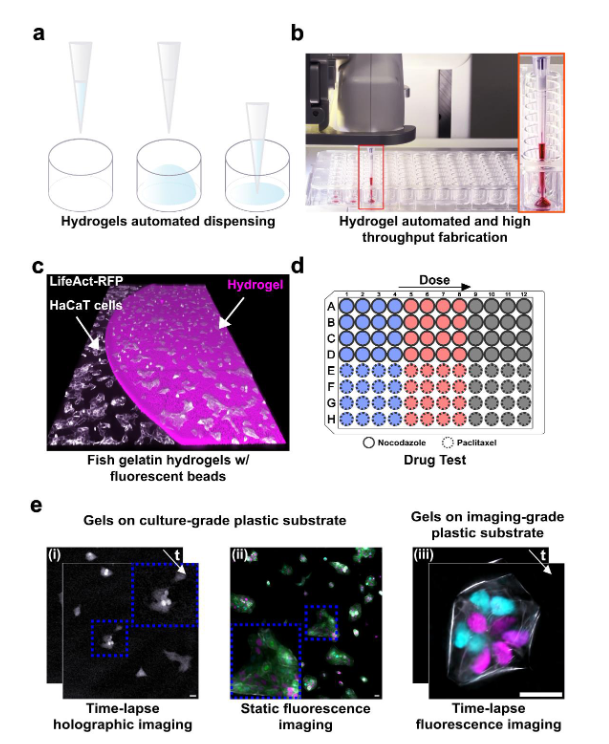
This project proposes to automate the screening and characterization of nanoparticle delivery systems for the delivery of the damage suppressor protein (Dsup) — a nucleosome-binding protein from Ramazzottius varieornatus (tardigrade). Dsup has been demonstrated to protect mammalian cells from oxidative stress and UV-induced DNA damage.
The goal is to determine which nanoparticle formulation most effectively delivers Dsup into human dermal fibroblasts, improving resistance to oxidative stress (H₂O₂ exposure). The long-term application is skin regeneration and anti-aging therapies.