Week 1: Principles and Practices
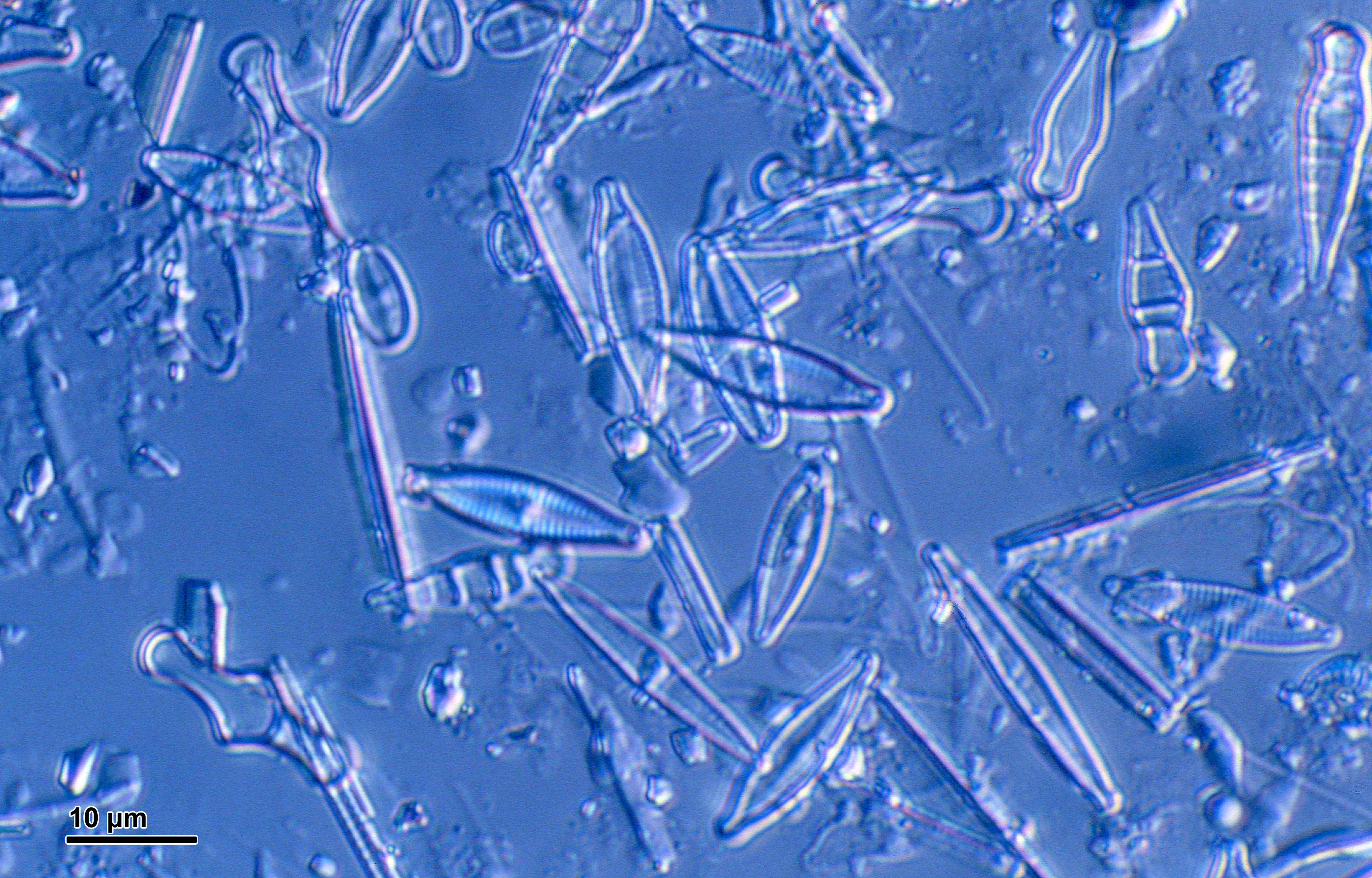 source: wikimedia commons
Genetically Engineered Diatoms to Bind with Building Rubble/Waste
Building materials like cement and brick are difficult to reuse and natural weathering or active demolition leaves behind tons of waste material that remains under-recycled. In a previous project my team from graduate school developed a porous, bio receptive glass using glass waste and I would like to expand upon that research by bioengineering diatoms into a silica scaffold of cement and glass rubble/frits to fuse these waste materials into a new architectural material. Diatoms are an exciting prospect for architecture for their silica frustules, inherent translucency, and their lacy pore structure. I am curious to see if there would be a way to pattern their silica deposits for enhanced carbon sink and particle processing in urban spaces. It would also be beautiful to see the formation of silica deposits depending on sun patterns on site, filling in the rubble scaffold where there is more direct light. It would also be interesting to potentially engineer the directional strength of a diatom-rubble piece and the lace pattern, playing with the idea of directional bias in architecture more theoretically but also for building methods.
Goals:
• When speculating such panels, it is important to keep policy which mitigates the impact of the material creation and installation on the surrounding soil and water biodiversity through run off material and resources used to grow the diatom structures. Diatoms can overpower other microorganisms and limits on the volume of diatom production could help reduce the chances of local ecological harm and biological impact.
• Another goal is to secure a non-stress inducing method of cultivating and sourcing the diatoms for this scale of application.
• This material should be lessening the burden of the construction industry.
Concerns:
• Who would have access to this material?
• How does this material impact the local environment?
• Will users receive this material positively and use it? Or will it be demolished or underutilized?
• Will this create excess burden on access to an organism for this scale? What are the political realities of sourcing this material?
• How do diatoms react with materials like cement, brick, and glass? Are there any reactions between materials that can cause issues?
Actions:
• When casting the rubble diatom mixture, create reusable casts/equipment workflows when possible.
• Work directly with ecologists to determine the site for harvesting and to determine if the site for installation is appropriate in case of run-off or other biological interactions.
• One method of mitigating the environmental impact of sourcing and using diatoms at this large scale could be to focus on cultivation from local areas with diatom overgrowth so that this helps cut down on the environmental impact of current unhealthy ecology.
• Lab testing, especially longevity testing, would help clear up uncertainty regarding the impact of the material on site as it weathers and does through periods of high and low growth. This includes the potential toxicity of the rubble, the biological interactions of the diatoms, and how the ,odified diatoms may change over time through mutations and biomass buildup.
• Community workshops/exhibits as user studies to understand how people would interact with the material (biosecurity of sensory interaction), understand whether they would accept it in their built environment, and educate them on the material itself.
| Does the option: | Casting | Harvesting | Sourcing | Lab Testing | Community Workshops |
|---|---|---|---|---|---|
| Enhance Biosecurity | |||||
| • By preventing incidents | n/a | *** | *** | *** | *** |
| • By helping respond | n/a | * | * | *** | n/a |
| Protect the environment | |||||
| • Through sourcing/creation | ** | *** | *** | * | n/a |
| • During and after installation | * | * | n/a | *** | ** |
| Other considerations | |||||
| • Encourage long term use by stakeholders | n/a | * | * | *** | *** |
Homework Slide Responses
Professor Jacobson:
- The error rate for polymerase is 1:10^6. Compared to the length of the human genome of around 3.2Gbp (slide 10), the error rate is minute, occurring perhaps once in one genome. Biology deals with this discrepancy by proofreading the action before it is coded into the DNA.
- There are 20 AA and 61 codons that specify amino acids (NHGRI), leading to different ways to code for an average human protein. Some reasons that all of these different codes don’t work for the protein of interest could be due to the physical structure of the protein, and the efficiency of each pathway. (not totally sure of this answer)
Dr.Leproust
- The most common method for oligo synthesis is currently a chip based gene synthesis that couples the nucleotide with phosphonamidite. Historically, this has been a solid phase synthesis.
- It’s difficult to make oligos longer than 200nt vir direct synthesis because of the surface and primarily the inefficiency of the current state of the art phosphonamidite method. Source: Yin Y, Arneson R, Yuan Y, Fang S. Long oligos: direct chemical synthesis of genes with up to 1728 nucleotides. Chem Sci. 2024 Dec 18;16(4):1966-1973. doi: 10.1039/d4sc06958g. PMID: 39759933; PMCID: PMC11694485.
- You can’t make a 2000bp gene with direct olio synthesis because of the increased error rate in PCR. The new gene pool solution offers a 1 in 3,000 bp error rate which would allow for greater gene lengths to be processed. (slide 39)
Professor George Church
- According to the NIH, the nine essential amino acids are histidine, isoleucine, lysine, methionine, phenylalanine, threonine, tryptophan, and valine. This means that the Lysine Contingency is really already a contingency that all animals have upon receiving all nine of these AAs from their diet, not just lysine. (Fictional) dinosaurs are just like you and me, minus 8 more essential amino acids. Source: Lopez MJ, Mohiuddin SS. Biochemistry, Essential Amino Acids. Updated 2024 Apr 30. In: StatPearls Internet. Treasure Island (FL): StatPearls Publishing; 2025 Jan-. Available from: https://www.ncbi.nlm.nih.gov/books/NBK557845/