Week 3: Lab Automation
Opentrons Art
When creating this GUI art I created an image of cherries with a checkered background to see how common features in traditional drawing would translate to bacterial image creation including shading, regular patterning, thinner and thicker lines, as well as curved and straight forms. I downloaded the python script for the PCR plate system from this simulator.
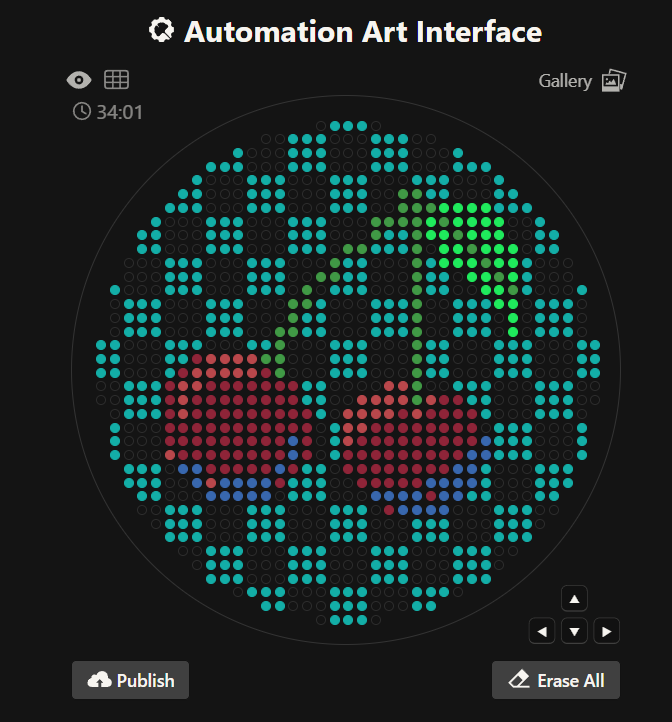
created through Ronan’s Opentrons plate art simulator
Python Script for Opentrons
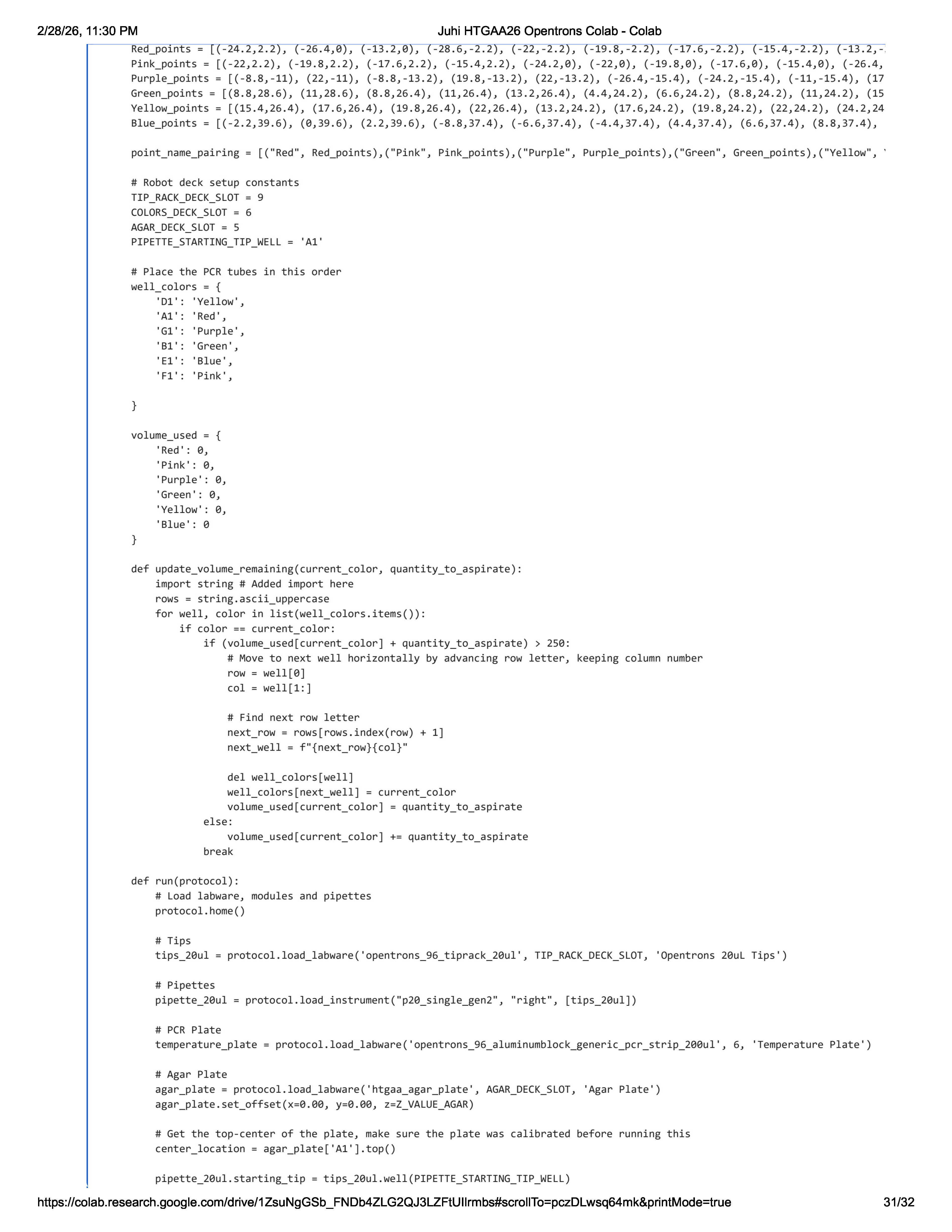
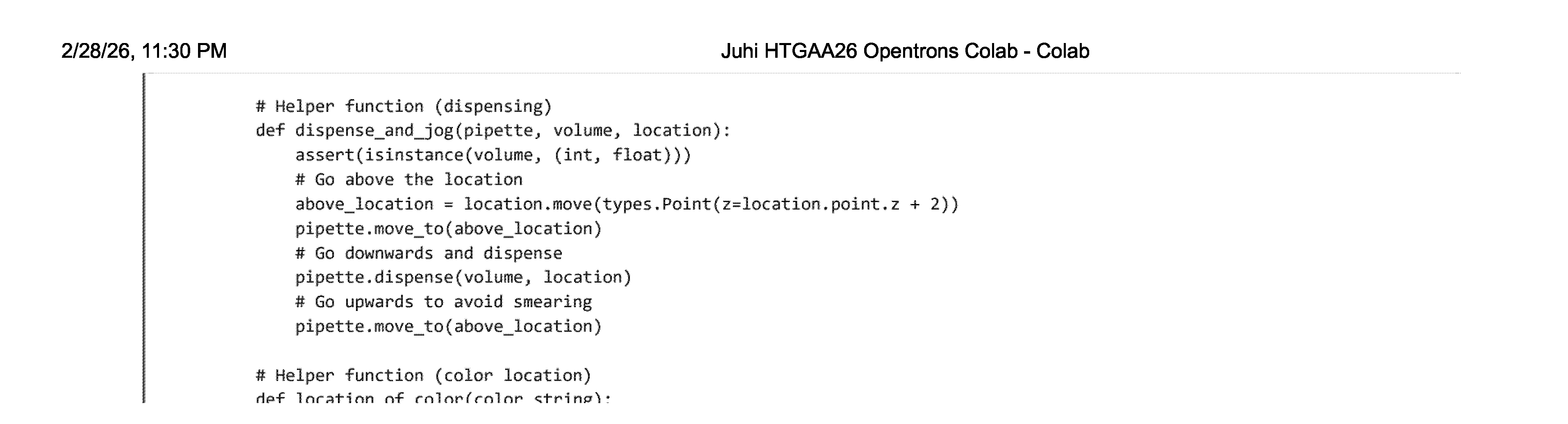
colab work: importing python script and error management
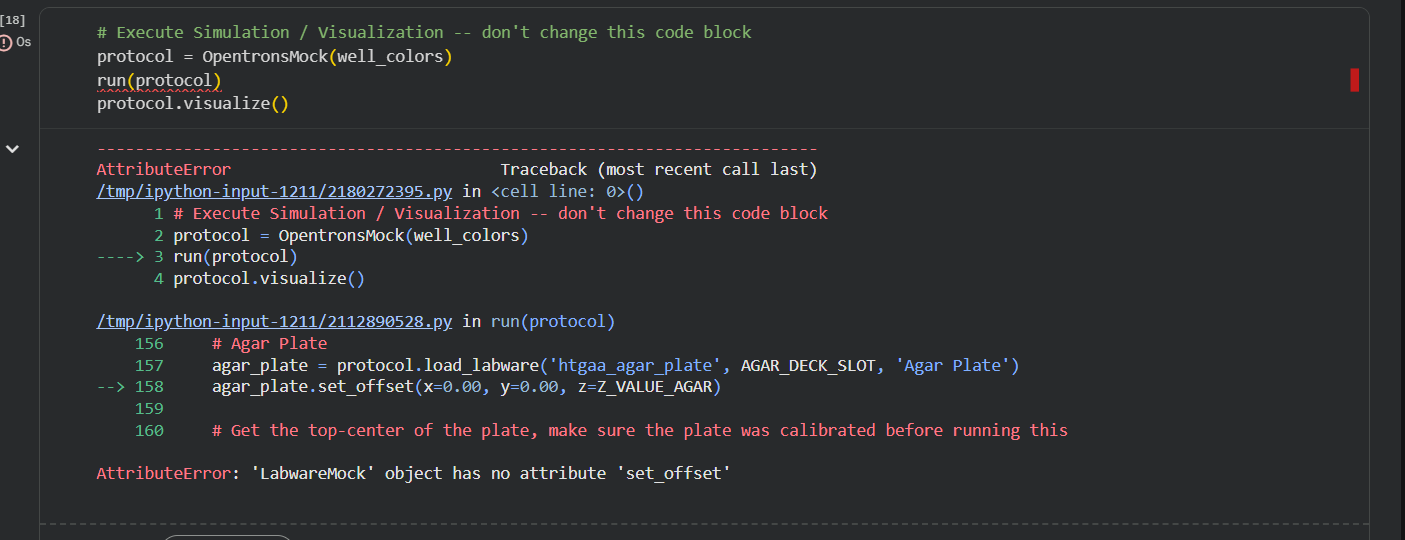
In the colab script I debugged until it was suggesting a bug that could fundamentally change the function for the code to properly converse with the opentrons system. This was about the “set_offset” condition. This error code is not present in the script cell, indicating that the issue is associated with the visualization cell.
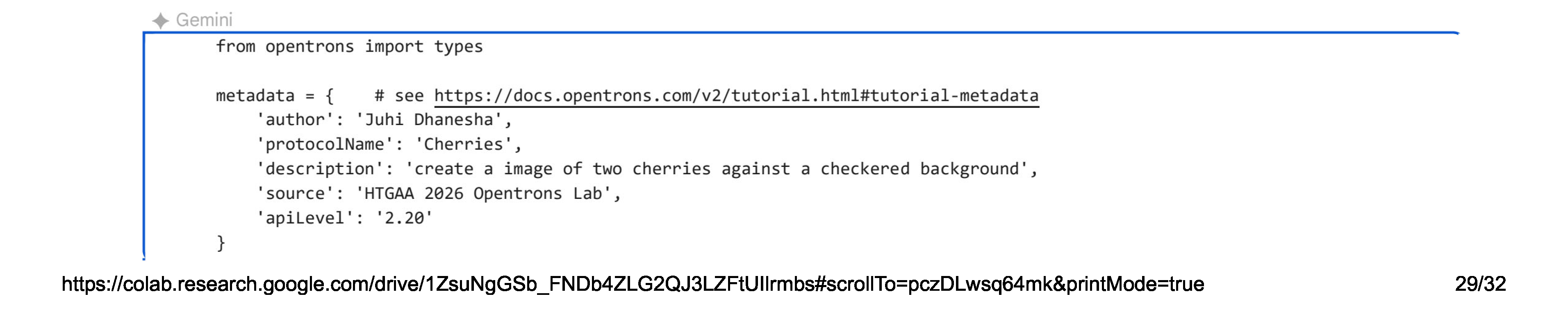
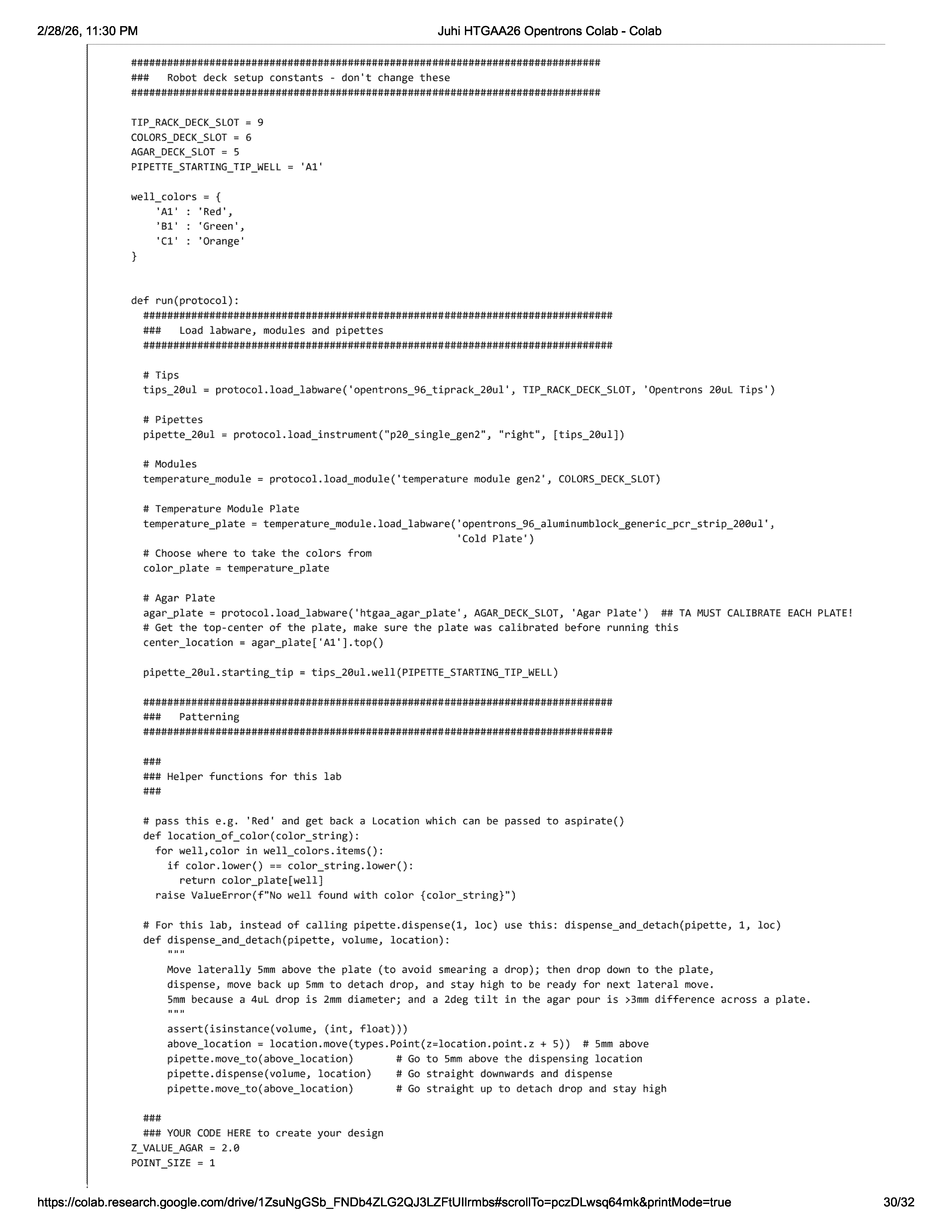
Opentrons Plate Art
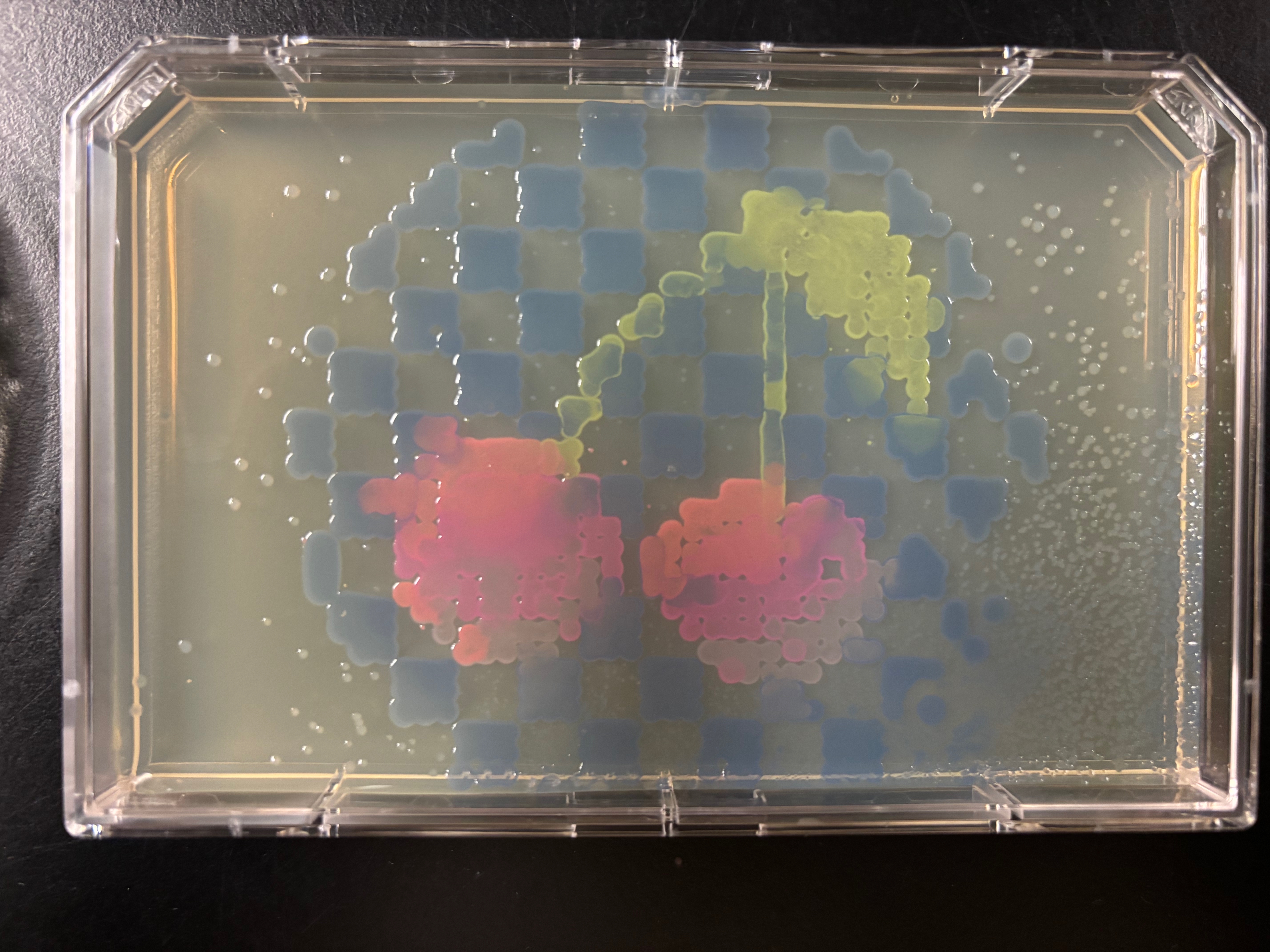 this lab required lots of troubleshooting, with this plate created after the lab time by the BUGSS TAs Amanda and Joel. Previous plates were unsuccessful due to various trouble shooting issues from the python script, the point size for the asperated droplet, and a potential air bubble in the well.
Opentrons Research and Potential Use of Automated Tools in Final Project
For the final project, if I were to pursue the diatom project idea, would be to use automated systems for cell seeding by scaning contruction rubble and detect the best spots to introduce diatoms into the rubble panel in response to the rubble placement, load bearing support, or areas that make easy bridges between rubble.
Salido et.al used automated technology for diatom identification:
Salido, J.; Sánchez, C.; Ruiz-Santaquiteria, J.; Cristóbal, G.; Blanco, S.; Bueno, G. A Low-Cost Automated Digital Microscopy Platform for Automatic Identification of Diatoms. Appl. Sci. 2020, 10, 6033. https://doi.org/10.3390/app10176033
Diatoms are traditionally identified and viewed using LM and SEM imaging, since they are invisible to the naked eye. Different species of diatoms have also remained unidentified due to these limitations. Automated technology and deep neural networks have assisted in the detection, classification, and counting which can be tricky due to the variety of shapes that diatoms may have.
Crit 1 Final Project Ideas
For the final project I would like to look closer at architectural materials and how they can respond to environmental stressors. Some of these ideas are a new perspective on previous ideas of mine, playing with how one concept can be explored through multiple fields.
Project 1: Diatoms and Rubble
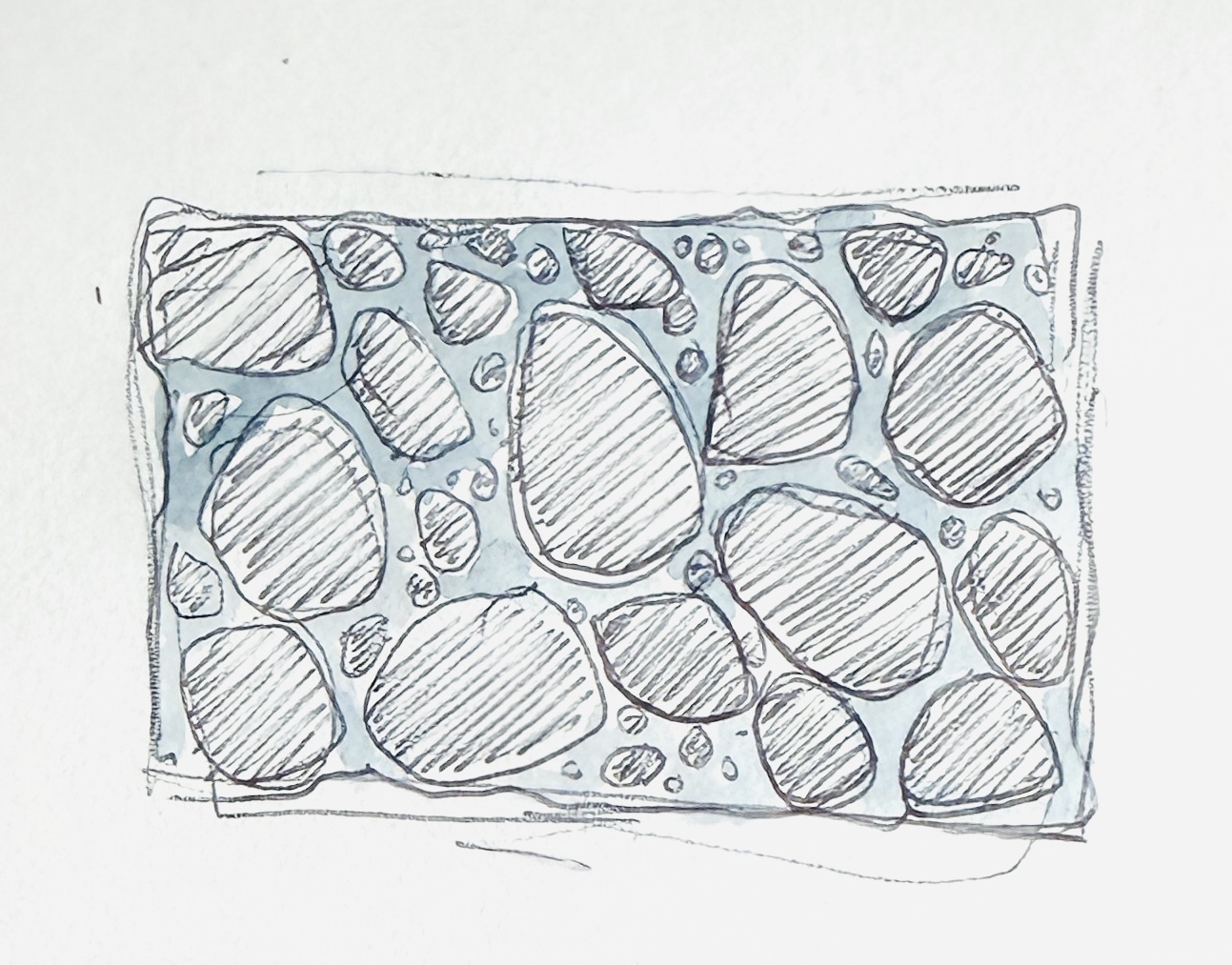
This proposal looks into using diatoms to create a new aggregate material out of construction waste (ie cement) and diatoms to create a bioreceptive panel system. It plays with the way that diatoms create silica cell walls, leaving opalescent lacy micropatterns that could bring a new use to materials that are very hard to repurpose. By using diatoms with rubble, this ‘new’ material would create beautiful translucent seams that could potentially help host other organisms or itself help with nutrient filtration depending on the design application.
Project 2: Biopigment Stained Glass with Air Quality Indication
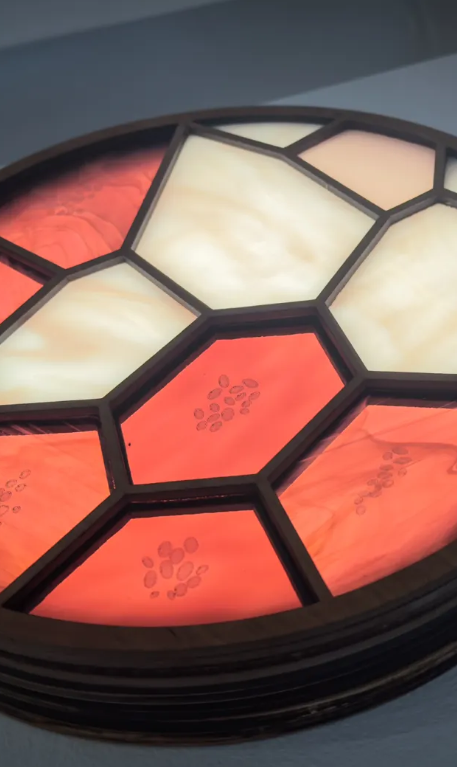
Stained glass has a history of storytelling for the masses, usually in churches and other religious spaces. It would be interesting to see if biopigments could:
- stain glass without chemical inclusions
- react to pollution levels and serve as a visual indicator for air quality in the area. This research would need to be further refined with the intensity of the color, how sensitive the reaction could be, and how the biofilm pigment could impact its environment in terms of microenvironments, both positive and negative.
Project 3: Brick Extremophiles
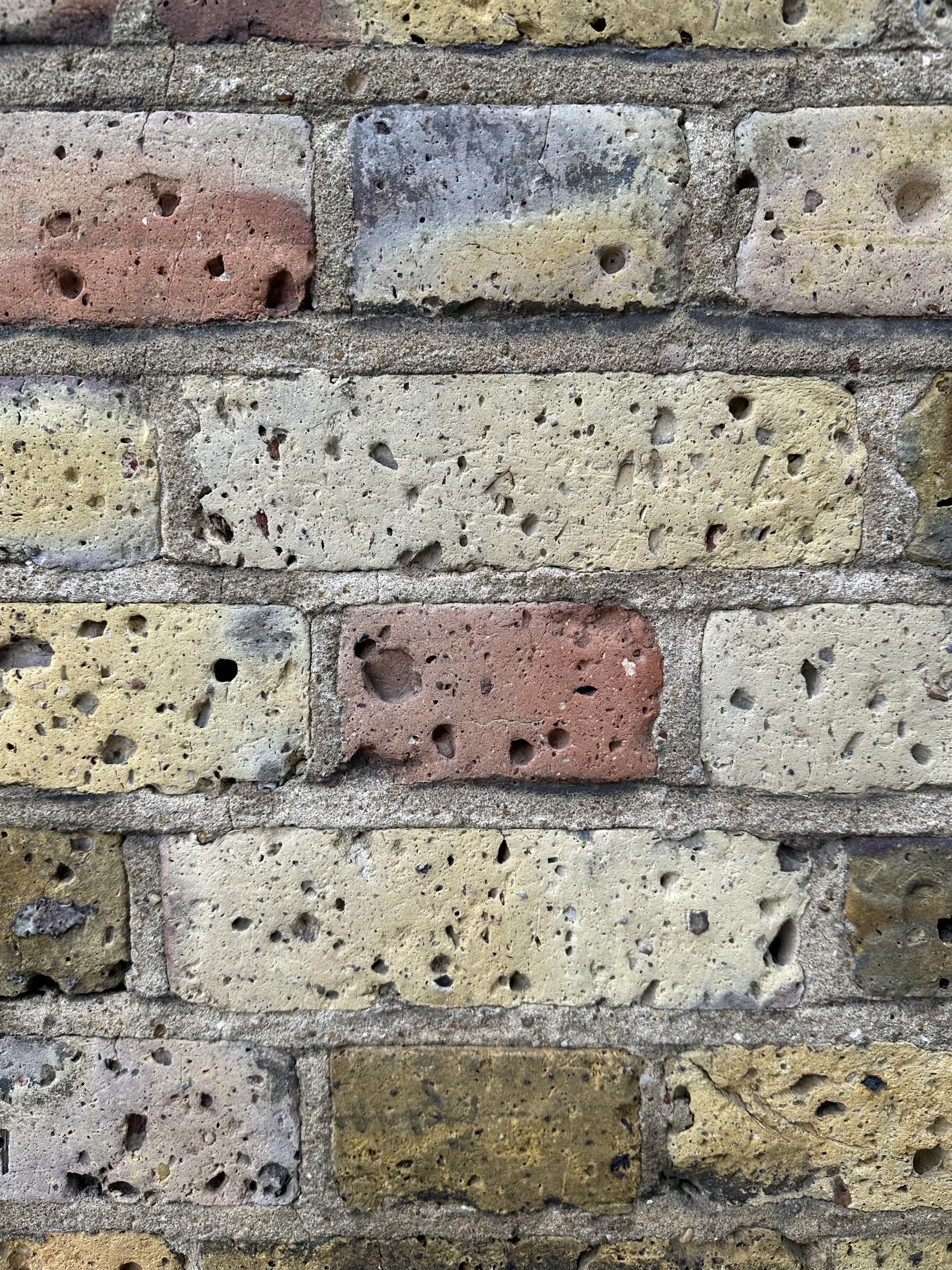
Looking back at a previous project where I studied brick walls and reimagined their structure, it would be interesting to see if there are certain prevalent extremophiles present in bricks especially in iron-rich clay areas. These extremophiles could be further designed to embody carbon and support environmental remediation.
Project 4: Bruising Homes
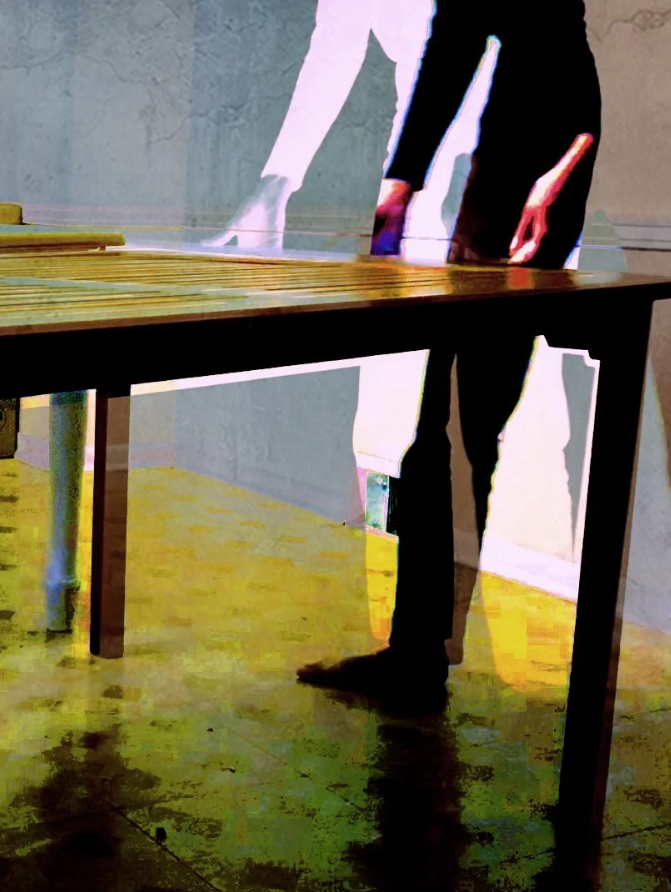
What if buildings bruised?
This is an idea that I pursued in a filmmaking studio in the past that I would like to unpack through alternative means. A touch-reactive biopigment could become a paint or biofilm that responds to the amount of pressure put onto the surface. Relating back to organisms like touch-me-not mimosa plants that are very sensitive to their environment, a paint like this could become an exploration into the permanence of human action, and document our relationship to our homes. The paint/biofilm would begin as a uniform color, and darken in reaction to pressure.