week-02-hw-dna-read-write-and-edit
This week, we were tasked to utilize different tools to be able to virtually read, write, and visualize using samples like lambda DNA from Escherichia coli and the Tumor suppressor gene from humans.
Part 1 - Introduction and DNA digest.
Gel Electrophoresis
- Gel - material
- Electro - Electric
- Phoresis - to transport
- It is a method used to transport charged materials using an electric field through a gel (a Semi-liquid substance).
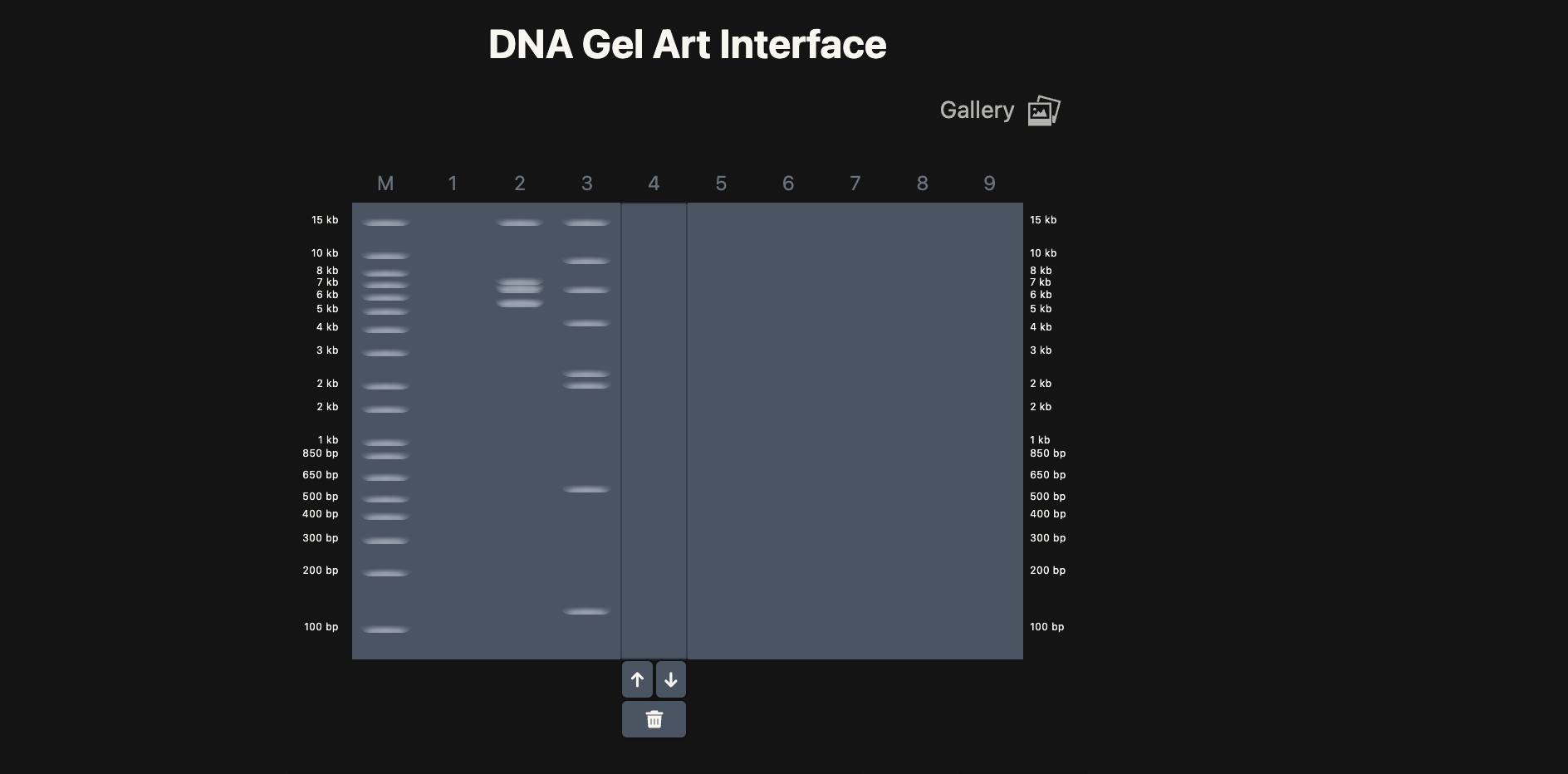
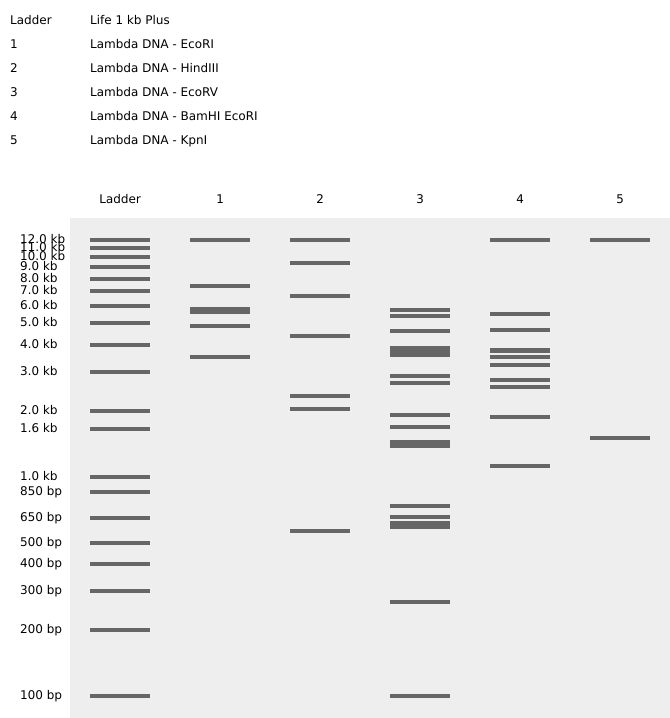
Digested fragments of Lambda DNA
Part 2
For this assignment, I have chosen the Tumor Repressor protein 53 in humans. I chose this because I have previously made a comparative analysis with the Trp 53 protein from the mouse.
3.1 The full amino acid sequence of Tp53 protein in FASTA format
AAH03596.1 Tumor protein p53 [Homo sapiens] MEEPQSDPSVEPPLSQETFSDLWKLLPENNVLSPLPSQAMDDLMLSPDDIEQWFTEDPGPDEAPRMPEAA PRVAPAPAAPTPAAPAPAPSWPLSSSVPSQKTYQGSYGFRLGFLHSGTAKSVTCTYSPALNKMFCQLAKT CPVQLWVDSTPPPGTRVRAMAIYKQSQHMTEVVRRCPHHERCSDSDGLAPPQHLIRVEGNLRVEYLDDRN TFRHSVVVPYEPPEVGSDCTTIHYNYMCNSSCMGGMNRRPILTIITLEDSSGNLLGRNSFEVRVCACAGR DRRTEEENLRKKGEPHHELPPGSTKRALPNNTSSSPQPKKKPLDGEYFTLQIRGRERFEMFRELNEALEL KDAQAGKEPGGSRAHSSHLKSKKGQSTSRHKKLMFKTEGPDSD
3.2 Reverse Translated Sequence
atggaagaaccgcagagcgatccgagcgtggaaccgccgctgagccaggaaacctttagc gatctgtggaaactgctgccggaaaacaacgtgctgagcccgctgccgagccaggcgatg gatgatctgatgctgagcccggatgatattgaacagtggtttaccgaagatccgggcccg gatgaagcgccgcgcatgccggaagcggcgccgcgcgtggcgccggcgccggcggcgccg accccggcggcgccggcgccggcgccgagctggccgctgagcagcagcgtgccgagccag aaaacctatcagggcagctatggctttcgcctgggctttctgcatagcggcaccgcgaaa agcgtgacctgcacctatagcccggcgctgaacaaaatgttttgccagctggcgaaaacc tgcccggtgcagctgtgggtggatagcaccccgccgccgggcacccgcgtgcgcgcgatg gcgatttataaacagagccagcatatgaccgaagtggtgcgccgctgcccgcatcatgaa cgctgcagcgatagcgatggcctggcgccgccgcagcatctgattcgcgtggaaggcaac ctgcgcgtggaatatctggatgatcgcaacacctttcgccatagcgtggtggtgccgtat gaaccgccggaagtgggcagcgattgcaccaccattcattataactatatgtgcaacagc agctgcatgggcggcatgaaccgccgcccgattctgaccattattaccctggaagatagc agcggcaacctgctgggccgcaacagctttgaagtgcgcgtgtgcgcgtgcgcgggccgc gatcgccgcaccgaagaagaaaacctgcgcaaaaaaggcgaaccgcatcatgaactgccg ccgggcagcaccaaacgcgcgctgccgaacaacaccagcagcagcccgcagccgaaaaaa aaaccgctggatggcgaatattttaccctgcagattcgcggccgcgaacgctttgaaatg tttcgcgaactgaacgaagcgctggaactgaaagatgcgcaggcgggcaaagaaccgggc ggcagccgcgcgcatagcagccatctgaaaagcaaaaaaggccagagcaccagccgccat aaaaaactgatgtttaaaaccgaaggcccggatagcgat
3.3 Optimized codon
ATGGAAGAACCACAAAGTGACCCCAGCGTTGAACCGCCGCTGAGCCAGGAAACCTTCAGTGATCTGTGGAAACTGCTGCCGGAAAACAACGTGCTGAGCCCGCTGCCGAGCCAGGCGATGGATGATCTGATGCTGTCTCCGGATGACATTGAGCAGTGGTTCACCGAAGACCCCGGACCGGATGAAGCGCCGCGTATGCCGGAAGCAGCACCGCGCGTAGCACCGGCACCGGCAGCACCGACCCCGGCTGCACCTGCACCGGCACCCTCATGGCCGCTCAGCAGCTCAGTGCCCAGCCAGAAAACCTATCAGGGCAGCTATGGCTTCCGCCTGGGCTTCCTGCACAGCGGCACGGCAAAATCGGTGACCTGCACCTACAGCCCTGCGCTGAACAAGATGTTCTGCCAGCTGGCGAAAACCTGCCCGGTGCAGCTGTGGGTTGACTCCACACCGCCGCCAGGCACCCGTGTGCGTGCGATGGCGATCTATAAACAGAGCCAGCACATGACCGAAGTGGTGCGTCGCTGCCCGCACCATGAGCGCTGCTCTGACAGCGACGGTCTGGCACCGCCGCAGCATCTGATCCGCGTTGAAGGTAACCTGCGTGTGGAGTATCTGGATGACCGCAACACCTTCCGCCACAGCGTGGTGGTGCCGTATGAACCGCCGGAAGTGGGCAGCGACTGCACCACCATCCACTACAACTACATGTGCAACTCCTCCTGCATGGGCGGTATGAACCGCCGTCCGATTCTGACCATTATCACCCTGGAAGACTCCAGCGGTAACCTGCTGGGCCGTAACAGCTTTGAAGTGCGTGTGTGTGCCTGTGCCGGCCGCGATCGCCGCACGGAAGAAGAAAACCTGCGCAAGAAAGGTGAACCGCACCACGAACTGCCGCCGGGCAGCACCAAGCGTGCGCTGCCGAACAACACCTCCTCCAGCCCGCAGCCGAAGAAGAAACCGCTGGATGGCGAGTACTTCACCCTGCAGATCCGTGGGCGTGAACGTTTTGAAATGTTCCGTGAGCTGAACGAAGCGCTGGAGCTGAAAGATGCGCAGGCGGGTAAAGAGCCGGGTGGCTCACGTGCGCACAGCAGCCACCTGAAATCCAAAAAAGGTCAGAGCACCAGCCGTCACAAAAAACTGATGTTTAAAACTGAAGGGCCGGACAGCGAT
3.4 Expression Method
Cell-dependent
- Transform plasmid into E. coli
- Cells replicate plasmid + express protein
- Induce expression (e.g., IPTG)
- Lyse cells, purify protein
Cell-free
- Add DNA/RNA to cell extract
- Extract contains ribosomes + factors
- Protein made in a test tube
- Faster; good for toxic proteins
3.5 Protein Alignment
The main reason that the same gene can produce different proteins at the transcriptional level is mainly because of :
- Alternative Splicing
- Alternative transcriptional and translational initiation.
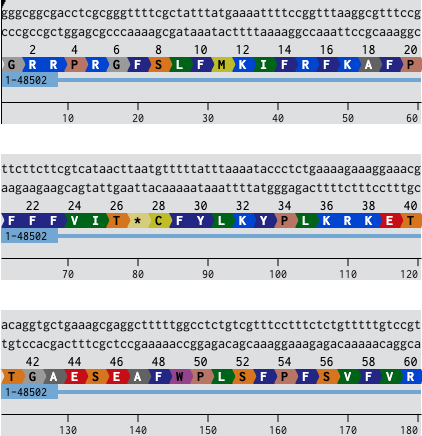
4 Preparing a Twist DNA Synthesis Order
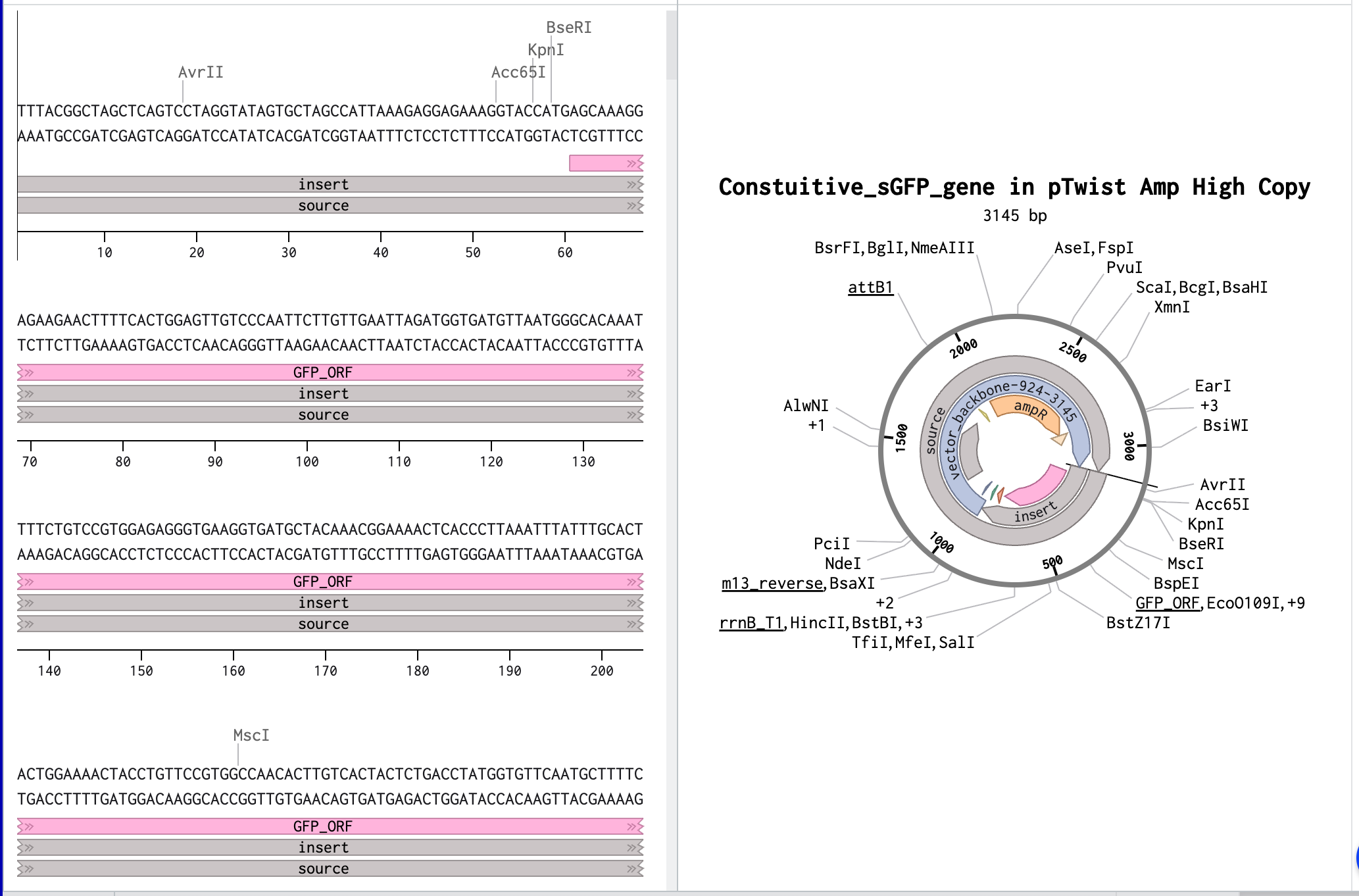
In this part, I was able to create an expression cassette that can be inserted into a vector plasmid and incorporated with a cell-free or a cell-dependent medium to express a desired protein. To exercise the entire procedure of making a construct and getting a customised plasmid vector benchling and Twist were used. I used the sGFP gene sequence from NCBI and annotated its promoter, ribosome-binding site, optimized codon region, and its terminator on benchling and later a pTwist Amp High Copy vector was used after downloading from Twist.