week-07-hw-genetic-circuits-part-ii
Assignment Part 1: Intracellular Artificial Neural Networks (IANNs)
What advantages do IANNs have over traditional genetic circuits, whose input/output behaviors are Boolean functions?
- Intracellular artificial neural networks provide more flexible and nuanced behavior than traditional Boolean genetic circuits because they can process inputs in a graded, continuous manner rather than simple on or off states. This allows cells to integrate multiple signals and produce proportional responses, making them better suited for complex decision making and pattern recognition inside biological systems.
Describe a useful application for an IANN; include a detailed description of input/output behavior, as well as any limitations an IANN might face to achieve your goal.
- A useful application of an intracellular artificial neural network would be in disease sensing, such as detecting cancer-specific molecular signatures. Inputs could be multiple biomarkers like microRNAs or metabolites, and the output could be the expression of a therapeutic protein only when a specific combination and threshold of signals is reached. This enables precise targeting and reduces off-target effects, although limitations include noise in gene expression, slow response times, and difficulty in tuning weights accurately inside living cells.
Below is a diagram depicting an intracellular single-layer perceptron where the X1 input is DNA encoding for the Csy4 endoribonuclease and the X2 input is DNA encoding for a fluorescent protein output whose mRNA is regulated by Csy4. Tx: transcription; Tl: translation.
- The perceptron system described works by using inputs that influence gene expression levels, where one input produces the Csy4 enzyme that regulates the mRNA of another gene encoding a fluorescent protein. Transcription and translation convert DNA inputs into proteins, and the interaction between Csy4 and the target mRNA effectively acts as a weighted connection, allowing the system to compute a combined output similar to a neural network node.
Assignment Part 2: Fungal Materials
What are some examples of existing fungal materials and what are they used for? What are their advantages and disadvantages over traditional counterparts?
- Fungal materials include products like mycelium based packaging, leather alternatives, and construction materials, often developed by companies such as Ecovative. These materials are biodegradable, sustainable, and require low energy to produce compared to plastics or animal based materials, but they can have limitations in durability, scalability, and consistency compared to traditional materials.
What might you want to genetically engineer fungi to do and why? What are the advantages of doing synthetic biology in fungi as opposed to bacteria?
- Genetically engineering fungi could allow them to produce specialized biomaterials, degrade environmental pollutants, or synthesize valuable compounds such as pharmaceuticals. Fungi are advantageous over bacteria because they naturally secrete large amounts of proteins, can grow into structured materials like mycelium networks, and are better suited for producing complex molecules, although they are generally slower growing and harder to genetically manipulate.
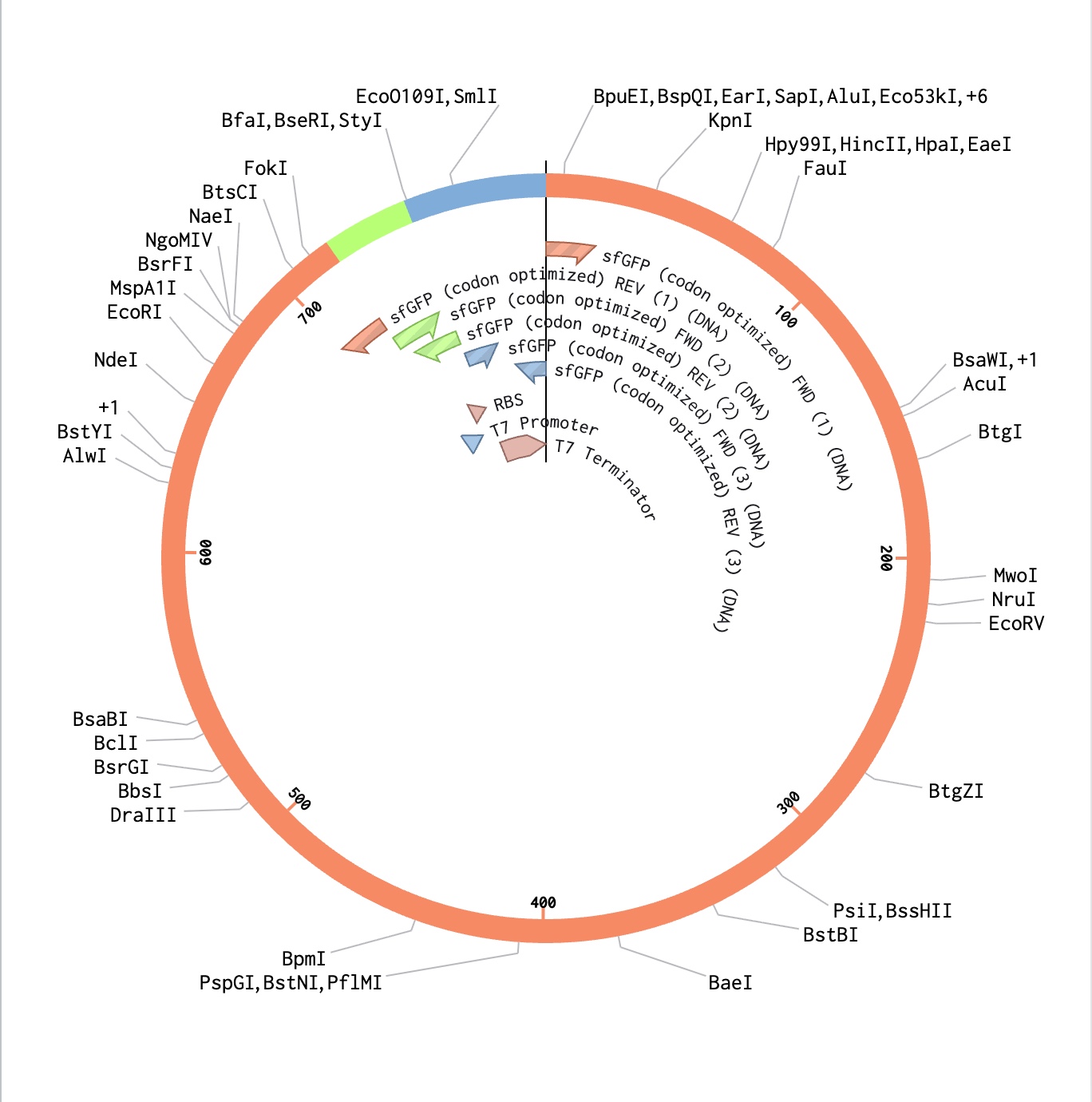
Part 3 First DNA Twist Order design