<Kaleab Berhanu> — HTGAA Spring 2026
About me
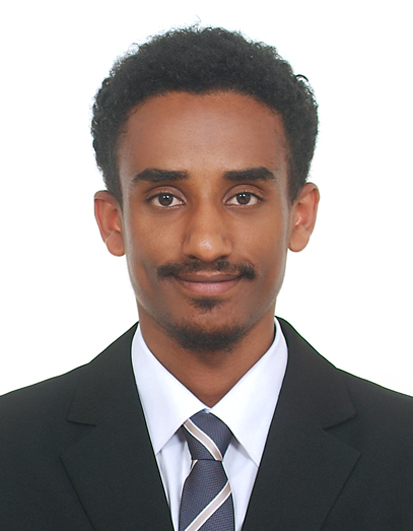
About Me
My name is Kaleab Berhanu, and I am a senior student double-majoring in Life Science and Biomedical Engineering at Hanyang University. My academic journey has taken me across the intersection of biology, engineering, and computation, and I am deeply motivated by the question of how biological systems can be understood, redesigned, and deployed to solve real-world problems in medicine and human health.
Research Experience
My research background began at the Neural Intelligence and Systems Laboratory at Hanyang University, where I worked as a research intern investigating the role of EPG neurons in the visual reflex behavior of Drosophila melanogaster. Using the UAS-GAL4 system to genetically manipulate specific neuronal populations, I maintained genetic lines through controlled inbreeding and analyzed behavioral and neural datasets using MATLAB. This experience gave me a deep appreciation for how much remains unknown about the nervous system, and how rigorous experimental design and patient analysis are the foundation of meaningful scientific discovery.
HTGAA 2026
This spring, I participated in How to Grow Almost Anything (HTGAA) 2026, MIT Media Lab’s intensive synthetic biology program, with weekly lab sessions held at Yonsei University. Across the course, I worked on DNA reading, writing, and editing, genetic circuit design, protein engineering, cell-free protein synthesis, lab automation, bioproduction, imaging and measurement, and building genomes. I completed computational projects using tools including Benchling, Asimov Kernel, PepMLM, PeptiVerse, and AlphaFold3, and gained hands-on experience with molecular biology techniques across wet and dry lab contexts.
Final Project
My HTGAA final project is titled A Hydrogel-Embedded Multiple Input-Output (MIMO) Genetic Circuit for IL-6 and Hypoxia Detection. The project addresses a critical gap in clinical monitoring: the inability to detect localized inflammation and hypoxia in real time at the tissue level without repeated blood draws or imaging. I designed a cell-free genetic circuit that senses two simultaneous disease signals — elevated IL-6 (an inflammatory cytokine) and low oxygen tension (hypoxia) — and produces two outputs: sfGFP fluorescence as a diagnostic reporter and a therapeutic peptide as a functional biological output. The circuit is encapsulated within an agarose hydrogel bioink matrix, creating a self-contained sense-and-respond biomaterial platform with potential applications in wound care, oncology, and critical care medicine globally.
Beyond the Lab
Outside of research, I have worked as a Global Ambassador for Hanyang University and produced content across English and Korean channels for ESAK. I participated in the Korea–Cambodia ICT Exchange Program organized by the Korea Productivity Center and KOICA, where I led the field research component of a smart irrigation project, conducting farmer interviews and designing a prototype that addressed real agricultural challenges, ultimately winning third place at a local competition in Cambodia. I also completed the LINC 3.0 Industry Collaboration Program, developing a global market strategy for an AI-based environmental analysis startup, and worked on data analysis and digital competency through Python-based coursework.
Future Aspirations
My long-term goal is to become a biotechnologist working at the frontier of synthetic biology and therapeutic engineering. I am particularly drawn to the design of programmable biological systems — circuits, materials, and platforms that can autonomously sense disease and respond with a therapeutic output, without requiring living organisms or complex clinical infrastructure. I am strongly considering pursuing graduate school in biomedical engineering or synthetic biology, where I hope to develop the depth of expertise needed to contribute independently to the fields of neural engineering, cell-free systems, and implantable biomaterials. I believe that the future of medicine lies not in reactive treatment but in proactive, localized biological intelligence embedded directly at the site of disease — and I intend to spend my career helping build it.
Contact info
- Email : kaluberu994@gmail.com
- Phone number : +821059255014
Homework
- week-01-hw-principles-and-practices
- week-02-hw-dna-read-write-and-edit
- week-03-hw-lab-automation
- week-04-hw-protein-design-part-i
- week-05-hw-protein-design-part-ii
- week-06-hw-genetic-circuits-part-ii
- week-07-hw-genetic-circuits-part-ii
- week-09-hw-cell-free-systems
- week-10-hw-imaging-and-measurement
- week-11-hw-building-genomes