Can flashes of light be used to grow a computer? The idea is to shine light at cells to get them to produce proteins that reconfigure the structure that surrounds the cell. I’m curious if cells can produce proteins that cause interactions in their surrounding environment.
#Goal: Maintain Biodiversity.
Reduce Proliferation Inhibit self-replication ability Action 1: Create Biological Testing Grounds. Researchers across academia and private sectors partner with municipal governments to set aside land via legislation that can be used for testing how cell-computers interact with their environment.
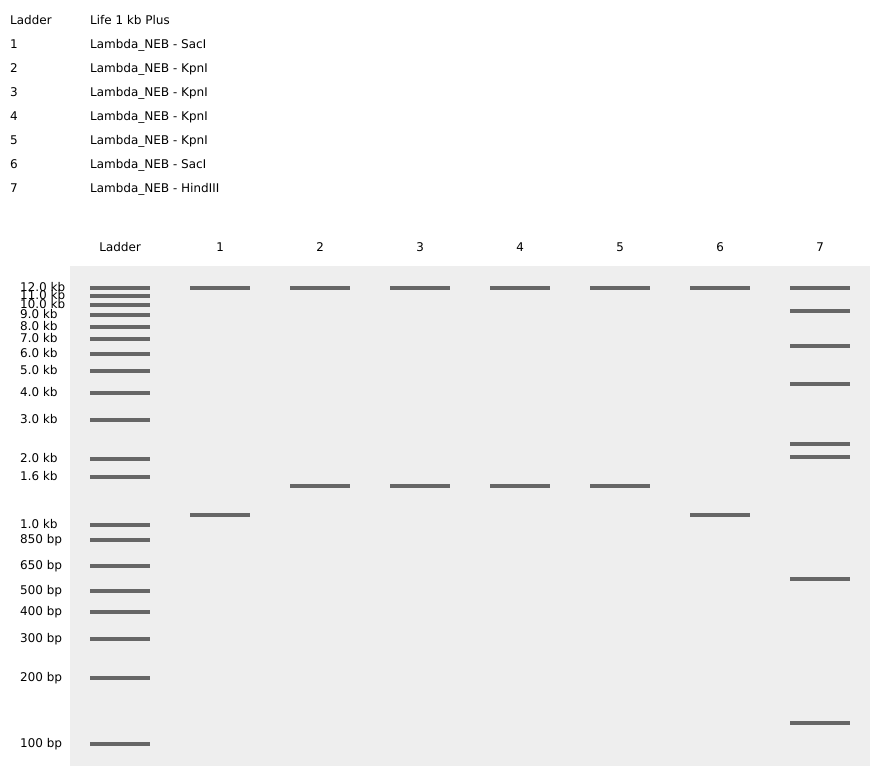
Part 1 Hi. I used the KPNI enzyme repeatedly in the virtual digest. Is it possible to re-use enzymes? I think not. The DNA will have already been cut up.
Part 3 I chose the protein phytochrome, which is found in plants and which detects red light. I chose phytochrome because I wanted to use a protein that’s found in plants. Initially I thought about choosing a protein that’s in asparagus. I learned that asparagus is green because of chlorophyll not because of a protein.
Part 2: The generated peptide with the sequence WRYYAVGAAHKK has an ipTM score of 0.43, which is greater than the SOD1 binding protein’s ipTM score of 0.34. Part 3: Peptides with higher ipTM do not show stronger predicted binding affinity. Peptide with the sequence WRYYAVGAAHKK has the highest ipTM of 0.43, but the first two peptides have lower ipTMs and stronger predicted binding affinities. All three peptides are soluble. I don’t know what therapeutic properties are.
IANNs have components that check whether two values are similar in magnitude, as opposed to just checking whether the values are HIGH or LOW. In other words, they can perform analog computations.
Here is a sample application for an IANN: Help calm down an allergic reaction to peanuts.
Input: peanut protein, white blood cells
Output: anti-inflammatory signals
Limitations: There might be an allergic reaction happening at a site that’s not near the cell with a genetic circuit, in which case the circuit won’t get triggered.
General Qs:
One advantage of cell-free protein synthesis is that the reaction can be freeze-dried to decrease its sensitivity to storage conditions. Freeze-dried cell-free protein synthesis mixture is sehlf-stable for a year.
CFPS is also sometimes faster because all the energy of the system is directed at producing a protein.
The main components of a cell-free expression system are:
DNA: contains code for protein of interest
RNA polymerase: produces RNA
Subsections of Homework
Week 1 HW: Principles and Practices & Lecture 2 Prep
Can flashes of light be used to grow a computer? The idea is to shine light at cells to get them to produce proteins that reconfigure the structure that surrounds the cell. I’m curious if cells can produce proteins that cause interactions in their surrounding environment.
#Goal: Maintain Biodiversity.
Reduce Proliferation
Inhibit self-replication ability
Action 1: Create Biological Testing Grounds.
Researchers across academia and private sectors partner with municipal governments to set aside land via legislation that can be used for testing how cell-computers interact with their environment.
Action 2: Create an organization that maintains a digital database of synthetic genomes. The government funds the database maintenance and internet infrastructure to ensure it remains accessible to future generations.
Action 3: Create legislation that limits the molecules that researchers can surround cell-computers with.
Approach
Maintaining Biodiversity
Fostering Lab Safety
Increasing Bioliteracy
Biological Testing Grounds
2
1
2
Synthetic Genome Database
3
3
1
Legislating Molecules
1
2
3
I would prioritize the creation of biological testing grounds because it scores evenly for maintaining biodiversity and increasing bioliteracy. I think increasing bioliteracy by itself furthers the mission of maintaining biodiversity. In order for biological testing grounds to help with bioliteracy, they need to be labelled on maps and include explanatory signage at the specific sites.
The assumption behind biological testing grounds is that there exists a technology that can prevent the spread of synthetic DNA beyond its borders (the assumption behind this assumption is that this technology would be calibrated to the DNA that’s being tested, so it doesn’t affect all DNA).
One uncertainty is that the findings from observing how a cell-computer interacts with the molecules in the biological training grounds might not translate to the rest of the world. However, the sub-goal of reducing proliferation should minimize harm to biodiversity. The assumption behind reducing proliferation being helpful is that quantity is a danger instead of the ability of cell-computers to change their surroundings.
Ethical concerns from this week:
I read the report titled, “Charting the Future of Biotechnology” by the National Security Commission on Emerging Biotechnology and saw mentions of biotechnology being used for defense and warfare. I am concerned about if trying to create messaging about the peaceful uses of biotechnology will take away attention from the warfare uses of biotechnology.
Week 2 Lecture Prep
Professor Jacobson:
Error rate of polymerase is 106. The human genome is 3.2x10⁹. DNA polymerase does proof-reading to correct for the error.
I’m not sure. I see that the average human protein is 1036 base pairs. I don’t know how to do the permutation math for how many different combinations there could be.
Well Lysine is an essential amino acid so it does not seem right to remove something that’s essential from creatures.
Week 2 HW
Part 1
Hi. I used the KPNI enzyme repeatedly in the virtual digest. Is it possible to re-use enzymes? I think not. The DNA will have already been cut up.
Part 3
I chose the protein phytochrome, which is found in plants and which detects red light. I chose phytochrome because I wanted to use a protein that’s found in plants. Initially I thought about choosing a protein that’s in asparagus. I learned that asparagus is green because of chlorophyll not because of a protein.
Codon optimization might be useful for speeding up protein production. I chose to optimize codon usage for spreading earthmoss because I like moss.
A cell-dependent way to produce phytochrome is:
put the DNA into a plasmid
put the plasmid into spreading earthmoss (how???? I wonder if putting the plasmid into water and putting the water onto the earthmoss would work)
5.1 DNA Read
i)
The DWORF gene because it’s short. I am imagining that a shorter gene will be easier for me to read.
AI prompts: “what’s the shortest dna sequence found in nature?” and “can you name me the functional genes that encode for short peptides”
ii)Next generation sequencing by synthesis because I want to see the colors light up one by one as the DNA is synthesized.
I don’t know.
Input: Human DNA. Preparation: I don’t know.
Add adaptors to end of DNA sequence. Denature DNA to get one strand. Make nucleotides have fluorescent tags. Polymerase will make the complementary strand. A camera takes images of what’s happening.
Short single-stranded nucleotide sequences.
5.2 DNA Write
i) A genetic circuit so I can learn what it is. When light is detected, light up.
ii) Chip based DNA synthesis. involving….a silicon wafer….optical addressing….
I don’t yet understand how manipulating protons related to synthesizing DNA..~~–
I don’t know what the limitations of this technology are.
5.3 DNA Edit
i) Edit the DNA of the green algae that sits on lakes to see if it can send light into the water below it. Why? To see if something that grows with light can also emit light.
Week 3 HW
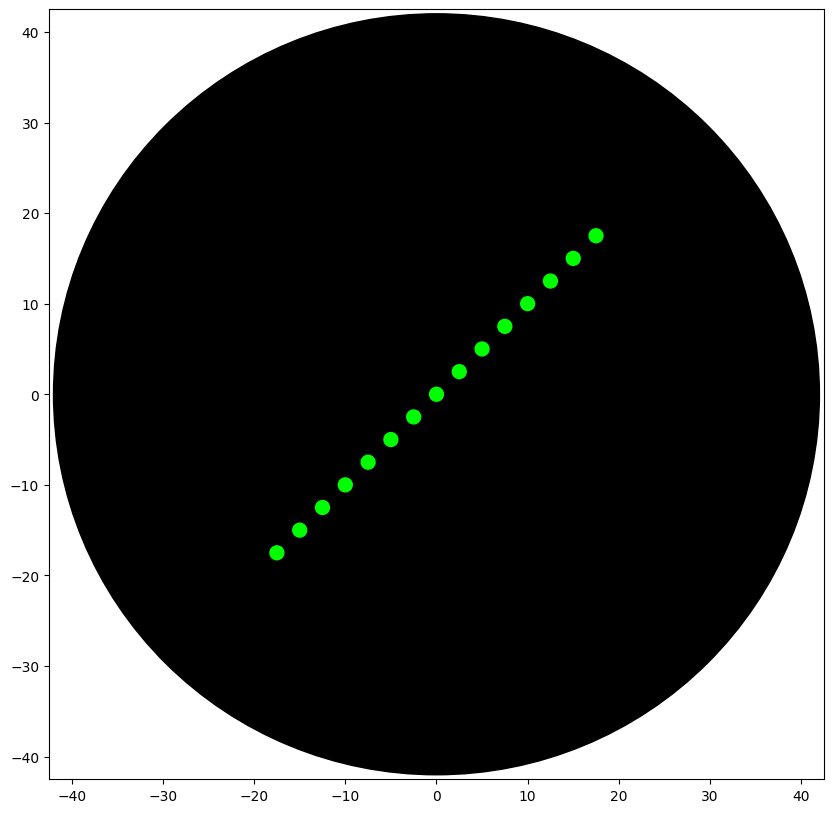
import random

radius = 40
xloc = -20
yloc = -20
cursor = center_location.move(types.Point(0,0))

# Aspirate
pipette_20ul.pick_up_tip()
pipette_20ul.aspirate(20, location_of_color('Green'))

for num in range(15):
    xloc += 2.5
    yloc += 2.5
    randomNum = random.randint(0,20)
    cursor = center_location.move(types.Point(xloc, yloc))
    dispense_and_detach(pipette_20ul, 1, cursor)

pipette_20ul.drop_tip()
Week 5 HW
Part 2: The generated peptide with the sequence WRYYAVGAAHKK has an ipTM score of 0.43, which is greater than the SOD1 binding protein’s ipTM score of 0.34.
Part 3:
Peptides with higher ipTM do not show stronger predicted binding affinity. Peptide with the sequence WRYYAVGAAHKK has the highest ipTM of 0.43, but the first two peptides have lower ipTMs and stronger predicted binding affinities.
All three peptides are soluble. I don’t know what therapeutic properties are.
Part 4:
I didn’t fix the errors I was getting with moPPIT.
Week 7 HW: Genetic Circuits Part II: Neuromorphic Circuits
IANNs have components that check whether two values are similar in magnitude, as opposed to just checking whether the values are HIGH or LOW. In other words, they can perform analog computations.
Here is a sample application for an IANN:
Help calm down an allergic reaction to peanuts.
Input: peanut protein, white blood cells
Output: anti-inflammatory signals
Limitations: There might be an allergic reaction happening at a site that’s not near the cell with a genetic circuit, in which case the circuit won’t get triggered.
Due to the threshold function, there might be false positives. This might happen if there were a lot of white blood cells but zero peanut protein. In this case, the genetic circuit woud still fire, which is an undesirable outcome.
The anti-inflammatory signal from the circuit might be slow acting.
The entire genetic circuit runtime might be slower than that of the allergic reaction.
Week 9 HW: Week 9 — Cell-Free Systems
General Qs:
One advantage of cell-free protein synthesis is that the reaction can be freeze-dried to decrease its sensitivity to storage conditions. Freeze-dried cell-free protein synthesis mixture is sehlf-stable for a year.
CFPS is also sometimes faster because all the energy of the system is directed at producing a protein.
The main components of a cell-free expression system are:
DNA: contains code for protein of interest
RNA polymerase: produces RNA
nucleotides: for RNA production
amino acids: for protein production
ribosomes & tRNA: the machinery that produces the proteins
energy source to power the reaction
Energy regneration is important for a CFPS system because some chemical reactions in cells require energy.
Part 2: Creatine phosphate and creatine kinase can be used to ensure a continous supply of ATP. Creatine kinase will guide the phosphate group from the creatine phosphate molecule to ADP (which is a byproduct of the breakdown of ATP). Combined, they form ATP.