Week 03 HW: Lab Automation
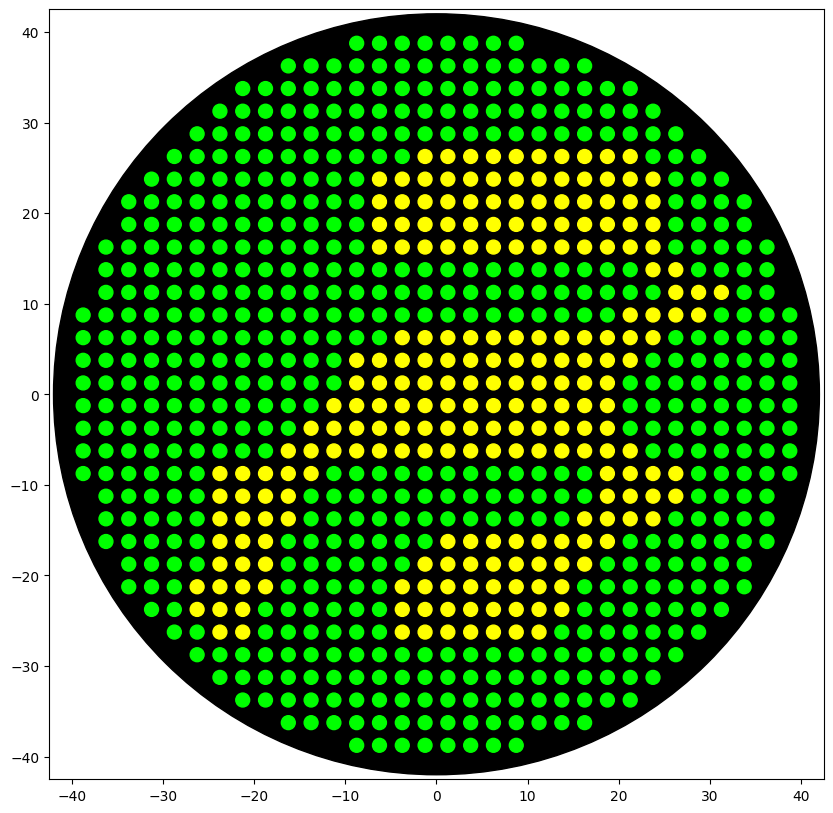
Python Script for Opentrons Artwork: https://colab.research.google.com/drive/14m54uLCM5UtsggVjU2Ucxh5hhtNELWD2#scrollTo=pczDLwsq64mk&line=4&uniqifier=1
- Find and describe a published paper that utilizes the Opentrons or an automation tool to achieve novel biological applications.
I found the paper ¨Opentrons for automated and high-throughput viscometry¨ very interesting.
¨The operating protocol involves measuring the amount of liquid dispensed over a set time for given dispense conditions. Data collected at different set dispense flow rates was used to train an ensemble machine learning regressor to predict Newtonian liquid viscosity¨. They demonstrated the ability of the proxy viscometer to characterize the rheological behavior of two types of power-law fluids.
Write a description about what you intend to do with automation tools for your final project.
For my final project, I intend to focus on a challenge that is directly relevant to my startup, Bioplastix, which develops technologies for the production of bio-based copolymers with plastic properties. I am particularly interested in exploring how low-cost automation tools, such as the Opentrons OT-2, can accelerate enzyme discovery and biopolymer development workflows. I have two potential project directions:
Idea 1: High-Throughput Screening of Polymerizing Enzymes: Bioplastix has access to a diverse environmental enzyme library. Our goal is to identify enzymes capable of polymerizing specific monomers into useful copolymers. An initial in silico screening step can be performed by identifying genetic sequences that are homologous to known polymerizing enzymes. However, the key bottleneck occurs during experimental validation in the wet lab. Using automation tools, we could perform parallel screening of up to 96 enzyme candidates per plate, standardizing reaction setup to reduce variability. This will be possible Implementing colorimetric assays to detect polymer formation. The automation platform would allow us to screen dozens (or hundreds) of enzymes under consistent conditions, significantly accelerating discovery while reducing human error.
Idea 2: Automated Cell-Free Production of Copolymers: A second direction would be to explore automated workflows for cell-free production systems. Instead of expressing enzymes in living cells, we could use cell-free systems to produce polymers. This would involve screen different reaction conditions (pH, cofactors, substrate ratios, temperature), optimize copolymer production in a high-throughput format.