Week 11 HW: Bioproduction & Cloud Labs
Week 11 — Bioproduction & Cloud Labs
Unfortunately, I was unable to contribute a pixel before the 4/19 deadline. However, I found the concept of the project compelling: using a cloud lab to run a 1,536-well plate as a collaborative canvas is a beautiful intersection of automation, community, and art.
What I liked: The idea of distributing authorship across participants worldwide and producing a physical biological artifact is genuinely novel. It turns a high-throughput experiment into a shared creative act.
What could be improved for next year: Sending reminders closer to the deadline and making the personalized URL more visible in the course Discourse thread would help participation. It would also be interesting to show a real-time preview of the artwork as pixels are added.
2. Cell-Free Protein Synthesis — Component Roles
E. coli Lysate
BL21 (DE3) Star Lysate (includes T7 RNA Polymerase): This lysate provides all the molecular machinery needed for transcription and translation — ribosomes, tRNAs, translation factors, metabolic enzymes, and chaperones. The T7 RNA Polymerase enables transcription from T7 promoter-driven DNA templates.
Salts / Buffer
Potassium Glutamate: Provides K⁺ ions that stabilize ribosome structure and support translation; glutamate also serves as a counterion that is compatible with enzymatic activity at near-physiological concentrations (~312 mM).
HEPES-KOH pH 7.5: A biological buffer that maintains the reaction pH near physiological levels, ensuring optimal enzyme activity and preventing acid-induced fluorophore quenching over long incubations.
Magnesium Glutamate: Supplies Mg²⁺, a critical cofactor for ribosome assembly, tRNA aminoacylation, and polymerase activity; concentration is carefully tuned to balance transcription and translation efficiency.
Potassium phosphate monobasic / dibasic: Together these form a secondary buffering system and provide inorganic phosphate that supports nucleotide recycling and energy metabolism within the lysate.
Energy / Nucleotide System
Ribose: A pentose sugar that serves as substrate for the phosphoribosyl pyrophosphate (PRPP) synthesis pathway, enabling de novo regeneration of nucleoside monophosphates from free bases; it is the central metabolite that makes the NMP-Ribose system sustainable over long reactions.
Glucose: Provides an additional carbon and energy source feeding into glycolysis and the pentose phosphate pathway, supporting ATP regeneration and NADPH production that sustain the reaction over 20+ hours.
AMP, CMP, GMP, UMP: These nucleoside monophosphates are the direct substrates for the energy regeneration pathway; cellular kinases in the lysate phosphorylate them to di- and triphosphate forms (ATP, CTP, GTP, UTP) needed for transcription and translation.
Guanine: A free purine base that enters the purine salvage pathway (via HGPRT: Guanine + PRPP → GMP + PPi), compensating for the absence of pre-formed GMP while avoiding product inhibition.
Translation Mix (Amino Acids)
17 Amino Acid Mix: Provides all standard amino acids except tyrosine and cysteine (which are unstable in bulk amino acid solutions and are supplied separately), giving the ribosomes all building blocks needed for polypeptide synthesis.
Tyrosine: An aromatic amino acid that is sparingly soluble at neutral pH and prone to oxidation; supplied separately at a controlled concentration to ensure availability without precipitation.
Cysteine: A sulfur-containing amino acid that oxidizes rapidly in mixed solutions and can form disulfide bonds prematurely; supplied separately to maintain its reduced, usable form throughout the reaction.
Additives
Nicotinamide: A precursor to NAD⁺ that supports cellular redox reactions within the lysate; maintaining NAD⁺/NADH balance is critical for sustained metabolic activity and oxidative chromophore maturation in fluorescent proteins.
Backfill
Nuclease-Free Water: Used to bring the reaction to final volume without introducing RNases or DNases that would degrade the DNA template or mRNA transcripts.
Differences: 1-hour PEP-NTP vs 20-hour NMP-Ribose-Glucose
The primary difference lies in the energy and nucleotide regeneration strategy. The PEP-NTP system uses phosphoenolpyruvate (PEP) as a high-energy phosphate donor combined with pre-formed NTPs (ATP, GTP, CTP, UTP), enabling immediate and rapid transcription/translation — but PEP is consumed quickly and the system exhausts itself within ~1 hour. The NMP-Ribose-Glucose system instead provides nucleoside monophosphates and simple sugars (ribose + glucose) that are converted to NTPs by endogenous lysate enzymes, creating a slower but sustained regeneration cycle that supports reactions up to 20+ hours.
Additionally, the two systems differ in their additives: the PEP-NTP mix includes spermidine (to stabilize nucleic acids), cAMP, NAD, and folinic acid, while the NMP-Ribose system simplifies this to nicotinamide alone, reflecting a leaner formulation optimized for cost and longevity over the 36-hour artwork incubation.
Bonus: How can transcription occur if GMP is not included but Guanine is?
Cells possess a purine salvage pathway that can convert free purine bases into nucleoside monophosphates without de novo synthesis. The enzyme hypoxanthine-guanine phosphoribosyltransferase (HGPRT), present in the E. coli BL21 lysate, catalyzes: Guanine + PRPP → GMP + PPi, where PRPP (phosphoribosyl pyrophosphate) is generated from ribose-5-phosphate (derived from ribose in the mix) and ATP. The resulting GMP is then phosphorylated to GTP by guanylate kinase and nucleoside diphosphate kinase, making it available for transcription. This approach avoids the product inhibition that pre-formed GMP could exert on certain enzymatic steps.
3. Planning the Global Experiment
Biophysical Properties of the 6 Fluorescent Proteins
a. sfGFP: sfGFP (superfolder GFP) is engineered for extremely robust folding even in challenging environments, making it one of the most reliably expressed proteins in cell-free systems. Its chromophore requires molecular oxygen for maturation, but maturation is fast (~15–30 min), giving strong signal early in the incubation.
b. mRFP1: mRFP1 is a monomeric red fluorescent protein derived from DsRed with a relatively slow chromophore maturation time and requirement for oxidative conditions. In cell-free systems this can mean fluorescence accumulates gradually, and signal at early timepoints may underestimate total protein produced.
c. mKO2: mKO2 (monomeric Kusabira-Orange 2) has a notably slow maturation half-time (~4.5 hours), meaning that even if translation is efficient, fluorescent signal develops slowly. For a 36-hour incubation this is manageable, but it highlights that endpoint fluorescence is a lagged proxy for expression.
d. mTurquoise2: mTurquoise2 is a high-quantum-yield cyan fluorescent protein with fast folding kinetics and good pH stability (pKₐ ~3.1), making it relatively resistant to acidification that can occur in long cell-free reactions as metabolites accumulate. Its fast maturation supports reliable quantification.
e. mScarlet-I: mScarlet-I is among the fastest-maturing red fluorescent proteins (t₁/₂ ~0.7 hours) with high brightness. This makes it an excellent reporter for cell-free systems where the expression window is limited, as fluorescence signal accumulates quickly and reflects synthesis kinetics faithfully.
f. Electra2: Electra2 is a recently developed fluorescent protein specifically engineered for performance in cell-free expression systems. It appears optimized for folding efficiency in the complex lysate environment, potentially offering higher yields than classically evolved fluorescent proteins under the same conditions.
Hypothesis: Reagent Adjustment to Maximize Fluorescence
Target protein: mKO2
Key challenge: Slow chromophore maturation (~4.5 h half-time)
Hypothesis: Increasing the concentration of nicotinamide (beyond the baseline 3.10 mM in the NMP-Ribose mix) will extend sustained metabolic activity in the cell-free reaction over the 36-hour incubation, allowing more mKO2 molecules to complete chromophore maturation and thereby increasing total endpoint fluorescence.
Rationale: Nicotinamide replenishes the NAD⁺ pool consumed by redox reactions in the lysate. As the reaction progresses, NAD⁺ depletion can stall glycolysis and energy regeneration, limiting ongoing translation. For a slow-maturing protein like mKO2, sustained synthesis over many hours is critical — more protein produced means more molecules that can eventually mature. By supplementing nicotinamide (e.g., testing 6 mM, 12 mM, 25 mM), we predict a dose-dependent increase in mKO2 fluorescence at 36 hours, with diminishing returns at concentrations that disturb NAD⁺/NADH balance.
Overview
Cloud laboratories represent a paradigm shift in experimental biology, enabling remote execution of automated protocols with high reproducibility and scalability.
Instead of manually performing experiments, users define protocols that are executed by robotic systems, including liquid handlers, incubators, and plate readers. Data is collected automatically and stored in centralized systems.
Cloud Lab Workflow
Cloud lab workflow
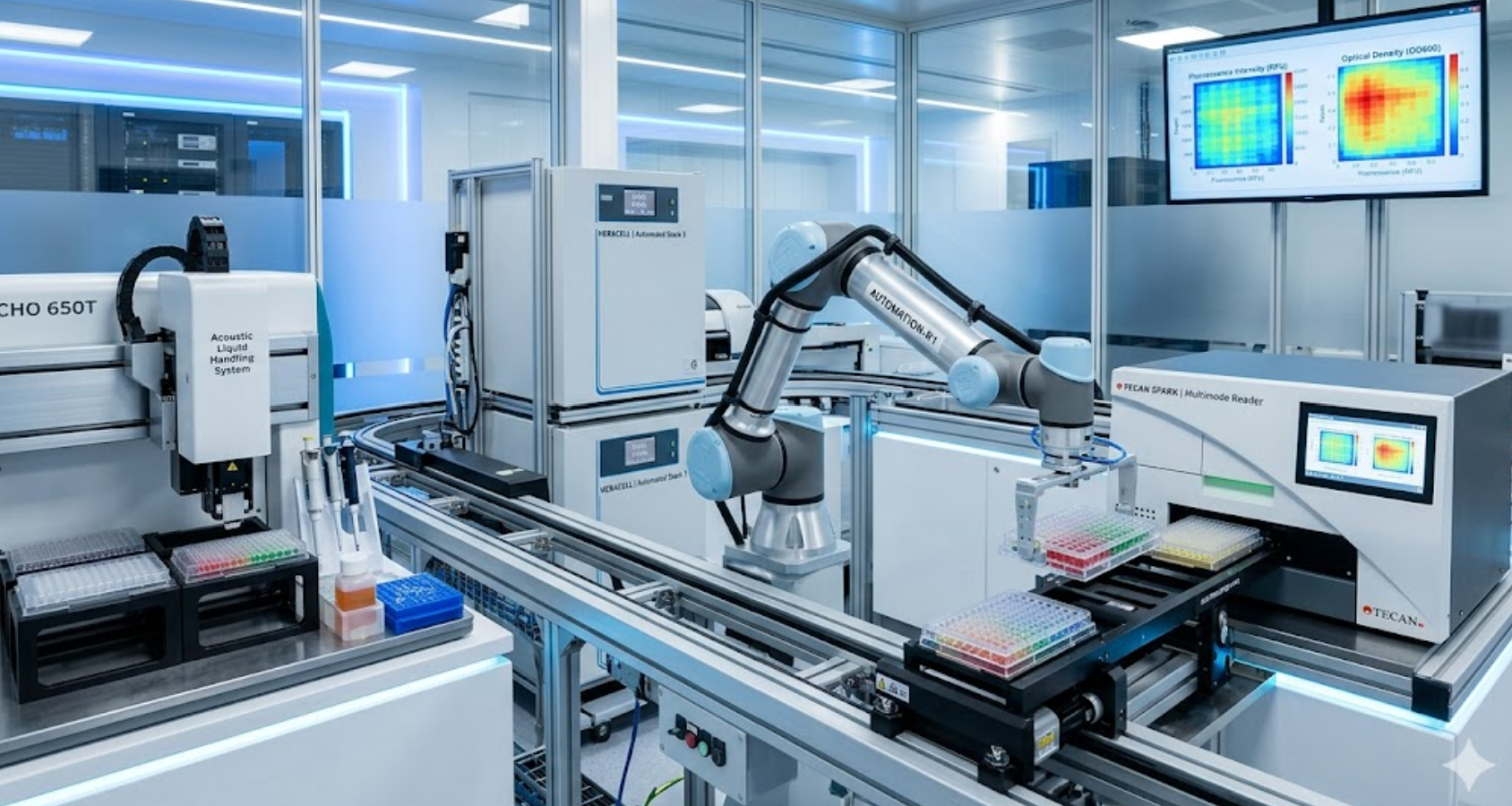
Cloud lab infrastructure integrates:
- Acoustic liquid handling (Echo525)
- Automated pipetting systems (Bravo, Multiflo)
- Incubation and environmental control
- Plate readers for OD600 and fluorescence
- LIMS for full experiment tracking
This enables high-throughput and reproducible experimentation.
Experiment Analysis: Variable Inoculation
Inoculation experiment design
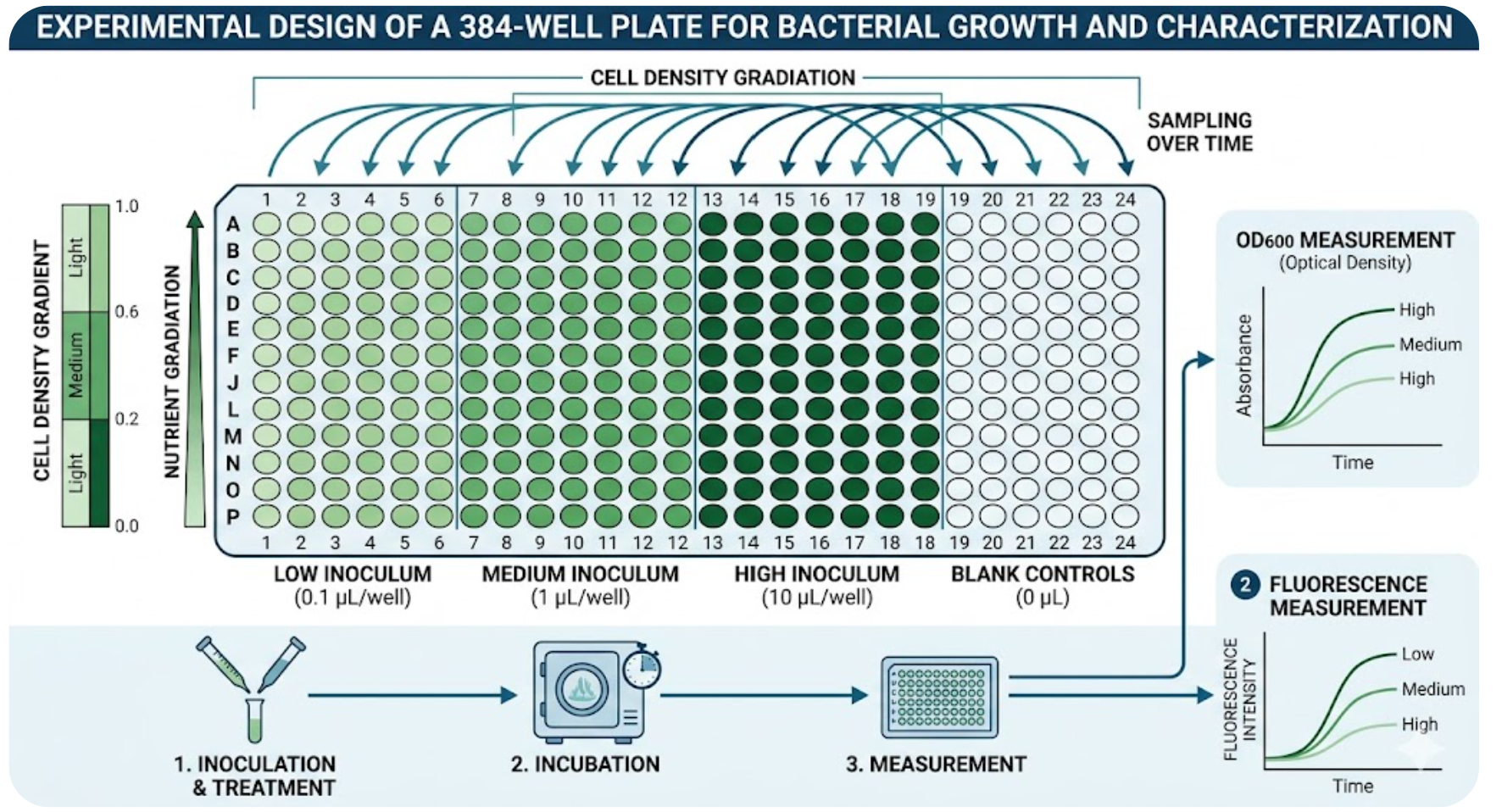
This experiment evaluates how initial bacterial inoculum affects growth and gene expression dynamics.
Design:
- 384-well plate
- LB + Carbenicillin
- Variable inoculation: 100 nL – 3 µL
- Measurements:
- OD600 (growth)
- Fluorescence (sfGFP)
- Frequency: every 30 minutes for 12 hours
Biological Interpretation
Growth vs expression tradeoff
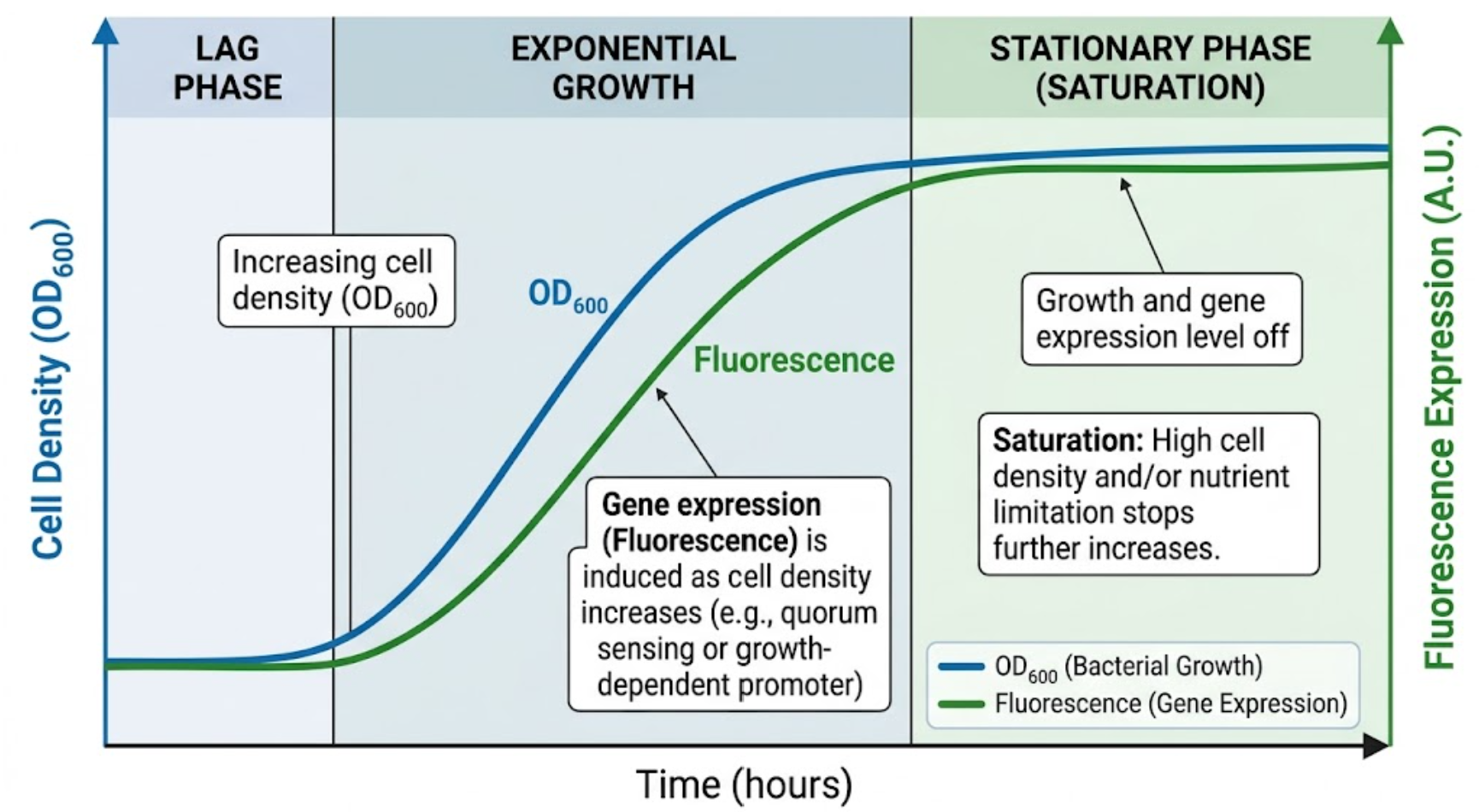
This setup explores:
- Lag phase dependence on initial cell number
- Growth kinetics variability
- Relationship between cell density and gene expression
- Potential saturation effects
The experiment highlights how small differences in initial conditions propagate into measurable biological outcomes.
Proposed Experiment 1 — Cell-Free Biosensor Screening
Biosensor screening
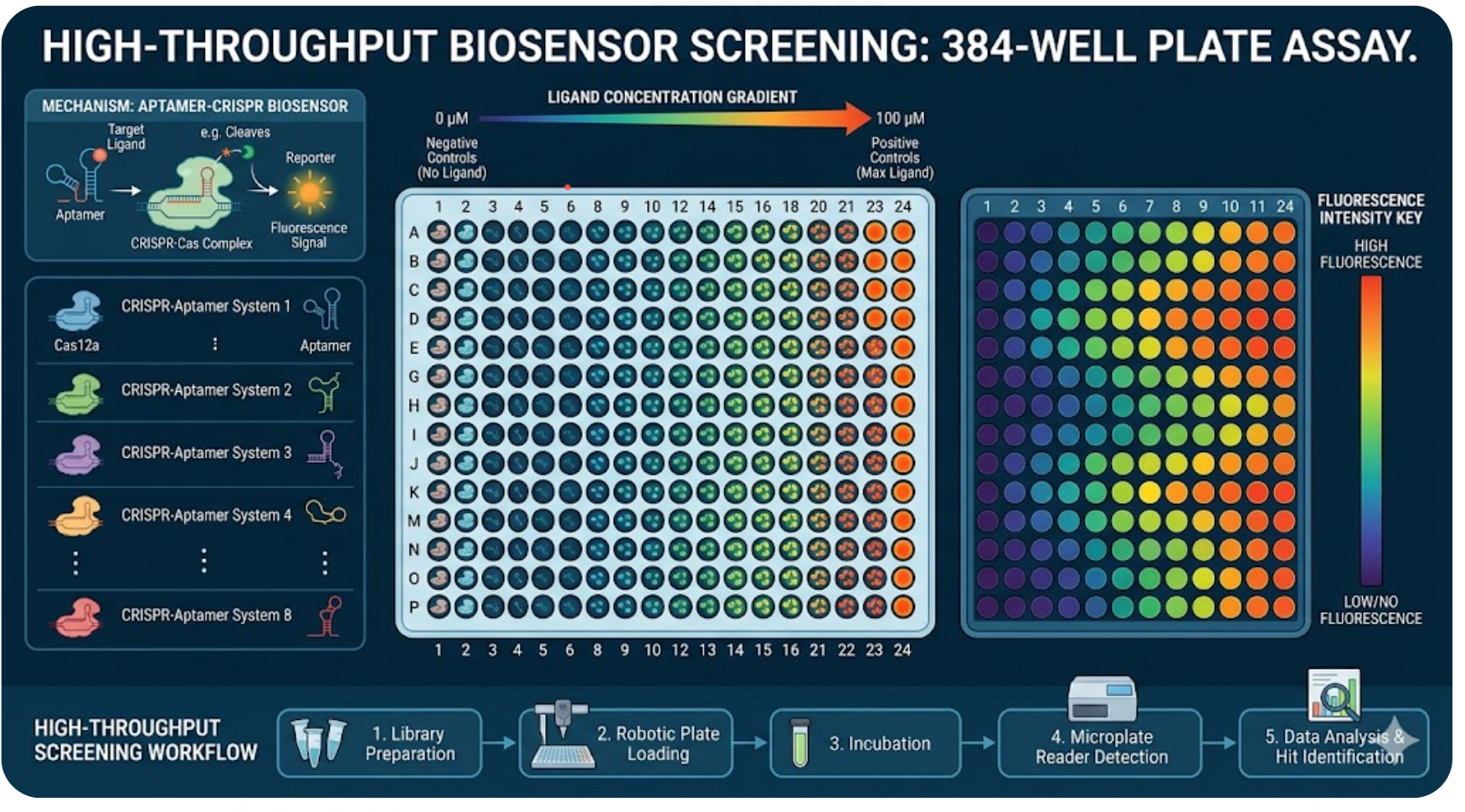
We propose a high-throughput screening platform for aptamer-CRISPR biosensors using a cell-free system.
Concept:
Each well contains a different biosensor configuration and ligand concentration.
Readout:
- Fluorescence from CRISPR-mediated reporter cleavage
Goal:
- Identify optimal biosensor architectures
- Generate dose-response curves
- Accelerate biosensor design cycles
Proposed Experiment 2 — Repressilator Landscape Mapping
Repressilator landscape
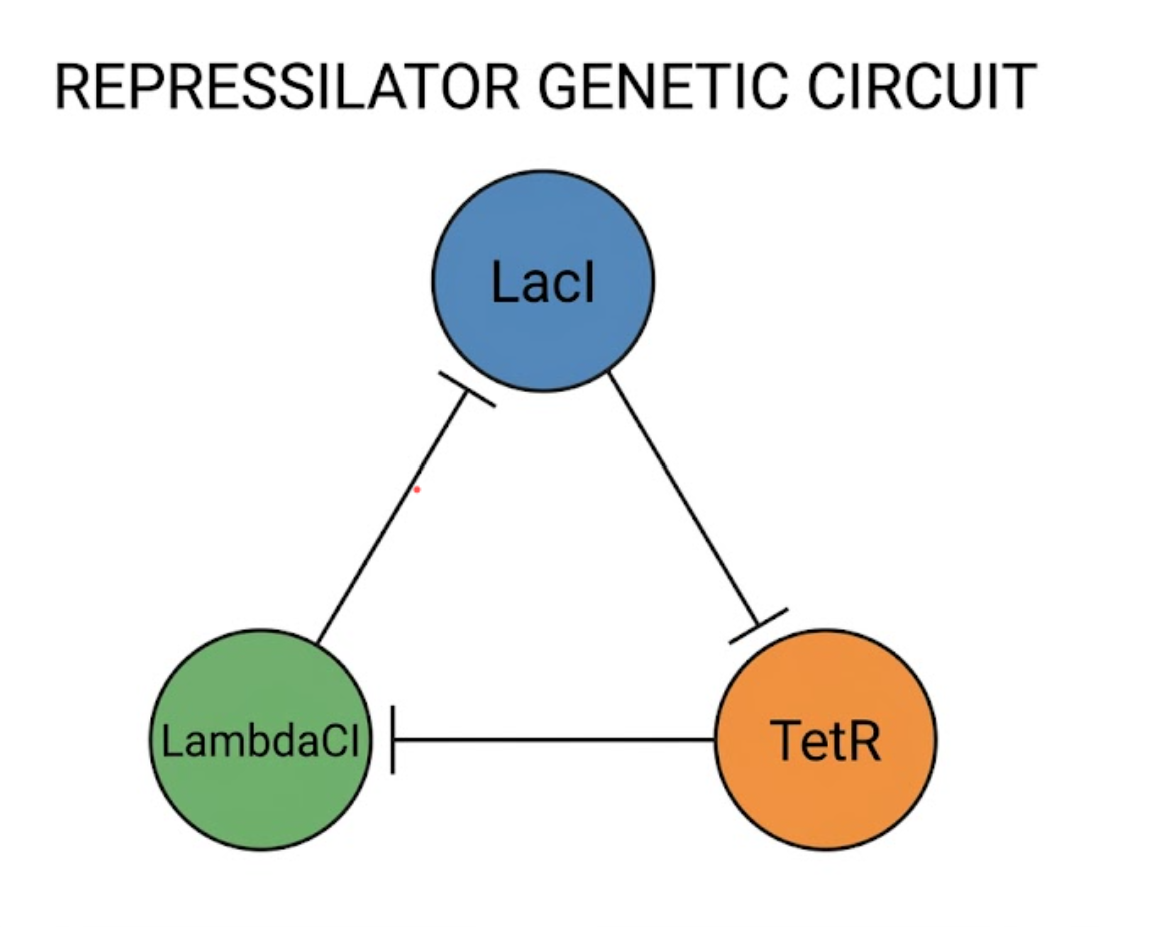
We propose exploring parameter space of synthetic oscillators.
Concept:
Each well contains a repressilator variant with modified:
- Promoter strength
- Degradation rates
Readout:
- Oscillation amplitude
- Frequency
- Stability
Goal:
- Identify robust oscillatory regimes
- Compare experimental vs computational predictions
Conclusion
Cloud laboratories enable:
- Massive parallelization
- Precise control of experimental variables
- Integration of modeling and experimentation
These platforms are especially powerful for synthetic biology, where iterative design-build-test cycles can be executed at scale.