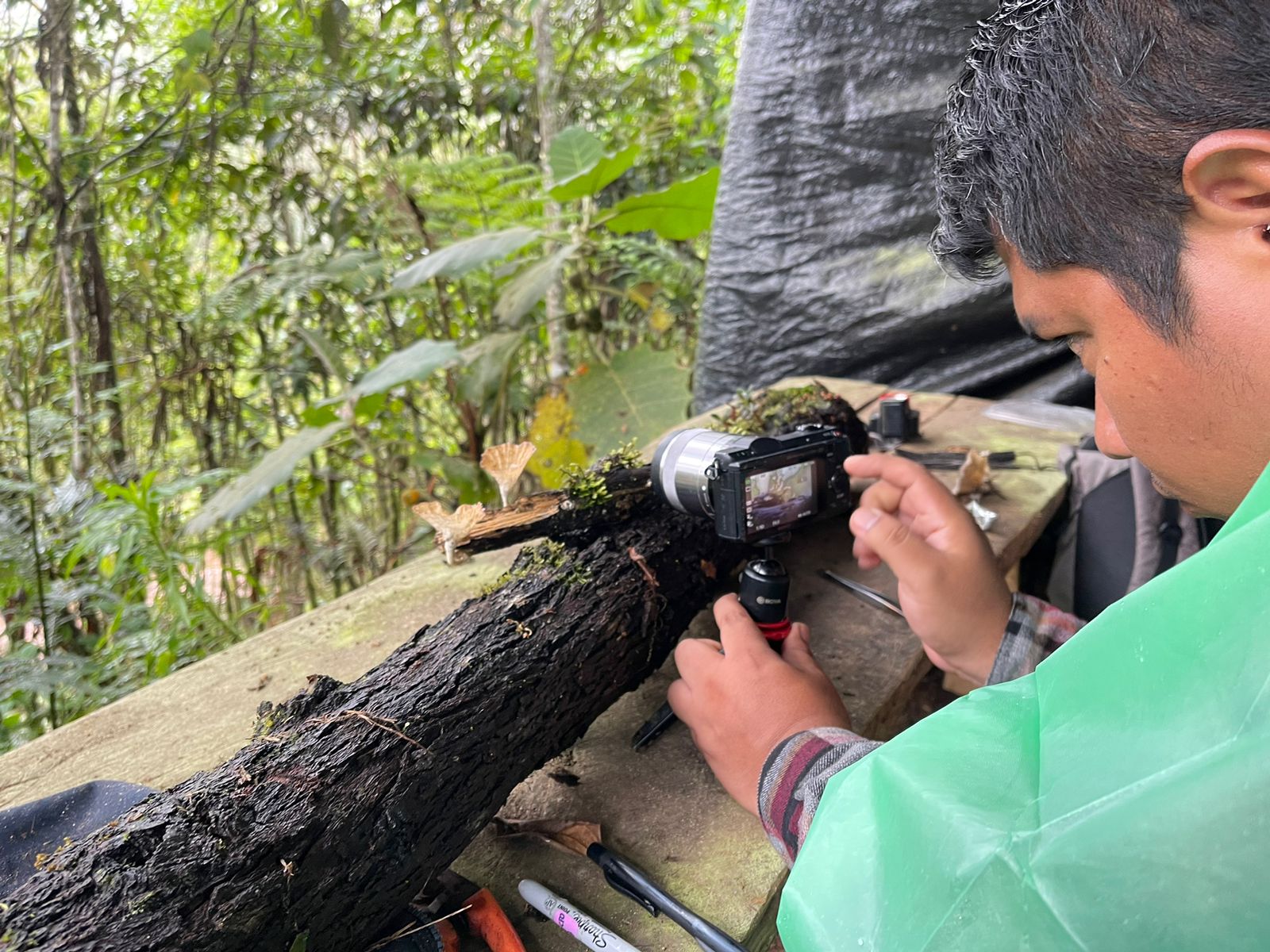
I am a Peruvian biologist interested in understanding how the Andes have shaped the genetic diversity of species. In this context, I have gained research experience in two main areas. First, I have worked as part of research teams analyzing the genetic diversity of Peruvian agrobiodiversity. Second, I am particularly interested in the evolution and ecology of high Andean freshwater fishes. In addition, I have participated in and organized projects related to citizen science and scientific outreach. My research interests include population genetics of domesticated species, soil metagenomics, and molecular ecology.
A biological engineering application: A biological tool I would like to develop is a sensor for detecting banned pesticides in agriculture. This tool would be low-cost and affordable, readily deployable in the field, and capable of providing reliable results. The sensor would be highly sensitive, able to detect trace levels of pesticides, and would serve as a first-line screening tool to monitor a large number of agricultural plots. 2. Governance/policy goals: This sensor would contribute to the implementation of Peru’s National Policy on Sustainable and Safe Agricultural Production and to efforts to monitor and regulate the use of agricultural pesticides. 3. Potential governance “actions” (AI assistance was used to organize governance concepts) Governance Action 1: Regulatory Screening Requirement There is insufficient monitoring for banned pesticides. A regulatory approach would require field-level screening using low-cost sensors. This assumes that sensors are reliable for screening purposes. Risks include false positives or, if successful, excessive reliance on sensors instead of laboratory verification.
Questions from Professor Jacobson: 1. The polymerase error rate is 10⁻⁶. A mammalian genome is 3,000 Mbp, so in a hypothetical continuous replication of DNA it could result in 3000 mutations. Most of the genome is non-coding, in addition, most replication errors are corrected by polymerase proofreading mechanisms. 2. With four nucleotides in DNA and codons made of triplets of these, there could potentially be 64 combinations to form amino acids. However, there are only 20 amino acids in practice. This is because the genetic code is degenerated, which makes it more robust to mutations. Questions from Dr. LeProust: 1. What’s the most commonly used method for oligo synthesis currently? Phosphoramidite chemistry synthesis. 2. Why is it difficult to make oligos longer than 200nt via direct synthesis? Because of accumulation of errors. 3. Why can’t you make a 2000bp gene via direct oligo synthesis? Because of accumulation of errors. Questions from George Church: The Smart Red Blood Cells (Smart-RBC) project aims to improve the body’s natural capabilities. Since it does not involve human experimentation but only organ prototypes, ethical barriers would not apply. One potential application would be improving performance in low-oxygen environment
Subsections of Homework
Week 1 HW: Principles and Practices
1. A biological engineering application: A biological tool I would like to develop is a sensor for detecting banned pesticides in agriculture. This tool would be low-cost and affordable, readily deployable in the field, and capable of providing reliable results. The sensor would be highly sensitive, able to detect trace levels of pesticides, and would serve as a first-line screening tool to monitor a large number of agricultural plots.
2. Governance/policy goals: This sensor would contribute to the implementation of Peru’s National Policy on Sustainable and Safe Agricultural Production and to efforts to monitor and regulate the use of agricultural pesticides.
3. Potential governance “actions” (AI assistance was used to organize governance concepts)
Governance Action 1: Regulatory Screening Requirement
There is insufficient monitoring for banned pesticides. A regulatory approach would require field-level screening using low-cost sensors. This assumes that sensors are reliable for screening purposes. Risks include false positives or, if successful, excessive reliance on sensors instead of laboratory verification.
Governance Action 2: Application of Reasonable Fines
Monitoring and enforcement would discourage farmers from using banned pesticides. This would involve continuous deployment of field monitoring and targeted detection in crops more likely to involve banned pesticide use. The approach assumes farmers respond to avoid penalties. Risks include farmers stopping the cultivation of certain crops if they become economically unprofitable.
Governance Action 3: Technical Standardization
There is a need to establish standards and validation protocols for pesticide sensors, led by academia, industry, and regulators. This requires testing trials and regulatory approval. It assumes that standardization increases trust and usability. Risks include slowing innovation or concentrating the market around a small number of certified technologies.
4. Score of your governance actions
Does the option:
Option 1
Option 2
Option 3
Enhance Biosecurity
• By preventing incidents
1
3
2
• By helping respond
1
3
2
Foster Lab Safety
• By preventing incident
1
3
2
• By helping respond
1
3
2
Protect the environment
• By preventing incidents
1
3
2
• By helping respond
1
3
2
Other considerations
• Minimizing costs and burdens to stakeholders
3
1
2
• Feasibility?
1
2
3
• Not impede research
3
1
2
• Promote constructive applications
1
3
2
5. Governance Action prioritization and trade offs (AI assistance was used to organize governance concepts)
I would prioritize the regulatory screening requirement using low-cost field sensors as the primary governance action. This option scores highly on feasibility because it builds on existing regulatory structures while expanding monitoring coverage.
The main trade-off considered is the risk of false positives, which can be mitigated through visual inspection and on-site verification of evidence of banned pesticide use, such as containers or application equipment. This recommendation assumes that sensors are used strictly as a first-line screening tool and that regulators maintain laboratory capacity. This recommendation is directed to national agricultural regulators responsible for pesticide control and food safety.
Week 2 HW: DNA r/w/e
Questions from Professor Jacobson:
1. The polymerase error rate is 10⁻⁶. A mammalian genome is 3,000 Mbp, so in a hypothetical continuous replication of DNA it could result in 3000 mutations. Most of the genome is non-coding, in addition, most replication errors are corrected by polymerase proofreading mechanisms.
2. With four nucleotides in DNA and codons made of triplets of these, there could potentially be 64 combinations to form amino acids. However, there are only 20 amino acids in practice. This is because the genetic code is degenerated, which makes it more robust to mutations.
Questions from Dr. LeProust:
1. What’s the most commonly used method for oligo synthesis currently? Phosphoramidite chemistry synthesis.
2. Why is it difficult to make oligos longer than 200nt via direct synthesis? Because of accumulation of errors.
3. Why can’t you make a 2000bp gene via direct oligo synthesis? Because of accumulation of errors.
Questions from George Church:
The Smart Red Blood Cells (Smart-RBC) project aims to improve the body’s natural capabilities. Since it does not involve human experimentation but only organ prototypes, ethical barriers would not apply. One potential application would be improving performance in low-oxygen environment