Week 9 HW: Cell Free Systems
General homework questions
1. Explain the main advantages of cell-free protein synthesis over traditional in vivo methods, specifically in terms of flexibility and control over experimental variables. Name at least two cases where cell-free expression is more beneficial than cell production.
Answer: Cell-free protein synthesis offers greater flexibility and control compared to traditional in vivo methods because the reaction occurs outside of living cells. This allows precise control over experimental variables such as temperature, pH, ion concentrations, and the addition of specific components (e.g., cofactors, inhibitors, or non-natural amino acids), without being constrained by cellular viability or stress responses. Additionally, cell-free systems are not time-dependent on cell growth, making them faster and more consistent. DNA constructs can also be prepared and stored for long periods and used on demand.
Cell-free expression is particularly beneficial in cases such as:
- Toxic protein production, where the protein would harm or kill living cells.
- Production of proteins with non-natural amino acids or modified components, since cell-free systems allow you to directly add these into the reaction without worrying about cellular metabolism or toxicity.
2. Describe the main components of a cell-free expression system and explain the role of each component.
Answer: The main components of a cell-free expression system:
DNA / RNA template – encodes the protein of interest; can be plasmid DNA or mRNA, and determines what protein is made
RNA polymerase – transcribes DNA into mRNA (only needed if starting from DNA)
Ribosomes – translate mRNA into protein
tRNAs – deliver the correct amino acids to the ribosome by matching codons in the mRNA
Amino acids – building blocks of the protein
Nucleotides (ATP, GTP, etc.) – used for RNA synthesis and provide energy for transcription and translation
Energy regeneration system (e.g., 3-PGA) – regenerates ATP to sustain protein synthesis over time
Cofactors and coenzymes (e.g., NAD, CoA, folic acid) – support enzymatic reactions required for transcription and translation
Buffer system (e.g., HEPES) – maintains stable pH and optimal chemical conditions for the reaction
Salts and small molecules (e.g., Mg²⁺, K⁺, spermidine) – stabilize ribosomes, nucleic acids, and improve reaction efficiency
*Cell extract (lysate) – most of these components are provided by the cell extract; it supplies the essential cellular machinery, including ribosomes, enzymes, and translation factors needed for protein synthesis.
**3. Why is energy provision regeneration critical in cell-free systems? Describe a method you could use to ensure continuous ATP supply in your cell-free experiment.
Answer: Energy provision and regeneration are critical in cell-free systems because transcription and translation require a large amount of ATP and GTP. Since there is no living cell to continuously produce new energy molecules, in the absence of an energy source, the reaction would quickly run out of energy, and protein synthesis would stop. In addition, ATP is needed not only as an energy source but also for many enzymatic steps in the system.
One way to ensure a continuous ATP supply is to include an energy regeneration system, such as 3-phosphoglycerate (3-PGA). In this method, 3-PGA is added to the reaction mixture and is metabolized by enzymes present in the cell extract to regenerate ATP over time. This helps maintain the energy level in the reaction and allows protein synthesis to continue for longer.
4. Compare prokaryotic versus eukaryotic cell-free expression systems. Choose a protein to produce in each system and explain why.
Answer: Prokaryotic vs. Eukaryotic Cell-Free Systems
Prokaryotic systems (e.g., E. coli lysate):
Faster, cheaper, and higher yield, but lack post-translational modifications (PTMs) such as glycosylation and proper folding for complex proteins.
Eukaryotic systems (e.g., wheat germ, rabbit reticulocyte, or mammalian lysates):
Slower and more expensive, but support proper folding and PTMs, making them suitable for complex proteins.
Examples:
1. Prokaryotic system → Green Fluorescent Protein (GFP) - GFP is a relatively simple protein that does not require complex post-translational modifications, so it can be efficiently produced in an E. coli-based cell-free system with high yield and speed.
2. Eukaryotic system → Human insulin (or a glycosylated antibody) - Proteins like antibodies or hormones often require proper folding and post-translational modifications (e.g., disulfide bonds, glycosylation). An eukaryotic cell-free system is better suited to produce these functional proteins.
5. How would you design a cell-free experiment to optimize the expression of a membrane protein? Discuss the challenges and how you would address them in your setup.
Answer: I would design the experiment using a cell-free system supplemented with membrane mimics such as liposomes, nanodiscs, or mild detergents, so that the hydrophobic regions of the membrane protein have an environment to insert into as it is being synthesized. I would then optimize conditions such as temperature, magnesium concentration, and the type/amount of membrane mimic.
The main challenge is that membrane proteins are hydrophobic, so they tend to aggregate or misfold without a membrane-like environment. This can be addressed by adding membrane mimics and evaluating both protein yield and functionality to ensure proper folding and insertion.
6. Imagine you observe a low yield of your target protein in a cell-free system. Describe three possible reasons for this and suggest a troubleshooting strategy for each.
Answer:
Not enough ribosomes – limits translation efficiency
→ Troubleshooting: increase the amount or quality of cell extract (which provides ribosomes)Insufficient energy supply (ATP/GTP depletion) – reaction stops early
→ Troubleshooting: add or optimize an energy regeneration system (e.g., 3-PGA, creatine phosphate)Poor DNA template quality or concentration – low transcription/translation
→ Troubleshooting: increase DNA concentration, check purity, or use a stronger promoter
Homework question from Kate Adamala
1. Synthetic minimal cell: glucose-sensing cell
Function:
A synthetic minimal cell detects high glucose levels and produces insulin or an insulin-like signal.
Input and output:
- Input: glucose
- Output: insulin (and optional reporter signal)
Cell-free Tx/Tl only?
Partly. It can sense and produce protein, but lacks stability and containment without encapsulation. Additionally, it is time-constrained.
Genetically modified natural cell?
Yes. Natural cells can do this, but are more complex and less controllable since they have other processes happening in the background.
Desired outcome:
Inactive at normal glucose levels; activates at high glucose to help regulate sugar levels in the blood.
2. Design all components of the synthetic glucose-sensing cell
a. What would the membrane be made of?
A simple lipid vesicle membrane, made from phospholipids, so it can act like a small artificial cell and keep the internal components contained.
b. What would you encapsulate inside? Enzymes, small molecules.
Inside, I would encapsulate the Tx/Tl machinery, a DNA circuit for glucose sensing and insulin production, energy molecules, ribosomes, enzymes, amino acids, and a reporter protein for signaling.
c. Which organism will your Tx/Tl system come from? Is bacterial OK, or do you need a mammalian system for some reason?
A bacterial Tx/Tl system would likely be enough if the goal is just to sense glucose and produce a simple protein output.
d. How will your synthetic cell communicate with the environment?
The membrane would need to allow glucose to enter, either through natural permeability if sufficient, or by including a membrane channel or pore protein. The produced output could be released by diffusion or membrane leakage.
Experimental details
a. List all lipids and genes.
(bonus: find the specific genes; for example, instead of just saying “small molecule membrane channel,” pick the actual gene.)
Answer:b. How will you measure the function of your system?
Answer:
3. Experimental details
a. List all lipids and genes.
- Lipids: POPC and cholesterol for the vesicle membrane.
- Tx/Tl system: bacterial cell-free system, for example from E. coli.
- Genes: a glucose-sensing genetic circuit, a reporter gene such as gfp, and a membrane pore gene such as α-hemolysin (ahl) to allow communication with the environment.
- Output gene: an insulin or insulin-like peptide gene.
b. How will you measure the function of your system?
Measure the output signal as glucose concentration changes. This could be done by tracking GFP fluorescence and by measuring insulin production with an assay such as ELISA.
Homework question from Peter Nguyen
Freeze-dried cell-free systems can be incorporated into all kinds of materials as biological sensors or as inducible enzymes to modify the material itself or the surrounding environment. Choose one application field — Architecture, Textiles/Fashion, or Robotics — and propose an application using cell-free systems that are functionally integrated into the material.
Answer each of these key questions for your proposal pitch:
Write a one-sentence summary pitch sentence describing your concept.
Answer:
A wearable skin patch that changes color in response to electrolyte loss in sweat (primarily sodium, potassium, and magnesium), enabling athletes and their teams to monitor hydration levels during competition (and outside of it) and optimize electrolyte intake in real time.How will the idea work, in more detail? Write 3–4 sentences or more.
Answer: The idea is a skin sticker with a freeze-dried cell-free sensing layer in the center and an adhesive border around it so it can stay attached during physical activity. The sensing region would be transparent from the outside, and when sweat reaches it, the water in the sweat would rehydrate and activate the cell-free reaction. Inside this layer, a DNA circuit would respond to sodium concentration: at low sodium levels, the patch would stay mostly transparent, while higher sodium levels would produce a stronger visible color change (the color would be due to a chromoprotein). If expanded to multiple inputs, the same concept could be adapted into a neuromorphic-style circuit that senses sodium, potassium, and magnesium together, assigns each ion a different weight based on its importance, and uses the combined signal to determine the final patch color.What societal challenge or market need will this address?
Answer:
This addresses the challenge of monitoring hydration and electrolyte balance in athletes in a simple, real-time, and non-invasive way. Currently, assessing electrolyte loss often requires lab tests or indirect measures, which are not practical during training or competition. This patch would provide immediate visual feedback, helping prevent dehydration, fatigue, and heat-related illnesses. The market need is especially strong in sports, military, and outdoor work, where performance and safety depend on maintaining proper electrolyte levels.How do you envision addressing the limitations of cell-free reactions (e.g., activation with water, stability, one-time use)?
Answer:
Most sports activities and competitions are shorter than the typical working time of a cell-free reaction, so the limited lifetime of the system should still be sufficient for a single session of use. A key design goal would be to optimize the freeze-dried reaction so it can be activated directly by sweat, rather than requiring pure water. In this application, one-time use is not a major limitation, since the patch is meant to be disposable and replaced with a new one for each practice or competition. Stability during storage could be addressed by keeping the sticker sealed and dry until use.
Homework question from Ally Huang
Freeze-dried cell-free reactions have great potential in space, where resources are constrained. As described in my talk, the Genes in Space competition challenges students to consider how biotechnology, including cell-free reactions, can be used to solve biological problems encountered in space. While the competition is limited to only high school students, your assignment will be to develop your own mock Genes in Space proposal to practice thinking about biotech applications in space!
For this particular assignment, your proposal is required to incorporate the BioBits® cell-free protein expression system, but you may also use the other tools in the Genes in Space toolkit (the miniPCR® thermal cycler and the P51 Molecular Fluorescence Viewer). For more inspiration, check out https://www.genesinspace.org/.
My Idea: Effect of Microgravity on the Time Required for Functional GFP Expression in Cell-Free Systems
Provide background information that describes the space biology question or challenge you propose to address. Explain why this topic is significant for humanity, relevant for space exploration, and scientifically interesting.
(Maximum 100 words)
Answer: Cell-free protein expression systems could become an important tool for long-duration space missions because they allow astronauts to produce proteins on demand without maintaining living cells. But, how does microgravity affect the speed or efficiency of protein production in these systems? In this project, I propose to compare the production of a fluorescent protein in freeze-dried cell-free reactions performed in space and on Earth. Understanding these effects is important for the future development of space-based biotechnology, including diagnostics and medicine production. While studying one protein cannot represent all proteins, any observed differences could be important in future experiments.Name the molecular or genetic target that you propose to study. Examples of molecular targets include individual genes and proteins, DNA and RNA sequences, or broader -omics approaches.
(Maximum 30 words)
Answer: The expression and maturation time of green fluorescent protein (GFP) produced from plasmid DNA in the BioBits cell-free expression system.Describe how your molecular or genetic target relates to the space biology question or challenge your proposal addresses.
(Maximum 100 words)
Answer: GFP serves as a measurable reporter for protein production in the BioBits cell-free expression system. By comparing the time required for functional fluorescent GFP to appear in reactions performed in microgravity (or the space environment in general) versus on Earth, I can evaluate whether space conditions affect protein expression or protein maturation kinetics. Because GFP fluorescence only appears after the protein is properly folded and matured, differences in fluorescence timing or intensity may indicate that spaceflight conditions influence important biochemical processes involved in protein production. Although this experiment focuses on one protein, any observed effects could suggest that future space biotechnology systems require additional testing and optimization.Clearly state your hypothesis or research goal and explain the reasoning behind it.
(Maximum 150 words)
Answer: I hypothesize that the time required for functional GFP fluorescence to appear in a freeze-dried cell-free expression system will differ between reactions performed in space and identical reactions performed on Earth. This difference could result from microgravity or other spaceflight-related conditions affecting biochemical processes such as transcription, translation, protein folding, or GFP maturation. Because future long-duration missions may rely on cell-free systems for on-demand production of medicines, diagnostics, and biomaterials, it is important to understand whether these systems behave differently in space environments. While this experiment investigates only one protein, observing altered expression or maturation kinetics could indicate that space conditions influence broader aspects of cell-free biotechnology and should therefore be considered in future system design and testing.Outline your experimental plan - identify the sample(s) you will test in your experiment, including any necessary controls, the type of data or measurements that will be collected, etc.
(Maximum 100 words)
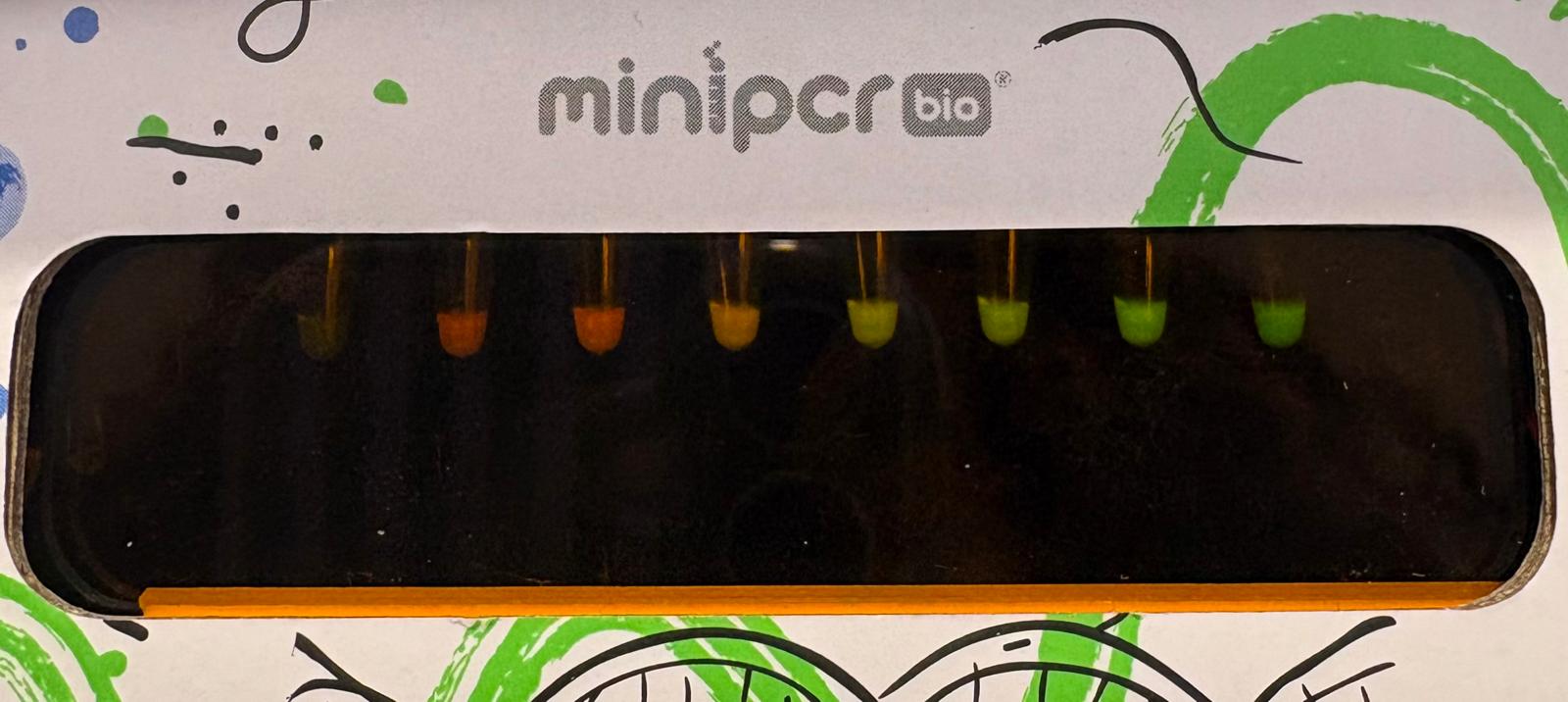
Answer: I will test identical BioBits cell-free reactions containing plasmid DNA encoding GFP. One set will be activated and monitored in space, and the control set will be activated and monitored on Earth under similar conditions. A negative control without GFP DNA will be included (both on Earth and in space) to confirm that fluorescence comes from GFP expression. The main measurements will be time until visible fluorescence appears, fluorescence intensity over time, and final fluorescence intensity. These data will be used to compare functional GFP production kinetics in space versus on Earth.