Week 3 HW: lab automation
My art for Opentrons Artwork
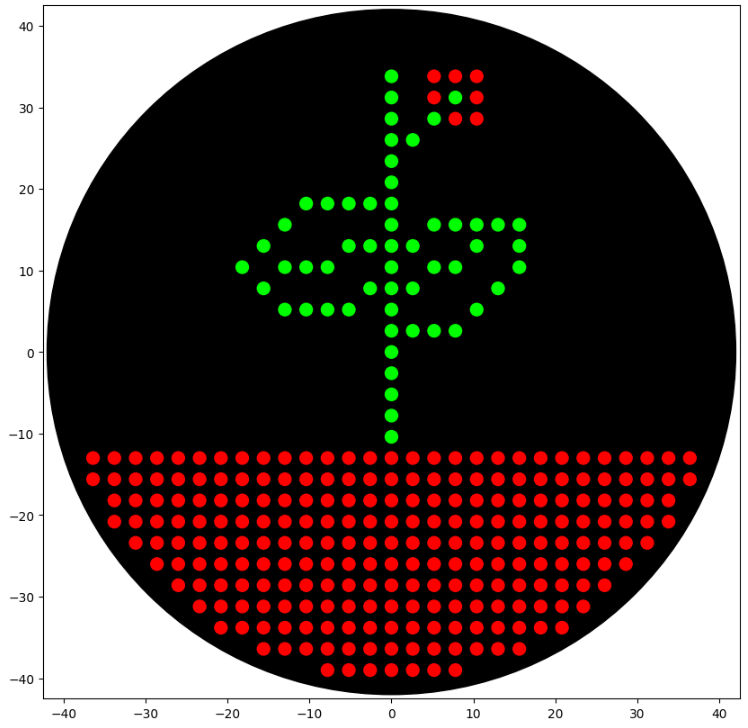
Output of the python script.
PAPER - Semiautomated Production of Cell-Free Biosensors
Journal: ACS Synthetic Biology (2025)
PMID: 40073441
Biosensors are biological systems that detect specific chemicals for example, if a substance is present, they might change color or glow. These can be used for:
- Environmental detection (e.g., fluoride in water)
- Health diagnostics
- Rapid point-of-need testing
But traditionally, making lots of biosensor reactions by hand is slow and inconsistent. Different people might mix things slightly differently, which leads to variability in performance.
Instead of assembling all the biosensor reactions manually, the researchers used a robotic liquid-handling platform (like Opentrons OT-2) to semi-automate the process:
- They wrote a protocol so the robot could prepare many reactions systematically
- They tested this by building a full 384-well plate of biosensors that detect fluoride
- They compared how well these robot-assembled reactions worked compared with manually assembled one
The robot-assembled biosensors worked as expected
The perks of the automated robot:OT-2
- Using robots makes it possible to produce many biosensors quickly and reliably
- This reduces human error when preparing them
- It helps scale up manufacturing or testing so the sensors can be widely deployed
Idea 1: Carbon Capturing Microbial Genomics
What I would automate: High Throughput Strain Screening I might have:
- Environmental isolates
- Engineered variants
- Promoter strengths
Total = n number of combinations
By using automation I can :
- Screen many strains simultaneously
- Maintain equal CO₂ exposure conditions
- Reduce pipetting variation
- Generate reproducible comparative data
Idea 2: Radiation Resistant Bio-Fabric for Space Habitat Walls
What I Would Automate: Stress Testing Simulation Automation could:
- Dispense engineered strains into plates
- Add oxidative stress chemicals (radiation mimic)
- Add ROS indicators
- Incubate
- Measure fluorescence or survival
This allows parallel radiation resistance testing.
Idea 3: Living Anti-Corrosion System for Ocean Infrastructure
What I Would Automate: Corrosion Sensor Screening
- Test combinations of: -> Iron responsive promoters -> pH sensitive promoters -> Mineral producing enzymes
- Salt Stress Optimization Automation could: -> Dispense increasing NaCl concentrations -> Add corrosion mimics -> Measure biofilm formation -> Quantify calcium carbonate output
FINAL PROJECT IDEAS
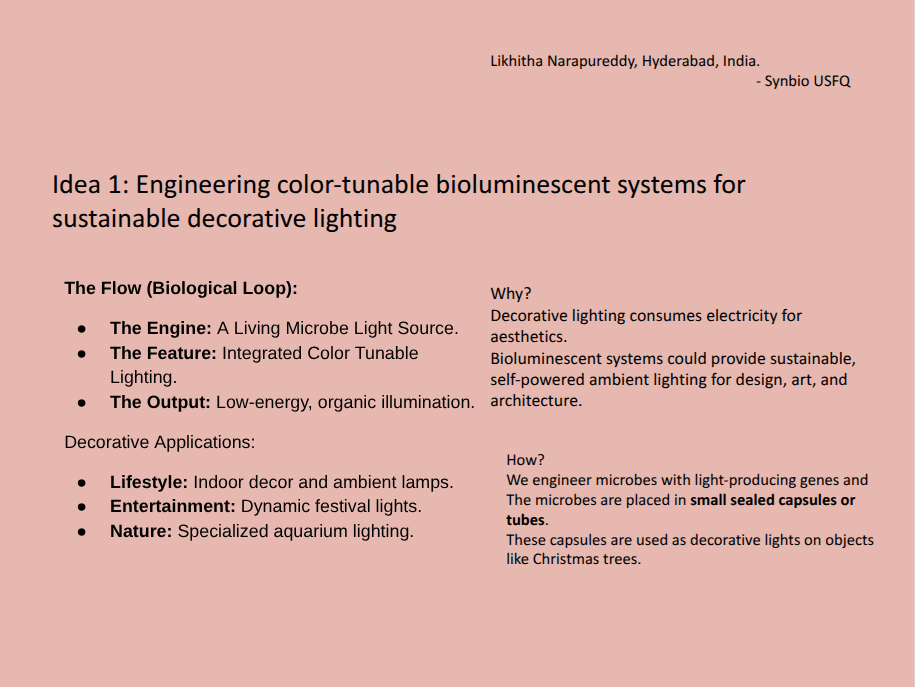
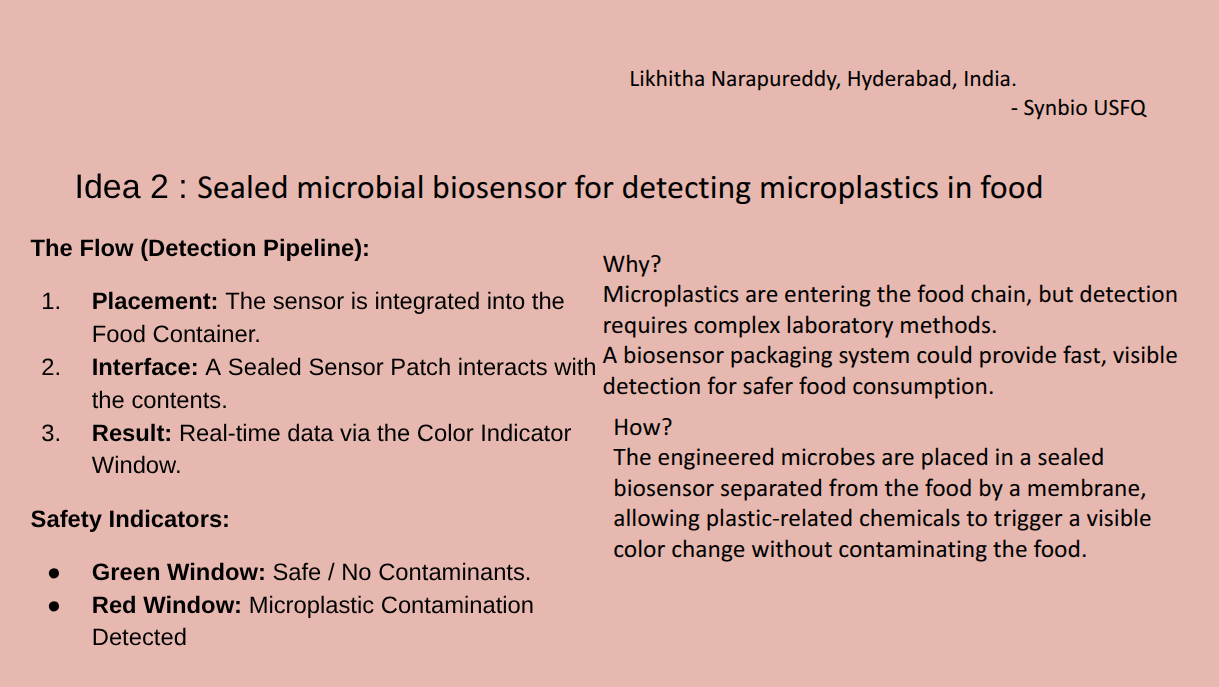
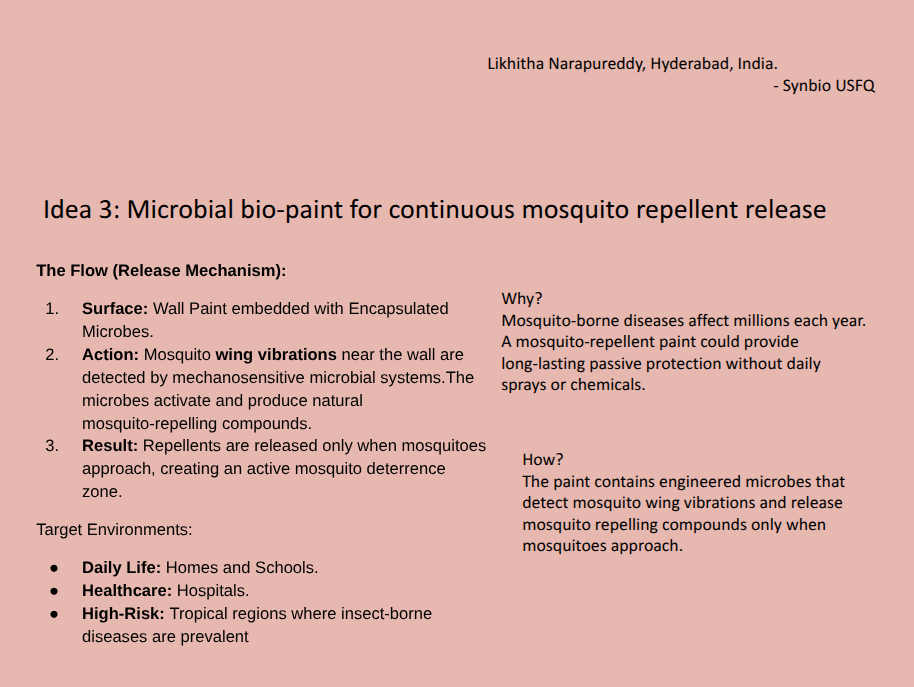
Here is the snapshot of my ideas