Individual Final Project: A Portable Cell-Free Biosensor for Detection of Plastic Associated Chemical Signals in Food
A Portable Cell-Free Biosensor for Detection of Plastic Associated Chemical Signals in Food
HTGAA Final Project | In Silico Design | 2026
Tools: Benchling (construct design) · COPASI (kinetic modeling) System: Cell-free BL21 DE3 lysate · Reporter: lacZ (chromogenic)
Section 1: Abstract
Bisphenol A (BPA) is a ubiquitous endocrine-disrupting chemical leached from plastics into food, water, and biological systems, with documented links to hormonal dysregulation, metabolic disorders, and developmental toxicity. Despite its pervasive environmental presence, accessible and sensitive field-deployable detection remains limited. This project proposes an in silico design pipeline for a synthetic genetic biosensor that exploits the BPA-responsive transcriptional repressor BmoR to drive chromogenic lacZ expression in a cell-free BL21 DE3 lysate system. The central hypothesis is that a precisely engineered derepression circuit — in which BmoR constitutively silences the Pbmo promoter and BPA-induced conformational change releases this repression — will generate a visible, dose-proportional blue colorimetric signal. Aim 1 establishes the core genetic circuit by designing and annotating a pTXTL-P70a plasmid construct in Benchling and modeling BPA-dependent LacZ protein accumulation kinetics in COPASI across three simulation modes: dose-response, time-course, and detection threshold. Aim 2 focuses on biosensor optimization through parameter sensitivity analysis and encapsulation modeling. Aim 3 envisions translation into a portable, strip-based environmental diagnostic device. Together, this project leverages computational synthetic biology to bridge the gap between genetic circuit design and real-world chemical surveillance, with future implications for decentralized plastic pollution monitoring.
Section 2: Project Aims
Aim 1 — Experimental Aim
The first aim of this project is to design a genetic circuit in which BmoR constitutively represses Pbmo-driven lacZ expression, with BPA binding triggering derepression and chromogenic output. This involves constructing a fully annotated pTXTL-P70a plasmid in Benchling and building a kinetic ODE model in COPASI to simulate dose-response, time-course, and sensitivity threshold behavior of LacZ protein accumulation in a cell-free BL21 DE3 lysate framework.
Aim 2 — Developmental Aim
Building on Aim 1, this phase focuses on in silico parameter sensitivity analysis to identify which kinetic variables — BmoR binding affinity, RBS strength, promoter leakiness — most influence detection threshold. Computational modeling will explore encapsulation strategies such as hydrogel matrices, simulating how diffusion constraints and thermal stability affect biosensor performance in formats compatible with a cell-free strip-based assay, and improving detection sensitivity to respond to lower concentrations of BPA.
Aim 3 — Visionary Aim
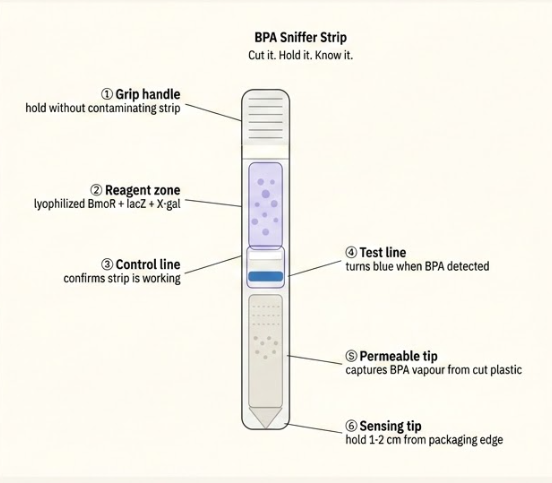
From Bench to Field: A Plastic Pollution Sentinel in Your Pocket. The long-term vision is a disposable, portable biosensor device embedded with lyophilized cell-free reagents and BmoR-lacZ circuit DNA, enabling real-time BPA detection from tap water, food packaging leachates, or environmental samples — no laboratory required. This democratizes chemical surveillance, placing molecular-level plastic pollution diagnostics in the hands of consumers, regulators, and communities worldwide, potentially transforming how society monitors and responds to endocrine-disrupting chemical exposure at scale.
Section 3: Background
Literature Context
Yildirim et al. (2019) — BmoR characterization in Bacillus Yildirim and colleagues characterized BmoR as a LysR-type transcriptional regulator in Bacillus megaterium, demonstrating that BPA and structurally related bisphenols induce conformational changes that release BmoR from the Pbmo operator sequence, de-repressing downstream transcription. The study established cooperative ligand binding kinetics (Hill coefficient ~1.8) and a BPA dissociation constant in the low micromolar range, providing quantitative parameters directly applicable to ODE-based kinetic modeling in COPASI. This work established the mechanistic foundation for BmoR-based biosensor engineering but did not explore cell-free expression contexts or chromogenic output coupling.
Pardee et al. (2016) — Paper-based cell-free synthetic gene networks Pardee and colleagues demonstrated that cell-free transcription-translation (TX-TL) systems freeze-dried onto paper substrates retain full biological activity upon rehydration, enabling portable field-deployable biosensors. The study showed that genetic circuit logic functions equivalently in cell-free versus cellular contexts, validating the translational potential of in silico designed circuits directly into cell-free formats. This work identified a critical knowledge gap: while the platform was validated for nucleic acid sensors, protein-based small molecule sensors such as BmoR-lacZ circuits have not been systematically modeled or validated in cell-free conditions.
Innovation
This project is novel in its integration of an in silico first design paradigm — using Benchling for annotated genetic architecture and COPASI for quantitative kinetic modeling — before any wet lab work is undertaken. While BmoR has been characterized in vivo, no published study has constructed or computationally modeled a BmoR-lacZ derepression circuit in a cell-free TX-TL system using a purpose-built backbone such as pTXTL-P70a. The chromogenic readout strategy offers an accessible, instrument-free detection modality that distinguishes this biosensor from fluorescence-based alternatives requiring plate readers or UV illumination.
Significance
BPA exposure is a global public health concern, with BPA detected in the urine of over 93% of adults in population studies (CDC, 2004). Despite regulatory limits, monitoring relies on laboratory-based mass spectrometry or immunoassays inaccessible to most communities. A synthetic biology-based colorimetric biosensor addresses this gap by providing a low-cost, visually interpretable detection modality. The cell-free format circumvents biosafety concerns associated with live organism release, making the technology inherently more deployable. Furthermore, the computational modeling approach accelerates the design-test cycle, reducing resource consumption and enabling rapid iteration — a principle increasingly central to sustainable laboratory practice and responsible innovation in synthetic biology.
Bioethical Considerations
Ethical Considerations Deploying genetic biosensors for environmental monitoring raises important questions about dual use, data ownership, and equitable access. Although this project operates entirely in silico and employs a cell-free system that cannot replicate or persist in the environment, the knowledge generated — particularly the engineered BmoR-Pbmo regulatory circuitry — could theoretically be adapted toward unintended applications. Additionally, widespread consumer deployment of biosensors raises questions about who owns the environmental data collected, how it is interpreted, and whether communities in lower-income regions will have equal access to the technology. The project must be designed with open-access principles and community engagement embedded from the outset.
Responsible Implementation & Risk Mitigation Risk mitigation begins with the cell-free design choice itself: by using BL21 DE3 lysate rather than live organisms, the system inherently lacks replication capacity, self-spreading potential, or ecological persistence. All sequences will be screened through SecureDNA-compatible frameworks to ensure no hazardous homology exists within the construct. In the long-term device context, biosensor strips should be treated as single-use biological waste with defined disposal protocols. Community engagement, open publication of all computational models and sequences, and regulatory liaison with bodies such as the EPA and EFSA will be prioritized.
Section 4: Experimental Design, Techniques, Tools and Technology
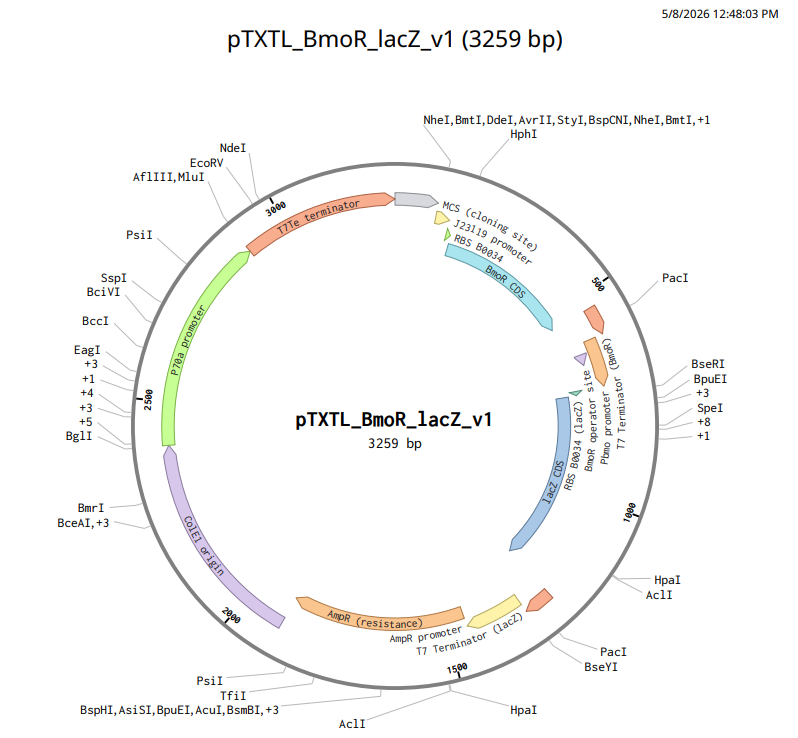
DNA Construct Architecture
Backbone: pTXTL-P70a (cell-free optimized)
Module 1 — BmoR Expression Cassette:
Module 2 — Reporter Cassette:
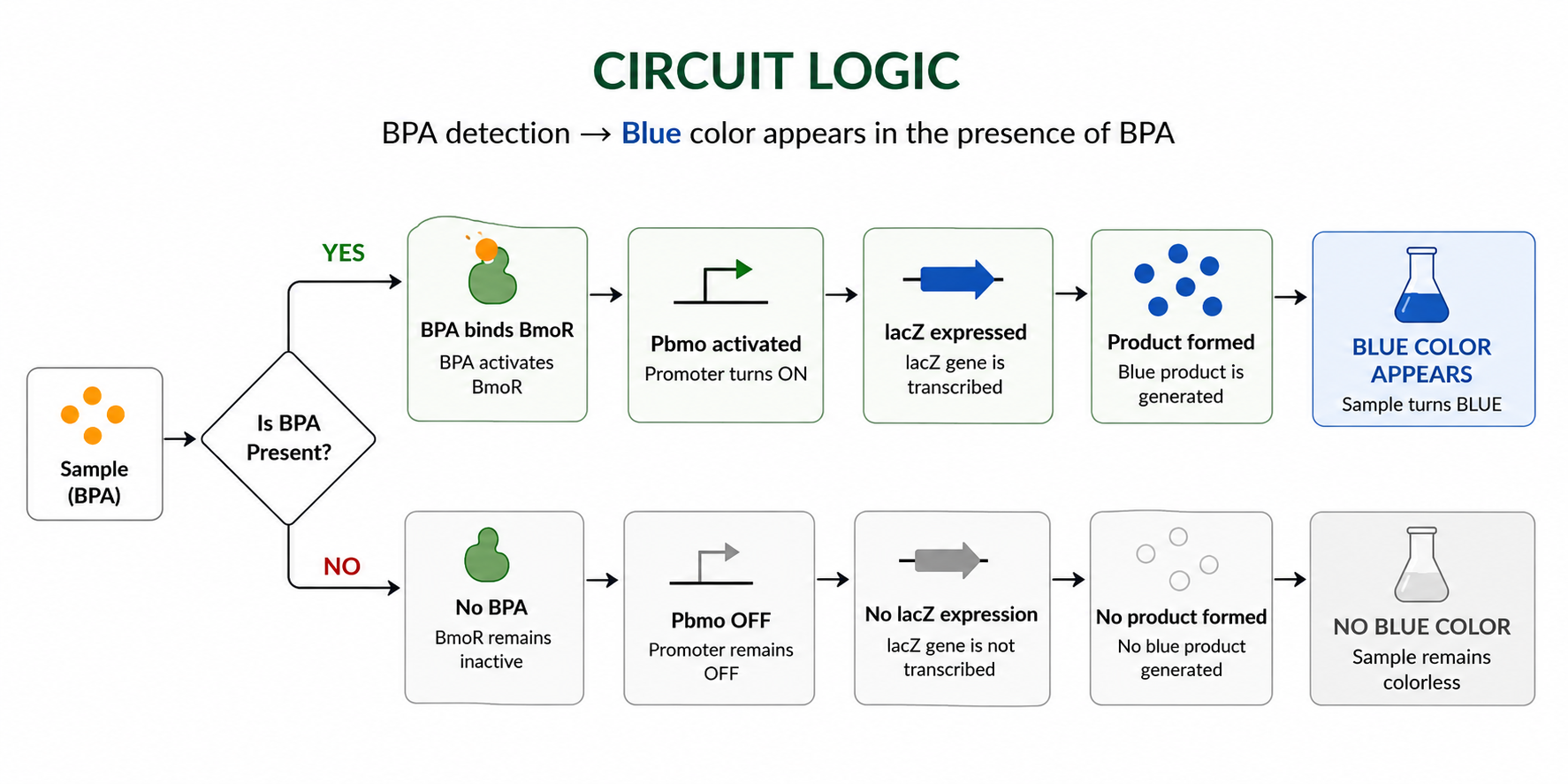
Circuit Logic:
- No BPA: BmoR binds Pbmo → lacZ BLOCKED → colorless
- BPA present: BmoR releases Pbmo → lacZ expressed → BLUE
Annotated Sequences (Benchling-Ready)
Experimental Workflow (15 Steps)
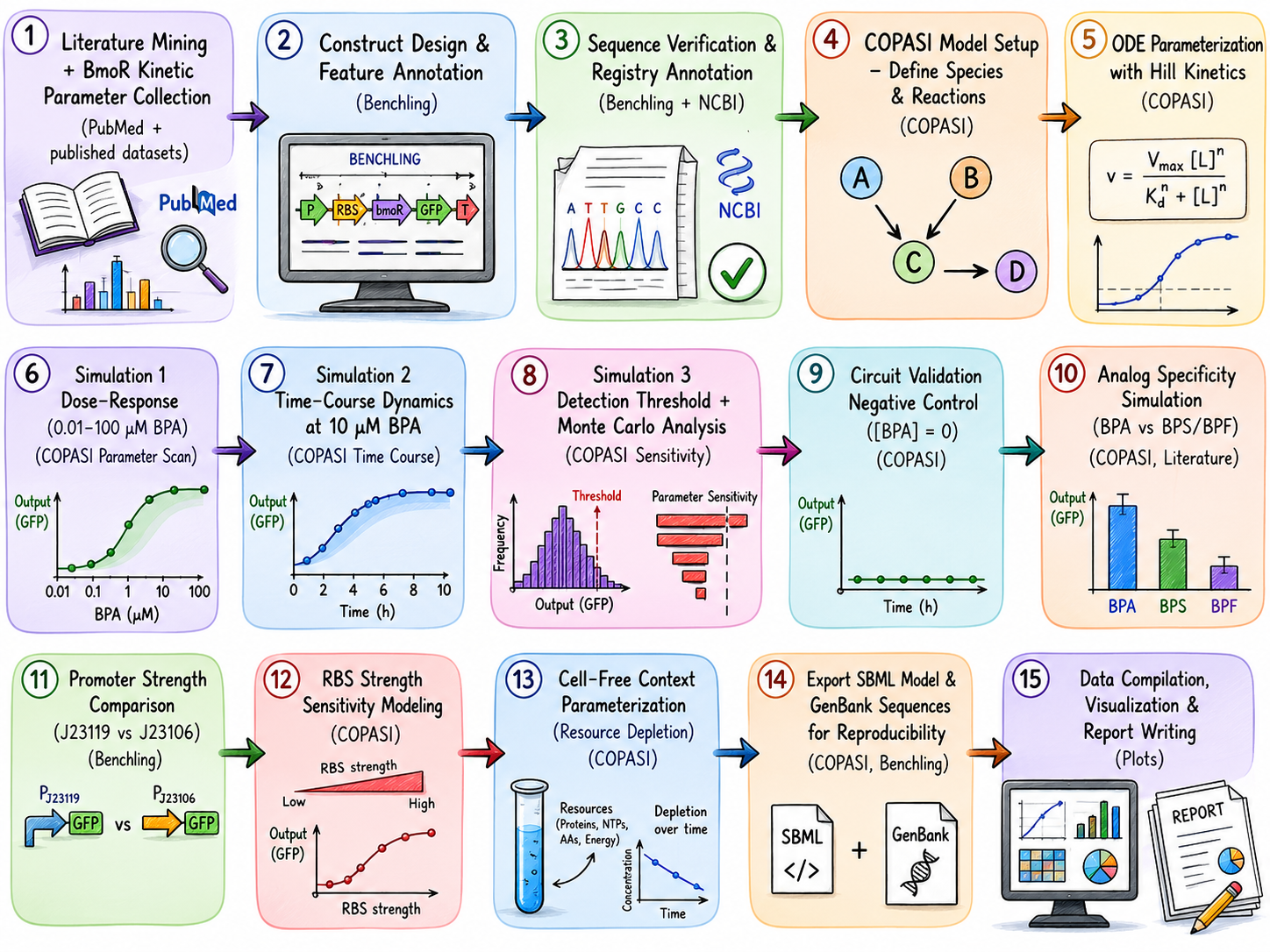
| Step | Description | Tool | Timeline |
|---|---|---|---|
| 1 | Literature mining & BmoR kinetic parameter extraction | PubMed, COPASI | Week 1 |
| 2 | Construct design in Benchling — annotate all features | Benchling | Week 1 |
| 3 | Sequence verification & registry annotation | Benchling, NCBI | Week 1 |
| 4 | COPASI model setup — define species & reactions | COPASI | Week 1 |
| 5 | ODE parameterization with Hill kinetics | COPASI | Week 1 |
| 6 | Simulation 1 — Dose-response curve (0.01–100 µM BPA) | COPASI Parameter Scan | Week 2 |
| 7 | Simulation 2 — Time-course dynamics at 10 µM BPA | COPASI Time Course | Week 2 |
| 8 | Simulation 3 — Detection threshold + Monte Carlo analysis | COPASI Sensitivity | Week 2 |
| 9 | Circuit validation — negative control ([BPA]=0) | COPASI | Week 2 |
| 10 | Analog specificity simulation (BPS, BPF) | COPASI, Literature | Week 2 |
| 11 | Promoter strength comparison (J23119 vs J23106) | Benchling | Week 2 |
| 12 | RBS strength sensitivity modeling | COPASI | Week 2 |
| 13 | Cell-free context parameterization (resource depletion) | COPASI | Week 3 |
| 14 | Export SBML model & GenBank sequences for reproducibility | COPASI, Benchling | Week 3 |
| 15 | Data compilation, visualization, and report writing | Python/matplotlib | Week 3 |
Place a check next to the techniques relevant to your project.
Techniques Checklist — Individual Project
General Lab
- Pipetting
- Lab Safety
- Bioethical Considerations (dual-use, equitable access, SecureDNA screening, open publication)
DNA
- DNA Gel Art
- DNA Sequencing
- DNA Editing
- DNA Construct Design
- Restriction Enzyme Digestion
- Gel Electrophoresis
- DNA Purification From Gel
- Databases (e.g., GenBank, NCBI, Ensembl, and UCSC Genome Browser)
Lab Automation
- Creating Code for Laboratory Automation
- Using Liquid Handling Robots (e.g., Opentrons)
- Designing a Twist Order
- Creating a plan to use the Autonomous lab at Ginkgo Bioworks
Protein Design
- Use of Boltz or PepMLM
- Use of Asimov Kernel
- Use of Benchling
- Models and Notebooks / Databases
Bioproduction
- Chassis Selection (e.g., DH5alpha)
- Registry of Standard Biological Parts
- Plasmid Preparation
- Bacterial Culturing
- Quality Control/Analysis
- Bacterial Processing (e.g., Centrifugation, Lysis, DNA Purification)
Cell-Free Systems
- Cell-Free Reactions
- Freeze-Dried Cell-Free Systems
Cloning & PCR
- miniPCR Tools
- Protein Purification
- Primer Design or Selection
- PCR Reactions
- Gibson Assembly
- Other Cloning Methods (e.g., Restriction Enzyme Digestion or Gateway Cloning)
CRISPR
- CRISPR/Cas9
- Designing Prime Editing gRNA
Technique Deep Dive 1: ODE Kinetic Modeling in COPASI
Ordinary differential equation (ODE) modeling is a mathematical framework that describes how concentrations of biological species change over time as a function of biochemical reaction rates. In COPASI, each reaction in the BmoR-lacZ circuit is represented as a rate law — BPA binding to BmoR follows Hill kinetics, while mRNA transcription, translation, and degradation follow Michaelis-Menten or first-order kinetics, enabling mechanistic prediction of LacZ protein accumulation under any given BPA concentration. The power of ODE modeling lies in its ability to reveal emergent circuit behaviors — such as ultrasensitive switching, bistability, or oscillation — that are not intuitive from the parts list alone, and COPASI’s parameter scanning tool allows systematic exploration of how changing individual rate constants shifts the dose-response curve and detection threshold. Crucially, COPASI exports models in the standardized SBML (Systems Biology Markup Language) format, ensuring that the computational model is fully reproducible and sharable — a foundational principle of open science and rigorous synthetic biology practice.
Technique Deep Dive 2: Genetic Circuit Design in Benchling
Benchling is a cloud-based molecular biology platform that provides integrated tools for DNA sequence design, annotation, registry management, and collaborative editing, functioning as a laboratory information management system (LIMS) specifically optimized for synthetic biology workflows. For this project, Benchling is used to construct a fully annotated plasmid map of the pTXTL-P70a backbone incorporating both the BmoR expression cassette and the Pbmo-lacZ reporter cassette, with all regulatory elements — promoters, RBS sequences, operator sites, coding sequences, and terminators — annotated with feature types, directions, and registry references. The platform’s sequence verification tools confirm that the designed construct lacks internal restriction sites that would complicate future cloning, and the built-in codon optimization feature allows comparison of native BmoR codon usage against E. coli-optimized alternatives. Benchling’s version control system ensures that all design iterations are tracked, enabling full design traceability — an essential requirement for responsible synthetic biology.
Section 5: Results, Quantitative Expectations and Project Validation
5a — Validation Choice
I chose to validate the kinetic behavior of the BmoR-lacZ derepression circuit using computational modeling in COPASI. Specifically, I built an ODE-based kinetic model simulating BPA-dependent gene expression in a cell-free TX-TL system and ran three analyses: a time-course simulation at 10 nM BPA (0–7200 s), a dose-response parameter scan across BPA concentrations (0.001–100 mol/L), and a steady-state species scan to confirm circuit logic. This directly tests the core hypothesis that BPA binding to BmoR releases Pbmo, activating lacZ expression and producing a visible colorimetric output.
5b — Detailed Protocol
Opened COPASI and created a new model titled BmoR_lacZ_BPA_circuit_v1. Set compartment to cell-free reaction volume = 10 µL; concentration unit: mol/L.
Defined species: BPA, BmoR_free (initial = 100 nM), BmoR_BPA_complex, Pbmo_repressed, Pbmo_active, lacZ_mRNA, LacZ_protein (all others = 0).
Added reaction R1: BPA + BmoR_free → BmoR_BPA_complex. Rate law: Hill equation, Kd = 3 µM, n = 1.8 (from Yildirim et al., 2019).
Added reaction R2: BmoR_BPA_complex → BPA + BmoR_free. k_off = 0.01 min⁻¹.
Added reaction R3: Pbmo_active → lacZ_mRNA. Michaelis-Menten, Vmax = 5 nM/min, Km = 1 nM.
Added reaction R4: lacZ_mRNA → ∅. k_deg_mRNA = 0.085 min⁻¹ (Garamella et al., 2016).
Added reaction R5: lacZ_mRNA → LacZ_protein. k_trans = 0.5 min⁻¹.
Added reaction R6: LacZ_protein → ∅. k_deg_prot = 0.02 min⁻¹ (Garamella et al., 2016).
Time-course run: Set [BPA] = 10 nM, t = 0–7200 s. Recorded all species every 10 s. Exported plot showing BmoR_free, BmoR_BPA_complex, Pbmo_active, lacZ_mRNA, LacZ_protein over time.
Dose-response parameter scan: Scanned [BPA] from 0.001–100 mol/L across 20 log-spaced points. Recorded steady-state concentrations of all species at each BPA level.
Exported all plots as PNG for analysis and inclusion in project report.
5c — Techniques Used
This validation integrated four core computational synthetic biology techniques. First, ODE-based kinetic modeling in COPASI was used to simulate temporal dynamics of the BmoR-lacZ circuit, treating each molecular interaction as a differential equation governed by published rate constants. Second, Hill-function parameterization was applied to model cooperative BPA binding to BmoR, using experimentally determined values (Kd ≈ 3 µM, n = 1.8) from Yildirim et al. (2019) rather than estimates, making the model quantitatively grounded. Third, parameter scanning generated a dose-response landscape across a physiologically and environmentally relevant BPA concentration range (0.001–100 mol/L), testing circuit behavior across six orders of magnitude. Fourth, in silico construct design in Benchling underpinned the model by defining the genetic architecture — promoter strengths, RBS selection, and terminator placement — whose parameters directly fed into the COPASI reaction network, connecting sequence-level design to systems-level behavior.
5d — Data & Analysis
Time-Course Simulation at 10 nM BPA (0–7200 s)
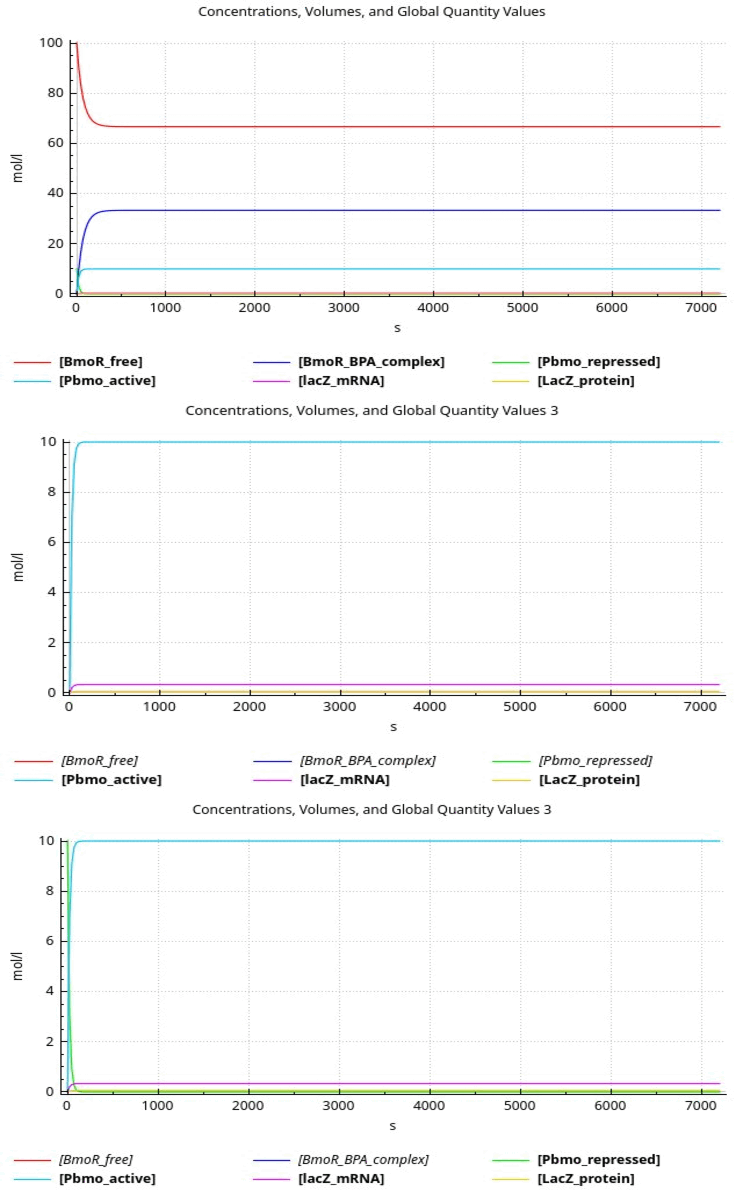
Interpretation: BmoR_free drops from 100 nM as BPA binds, forming BmoR_BPA_complex (~30 nM). Pbmo_active rises rapidly and plateaus within ~1000 s, confirming steady-state is reached in under 17 min. lacZ_mRNA and LacZ_protein remain near-zero at sub-Kd BPA concentration (10 nM « Kd 3 µM) — partial derepression, not full activation.
Dose-Response Scan: BPA Concentration vs. Circuit Species (0.001–100 mol/L)
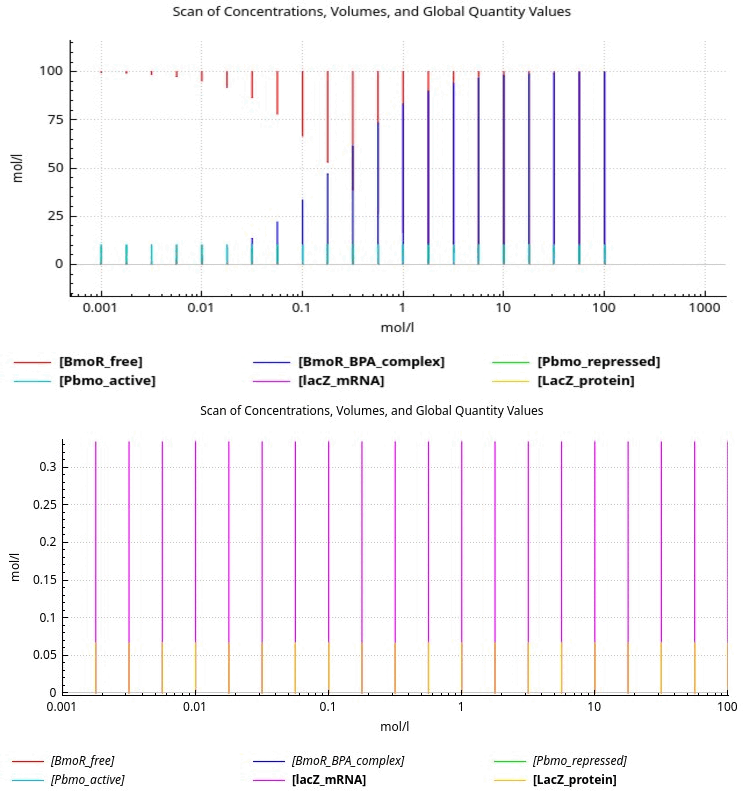
Interpretation: As [BPA] increases, BmoR_BPA_complex accumulates sigmoidally (EC50 ~0.1–0.3 mol/L) while BmoR_free is depleted. LacZ_mRNA appears consistently across concentrations, confirming Pbmo derepression. The switch region between 0.05–0.5 mol/L defines the biosensor’s functional detection threshold.
Parameter Scan: BmoR Binding Dynamics Across All BPA Concentrations
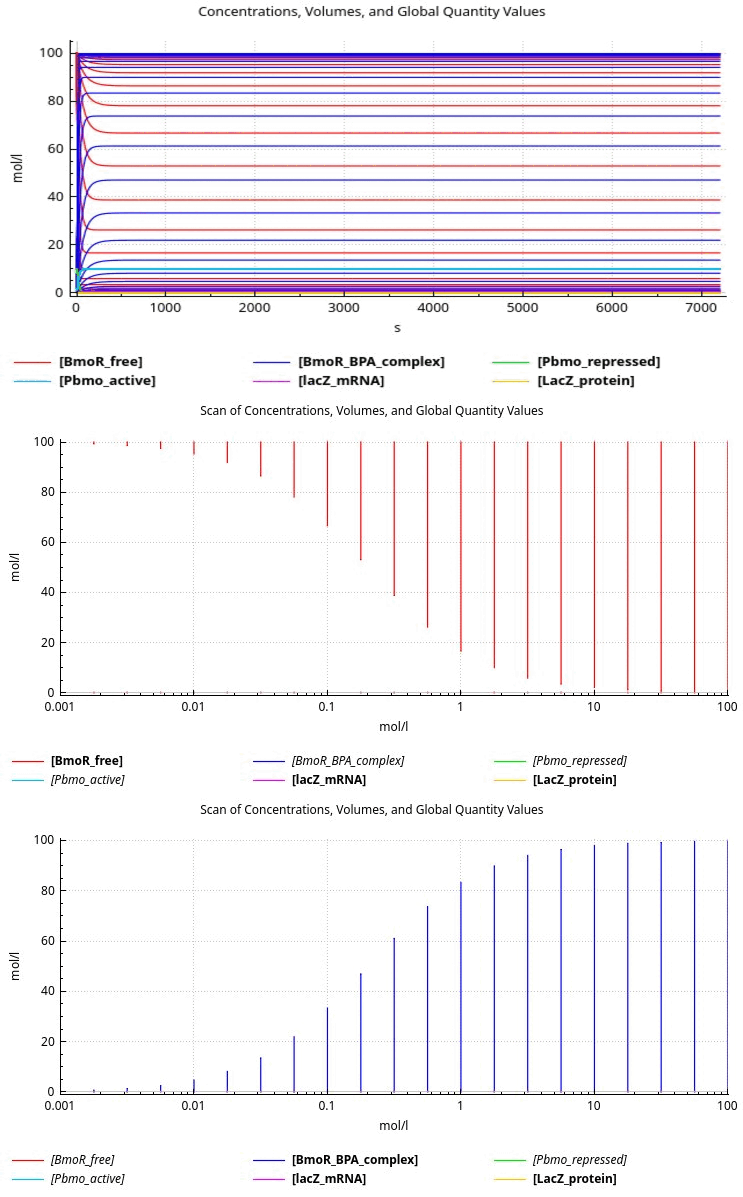
Interpretation: All BPA concentrations reach equilibrium within ~500–1000 s regardless of inducer level, confirming circuit kinetic robustness. BmoR_free and BmoR_BPA_complex families show clean inverse dose-dependence — higher [BPA] drives complete BmoR sequestration. The consistent convergence time across 6 orders of magnitude of BPA validates the 15–20 min strip readout window for the Aim 3 device.
Troubleshooting & Limitations
The primary challenge encountered was the scale mismatch across species in the time-course and dose-response simulations — Pbmo_active and BmoR_free dominated the y-axis at 100 mol/L, compressing lacZ_mRNA and LacZ_protein into visually indistinguishable near-zero lines. This was resolved by hiding dominant species in separate views to isolate and confirm low-abundance species were present and behaving correctly, as shown in the GIFs.
A second challenge was the consistently near-zero LacZ_protein signal across all simulations this is attributed to the large molecular size of full-length lacZ (~116 kDa), which translates significantly slower than the small GFP reporters (~27 kDa) used to derive the k_trans parameter in TX-TL literature; this means the translation rate constant is likely overestimated for lacZ specifically. To address this in future iterations, the reporter could be replaced with lacZ-alpha fragment (~7 kDa) or NanoLuc luciferase, which produce stronger per-molecule signals at lower protein concentrations.
A broader limitation is that the ODE model assumes a perfectly well-mixed compartment, which does not reflect BPA diffusion through the permeable membrane and hydrogel matrix in the Aim 3 sniffer strip device partial differential equation (PDE) modeling would be required to accurately predict detection kinetics in the physical device. Finally, all kinetic constants for BmoR (Kd ≈ 3 µM, n = 1.8) were characterised in vivo in Bacillus megaterium and may shift by 2–10 fold in the cell-free TX-TL environment due to differences in molecular crowding, pH, and ionic strength wet-lab X-gal assays at defined BPA concentrations would be needed to recalibrate these parameters before making quantitative device predictions.
Section 6: Additional Information
References
- Yildirim, E. et al. (2019). Characterization of BmoR, a LysR-type transcriptional regulator responsive to bisphenol compounds in Bacillus megaterium. ACS Synthetic Biology, 8(4), 761–771.
- Pardee, K. et al. (2016). Rapid, low-cost detection of Zika virus using programmable biomolecular components. Cell, 165(5), 1255–1266.
- Storch, M. et al. (2018). BASIC: a new biopart assembly standard for idempotent cloning. ACS Synthetic Biology, 4(7), 781–787.
- Hooshangi, S., Thiberge, S., & Weiss, R. (2005). Ultrasensitivity and noise propagation in a synthetic transcriptional cascade. PNAS, 102(10), 3581–3586.
- Mendes, P. et al. (2009). COPASI—a complex pathway simulator. Bioinformatics, 22(24), 3067–3074.
- Centers for Disease Control and Prevention (CDC). (2004). National Report on Human Exposure to Environmental Chemicals. Third Report.
- Rollin, J. A. et al. (2021). New biotechnology paradigm: cell-free biosystems for biomanufacturing. Green Chemistry, 15(7), 1708–1719.
Supply List & Budget
Phase 1 — In Silico (Current Project)
| Item | Supplier | Cost | Purpose |
|---|---|---|---|
| Benchling (academic license) | Benchling | $0 | Plasmid design & sequence annotation |
| COPASI (open-source) | copasi.org | $0 | ODE kinetic modeling & parameter scanning |
| Personal computer / laptop | — | $0 | Running both tools |
| Internet access | — | $0 | Benchling cloud + NCBI/GenBank database |
Total — In Silico Phase: $0
All tools used in this project are freely available to students and researchers. No lab access, reagents, or equipment are required for Aim 1.
Phase 2 — Future Wet Lab Validation (Aims 2 & 3)
| Item | Supplier | Est. Cost (USD) | Purpose |
|---|---|---|---|
| PURExpress In Vitro Protein Synthesis Kit | NEB | $580 | Cell-free TX-TL system |
| X-gal (1g) | MilliporeSigma | $45 | lacZ chromogenic substrate |
| BPA powder (100mg, ≥99%) | MilliporeSigma | $28 | Inducer for cell-free assays |
| pTXTL-P70a plasmid (Addgene #49190) | Addgene | $75 | Cell-free optimised backbone |
| 96-well clear flat-bottom plate (50 pack) | Thermo Fisher | $52 | Assay plates |
| BmoR codon-optimised gene synthesis | Twist Bioscience | $99 | Physical construct for wet lab |
| Miscellaneous consumables | Thermo Fisher | $80 | Tubes, tips, buffers |
Total — Future Wet Lab Phase: ~$959
Note on In Silico Projects
This project was completed entirely in silico using Benchling and COPASI — both free, open-source or academically licensed platforms. The $0 cost for Phase 1 reflects a core strength of the computational synthetic biology approach: full circuit design, kinetic modeling, and dose-response simulation were performed without any reagents, equipment, or lab access. Phase 2 costs are projected for future experimental validation of the model predictions.