Week 3 HW: Lab Automation

Part 1: Python Script
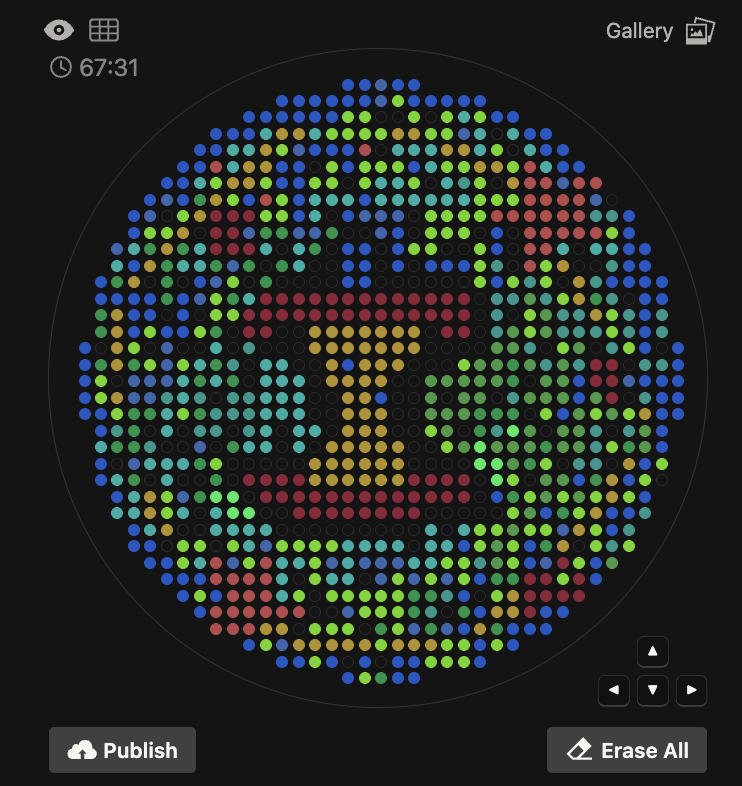
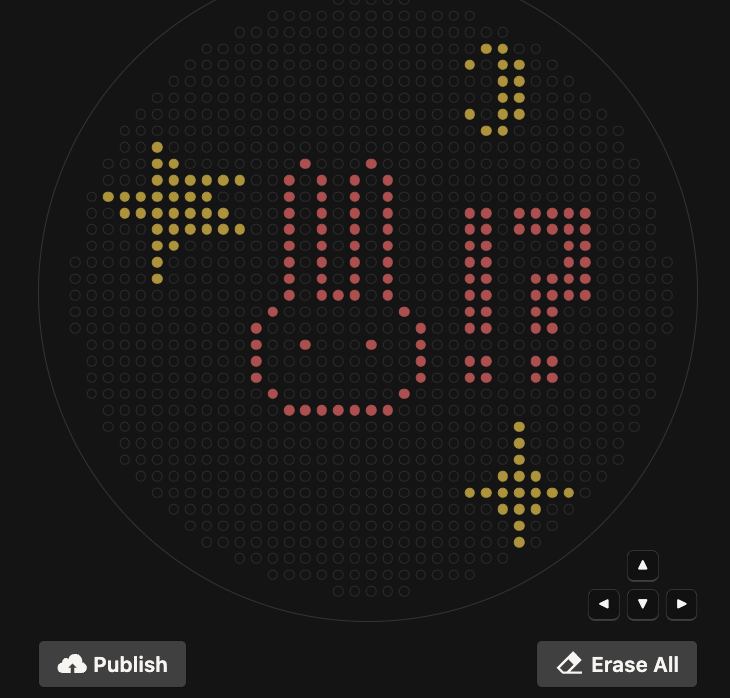
Despite having taking 6.100A, I am still not very adept with Python. I am even less skilled with Google Colab, so I had no choice but to use the GUI to generate my Python script. I produced this beautiful piece of art:
I also created this one:
Part 1: Post-Lab Questions
Question 1
The paper I chose is titled “AssemblyTron: flexible automation of DNA assembly with Opentrons OT-2 lab robots.”
This paper introduces AssemblyTron, an open-source Python framework that automates DNA assembly workflows by linking j5 DNA design outputs directly to execution on the Opentrons OT-2 liquid handling robot, addressing a major bottleneck in the “Build” step of synthetic biology’s Design–Build–Test–Learn (DBTL) cycle.
The software can do a variety of tasks. For example, it parses combinatorial design files, generates deck setup instructions, tracks reagent volumes and concentrations, optimizes PCR conditions (including gradient annealing calculations), and produces robot-ready protocols with minimal human intervention.
The authors demonstrate that AssemblyTron can automate PCR setup with optimized annealing temperature gradients, Golden Gate assembly, and homology-based assembly (IVA/AQUA). Performance (transformation efficiency and assembly fidelity) was comparable to manual methods. Overall, the platform reduces time, training burden, cost, and human error in molecular cloning while increasing accessibility to automated synthetic biology workflows.
Question 2
One semi-final concept is: Automated high-throughput screening of heavy-metal–capturing protein/peptide hydrogels to identify formulations that (1) bind Pb²⁺/Cu²⁺/Ni²⁺ strongly, (2) remain mechanically stable, and (3) can be regenerated (release metals on command for reuse).
Rather than focusing on a single formulation, I intend to use automation to systematically explore a formulation space defined by binding motif sequence (e.g., histidine-rich, cysteine-rich, or acidic domains), polymer concentration, crosslink density, pH, and salt conditions. This approach allows rapid mapping of structure–property–function relationships for environmentally relevant remediation materials.
Using the Opentrons OT-2, I will automate preparation of a 96-well hydrogel library. The robot will dispense defined volumes of protein or peptide stock solutions, buffers at varying pH, salt solutions, and crosslinking agents to generate a matrix of conditions with built-in replicates. After gel formation, the OT-2 will add standardized metal solutions and perform timed incubations. By measuring the depletion of metal ions from solution, I can calculate binding capacity and compare performance across formulations.
To evaluate reusability, the robot could also perform regeneration cycles by washing gels and introducing elution buffers to release captured metals. Subsequent rebinding assays will quantify how much capacity is retained after multiple cycles. This enables screening not only for binding strength but also for material durability and practical reuse potential. Where possible, I will include simple mechanical proxies to confirm that optimized metal-binding formulations still form stable hydrogels.
To support the workflow, I plan to design and 3D print custom tube adapters and plate alignment fixtures to improve reproducibility and organization of reagents. If available, Ginkgo Nebula can be used to help design and track sequence variants, generate plate maps, and manage combinatorial condition matrices.
References:
Bryant, J. A., Kellinger, M., Longmire, C., Miller, R., & Wright, R. C. (2023). AssemblyTron: Flexible automation of DNA assembly with Opentrons OT-2 lab robots. Synthetic Biology, 8(1), ysac032. https://doi.org/10.1093/synbio/ysac032