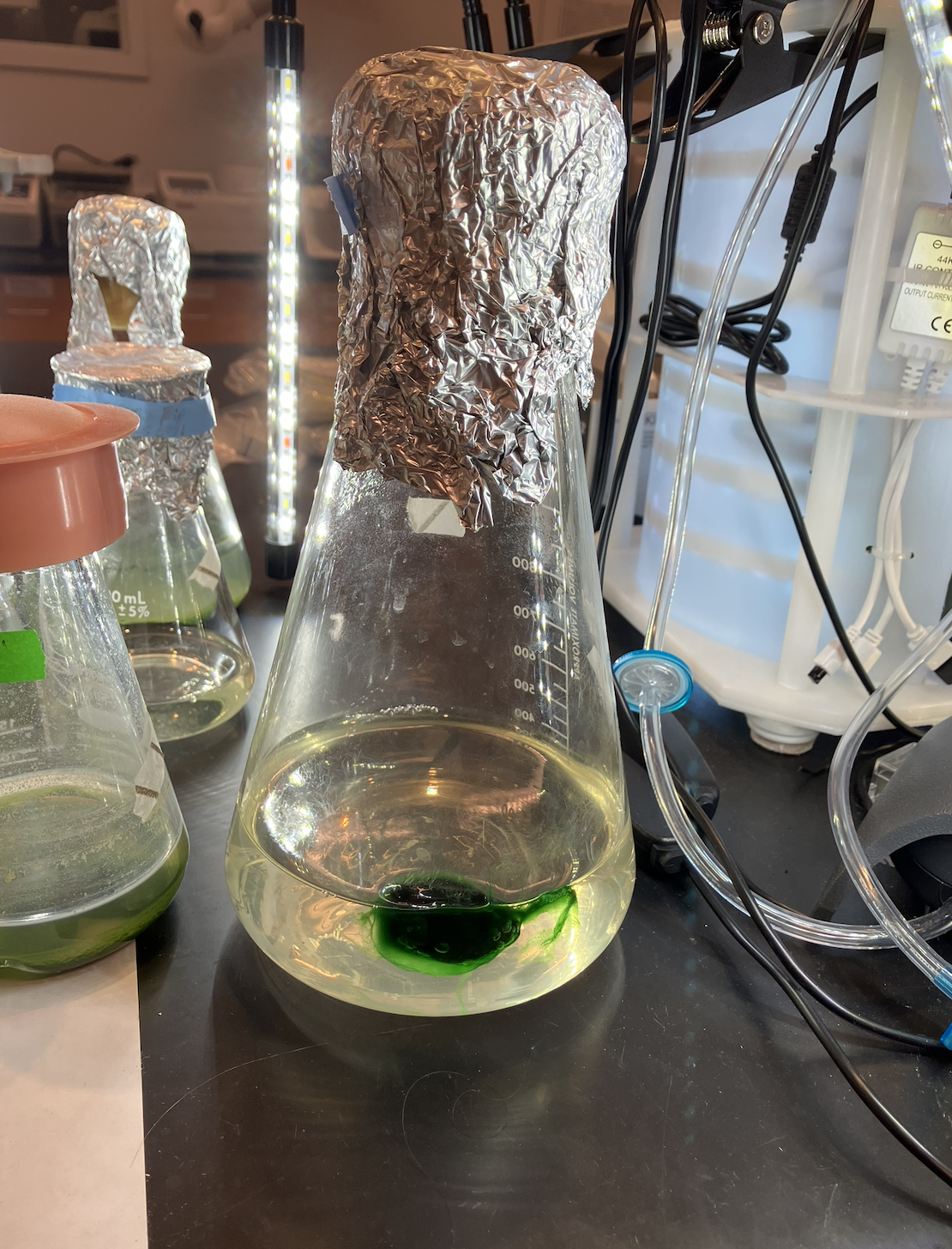
Enhancing the Viability of Oscillatoria as a SynBio Chassis Abstract Oscillatoria is a genus of filamentous cyanobacteria with the ability to form oxygenic photogranules, glob-like consortia of photosynthetic cyanobacteria and heterotrophic bacteria that naturally absorb and break down harmful chemicals (Wang et al., 2023; Atoku et al, 2021), and that offer several potential sustainability advantages over current wastewater treatment techniques (Brockmann et al., 2021).
Enhancing the Viability of Oscillatoria as a SynBio Chassis
Abstract
Oscillatoria is a genus of filamentous cyanobacteria with the ability to form oxygenic photogranules, glob-like consortia of photosynthetic cyanobacteria and heterotrophic bacteria that naturally absorb and break down harmful chemicals (Wang et al., 2023; Atoku et al, 2021), and that offer several potential sustainability advantages over current wastewater treatment techniques (Brockmann et al., 2021).
Oscillatoria’s unique morphology—it typically forms large, filamentous “globs” in culture and has complex, mutualistic relationships with heterotrophic bacteria and other cyanobacteria—additionally offers potential for novel synthetic biology applications. However, Oscillatoria is a non-model organism, and a lack of extensive study, combined with its unusual morphology, present major barriers to using it as a chassis. Notably, certain species of Oscillatoria, including Oscillatoria lutea, have been reported to produce the toxin microcystin (UTEX Culture Collection of Algae), a potent hepatotoxin that presents major human health concerns and would compromise Oscillatoria’s effectiveness as a chassis.
To enhance the safety and viability of Oscillatoria species as SynBio chassis for wastewater treatment and other applications, I aim to knock out several Oscillatoria species’ ability to produce microcystins. I designed a circuit that would use an insertional inactivation-based approach similar to methods that have successfully knocked out microcystin production in other cyanobacteria (Pearson et al, 2004). My circuit, which I plan to assemble via Gibson Assembly, contains a region identical to a portion of the microcystin synthesis operon, but with a critical region (part of the McyH gene) removed and replaced with an ampicillin resistance cassette. The identical regions provide homology necessary for recombination, while the insertion of ampicillin resistance inactivates the previously functional gene and, during culturing in ampicillin-containing media, provides a selective advantage to undergo homologous recombination and incorporate the non-functional version of the gene. My microcystin-removed Oscillatoria will be safer and better-suited for downstream engineering for applications such as wastewater treatment.
Project Aims
Aim 1
My first experimental aim is to design a circuit (and associated Gibson primers) in silico, to be assembled with Gibson Assembly, that would perform insertional inactivation and replace a critical sequence associated with microcystin production with an antibiotic resistance cassette. I designed my circuit using the NEBuilder Assembly Tool and visualized it in Benchling.
See circuit design below. Note that I’ve used the high copy vector pSB1c3-Bba_J04450, an upstream and downstream sequence that should be identical to those in the Mcy operon (primarily in McyH gene region), an ampicillin resistance cassette (which I would PCR out of the pUC19 vector), and the BBa_B0015 terminator to ensure correct transcription of the ampicillin resistance gene.
Aim 2
Before ordering and testing my circuit in vitro, I plan to sequence the three Oscillatoria strains that I am currently culturing in William & Mary’s bioengineering lab, as none of the three has been sequenced. Sequencing will allow me to design primers that precisely target the microcystin-production sequences specific to the strains I am working with, increasing the chance that homologous recombination is successful. I also need to identify a suitable “suicide vector”—i.e., a vector that will not replicate across generations and thereby forces the host to integrate it via homologous recombination—that works in Oscillatoria. My current design uses the vector pSB1c3-Bba_J04450 because it is standard, but my final wet lab design needs to be unable to replicate. Some possible options include pGEM-T, which worked as a suicide vector in Microcystis aeruginosa (Pearson et al., 2004), and pBK-CMV, which worked in Planktothrix agardii (Christiansen et al., 2003), a species that may be closely related to Oscillatoria.
After sequencing the strains and redesigning primers accordingly, and identifying and testing a suicide vector and assessing different methods for transformation into Oscillatoria, I will assemble the circuit in vitro, transform it into my Oscillatoria species, and assess the success of microcystin knockout via amplicon sequencing and by measuring microcystin production with specialized assay kits.
Aim 3
Ultimately, my microcystin-removed Oscillatoria could have applications as a chassis for wastewater treatment and other aquatic SynBio applications for which traditional chassis such as E. coli may not be ideal. I am particularly interested in engineering it to form stronger mutualistic associations with specific heterotrophic bacteria that are involved in the activated sludge process for wastewater treatment, with the goal of enhancing and optimizing the wastewater treatment process.
Background
Literature
Pearson et al. (2004) successfully knocked out a portion of the McyH gene, which is essential for microcystin production in many cyanobacteria, in M. aeruginosa via an “insertional inactivation” method. They essentially amplified a large fragment of the Microcystin-production operon, put it into a suicide vector, which prevented plasmid replication and guaranteed integration, and swapped out a critical portion or the original fragment for an antibiotic resistance cassette. (They used restriction enzyme digests and insertion via blunt ends and A-T overhangs to stitch everything together). This paper forms the broad methodological inspiration for my circuit and experimental design, and I’ve adapted Pearson et al.’s circuit design to be Gibson Assembly-based—so that I can more easily swap out the homologous sequences depending on the Mcy-containing species that I am engineering (e.g., Oscillatoria rather than M. aeruginosa).
Abouhend et al. (2018) tested the feasibility of an oxygenic phtoogranule-based method for wastewater treatment. They were able to effectively treat wastewater (removing nitrogen and organic compounds) using photogranules that contained, putatively, Oscillatoria species among other bacteria. Their method did not require the aeration process necessary for typical wastewater treatment methods, and could be more efficient and economical.
Innovation
Oscillatoria and other filamentous cyanobacteria have potential applications as aquatic SynBio chassis, including in wastewater remediation. However, Oscillatoria is a non-model organism that is morphologically unique and has few sequences and engineering resources available online. My project enhances the viability of this non-model organism, potentially broadening the range of chassis well-suited for purposes (e.g., developing SynBio tools for water environments) not suited for traditional chassis such as E. coli.
Impact
Effective wastewater treatment is essential for human and environmental health. However, conventional treatment methods are energy-intensive, resource-intensive, and produce a nutrient and pollutant-rich “sludge” byproduct that is usually disposed of via incineration or dumping into landfills. These methods release greenhouse gases into the atmosphere and contaminate soil and aquatic ecosystems with toxic, eutrophication-inducing waste.
Oxygenic photogranules and offer several sustainability advantages over current wastewater treatment techniques (Brockmann et al., 2021). Unlike conventional methods, which involve oxygen-dependent bacteria, a photogranule system would be self-oxygenating—eliminating the need for an energy-intensive aeration process (Abouhend et al., 2018; Milferstedt et al., 2017), self-aggregating—potentially reducing the need for chemical flocculants (Smetana et al., 2023), and renewable: cyanobacteria fix nitrogen and phosphorous, and resulting photogranular “sludge” could be sustainably repurposed as fertilizer or biofuel (Trebuch et al., 2024).
By knocking out toxin production in Oscillatoria, I aim to develop it as a suitable and non-hazardous chassis for wastewater treatment.
Ethics
My project most directly involves the principles of responsibility and beneficence/non-maleficience. By studying Oscillatoria as a potential chassis for wastewater treatment, I promote beneficence by aiming to enhance the wastewater treatment process so that it is more effective and contributes effectively to human and environmental health and safety while being as sustainable and economical as possible. My project promotes responsibility and non-maleficience by aiming to ensure that SynBio tools involving Oscillatoria and other potentially toxin-producing non-model cyanobacterial chassis are safe and do not have unintended consequences such as toxin release into otherwise clean water or the environment—by providing a framework that can be adapted to knock out toxin production in various species.
I propose several measures to ensure that my project is ethical. First, since my circuit inactivates toxin production via insertion of an antibiotic resistance cassette, we need to ensure that we can effectively remove this antibiotic resistance or render it non-functional before we deploy the engineered Oscillatoria in a real wastewater setting. Antibiotic resistance is a major problem, and we need to limit the risk of resistance gene transfer between engineered bacteria and other (potentially pathogenic) bacteria in the environment. We can enhance the safety of the engineered Oscillatoria by introducing a kill switch—so that the engineered Oscillatoria cells die before leaving the wastewater setting. Second, we must test the engineered Oscillatoria rigorously in simulated wastewater environments (i.e., microcosms) in order to assess its effectiveness at wastewater remediation and to screen for unintended consequences either associated with the bacteria itself or with the modifications that I’ve introduced. Microcystin and other toxin detection and quantification assays provide a rigorous method to assess whether microcystin knockout was successful and to assess the safety of the engineered strains. RNA sequencing may also help us assess whether the wastewater context causes any unexpected unsafe/unethical effects, such as the expression of genes associated with toxin production, virulence, or antimicrobial resistance.
Experimental Design
Plan
Sequence Oscillatoria species that I am currently culturing in the lab (Oscillatoria sp., Carolina, O. brevis, UTEX, and O. lutea, UTEX)
Bioinformatic sequence assembly and annotation – identify regions that are similar to the microcystin production operon or other toxin production/synthesis genes/regions in related cyanobacteria (long term – this and the previous step will likely take several months, as I will need to obtain quality DNA extractions, wait for sequencing results, and perform intensive bioinformatic analysis)
Use microcystin detection assays (e.g. Attogene ELISA assay) to quantify microcystin production in my current cultures, potentially after cell lysis techniques (e.g., bead beating), to assess importance of my current engineering modifications and to assess which strains to prioritize for microcystin knockout and for future engineering (shorter term, ~2 weeks)
Test different “suicide vectors” in Oscillatoria and assess their persistence/non-persistence across generations of cells. This will involve testing different electroporation and transformation procedures, which may function differently in Oscillatoria given its unique morphology (~1 month but may take longer depending on the ease of transformation).
Redesign Gibson assembly primers and parts (using NEBuilder and Benchling) depending on the exact toxin-production sequences based on sequencing and based on the ideal “suicide vector” as determined in the step above (~2 days)
Run PCR to obtain upstream and downstream homologous fragments for Gibson Assembly, then complete Gibson Assembly, validate it via electrophoresis (1 week)
Send plasmid for sequencing and assess integrity and placement of parts (dependent on sequencing timeline)
Transform plasmid into Oscillatoria, culture for several generations in ampicillin-containing media, obtain surviving granules/colonies, sequence them (or potentially PCR and sequence amplicons for the toxin-production region/gene(s)) and assess microcystin toxin presence via specialized assays such as the Attogene ELISA assay.
Iterate through Design-Build-Test-Learn cycles to eventually develop an effective circuit and develop strategies for engineering Oscillatoria.
Techniques
Per lab exercise:
Pipetting
Pipetting
Lab Safety
Bioethical Considerations
DNA Gel Art
DNA Sequencing
DNA Editing
DNA Construct Design
Gel Electrophoresis
Databases (e.g., GenBank, NCBI, Ensembl, and UCSC Genome Browser)
Lab Automation
Designing a Twist Order
Protein Design
Use of Benchling
Bioproduction
Chassis Selection
Registry of Standard Biological Parts
Plasmid Preparation
Bacterial Culturing
Quality Control/Analysis
Bacterial Processing (e.g., Centrifugation, Lysis, DNA Purification)
Cell-Free Systems
N/A
Gibson Assembly
Primer Design or Selection
PCR Reactions
Gibson Assembly
CRISPR
N/A
Technique Details
DNA construct design: I used the NEBuilder tool and Benchling DNA sequence import feature in order to design my Mcy-knockout circuit and associated Gibson primers in silico. I will continue using these tools to design new iterations of my circuit following the experimental design outlined in my response to the previous question.
Quality control/analysis: I will assess the effectiveness/quality of my circuit on two levels: 1) I will ensure, via plasmid sequencing after Gibson Assembly, that I have assembled my circuit correctly and that all the base pairs and the general order of parts is as-expected. 2) I will assess whether my circuit effectively knocked out toxin production via insertional inactivation of Mcy genes by measuring microcystin production with specialized kits and by performing full genome sequencing of the engineered strains or through PCR and amplicon sequencing of the target regions.
Results and Analysis
Validation and Protocol
I designed in silico a preliminary genetic circuit to knock out microcystin production in Oscillatoria. I designed my circuit for Gibson Assembly and designed Gibson primers to stitch together all the relevant parts.
Considered various engineering approaches for microcystin-knockout. Understood and planned out insertional inactivation / homologous recombination approach based on literature (Pearson et al., 2004; Christiansen et al., 2003)
Identified key genetic parts for Gibson circuit using NCBI nucleotide database and iGEM registry of standard biological parts, planned out homologous regions of Oscillatoria genome to target and include in the circuit using existing M. aeruginosa sequences available online. (The current iteration of the circuit is, due to a lack of Oscillatoria sequences for my species of interest, M. aeruginosa-specific, however I plan to adapt it to Oscillatoria after performing full genome sequencing on my current cultures/species.)
Pulled part sequences to Benchling folder from iGEM registry and NCBI nt database
Used NEBuilder tool to design Gibson Assembly primers for parts / circuit design
Imported NEBuilder design to Benchling and annotated sequences that were unclear
Redesigned circuit several times to account for errors in sequence directionality and the lack of a terminator in the original pUC19 AmpR cassette that I used.
Validation Techniques
I used online DNA design tools, such as NEBuilder and Benchling to design and validate my circuit. The NEBuilder tool allowed me to design Gibson primers to both amplify the cyanobacterial sequences of interest and to combine the parts via Gibson Assembly. I also used several databases, including the iGEM parts registry and NCBI nucleotide database to obtain parts and relevant cyanobacterial DNA sequences for my assembly. In terms of wet lab techniques, I grew several Oscillatoria species by preparing BG-11 media (the standard media for cyanobacteria, containing various stock solutions of salts / metal ions) and culturing the bacteria under artificial lighting for photosynthesis.
Validation Data
While my in silico circuit design was my main output, I also tested PCRs using existing primers (primers I had used for a previous project) in order to amplify McyB and McyE, part of the microcystin synthesis operon, in M. aeruginosa. (See gel below) Bands in lanes 3 and 6 of the below gel (note that the other bands correspond to unrelated environmental samples) provide experimental data indicating the presence of the microcystin operon in M. aeruginosa and indicating that the “Culture PCR” method is effective at least in some species of cyanobacteria. After I obtain quality genome sequences for my Oscillatoria species, I will design Oscillatoria-specific primers and perform a similar PCR to obtain amplicons for microcystin synthesis genes specific to my Oscillatoria species.
Challenges
The biggest challenge that I encountered was that there are no genome sequences available online for the Oscillatoria species that I am currently culturing in the lab, which made it difficult to design primers that would effectively PCR out portions of the Oscillatoria Mcy operon for use in my circuit. Thinking I could potentially create primers for other related Oscillatoria species, I experimented with BLASTing the Mcy operon sequence from M. aeruginosa against reference Oscillatoria sequences (though not the same species that I am currently culturing, which do not have sequences available) and did not find a match. Ultimately, I decided to design a preliminary version of the circuit with sequences based on the Mcy operon in M. aeruginosa, which is well characterized and annotated. Once I sequence and analyze my Oscillatoria species’ genomes, I will adapt this circuit to contain Oscillatoria-specific sequences (to provide homology necessary for homologous recombination / insertional inactivation) so that it can function effectively in my target species.
References
Abouhend, A. S., McNair, A., Kuo-Dahab, W. C., Watt, C., Butler, C. S., Milferstedt, K., Hamelin, J., Seo, J., Gikonyo, G. J., El-Moselhy, K. M., & Park, C. (2018). The Oxygenic Photogranule Process for Aeration-Free Wastewater Treatment. Environmental Science & Technology, 52(6), 3503–3511. https://doi.org/10.1021/acs.est.8b00403
Atoku, D. I., Ojekunle, O. Z., Taiwo, A. M., & Shittu, O. B. (2021). Evaluating the efficiency of Nostoc commune, Oscillatoria limosa and Chlorella vulgaris in a phycoremediation of heavy metals contaminated industrial wastewater. Scientific African, 12, e00817. https://doi.org/10.1016/j.sciaf.2021.e00817
Brockmann, D., Gérand, Y., Park, C., Milferstedt, K., Hélias, A., & Hamelin, J. (2021). Wastewater treatment using oxygenic photogranule-based process has lower environmental impact than conventional activated sludge process. Bioresource Technology, 319, 124204. https://doi.org/10.1016/j.biortech.2020.124204
Christiansen, G., Fastner, J., Erhard, M., Börner, T., Dittmann, E. (2003). Microcystin Biosynthesis in Planktothrix: Genes, Evolution, and Manipulation. J Bacteriol, 185. https://doi.org/10.1128/jb.185.2.564-572.2003
Pearson, L.A., Hisbergues, M., Börner, T., Dittmann, E., Neilan, B.A. (2004). Inactivation of an ABC Transporter Gene, mcyH, Results in Loss of Microcystin Production in the Cyanobacterium Microcystis aeruginosa PCC 7806. Appl Environ Microbiol, 70. https://doi.org/10.1128/AEM.70.11.6370-6378.2004
Milferstedt, K., Kuo-Dahab, W. C., Butler, C. S., Hamelin, J., Abouhend, A. S., Stauch-White, K., McNair, A., Watt, C., Carbajal-González, B. I., Dolan, S., & Park, C. (2017). The importance of filamentous cyanobacteria in the development of oxygenic photogranules. Scientific Reports, 7(1), 17944. https://doi.org/10.1038/s41598-017-16614-9
Smetana, G., & Grosser, A. (2023). The Oxygenic Photogranules—Current Progress on the Technology and Perspectives in Wastewater Treatment: A Review. Energies, 16(1), 523. https://doi.org/10.3390/en16010523
Trebuch, L. M., Timmer, J., Graaf, J. V. D., Janssen, M., & Fernandes, T. V. (2024). Making waves: How to clean surface water with photogranules. Water Research, 260, 121875. https://doi.org/10.1016/j.watres.2024.121875
Wang, Z., Chen, W., Wang, J., Gao, M., Zhang, D., Zhang, S., Hao, Y., & Song, H. (2023). Exploring the mechanism and negentropy of photogranules for efficient carbon, nitrogen and phosphorus recovery from wastewater. Chemical Engineering Journal, 476, 146510. https://doi.org/10.1016/j.cej.2023.146510
Supply List
DNA extraction reagents (e.g., PCI, salt solutions, etc)
PCR reagents (e.g., Q5 master mix)
DNA order: pUC19 for AmpR cassette, backbone plasmid, BBa_B0015 terminator
DNA order: Primers to amplify relevant genomic sequences in Mcy operon, to amplify AmpR gene from pUC19 cassette, amplify terminator part, and amplify backbone—and create Gibson-ready overlaps
Plasmid sequencing for after assembly
Full genome sequencing for at least one Oscillatoria species, preferably O. lutea
Amplicon sequencing (probably through Plasmidsaurus) for knockout validation
Standard lab reagent and equipment costs
Total budget, accounting for likely sequencing costs: ~$300
Subsections of Individual Final Project
Final Project - Ideas/Drafts
Project Idea:
Developing an Engineerable Photogranule System for Wastewater Treatment with Cyanobacterium Oscillatoria sp. and Chassis Bacterium Acinetobacter baylyi ADP1
Effective wastewater treatment is essential for human and environmental health. However, conventional treatment methods are energy-intensive, resource-intensive, and produce a nutrient and pollutant-rich “sludge” byproduct that is usually disposed of via incineration or dumping into landfills. These methods release greenhouse gases into the atmosphere and contaminate soil and aquatic ecosystems with toxic, eutrophication-inducing waste.
Oxygenic photogranules, glob-like consortia of filamentous photosynthetic cyanobacteria and non-photosynthetic bacteria, naturally absorb and break down harmful chemicals (Wang et al., 2023; Atoku et al, 2021) and offer several sustainability advantages over current wastewater treatment techniques (Brockmann et al., 2021). Unlike conventional methods, which involve oxygen-dependent bacteria, a photogranule system would be self-oxygenating—eliminating the need for an energy-intensive aeration process (Abouhend et al., 2018; Milferstedt et al., 2017), self-aggregating—potentially reducing the need for chemical flocculants (Smetana et al., 2023), and renewable: cyanobacteria fix nitrogen and phosphorous, and resulting photogranular “sludge” could be sustainably repurposed as fertilizer or biofuel (Trebuch et al., 2024).
I aim to develop an engineerable model photogranule system that could be easily modified (via genetic engineering techniques) to enhance versatility and resilience to diverse microbial conditions, target specific chemical products and pollutants of-interest for removal and/or detoxification, and enhance the viability of the bacterial-waste sludge for renewable downstream applications. My project will use Oscillatoria sp., a photogranule-forming cyanobacterium that I currently culture in the W&M Bioengineering Lab, and Acinetobacter baylyi ADP1, a highly-engineerable non-photosynthetic model bacterium with natural pollutant-degradation capabilities and promising applications in biosensing and bioremediation (Baugh et al., 2025; Li et al., 2021; Cui et al., 2018; Suárez et al., 2017). I plan to enhance A. baylyi’s ability to associate and form photogranules with Oscillatoria by upregulating genetic pathways associated with biofilm formation and aggregation and by modifying the structure of certain membrane proteins so that they adhere to molecules in Oscillatoria’s cellular secretions. My Oscillatoria-Acinetobacter photogranules will be easily-engineerable via the well-characterized model A. baylyi, providing a platform for future photogranule-based biotechnology applications.
References
Abouhend, A. S., McNair, A., Kuo-Dahab, W. C., Watt, C., Butler, C. S., Milferstedt, K., Hamelin, J., Seo, J., Gikonyo, G. J., El-Moselhy, K. M., & Park, C. (2018). The Oxygenic Photogranule Process for Aeration-Free Wastewater Treatment. Environmental Science & Technology, 52(6), 3503–3511. https://doi.org/10.1021/acs.est.8b00403
Atoku, D. I., Ojekunle, O. Z., Taiwo, A. M., & Shittu, O. B. (2021). Evaluating the efficiency of Nostoc commune, Oscillatoria limosa and Chlorella vulgaris in a phycoremediation of heavy metals contaminated industrial wastewater. Scientific African, 12, e00817. https://doi.org/10.1016/j.sciaf.2021.e00817
Baugh, A. C., Tumen-Velasquez, M. P., Zempel, I. R., Duscent-Maitland, C. V., Slarks, L. E., Defalco, J. B., Johnson, C. W., Beckham, G. T., & Neidle, E. L. (2025). Rewiring Aromatic Compound Consumption: Chromosomal Amplification and Evolution of a Foreign Pathway in Acinetobacter baylyi ADP1. ACS Synthetic Biology, 14(9), 3543–3556. https://doi.org/10.1021/acssynbio.5c00341
Brockmann, D., Gérand, Y., Park, C., Milferstedt, K., Hélias, A., & Hamelin, J. (2021). Wastewater treatment using oxygenic photogranule-based process has lower environmental impact than conventional activated sludge process. Bioresource Technology, 319, 124204. https://doi.org/10.1016/j.biortech.2020.124204
Cui, Z., Luan, X., Jiang, H., Li, Q., Xu, G., Sun, C., Zheng, L., Song, Y., Davison, P. A., & Huang, W. E. (2018). Application of a bacterial whole cell biosensor for the rapid detection of cytotoxicity in heavy metal contaminated seawater. Chemosphere, 200, 322–329. https://doi.org/10.1016/j.chemosphere.2018.02.097
Li, H., Yang, Y., Zhang, D., Li, Y., Zhang, H., Luo, J., & Jones, K. C. (2021). Evaluating the simulated toxicities of metal mixtures and hydrocarbons using the alkane degrading bioreporter Acinetobacter baylyi ADPWH_recA. Journal of Hazardous Materials, 419, 126471. https://doi.org/10.1016/j.jhazmat.2021.126471
Milferstedt, K., Kuo-Dahab, W. C., Butler, C. S., Hamelin, J., Abouhend, A. S., Stauch-White, K., McNair, A., Watt, C., Carbajal-González, B. I., Dolan, S., & Park, C. (2017). The importance of filamentous cyanobacteria in the development of oxygenic photogranules. Scientific Reports, 7(1), 17944. https://doi.org/10.1038/s41598-017-16614-9
Smetana, G., & Grosser, A. (2023). The Oxygenic Photogranules—Current Progress on the Technology and Perspectives in Wastewater Treatment: A Review. Energies, 16(1), 523. https://doi.org/10.3390/en16010523
Suárez, G. A., Renda, B. A., Dasgupta, A., & Barrick, J. E. (2017). Reduced Mutation Rate and Increased Transformability of Transposon-Free Acinetobacter baylyi ADP1-ISx. Applied and Environmental Microbiology, 83(17), e01025-17. https://doi.org/10.1128/AEM.01025-17
Trebuch, L. M., Timmer, J., Graaf, J. V. D., Janssen, M., & Fernandes, T. V. (2024). Making waves: How to clean surface water with photogranules. Water Research, 260, 121875. https://doi.org/10.1016/j.watres.2024.121875
Wang, Z., Chen, W., Wang, J., Gao, M., Zhang, D., Zhang, S., Hao, Y., & Song, H. (2023). Exploring the mechanism and negentropy of photogranules for efficient carbon, nitrogen and phosphorus recovery from wastewater. Chemical Engineering Journal, 476, 146510. https://doi.org/10.1016/j.cej.2023.146510