Week 7 HW: Genetic Circuit II
What advantages do IANNs have over traditional genetic circuits, whose input/output behaviors are Boolean functions?
IANNs are more “organic” in that though it is still a structured system, it does not operate on a binary code as a genetic circuit does. This makes IANNs more attuned for detecting and accounting for fluctuating systems such as varied metabolic activity and hormone changes. IANNs can also support multiple functions at once while genetic circuits, in order to scale, need be highly specific. An IANNs system is responsive while a genetic circuit is decisive is how I think of it. However, though this sounds great, IANNs is more complex to build.
Describe a useful application for an IANN; include a detailed description of input/output behavior, as well as any limitations an IANN might face to achieve your goal.
A useful application of an IANN would be the control and regulation of secondary metabolic pathways through the regulation of PPTase’s.
Input to the IANN would be environmental signals such as available sources i.e. carbon to nitrogen ratio, and chromatin reporters that sit at the BGC target sequence. This is the perfect condition to detect the cell’s readiness to initiate secondary metabolic activity. Output from the IANN would be the PPTase expression level which sets the size of the active carrier protein pool, and a chromatin remodeling factor targeted at BGC that UNLOCKS the BGC.
The limitations of this system would be the possible off-target activation of fatty acid carrier proteins which would disrupt the secondary metabolic pathway. Also, the IANN is not designed to survive the possible flux and rapidity of shifting environmental conditions that actively determine secondary metabolism.
What are some examples of existing fungal materials and what are they used for?
Fungal materials are extremely fascinating. There are many developing fungal materials both in R&D and the market. Most notably, ECOVATIVE has mass produced fungal packaging in which a substrate is inoculated with a fungal spore and from there a mycelium network branches. The mycelium inoculates all throughout the substrate (typically sawdust) and this network stitches the sawdust particulates together to create a dense mycelial brick. Once baked, which kills the mycelium, you get a safe, biodegradable material that can replace packaging materials. There are mycelium leathers as well that are grown on liquid. Mycelium, even in liquid, grows dense frameworks, but specifically on the liquid to air interface. It creates a floating patch that can then be treated and pressed into a fabric!
There is further research within the field of fungal materials, and the most exciting is geared towards engineered living materials in which the organism stays alive and as a result either improves the product or doesn’t affect its function. Filamentous fungi are incredibly robust in that they have no center of control. From one hyphal tip, a whole network can grow as fungi are self-regenerative. ELM’s researchers are attempting to keep fungal spores dormant with the depletion of moisture in order to keep the self regenerative properties of mycelium for damaged products.
What are their advantages and disadvantages over traditional counterparts?
Fungal materials are bio-degradable and more impressively, compostable. Meaning, you could chuck your mycelium packaging in the dirt and the natural environment can organically breakdown the waste in a non-invasive manner. Fungal materials are safe and offer an array of possibilities for non-toxic materials and pigment alternatives. You get to cultivate with life which inspires more empathy.
The main disadvantage in working with fungi to make materials is the unpredictability, and contamination issues. Fungi are living, and because they are alive, we have to feed them. This can cause contamination in the food source, or on the mycelium itself. In a BSL-1 lab, any un-predicted growth (contamination) is immediately considered a biohazard. If your work gets contaminated, there is no coming back, you must kill the mold and throw away your piece.
What might you want to genetically engineer fungi to do and why?
Fungi produce a unique class of secondary metabolites called polyketides that can be used for pharmaceuticals, materials, and design. However, secondary metabolites, as the name suggests, a secondary priority to produce because they are not required for survival. The majority of beneficial compounds are produced from SM pathways. I would engineer fungi to produce SM pathways quicker and with more consistency. My interest is in the colors that fungi make, such as xylindein in C.aeruginascens, that contain anti-microbial and semi-conductive properties. However, it takes forever to grow. The attempt to introduce pathways into unicellular organisms presents a whole slew of issues, most importantly, the native organism machinery will always work best to express a pathway of genes. If I could engineer the pathway and possibly the genes that express the tailoring enzymes in C.aeruginascens then I could strive for faster production of the pigment without the experimental pitfalls of sequential gene read in the pathway, integration into the genome etc… because it would be within the native organism already.
What are the advantages of doing synthetic biology in fungi as opposed to bacteria?
My initial thoughts are that fungi with the added complexity are better suited at expressing multi-gene pathways while unicellular bacteria and yeast struggle to read through constructs containing more than one insert. This is both an issue for heterologous expression and homologous recombination in bacteria.
Comparing fungi and bacteria is a similar logic to comparing apples to oranges. Both are fruits or in our case, both are living systems. But besides that, their functioning similarities are minimal. The choice to synthetically engineer a fungal strain would come down to production yield, product intent and overall need.
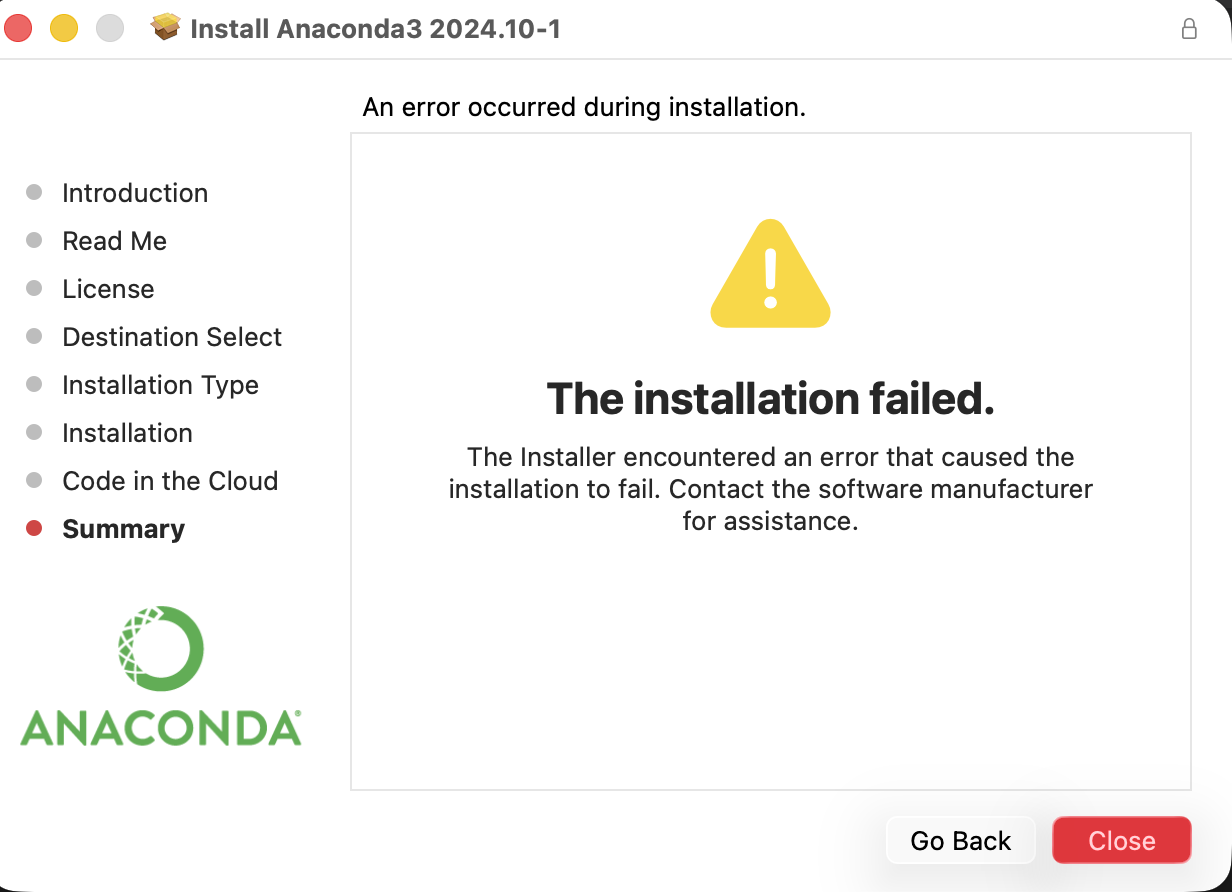
I attempted to do the neuromorphic wizard lab multiple times but kept running into this pop up. I am unable to complete the assignment due to Anaconda failing to install into my computer consistently. I got to see my node mates complete the assignment.