Week 9 HW: Cell Free Systems
🧬 General Homework Questions
Cell-Free Protein Synthesis
- Explain the main advantages of cell-free protein synthesis over traditional in vivo methods, specifically in terms of flexibility and control over experimental variables.
R/: The main advantage of cell-free protein synthesis over traditional in vivo methods is the greater flexibility and control over experimental variables. In living cells, there are many uncontrollable factors the cell may degrade the target protein through proteolysis, compete for resources, or respond unpredictably to foreign sequences. Cell-free systems eliminate the cell itself as a variable, allowing direct manipulation of reaction conditions such as temperature, pH, and component concentrations.
- Name at least two cases where cell-free expression is more beneficial than cell production.
R/: Two cases where cell-free expression is more beneficial than cell production are: first, the production of toxic proteins; proteins that would kill a living host cell can be safely expressed in a cell-free system since there is no living organism to harm. Second, the production of complex human proteins, a cell-free system derived from human or eukaryotic extracts can perform the necessary post-translational modifications, such as glycosylation, that bacterial cells cannot, resulting in a functional protein.
Components of Cell-Free Systems
- Describe the main components of a cell-free expression system.
- Explain the role of each component.
R/: The main components of a cell-free expression system are: ribosomes, which translate the mRNA into a protein; RNA polymerase and transcription/translation factors, which transcribe the DNA into mRNA and assist in the process; ATP, which provides the energy needed to drive the reactions; amino acids, which are the building blocks assembled into the final protein; and the DNA or mRNA template, which contains the instructions for the protein to be produced.
Energy Regeneration
- Why is energy provision and regeneration critical in cell-free systems?
- Describe a method to ensure continuous ATP supply in a cell-free experiment.
R/: Energy regeneration is critical in cell-free systems because, unlike living cells, there are no mitochondria or metabolic pathways to continuously produce ATP. Once the initial ATP supply is consumed, all transcription and translation reactions stop, even if all other components are still available. To ensure a continuous ATP supply, one method is to include a creatine phosphate and creatine kinase regeneration system in the reaction. Creatine phosphate donates its phosphate group to ADP, continuously regenerating ATP throughout the experiment. Alternatively, glucose and glycolytic enzymes can be added to the system to mimic the cell’s natural ATP production pathway
Expression Systems Comparison
- Compare prokaryotic versus eukaryotic cell-free expression systems.
- Choose a protein to produce in each system and explain why.
R/: Prokaryotic cell-free systems, such as those derived from E. coli, are simpler, faster, and less expensive to prepare. However, they cannot perform post-translational modifications such as glycosylation. A good protein to produce in this system would be insulin, a relatively simple protein that can be produced quickly and in large quantities for industrial purposes.
Eukaryotic cell-free systems, such as those derived from human or yeast cells, are more complex but can perform the post-translational modifications necessary for many human proteins to function correctly. A good protein to produce in this system would be erythropoietin (EPO), a hormone that requires glycosylation to be biologically active a modification that a prokaryotic system cannot perform.
Membrane Protein Expression
- How would you design a cell-free experiment to optimize the expression of a membrane protein?
- What challenges are involved, and how would you address them?
R/: Membrane proteins require a lipid environment to fold correctly. Without a membrane, they aggregate and become insoluble and nonfunctional, making them particularly challenging to produce in cell-free systems.
To address this, I would supplement the cell-free reaction with liposomes or nanodiscs; artificial lipid structures that mimic the cell membrane and provide a surface where the membrane protein can insert itself correctly. Additionally, detergents can be added to keep the protein soluble during synthesis. I would test different lipid and detergent concentrations systematically, varying one condition at a time while keeping all others constant, to find the optimal amounts.
Other variables to optimize include temperature; lower temperatures can help the protein fold correctly instead of aggregating, and DNA template concentration, which affects how much protein is produced without overwhelming the system. Finally, success would be measured by running an SDS-PAGE gel to confirm protein production, and a solubility assay to confirm the protein is folding correctly and not precipitating. A functional activity assay could also be used to verify that the protein is working as expected.
Troubleshooting
- Imagine you observe a low yield of your target protein in a cell-free system.
- Describe three possible reasons for this.
- Suggest a troubleshooting strategy for each reason.
R/: First, ATP depletion: the ATP in the reaction is consumed quickly and synthesis stops. To address this, a creatine phosphate and creatine kinase regeneration system should be added to continuously regenerate ATP throughout the experiment.
Second, insufficient DNA template: if there is not enough DNA, transcription will be limited and little mRNA will be produced. To troubleshoot this, the DNA template should be amplified using PCR before the experiment to ensure a sufficient concentration.
Third, poor ribosome activity: ribosomes require the correct magnesium concentration to function properly. If magnesium levels are too high or too low, translation efficiency drops significantly. To address this, magnesium concentration should be systematically optimized by testing a range of concentrations.
🧪 Homework Question from Kate Adamala
Synthetic Minimal Cell Design
- Pick a function and describe it.
- What would your synthetic cell do? What is the input and what is the output?
R/:The synthetic minimal cell would function as a biosensor for Chagas disease, caused by the parasite Trypanosoma cruzi. Chagas is known as the “silent disease” because most infected people are unaware they carry it, and current diagnostic methods require specialized laboratory equipment unavailable in many endemic regions. The input would be molecules unique to Trypanosoma cruzi, such as its GPI-anchored surface proteins, present in a patient’s blood sample. The output would be GFP fluorescence — the synthetic cell would glow green under UV light when the parasite is detected, providing a simple yes/no diagnostic result visible to the naked eye.
- Could this function be realized by cell-free Tx/Tl alone, without encapsulation?
R/: No. Without encapsulation, the cell-free machinery would be exposed to the complex environment of the patient’s blood, where proteases would rapidly degrade the ribosomes and enzymes before they could produce GFP. Additionally, without a membrane, there would be no control over which molecules activate the system, leading to false positives and unreliable results. Encapsulation is essential to protect the internal machinery and ensure specific detection.
- Could this function be realized by a genetically modified natural cell?
R/: Yes, this function could theoretically be realized by a genetically modified natural cell. However, it would be significantly more complex and potentially dangerous. A living cell has its own metabolism and processes that could interfere with the detection signal. Additionally, introducing living genetically modified organisms into a patient raises serious safety and regulatory concerns. A synthetic minimal cell is safer because it is not alive, cannot replicate or mutate, and is designed to perform only one specific function — detecting Trypanosoma cruzi and producing a GFP signal.
- Describe the desired outcome of your synthetic cell operation.
R/: In the presence of Trypanosoma cruzi molecules, the synthetic cell detects the parasite and produces a visible green fluorescence signal, enabling early diagnosis of Chagas disease in field settings without specialized laboratory equipment.
System Design
- Design all components that would need to be part of your synthetic cell.
- What would the membrane be made of?
R/: The membrane would be made of POPC phospholipids and cholesterol, similar to a natural cell membrane. It would incorporate specific membrane channel proteins that allow molecules unique to Trypanosoma cruzi to enter the synthetic cell and trigger GFP expression, while protecting the internal machinery from degradation by external proteases in the patient’s blood.
- What would you encapsulate inside (enzymes, small molecules)?
- Cell-free Tx/Tl system from E. coli: ribosomes, RNA polymerase, and transcription/translation factors
- DNA encoding eGFP under the control of a promoter activated by Trypanosoma cruzi molecules
- ATP and a creatine phosphate regeneration system for continuous energy supply
- Amino acids as building blocks for GFP synthesis
- Membrane channel proteins to allow parasite molecules to enter
- Which organism will your Tx/Tl system come from?
- Is a bacterial system sufficient, or do you need a mammalian system? Why?
R/:The Tx/Tl system will come from bacteria (E. coli). Since eGFP is a simple protein that does not require post-translational modifications such as glycosylation, a bacterial system is sufficient and more practical. It is cheaper, faster, and easier to prepare than a mammalian system, making it ideal for a diagnostic tool intended for field use in endemic regions.
Communication
- How will your synthetic cell communicate with the environment?
- Are substrates permeable, or do you need to express membrane channels?
R/: The synthetic cell will communicate with the environment through specific membrane channel proteins; alpha-hemolysin (aHL) expressed on its surface. These channels will be selectively permeable, allowing only molecules unique to Trypanosoma cruzi to enter and activate the GFP promoter.
Experimental Details
- List all lipids and genes required.
- Specify actual genes where possible (e.g., membrane channels).
R/:
- Lipids: POPC, cholesterol
- Genes: eGFP (enhanced Green Fluorescent Protein), alpha-hemolysin (aHL) membrane channel, TcGPR aptamer-controlled promoter activated by Trypanosoma cruzi surface molecules
- How will you measure the function of your system?
R/: The function will be measured by detecting GFP fluorescence. In the presence of Trypanosoma cruzi, the synthetic cell will fluoresce green under UV light, providing a simple yes/no result visible to the naked eye for field use. For more precise quantification in a laboratory setting, flow cytometry could be used to measure fluorescence intensity. A negative control synthetic cells exposed to a sample without Trypanosoma cruzi would be run simultaneously to confirm specificity and rule out false positives
🤖 Homework Question from Peter Nguyen
Application Design
- Choose one application field: Architecture, Textiles/Fashion, or Robotics.
R/: Robotics
- Propose an application using freeze-dried cell-free systems integrated into materials.
Proposal Questions
- Write a one-sentence summary pitch describing your concept.
R/: A soft robot embedded with freeze-dried cell-free biosensors that detect heavy metals in rivers close to mines in order to detect and report river contamination that could affect nearby communities.
- Explain how the idea works in detail (3–4 sentences or more).
R/: The soft robot is built with a silicone skin layer containing encapsulated freeze-dried cell-free biosensors distributed across its surface. When the robot is deployed into a river, a mechanically-triggered release system opens the protective encapsulation, allowing river water to rehydrate the cell-free system. The biosensors contain metal-responsive inducible promoters (such as MerR for mercury or ArsR for arsenic) that, when activated by the presence of heavy metals, drive the expression of a fluorescent reporter protein like GFP. This fluorescent signal is detected by an onboard optical sensor that wirelessly transmits a contamination alert to the operator in real time.
- What societal challenge or market need does this address?
R/: Illegal and industrial mining operations frequently cause heavy metal leakage into nearby rivers, contaminating water sources for rural and indigenous communities that depend on them for drinking, agriculture, and fishing. Current water monitoring methods require manual sample collection and laboratory analysis, which is slow, expensive, and logistically difficult in remote areas. This robot provides a fast, deployable, and low-cost alternative for real-time environmental monitoring in regions where traditional infrastructure is absent.
- How will you address limitations of cell-free systems (e.g., activation, stability, single use)?
R/: The single-use limitation is addressed by the mission design itself, each robot deployment corresponds to one sampling event in one location, making single-use acceptable and even practical. The stability of the freeze-dried system eliminates the need for cold chain storage, allowing robots to be stored and transported to remote mining regions without refrigeration. Premature activation by humidity or ambient moisture is prevented by the protective encapsulation layer, which only opens upon deliberate mechanical triggering by the operator before river entry.
🚀 Homework Question from Ally Huang
Genes in Space Proposal
- Provide background information describing the space biology question or challenge (≤100 words).
R/:Space exploration exposes astronauts to two major biological threats: cosmic radiation and microgravity. Cosmic radiation directly breaks DNA strands, while microgravity disrupts the cellular cytoskeleton, impairing the efficiency of DNA repair mechanisms. Together, these factors cause cumulative DNA damage that increases the risk of mutations, cancer, and accelerated cellular aging. For long-duration missions such as a Mars expedition, where astronauts would be exposed for up to three years without access to advanced medical facilities, real-time monitoring of DNA damage is critical to ensure crew health and mission success.
Name the molecular or genetic target (≤30 words). R/: Expression levels of DNA damage response genes, specifically p53, BRCA1, and RAD51, detected through their messenger RNA (mRNA) in astronaut blood samples.
Explain how this target relates to the space biology challenge (≤100 words).
R/:When DNA is damaged by radiation, cells activate an emergency response pathway that upregulates repair genes such as p53, BRCA1, and RAD51. Elevated mRNA levels of these genes in an astronaut’s blood indicate active DNA damage and repair attempts. By measuring the expression levels of these genes over time, we can track the accumulation of DNA damage throughout a mission. This provides a direct, molecular-level window into how the combination of radiation and microgravity is affecting the astronaut’s genome in real time.
- State your hypothesis or research goal and explain the reasoning (≤150 words).
R/:My hypothesis is that astronauts on long-duration missions will show progressively increasing expression of DNA damage response genes (p53, BRCA1, RAD51) compared to pre-flight baseline levels, and that this increase will correlate with mission duration and radiation exposure levels.
This hypothesis is based on two established facts: first, that cosmic radiation causes double-strand DNA breaks, which are known to activate these repair pathways; and second, that microgravity impairs cytoskeletal organization, reducing the efficiency of DNA repair and allowing damage to accumulate. By tracking gene expression over time using BioBits® cell-free protein expression system, we can establish whether current radiation shielding and countermeasures are sufficient, and at what point during a mission DNA damage reaches clinically concerning levels, critical information for planning a safe Mars mission.
- Outline your experimental plan, including samples, controls, and measurements (≤100 words).
R/:Blood samples will be collected from astronauts monthly throughout the mission. mRNA will be extracted and introduced into BioBits® freeze-dried cell-free systems engineered with fluorescent reporters linked to p53, BRCA1, and RAD51 expression. Fluorescence intensity, measured with the P51 Molecular Fluorescence Viewer, will indicate gene expression levels. Controls will include pre-flight baseline samples from each astronaut and Earth-based samples from non-exposed individuals. The miniPCR® thermal cycler will be used to amplify target sequences for confirmation. Data will be compared across time points to track damage accumulation trends throughout the mission.
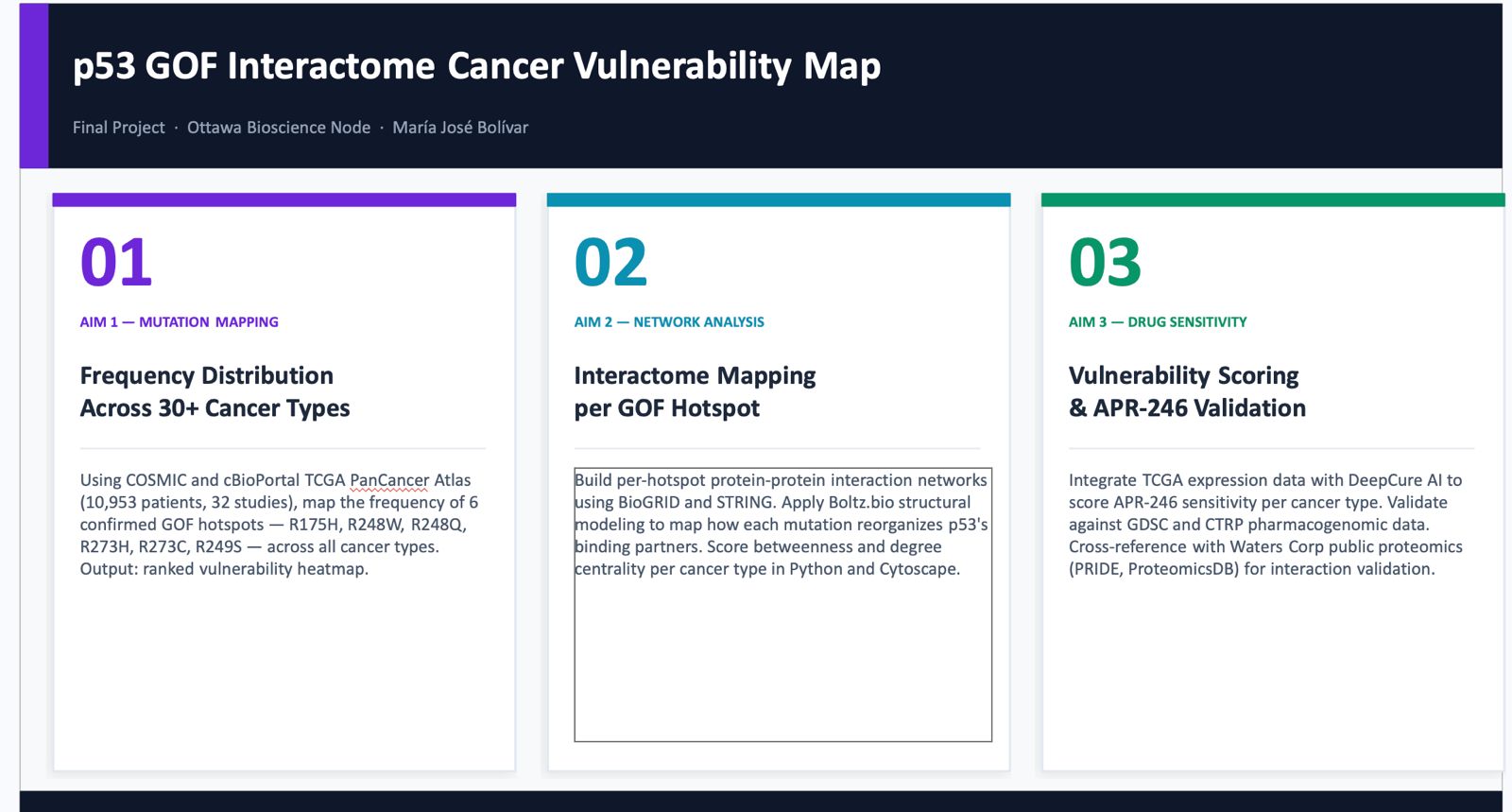
Homework Part B: Individual Final Project
Put your chosen final project slide in the appropriate slide deck following the instructions on slide 1: