Week 7 HW: genetic circuits part ii
Assignment Part 1: Intracellular Artificial Neural Networks (IANNs)
1. Advantages of IANNs over traditional Boolean genetic circuits
Intracellular Artificial Neural Networks (IANNs) offer several advantages compared to traditional genetic circuits that rely on Boolean logic:
First, IANNs enable graded and continuous responses rather than strictly binary outputs (ON/OFF). This allows cells to process signals in a more nuanced way, similar to natural biological systems, where gene expression levels vary continuously. Second, IANNs can integrate multiple inputs simultaneously with weighted contributions, instead of relying on rigid logical gates (e.g., AND, OR). This makes them more flexible and scalable for complex decision-making tasks. Third, IANNs are capable of learning-like behavior and adaptability (at least in design or through tunable parameters), which allows for optimization of responses without redesigning the entire circuit. Finally, IANNs support higher computational complexity within a single cell, enabling implementation of functions that would require many layers of traditional Boolean circuits.
2. Example application of an IANN A useful application of an IANN is in smart disease diagnostics and targeted therapy, particularly in detecting cancer-specific cellular states.
Input/Output behavior:
- Inputs (X₁, X₂, X₃, etc.): expression of multiple biomarkers, such as microRNAs, transcription factors, or metabolites associated with cancer.
- Each input is assigned a weight, reflecting its importance in identifying the disease state.
- The IANN processes these inputs through a weighted sum and activation function.
- Output: a therapeutic response, such as expression of a cytotoxic protein or activation of apoptosis, only when the combined signal exceeds a defined threshold.
This allows the system to distinguish between healthy and diseased cells with greater precision than simple Boolean logic.
Limitations:
- Biological noise: Variability in gene expression can affect the reliability of weighted computations.
- Limited scalability: Increasing the number of inputs may lead to metabolic burden and circuit instability.
- Tuning challenges: Precisely adjusting weights and thresholds in living cells is difficult.
- Response time: Cellular processes (transcription/translation) are slower than electronic systems.
3. Explanation of the intracellular single-layer perceptron A perceptron is the simplest type of artificial neural network, consisting of inputs, weights, a weighted sum, and an activation function that produces an output.
In the intracellular system described:
- X₁ (Csy4 endoribonuclease DNA): Acts as an input that produces the Csy4 protein after transcription (Tx) and translation (Tl).
- X₂ (fluorescent protein DNA): Produces mRNA that encodes a fluorescent protein, but this mRNA is regulated by Csy4.
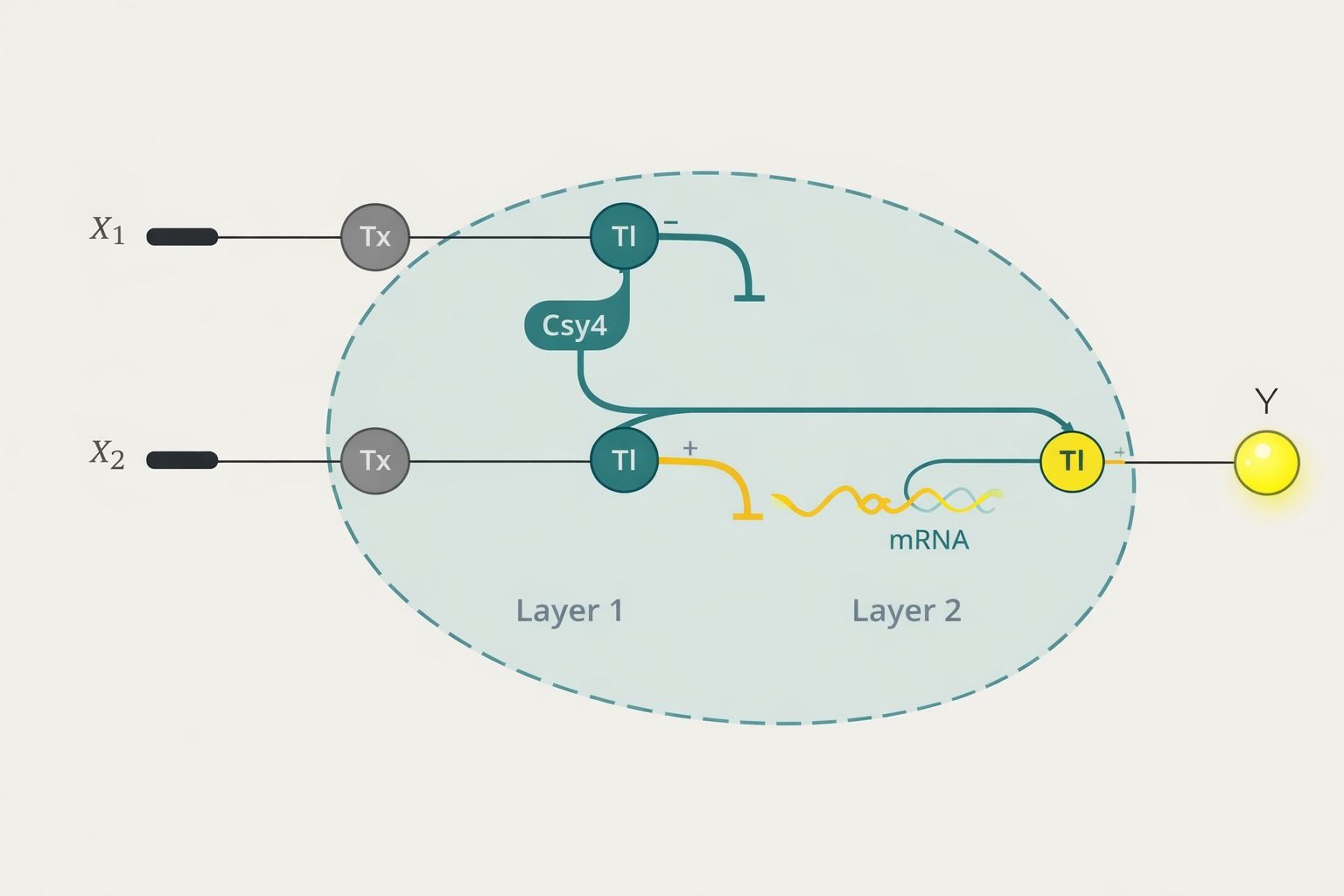
Mechanism:
- The presence of Csy4 (from X₁) affects the stability or processing of the mRNA from X₂.
- This interaction effectively assigns a weight to X₁’s influence over the output.
- The fluorescent protein level represents the output (Y).
Perceptron analogy:
- Inputs: X₁ and X₂
- Weight: Regulatory effect of Csy4 on the fluorescent protein mRNA
- Summation: Combined effect of transcription and regulation
- Activation function: Threshold-like behavior in protein expression (e.g., fluorescence only above a certain level)
Thus, this system behaves like a biological perceptron, where gene expression and RNA regulation implement the mathematical operations of weighted input summation and activation.
Assignment Part 2: Fungal Materials
1. What are some examples of existing fungal materials and what are they used for? What are their advantages and disadvantages over traditional counterparts?s
Several fungal (mycelium-based) materials already exist and are being used in different industries:
Examples and uses:
- Mycelium-based packaging: Used as a biodegradable alternative to plastic foams (e.g., Styrofoam).
- Construction materials: Mycelium composites can be used as insulation panels or lightweight building blocks.
- Textiles and leather-like materials: Flexible fungal materials are used as sustainable alternatives to animal leather.
- Acoustic and thermal insulation: Due to their structure, mycelium materials are effective at sound absorption and heat resistance.
Advantages over traditional materials:
- Sustainability: They are biodegradable, renewable, and can be grown on agricultural waste.
- Low energy production: They require less energy compared to plastics or synthetic materials.
- Environmental benefits: They reduce pollution and can even sequester carbon during growth.
- Fire resistance and non-toxicity: They do not contain harmful chemicals and can resist heat.
Disadvantages:
- Lower mechanical strength: They are often weaker than traditional materials like plastics or concrete.
- High moisture sensitivity (hygroscopicity): They can absorb water easily, affecting durability.
- Biological degradation: They can be susceptible to microbial decay if not properly treated.
- Production challenges: Growth requires controlled conditions and consistency can be an issue.
2. What might you want to genetically engineer fungi to do and why? What are the advantages of doing synthetic biology in fungi as opposed to bacteria? One interesting goal for genetically engineering fungi would be to create living materials that can self-heal or respond to environmental stimuli.
Example application:
- Engineer fungi to produce self-repairing building materials that can detect cracks and regrow to repair structural damage.
- Inputs: Environmental signals such as mechanical stress, cracks, or humidity.
- Outputs: إنتاج enzymes or new mycelial growth that reinforces the damaged area.
- Bioremediation fungi engineered to degrade plastics, toxins, or pollutants more efficiently.
Why fungi? Advantages over bacteria:
Ability to form complex structures: Fungi naturally grow as multicellular networks (mycelium), which is ideal for building materials, unlike bacteria that are mostly unicellular.
Secretion of enzymes: Fungi efficiently secrete enzymes to break down complex substrates (e.g., lignin, plastics), making them powerful for industrial and environmental applications.
Growth on low-cost substrates: They can grow on agricultural waste (e.g., sawdust, straw), reducing production costs.
Higher metabolic complexity: Fungi can produce more complex molecules (e.g., secondary metabolites) than many bacteria.
Greater tolerance to contamination: Some fungi are more robust in non-sterile conditions compared to bacteria.
Limitations:
- Genetic engineering in fungi is often more complex and slower than in bacteria.
- Growth rates are generally slower than bacterial systems.
- Regulatory and scalability challenges still exist.
Assignment Part 3: First DNA Twist Order
For my first Twist DNA order, I designed SilkWire-1, a fusion protein that combines the conductive aromatic core of Geobacter sulfurreducens PilA (the backbone of electrically conductive bacterial nanowires) with a silk-like repeat domain (sSilk-96, based on the MaSp1 consensus motif from Nephila clavipes). The goal is to produce a recombinant protein that self-assembles into hydrogel fibers with intrinsic electrical conductivity — the central construct of my final project on protein-integrated responsive hydrogels.
Insert: SilkWire-1 (507 bp CDS)
Full name: SilkWire-1 — Met-His6-sPilA-61-W51W57-GSGSG-sSilk-96
Codon optimization: E. coli K-12 (strain 562), CAI = 0.765
Synthesis vendor: Twist Bioscience (primary order)
Domain architecture (169 aa total)
| Domain | Residues | Function |
|---|---|---|
| Met-His6 tag | 1–7 (MHHHHHH) | Ni-NTA affinity purification |
| sPilA-61-W51W57 | 8–61 (54 aa) | Authentic G. sulfurreducens PilA aromatic core with W51W57 mutations for enhanced π-stacking and electrical conductivity |
| GSGSG flexible linker | 62–66 | Decouples PilA fold from silk domain; allows independent assembly of each module |
| sSilk-96 | 67–169 (103 aa) | 8× MaSp1 consensus repeat (GGAGQGGYGGLS)×8 — silk-like β-sheet forming domain that drives hydrogel self-assembly |
Protein sequence (169 aa)
Design rationale
Why PilA W51W57?
The G. sulfurreducens PilA protein forms electrically conductive “microbial nanowires” through a network of aromatic amino acids (Phe, Tyr, Trp) that enable long-range electron transfer via π-stacking and metallic-like conductivity. The W51W57 double-tryptophan variant (Trp substitutions at positions 51 and 57) enhances the aromatic density of the assembled fiber, improving conductance. The sPilA-61 truncation retains the soluble, hydrogel-compatible portion of the protein while removing the membrane anchor.
Why sSilk-96?
Spider silk MaSp1 consensus repeats (GGAGQGGYGGLS) self-assemble into β-sheet nanostructures that form strong, flexible hydrogel matrices. The 8-repeat version (96 residues) provides sufficient repeat length for robust gel formation while keeping the total construct size manageable for E. coli expression. The alternating Gly and Gln/Tyr residues drive β-sheet stacking, and the Tyr residues can participate in additional π-stacking interactions with the PilA aromatic core.
Why the GSGSG linker?
A flexible Gly-Ser linker physically decouples the folding of the PilA α-helical domain from the silk β-sheet domain, allowing each module to adopt its native structure independently. This prevents misfolding that would occur if the domains were fused directly.
Nucleotide sequence (507 bp, codon-optimized for E. coli)
Backbone Vector: pET28a
The insert will be synthesized and cloned into the pET28a expression vector (Novagen/Sigma-Aldrich), which was selected for its high-yield, tightly regulated bacterial expression system.
Key features of pET28a:
| Feature | Details |
|---|---|
| Total size | 5,369 bp |
| Promoter | T7 promoter (bacteriophage T7 RNA polymerase-dependent) |
| Inducer | IPTG (isopropyl β-D-thiogalactopyranoside) |
| Regulation | lacI repressor gene included — tight off-state, high induction ratio |
| Antibiotic resistance | Kanamycin (KanR) |
| N-terminal tag | His6 tag + thrombin cleavage site (optional removal) |
| Origins of replication | pBR322 ori (ColE1-type, ~40 copies/cell) + f1 ori |
| Host requirement | E. coli BL21(DE3) or derivative (must express T7 RNA polymerase from λDE3 prophage) |
Why pET28a for SilkWire-1?
- The T7 promoter drives very high-level expression, which is important for silk-like proteins that often express poorly due to repetitive codon usage.
- The N-terminal His6 tag is already included in the SilkWire-1 design (MHHHHHH), allowing one-step Ni-NTA purification under denaturing conditions if inclusion bodies form — which is common for silk-like proteins. Resolubilization in urea followed by dialysis is the standard purification strategy.
- The kanamycin resistance allows selection independently of ampicillin-resistant plasmids that may be co-transformed in future experiments.
- IPTG induction at lower temperatures (16–20°C) can improve soluble expression of repetitive proteins by slowing translation and allowing correct folding.
Benchling Assembly Documentation
The construct was designed in Benchling using Gibson Assembly cloning strategy.
Assembly parameters
| Parameter | Value |
|---|---|
| Assembly method | Gibson Assembly |
| Created | 19/2026 23:02 by Maria Rivas |
| Total assembled size | 5.9 kb |
| Backbone | pET28a (5,369 bp → 5.4 kb in assembly) |
| Insert | SilkWire1_insert_codon_optimized (516 bp) |
| Fragments | 2 (backbone + insert) |
Primers
Backbone amplification:
- 5′ primer:
pET28a_forward - 3′ primer:
pET28a_reverse
Insert amplification:
- 5′ primer:
SilkWire1_insert_codon_optimized_forward - 3′ primer:
SilkWire1_insert_codon_optimized_reverse
Gibson Assembly primers add ~20 bp homology overhangs to each end of the insert matching the linearized pET28a backbone, enabling seamless ligation-independent joining.
Assembly history and circular map
The Benchling assembly history shows the two-fragment Gibson design — the pET28a backbone (orange arc, ~5.4 kb) and the SilkWire-1 insert (green arc, 516 bp) assembled into a 5.9 kb circular plasmid. The restriction map (pET28a sequence view) confirms the insert position within the Multiple Cloning Site (MCS), downstream of the T7 promoter and His6 tag region.
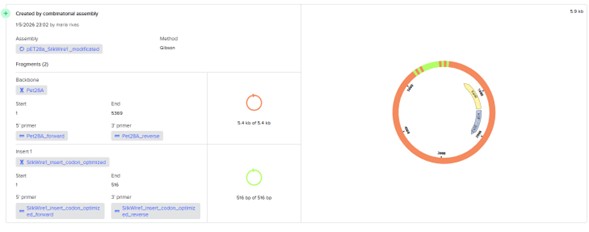
Figure 1. Benchling combinatorial assembly record showing the pET28a backbone (5.4 kb) and SilkWire-1 codon-optimized insert (516 bp) joined by Gibson Assembly into a 5.9 kb construct.
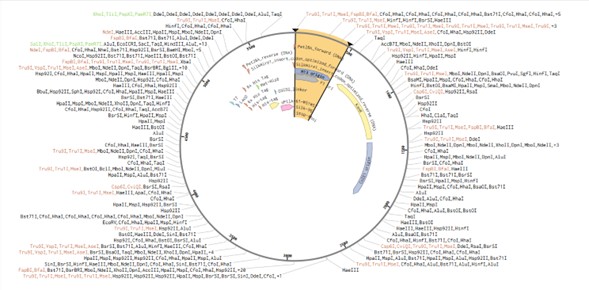
Figure 2. Circular restriction map of pET28a with annotated features, confirming the backbone architecture. The SilkWire-1 insert is cloned into the NdeI/XhoI region of the MCS, downstream of the T7 promoter and N-terminal His6 tag.
Expression and Validation Plan
Once synthesized and cloned, expression of SilkWire-1 will be validated using the following workflow:
- Transform pET28a-SilkWire-1 into E. coli BL21(DE3) competent cells; select on LB + kanamycin (50 µg/mL) plates.
- Colony PCR using pET28a T7 promoter primer + SilkWire1 reverse primer to confirm insert presence (~600 bp band expected).
- Sanger sequencing of 3–5 colonies to confirm sequence fidelity.
- IPTG induction: Grow confirmed colony to OD~0.6, induce with 0.5 mM IPTG at 20°C overnight.
- SDS-PAGE: Expect a band at ~18.7 kDa (169 aa × ~111 Da/aa average).
- Ni-NTA purification: Lyse cells, bind His6-tagged SilkWire-1 to Ni-NTA resin, elute with imidazole gradient.
- Mass spectrometry (Week 10 skills): Confirm molecular weight of purified protein by intact LC-MS; target MW ≈ 18,700 Da.
- Hydrogel formation assay: Dialyze purified protein into phosphate buffer, concentrate to >5 mg/mL, and assess self-assembly by turbidity, rheology (G′ vs G″), and AFM.
Connection to Final Project
SilkWire-1 is the primary molecular building block of my final project: a protein-integrated, electrically responsive hydrogel for biosensing applications. The design hypothesis is that the PilA aromatic core will enable electron transfer through the assembled gel matrix, while the silk domain provides structural integrity and tunable mechanical properties. Future iterations will incorporate pH-sensitive amino acid mutations and crosslinkable tyrosine residues to create a stimuli-responsive material that changes conductance in response to environmental signals.