Week 1 HW: Principles and Practices
1. Biological engineering application and tool
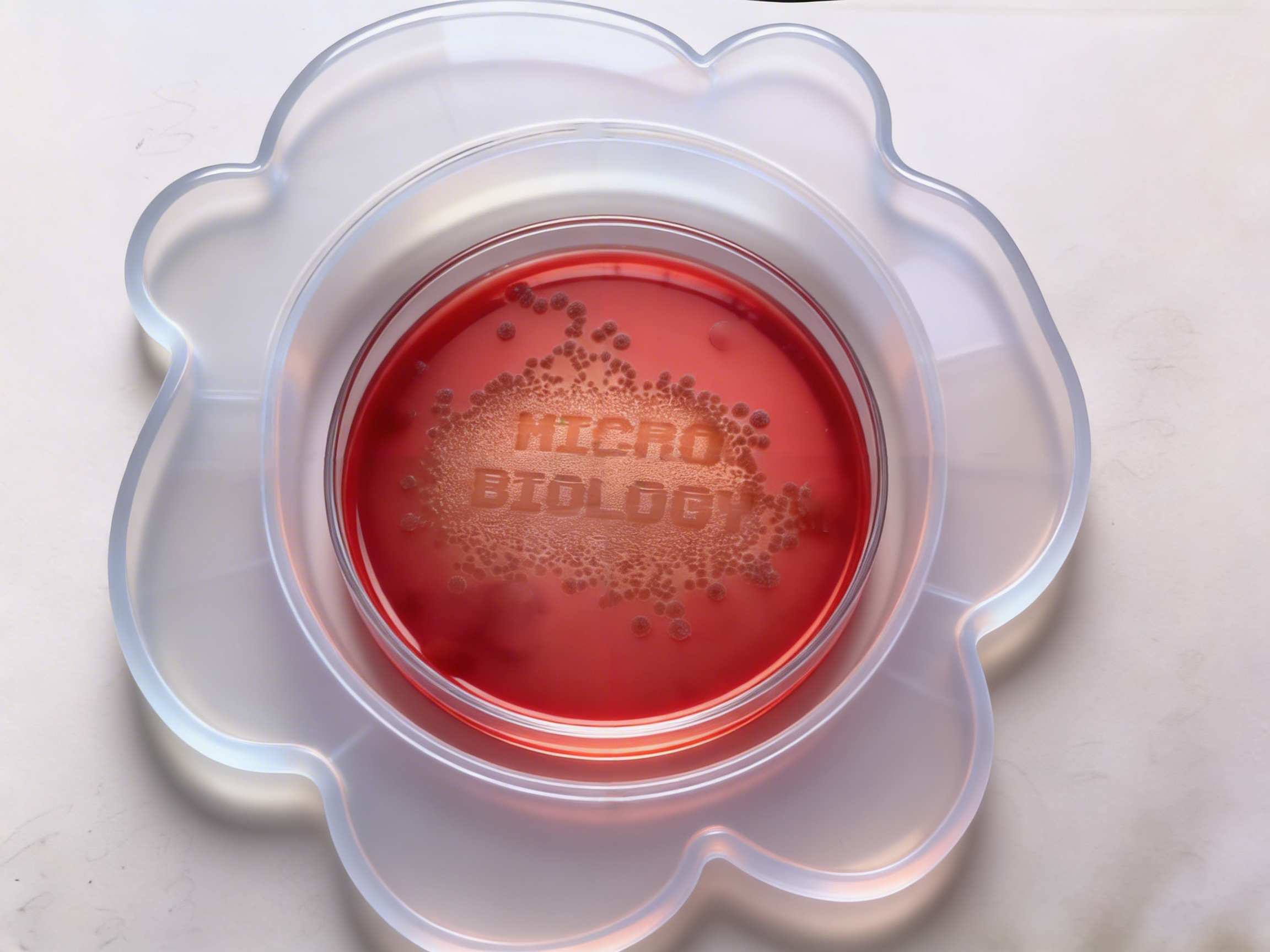
The project proposes the development of a compact experimental and artistic-scientific device for the study and artistic modulation of bacterial growth patterns on a solid (agar) nutrient medium. The device is a tabletop device in a plastic case with a built-in vibrating column and a microcontroller providing programmable control of vibration parameters, including frequency, modes, and temporal patterns. A standard Petri dish containing solid agar, onto which an image of E. coli has been pre-printed using a DIY bioprinter, is placed on top of the device. After bioprinting, the image undergoes “mechanical post-processing” in the form of vibration, allowing for the study and artistic interpretation of the influence of mechanical environmental conditions on the spatial organization of bacterial growth. This translates the digital image and digital post-processing into a physical space known as “analog biological post-processing.”
The theoretical basis for the project is based on data on the mechanosensitivity of bacteria and the mechanical nature of colony growth. According to the work of Ghodake et al. (2024) found that low-frequency mechanical vibration (1–20 Hz) in a liquid medium altered the growth rate and morphology of E. coli cells, demonstrating the bacteria’s fundamental sensitivity to external mechanical stimuli. Although this study was conducted in liquid culture, it suggests that when vibration is transmitted through solid agar, the mechanical effect will be realized not through mixing, but by creating localized mechanical stress and changing growth conditions for E. coli colonies.
Furthermore, Kochanowski et al. (2024) demonstrated that the growth and morphology of bacterial colonies on solid surfaces depend significantly on mechanical interactions between the cells and the substrate, including friction, adhesion, and mechanical resistance of the medium. This confirms that changing environmental mechanical conditions can lead to reproducible changes in colony shape and structure. The project involves using low-frequency mechanical vibration transmitted through the bottom of the Petri dish and agar during the active colony growth phase (3–8 hours after printing) to avoid simple physical image smearing at the early stage and a limited effect at later stages of growth. Thus, the image goes from a digital file through bioprinting and mechanical post-processing to a physical biological object.
2. Governance/policy goals
The project is being considered as an extension of the bioart curriculum at ITMO University. It is planned to expand the bioprinting program and develop additional approaches for manipulating printed E. coli images. The plan is to make this technology publicly accessible and expand its audience, engaging not only university students but also external audiences interested in bioart. This is an important step toward expanding the bioart community of artists and citizen science. Accessibility is also key. The images are printed using a DIY bioprinter, and the vibration device is inexpensive to assemble. Participants will also be able to print the device body using ITMO University’s fab lab.
Therefore, the primary goal is to create a device as part of the curriculum. Subgoals: improve the course curriculum and expand its technological capabilities; make the program accessible to a wider audience; create the device as an art project for display at the Art & Science exhibition; and create a bioart community in St. Petersburg.
3. Potential governance “actions”
1_ Goal.
To conduct research and develop a technology for influencing E. coli with frequencies using a vibrating column. I am currently teaching a course for Art & Science Master’s students, where they print images using a bioprinter.
2_ Design.
To implement the course development and expand the participating audience, it is necessary to:
- Expand the use of the device into the framework of institutional education and art-science projects.
- Obtain formal approval from the Art & Science Center at ITMO University. The Art & Science Center already has an established practice of holding workshops for external audiences.
- BioArt Lab, which is part of the Art & Science Center, has a laboratory that can host these classes. Currently, classes are held there for students, but since the Art & Science Center has its own separate entrance and hosts exhibitions, outsiders are welcome to come to the University; they only need to fill out an application.
- Since the course requires the purchase of nutrient media, it can be offered for a fee, but at a minimal cost. The Art & Science Center frequently hosts exhibitions, and the practice of paying for workshops also has a well-established system.
3_ Assumptions, uncertainties.
To confirm the success of the technology for influencing E. coli growth with frequencies, a series of experiments must be conducted under controlled conditions: without frequency exposure, with varying frequency exposure, and with frequency exposure at different growth phases. The experimental results may reveal that, with low frequency exposure, dense agar will significantly minimize frequencies and, accordingly, will have an effect on E. coli growth, but not as strong.
4_ Risks of failure and success.
Even if the change in E. coli growth through frequency exposure is not significant, it will still be a research result, given that similar experiments were previously conducted in a liquid medium, not on solidified agar. This device could, in any case, be exhibited as an art piece at technology art exhibitions.
4. Options
| Users and Partnerships:
- Creation of a bioart community
- Engaging this community through course participation
- Funding acquisition
| Development of DIY devices
- Research into DIY and local opportunities
- Affordable device
- Low barrier to entry
| Institution and Educationt
- Accessible education not only for students
- Supporting accessibility at the local level
- Implementation of new, modern technological solutions in the educational program
5. Conclusion
Based on the above assessment, the most desirable action is to develop a bioart community by offering an affordable, paid course accessible to external audiences at ITMO University. This low entry barrier and accessible DIY projects will foster interest in bioart technologies.
Answers to questions:
Homework Questions from Professor Jacobson.
- What is the error rate of polymerase? 1:106 How does this compare to the length of the human genome? HThe human genome is 3–3.2 × 10⁹ bp, hence 3000 bp of the human genome could be wrong. How does biology deal with that discrepancy? There are DNA repair systems: MutS, MutL, and MutH in prokaryotes, and MSH and MLH in eukaryotes.
- How many different ways are there to code (DNA nucleotide code) for an average human protein? An average human protein consists of 300–400 amino acids. There are 20 types of proteinogenic amino acids, which are encoded by 61 codons in total. Due to codon degeneracy, some amino acids can have up to 6 synonymous codons, leading to up to 10200 possible theoretical sequences. In practice what are some of the reasons that all of these different codes don’t work to code for the protein of interest? There are conserved domains that provide mRNA stability and/or folding stability, functional motifs, and regions marking exons/introns, translation start/termination sites, etc. Therefore, some sequences will not yield chemically stable, functional, or translation-appropriate proteins.
Homework Questions from Dr. LeProust:
- What’s the most commonly used method for oligo synthesis currently? Next Generation (Chip Based) Oligo Nucleotide Synthesis.
- Why is it difficult to make oligos longer than 200nt via direct synthesis? Yield decreases with further synthesis steps due to lower fidelity, error accumulation, and formation of hairpins, dimers, and clogs.
- Why can’t you make a 2000bp gene via direct oligo synthesis? Direct oligo synthesis involves step-by-step addition of bases to the chain. With this technology, the yield of the full-length product decreases exponentially with each added base. Even if an exact 2000 bp oligo is synthesized, it would be difficult to purify it from, for instance, a 1990 bp oligo using gel electrophoresis.
Homework Question from George Church:
- What are the 10 essential amino acids in all animals and how does this affect your view of the “Lysine Contingency”? There are 9 essential amino acids: histidine, isoleucine, leucine, lysine, methionine, phenylalanine, threonine, tryptophan, and valine. Pyrrolysine also exists, occurring only in certain organisms, so it could be considered a 10th essential amino acid. The “Lysine Contingency” in the movie Jurassic Park was presented as an engineered inability of dinosaurs to produce lysine, aimed at tying them to the park territory where they could receive necessary supplements. As we can see, almost all vertebrates share this inability naturally, so the movie creators might have chosen a different amino acid, such as alanine, for dramatic effect.