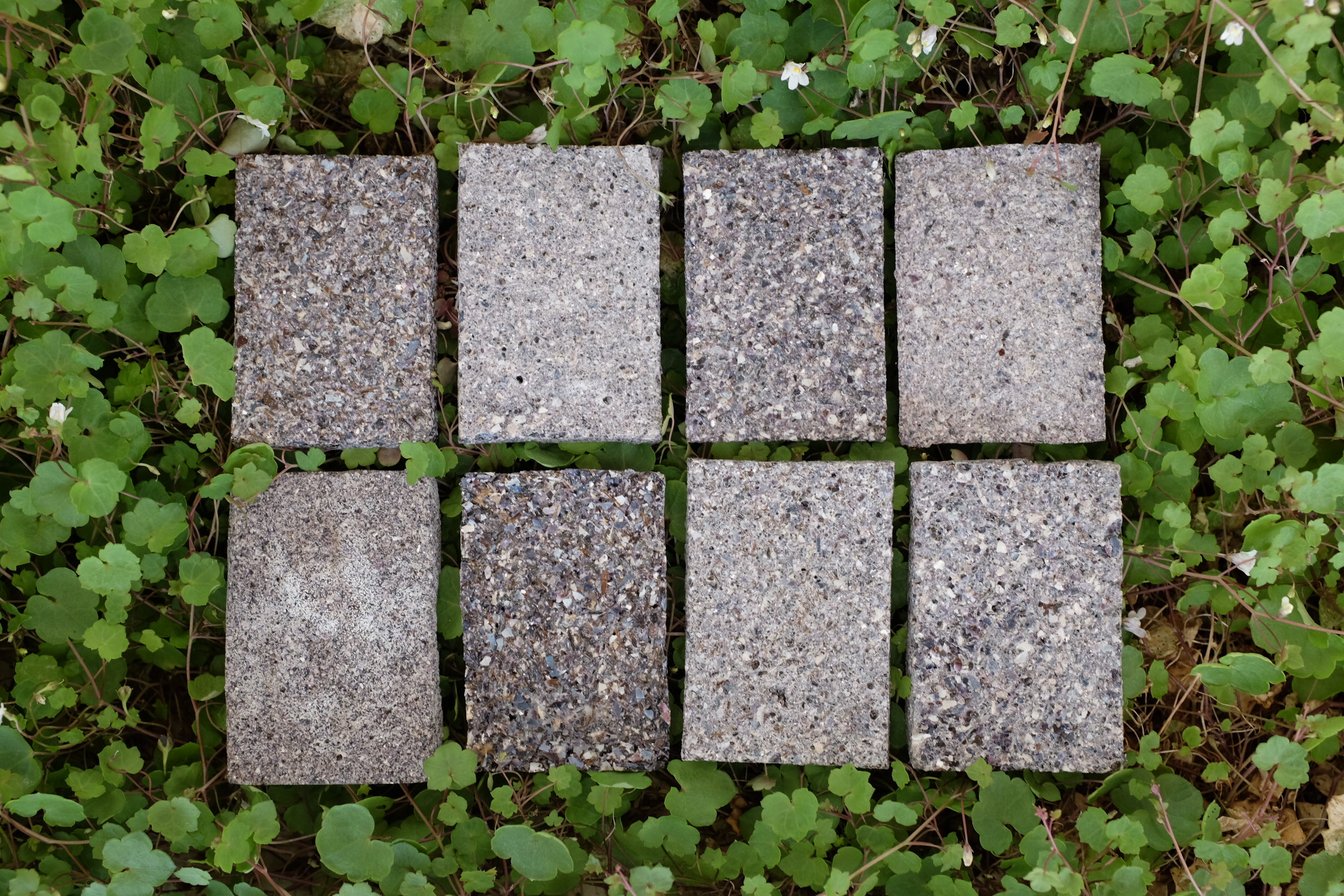
Project Proposal A biological engineering application I am curious about is designing a process for using enzymes to create carbon capturing concrete in-situ from waste bivalves shells as a calcium source. Having previously done research on bio-based building materials from shellfish waste, one of the biggest difficulties was achieving a material that fully biomineralises to become water resistant. Instead, post processing had to be done to create an additional water barrier layer. I am also interested in how this biogenic concrete material could be used as a living construction system.
Subsections of Homework
Week 1 HW: Principles and Practices
Project Proposal
A biological engineering application I am curious about is designing a process for using enzymes to create carbon capturing concrete in-situ from waste bivalves shells as a calcium source. Having previously done research on bio-based building materials from shellfish waste, one of the biggest difficulties was achieving a material that fully biomineralises to become water resistant. Instead, post processing had to be done to create an additional water barrier layer. I am also interested in how this biogenic concrete material could be used as a living construction system.
Governance/Policy Goals
Goal 1: Prevent ecological harm
: By putting a living material into the world, there may be other unintended outcomes that harm existing natural ecosystems
: Requiring field trials with data capture and environmental impact assessment to mitigate negative side affects
: Monitoring the impact over time
: Ensuring the material doesn’t cause ecological toxicity at end-of-life
Goal 2: Biocontainment considerations
:If engineering genetically modified organisms, there will need to be preventative measures so they don’t “escape” and have unwanted effects
:Procedure for containing without hindering function of living material
Goal 3: Ensure ethical supply chain
:Raw material traceability
:Ensure current re-use markets are not displaced
:Protect local fishing and aquaculture communities to prevent exploitation
Goal 4: Establishing a definition for ’livingness'
:When living cells are introduced, a material is no longer inert
:Regulations for defining the rights of a material if it is living
Potential Governance Actions
Requirement for biodegradability and end-of-life testing in various ecosystems during testing phase
Purpose: Currently, other than increasing requirement for product carbon footprints, very little end-of-life testing is required for new building materials. There is no regulation for engineered living materials, as it’s a relatively new innovation. This would represent an additional testing process before market readiness and would encure time and cost burdens.
Design: Putting this framework in place would require buy-in from multiple stakeholders, including researchers, businesses, and government entities. There would need to be certification procedure to ensure compliance, with a auditing/assessor board.
Assumptions: Commonly assumed that if something is “biodegradable” then it is safe everywhere, but in the wrong environment it could have unknown detrimental effects. I assume that businesses would be responsive to regulations, but that may not be the case.
Risk of failure: Prohibitively expensive ecotoxicity testing could disadvantage small companies and consolidate power among larger firms.
Incentivise community collaboration and co-benefits
Purpose: Set up positive relationships with shellfishers to allow for mutual benefits from research and products. In many regions, the fishing industry is the backbone of local communities, sustaining jobs, income, and long-term livelihoods. It is common to see large businesses or academic research operate in isolation without considering the communities who are impacted. Setting up good connections and engaging with local people will see increased benefits.
Design: Early stakeholder engagement (with local councils, businesses, residents, etc.) to ensure the research aligns with community needs and businesses. Offering cash incentives or tax benefits for engaging in the partnership.
Assumptions: I assume that having an additional income stream for shellfish byproduct would be a benefit for local fishing businesses, however there could be unseen negative factors. Assuming that
Risks of Failure: That people don’t actually buy in to the collaboration, or that after time the relationships break down. Engagment becomes performative, without having real impact.
Establish safe testing environment
Purpose: The construction industry is highly regulated and tends to favour established materials with proven performance. However, innovation inherently involves iteration and early-stage failure. To enable responsible experimentation, dedicated pilot sites or small-scale trial zones should be established, allowing new materials to be evaluated in real-world conditions within a controlled regulatory framework.
Design: Create regulated zones for experiements in the real world, with appropriate oversight. Robust containment strategies should be implemented to minimise risk, and clear stop-procedures must be in place to terminate trials immediately if unintended consequences arise. Would need some government funding in place to make it accessible.
Assumptions: I assume that the containment and emergency stop strategy would work in the actual ecosystem. Also that a small scale trial would actual provide a sample of the real setting, but it may not.
Risks of failure: High costs could disproportionately burden small businesses and startups. The potential for unintended biological release or biohazard events if containment measures fail.
Does the option:
Require end-of-life testing
Incentivise community collaboration
Establish safe testing environment
Prevent Ecological Harm
1
3
2
Enhance Biocontainment
3
3
1
Ensure Ethical Supply Chain
3
1
2
Define the policy for a “living” material
3
3
1
Based on this matrix, I would prioritise establishing a safe test zone for emerging bio-based and living materials. Although it did not impact in most other goals, I do think engagement with community and supply chain will be crucial to ensure ethical application. This option scored highly in enabling innovation while maintaining safety oversight, making it the most balanced mechanism for advancing technological development without compromising public protection.
I would direct this recommendation to national government bodies responsible for construction regulation (e.g., a national building standards authority), in collaboration with industry consortia and academic research institutions. National coordination is necessary to ensure regulatory legitimacy, while industry and academic partners would provide technical expertise and operational capacity.
The key trade-off is between the speed of innovation and regulatory caution. Creating a test zone may accelerate material development, but it also introduces controlled exposure to risk. There is also a trade-off between accessibility and safety. Stricter oversight improves risk mitigation but may increase costs, potentially disadvantaging small enterprises.
This recommendation assumes that controlled real-world testing is essential for validating novel building materials and that current regulatory pathways are too rigid for early-stage innovation. It also assumes that risks can be sufficiently mitigated through containment strategies, monitoring, and predefined emergency stop protocol.
Reflecting on what you learned and did in class this week, outline any ethical concerns that arose, especially any that were new to you. Then propose any governance actions you think might be appropriate to address those issues. This should be included on your class page for this week.
I’m still thinking on this one and have more to add!