Class Assignment — DUE BY START OF FEB 10 LECTURE First, describe a biological engineering application or tool you want to develop and why I want to create an antidote for the venom of the Lachesis acrochorda a South American snake, which is currently treated with antivenom serums. But I want to create one that is cheaper and more accessible. This would also help protect this snake species, which is endangered due to habitat loss and because it is potentially deadly to humans.
Part 1: Benchling & In-silico Gel Art Make a free account at benchling.com
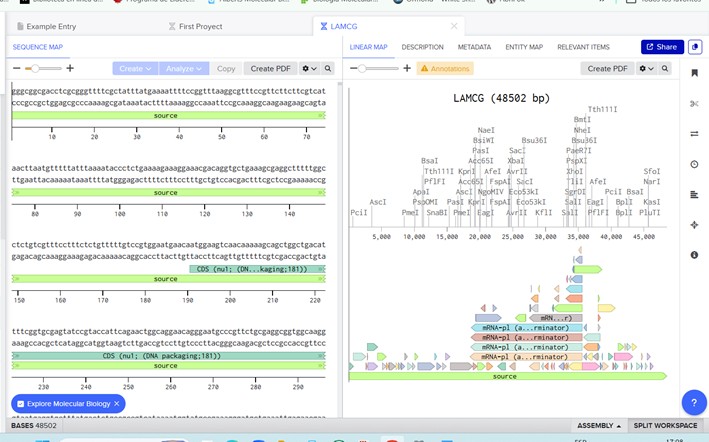
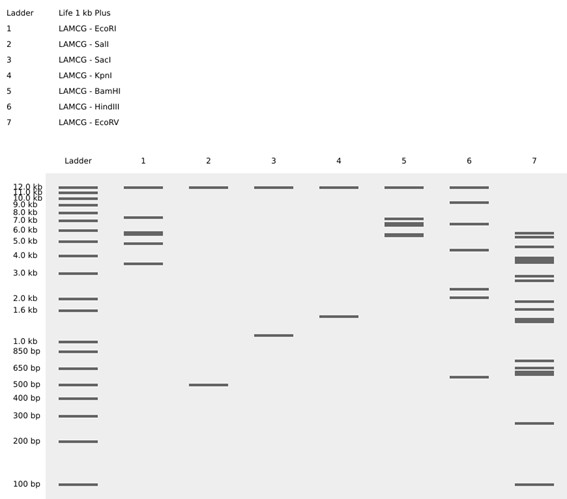
Import the Lambda DNA.
Simulate Restriction Enzyme Digestion with the following Enzymes:
EcoRI
HindIII
BamHI
KpnI
EcoRV
SacI
SalI
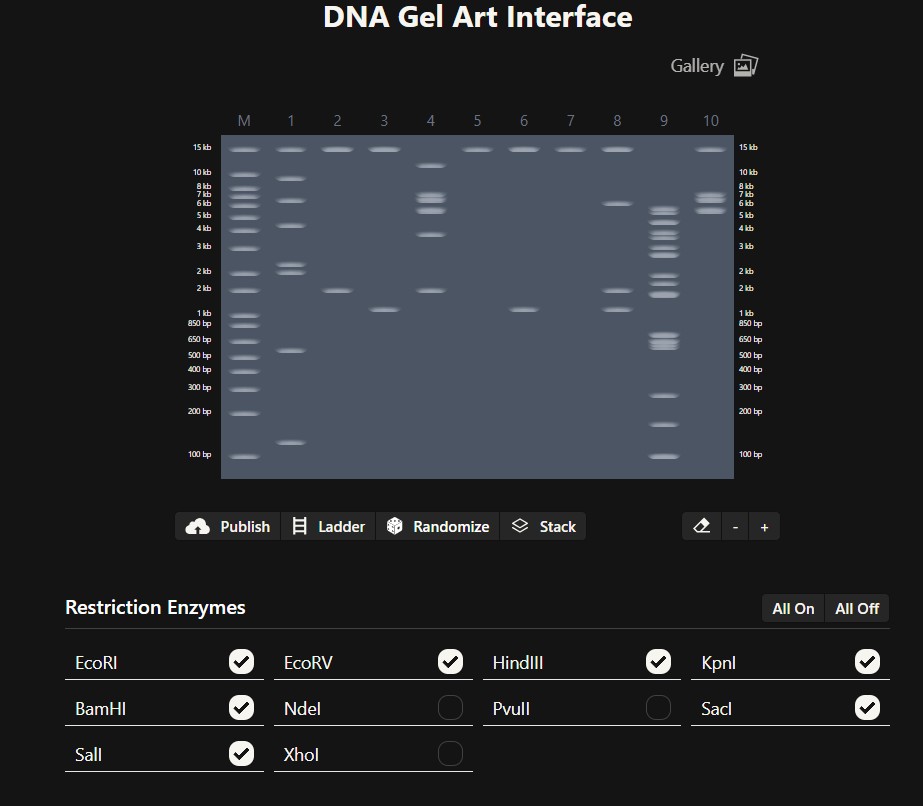
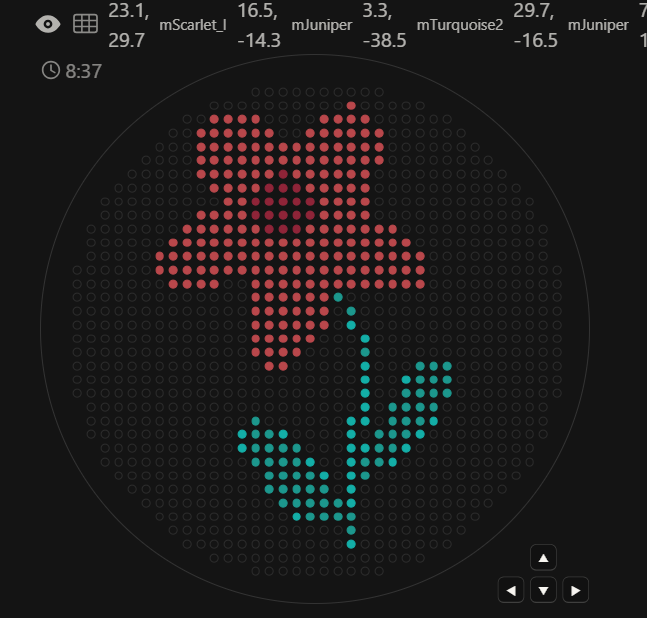
Create a pattern/image in the style of Paul Vanouse’s Latent Figure Protocol artworks.
You might find Ronan’s website a helpful tool for quickly iterating on designs!
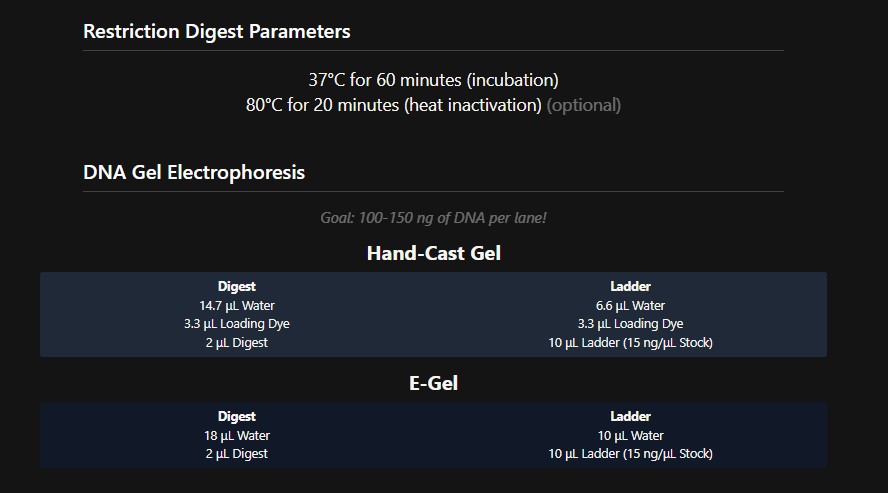
Assignment: Python Script for Opentrons Artwork — DUE BY YOUR LAB TIME! I downloaded the script from the GUI website:
The script from opentrons import types
import string
metadata = { ‘protocolName’: ‘{YOUR NAME} - Opentrons Art - HTGAA’, ‘author’: ‘HTGAA’, ‘source’: ‘HTGAA 2026’, ‘apiLevel’: ‘2.20’ }
Z_VALUE_AGAR = 2.0 POINT_SIZE = 0.75
Part A: Conceptual Questions Answer any NINE of the following questions from Shuguang Zhang: (i.e. you can select two to skip)
How many molecules of amino acids do you take with a piece of 500 grams of meat? (on average an amino acid is ~100 Daltons)
Why do humans eat beef but do not become a cow, eat fish but do not become fish?
Part A: SOD1 Binder Peptide Design (From Pranam) Superoxide dismutase 1 (SOD1) is a cytosolic antioxidant enzyme that converts superoxide radicals into hydrogen peroxide and oxygen. In its native state, it forms a stable homodimer and binds copper and zinc.
Mutations in SOD1 cause familial Amyotrophic Lateral Sclerosis (ALS). Among them, the A4V mutation (Alanine → Valine at residue 4) leads to one of the most aggressive forms of the disease. The mutation subtly destabilizes the N-terminus, perturbs folding energetics, and promotes toxic aggregation.
Assignment: DNA Assembly Answer these questions about the protocol in this week’s lab:
What are some components in the Phusion High-Fidelity PCR Master Mix and what is their purpose?
What are some factors that determine primer annealing temperature during PCR?
There are two methods from this class that create linear fragments of DNA: PCR, and restriction enzyme digests. Compare and contrast these two methods, both in terms of protocol as well as when one may be preferable to use over the other.
Assignment Part 1: Intracellular Artificial Neural Networks (IANNs) What advantages do IANNs have over traditional genetic circuits, whose input/output behaviors are Boolean functions?
Describe a useful application for an IANN; include a detailed description of input/output behavior, as well as any limitations an IANN might face to achieve your goal.
Below is a diagram depicting an intracellular single-layer perceptron where the X1 input is DNA encoding for the Csy4 endoribonuclease and the X2 input is DNA encoding for a fluorescent protein output whose mRNA is regulated by Csy4. Tx: transcription; Tl: translation.
Subsections of Homework
Week 1 HW: Principles and Practices
Class Assignment — DUE BY START OF FEB 10 LECTURE
First, describe a biological engineering application or tool you want to develop and why
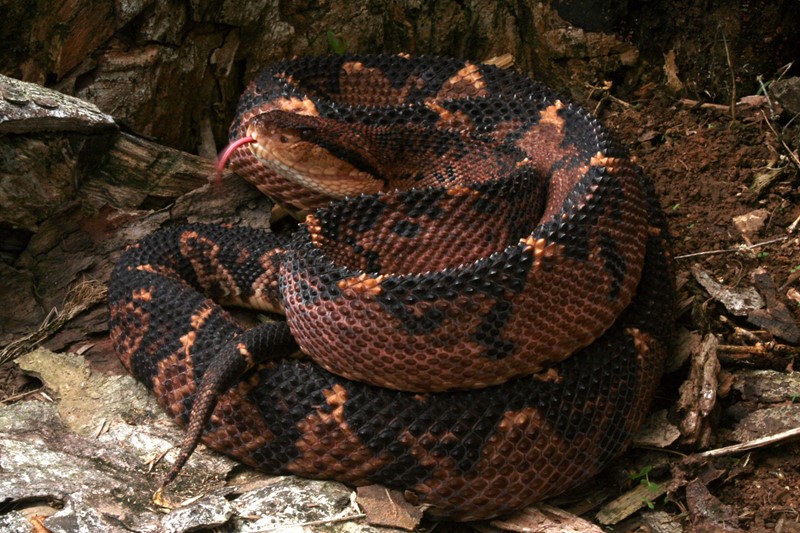
I want to create an antidote for the venom of the Lachesis acrochorda a South American snake, which is currently treated with antivenom serums. But I want to create one that is cheaper and more accessible. This would also help protect this snake species, which is endangered due to habitat loss and because it is potentially deadly to humans.
Next, describe one or more governance/policy goals related to ensuring that this application or tool contributes to an “ethical” future, like ensuring non-malfeasance (preventing harm). Break big goals down into two or more specific sub-goals.
Goal 1: Biosafety in laboraotry.
Sub-goals: 1. Looking after the well-being of researchers. 2. Looking after the well-being of people who live near or are related to the laboratory
Goal 2: Protect snakes and their habitat.
Sub-goals: 1. Reduce the threat category of snakes. 2. Restore the snake’s habitat.
Goal 3: Protect and educate communities living near the snake habitats.
Sub-goals: 1. Make the snake no longer a potentially deadly threat to humans. 2. Help people stop seeing the snake as the enemy and understand the importance of protecting this species and its habitat.
Next, describe at least three different potential governance “actions” by considering the four aspects below (Purpose, Design, Assumptions, Risks of Failure & “Success”).
Action 1. Demand stricter laboratory standards and protocols
Purpose: Standard norms and protocols exist, but they need to be updated to take into account new technologies.
Design: It is necessary to involve the government, laboratory technicians, and national and international health regulatory organizations. Such as: World Health Organization and Agencia Nacional de Regulación, Control y Vigilancia Sanitaria of Ecuador
Assumptions: That all actors will cooperate efficiently
Risks of Failure & “Success”: By demanding overly strict regulations, very few people can comply with them, hindering research.
Action 2. Ban the killing of snakes and deforestation
Purpose: There are certain prohibitions, but the regulations need to be specified.
Design: The legislative and environmental sectors of the government must develop an action plan
Assumptions: That people accept change
Risks of Failure & “Success”: The snake is protected, but people are put in danger.
Action 3.Mass media communication about the importance of snakes in the ecosystem
Purpose: to change people’s perception of snakes so that they do not exterminate them.
Design: Communicating through television, the internet, and schools
Assumptions: That people are going to change the beliefs they’ve always had
Risks of Failure & “Success”: Failure to achieve effective communication
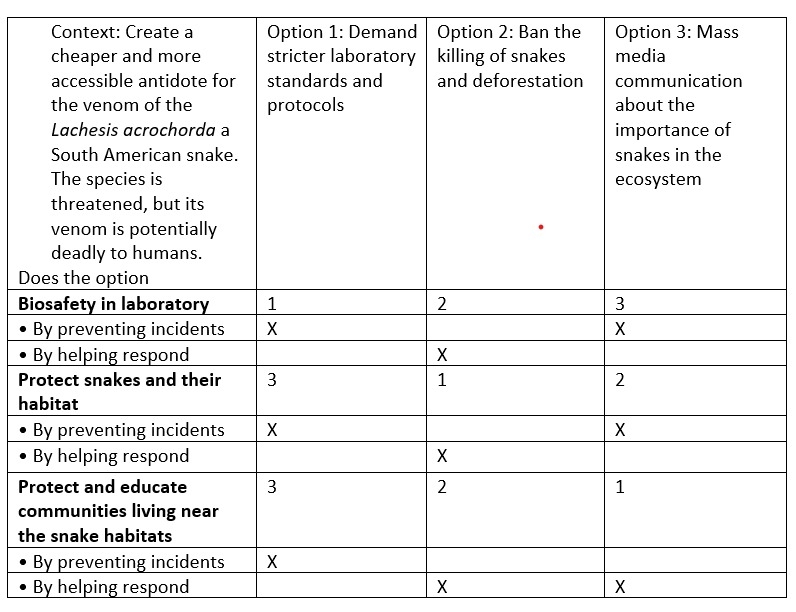
Next, score (from 1-3 with, 1 as the best, or n/a) each of your governance actions against your rubric of policy goals. The following is one framework but feel free to make your own:
Last, drawing upon this scoring, describe which governance option, or combination of options, you would prioritize, and why. Outline any trade-offs you considered as well as assumptions and uncertainties.
I would prioritize stricter laboratory standards and protocols for the safety of researchers, laboratory personnel, and the general public. If things don’t go well, the community should be compensated financially with long-term plans or other strategies should be explored. The laboratory, the government, and the Ministry of Health should develop control protocols. Communities living near snakes should be actively involved.
Reflecting on what you learned and did in class this week, outline any ethical concerns that arose, especially any that were new to you. Then propose any governance actions you think might be appropriate to address those issues. This should be included on your class page for this week.
I think people should be compensated if the plan fails and there is collateral damage. To ensure a fair process, legislation should be applied by the government. Protocols must be followed to assess the appropriate compensation based on the extent of the damage.
Assignment (Week 2 Lecture Prep) — DUE BY START OF FEB 10 LECTURE
Homework Questions from Professor Jacobson
Nature’s machinery for copying DNA is called polymerase. What is the error rate of polymerase? How does this compare to the length of the human genome. How does biology deal with that discrepancy?
The eror rate of polymerase is 1 in 100000 nucleotides which is high considring the human genome has 3.2 billion nucleotide pairs. There are repair mechanisms that reduce the number of errors in DNA.
2.How many different ways are there to code (DNA nucleotide code) for an average human protein? In practice what are some of the reasons that all of these different codes don’t work to code for the protein of interest?
There are three ways in average for each one of the 20 proteins. The reasons for these different codes don’t work to code for the protein of interest is because simply replicating the same codons is not enough; it is difficult to implement the post-transcriptional machinery and other regulatory elements.
Homework Questions from Dr. LeProust:
What’s the most commonly used method for oligo synthesis currently?
Phosphoramidite method
Why is it difficult to make oligos longer than 200nt via direct synthesis?
Cumulative efficiency small errors that, when repeated, affect overall performance.
Why can’t you make a 2000bp gene via direct oligo synthesis?
It’s not functional; many errors accumulate.
Homework Question from George Church:
Choose ONE of the following three questions to answer; and please cite AI prompts or paper citations used, if any.
Using Google & Prof. Church’s slide #4 What are the 10 essential amino acids in all animals and how does this affect your view of the “Lysine Contingency”?
The 10 essential amino acids for animals—Phenylalanine, Valine, Threonine, Tryptophan, Isoleucine, Methionine, Histidine, Arginine, Leucine, and Lysine—are those that cannot be synthesized endogenously and must be acquired through diet. When viewed through the lens of the “Lysine Contingency” from Jurassic Park, this biological reality reveals a major plot hole: since almost all vertebrates (including humans) are already naturally “lysine contingent,” the fail-safe was essentially meaningless. The genetic code wheel in the image shows that Lysine (K) is a standard, universal building block encoded by AAA and AAG; because it is fundamental to life, it is widely available in nature through plants and other animals. For a contingency to actually work, as suggested by the NSAA (Non-Standard Amino Acids) highlighted in red on the right of your image, scientists would have had to engineer the organisms to require a synthetic, lab-grown monomer like Pyrrolysine (Pyl) or a unique chemical derivative not found in the wild. This would ensure the “monomer” required for survival couldn’t be scavenged from the environment, unlike the common Lysine
Prompt:Using this image anwer this question: What are the 10 essential amino acids in all animals and how does this affect your view of the “Lysine Contingency”? Write in in a paragrapgh
Assignment (Your HTGAA Website) — DUE BY START OF FEB 10 LECTURE
Begin personalizing your HTGAA website in in https://edit.htgaa.org/, starting with your homepage — fill in the template with information about yourself, or remove what’s there and make it your own. Be creative!
Done
Week 2 HW: DNA READ, WRITW AND EDIT
Part 1: Benchling & In-silico Gel Art
Make a free account at benchling.com
Import the Lambda DNA.
Simulate Restriction Enzyme Digestion with the following Enzymes:
EcoRI
HindIII
BamHI
KpnI
EcoRV
SacI
SalI
Create a pattern/image in the style of Paul Vanouse’s Latent Figure Protocol artworks.
You might find Ronan’s website a helpful tool for quickly iterating on designs!
Part 3: DNA Design Challenge
3.1 Choose your protein
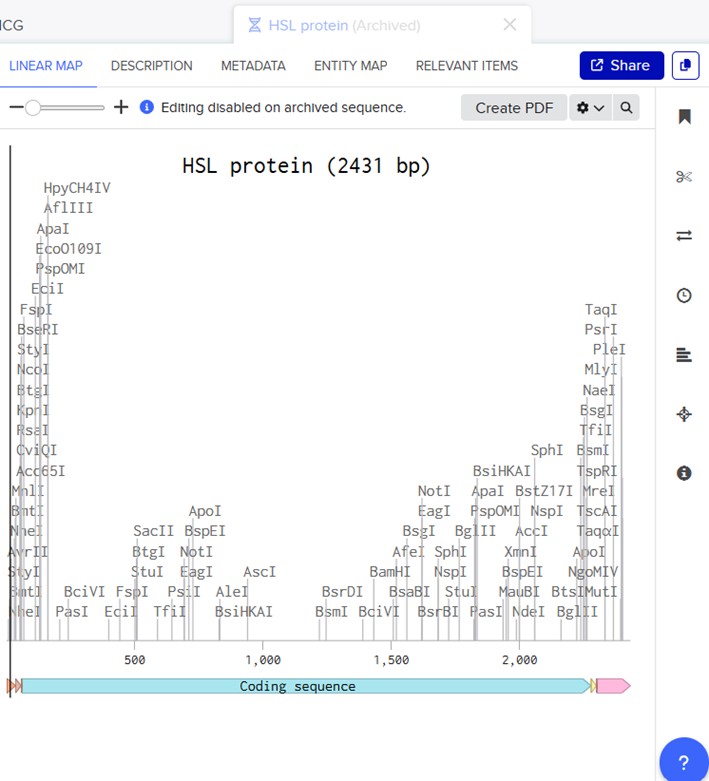
Which protein have you chosen and why? I have choose the Hormone-sensitive lipase. I chose because It is an important enzyme whose deficiency causes health problems, mainly in the liver (Xia et al. 2017).
Xia B, Cai GH, Yang H, Wang SP, Mitchell GA, Wu JW. Adipose tissue deficiency of hormone-sensitive lipase causes fatty liver in mice. PLoS Genet. 2017 Dec 12;13(12):e1007110. doi: 10.1371/journal.pgen.1007110.
I used the reverse translation tool of the website bioinformatics.org.
3.3. Codon optimization
Once a nucleotide sequence of your protein is determined, you need to codon optimize your sequence. You may, once again, utilize google for a “codon optimization tool”. In your own words, describe why you need to optimize codon usage.
To increase the expression of the protein of interest
Which organism have you chosen to optimize the codon sequence for and why?
I chose the mouse Mus musculus because they have a high degree of similarity to the human genome. The articles I consulted describe tests performed on mice.
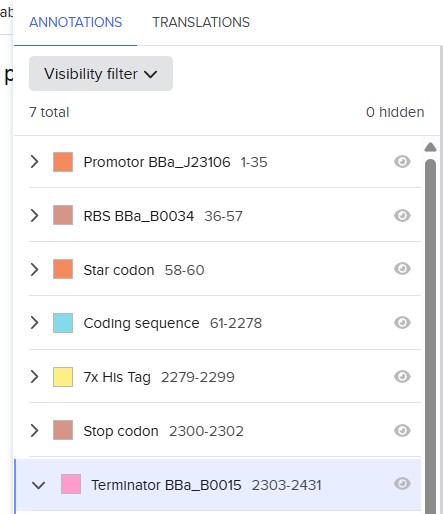
A T G G A T C T G C G C A C C A T G A C C C A G A G C C T G G T G A C C C T G G C G G A A G A T A A C A T G G C G T T T T T T A G C A G C C A G G G C C C G G G C G A A A C C G C G C G C C G C C T G A G C A A C G T G T T T G C G G G C G T G C G C G A A C A G G C G C T G G G C C T G G A A C C G A C C C T G G G C C A G C T G C T G G G C G T G G C G C A T C A T T T T G A T C T G G A T A C C G A A A C C C C G G C G A A C G G C TA T C G C A G C C T G G T G C A T A C C G C G C G C T G C T G C C T G G C G C A T C T G C T G C A T A A A A G C C G C T A T G T G G C G A G C A A C C G C A A A A G C A T T T T T T T T C G C G C G A G C C A T A A C C T G G C G G A A C T G G A A G C G T A T C T G G C G G C G C T G A C C C A G C T G C G C G C G A T G G C G T A T T A T G C G C A G C G C C T G C T G A C C A T T A A C C G C C C G G G C G T G C T G T T T T T T T G AA G G C G A T G A A G G C C T G A C C G C G G A T T T T C T G C A G G A A T A T G T G A C C C T G C A T A A A G G C T G C T T T T A T G G C C G C T G C C T G G G C T T T C A G T T T A C C C C G G C G A T T C G C C C G T T T C T G C A G A C C C T G A G C A T T G G C C T G G T G A G C T T T G G C G A A C A T T A T A A A C G C A A C G A A A C C G G C C T G A G C G T G A C C G C A G C C T G T T T A C C G G C G G C C G CT T T G C G A T T G A T C C G G A A C T G C G C G G C G A A T T T G A A C G C A T T A T T C A G A A C C T G G A T G T G C A T T T T T G G A A A G C G T T T T G G A A C A T T A C C G A A A T T G A A G T G C T G A G C A G C C T G G C G A A C A T G G C G A G C A C C A C C G T G C G C G T G A G C C G C C T G C T G A G C C T G C C G C C G G A A G C G T T T G A A A T G C C G C T G A C C GT G A C C A T T A G C C C G C C G C T G G C G C A T A C G G C C C G G C G C G G T G C T G G C G C G C C T G A T A G C T A T G A T C T G C G C G A A G G C C A G G A T A G C A A A G T G C T G A A C A G C C T G G C G A A A A G C G A A G G C C C G C G C C T G G A A C T G C G C C C G C C C G C C G C A T C A G G C G C C G C A G C C G C G C G C T G G T G G T G C A T A T T C A T G G C G G C G G C T T T G T G G C G C A G A CC A G C A A A A G C C A T G A A C C G T A T C T G A A A A A C T G G G C G C A G G A A C T G G G C G T G C C G A T T T T T A G C A T T G A T T A T A G C C T G G C G C C G A A G C G C C G T T T C C G C G C G C T G G A A G A A T G C T T T T T T G C G T A T T G C T G G G C G G T G A A A C A T T G C G A T C T G C T G G G C A G C A C C G G C G A A C G C A T T T G C C T G G C G G G C G A T A G C G C G G G C G A A C C T GT G C A T T A C C G T G A G C C T G C G C G G C G G C G T A T G G C G T G C G C G T G C C G G A T G G C A T T A T G G C G G C G T A T C C G G T G A C C A C C C T G C A G A G C G C G A G C C C G A G C C G C C T G C T G A G C C T G A T G G A T C C G C T G C C G C T G A G C G T G C T G A G C A A A T G C G T G A G C G C G T A T A G C G G C A C C G A A G C G A A G A T C A T T T T G A T A G C G A T C A G A A A GC G C T G G G C G T G A T G G G C C T G G T G C A G C G C G A T A C C A G C C T G T T T C T G C G C G A T C T G C G C C T G G G C G C G A G C A G C T G G C T G A A C A G C T T T C T G G A A C T G A G C G G C C G C A A A C C G C A G A A A A C C A C C A G C C C G A C C G C G A A A G C G T G C G C C C G A C C G A A A A G C A T G C G C C G C A G C G T G A G C G A A G C G G C G C T G G C G C A G C C G G A A G G C C T G C T G G GC A C C G A T A C C C T G A A A A A A A C T G A C C A T T A A A G A T C T G A G C A A C A G C G A A C C G A G C G A T A G C C C G G A A A T G A G C C A G A G C A T G G A A A C C C T G G G C C C G A G C A C C C C G A G C G A T G T G A A C T T T T T T C T G C G C C C G G G C A A C A G C C A G G A A G A A A G C G G A A G C G A A A G A T G A A G T G C G C C C G A T G G A T G G C G T G C C G C G C G T G C G C G C G C G G C G T T T C C GG A A G G C T T T C A T C C G C G C C G C A G C A G G G C G T G C T G C A T A T G C C G C T G T A T A C C A G C C C G A T T G T G A A A A A A C C C G T T T A T G A G C C C G C T G C T G G C G C C G G A T A G C A T G C T G A A A A A C C C T G C C G C C G G T G C A T C C G A T G C T G G A T G A T A G C G T G A T G T T T G C G C G C C G C C T G C G C G A T C T G G G C C A G C C G GT G A C C C T G A A A G T G G T G G A A G A T C T G C C G C A T G G C T T T C T G A G C C T G G C G G C G C T G T G C C G C G A A A C C C G C C A G G C G A C C G A A T T T T G C G T G C A G C G C A T T C G C C T G A T T C T G A C C C C G C C G G C G G C G C C G C T G A A C
I used the VectorBuilder website optimization tool, avoiding the Bbs I, Bbv I, and Bsa I recognition sites.
3.4. You have a sequence! Now what?
What technologies could be used to produce this protein from your DNA? Describe in your words the DNA sequence can be transcribed and translated into your protein. You may describe either cell-dependent or cell-free methods, or both.
I’m going to design the protein and find out if I can order the plasmid with my design from a company in my country; I might have to import it, which requires several permits. Then I’m going to transform bacteria with this DNA in the lab, to clone it and have bacterial cultures that can produce this protein.
3.5. How does it work in nature/biological systems?
Describe how a single gene codes for multiple proteins at the transcriptional level.
Because after transcription, splicing causes several isoforms to be generated from the same genetic code.
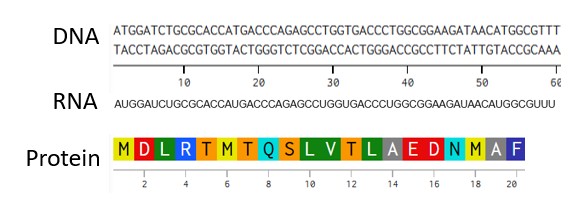
Try aligning the DNA sequence, the transcribed RNA, and also the resulting translated Protein!!! See example below.
Part 4: Prepare a Twist DNA Synthesis Order
4.1. Create a Twist account and a Benchling account
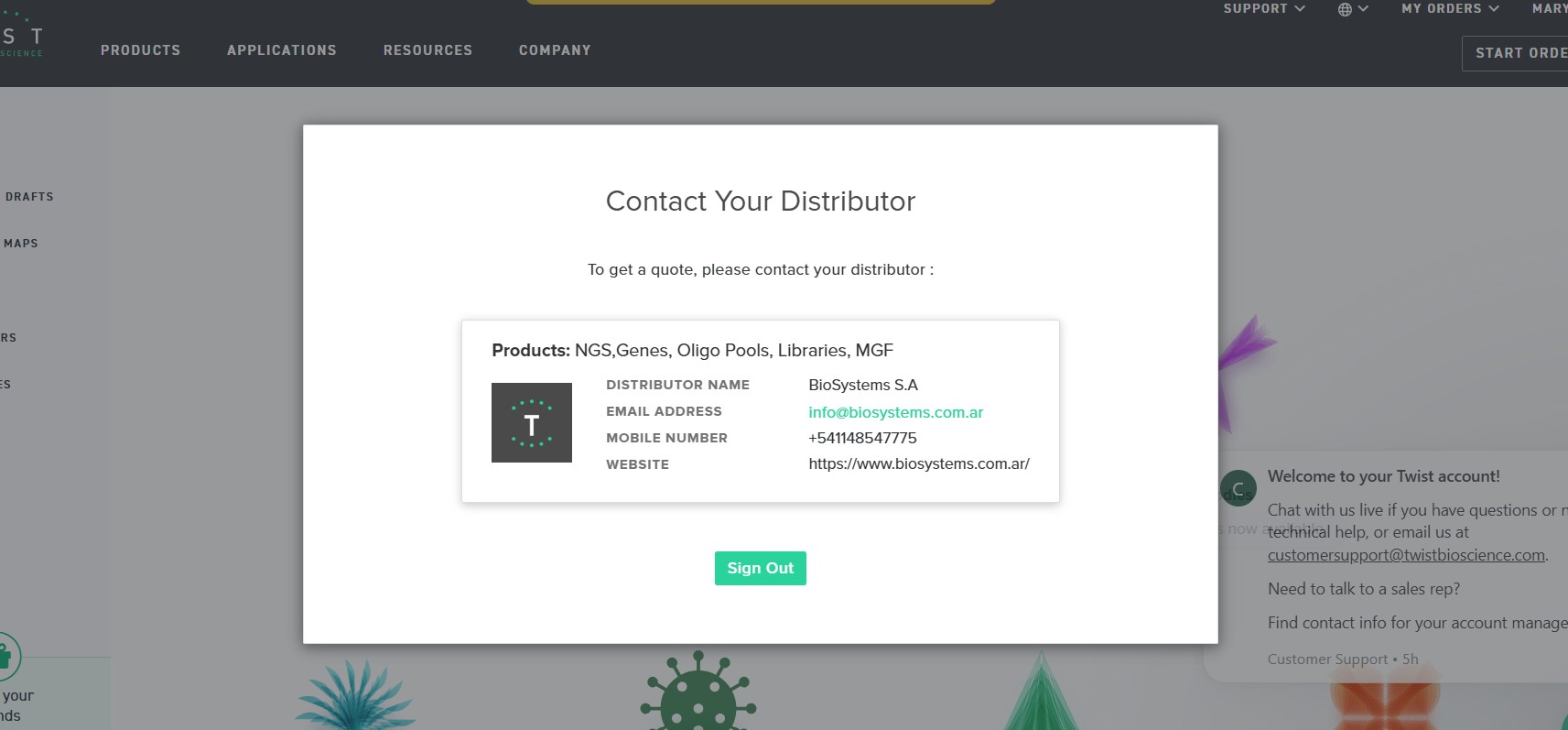
I was able to create an account on Benchling but not on Twist. I live in Ecuador and it seems to be blocked in my country.
From 4.3 to 4.6 I couldn’t make them because I can’t use Twist
Part 5: DNA Read/Write/Edit
5.1 DNA Read
(i) What DNA would you want to sequence (e.g., read) and why?
The DNA of the venomous snake Lachesis acrochorda to learn all about its genome and conduct research on its evolutionary history and the genes for venom production
(ii) In lecture, a variety of sequencing technologies were mentioned. What technology or technologies would you use to perform sequencing on your DNA and why?
I would use Illumina
Also answer the following questions:
Is your method first-, second- or third-generation or other? How so?
It is a more modern technology and is faster and cheaper than first generation techniques.
What is your input? How do you prepare your input (e.g. fragmentation, adapter ligation, PCR)? List the essential steps.
For Illumina, short fragments are needed.
First, the DNA is fragmented using restriction enzymes.
Second, the ends are repaired and adenylated.
Third, ligation is performed by adding adapters.
Fourth, PCR is used to amplify the fragments.
What are the essential steps of your chosen sequencing technology, how does it decode the bases of your DNA sample (base calling)?
Steps
First: fragmentation and ligation.
Second: clusters are generated by anchoring the DNA to a flow cell.
Third: sequencing begins by adding Illumina polymerases and fluorescent nucleotides.
Depending on the nucleotide that passes through the cell, it glows a different color; photos are taken and processed in the software.
What is the output of your chosen sequencing technology?
The sequence of the fragments is obtained, which then need to be mapped.
5.2 DNA Write
(i) What DNA would you want to synthesize (e.g., write) and why?
Create antibodies that neutralize the myotoxins and neurotoxins of the snake Lachesis acrochorda
(ii) What technology or technologies would you use to perform this DNA synthesis and why?
I would use Microarray synthesis. it is cheap and allows the synthesis of thousands of sequences.
Also answer the following questions:
What are the essential steps of your chosen sequencing methods?
Steps
First: Design in the software.
Second: Place chemical linkers on the chips.
Third: Load the reservoirs with nucleotides.
Fourth: When the nucleotide binds to the forming chain, wash away the excess reagents.
Fifth: Remove the protecting group to add the next nucleotide and repeat until the required length is reached.
Sixth: Cut and collect the sequences.
What are the limitations of your sequencing method (if any) in terms of speed, accuracy, scalability?
It requires further amplification due to the small amount produced and cannot synthesize very long sequences.
5.3 DNA Edit
(i) What DNA would you want to edit and why?
I would like to create potatoes that contain anthocyanins. Potatoes are a widely consumed food, and this antioxidant could be added to supplement the diet.
(ii) What technology or technologies would you use to perform these DNA edits and why?
The potato is a dicotyledonous plant, so I would use Agrobacterium tumefaciens to introduce the gene. It’s a proven and widely used method.
Also answer the following questions:
How does your technology of choice edit DNA? What are the essential steps?
First: Introduce the gene into the vector, which would be the Ti plasmid of the bacterium. The plasmid will contain genes for anthocyanin production, as many as possible, and an antibiotic resistance gene for subsequent selection.
Second: Transform the bacterium with the plasmid.
Third: Expose the bacteria to plant cells in vitro to infect them with the plasmid.
Fourth: Select the transformed cells, which are those that grow in a medium containing antibiotics.
What preparation do you need to do (e.g. design steps) and what is the input (e.g. DNA template, enzymes, plasmids, primers, guides, cells) for the editing?
The Ti plasmid is designed by introducing the gene of interest, in software such as Benchling.
3.What are the limitations of your editing methods (if any) in terms of efficiency or precision?
It’s very imprecise. it’s impossible to pinpoint exactly where in the genome the gene will be inserted. Consequently, the gene might not be expressed or it could affect other genes.
Week 3 HW: Lab Automation
Assignment: Python Script for Opentrons Artwork — DUE BY YOUR LAB TIME!
def update_volume_remaining(current_color, quantity_to_aspirate):
rows = string.ascii_uppercase
for well, color in list(well_colors.items()):
if color == current_color:
if (volume_used[current_color] + quantity_to_aspirate) > 250:
# Move to next well horizontally by advancing row letter, keeping column number
row = well[0]
col = well[1:]
            # Find next row letter
            next_row = rows[rows.index(row) + 1]
            next_well = f"{next_row}{col}"

            del well_colors[well]
            well_colors[next_well] = current_color
            volume_used[current_color] = quantity_to_aspirate
        else:
            volume_used[current_color] += quantity_to_aspirate
        break
def run(protocol):
# Load labware, modules and pipettes
protocol.home()
# Tips
tips_20ul = protocol.load_labware('opentrons_96_tiprack_20ul', TIP_RACK_DECK_SLOT, 'Opentrons 20uL Tips')

# Pipettes
pipette_20ul = protocol.load_instrument("p20_single_gen2", "right", [tips_20ul])

# Deep Well Plate
temperature_plate = protocol.load_labware('nest_96_wellplate_2ml_deep', 6)

# Agar Plate
agar_plate = protocol.load_labware('htgaa_agar_plate', AGAR_DECK_SLOT, 'Agar Plate')
agar_plate.set_offset(x=0.00, y=0.00, z=Z_VALUE_AGAR)

# Get the top-center of the plate, make sure the plate was calibrated before running this
center_location = agar_plate['A1'].top()

pipette_20ul.starting_tip = tips_20ul.well(PIPETTE_STARTING_TIP_WELL)

# Helper function (dispensing)
def dispense_and_jog(pipette, volume, location):
    assert(isinstance(volume, (int, float)))
    # Go above the location
    above_location = location.move(types.Point(z=location.point.z + 2))
    pipette.move_to(above_location)
    # Go downwards and dispense
    pipette.dispense(volume, location)
    # Go upwards to avoid smearing
    pipette.move_to(above_location)

# Helper function (color location)
def location_of_color(color_string):
    for well,color in well_colors.items():
        if color.lower() == color_string.lower():
            return temperature_plate[well]
    raise ValueError(f"No well found with color {color_string}")

# Print pattern by iterating over lists
for i, (current_color, point_list) in enumerate(point_name_pairing):
    # Skip the rest of the loop if the list is empty
    if not point_list:
        continue

    # Get the tip for this run, set the bacteria color, and the aspirate bacteria of choice
    pipette_20ul.pick_up_tip()
    max_aspirate = int(18 // POINT_SIZE) * POINT_SIZE
    quantity_to_aspirate = min(len(point_list)*POINT_SIZE, max_aspirate)
    update_volume_remaining(current_color, quantity_to_aspirate)
    pipette_20ul.aspirate(quantity_to_aspirate, location_of_color(current_color))

    # Iterate over the current points list and dispense them, refilling along the way
    for i in range(len(point_list)):
        x, y = point_list[i]
        adjusted_location = center_location.move(types.Point(x, y))

        dispense_and_jog(pipette_20ul, POINT_SIZE, adjusted_location)

        if pipette_20ul.current_volume == 0 and len(point_list[i+1:]) > 0:
            quantity_to_aspirate = min(len(point_list[i:])*POINT_SIZE, max_aspirate)
            update_volume_remaining(current_color, quantity_to_aspirate)
            pipette_20ul.aspirate(quantity_to_aspirate, location_of_color(current_color))

    # Drop tip between each color
    pipette_20ul.drop_tip()
Post-Lab Questions
Find and describe a published paper that utilizes the Opentrons or an automation tool to achieve novel biological applications.
Write a description about what you intend to do with automation tools for your final project. You may include example pseudocode, Python scripts, 3D printed holders, a plan for how to use Ginkgo Nebula, and more. You may reference this week’s recitation slide deck for lab automation details.
Final Project Ideas
Week 4 HW: Protein Design Part I
Part A: Conceptual Questions
Answer any NINE of the following questions from Shuguang Zhang: (i.e. you can select two to skip)
How many molecules of amino acids do you take with a piece of 500 grams of meat? (on average an amino acid is ~100 Daltons)
Why do humans eat beef but do not become a cow, eat fish but do not become fish?
Why are there only 20 natural amino acids?
Can you make other non-natural amino acids? Design some new amino acids.
Where did amino acids come from before enzymes that make them, and before life started?
If you make an α-helix using D-amino acids, what handedness (right or left) would you expect?
Can you discover additional helices in proteins?
Why are most molecular helices right-handed?
Why do β-sheets tend to aggregate?
What is the driving force for β-sheet aggregation?
Why do many amyloid diseases form β-sheets?
Can you use amyloid β-sheets as materials?
Design a β-sheet motif that forms a well-ordered structure.
Part B: Protein Analysis and Visualization
Briefly describe the protein you selected and why you selected it.
Identify the amino acid sequence of your protein.
How long is it? What is the most frequent amino acid? You can use this Colab notebook to count the frequency of amino acids.
How many protein sequence homologs are there for your protein? Hint: Use Uniprot’s BLAST tool to search for homologs.
Does your protein belong to any protein family?
Identify the structure page of your protein in RCSB
When was the structure solved? Is it a good quality structure? Good quality structure is the one with good resolution. Smaller the better (Resolution: 2.70 Å)
Are there any other molecules in the solved structure apart from protein?
Does your protein belong to any structure classification family?
Open the structure of your protein in any 3D molecule visualization software:
PyMol Tutorial Here (hint: ChatGPT is good at PyMol commands)
Visualize the protein as “cartoon”, “ribbon” and “ball and stick”.
Color the protein by secondary structure. Does it have more helices or sheets?
Color the protein by residue type. What can you tell about the distribution of hydrophobic vs hydrophilic residues?
Visualize the surface of the protein. Does it have any “holes” (aka binding pockets)?
Part C. Using ML-Based Protein Design Tools
Copy the HTGAA_ProteinDesign2026.ipynb notebook and set up a colab instance with GPU.
Choose your favorite protein from the PDB.
We will now try multiple things in the three sections below; report each of these results in your homework writeup on your HTGAA website:
C1. Protein Language Modeling
Deep Mutational Scans
a. Use ESM2 to generate an unsupervised deep mutational scan of your protein based on language model likelihoods.
b. Can you explain any particular pattern? (choose a residue and a mutation that stands out)
c. (Bonus) Find sequences for which we have experimental scans, and compare the prediction of the language model to experiment.
Latent Space Analysis
a. Use the provided sequence dataset to embed proteins in reduced dimensionality.
b. Analyze the different formed neighborhoods: do they approximate similar proteins?
c. Place your protein in the resulting map and explain its position and similarity to its neighbors
C2. Protein Folding
Fold your protein with ESMFold. Do the predicted coordinates match your original structure?
Try changing the sequence, first try some mutations, then large segments. Is your protein structure resilient to mutations?
Part D. Group Brainstorm on Bacteriophage Engineering
Find a group of ~3–4 students
Read through the Phage Reading material listed under “Reading & Resources” below.
Review the Bacteriophage Final Project Goals for engineering the L Protein:
Increased stability (easiest)
Higher titers (medium)
Higher toxicity of lysis protein (hard)
Brainstorm Session
Choose one or two main goals from the list that you think you can address computationally (e.g., “We’ll try to stabilize the lysis protein,” or “We’ll attempt to disrupt its interaction with E. coli DnaJ.”).
Write a 1-page proposal (bullet points or short paragraphs) describing:
Which tools/approaches from recitation you propose using (e.g., “Use Protein Language Models to do in silico mutagenesis, then AlphaFold-Multimer to check complexes.”).
Why do you think those tools might help solve your chosen sub-problem?
Name one or two potential pitfalls (e.g., “We lack enough training data on phage–bacteria interactions.”).
Include a schematic of your pipeline.
This resource may be useful: HTGAA Protein Engineering Tools
Each individually put your plan on your HTGAA website
Include your group’s short plan for engineering a bacteriophage
Week 5 HW: Protein Design Part II
Part A: SOD1 Binder Peptide Design (From Pranam)
Superoxide dismutase 1 (SOD1) is a cytosolic antioxidant enzyme that converts superoxide radicals into hydrogen peroxide and oxygen. In its native state, it forms a stable homodimer and binds copper and zinc.
Mutations in SOD1 cause familial Amyotrophic Lateral Sclerosis (ALS). Among them, the A4V mutation (Alanine → Valine at residue 4) leads to one of the most aggressive forms of the disease. The mutation subtly destabilizes the N-terminus, perturbs folding energetics, and promotes toxic aggregation.
Your challenge:
Design short peptides that bind mutant SOD1.
Then decide which ones are worth advancing toward therapy.
You will use three models developed in our lab:
PepMLM: target sequence-conditioned peptide generation via masked language modeling
Begin by retrieving the human SOD1 sequence from UniProt (P00441) and introducing the A4V mutation.
Using the PepMLM Colab linked from the HuggingFace PepMLM-650M model card:
Generate four peptides of length 12 amino acids conditioned on the mutant SOD1 sequence.
To your generated list, add the known SOD1-binding peptide FLYRWLPSRRGG for comparison.
Record the perplexity scores that indicate PepMLM’s confidence in the binders.
Part 2: Evaluate Binders with AlphaFold3
Navigate to the AlphaFold Server: alphafoldserver.com
For each peptide, submit the mutant SOD1 sequence followed by the peptide sequence as separate chains to model the protein-peptide complex.
Record the ipTM score and briefly describe where the peptide appears to bind. Does it localize near the N-terminus where A4V sits? Does it engage the β-barrel region or approach the dimer interface? Does it appear surface-bound or partially buried?
In a short paragraph, describe the ipTM values you observe and whether any PepMLM-generated peptide matches or exceeds the known binder.
Part 3: Evaluate Properties of Generated Peptides in the PeptiVerse
Structural confidence alone is insufficient for therapeutic development. Using PeptiVerse, let’s evaluate the therapeutic properties of your peptide! For each PepMLM-generated peptide:
Paste the peptide sequence.
Paste the A4V mutant SOD1 sequence in the target field.
Check the boxes
Predicted binding affinity
Solubility
Hemolysis probability
Net charge (pH 7)
Molecular weight
Compare these predictions to what you observed structurally with AlphaFold3. In a short paragraph, describe what you see. Do peptides with higher ipTM also show stronger predicted affinity? Are any strong binders predicted to be hemolytic or poorly soluble? Which peptide best balances predicted binding and therapeutic properties?
Choose one peptide you would advance and justify your decision briefly.
Part 4: Generate Optimized Peptides with moPPIt
Now, move from sampling to controlled design. moPPIt uses Multi-Objective Guided Discrete Flow Matching (MOG-DFM) to steer peptide generation toward specific residues and optimize binding and therapeutic properties simultaneously. Unlike PepMLM, which samples plausible binders conditioned on just the target sequence, moPPIt lets you choose where you want to bind and optimize multiple objectives at once
Open the moPPit Colab linked from the HuggingFace moPPIt model card
Make a copy and switch to a GPU runtime.
In the notebook
Paste your A4V mutant SOD1 sequence.
Choose specific residue indices on SOD1 that you want your peptide to bind (for example, residues near position 4, the dimer interface, or another surface patch).
Set peptide length to 12 amino acids.
Enable motif and affinity guidance (and solubility/hemolysis guidance if available). Generate peptides.
After generation, briefly describe how these moPPit peptides differ from your PepMLM peptides. How would you evaluate these peptides before advancing them to clinical studies?
Part C: Final Project: L-Protein Mutants
Week 6 HW: Genetic Circuits Part I Assembly Technologies
Assignment: DNA Assembly
Answer these questions about the protocol in this week’s lab:
What are some components in the Phusion High-Fidelity PCR Master Mix and what is their purpose?
What are some factors that determine primer annealing temperature during PCR?
There are two methods from this class that create linear fragments of DNA: PCR, and restriction enzyme digests. Compare and contrast these two methods, both in terms of protocol as well as when one may be preferable to use over the other.
How can you ensure that the DNA sequences that you have digested and PCR-ed will be appropriate for Gibson cloning?
How does the plasmid DNA enter the E. coli cells during transformation?
Describe another assembly method in detail (such as Golden Gate Assembly)
-Explain the other method in 5 - 7 sentences plus diagrams (either handmade or online).
-Model this assembly method with Benchling or Asimov Kernel!
Assignment: Asimov Kernel
Create a Repository for your work
Create a blank Notebook entry to document the homework and save it to that Repository
Explore the devices in the Bacterial Demos Repo to understand how the parts work together by running the Simulator on various examples, following the instructions for the simulator found in the “Info” panel (click the “i” icon on the right to open the Info panel)
Create a blank Construct and save it to your Repository
-Recreate the Repressilator in that empty Construct by using parts from the Characterized Bacterial Parts repository
-Search the parts using the Search function in the right menu
-Drag and drop the parts into the Construct
-Confirm it works as expected by running the Simulator (“play” button) and compare your results with the Repressilator Construct found in the Bacterial Demos repository
-Document all of this work in your Notebook entry - you can copy the glyph image and the simulator graphs, and paste them into your Notebook
Build three of your own Constructs using the parts in the Characterized Bacterials Parts Repo
-Explain in the Notebook Entry how you think each of the Constructs should function
-Run the simulator and share your results in the Notebook Entry
-If the results don’t match your expectations, speculate on why and see if you can adjust the simulator settings to get the expected outcome
Week 7 HW: Genetic Circuits Part II: Neuromorphic Circuits
Assignment Part 1: Intracellular Artificial Neural Networks (IANNs)
What advantages do IANNs have over traditional genetic circuits, whose input/output behaviors are Boolean functions?
Describe a useful application for an IANN; include a detailed description of input/output behavior, as well as any limitations an IANN might face to achieve your goal.
Below is a diagram depicting an intracellular single-layer perceptron where the X1 input is DNA encoding for the Csy4 endoribonuclease and the X2 input is DNA encoding for a fluorescent protein output whose mRNA is regulated by Csy4. Tx: transcription; Tl: translation.
Assignment Part 2: Fungal Materials
What are some examples of existing fungal materials and what are they used for? What are their advantages and disadvantages over traditional counterparts?
What might you want to genetically engineer fungi to do and why? What are the advantages of doing synthetic biology in fungi as opposed to bacteria?
Assignment Part 3: First DNA Twist Order
Review the Individual Final Project documentation guidelines.
Submit this Google Form with your draft Aim 1, final project summary, HTGAA industry council selections, and shared folder for DNA designs. DUE MARCH 20 FOR MIT/HARVARD/WELLESLEY STUDENTS
Review Part 3: DNA Design Challenge of the week 2 homework. Design at least 1 insert sequence and place it into the Benchling/Kernel/Other folder you shared in the Google Form above. Document the backbone vector it will be synthesized in on your website.