Hi, I am Max, a hacker aspiring to be a biohacker. In my early 20s, I started a hackerspace in Poland, and quickly moved to London to work in infrastructure and cybersecurity in various industries as a contractor. Finance, Telco, Crypto: after a few years of working on seriously sounding critical infrastructure projects, I got bored and moved to Cambridge. I always wanted to do bio, but tech was a better career choice at the time.
Since then, I’ve worked at the Sanger Institute, done an undergraduate certificate in genetics at Cambridge, studied genomic medicine at King’s College, and organised the biggest biohackathon.xyz in the UK (maybe outside of the UK as well) with over 115k non-dilutive funding as awards. I have some solid basics in genomics and bioinformatics now, but I still want to learn wet lab.
I’ve also been running a biobank on the side, combining my cybersecurity infrastructure with a newly acquired bio skill set. Using GDPR and HIPAA laws to access anyone’s data anywhere. Let me know if you plan to build a cohort dataset and need help getting the data.
First, describe a biological engineering application or tool you want to develop and why. A biological application I would love to pursue throughout HTGAA is an exploration of biomaterials’ potential in construction.
Prep work for week 2 homework:
Questions of Professor Jacobson: Nature’s machinery for copying DNA is called polymerase. What is the error rate of polymerase? How does this compare to the length of the human genome. How does biology deal with that discrepancy? DNA polymerases error rate is one mistake per 10⁵–10⁶ nucleotides, with proofreading it improves to 1 in 10⁷, with post replication final error rate is 1 in 10⁹–10¹⁰ nucleotides.
Subsections of Homework
Week 1 HW: Principles and Practices
1. First, describe a biological engineering application or tool you want to develop and why.
A biological application I would love to pursue throughout HTGAA is an exploration of biomaterials’ potential in construction.
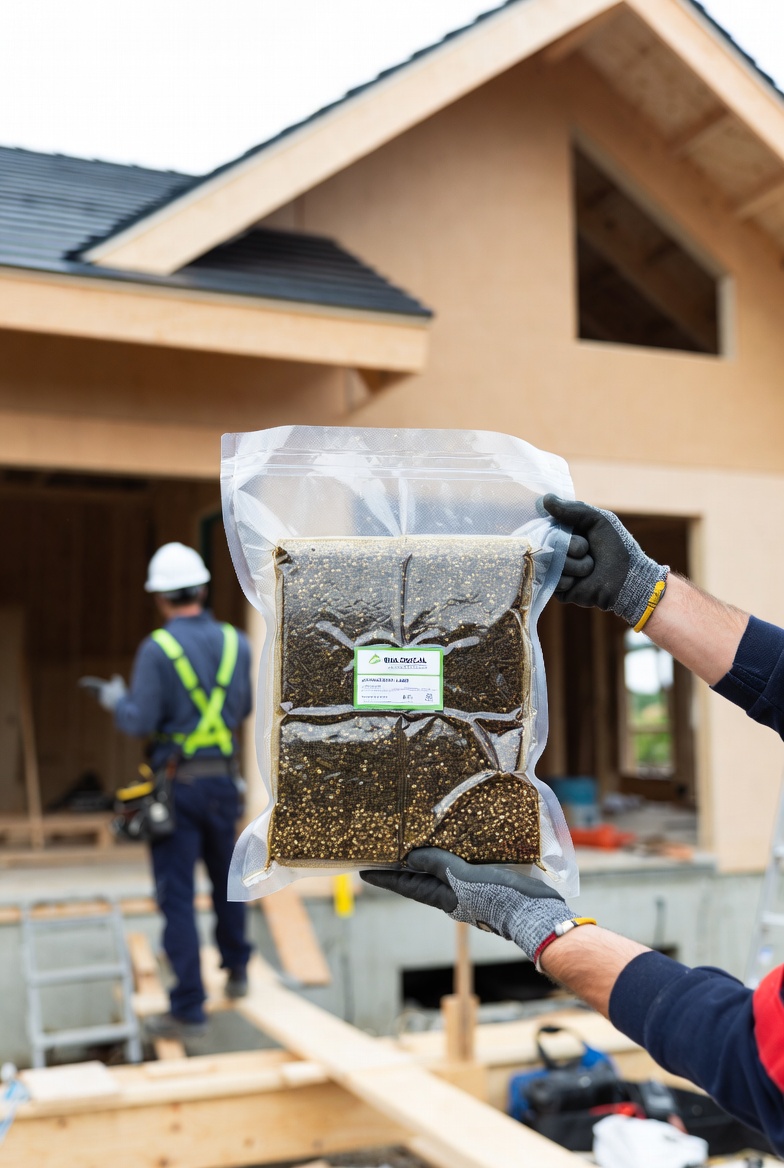
I would like to figure out a protocol that construction workers can follow at construction sites. The ideal would be a sponge covered in ecoli or small plant seeds, vacuum-sealed in plastic bags, delivered to construction workers, who can unseal them and place them in various places in a newly built house, then provide the medium for them.
The biological mechanism in place should be replaceable depending on the house’s needs for various attributes.
The first candidates would either be a plasmid or a plant to produce hardened lignin, cellulose, or spider web.
I would try to do the opposite of what researchers try to knock out.
Cellulose and spider web are also well-tested targets to consider. My goal will probably be to find and replicate existing research on gene engineering, while innovating on the protocol for what can be done with the end result. That’s why I am rather open-minded on what to focus, ideally I would do plasmids producing spider web, cellulose of different types, and plant engineering for lignin, and compare how all of those behave in practice, as the end goal is to have a delivery mechanism of biomaterials to house builts, and our delivery mechanism platform should be able to do various organisms.
A living house is an interesting sci-fi concept, but a living organism which dies after construction ends, like geneticly modified cellulose -> “wood” of special properties, is a perfectly acceptable direction, and probably easier to predict and manage initially.
The big questions are:
Fungus will pose a challenge, whatever solution we go with, we probably will want to put a living organism in a dark place and give it water with some medium… Antibiotics would create a super fungus, so consideration would be choosing an organism that can feed on other things than fungus, or that has a natural upper hand over it to populate the space much faster.
Scalable protocol for people trained in construction work, but not in biology
What are the low hanging fruits if such a delivery protocol was perfected? What attributes we could offer to a contstruction industry with existing bioengineering solutions?
Is there any commercial point in all of it? Conventional materials are already highly developed for most use cases. We either should find niche use cases where conventional materials are lacking, or redesign the whole construction industry systemicly, which is a bigger challange.
The project should result in at least partial answers to the above and build intuition. Is there a point in further research?
2. Next, describe one or more governance/policy goals related to ensuring that this application or tool contributes to an “ethical” future, like ensuring non-malfeasance (preventing harm).
Minimize ecosystem effects
Deploying GMO into the enviornement is not allowed in all jurisdictions, I would probably focus on the USA market, the organisms should be designed with an assumption they will get out of the construction work plots sooner or later, into places such as ground waters, thus they all should be designed in such a way, it will not pose risk of harm to the ecosystem. Ideally they should be infertile such as plant seeds, or have short lifespans if not provided our medium.
Transparent engagment with trial communities
The first construction work should be carried with a developer who is transparent about it, promotes it as a new way of building houses, but also provides diclaimers of all potential risks, such as still growing elements, extra quality controls done to make sure fungi has not developed etc. Living houses community should attract high self consious individuals willing to acccept new risks and report any issues.
New construction methods could allow for new affordable housing, new standards of self build houses in times where housing crirs is a huge constraint and one could say enprisonment from free and happy autonomyous live of generations coming into adulthood.
Next, describe at least three different potential governance “actions” by considering the four aspects below (Purpose, Design, Assumptions, Risks of Failure & “Success”). Try to outline a mix of actions (e.g. a new requirement/rule, incentive, or technical strategy) pursued by different “actors” (e.g. academic researchers, companies, federal regulators, law enforcement, etc). Draw upon your existing knowledge and a little additional digging, and feel free to use analogies to other domains (e.g. 3D printing, drones, financial systems, etc.).
Aspect
Environmental Monitoring
Community Transparency & Involvement
Regulatory Approval
Purpose
Monitor whether engineered organisms escape construction sites and affect local ecosystems. Prevent or respond to incidents.
Inform local communities about the project, risks, and benefits. Provide channels for feedback or reporting problems.
Ensure compliance with GMO regulations, permitting, and safety standards.
Design
Set up local soil, air, and water testing post-construction. Include control plots. Track organism survival and unintended spread.
Assign a point of contact for residents and stakeholders. Hold information sessions. Publish results in accessible formats.
Work with federal and state regulators to pre-approve organisms, experimental protocols, and delivery methods.
Assumptions
Organisms are designed to be non-threatening to the environment in small amounts. Monitoring ensures no large-scale ecological disruption.
Communities are willing to engage and report problems. Residents understand and accept living materials in buildings.
Regulatory framework can accommodate experimental living construction methods. Laws are clear on containment and field use.
Risks of Failure & “Success”
Failure: mutation or uncontrolled colony growth; Success: no environmental impact, early detection of anomalies.
Failure: community distrust or complaints; Success: transparent engagement, early problem reporting.
Failure: legal violation, project shutdown; Success: approved protocols that allow safe field testing and commercial use.
4. Next, score (from 1-3 with, 1 as the best, or n/a) each of your governance actions against your rubric of policy goals.
Does the option:
Environmental Monitoring
Community Transparency & Involvement
Regulatory Approval
Enhance Biosecurity
• By preventing incidents
1
2
2
• By helping respond
1
2
1
Foster Lab Safety
• By preventing incidents
2
3
1
• By helping respond
2
3
1
Protect the environment
• By preventing incidents
1
3
2
• By helping respond
1
2
2
Other considerations
• Minimizing costs and burdens to stakeholders
2
1
3
• Feasibility?
2
1
2
• Not impede research
1
2
2
• Promote constructive applications
1
1
2
5. Last, drawing upon this scoring, describe which governance option, or combination of options, you would prioritize, and why. Outline any trade-offs you considered as well as assumptions and uncertainties.
Governance Option Prioritization
Based on the scoring of the governance actions against the rubric of policy goals, I would prioritize a combination of Environmental Monitoring and Community Transparency & Involvement, with Regulatory Approval as a foundational requirement.
Reasoning
Environmental Monitoring (priority 1): This option scored highest for protecting the environment and enhancing biosecurity. Monitoring allows early detection of escaped organisms, mutations, or unintended ecological impacts. Its design supports both incident prevention and rapid response, which is critical for any living biomaterial deployed in construction sites.
Community Transparency & Involvement (priority 2): While slightly weaker for direct biosecurity and lab safety, this option excels at fostering trust, providing accountability, and promoting constructive applications. Involving communities ensures that risks are reported promptly, and the living materials are accepted and managed responsibly.
Regulatory Approval (priority 3, foundational): Although it scored lower in engagement and ecosystem monitoring, regulatory compliance is non-negotiable. It ensures legal operation, protects against liability, and provides guidelines for safe experimentation. This option complements the first two by codifying standards for organism design, containment, and deployment.
Trade-offs Considered
Cost vs. Safety: Environmental monitoring can be resource-intensive, requiring soil, water, and site testing, but is essential for preventing ecological harm.
Community Engagement vs. Efficiency: Transparency requires time and effort to communicate with residents and stakeholders, potentially slowing deployment, but it increases reporting of issues and social acceptance.
Regulatory Burden vs. Flexibility: Compliance ensures safety but may limit experimental freedom or introduce delays in piloting new organisms.
Assumptions and Uncertainties
Assumes organisms are engineered to minimize ecological risks, but mutations or unexpected growth patterns are still possible.
Assumes community members are willing and able to engage responsibly; participation may vary.
Regulatory frameworks are assumed to be clear and supportive of controlled experimental deployment, but local variations could pose challenges.
Feasibility of monitoring and community engagement depends on available resources and the scale of construction projects.
Conclusion: Prioritizing Environmental Monitoring and Community Engagement, while ensuring Regulatory Approval, creates a layered governance approach that maximizes safety, transparency, and constructive innovation. This combination balances biosecurity, social acceptability, and legal compliance, while acknowledging practical constraints and uncertainties.
Week 2 HW: DNA Read, Write and Edit
Prep work for week 2 homework:
Questions of Professor Jacobson:
Nature’s machinery for copying DNA is called polymerase. What is the error rate of polymerase? How does this compare to the length of the human genome. How does biology deal with that discrepancy?
DNA polymerases error rate is one mistake per 10⁵–10⁶ nucleotides, with proofreading it improves to 1 in 10⁷, with post replication final error rate is 1 in 10⁹–10¹⁰ nucleotides.
Comparing this to human genomie size of ~3 × 10⁹ base pairs, we can see just pure DNA polymerases by itself would still result in thousands of errors per cell division, but with all biology defense mechanisms it drops to 0-3 errors.
How many different ways are there to code (DNA nucleotide code) for an average human protein? In practice what are some of the reasons that all of these different codes don’t work to code for the protein of interest?
Average Human Protein: 1036 bp, codons are 3 bp ~ 345 amino acids.
3345 ≈ 10165 theoretical ways to encode the same proteins.
Reasons why we don’t have that many codes to code for proteins:
Codon bias: Rare codons slow translation or reduce protein yield
mRNA structure: Folding can block ribosomes
Translation speed: Affects proper protein folding
Regulatory signals: Splicing, miRNA, or promoter motifs can be disrupted
GC content & stability: Extreme sequences can be silenced or unstable
Quality control: Cells degrade faulty mRNA or misfolded proteins
Questions of Dr. LeProust:
What’s the most commonly used method for oligo synthesis currently?
Phosphoramidite chemical synthesis
Why is it difficult to make oligos longer than 200nt via direct synthesis?
Error rates accumulate with each step; longer oligos have many more synthesis errors
Why can’t you make a 2000bp gene via direct oligo synthesis?
Errors multiply, so genes are built by assembling shorter oligos instead
Question from George Church:
[Using Google & Prof. Church’s slide #4] What are the 10 essential amino acids in all animals and how does this affect your view of the “Lysine Contingency”?
Histidine
Isoleucine
Leucine
Lysine
Methionine
Phenylalanine
Threonine
Tryptophan
Valine
Arginine
I did not know about Lysine Contingency before, so not sure how it affects my view, but it’s really interesting we got locked out evolutionary out of something required at such a fundamental level, it also shows an interesting systemic dependency at massive scale I was unaware of.