Week 2 HW: DNA Read, Write and Edit
Part 1: Benchling & In-silico Gel Art
- Make a free account at benchling.com
- Import the Lambda DNA.
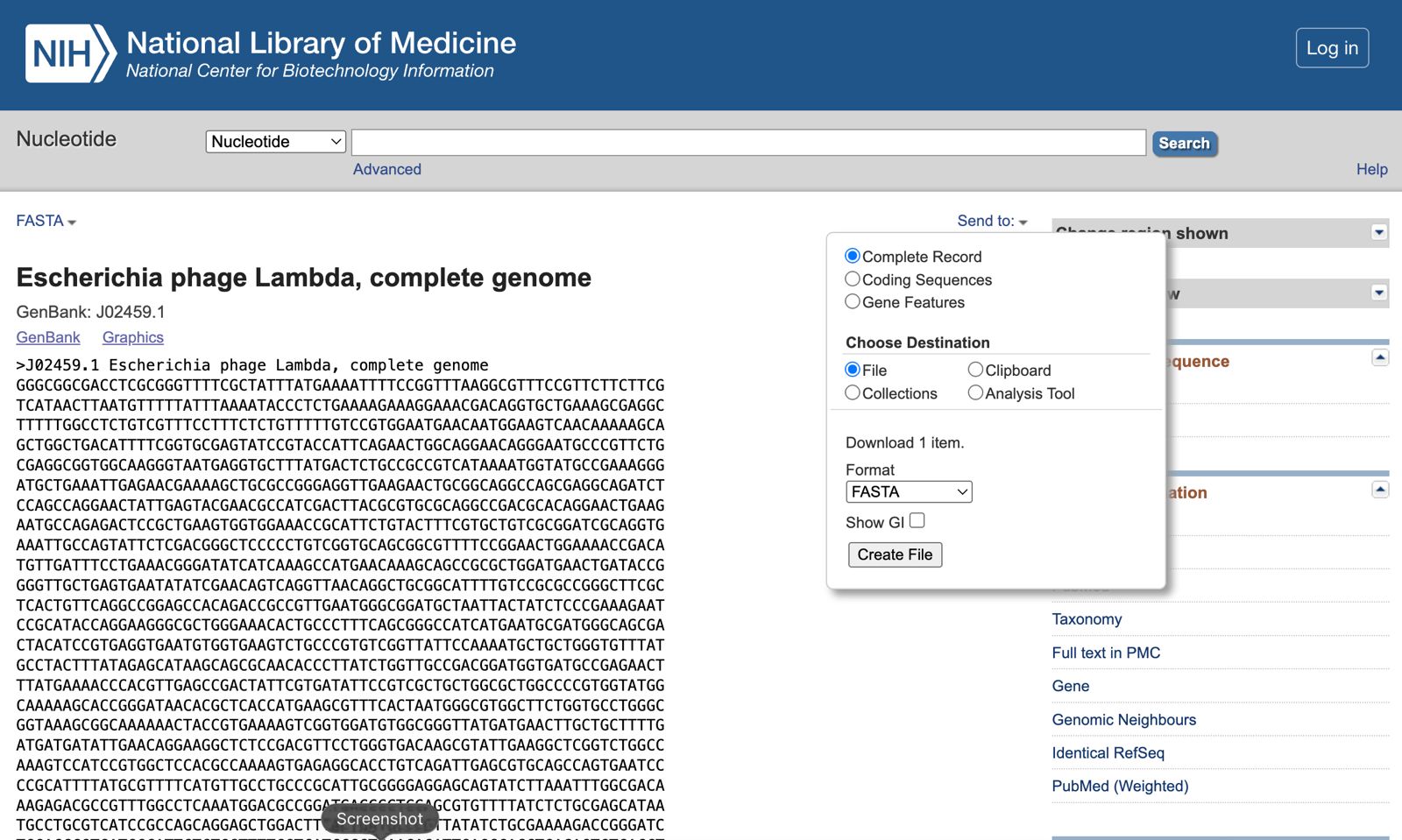
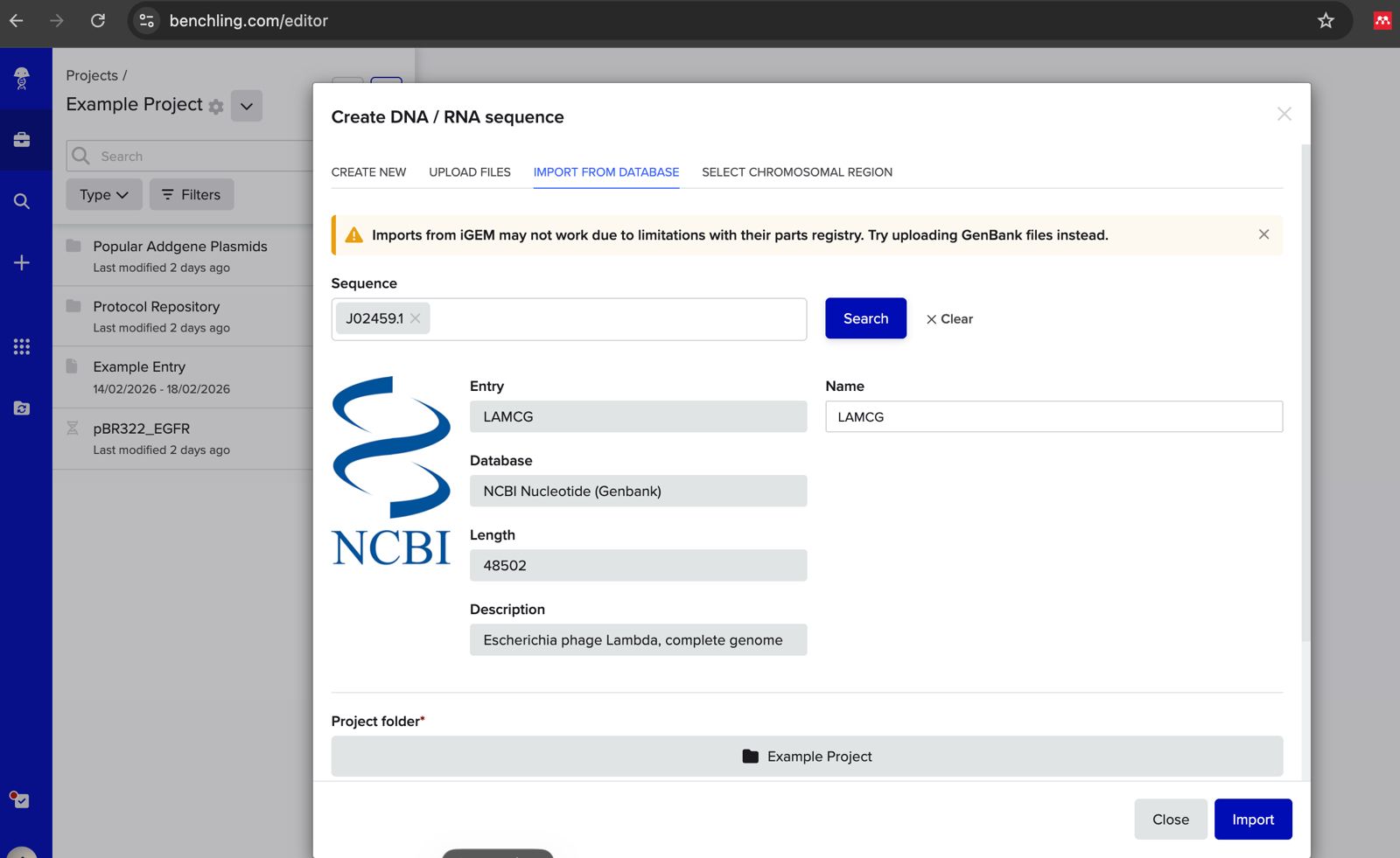
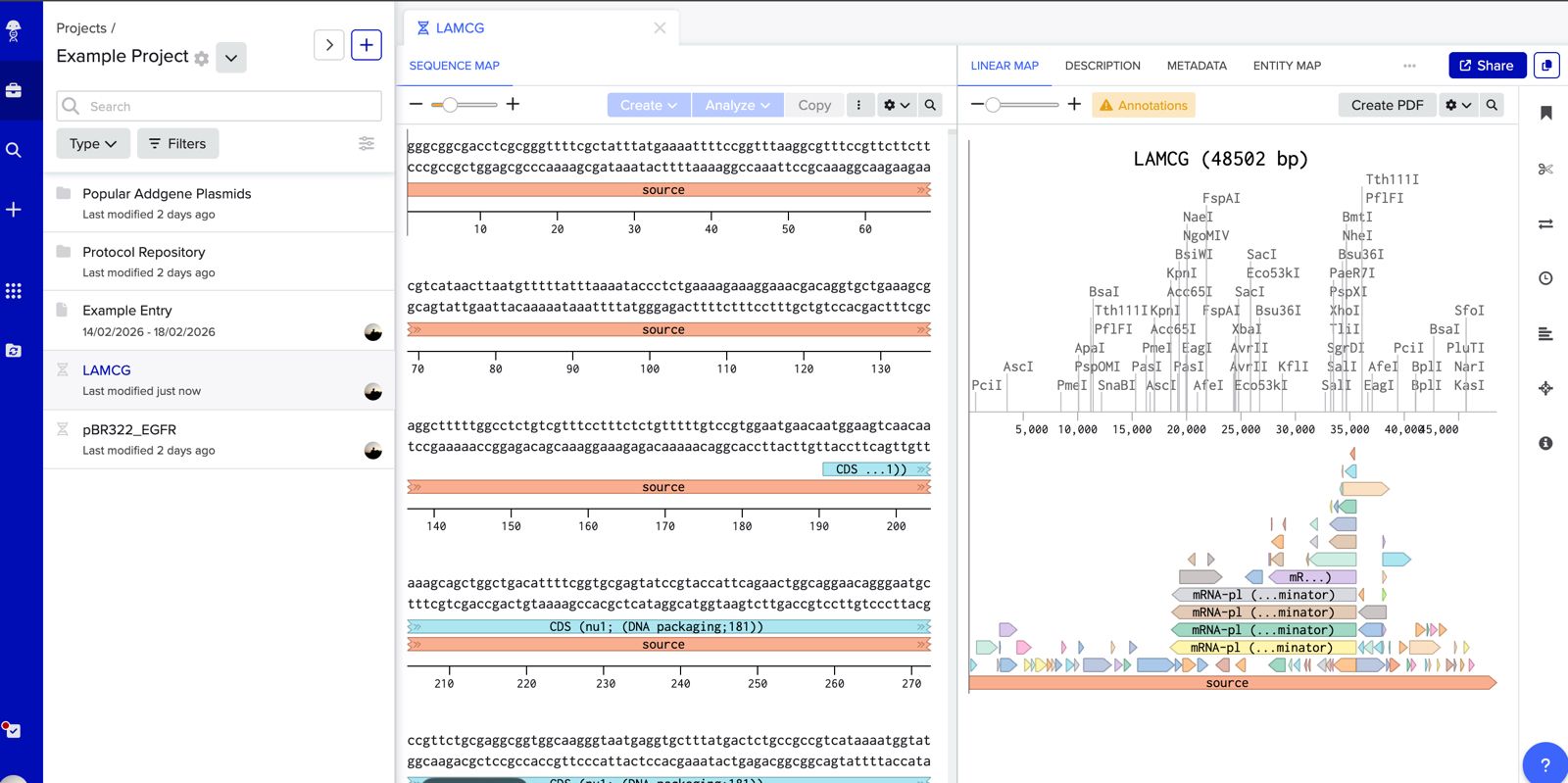
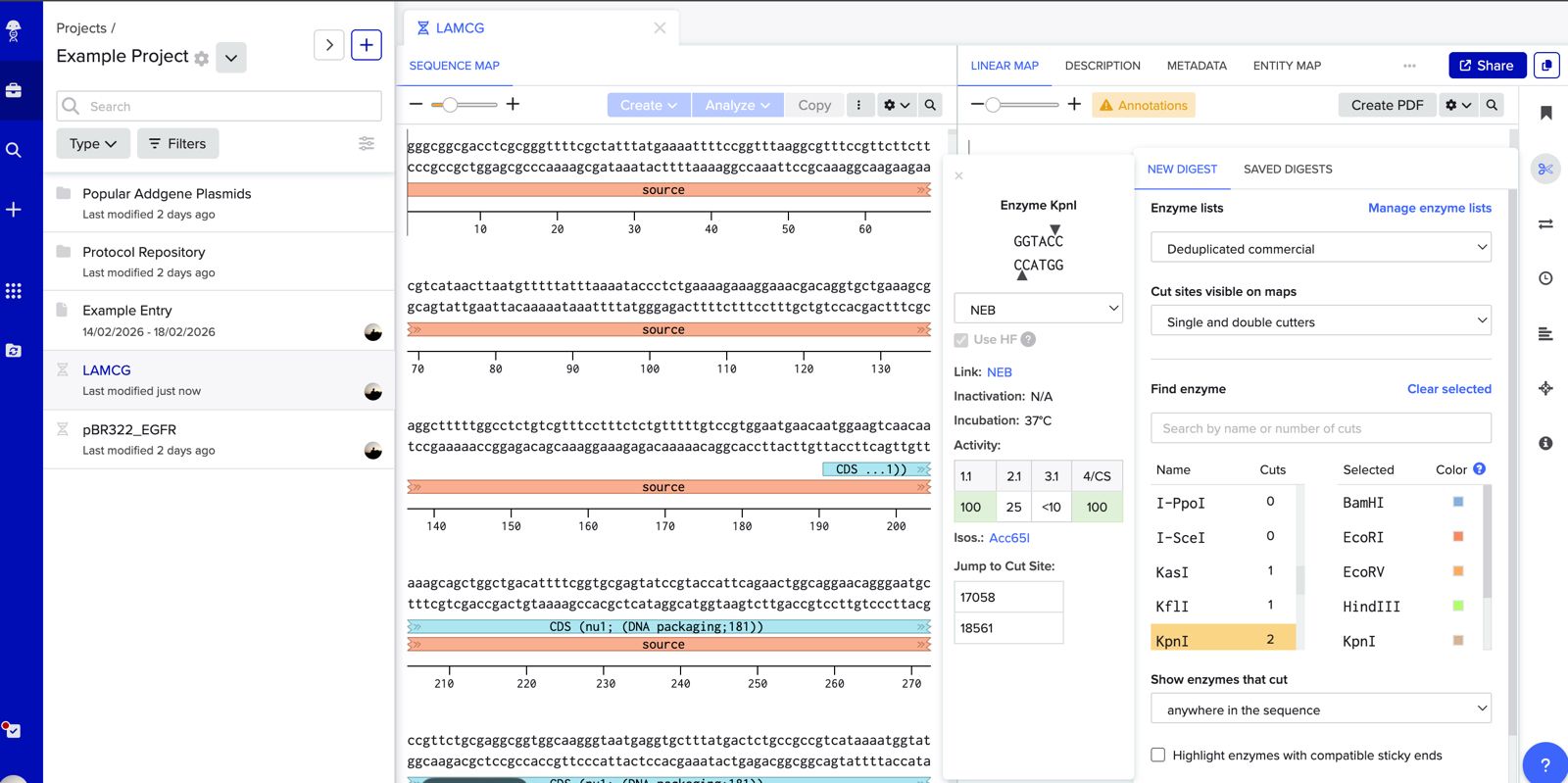
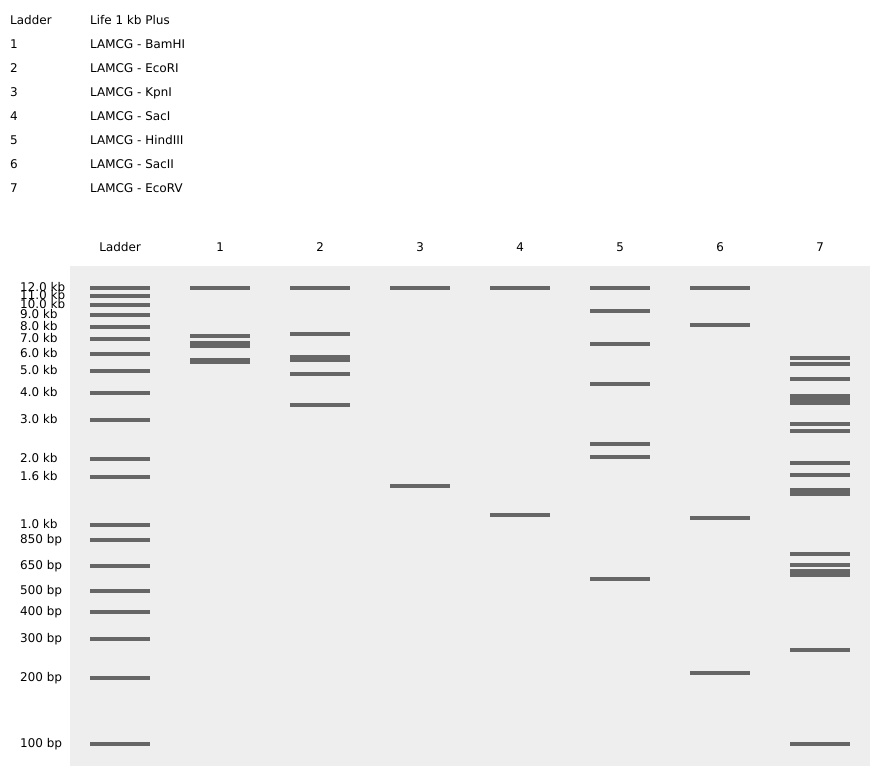
Simulate Restriction Enzyme Digestion with the following Enzymes: EcoRI HindIII BamHI KpnI EcoRV SacI SalI
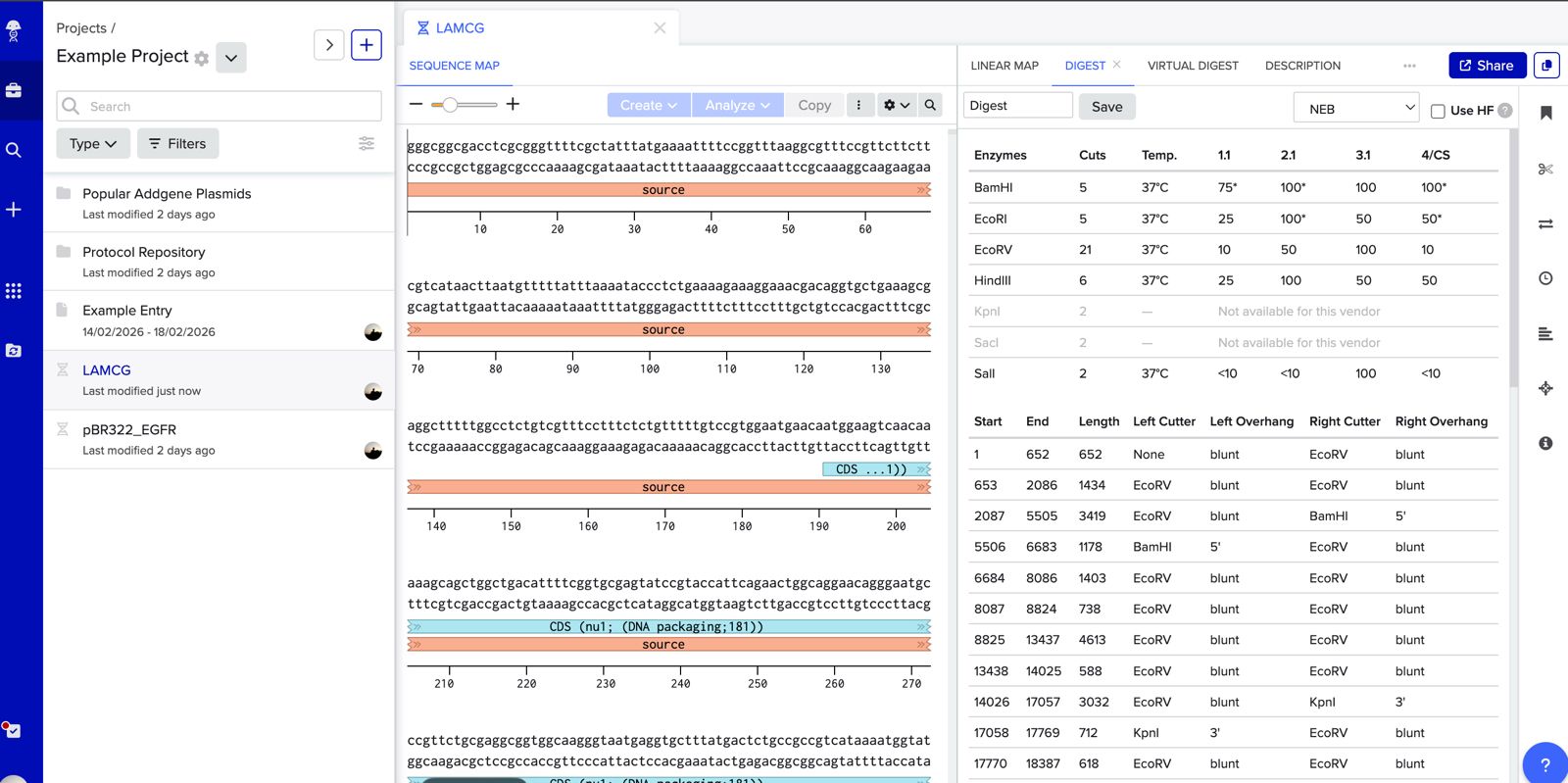
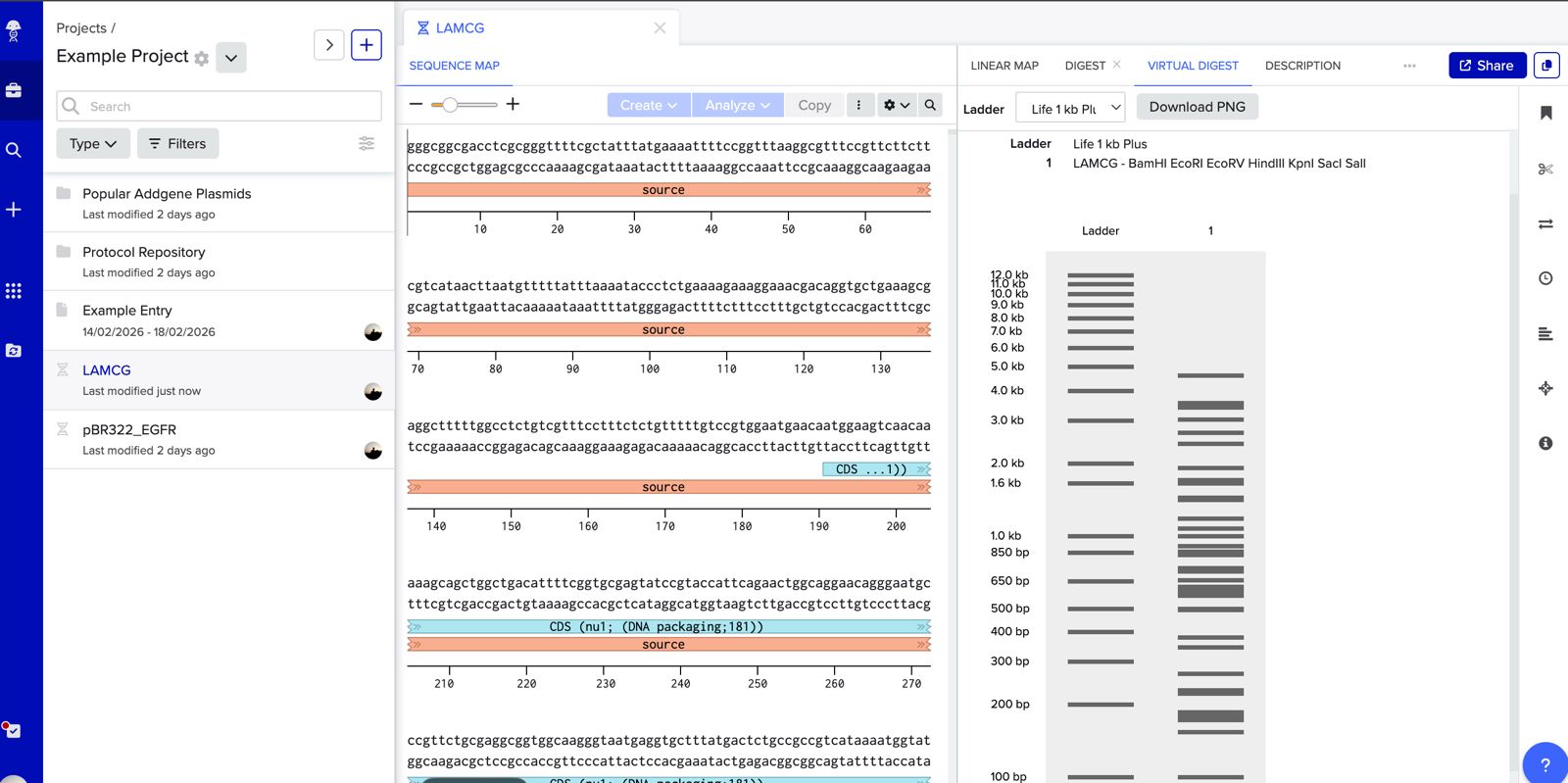
Create a pattern/image in the style of Paul Vanouse’s Latent Figure Protocol artworks.
Part 3: DNA Design Challenge
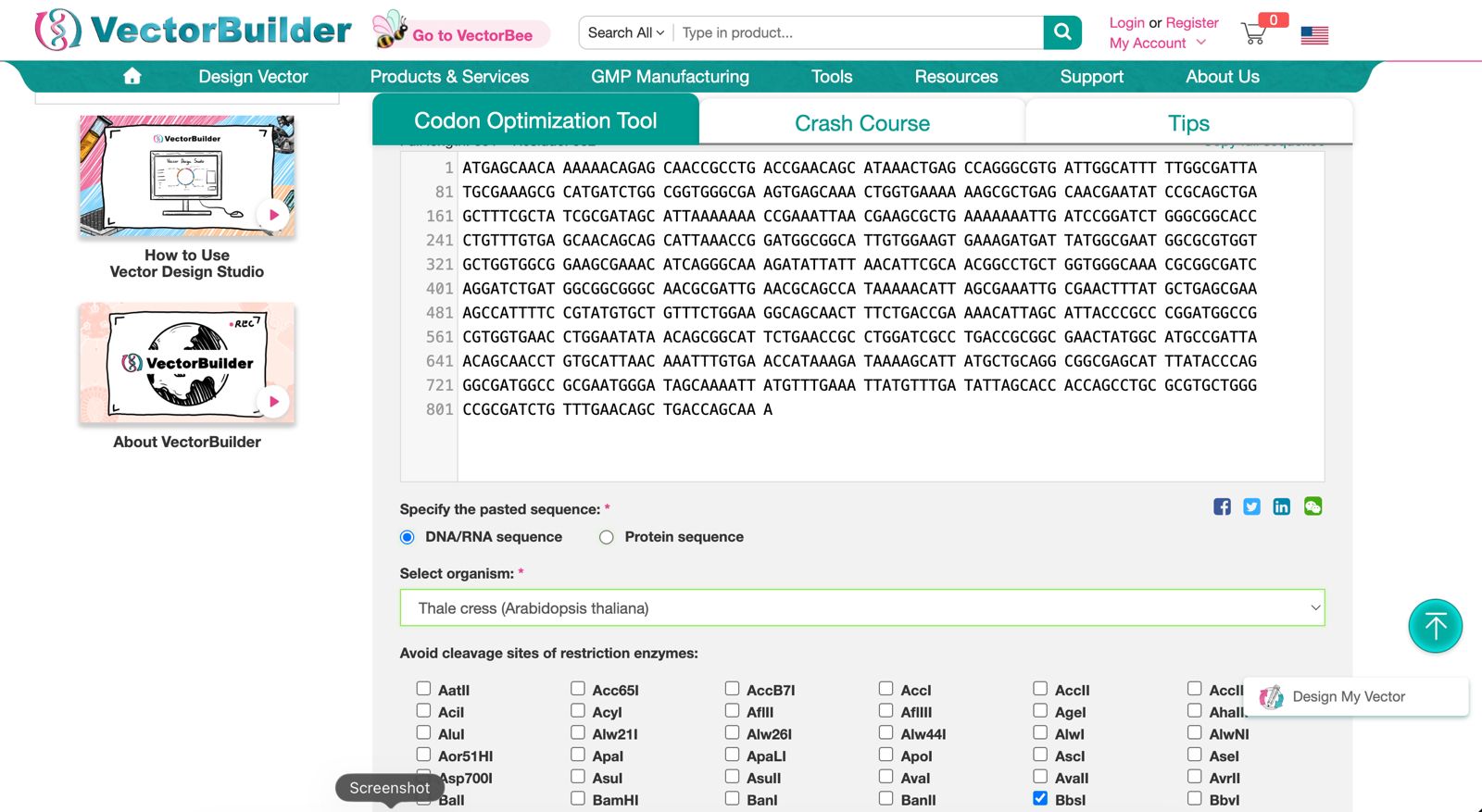
The sequence of the peotein is:
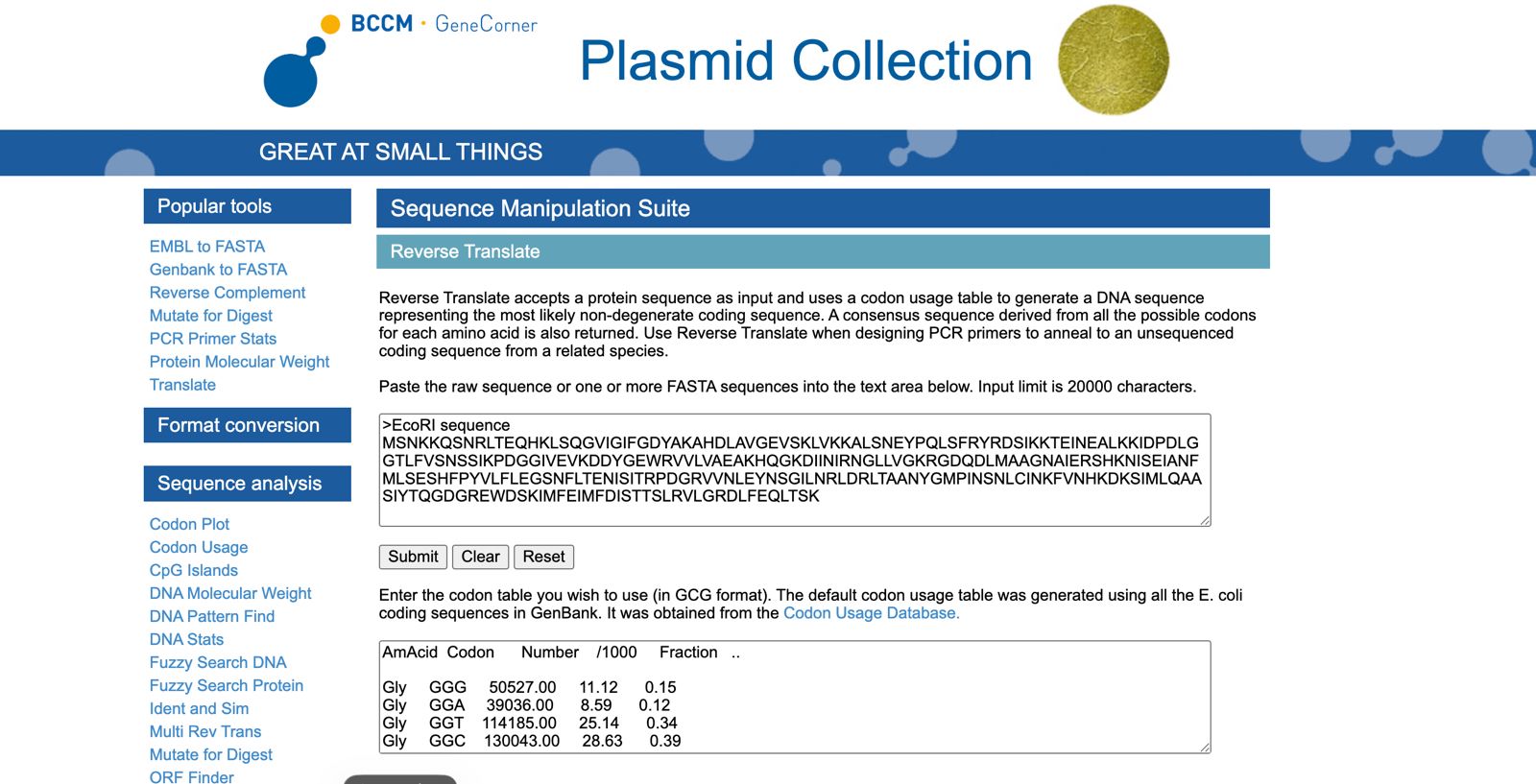
The reverse translated sequence is:
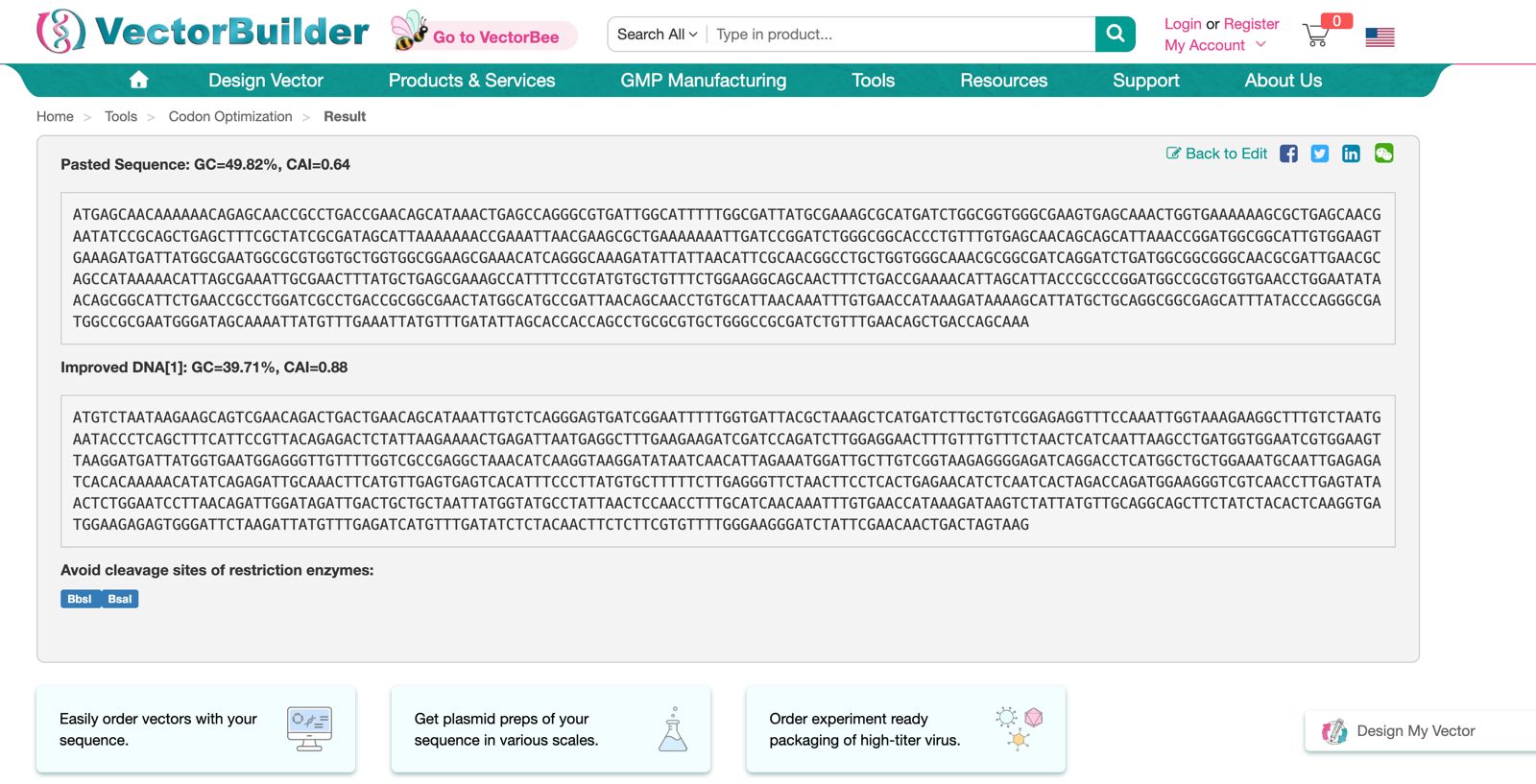
Codon Optimization
Part 4: Prepare a Twist DNA Synthesis Order
Part 5: DNA Read/Write/Edit
5.1 DNA Read
(i) What DNA would you want to sequence (e.g., read) and why?
The primary sequencing target is the Potato Virus Y (PVY) coat protein region (~nt 8,950–9,200; GenBank DQ157180), especially the 30-nt trigger site (nt 8,960–8,989) used in my toehold-switch biosensor design, because even single-nucleotide mismatches can significantly reduce switch activation. Sequencing enables both PVY variant surveillance across circulating strains and verification that the synthesized toehold-switch plasmids contain the exact intended sequences, while secondary sequencing of the spinach chloroplast 16S rRNA anti-Shine-Dalgarno region helps explain chloroplast-specific translation effects observed in SANDSTORM analyses.
(ii) In lecture, a variety of sequencing technologies were mentioned. What technology or technologies would you use to perform sequencing on your DNA and why?
I would use Oxford Nanopore Technologies (ONT) long-read sequencing for PVY field-isolate surveillance and Sanger sequencing for plasmid construct verification. ONT MinION sequencing is well suited for PVY because it can generate full-length reads of the ~800 bp coat protein ORF, enabling haplotype reconstruction in mixed infections, while its portability, real-time high-accuracy basecalling (>99% with Q20+ chemistry), and compatibility with direct RNA sequencing make it ideal for field-deployable SNP surveillance and assessment of viral RNA accessibility within native secondary structures.
5.2 DNA Write
(i) What DNA would you want to synthesize (e.g., write) and why?
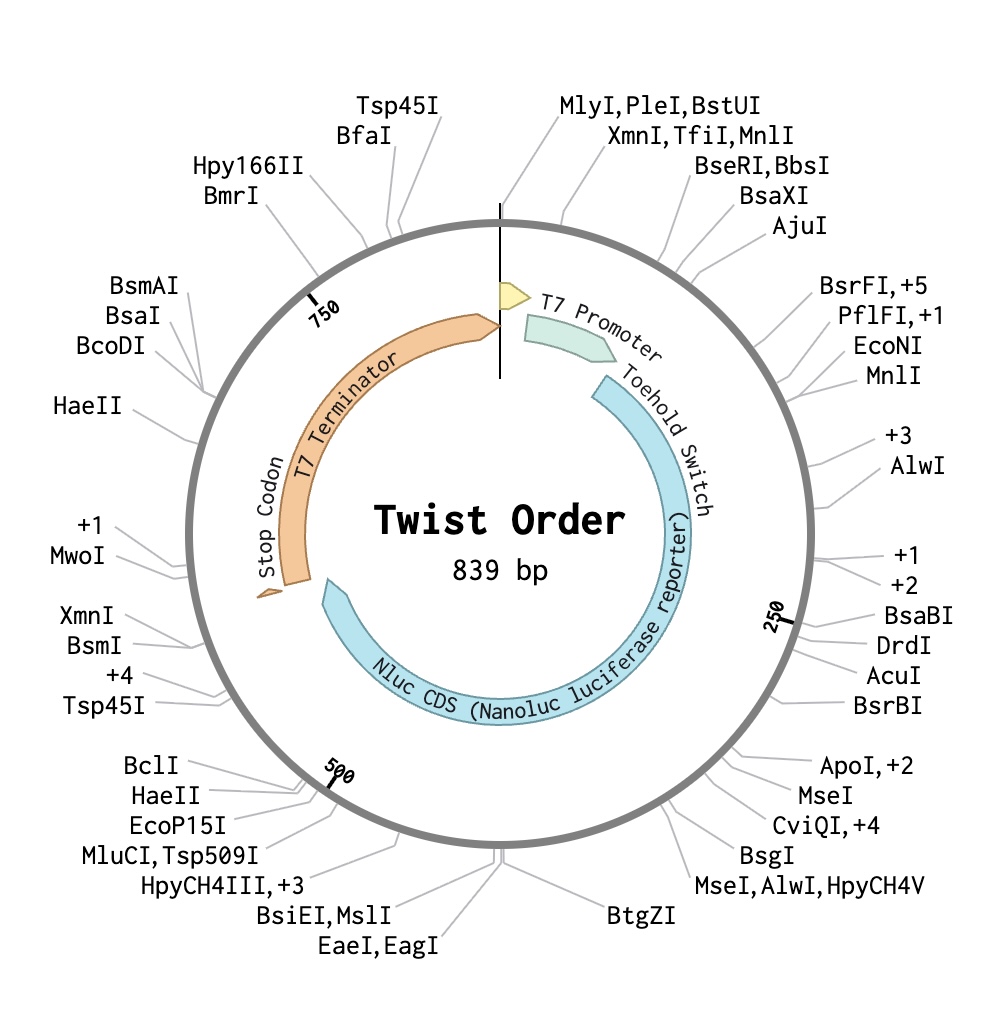
The DNA I would synthesise is the TS-PVY-01 toehold-switch expression cassette, a 3,248 bp plasmid encoding a PVY-triggered NanoLuc reporter in a pUC19 backbone, which serves as the core experimental construct of my project. Its function depends on precise engineering of an accessible toehold domain, a stem-loop structure that represses translation in the OFF state, and trigger-induced strand displacement that exposes the ribosome-binding site, making single-nucleotide-accurate de novo synthesis and sequence-verified commercial production essential.
(ii) What technology or technologies would you use to perform this DNA synthesis and why?
I would use Twist Bioscience’s Clonal Gene synthesis service for all toehold-switch constructs because its silicon-chip-based parallel oligonucleotide synthesis, enzymatic assembly, clonal selection, and NGS verification provide highly accurate, sequence-verified DNA production. Short oligos are synthesised and hierarchically assembled into full plasmids before cloning and validation in E. coli, while key limitations include synthesis-length constraints requiring multi-step assembly, turnaround time for clonal genes, and increasing costs at large library scales where pooled oligo synthesis becomes more practical.
5.3 DNA Edit
(i) What DNA would you want to edit and why?
The DNA I want to edit is the 18-nt lower stem domain of the TS-PVY-01 toehold switch, where precise single-nucleotide substitutions will be introduced to modulate stem thermodynamic stability and test whether chloroplast ribosomes have different optimal stability requirements than E. coli. For example, converting a G-C pair to an A-U wobble pair at stem position 15 is predicted to weaken stem stability and alter ON/OFF ratios, allowing experimental validation of the SANDSTORM model’s mechanistic predictions about how stem energetics influence translation in chloroplast versus bacterial cell-free systems.
(ii) What technology or technologies would you use to perform these DNA edits and why?
I would use adenine base editing (ABE8e) delivered as an RNP complex to introduce the precise G→A substitution at the targeted stem position in the TS-PVY-01 toehold-switch plasmid, followed by sequencing validation before functional testing or re-cloning. ABE is preferred over Cas9-mediated DSB repair because it enables single-nucleotide resolution edits (A•T ↔ G•C transition via adenine deamination to inosine), avoids indel formation that would disrupt the NanoLuc ORF, and is well suited to small synthetic plasmids that can be efficiently edited in bacterial or cell-free plasmid systems, making it the most controlled approach for testing structure–function effects of stem stability changes.