Week 1 HW: Principles and Practices
About my project.
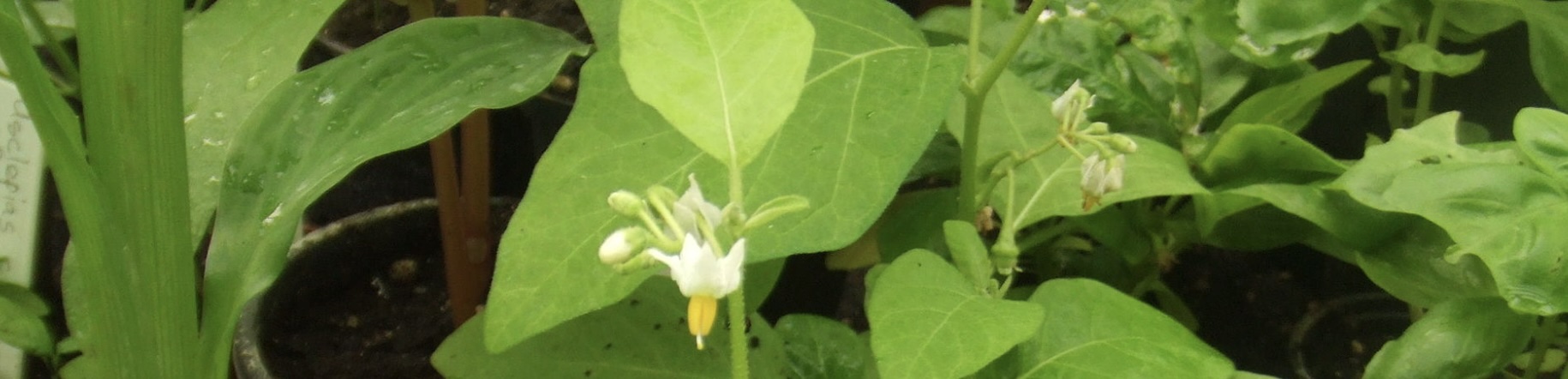
Question 1 First, describe a biological engineering application or tool you want to develop and why.
I’d Like to Do
I would like to develop an anthocyanin-based reporter system for Solanum aethiopicus. I would like it to use native genetic elements to fit in with my desire to do ethical biotechnology that fits in my own beliefs.
Development of a Cisgenic Anthocyanin-Based Visible Reporter System in Solanum aethiopicum
Overview
Reporter systems are important for studying biotechnology and understanding how life works. In resource-strained contexts, these kinds of experiments are hard to do due to high costs and equipment needs. They traditionally use elements like fluorescent or luminescent proteins from jellyfish and fireflies. The additional problem on an ethical level is that they rely on species-mixing which is contrary to the beliefs of some religions. In this project, the aim is to develop and demonstrate the efficacy of a reporter system that does not rely on species mixing. To do this, the project will use strictly cisgenic, same species elements to build the reporter system, using Solanum aethiopicum as a novel model organism.
Question 2 Next, describe one or more governance/policy goals related to ensuring that this application or tool contributes to an “ethical” future, like ensuring non-malfeasance (preventing harm). Break big goals down into two or more specific sub-goals.
I would like its usage to be straight forward as a gene-edited technology that does not outcompete its wild counterparts. It contributes towards an ethical future because it allows people with limited resources to safely carry out analyses in Solanum aethiopicum to understand gene function and maybe design new varieties with better traits that match their needs. All this can be done without mixing species which matters to people who don’t want to do this because of their spiritual and personal beliefs.
Question 3 Next, describe at least three different potential governance “actions” by considering the four aspects below (Purpose, Design, Assumptions, Risks of Failure & “Success”).
Purpose: What is done now and what changes are you proposing? Now, gene-edited technologies such as vaccines are not treated as “genetically modified”, they are regulated by the same organisation that regulates medicines in Zambia. I think this is not a good idea. Although my technology fits this description, I don’t want to normalise and naturalise these technologies. They are still technologies that should be traced as such. option1I propose separate legislation that speaks directly to gene edited products like mine where no new DNA is introduced from another organism. Currently these products are treated as though they are natural, that does not sit well with me. I believe there should be traceability and vigilance even though it is perfectly safe when it is deployed to the public.
Design: What is needed to make it “work”? (including the actor(s) involved - who must opt-in, fund, approve, or implement, etc) The buy-in of indigenous researchers. They need to opt to use Solanum aethiopicus and my reporter system to do routine plant biotechnology investigations especially about traits that are applicable to their context such as drought tolerance or pathogen resistance. Option2The authorities (the Ministry) could make it a recommended model organism for the nation’s researchers to use. Assumptions: What could you have wrong (incorrect assumptions, uncertainties)? The gene editing could cause not unintended consequences. Maybe the anthocyanin expression may not work to a degree where phenotypes are easily visible. Option3The idea is that this technology makes it easy for researchers to see gene expression cheaply and easily. It does not work if you need high tech equipment to detect the anthocyanin expression from the reporter system. So its cost must be kept low Risks of Failure & “Success”: How might this fail, including any unintended consequences of the “success” of your proposed actions? People might not want to use a new model organisms, perhaps they want to stick to Arabidosis or Medicago for their research.
Question 4 Next, score (from 1-3 with, 1 as the best, or n/a) each of your governance actions against your rubric of policy goals. The following is one framework but feel free to make your own:
| Does the option: | Option 1 | Option 2 | Option 3 |
|---|---|---|---|
| Enhance Biosecurity | |||
| • By preventing incidents | 3 | 1 | 2 |
| • By helping respond | NA | NA | NA |
| Foster Lab Safety | |||
| • By preventing incident | 1 | NA | NA |
| • By helping respond | NA | NA | NA |
| Protect the environment | |||
| • By preventing incidents | 1 | 2 | NA |
| • By helping respond | NA | NA | NA |
| Other considerations | |||
| • Minimizing costs and burdens to stakeholders | 3 | 2 | 1 |
| • Feasibility? | 2 | 3 | 1 |
| • Not impede research | 3 | 2 | 1 |
| • Promote constructive applications | 3 | 2 | 1 |
Question 5 Last, drawing upon this scoring, describe which governance option, or combination of options, you would prioritize, and why. Outline any trade-offs you considered as well as assumptions and uncertainties. I would opt for keeping the cost of the technology low through some kind of subsidy framework and I would also look at the involvement of the Ministry in encouraging uptake of the model organism and its specially developed reporter systems
Answers to Questions
Why read, write & measure polymers? To understand and exploit natural and designed properties like chirality and reactivity How many basepairs do we need to synthesize? from less than 960 bp because that is the average bacterial protein size. There are plenty that are much smaller such as heat shock proteins and cyclotides in plants Why use a custom panel from twist? Their panels show exceptional performance across low variant allele frequencies, that is one reason.