Week 9 HW: Cell Free Systems
General Homework Questions
- Explain the main advantages of cell-free protein synthesis over traditional in vivo methods, specifically in terms of flexibility and control over experimental variables. Name at least two cases where cell-free expression is more beneficial than cell production. -Cell-free can be used even when cold-chain conditions cannot be assured -Cell-free systems can be used without cloning and creating recombinant organisms
- Cell-free protein synthesis offers flexibility and a lot of control because you can directly tune reaction components (DNA amount, salts/cofactors, energy mix, chaperones, redox environment) and test many conditions rapidly without cell growth, regulation, or viability constraints.
- Cell-free expression is especially beneficial for rapid prototyping of constructs/circuits and also producing products especially if they are tocix to living expression systems. It can also enable on-demand expression (e.g., freeze-dried systems) and reactions requiring tightly controlled chemistry. This is great for making vaccines on demand on a mission to Mars for example.
- Describe the main components of a cell-free expression system and explain the role of each component.
For General Systems
Cell extract (lysate) or purified translation system — supplies the machinery that makes protein (ribosomes, tRNAs, translation factors, enzymes).
Genetic template (DNA or mRNA) — the instructions for what protein to make; DNA needs transcription first, mRNA can be translated directly.
Transcription components (if using DNA) — RNA polymerase + NTPs to make mRNA from DNA.
Translation substrates — amino acids (building blocks) and energy-carrying nucleotides (mainly ATP/GTP) to run translation.
Energy regeneration mix — keeps ATP/GTP levels up so the reaction lasts longer and yields more protein.
Salts/ions + buffer — sets the chemical environment (pH and ion balance) so enzymes and ribosomes work properly.
Stabilizers/processing helpers (optional) — reducing agents, chaperones, cofactors, membrane mimics, and nuclease/protease control to improve folding, function, and stability of the product.
For E coli
| Component (E. coli CFPS) | What it is (typical examples) | Role in the system |
|---|---|---|
| E. coli S30 cell extract (lysate) | Crude extract containing ribosomes, tRNAs, translation factors, metabolic enzymes (often made from BL21-derived strains) | Core expression system that performs transcription/translation and supplies many supporting enzymes |
| DNA template | Plasmid DNA (most common) or linear PCR product; includes promoter + RBS + coding sequence + terminator | Blueprint for the protein; design of promoter/RBS strongly controls expression level |
| RNA polymerase source | Endogenous E. coli RNAP (for σ70 promoters) and/or added T7 RNA polymerase (for T7 promoters) | Converts DNA to mRNA; T7 is often used for high-yield transcription |
| NTPs | ATP, GTP, CTP, UTP | Substrates for transcription; ATP/GTP also supply energy used during translation |
| Amino acids | All 20 amino acids | Building blocks for the synthesized protein |
| Energy regeneration system | One of: PEP, creatine phosphate, 3-PGA, glucose/maltodextrin-based systems (varies by kit or lab) | Replenishes ATP/GTP so the reaction keeps running and yields stay high |
| Salts / ions | Especially Mg²⁺ and K⁺ (sometimes NH₄⁺) | Tune ribosome activity, enzyme function, and overall productivity; Mg²⁺/K⁺ concentration are the main variables for optimisation |
| Buffer (pH control) | HEPES or Tris-based buffer | Keeps pH stable so transcription/translation enzymes remain active |
| Reducing agent | DTT or β-mercaptoethanol | Maintains a reducing environment; helps prevent oxidation-related loss of activity (important for many proteins) |
| Small-molecule supplements | Often include spermidine/putrescine, folinic acid, cAMP (system-dependent) | Stabilize nucleic acids and support efficient translation (varies by formulation) |
| Nuclease control (optional but common for linear DNA) | DNase/RNase inhibitors, or extracts engineered to reduce nuclease activity | Protects DNA/RNA templates (especially linear DNA) from degradation |
| Protease control (optional) | Protease inhibitors or protease-reduced strains/extracts | Reduces breakdown of newly made protein, improving yield and integrity |
| Chaperones / folding helpers (optional) | GroEL/ES, DnaK/DnaJ/GrpE added or enriched extracts | Improve solubility and correct folding of difficult proteins |
| Add-ons for special protein classes (optional) | Detergents, liposomes/nanodiscs (membrane proteins); cofactors/metals (heme, Zn²⁺, etc.) | Enables functional expression of membrane proteins or cofactor-dependent enzymes |
- Why is energy provision regeneration critical in cell-free systems? Translation is energy-intensive because charging tRNAs and moving the ribosome along mRNA consumes ATP/GTP at multiple steps. Transcription also draws on NTP pools, if using a DNA template, the system must spend NTPs to make mRNA. Without regeneration, the reaction stalls fast: ATP/GTP drop, ADP/AMP and inorganic phosphate build up, and the system loses driving force and efficiency. Therfore energy balance affects yield and fidelity: low energy can reduce protein yield and sometimes increase incomplete/aberrant products.
Describe a method you could use to ensure continuous ATP supply in your cell-free experiment. One method to ensure continuous ATP supply could be to use an ATP regeneration module that continually converts ADP to ATP. e.g. phosphoenolpyruvate (PEP) + pyruvate kinase (PK)
Add an energy “fuel” molecule (PEP) and the enzyme pyruvate kinase.
PK transfers phosphate from PEP to ADP:
- PEP + ADP → pyruvate + ATP
As the cell-free system consumes ATP (making ADP), PK converts that ADP back into ATP, keeping ATP levels high enough for sustained expression.
Compare prokaryotic versus eukaryotic cell-free expression systems. Choose a protein to produce in each system and explain why.
Prokaryotic vs eukaryotic cell-free expression (expressing GFP in each)
| Feature | Prokaryotic Cell Free Systems | Eukaryotic Cell Free Systems |
|---|---|---|
| Source of machinery | Bacterial ribosomes + factors | Eukaryotic ribosomes + factors |
| Speed / yield | Typically fast and often high-yield for many proteins | Often slower and can be lower-yield, but depends on platform |
| Setup complexity | Generally simpler/cheaper | Often more expensive; more complex components |
| Template requirements | Works well with DNA; common to use T7 promoter + bacterial RBS | Often prefers capped mRNA or eukaryotic translation signals (this is platform-dependent) |
| Protein folding environment | Good for many soluble proteins but limited eukaryotic folding machinery | Better suited to some eukaryotic folding needs; can support more complex proteins |
| Post-translational modifications | Minimal | Can support some PTM-related processes depending on system (still limited vs living cells) |
| Typical best use | Rapid prototyping + high-throughput expression of simple proteins | Proteins needing a more eukaryote-like translation/folding context |
Protein choice in each system: GFP (and why)
1) Prokaryotic system (E. coli cell-free) to produce GFP
GFP is a soluble, relatively robust protein that folds well in bacterial contexts.
Prokaryotic CFPS is ideal for fast, high-yield expression, so GFP gives a strong, quick fluorescence readout for verifying the system and optimizing conditions.
It’s a standard reporter for tuning DNA concentration, Mg²⁺/K⁺ balance, and energy regeneration because output is easy to measure.
Expected output
- Rapid increase in fluorescence as GFP accumulates (often within hours, depending on system).
2) Eukaryotic system (wheat germ or rabbit reticulocyte CFPS) to produce GFP
GFP is still easy to detect, so it’s a simpler way to validate a eukaryotic CFPS setup.
Demonstrates eukaryotic translation control (e.g., dependence on mRNA features like cap/poly(A), or different 5′/3′ UTR effects—platform dependent) without the extra complication of difficult-to-fold proteins.
Using GFP in a eukaryotic system is a good baseline before moving to proteins that truly require eukaryotic translation/folding environments.
Expected output
Fluorescence increase that may have different kinetics and yield than E. coli CFPS, but still provides a clear functional readout.
How would you design a cell-free experiment to optimize the expression of a membrane protein? Discuss the challenges and how you would address them in your setup. In an E. coli cell-free system, optimising expression of LacY (the lactose permease, an MFS transporter) primarily requires preventing aggregation of hydrophobic transmembrane segments and promoting correct insertion into a membrane-like environment during synthesis. When LacY is translated in a purely aqueous reaction, it commonly precipitates or adopts nonfunctional conformations because the nascent helices lack a suitable hydrophobic phase.
My experiment would include a membrane mimic from the start of the reaction to enable co-translational capture and insertion. I could include liposomes because they are often preferred when the experimental goal is functional reconstitution, since they allow LacY to be embedded in a bilayer context, although insertion efficiency and orientation may vary.
After selecting a membrane mimic that reduces aggregation, my next focus would be the quality of folding and insertion. Reaction conditions should be tuned to avoid overwhelming the folding and insertion capacity of the system. Excessive expression drive (for example, very high template concentration or very strong transcription) can cause LacY to accumulate faster than it can insert and fold, increasing aggregation and reducing the proportion of functional protein.
Energy regeneration is also critical because membrane protein synthesis may benefit from extended reaction durations. If ATP and GTP are depleted early, translation stalls before substantial correctly inserted protein accumulates. My effective energy regeneration strategy would help maintain nucleotide triphosphate levels and sustains translation long enough to improve overall production.
Successful optimisation would be assessed using multiple readouts rather than total yield alone. Useful metrics include the total amount of LacY produced, the fraction captured in the membrane mimic versus insoluble material, and most important of all, evidence of functional behaviour consistent with correctly folded LacY in a membrane environment.
- Imagine you observe a low yield of your target protein in a cell-free system. Describe three possible reasons for this and suggest a troubleshooting strategy for each. Possible reasons:
- Not enough regeneration of energy molecules - change my energy regeneration module
- Folding of functional protein is not possible optimally- I would try other chaperones and reaction conditions
- DNA template is not good- Maybe the promotors are not idea or other regulatory elements. I would test out other parts.
Synthetic Minimal Cells
- Pick a function and describe it.
- What would your synthetic cell do? What is the input and what is the output?
The synthetic minimal cell would function as a protected screening reactor that converts a biological “unknown” into a quantitative biosensor signal. The input is a plant-derived cyclotide/peptide extract (or fraction) added to the synthetic cell containing a LacI–sfGFP regulatory module and Tx/Tl machinery. The output is a measurable sfGFP signal (end-point fluorescence and/or time-course kinetics) that reports how the peptide perturbs the LacI–sfGFP module (e.g., changes in repression strength, expression rate, or signal stability). This output is used as a proxy for bioactivity and to stratify hits into mechanism-like response classes.
- What would your synthetic cell do? What is the input and what is the output?
Could this function be realized by cell-free Tx/Tl alone, without encapsulation?
Yes, but not optimally. A bulk (non-encapsulated) Tx/Tl reaction can produce the GFP readout, but encapsulation improves practical performance by stabilizing the reaction microenvironment, buffering dilution and inhibitors from crude extracts, and enabling more consistent kinetics and comparability across samples. Encapsulation also supports portability and modular handling (e.g., dried “synthetic cells” that are rehydrated in the field), which is harder to maintain with open bulk reactions.Could this function be realized by genetically modified natural cell?
Not really for the intended screening goal, because cyclotides and related bioactive peptides can be toxic at the concentrations required for discovery and validation, which can collapse cell viability and confound interpretation. A living cell also introduces additional layers (stress responses, transport limits, metabolism, degradation, growth effects) that can mask direct bioactivity and reduce the clarity of the readout, especially when working with crude plant mixtures.Describe the desired outcome of your synthetic cell operation.
The desired outcome is a reliable, repeatable decision signal that identifies which African plant extracts/fractions contain cyclotide-like peptides with meaningful antiparasitic potential and prioritizes them into a short list of “hits.” Practically, success looks like: (i) clear, quantifiable changes in sfGFP output relative to controls, (ii) consistent response patterns across replicates and across preparation batches, and (iii) a set of top candidates that can be carried forward to structural integration (linking activity to known/predicted cyclotide scaffolds) and template definition for downstream peptide design and validation.
- Design all components that would need to be part of your synthetic cell.
- What would the membrane be made of?
A lipid vesicle membrane is the most straightforward choice, because it mimics biology and is compatible with protein pores/channels if needed. A practical design would use phospholipid liposomes.
- What would the membrane be made of?
- What would be encapsulated inside (enzymes, small molecules)?
Inside the synthetic cell, the minimal set is everything required to run a LacI–sfGFP transcription/translation reaction reliably and report on perturbations caused by cyclotide-containing samples:
Tx/Tl machinery: ribosomes, tRNAs, translation factors (as part of an extract or purified mix)
Transcription components: RNA polymerase appropriate to the promoter used (e.g., T7 promoter)
Genetic program: DNA template encoding sfGFP under LacI control, plus the regulatory DNA elements
Regulator: LacI protein (preloaded) or DNA encoding LacI (so the system can establish repression internally)
Building blocks: amino acids, NTPs
Energy system: ATP/GTP supply plus an energy regeneration module
Buffering/ions: Mg2+, K+ and pH buffer to keep the reaction in its productive window
Stability helpers e.g. chaperones
Which organism would the Tx/Tl system come from? Is bacterial OK, or is mammalian needed?
Bacterial is my ideal for this application, and an E. coli-based Tx/Tl system is the best fit for me in this cases. The readout is sfGFP expression controlled by LacI, which is a bacterial regulator and does not require mammalian transcriptional machinery or mammalian-only inducible systems.How will the synthetic cell communicate with the environment?
Communication can be designed in three tiers, depending on what must cross the membrane:
Pores/channels: the membrane can include a general or defined diffusion pore so small molecules and peptides can access the internal reaction without fully compromising compartment integrity.
Compartment-protective gating (best for crude extracts): If crude plant mixtures contain inhibitors that could crash the Tx/Tl chemistry, the membrane strategy can be tuned to admit the relevant molecular size range while excluding larger inhibitory components, effectively functioning as a filter. This makes encapsulation meaningfully better than bulk cell-free reactions.
Experimental details
- List all lipids and genes. (bonus: find the specific genes; for example, instead of just saying “small molecule membrane channel” pick the actual gene.) Genes: lacI, sfGFP, T7 RNAP (T7 gene 1) or sigma-70 promoter with endogenous RNAP, plus one membrane pore gene (mscL, ompF for small-molecule access)
- How will you measure the function of your system? General GFP fluorescence, dose-dependent changes in GFP fluorescence, difference in performance between experiments with pores/channels and those without.
Applications of Freeze-Dried Cell Free Systems
One-sentence pitch
A low-cost, single-use “kachasu safety strip” that flags dangerous adulterants sometimes added to boost “kick” (e.g., nitrogen fertilizer residues and related contaminants) using a simple, unmistakable color warning.
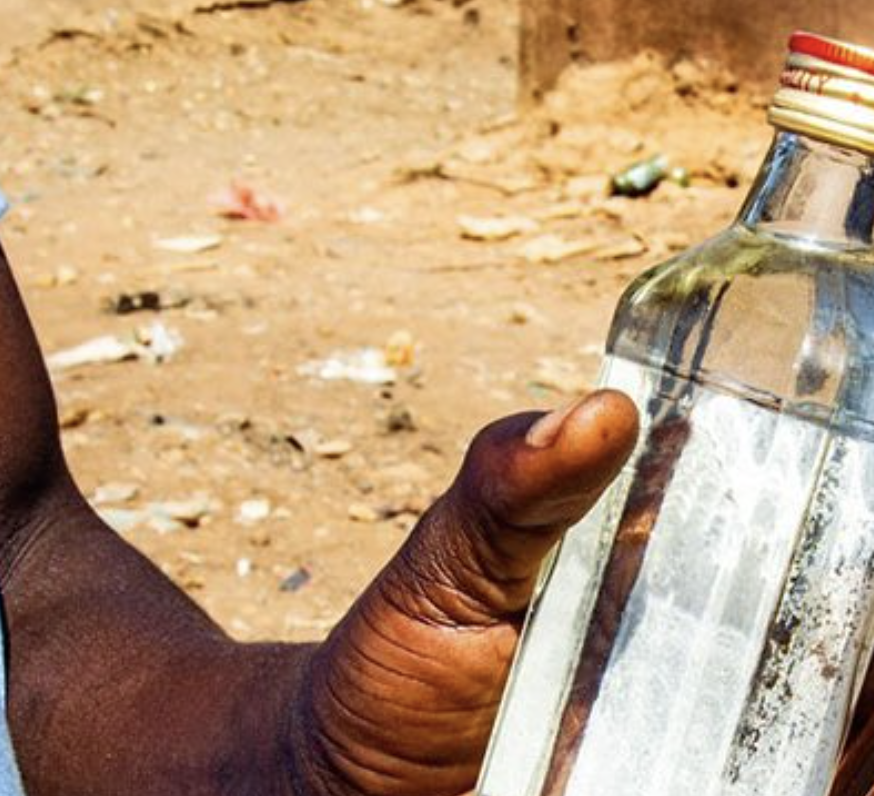
How it works (3–4+ sentences)
A drop of spirit is applied to a paper strip (or a sealed sachet test) that wicks the sample into multiple reaction spots. Each spot contains a freeze-dried, cell-free colorimetric module tuned to a different high-risk adulterant class relevant to local practice, such as ammonium/urea-type nitrogen signals (fertilizer-associated), abnormal oxidants, and other broad “toxic adulterant” proxies, plus a control spot to confirm the test ran correctly. The outputs appear as a small set of traffic-light indicators (green = no flag, red = dangerous flag) designed for non-technical interpretation. The tool is framed as harm reduction: it does not certify safety, but it quickly identifies batches that are high-risk and should not be sold or consumed.
Societal challenge / market need
Adulteration of informal spirits with non-food chemicals can cause poisoning, organ damage, and community outbreaks, and consumers often have no way to tell what has been added. Lab testing is expensive and inaccessible, while enforcement-only approaches often fail to reduce harm on the ground. A rapid, field-stable screening tool supports community health workers, vendors, and buyers with immediate risk information and can reduce preventable injury and death.
Addressing cell-free limitations (activation, stability, one-time use)
Activation is triggered by the sample itself: the spirit rehydrates the freeze-dried reactions. Stability is handled through foil barrier packaging, desiccants, and stabilizing excipients so strips can be stored without cold chain in local conditions. One-time use is appropriate for batch screening; the design stays low-cost by using paper microfluidics and simple color outputs, and reliability is improved by including internal controls and conservative thresholds (flagging “danger likely” rather than trying to quantify exact concentrations).
Genes in Space
Provide background information that describes the space biology question or challenge you propose to address. Explain why this topic is significant for humanity, relevant for space exploration, and scientifically interesting. (Maximum 100 words) Background Long-duration spaceflight exposes astronauts to microgravity and radiation, which can alter gene expression, RNA processing, and protein synthesis. Neurodevelopmental and synaptic pathways are especially relevant because cognition, sensory processing, and behavioral performance are mission-critical. Fragile X biology (studied the process in plants before) is scientifically interesting because it links RNA structure, control, and neuronal function, offering a model for how stressors might shift RNA–protein regulation. Studying Fragile X–related translation in cell-free systems enables controlled, low-mass experiments that inform astronaut health risk, countermeasure design, and fundamental principles of gene regulation in space-relevant conditions.
Name the molecular or genetic target that you propose to study. Examples of molecular targets include individual genes and proteins, DNA and RNA sequences, or broader -omics approaches. (Maximum 30 words) Molecular/genetic target
FMR1 5′UTR CGG-repeat RNA elements and FMRP-mediated translational regulation, measured using CGG-repeat reporter constructs in a eukaryotic cell-free transcription–translation system.Describe how your molecular or genetic target relates to the space biology question or challenge your proposal addresses. (Maximum 100 words) Microgravity-like transport changes and radiation-like stress can perturb RNA folding, RNA–protein interactions, and translation kinetics. The FMR1 CGG-repeat region is a structured RNA element whose repeat length influences translation and can promote abnormal translation behaviors. FMRP is an RNA-binding translational regulator central to neuronal function. Together, CGG-repeat RNA and FMRP provide a sensitive “stress test” for how space-relevant conditions alter translation control. A cell-free approach isolates these mechanisms from whole-cell confounders, enabling direct measurement of repeat-length–dependent translation shifts under space-like constraints.
Clearly state your hypothesis or research goal and explain the reasoning behind it. (Maximum 150 words) Space-relevant stressors (altered mixing/transport and radiation-like oxidative/nucleic-acid stress) amplify CGG-repeat–dependent disruption of translation and RNA stability, and they alter the modulatory effect of FMRP on translation. The reasoning is that structured repeat RNAs can be sensitive to changes in biophysical environment (diffusion, crowding, redox balance) and to damage that affects RNA integrity or ribosome progression. If space-like stress worsens ribosome stalling or shifts translation dynamics, repeat-containing templates should show larger drops in protein output and/or altered kinetics compared to non-repeat controls. Goal: quantify how repeat length and FMRP presence interact with space-relevant stressors to change translation output, providing a mechanistic basis for neurorelevant risk assessment and countermeasure screening.
Outline your experimental plan - identify the sample(s) you will test in your experiment, including any necessary controls, the type of data or measurements that will be collected, etc. (Maximum 100 words) Test a panel of cell-free templates encoding sfGFP with matched 5′UTRs containing: no repeat (control), short CGG, premutation-range CGG, and long CGG. Run reactions under baseline conditions and under two perturbations: a microgravity-relevant transport condition (reduced convection/mixing) and a radiation-relevant stress proxy (oxidative/nucleic-acid stress). Include ± added purified FMRP (or an FMRP surrogate) to test regulation. Measurements: sfGFP fluorescence time-course (rate, onset, plateau), plus RNA integrity at endpoint (template stability). Controls: no-template and no-stress controls.