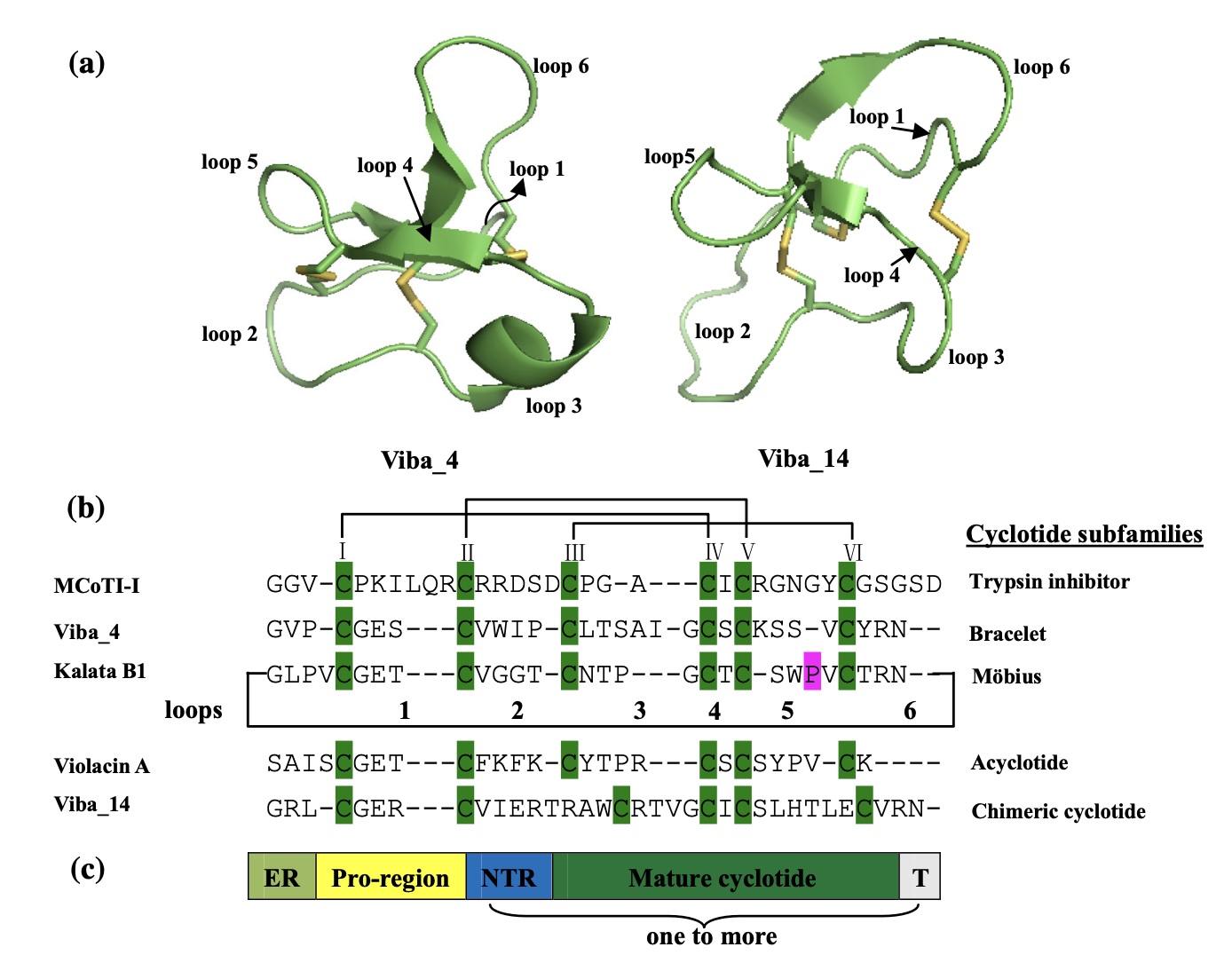
From Zhang et al. (2015)
Bioengineered Acaricide from African Biodiversity Moola Mutondo Designer Cells Node
Committed Listener
Abstract African plants contain many cyclotides, ultra‑stable peptides with major potential as drugs and biopesticides, but functional screening of this diversity is limited. The goal is to build a programmable biosensor platform to screen African plant germplasm for cyclotides that modulate a defined bacterial regulatory pathway. The project tests the hypothesis that cyclotides or related peptides which interact with LacI will cause measurable changes in a LacI‑controlled GFP reporter circuit. Specific aims are: (1) design and assemble a plasmid encoding a constitutive LacI cassette and a LacI‑regulated sfGFP reporter, (2) establish a cell‑free or E. coli assay compatible with lyophilised plant extracts, and (3) implement a small‑scale, automated screen (e.g., on an Opentrons robot) to identify extracts that reproducibly alter GFP output. Methods include DNA design and synthesis, cell‑free expression or bacterial culture, plant extract preparation, automated liquid handling, and plate‑reader fluorescence measurements.
African plants contain many cyclotides, ultra‑stable peptides with major potential as drugs and biopesticides, but functional screening of this diversity is limited. The goal is to build a programmable biosensor platform to screen African plant germplasm for cyclotides that modulate a defined bacterial regulatory pathway. The project tests the hypothesis that cyclotides or related peptides which interact with LacI will cause measurable changes in a LacI‑controlled GFP reporter circuit. Specific aims are: (1) design and assemble a plasmid encoding a constitutive LacI cassette and a LacI‑regulated sfGFP reporter, (2) establish a cell‑free or E. coli assay compatible with lyophilised plant extracts, and (3) implement a small‑scale, automated screen (e.g., on an Opentrons robot) to identify extracts that reproducibly alter GFP output. Methods include DNA design and synthesis, cell‑free expression or bacterial culture, plant extract preparation, automated liquid handling, and plate‑reader fluorescence measurements.
Aim 1: Experimental Aim (this project)
The first aim of my final project is to build and test a LacI–sfGFP biosensor plasmid that can report on cyclotide activity in African plant extracts by utilizing DNA design in Benchling, Twist clonal gene synthesis, and E. coli or cell‑free expression assays in multi‑well plates. I will assemble and annotate the construct (J23106–lacI cassette plus LacI‑regulated sfGFP cassette), establish reaction conditions compatible with crude extracts from lyophilised plant material, and quantify fluorescence changes using a plate reader, with the option to automate liquid handling on an Opentrons system.
Aim 2: Development Aim The second aim is to develop a portable, cell‑free screening workflow that uses the LacI–sfGFP construct to test panels of lyophilised African plant germplasm for cyclotide activity, including in low‑infrastructure settings. This includes refining extract preparation and normalization, optimizing cell‑free assay conditions for robustness without specialized equipment, and implementing Opentrons‑based automation in the lab as a reference workflow that can be down‑scaled to simple, field‑deployable formats (e.g., pre‑aliquoted lyophilised TXTL reactions in strips or plates).
Aim 3: Visionary Aim The third aim is to establish a distributed, field‑compatible platform that lets communities and regional labs screen local biodiversity for bioactive cyclotides using standardized cell‑free genetic circuits. In its fully realized form, this system would enable on‑site testing of plant material with minimal laboratory infrastructure, creating a networked pipeline where field screens feed into centralized follow‑up, thereby shifting peptide discovery capacity toward African institutions and the Global South.
Cell‑free systems are used so that cyclotide activity can be assayed directly from lyophilised plant material in simple, portable reaction formats, enabling on‑site testing outside fully equipped laboratories. This is directly inspired my MiniPCR BioBits products.
Problem Africa is rich in indigenous knowledge about medicinal plants and pest control, but much of this knowledge is being lost as knowledge‑holders pass away, limiting systematic discovery of peptide leads such as cyclotides from African biodiversity.
Goal To use African biodiversity and indigenous knowledge systems to develop and validate a cyclotide‑based peptide template for antiparasitic (e.g., acaricide) applications, starting from functional screening in a LacI–sfGFP biosensor platform.
Hypothesis Cyclotides and related peptides discovered by combining African germplasm, indigenous knowledge, and a programmable biosensor system will yield more potent, context‑relevant, and accessible antiparasitic drug candidates than approaches that ignore local biodiversity and use patterns.
Innovation and Approach Collect candidate cyclotide‑producing plants and ethnobotanical leads from local communities; prepare lyophilised plant germplasm and screen extracts in a LacI‑based GFP cell‑free assay (optionally automated on Opentrons) to identify bioactive peptides; integrate hits with known and predicted cyclotide structures to define peptide templates; and, in future work, use these templates for synthetic peptide design, plant transient expression, and ultimately engineered cyclotide‑producing crops.
Impact If successful, this platform will enable African and rural labs to couple field‑compatible, cell‑free biosensing with indigenous knowledge, supporting the development of locally relevant cyclotide‑based antiparasitic interventions and, longer‑term, engineered crops that provide community‑accessible biopesticide or therapeutic functions.
SECTION 4: EXPERIMENTAL DESIGN, TECHNIQUES, TOOLS, AND TECHNOLOGY
Overview
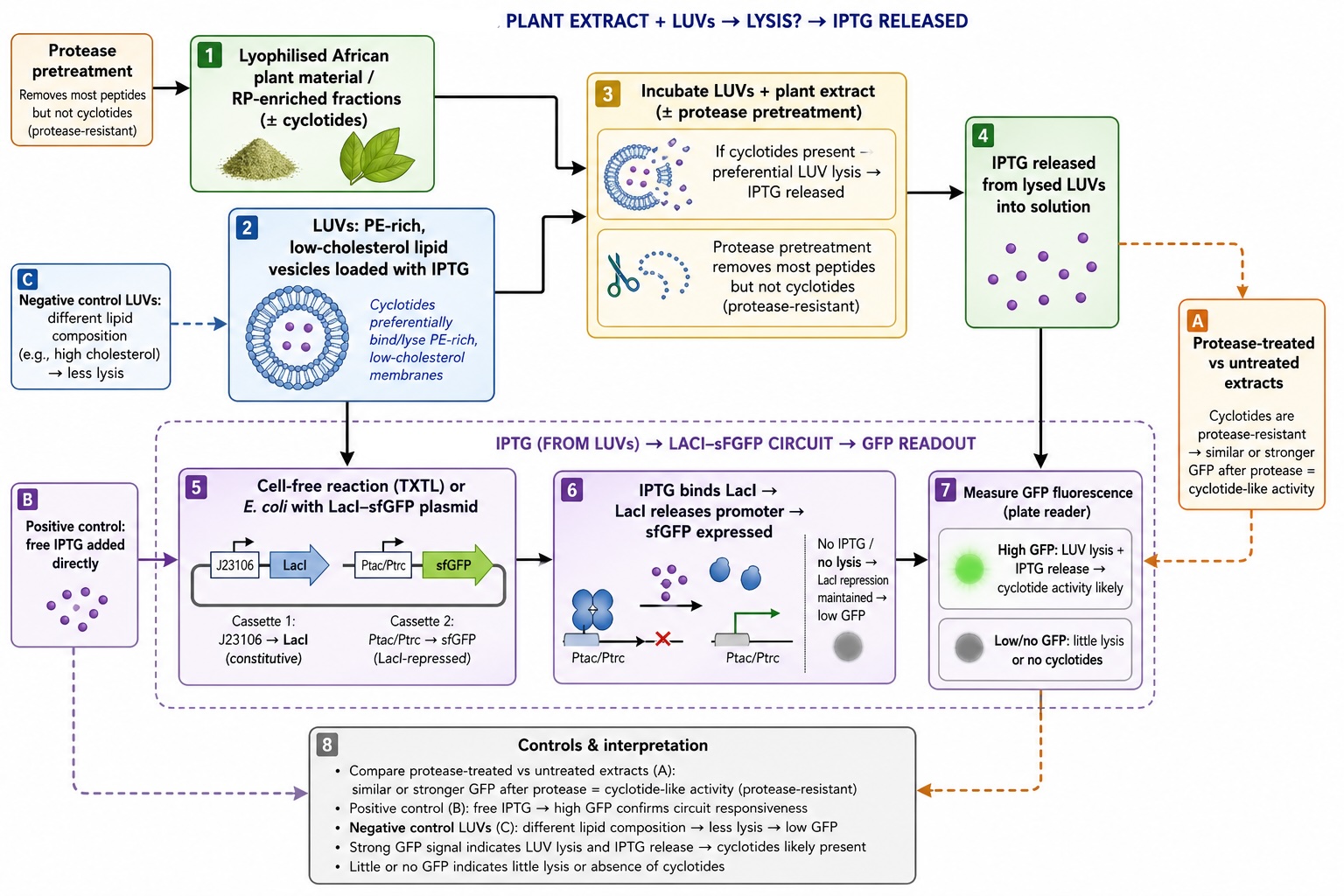
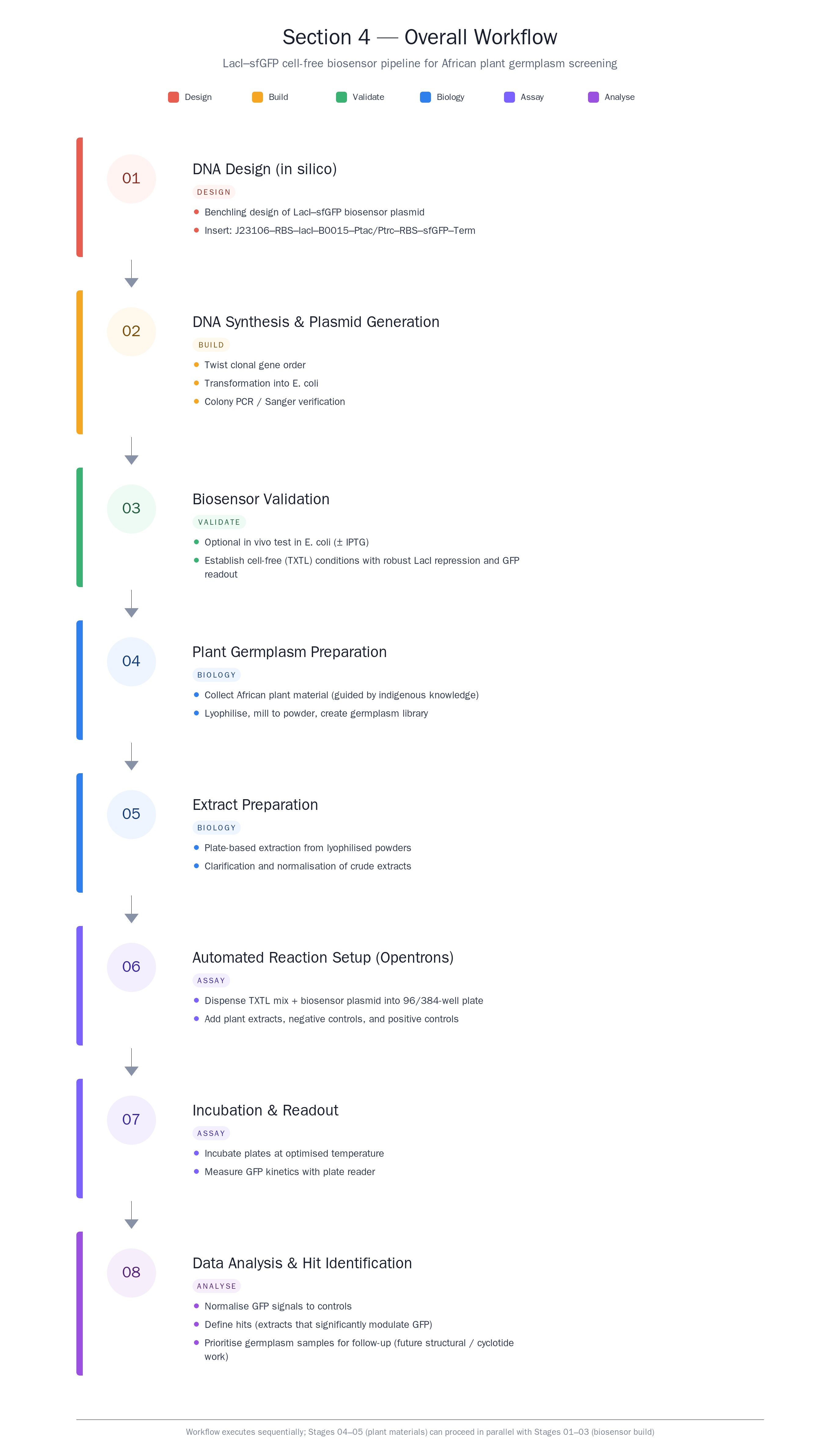
The project will establish a LacI‑regulated sfGFP biosensor plasmid and a cell‑free, Opentrons‑assisted workflow to screen lyophilised African plant germplasm for cyclotides or related peptides that modulate LacI activity.
Experimental plan
Design biosensor construct in silico (1–2 days)
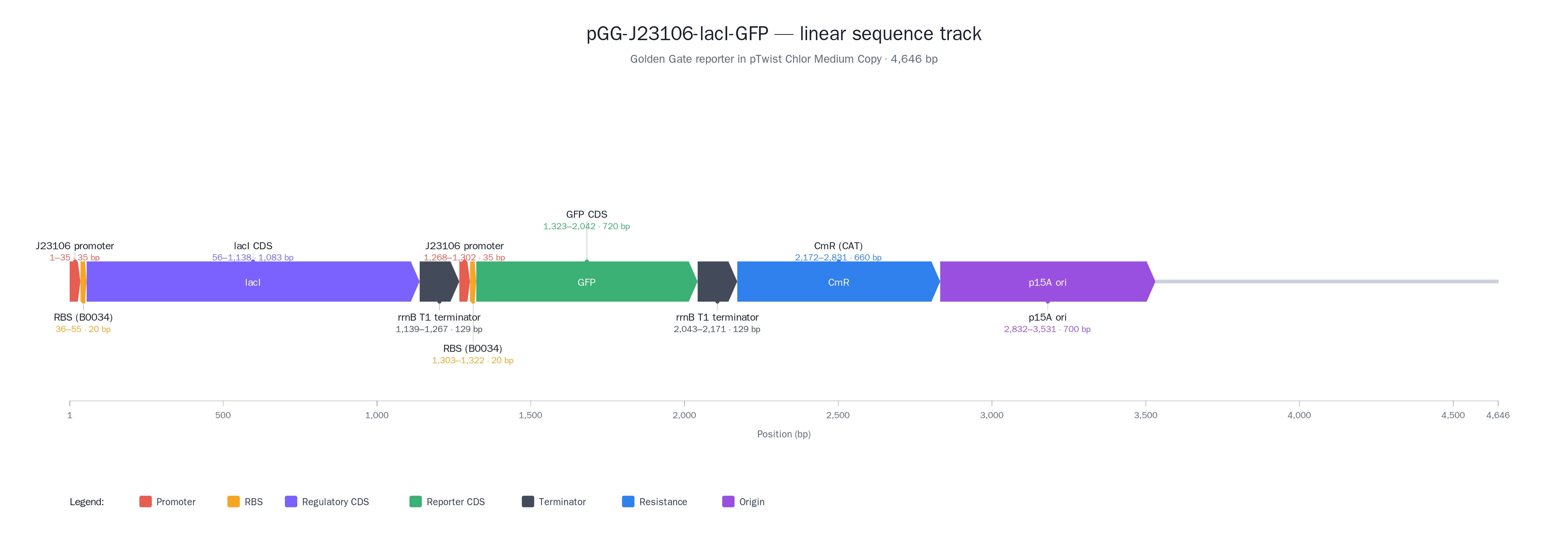
Use Benchling to design a plasmid with a standard E. coli backbone (ori, antibiotic marker) and a synthetic insert comprising two transcriptional cassettes in series:
Expected result: Confirmation of a synthesis order that will deliver the complete biosensor plasmid.
Receive and verify biosensor plasmid (1–2 weeks turnaround; 2–3 days lab work)
Transform the Twist‑supplied plasmid into E. coli, plate on antibiotic, and pick colonies.
Verify construct by colony PCR and/or Sanger sequencing across the insert.
Methods: Chemical transformation, plating, miniprep, PCR, sequencing.
Expected result: Verified clone(s) carrying the correct LacI–sfGFP biosensor plasmid.
Benchmark biosensor in vivo (optional but informative; 3–5 days)
Express the plasmid in E. coli and measure GFP with and without IPTG (or another LacI inducer).
Methods: E. coli culture, inducer titration, plate‑reader fluorescence.
Expected result: Low baseline GFP in the absence of inducer and increased GFP upon induction, confirming functional LacI repression and dynamic range.
Set up cell‑free biosensor conditions (3–5 days optimization)
Use an E. coli TXTL or similar extract system and titrate plasmid concentration, reaction volume, and incubation time to obtain robust GFP expression and clear repression by LacI.
Expected result: A cell‑free condition where LacI keeps GFP low at baseline, with a defined induction window and reproducible kinetics suitable for screening.
Collect plant material guided by African indigenous knowledge and biodiversity (e.g., Rubiaceae/Violaceae and other candidate cyclotide‑producing species).
Lyophilise leaves, roots, or whole tissue, then mill to a fine powder and store as a germplasm library.
Expected result: A stable screening protocol with acceptable signal‑to‑noise and reproducible hit calls.
Secondary characterization of hits (future development; beyond core HTGAA timeline)
For top‑scoring extracts, perform dilution series and repeat TXTL assays to generate simple dose–response curves.
Optionally, fractionate extracts or cross‑reference with known/predicted cyclotide content from literature and in silico predictions.
Methods: Serial dilution, repeated TXTL assays, literature and database mining.
Expected result: Shortlisted plant samples and conditions that strongly suggest cyclotide or peptide modulators of LacI activity.
Field‑compatible format exploration (conceptual or pilot; 3–5 days if attempted)
Evaluate whether lyophilised or pre‑aliquoted cell‑free reagents with the plasmid can be used in simpler, low‑infrastructure formats (e.g., strips or small tubes) for non‑Opentrons, field‑adjacent testing.
Expected result: A proof‑of‑concept or design concept for field‑deployable assays that extend beyond the core laboratory setup.
Expected overall outcome
If successful, this experimental plan will yield:
A verified LacI–sfGFP biosensor plasmid and robust cell‑free assay.
An Opentrons‑enabled workflow to test many lyophilised plant extracts in parallel.
A first set of “hit” germplasm samples whose extracts modulate LacI‑controlled GFP, forming the basis for future cyclotide identification, structural work, and peptide template design.
Techniques relevant to my project
Key (✔ = relevant / used, ✖ = not central right now).
Core lab skills
✔ Pipetting
✔ Lab Safety
✔ Bioethical Considerations (must check this box)
DNA / sequence work
✖ DNA Gel Art
✔ DNA Sequencing (to verify the Twist plasmid)
✔ DNA Editing (in silico design/edits in Benchling)
✔ DNA Construct Design
✖ Restriction Enzyme Digestion (not essential if using Twist + Gibson‑free workflows)
✖ Gel Electrophoresis (optional for QC)
✖ DNA Purification From Gel
✔ Databases (GenBank / NCBI for promoters, lacI, sfGFP, cyclotides)
Automation and robotics
✔ Lab Automation
✔ Creating Code for Laboratory Automation
✔ Using Liquid Handling Robots (Opentrons)
✔ Designing a Twist Order
✖ Creating a plan to use the Autonomous lab at Ginkgo Bioworks
Protein / design tools
✖ Protein Design (core project is regulatory, not de novo protein design)
✖ Use of Boltz or PepMLM
✖ Use of Asimov Kernel
✔ Use of Benchling
✔ Models and Notebooks (for data analysis / planning)
✔ Databases (for cyclotides, natural products)
Bioproduction / bacteria
✔ Chassis Selection (e.g., DH5α or similar for plasmid propagation)
✔ Registry of Standard Biological Parts (Anderson promoters, RBS, B0015)
✔ Plasmid Preparation
✔ Bacterial Culturing (to grow and prep the construct)
✔ Freeze-Dried Cell Free Systems (this is part of my testing and field‑deployable vision)
✖ miniPCR Tools (not required here)
✖ Protein Purification (not needed for the screen)
Cloning / assembly
✔ Primer Design or Selection (PCR‑based edits/QC)
✖ Gibson Assembly (can be optional if Twist delivery of the full plasmid is not possible)
✔ Other Cloning Methods (basic transformation, maybe RE‑based subcloning if needed)
Genome editing
✖ CRISPR/Cas9
✖ Designing Prime Editing gRNA
If it is decided to explicitly re‑clone or modify the plasmid by hand rather than rely entirely on Twist, then “Restriction Enzyme Digestion,” “Gel Electrophoresis,” and “Gibson Assembly” would be checked as well.
Notes about two techniques used in this study
1. Cell‑Free Reactions / Freeze‑Dried Cell‑Free Systems I will use E. coli extract–based cell‑free reactions as the main testbed for the LacI–sfGFP biosensor, allowing direct GFP measurement from DNA without transformation. In the lab, I will tune plasmid concentration and reaction conditions to achieve a low GFP baseline (LacI repression) and a clear induced state that cyclotides can modulate. Normalized plant extracts from lyophilised African germplasm will then be added to these reactions, and changes in fluorescence will indicate effects on the LacI pathway.
The construct can be used in its linear form:
OR cloned into pUC18 (for increased stability and expression) using these primers:
Reverse: GCGC | AAGCTT | TATAAACGCAGAAAGGCCCAC
clamp HindIII reverse-complement of cassette end
2. Using Liquid Handling Robots (Opentrons) / Automation Code I will use an Opentrons robot to assemble multi‑well plates, automating pipetting of TXTL mix, biosensor plasmid, plant extracts, and controls. A Python‑based protocol will define deck layout, labware, volumes, and well mapping so each extract and control is dispensed consistently. This automation improves reproducibility, enables larger germplasm screens, and links fluorescence readouts directly to specific plant samples.
How To Grow (Almost) Anything Industry Council companies which are associated with my final project
Addgene
Millipore Sigma
New England Biolabs
Opentrons
Twist Biosciences
Section 5 Results and quantitative expectations
What aspect would I validate?
I would choose to validate the LacI–sfGFP biosensor design and its basic function in a cell‑free reaction. If successful, this would show that the J23106–lacI–Ptac/Ptrc–sfGFP construct can give low baseline GFP and higher GFP with an inducer, establishing a usable dynamic range for later cyclotide screens.
How I would validate it
I would design the biosensor plasmid in Benchling with two cassettes on a standard E. coli backbone: J23106–RBS–lacI–B0015 and Ptac/Ptrc–RBS–sfGFP–Term.
I would export the insert, place a Twist clonal gene order, then transform the plasmid into E. coli, plate, and miniprep candidate clones.
I would verify correct assembly by Sanger sequencing across key junctions.
I would then set up small E. coli TXTL reactions in a 96‑well plate with a fixed plasmid concentration, add either no inducer or IPTG, incubate, and record GFP fluorescence over time in a plate reader.
Techniques I would use
In this validation, I would apply DNA construct design and in silico editing to assemble the LacI–sfGFP plasmid in Benchling. I would also use basic bioproduction techniques, including bacterial transformation, plasmid preparation, and Sanger sequencing for verification. For functional testing, I would use cell‑free reactions (TXTL) to measure GFP expression directly from the plasmid. Optionally, I might also use basic data analysis / modeling (e.g., in a notebook) to quantify fold‑change and compare time courses between induced and uninduced reactions.
Data and quantitative expectations
If I performed this experiment, I would expect low baseline GFP fluorescence in the absence of inducer and roughly a 2–10‑fold increase in endpoint fluorescence in the presence of IPTG at the same DNA concentration. I would anticipate GFP time courses where induced wells rise to a higher plateau than uninduced wells over 4–8 hours, visible as separated curves or as bar plots of normalized endpoint values.
Challenges and limitations (anticipated)
I would anticipate that tuning plasmid concentration in TXTL could be tricky: too much LacI might over‑repress GFP, while too little might give high background and low dynamic range. I would plan to test several DNA concentrations and, if necessary, adjust promoter strength or separate LacI and GFP onto two plasmids. I would also expect that some future plant extracts could nonspecifically inhibit TXTL, so I would design dilution series and toxicity controls to distinguish general inhibition from true LacI‑specific effects. Finally, I would consider plate‑reader sensitivity and background fluorescence as potential issues and would plan to calibrate gain settings or use GFP standards if needed.
References
Huang et al. (2018)
Huang, A., Nguyen, P. Q., Stark, J. C., Long, M., Padir, A., & Lu, T. K. (2018). BioBits™ Bright: A fluorescent synthetic biology education kit. Science Advances, 4(8), Article eaat5107. https://doi.org/10.1126/sciadv.aat5107
Nguyen et al. (2019)
Nguyen, P. Q., Botyanszki, Z., Huang, A., & Lu, T. K. (2019). BioBits Explorer: A modular synthetic biology education kit. Science Advances, 4(8), Article eaat5105. (Companion to Silver et al., 2018)
Stark et al. (2023)
Stark, J. C., Belter, A. M., Lakshmikanth, R., & Lu, T. K. (2023). At-home, cell-free synthetic biology education modules for remote learning. Synthetic Biology, 8(1), ysad012. https://doi.org/10.1093/synbio/ysad012
Tran et al. (2024)
Tran, G. H., Tran, T. H., Pham, S. H., Xuan, H. L., & Dang, T. T. (2024). Cyclotides: The next generation in biopesticide development for eco-friendly agriculture. Journal of Peptide Science, 30(6), Article e3570. https://doi.org/10.1002/psc.3570
Sun et al. (2013)
Sun, Z. Z., Hayes, C. A., Shin, J., Caschera, F., Murray, R. M., & Noireaux, V. (2013). Protocols for implementing an Escherichia coli based TX-TL cell-free expression system for synthetic biology. Journal of visualized experiments : JoVE, (79), e50762. https://doi.org/10.3791/50762
Zhang et al. (2015)
Zhang, J., Hua, Z., Huang, Z., Chen, Q., Long, Q., Craik, D. J., Baker, A. J. M., Shu, W., & Liao, B. (2015). Two blast-independent tools, CyPerl and CyExcel, for harvesting hundreds of novel cyclotides and analogues from plant genomes and protein databases. Planta, 241(4), 929–940. https://doi.org/10.1007/s00425-014-2229-5