Week 7 HW: Genetic Circuits Part-II
Assignment Part 1: Intracellular Artificial Neural Networks (IANNs)
Question 1. What advantages do IANNs have over traditional genetic circuits, whose input/output behaviors are Boolean functions?
Answer
An IANN is a nonlinear computer model designed to mimic the structure and function of biological neurons in the brain. It usually has multiple inputs and outputs, where neurons process weighted inputs to generate output signals.
Unlike traditional circuits that use signals to hit on and off thresholds, IANNs operate on analog computation and signals, which is more efficient for biological systems and allows them to process continuous chemical concentrations with much higher precision without losing information at binary thresholds. Additionally, IANNs are more robust to noise and biological variability because their distributed architecture prevents the failure of a single component from crashing the system. IANNs can also be trained to classify and adapt to nonlinear biological data through pattern recognition and learning, unlike traditional circuits, which are hard-coded for specific logic.
Question 2. Describe a useful application for an IANN; include a detailed description of input/output behavior, as well as any limitations an IANN might face to achieve your goal.
Answer
A useful application for an IANN would be in an environmental biosensor for detecting and classifying the levels of heavy metal pollutants in water.
The IANN would take intracellular signals generated in response to the presence of different heavy metal pollutants, such as mercury, lead, cyanide, and arsenic, at varying concentrations. Each signal would be weighted and processed through a network of regulatory elements that would allow the cell to integrate all the signals simultaneously rather than responding to each pollutant independently.
The output would be graded expressions of different reporter proteins, where a particular color corresponds to a specific pollutant. The presence of multiple pollutants would also correspond to a specific colour. For example, green for mercury, blue for lead, and orange for mercury and lead being present at the same time. This would enable the biosensor to distinguish complex environmental conditions, rather than simply indicating the presence or absence, as in a traditional genetic circuit.
Some limitations I might face include difficulty in engineering the precise weights and stable interactions between components in a variable and noisy cellular environment. Additionally, the IANN would need to be trained on high-quality data for the unique water chemistry of the specific mining regions to prevent inaccurate readings.
Question 3. Below is a diagram depicting an intracellular single-layer perceptron where the X1 input is DNA encoding for the Csy4 endoribonuclease and the X2 input is DNA encoding for a fluorescent protein output whose mRNA is regulated by Csy4. Tx: transcription; Tl: translation.
Draw a diagram for an intracellular multilayer perceptron where layer 1 outputs an endoribonuclease that regulates a fluorescent protein output in layer 2.
Answer
Below is a diagram of an intracellular multilayer perceptron where layer 1 outputs an endoribonuclease that regulates a fluorescent protein output in layer 2. I drew it using Microsoft Word. I designed with a low-pass circuit in mind.
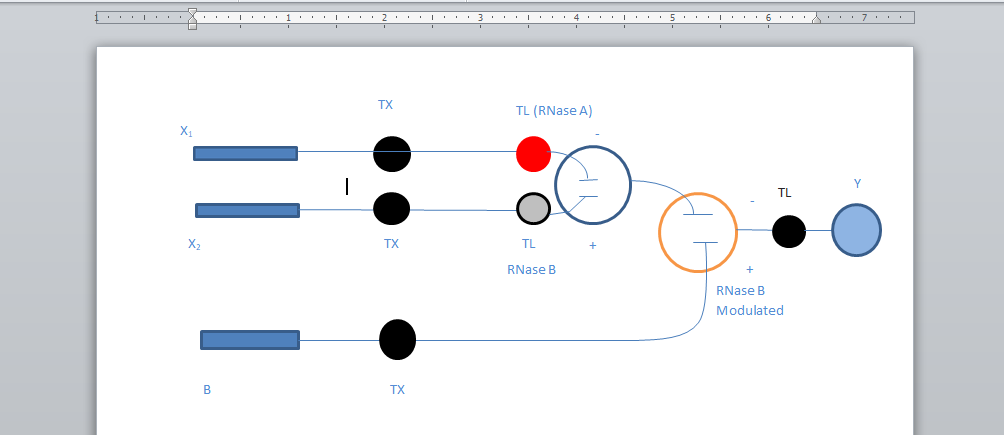
X1, X2 and B are the inputs. X1 is DNA encoding RNase A (a Csy4-like endoribonuclease), X2 is DNA encoding RNase B (a second endoribonuclease), and B (the Bais) is DNA encoding the fluorescent protein (FP) whose mRNA will be regulated. The TX are transcription nodes, they represent RNA polymerase reading the DNA from the inputs and producing mRNA molecules. The red TL node on X1 represents translation. Its output RNase A is inhibitory and will cleave and silence other downstream mRNA. The black TL node on the X2 branch represents translation of RNase B mRNA into RNase B protein.
The circle with the blue outline is the core computational node of Layer 1. At this node, RNase A (−, red) arrives from the top and delivers an inhibitory signal. RNase A cleaves the RNase B mRNA, reducing how much RNase B protein gets made. This is the negative weight in the perceptron analogy. X2 mRNA (+, black) arrives from the bottom and delivers a positive/permissive signal. It is the substrate being regulated. This is the positive weight.
The circle with the orange outline is the core computational node of layer 2. At this node, Modulated RNase B (−) arrives from Layer 1 at the top and delivers an inhibitory signal. That cleaves the fluorescent protein mRNA, suppressing translation. B mRNA (+) arrives from the bottom. This is the fluorescent protein mRNA produced by transcription of B, and it is the substrate being regulated in Layer 2.
The final black TL node represents the ribosome translating the surviving fluorescent protein mRNA into fluorescent protein. The blue circle represents the fluorescent protein Y. It is the final output of the entire multilayer perceptron. Y will be express when inputs of X1, X2 are lower than the input of B.
Assignment Part 2: Fungal Materials
Question 1. What are some examples of existing fungal materials, and what are they used for? What are their advantages and disadvantages over their traditional counterparts?
Answer
Fungal materials are sustainable, bio-based materials grown from mycelium.
Some examples of materials and their uses are:
Mycelium leather, like Mylo by Bolt Threads, is grown from fungal mats that are harvested and treated to create a soft and flexible material that mimics the texture and tensile strength of animal leather. It is used to produce fashion products such as bags, shoes, and jackets.
Mycelium Building blocks and insulation made from mycelium-bound biocomposites formed by growing fungi on cellulose-rich bases. They are used as acoustic tiles, insulation panels, and brick to construct structures.
Funagl paper and filtration membranes made from processing fungal filaments into a paper-like sheet using *Trametes versicolor, which are hydrophobic and fire-resistant. They are used in research for water filtration membranes that can attract heavy metals due to their chitin content.
Fungal materials, unlike their traditional counterparts such as plastics, forms, and animal/synthetic leather, offer several advantages. Biomaterials are highly sustainable due to their biodegradable nature and production from agricultural waste. By upcycling agricultural waste such as sawdust and rice husks, we can create valuable products that significantly reduce the carbon footprint. Additionally, they can be grown into specific shapes and do not require high-heat polymerization like plastics, which reduces manufacturing waste and energy consumption. In the case of mycelium leather, fungal materials can provide an ethical alternative to animal-derived products.
However, aside from their numerous benefits, fungal materials also have notable disadvantages. They generally exhibit lower mechanical strength and durability compared to their traditional counterparts. They are also sensitive to moisture and environmental conditions if not properly treated. Additionally, their growth-based manufacturing process is slower than traditional materials methods, which poses a challenge for scalability and widespread adoption. This also currently makes them more expensive due to the limited production scale.
Question 2. What might you want to genetically engineer fungi to do and why? What are the advantages of doing synthetic biology in fungi as opposed to bacteria?
Answer
I would like to engineer fungi to act as a cooperative network that redistributes nutrients to improve soil structure and protect plants from disease. Mycorrhizal fungi species naturally form underground hyphal networks that connect plant roots and facilitate nutrient exchange. They can be engineered to sense deficiencies and transport key elements like nitrogen and phosphorus to areas where they are needed. They could be designed to secrete compounds that improve soil aggregation, water retention, and overall soil health, while producing antimicrobial molecules to suppress plant pathogens. This idea would help create more sustainable agriculture by reducing reliance on chemical fertilizers and pesticides. By improving nutrient distribution, enhancing soil structure, and protecting plants from disease. Which would increase crop productivity while maintaining long-term soil health and minimizing environmental damage.
Performing synthetic biology in fungi as opposed to bacteria has certain advantages, such as the ability of fungi to secrete large quantities of proteins directly into their environment, which simplifies the protein purification process and makes fungi highly efficient cell factories. Additionally, fungi are eukaryotes and possess complex intracellular machinery, such as the Golgi apparatus and the endoplasmic reticulum, which enables them to perform critical post-translational modifications that are essential for the folding and stabilization of human-like proteins. This makes fungi very valuable for producing pharmaceuticals and enzymes.
Assignment Part 3: First DNA Twist Order
Answer
I have reviewed the Individual Final Project documentation guidelines.
I have also submitted the Google form with my Draft Aim, Final project summary, HTGAA industry council selections, and shared a link to a Benchling folder with my DNA designs.
Benchling Link: https://benchling.com/nana_agyei/f_/s7W3uyJfT5-htgaa-project/
I designed a DNA insert sequence in my Benchling folder.
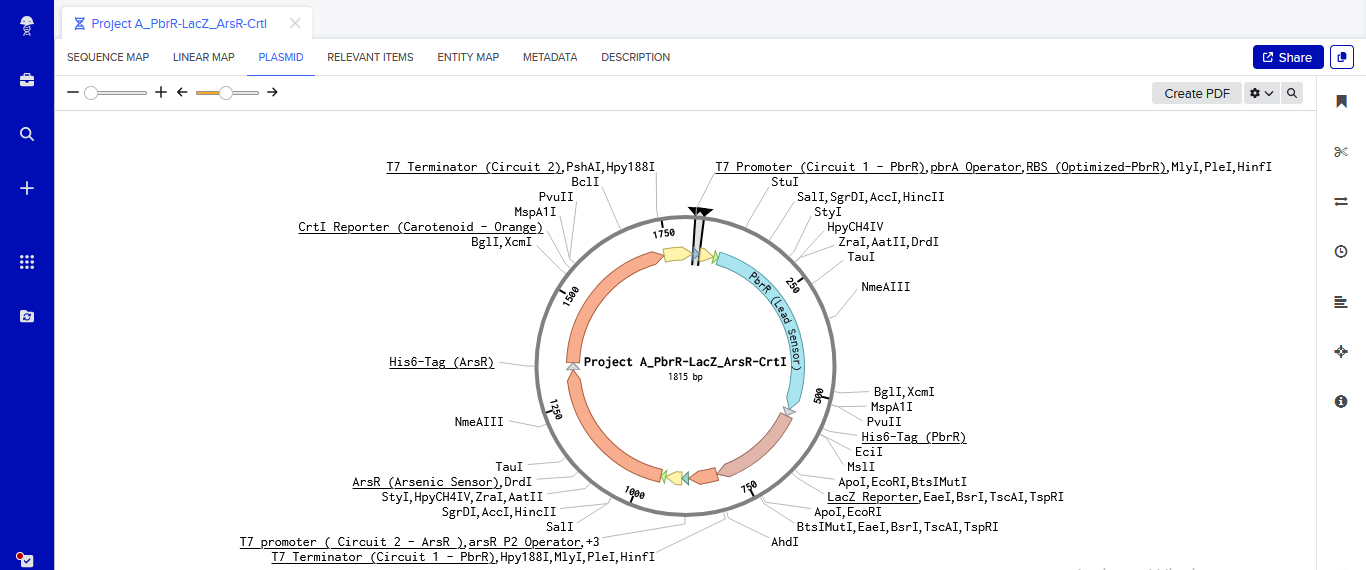
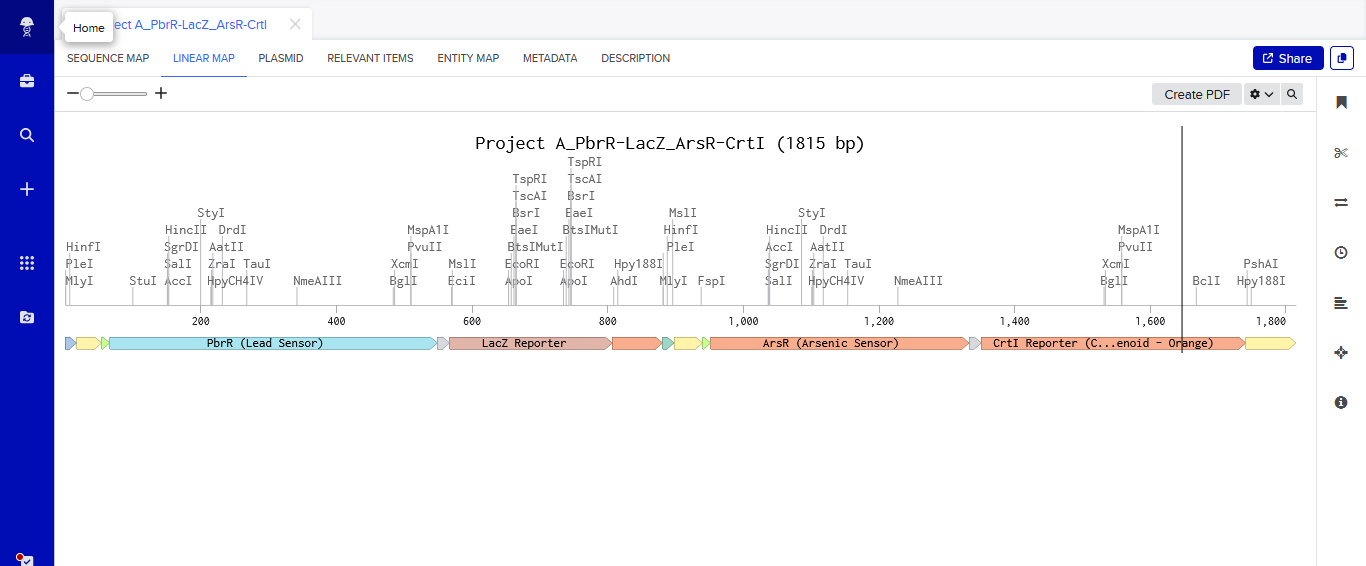
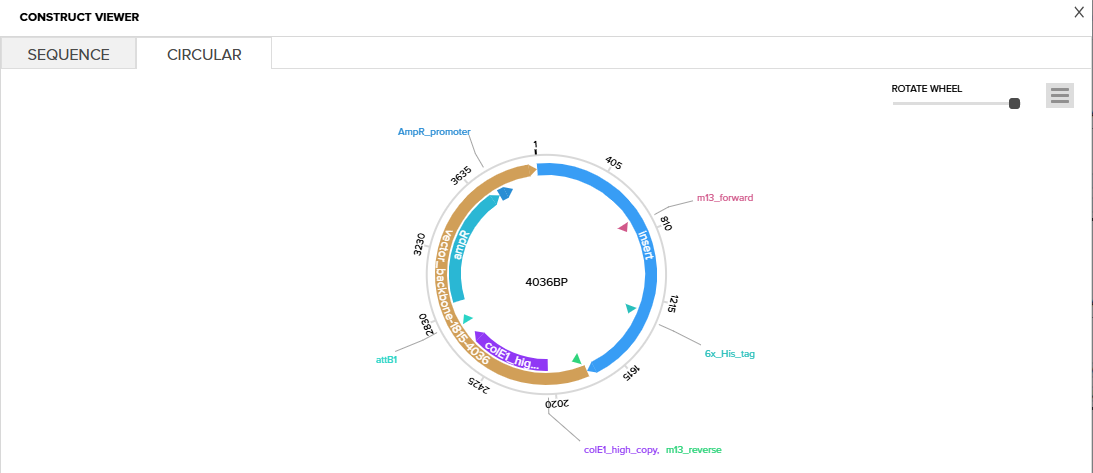
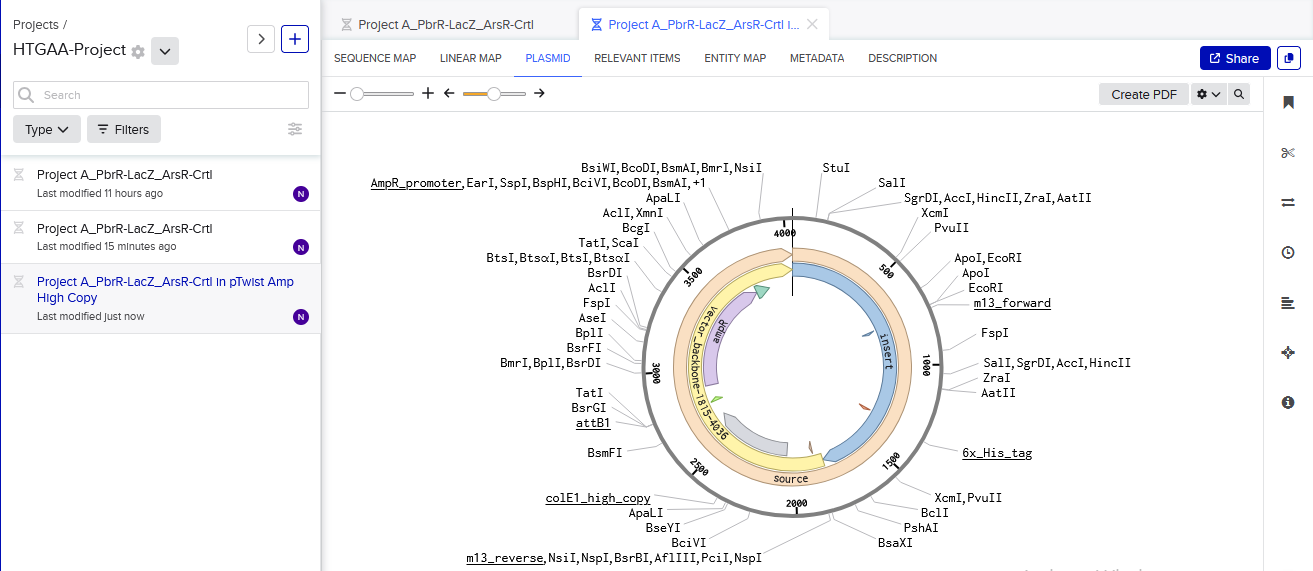
I downloaded the insert sequence as a FASTA file and inserted it into the pTwist Amp High Copy conal vector on the Twist Biosciences site. Visualized the plasmid and downloaded the plasmid sequence in GeneBank format and imported it into Benchling.