Week 11 HW: Bioproduction and Cloud Labs
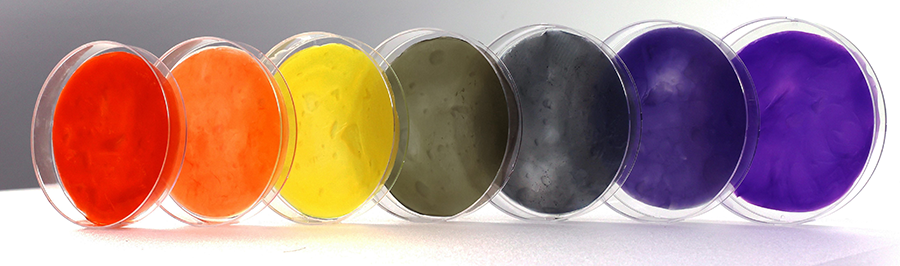
Part A: The 1,536 Pixel Artwork Canvas | Collective Artwork
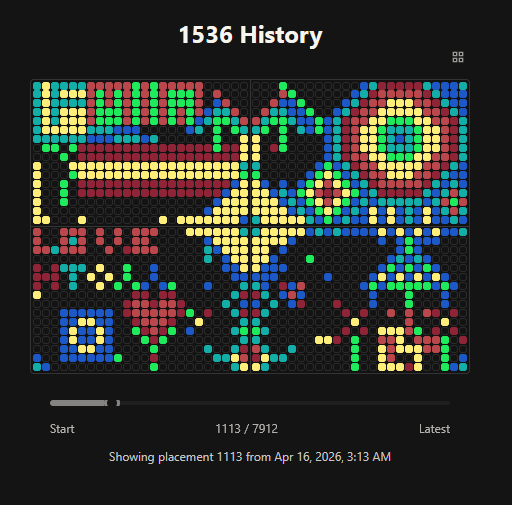
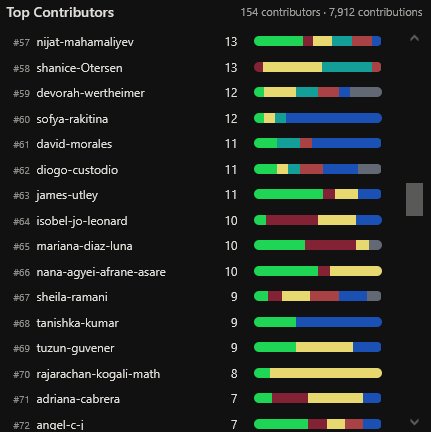
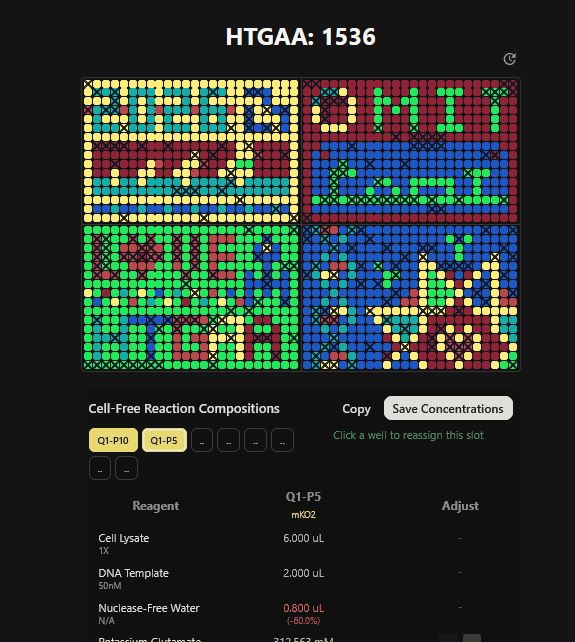
I contributed to the HTGAA global artwork canvas, which drew inspiriration from the reddit r/Place experiment. I helped in filling the yellow space pixels in the blue box at the lower left corner of the artwork, and also helped in some of the other designs. In all, I contributed 10 pixels to the global artwork canvas and was ranked 66th among the top contributors. I enjoyed working with everyone to create beautiful designs from the chaos of pixels 😹.
Part B: Cell-Free Protein Synthesis | Cell-Free Reagents
Question 1. Referencing the cell-free protein synthesis reaction composition (the middle box outlined in yellow on the image above, also listed below), provide a 1-2 sentence description of what each component’s role is in the cell-free reaction.
Answer
E.coli Lysate
- BL21 (DE3) Star Lysate (includes T7 RNA polymerase): Provides the core transcription and translation machinery, such as ribosomes, tRNAs, and enzymes, to the cell-free system. The included T7 RNA polymerase will drive high transcription efficiency from T7 promoters.
Salts / Buffer
Potassium Glutamate: stabilizes the activity of ribosomes and enzymes for efficient translation.
HEPES-KOH pH 7.5: It is a buffer that maintains the cell-free system at a physiologically optimal pH for enzymatic activity.
Magnesium Glutamate: supplies Mg2+ ions, which are essential cofactors for ribosome structure, ATP utilization, and transcription efficiency to the cell-free system.
Potassium phosphate monobasic: It supplies inorganic phosphate, which is essential for regenerating ATP from ADP during the energy-consuming processes of transcription and translation
Potassium phosphate dibasic: It forms a phosphate buffer with potassium phosphate monobasic to contribute phosphate groups, which are necessary for energy metabolism and nucleotide balance.
Energy / Nucleotide System
Ribose: Serves as a precursor for nucleotide regeneration and supports sustained transcription.
Glucose: Serves as an energy substrate and fuels the regeneration of ATP through glycolytic enzymes present in the cell-free system.
AMP: Adenosine Monophosphate serves as the fundamental building block for AP regeneration, which is used to power transcription and translation reactions.
CMP: Cytidine Monophosphate acts as the precursor for CTP, which is an essential nucleotide triphosphate for RNA synthesis during transcription in cell-free systems.
GMP: Guanosine Monophosphate acts as the precursor for GTP, which is essential for RNA synthesis and acts as the immediate energy source for protein synthesis.
UMP: Uridine Monophosphate serves as the precursor for UTP, which is essential for RNA polymerization and used in the synthesis of activated sugars like UDP-glucose.
Guanine: Functions as the purine base substrate in the salvage pathway to replenish GDP/GTP pools and provide essential energy for translation and protein synthesis.
Translation Mix (Amino Acids)
T7 Amino Acid Mix: Supplies most of the amino acids required for protein synthesis.
Tyrosine: Serves as a building block for protein synthesis and a functional marker for biochemical activity.
Cysteine: Acts as a reducing agent and enhances protein synthesis by maintaining a reduced environment, protecting thiol groups. It also acts as a precursor for glutathione synthesis.
Additives
- Nicotinamide: acts as a cofactor precursor that supports redox balance and metabolic activity in cell lysate.
Backfill
- Nuclease-free Water: is used to adjust the final volume of the reaction while preventing disruptions in transcription due to nucleic acid degradation.
Question 2. Describe the main differences between the 1-hour optimized PEP-NTP master mix and the 20-hour NMP-Ribose-Glucose master mix shown in the Google Slide above. (2-3 sentences)
Answer
The 1-hour PEP-NTP master mix supplies the cell-free reaction with immediate usable materials such as nucleotide triphosphates (NTPs) and phosphoenolpyruvate (PEP) to achieve really fast protein synthesis. However, it is not efficient due to its limited longevity of protein synthesis and high cost. On the other hand, the 20-hour NMP-Ribose-Glucose master mix supplies the cell-free reaction with raw materials such as nucleotides monophosphates (NMPs), ribose and glucose to build nuclotide triphosphates (NTPs) via metabolic regeneration. This results in a slower but more sustained and resource-efficient protein synthesis.
Question 3. Bonus question: How can transcription occur if GMP is not included but Guanine is?
Answer
Transcription can still occur when guanosine monophosphate (GMP) is not included in a cell-free system, but guanine is, due to the cell lysate containing active salvage pathway enzymes that convert the free guanine bases into functional guanosine triphosphate (GTP) that can be used for RNA synthesis.
Part C: Planning the Global Experiment | Cell-Free Master Mix Design
Question 1. Given the 6 fluorescent proteins we used for our collaborative painting, identify and explain at least one biophysical or functional property of each protein that affects expression or readout in cell-free systems. (Hint: options include maturation time, acid sensitivity, folding, oxygen dependence, etc) (1-2 sentences each)
sfGFP
mRFP1
mKO2
mTurquoise2
mScarlet_I
Electra2
The amino acid sequences are shown in the HTGAA Cell-Free Benchling folder.
Answer
sfGFP: Superfold GFP has a very fast maturation time and enhanced folding efficiency. This allows it to fold correctly even under suboptimal conditions typical for a cell-free system. This results in early signal detection.
mRFP1: A red fluorescent protein has a low maturation time of around 20 to 50 minutes, which causes the production of fluorescence to lag behind protein synthesis. This leads to an underestimation of early protein yield levels.
mKO2: A basic orange fluorescent protein exhibits a moderate acid sensitivity and slow maturation. This causes the orange fluorescence to develop slowly and be reduced by a lightly acidic cell-free reaction system. It also exhibts a stong dependance on oxygen. In a cell free system where dissolved oxygen is consumed and not replenshid mKO2 chromophore maturation could be delayed or incomplete resulting in a reduction in the observed fluorescene relative to actual protein expression.
mTurquoise2: A cyan fluorescent protein has a very low pKA of 3.1, which makes it one of the most pH-stable fluorescent proteins available. Its robustness to acidic environments means any pH drift in a cell-free system will not compromise its readout.
mScarlet-I: Is an engineered red fluorescent protein that has been optimized for fast maturation compared to other red fluorescent proteins. This improves its real-time readout and gives it a high intrinsic brightness.
Electra2: Is an engineered blue fluorescent protein that was designed for improved brightness and folding. It is oxygen-dependent for chromophore maturation, which means fluorescence will not develop in anaerobic or poorly aerated cell-free systems.
Question 2. Create a hypothesis for how adjusting one or more reagents in the cell-free mastermix could improve a specific biophysical or functional property you identified above, in order to maximize fluorescence over a 36-hour incubation. Clearly state the protein, the reagent(s), and the expected effect.
Answer
My hypothesis involves manipulating the ratio of nicotinamide to ribose to determine the net oxygen available for mK20 chromophore maturation and the level of fluoresecne produced. The goal I have in mind is to produce low, medium, and high fluorescence of mK02.
The rationale behind my hypothesis stems from mKO2 exhibiting a strong dependence on dissolved oxygen for chromophore maturation, making it sensitive to redox environments of cell-free reactions over extended incubation periods. Nicotinamide and ribose would serve as the primary levers governing the redox environment of the reaction. Ribose drives the metabolic flux of the reaction through the pentose phosphate pathway to regenerate NMP for sustained transcription and translation, but consumes dissolved oxygen as a byproduct. While nicotinamide serves as a precursor to NAD+ and governs the NAD+/NADH ratio of the cell-free system. When NAD+ is abundant, the NADH generated by metabolism is effectively re-oxidized, preserving dissolved oxygen for the maturation of the mK02 chromophore rather than allowing it to be consumed by competing metabolic reactions.
With that in mind, I believe pairing a high concentration of ribose to a low concentration of nicotinamide would create a hyperactive reducing environment that rapidly depletes dissolved oxygen, leaving mKO2 protein unable to complete the oxidation of its chromophore for maturation, producing a low fluorescence. Additionally, a balanced proportional increase in both ribose and nicotinamide would partially compensate for oxygen consumption by improving the cycling of NAD+ to support moderate chromophore maturation and produce medium fluorescence. Finally, a high concentration of nicotinamide paired with a low concentration of ribose would maximize NAD+ driven redox maintenance while limiting metabolic oxygen consumption, thereby preserving the oxidizing environment mK02 requires to produce a high fluorescence.
Question 3. The second phase of this lab will be to define the precise reagent concentrations for your cell-free experiment. You will be assigned artwork wells with specific fluorescent proteins and receive an email with instructions this week (by April 24). You can begin composing master mix compositions here.
Answer
To compose my master mix to produce low, medium, and high fluorescence of the mK2O fluorescent protein, I used the cell-free optimization interface to adjust the composition of the cell-free reaction.
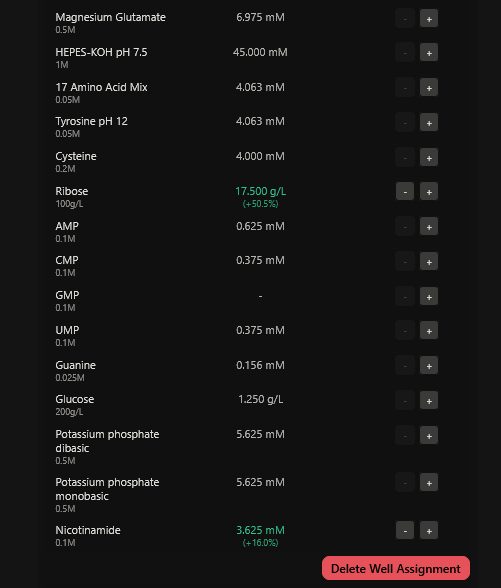
- To produce a low fluorescence of the mK20 protein, I adjusted the Delta of nicotinamide to +0.500mM and a Delta % of 16%, while I adjusted the Delta of ribose to +5.875 g/L and a Delta % of 50.5%.
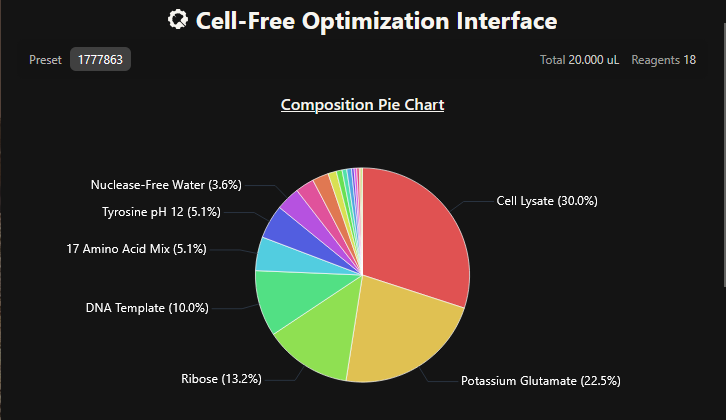
- Potassium Glutamate 312.56 mM
- HEPES-KOH pH 7.5 45.00 mM
- Magnesium Glutamate 6.97 mM
- Potassium phosphate dibasic 5.63 mM
- Potassium phosphate monobasic 5.63 mM
- 17 Amino Acid Mix 4.06 mM
- Tyrosine pH 12 4.06 mM
- Cysteine 4.00 mM
- Nicotinamide 3.63 mM
- AMP 625.00 uM
- CMP 375.00 uM
- UMP 375.00 uM
- Guanine 156.25 uM
- Ribose 17.500 g/L
- Glucose 1.250 g/L
- Nuclease-Free Water 0.725 uL
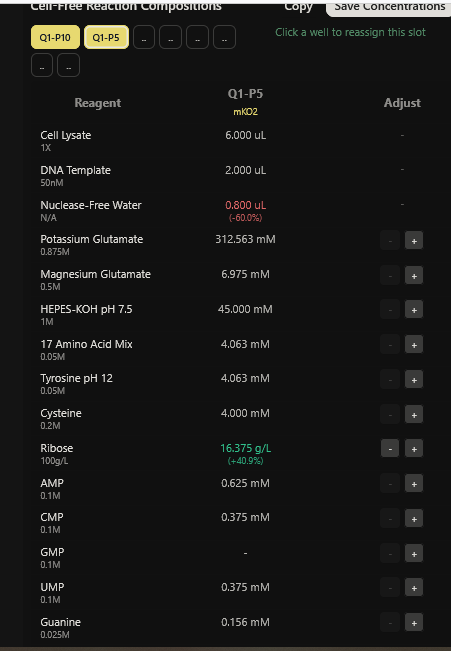
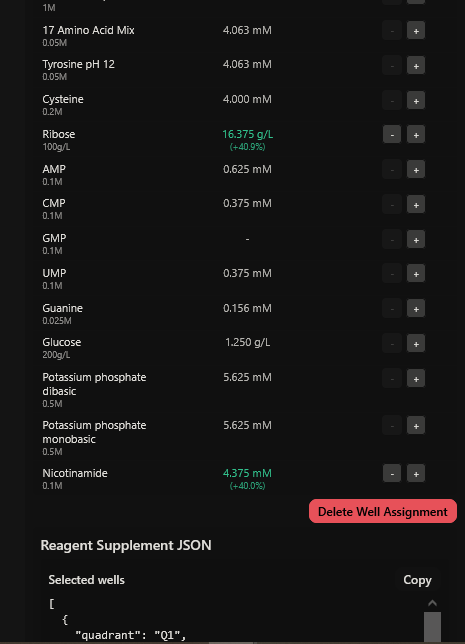
- To produce medium fluorescence of the mK20 protein, I increased the Delta of nicotinamide to +1.250 mM and a Delta % of 40.0%, while I adjusted the Delta of ribose to +4.750 g/L and a Delta % of 40.9%
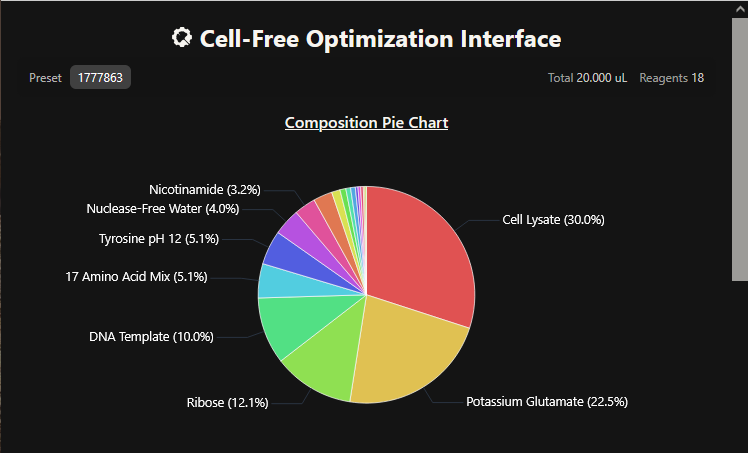
- Potassium Glutamate 312.56 mM
- HEPES-KOH pH 7.5 45.00 mM
- Magnesium Glutamate 6.97 mM
- Potassium phosphate dibasic 5.63 mM
- Potassium phosphate monobasic 5.63 mM
- Nicotinamide 4.38 mM
- 17 Amino Acid Mix 4.06 mM
- Tyrosine pH 12 4.06 mM
- Cysteine 4.00 mM
- AMP 625.00 uM
- CMP 375.00 uM
- UMP 375.00 uM
- Guanine 156.25 uM
- Ribose 16.375 g/L
- Glucose 1.250 g/L
- Nuclease-Free Water 0.800 uL
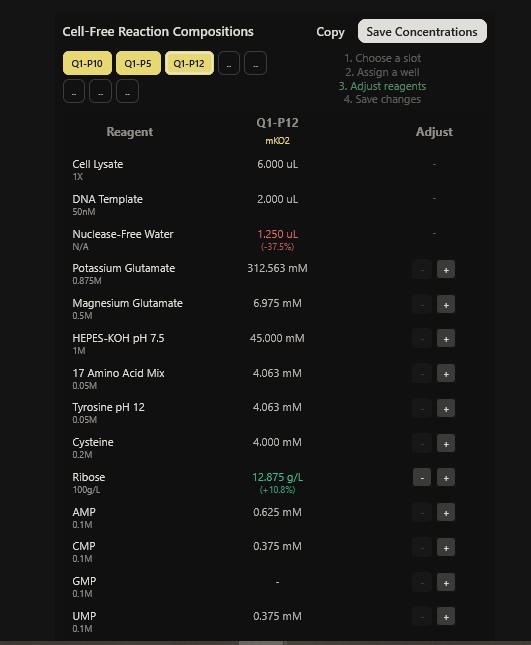
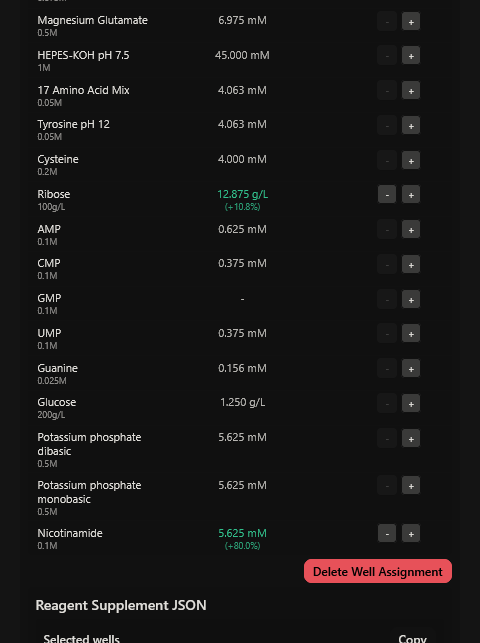
- To produce a high fluorescence of the mK20 protein, I adjusted the Delta of nicotinamide to +2.500 mM and a Delta % of 80.00%, while I adjusted the Delta of ribose to +1.250g/L and a Delta % of 10.8%.
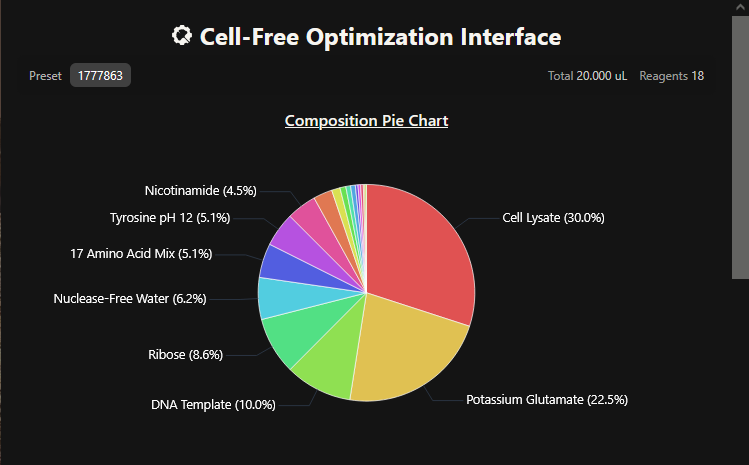
- Potassium Glutamate 312.56 mM
- HEPES-KOH pH 7.5 45.00 mM
- Magnesium Glutamate 6.97 mM
- Potassium phosphate dibasic 5.63 mM
- Potassium phosphate monobasic 5.63 mM
- Nicotinamide 5.63 mM
- 17 Amino Acid Mix 4.06 mM
- Tyrosine pH 12 4.06 mM
- Cysteine 4.00 mM
- AMP 625.00 uM
- CMP 375.00 uM
- UMP 375.00 uM
- Guanine 156.25 uM
- Ribose 12.875 g/L
- Glucose 1.250 g/L
- Nuclease-Free Water 1.250 uL
Part 2
Following my hypothesis above, I only selected wells that housed the mKO2 fluorescent protein.
I first selected well Q1-P10, I then adjusted the level of nicotinamide to 3.625nM and ribose to 15.500g/L to produce a low fluorescence of the mK20 protein.
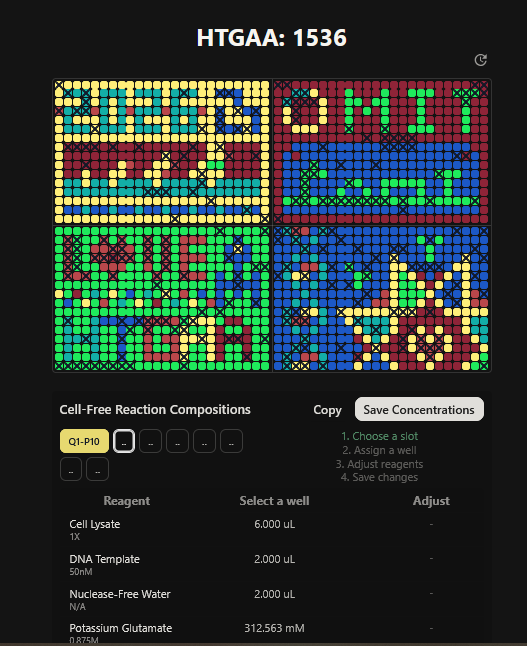
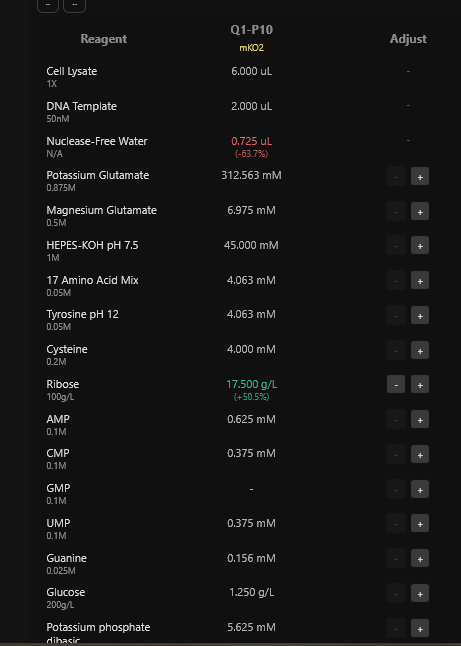
I then selected well Q1-P5 and adjusted the level of nicotinamide to 4.375 mM and ribose to 16.375g/L to produce medium fluorescence of the mK20 protein.
I selected well Q1-P12 and adjusted the level of nicotinamide to 5.625 mM and ribose to 12.875 g/L to produce High fluorescence of the mK20 protein.
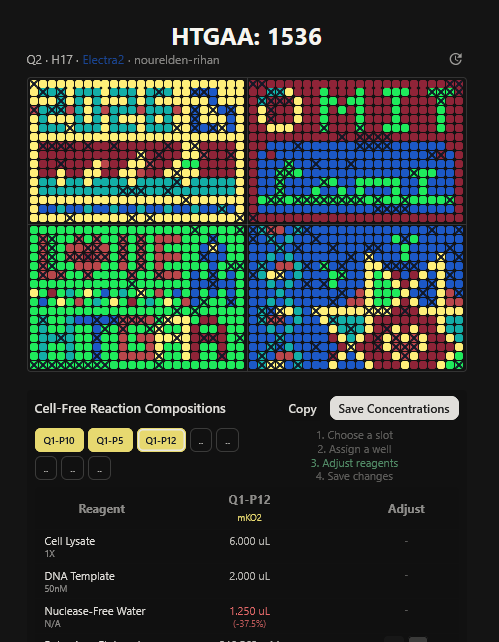
I used wells Q1-P7, Q1-P16, and Q1-P18 as controls, with all the reagent volumes and concentrations left unchanged for those wells. They would enable me to determine whether the observed differences in fluorescence are truly due to the manipulation of ribose and nicotinamide by serving as reference points of what mKO2 fluorescence looks like under standard conditions.
.PNG)
.PNG)
.PNG)
Additionally, I selected Well Q1-P17 adjusted nicotinamide to 4.875 mM and ribose to 12.375 g/L to produce a medium-to-high fluorescence of the mK20 protein.
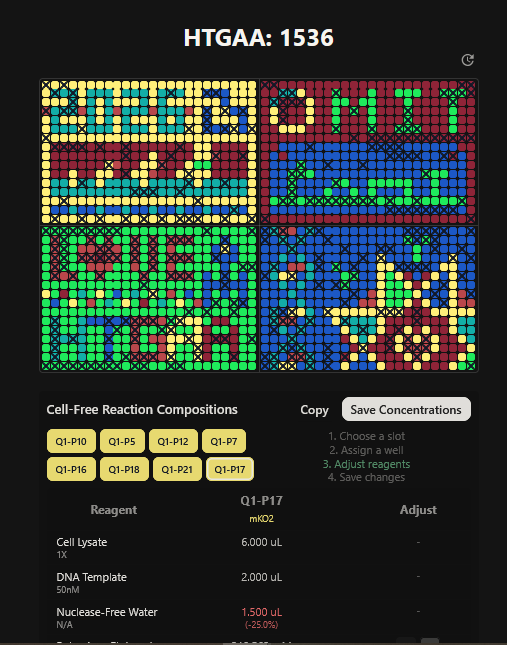
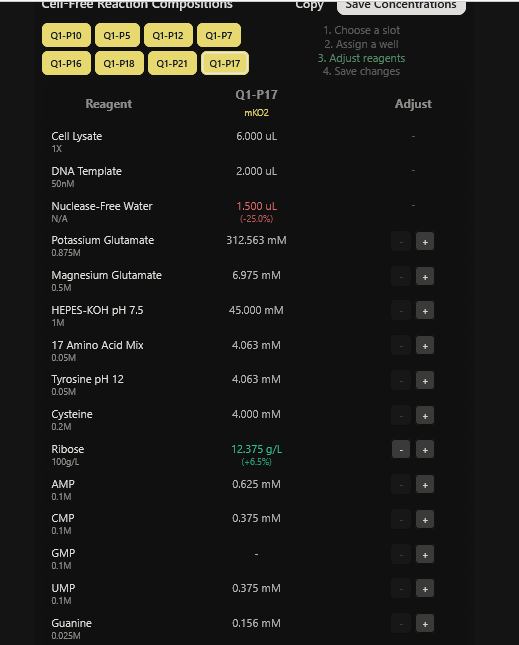
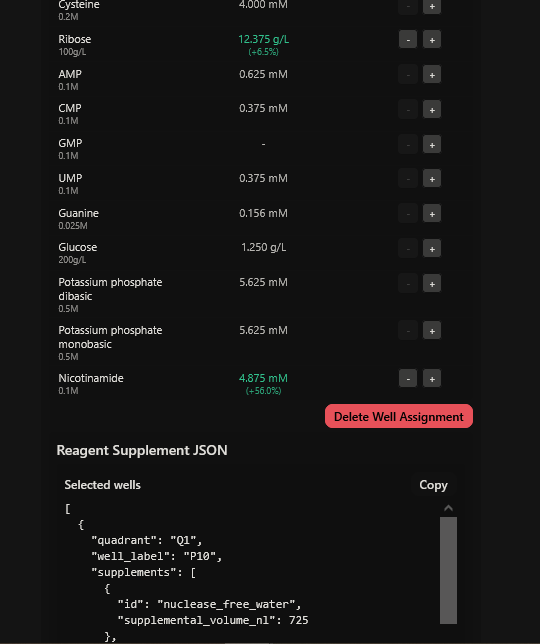
I selected Q1-P21 and adjusted the amount of nicotinamide to 5.375 mM and cysteine to 5.000 mM. I did this to test the effect of cysteine on the mK02 fluorescent protein. Cysteine is also a potential competing reductant that consumes dissolved oxygen and might suppress mKO2 chromophore oxidation while also being one of the building blocks for protein synthesis.
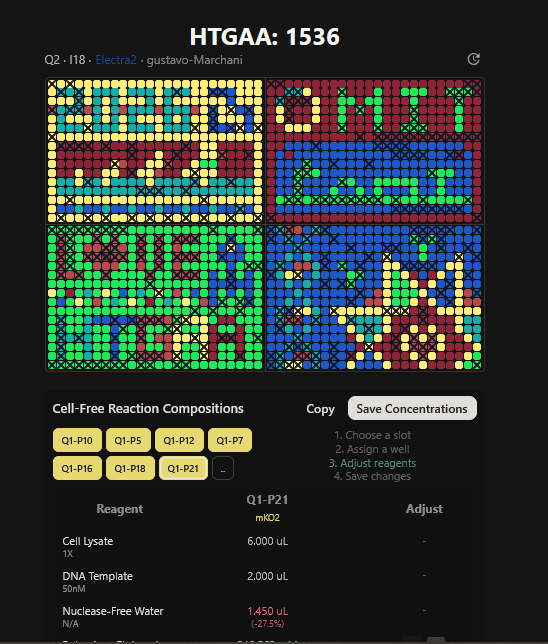
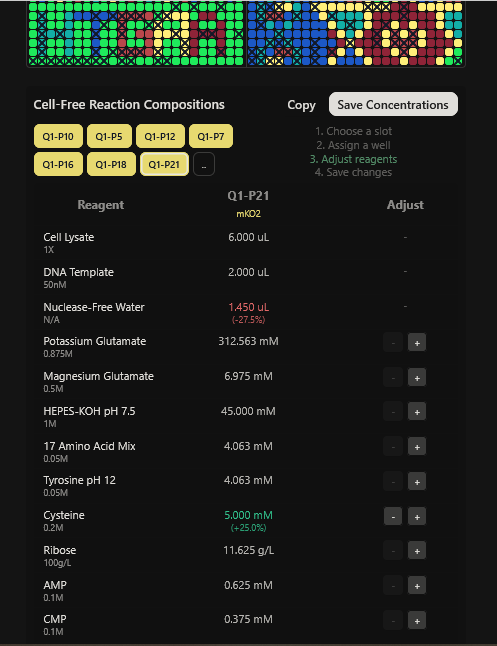
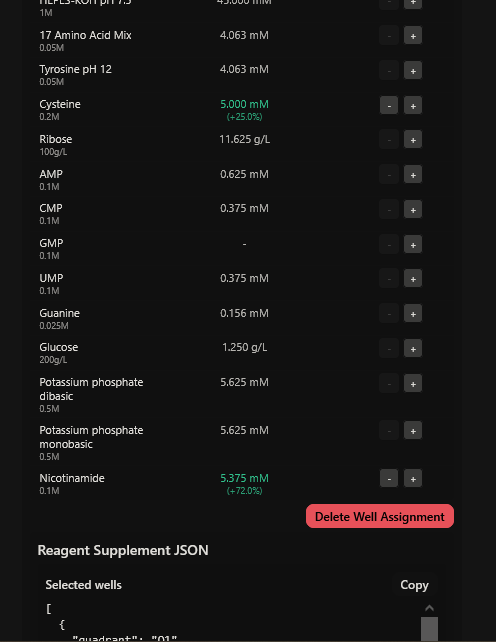
Question 4. The final phase of this lab will be analyzing the fluorescence data we collect to determine whether we can draw any conclusions about favorable reagent compositions for our fluorescent proteins. This will be due a week after the data is returned (date TBD!). The reaction composition for each well will be as follows:
Answer
Part D: Build-A-Cloud-Lab | (optional) Bonus Assignment
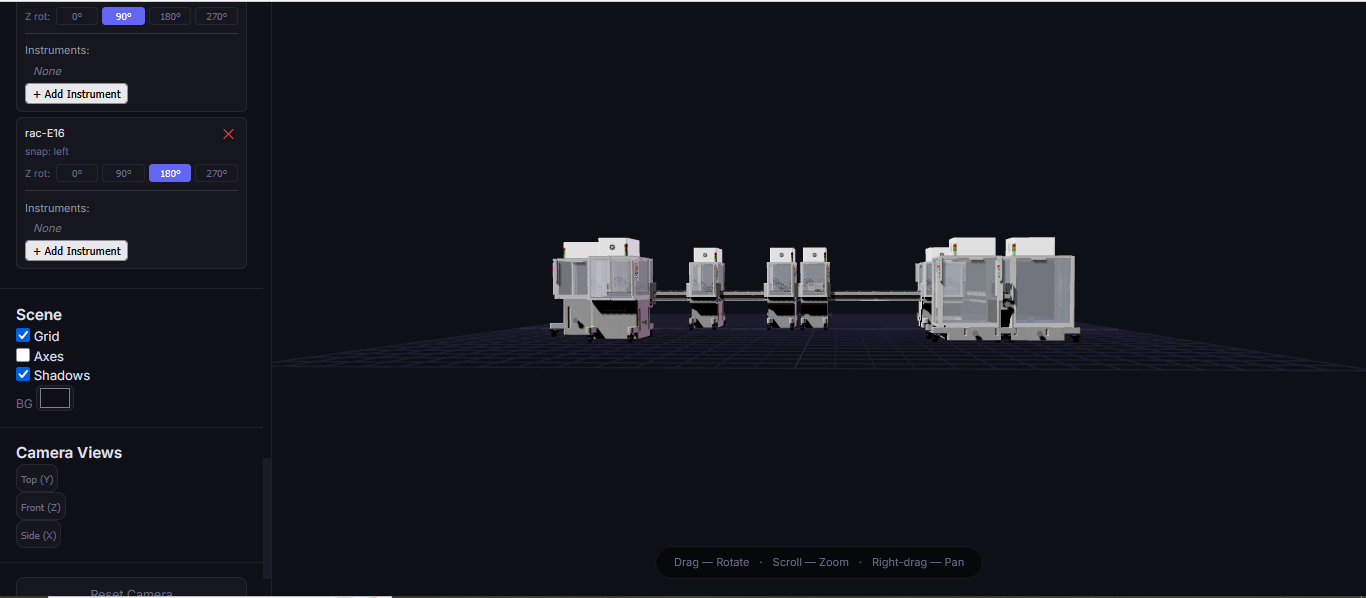
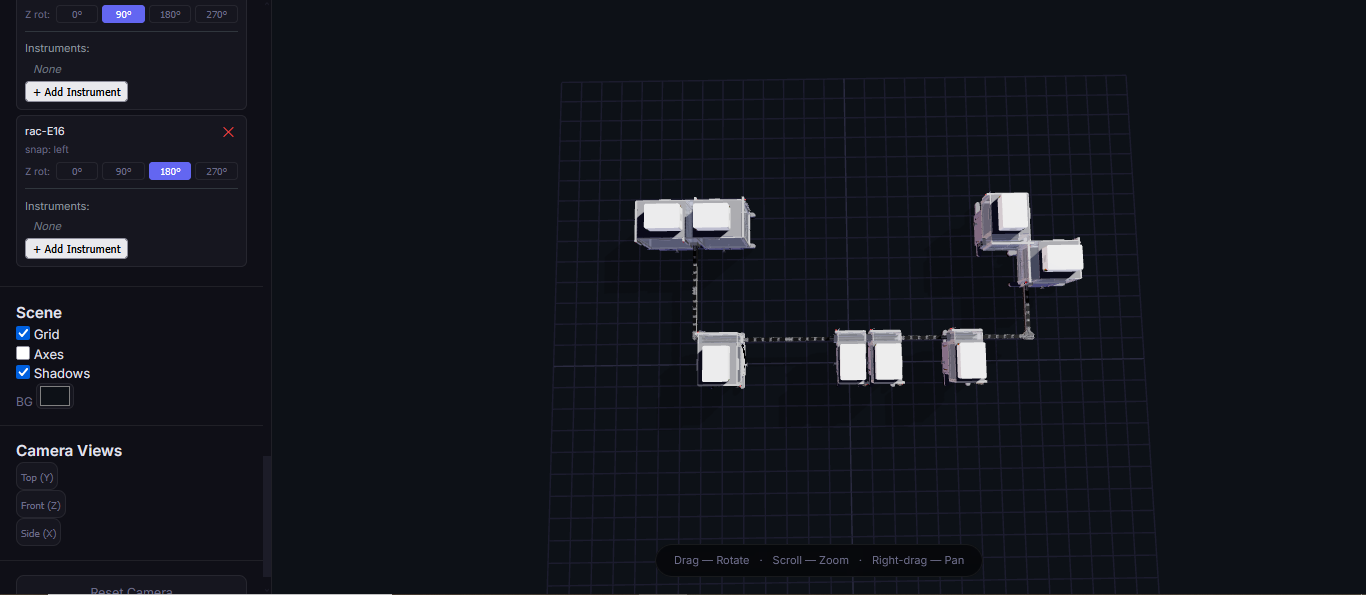
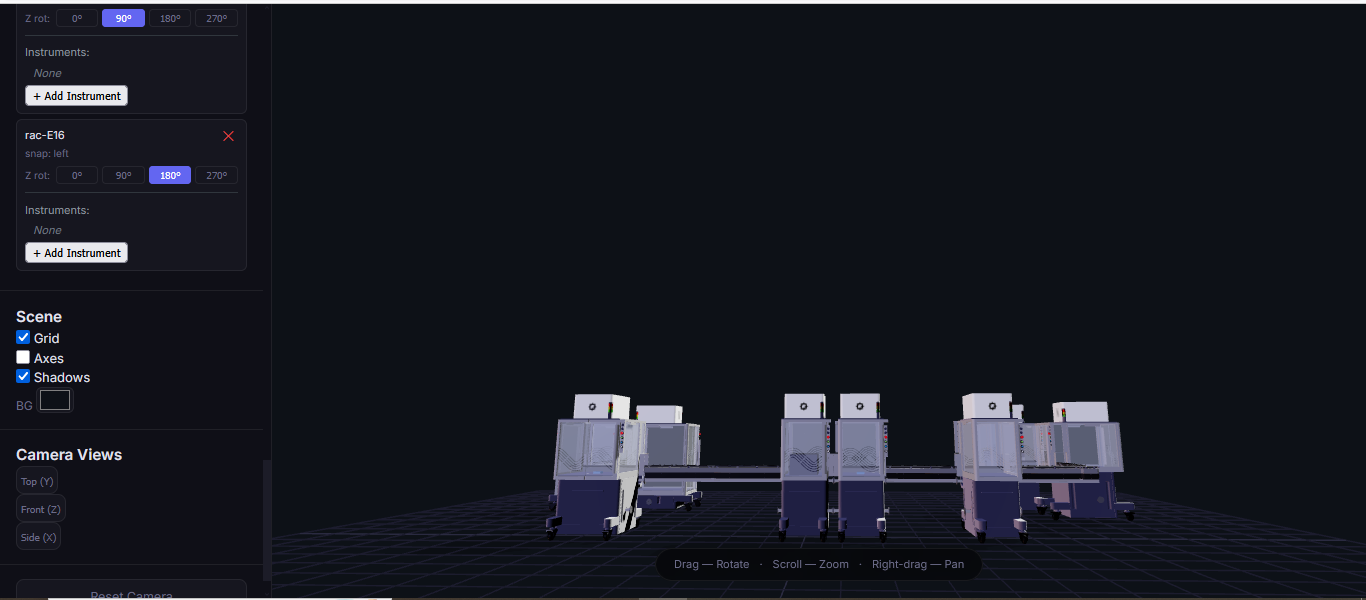
Question 1. Use this simulation tool to create an interesting-looking cloud lab out of the Ginkgo Reconfigurable Automation Carts. This is just a minimal implementation so far, but I would love to see some fun designs!
Answer
I used the simulation tool to create a simple design of a cloud lab.
References
Kaida, A., & Miura, M. (2012). Differential dependence on oxygen tension during the maturation process between monomeric Kusabira Orange 2 and monomeric Azami Green expressed in HeLa cells. Biochemical and biophysical research communications, 421(4), 855–859. https://doi.org/10.1016/j.bbrc.2012.04.102