Hello, I’m Nipada Srisereenuwat. My nickname is Khing. I’m interested in regenerative agroforestry and design. My background includes design thinking, human-centered design, service design, and corporate sustainability.
I would like to use the knowledge from this course to help mitigate climate change and increase bioliteracy for Thai people.
First, describe a biological engineering application or tool you want to develop and why. This could be inspired by an idea for your HTGAA class project and/or something for which you are already doing in your research, or something you are just curious about. ❓Can we develop a biological engineering tool such as microbes that can reduce the time of a no-turn composting process?
Subsections of Homework
Week 1 HW: Principles and Practices
First, describe a biological engineering application or tool you want to develop and why. This could be inspired by an idea for your HTGAA class project and/or something for which you are already doing in your research, or something you are just curious about.
❓Can we develop a biological engineering tool such as microbes that can reduce the time of a no-turn composting process?
🌱 Idea: No-turn composting that can produce good quality compost in less than 1 month for private own urban forest 🌱
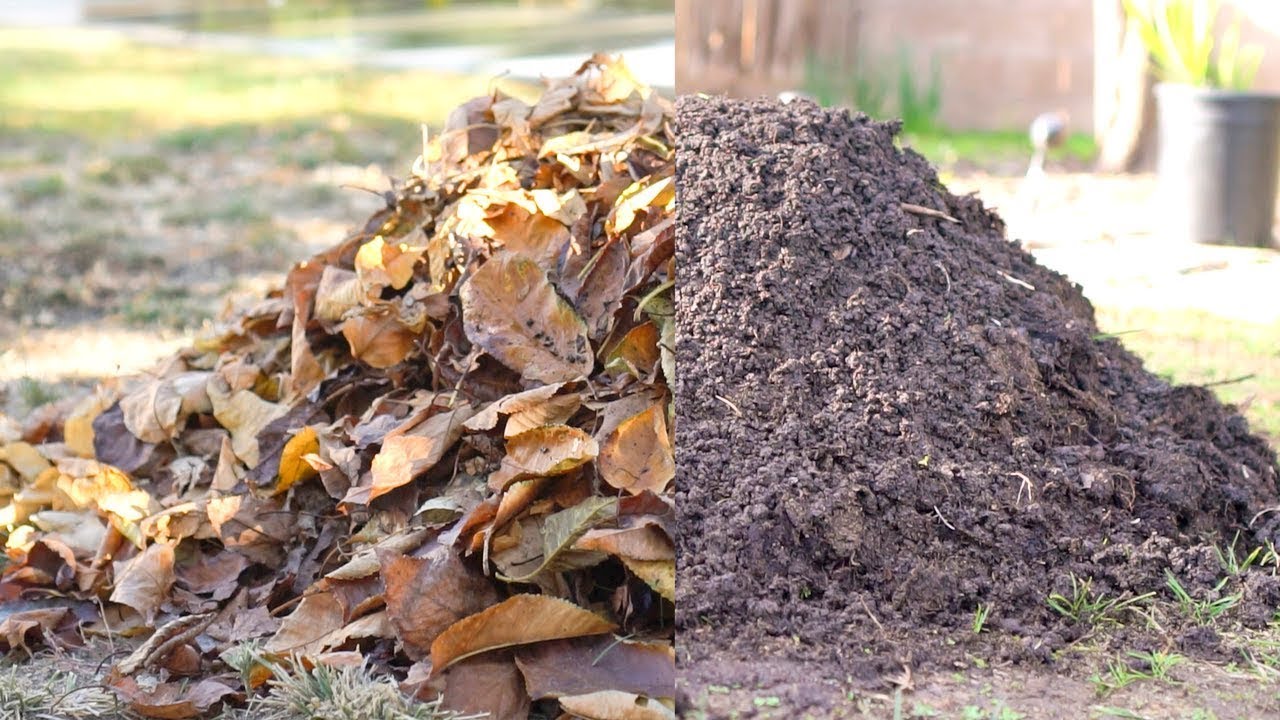
From my observation, many people who own a plot of land that is agroforestry or an urban forest has a lot of leaves fallen on the ground and they don’t know how to manage them. At the same time, a lot of land owner and farmers are looking to buy compost to use during the seedling process. Land owners who want to make compost by themselves try many methods of composting. Some methods use a lot of effort, involve higher cost, but take shorter time to get a good quality compost. However, some methods that use lower efforts and lower cost, but take longer time to get a good quality compost. For larger scale of land, it takes a lot of effort and time to gather the leaves. In order to practice making compost by themselves sustainably, the method that takes low effort and produce a good quality compost in a short period of time would incentivize more land owner to compost by themselves.
My idea is to develop a biological engineering tool involving a specifically engineered microbes that can significantly accelerate the no-turn composting process. Currently, eve though the no-turn composting takes low-effort it can take more than 6 months or more to get usable compost. This longer timeframe discourages wider adoption. My goal is to reduce this period of time of composting to approximately 1 month or less while maintaining the quality of the final compost product. This accelerated composting would benefit home gardeners, community composting programs, and even larger-scale agricultural operations by providing a faster, more efficient way to manage organic waste and create valuable soil to improve the growth of plants. Moreover, this idea might be able to reduce the PM2.5 air pollution level in Thailand. One of the causes of the PM2.5 air pollution level in Thailand is the wild fire caused by the friction of dried leaves from a poorly managed forests. If we could turn fallen leaves into valuable compost and sell them, we might be able to reduce the dried leaves that cause wild fire. This will then reduce the rate of wild fire and eventually reduce the air pollution level.
Next, describe one or more governance/policy goals related to ensuring that this application or tool contributes to an “ethical” future, like ensuring non-malfeasance (preventing harm). Break big goals down into two or more specific sub-goals.
Governance/policy Goals
Big Goal: Minimize potential ecological and societal harm from the widespread use of the engineered microbes.
This focuses on ensuring the engineered microbes do not disrupt the natural ecosystem of the forest (or the location that the compost is being made). If the engineered microbes escape the composting site and start braking down things they should not, they might create an imbalance to the ecosystem. This goal includes preventing the microbes from outcompeting native microorganisms, harming beneficial insects or other wildlife, or disrupting nutrient cycles.
Sub-goal 2: Ensure safe handling and usage for human populations.
This goal focuses on preventing potential health risks to humans who may come into contact with the engineered microbes during composting or when using the final compost product. This includes considering potential allergenicity, toxicity, or the development of antibiotic resistance.
Sub-goal 3: Promote transparency and engagement with stakeholder.
This goal focuses on the process during the development and implementation of the engineered microbes idea. This would include seeking input from stakeholders and incorporating their insights and concerns into the decision-making process and the final product. In addition to the stakeholder engagement, the idea developer should be open and transparent about its potential risks and benefits.
Next, describe at least three different potential governance “actions” by considering the four aspects below (Purpose, Design, Assumptions, Risks of Failure & “Success”). Try to outline a mix of actions (e.g. a new requirement/rule, incentive, or technical strategy) pursued by different “actors” (e.g. academic researchers, companies, federal regulators, law enforcement, etc). Draw upon your existing knowledge and a little additional digging, and feel free to use analogies to other domains (e.g. 3D printing, drones, financial systems, etc.).
Purpose: What is done now and what changes are you proposing?
Design: What is needed to make it “work”? (including the actor(s) involved - who must opt-in, fund, approve, or implement, etc)
Assumptions: What could you have wrong (incorrect assumptions, uncertainties)?
Risks of Failure & “Success”: How might this fail, including any unintended consequences of the “success” of your proposed actions?
Action 1: Mandatory Environmental Impact Assessment (EIA) for Microbe Deployment
Purpose: To evaluate the potential ecological risks before the engineered microbes are released into the environment. Currently, there might be voluntary guidelines but no mandatory assessment for such microbial applications, particularly in Thailand.
Design: Require any individual or organization intending to use the engineered microbes to conduct an EIA following standardized protocols established by a joint Thai Ministry of Natural Resources and Environment and international body like the UNEP. The assessment would include studies on microbe persistence, interaction with native species, and potential effects on soil health. Data would need to be submitted for review and approval by a designated regulatory body.
Actor: Thai Ministry of Natural Resources and Environment, UNEP (United Nations Environment Programme), consultancy company, farmers, land owners, Mae Fah Luang Foundation, Forest Restoration and Research Unit (FORRU).
Assumptions: Assumes that standardized testing protocols are sufficient to predict real-world ecological impacts. Assumes compliance from users.
Risks: EIA could be costly and time-consuming, potentially hindering innovation. Protocols may not capture all potential environmental interactions.
Action 2: Development of “Kill Switches” in Engineered Microbes
Purpose: To limit the potential for uncontrolled spread of the engineered microbes.
Design: Fund research to incorporate genetic “kill switches” into the microbes that are triggered by specific environmental cues (e.g., absence of certain nutrients, temperature changes). The “kill switch” would cause the microbes to self-destruct after a certain period or outside of the composting environment.
Actor: Thai National Science and Technology Development Agency (NSTDA), international research institutions, researcher, university laboratory, community laboratory, designers.
Assumptions: Assumes that effective and reliable “kill switches” can be developed. Assumes that the environmental cues triggering the switches won’t prematurely activate them during the composting process.
Risks: Research and development of “kill switches” can be expensive and time-consuming. “Success” could lead to the evolution of microbes that bypass the kill switch.
Action 3: Public Registry of Engineered Microbe Strains and Usage
Purpose: To increase transparency and traceability of the use of engineered microbes.
Design: Establish an online, publicly accessible database where researchers, companies, and individuals using the engineered microbes must register the specific strain, its intended use, and the location of deployment. This registry would also facilitate information sharing about potential risks or adverse effects.
Actor: civic technology company such as WeVis, Ministry of Public Health, WHO, university, community laboratory, farmers, land owners, Mae Fah Luang Foundation, Forest Restoration and Research Unit (FORRU), company.
Assumptions: Assumes that users will comply with the registration requirement. Assumes data privacy can be protected.
Risks: Registry could be burdensome to maintain. Users such as farmers might input false information and create false data. Misuse of information. Stigmatization of the certain strains, even if they are safe.
Next, score (from 1-3 with, 1 as the best, or n/a) each of your governance actions against your rubric of policy goals.
Does the option:
Option 1: Mandatory EIA for Microbe Deployment
Option 2:Kill Switches
Option 3:Public Registry
Ensure the engineered microbes do not disrupt the natural ecosystem
• By preventing the microbes from outcompeting native microorganisms, harming beneficial insects or other wildlife, or disrupting nutrient cycles.
2
1
2
Ensure safe handling and usage for human populations
• By preventing potential health risks to humans who may come into contact with the engineered microbes during composting or when using the final compost product.
1
1
3
Promote transparency and engagement with stakeholder
• Promote transparency
2
3
1
• Stakeholder engagement
1
3
3
Last, drawing upon this scoring, describe which governance option, or combination of options, you would prioritize, and why. Outline any trade-offs you considered as well as assumptions and uncertainties. For this, you can choose one or more relevant audiences for your recommendation, which could range from the very local (e.g. to MIT leadership or Cambridge Mayoral Office) to the national (e.g. to President Biden or the head of a Federal Agency) to the international (e.g. to the United Nations Office of the Secretary-General, or the leadership of a multinational firm or industry consortia). These could also be one of the “actor” groups in your matrix.
I would prioritize the of Action 1: Mandatory Environmental Impact Assessment for Microbe Deployment and conduct initial stakeholder engagement as the first action during the development phase. Then I would combine Action 2: Kill Switches and Action 3: Public Registry in parallel. Although Action 3 (Public Registry) provides open data and transparency, it does not directly prevent harms. Therefore, the Environmental Impact Assessment for Microbe Deployment and the development of Kill Switches could directly tackle the potential ecological and societal harm.
Trade-offs: The trade-off is between potentially slowing down innovation and ensuring safety. While Mandatory Environmental Impact Assessment for Microbe Deployment take a lot of time to conduct and analyze results which might slow down the use of technology. To ensure an ethical future I believe the long-term benefits of preventing harm can trade off with the costs of slightly slower development.
Assumptions and Uncertainties: I assume that both EIAs and Kill Switch technologies will continue to improve in accuracy and reliability. Although EIA seems to be the best option for accurate evaluation of the risks, there can be a false data from the survey process when the farmers or land owners do not trust the company that conduct the EIA. In this case, a collaboration with local environmental influencer and local civic technology company such as WeVis might be another way to collect more authentic data and insights from users. Another uncertainty is the level of compliance with mandatory EIAs because enforcement can be challenging in Thailand. Therefore, when the product is out in society and users don’t conduct mandatory EIAs it might be harder to prevent harms. However, international collaboration such as UNEP or WHO with local organization such as Mae Fah Luang Foundation, Forest Restoration and Research Unit (FORRU) could help create trust and strengthen the effectiveness of local regulatory.
Reflecting on what you learned and did in class this week, outline any ethical concerns that arose, especially any that were new to you. Then propose any governance actions you think might be appropriate to address those issues. This should be included on your class page for this week.
I have learned that while we get inspire from the fancy ideas we should also think about the ethical aspect of the technologies and harms that can arise from them.
One part of the lecture that I found interesting was when David talked about the next 50 years of biotechnology is “TRUST”.
This also made me think if a person or group of people could build trust with many people. When those people already had the trust they could do something unethical and the people who gave trust to them won’t question their action that could create negative impact or lead us to an unethical future.
My ideas on the governance actions for this concern on trust are
First create a bio-literate society. This could starts with adding a class on ethics and governance as early as possible for students.
We could create a check and balance system through an international collaboration of experts that oversee, review and assess the risk of the misuse of scientific research. This could be an open event that everyone can access publicly online.
International organization such as iGEM or HTGAA community could also raise awareness and share knowledges on the unethical cases and governance to the public in easy language so more people can be able to think critically before they trust in something or someone.
Assignment (Final Project) – Due as part of your Final Project presentation (not Feb 10)
As part of your final project, design one or more strategies to ensure that your project, and what it enables, contributes to growing an ethical biological future.
I’m still thinking about this.
Assignment (Week 2 Lecture Prep)
Homework Questions from Professor Jacobson
Nature’s machinery for copying DNA is called polymerase. What is the error rate of polymerase? How does this compare to the length of the human genome. How does biology deal with that discrepancy?
The the error rate of polymerase is 1:106
The human genome is approximately 3.2 billion base pairs (bp).
An error rate of 10−6 applied to a genome of 3.2 x 10⁹ bases would result in roughly 3,200 errors every time a cell divides.
Over many divisions, this accumulation of errors would be catastrophic for the organism.
How does biology deal with that discrepancy?
To bridge the gap between the polymerase’s raw error rate and the high fidelity required for life, biology employs additional layers of error correction:
Proofreading: The polymerase itself has a built-in “proofreading” capability (exonuclease activity) that checks and corrects errors immediately during synthesis.
Mismatch Repair: Cells utilize a dedicated repair system to fix errors that escape the polymerase’s proofreading. This system involves proteins such as MutS, MutL, and MutH (part of the mismatch repair pathway). These proteins detect mismatches in the newly synthesized DNA strand (which can be distinguished from the older strand by methyl markers), excise the incorrect segment, and allow the machinery to resynthesize the DNA correctly
By combining the polymerase’s proofreading with these post-replication repair systems, biology reduces the effective error rate significantly, ensuring the stability of the genome.
Throughput Error Rate Product Differential is approximately 108
How many different ways are there to code (DNA nucleotide code) for an average human protein? In practice what are some of the reasons that all of these different codes don’t work to code for the protein of interest?
The average human protein requires 1,036 base pairs (nucleotides) of DNA to encode
Because there are approximately 345 amino acids in an average human protein (1036÷3), and the average redundancy is roughly 3 synonymous codons per amino acid, the number of possible unique DNA sequences that code for the exact same protein sequence is roughly 3345. This results in a number far exceeding the number of atoms in the universe.
In practice what are some of the reasons that all of these different codes don’t work to code for the protein of interest?
Biology selects specific sequences because “synonymous” DNA codes behave very differently physically and chemically within the cell.
RNA Secondary Structure (Folding): Single-stranded RNA does not stay linear; it folds back on itself. Different nucleotide sequences—even those coding for the same protein—will fold into completely different shapes.
Inhibition: If the mRNA folds into a tight “hairpin” or stable secondary structure, the cellular machinery (ribosome) may be physically unable to access the code to translate it
Energy States: Sources show that sequences have specific “Minimum Free Energy” structures. A sequence that folds into a structure with very low free energy (very stable) can effectively lock the code away
Homework Questions from Dr. LeProust
What’s the most commonly used method for oligo synthesis currently?
Phosphoramidite method
Why is it difficult to make oligos longer than 200nt via direct synthesis?
The primary difficulty arises from the repetitive nature of the phosphoramidite synthesis cycle. This chemical process involves four specific steps for adding each nucleotide: coupling, capping, oxidation, and deblocking
Accumulation of Errors: Even with highly efficient chemistry, the yield is not 100% for each step. As the chain grows, microscopic failures in coupling accumulate. For longer sequences, such as 500-mers, these failures result in truncation products—incomplete strands that did not reach full length
Why can’t you make a 2000bp gene via direct oligo synthesis?
Current chemical synthesis methods are not viable for a 2000 bp strand because the cumulative error rate would result in effectively zero full-length product. Instead, genes are manufactured using Gene Assembly.
Synthesis vs. Assembly: To create a gene, the process does not synthesize the entire 2000 bp sequence base-by-base from start to finish. Instead, the workflow utilizes “Ultra-long oligo synthesis” to create smaller, manageable pieces (e.g., up to 300 or 500 bases), which are then stitched together using “Enzymatic assembly”
Homework Question from George Church
Choose ONE of the following three questions to answer; and please cite AI prompts or paper citations used, if any.
(Using Google & Prof. Church’s slide #4 ) What are the 10 essential amino acids in all animals and how does this affect your view of the “Lysine Contingency”?
Phenylalanine
Valine
Threonine
Tryptophan
Isoleucine
Methionine
Histidine
Arginine
Leucine
Lysine
How does this affect my view of the “Lysine Contingency?
I didn’t know that human can’t make Lysine either. After understanding that Lysine can easily be found in nature. I wonder why the scientist who came up with the idea and had already made all the dinosaur Lysine-dependent couldn’t think about the fact that Lysine is also in meats, beans, fish, eggs, or seeds. And if the dinosaur escape the island they can also easily find and eat those and get Lysine and not die.
Although the scientist might came up with good intention to prevent harm from when the dinosaur escape the island.
This solution shows that although the scientist has created a biological engineering application or tool like Lysine Contingency to prevent harm from when the dinosaur escape the island. Their solution still cause harm to others in the end.
This is what I have learned from Lysine Contingency:
Testing early: We should test our hypothesis in small scale first before making our idea into large scale.
Stakeholders: Before we make our idea into reality, during the research, ideation, and testing phase we should involve stakeholders into each phase. We should talk to the stakeholders, learn from them, listen to them, and include their concerns in every steps of the process. We should ensure that stakeholders have power in every decision making process.
Continuous Improvement: We should approach our idea as a iterative process. Even after we have created the engineered dinosaurs, we should still come back and test our hypothesis again. When we have more data and insights from the real world experience. We should constantly think of ways to prevent potential harms. And all these iterative should include and prioritize feedback from stakeholders which can help the project owner see what to improve now or in the next iteration.
Community: We should create a global community and invite people to work together to help ensuring the that we are moving towards an ethical future. The community can help review, give feedback, help define principles or create framework. And all this process should be done with transparency and respecting others in mind.
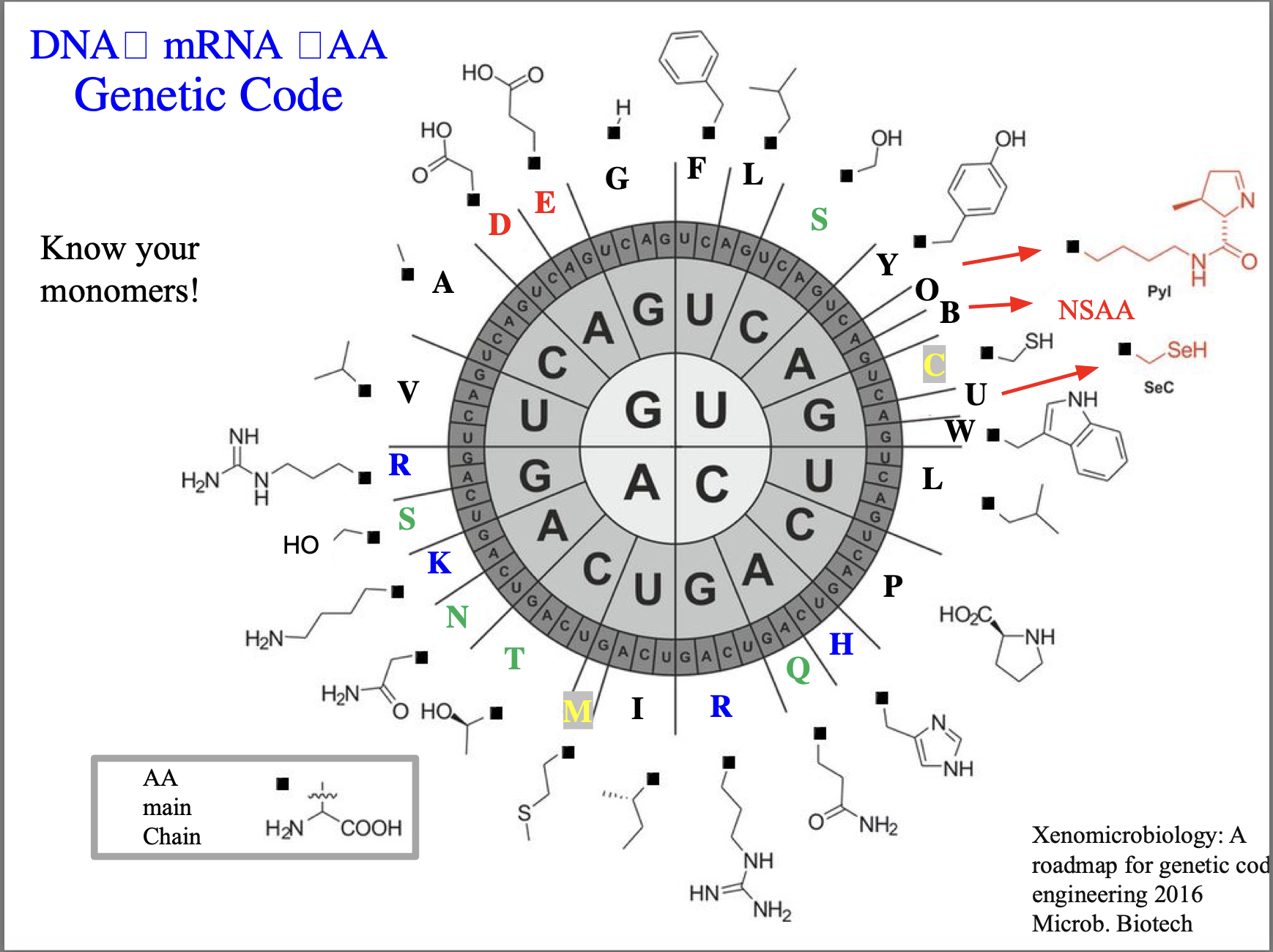
In Slide 4 is a picture of the Codon Wheel, a visual map that shows how the cell translates 3-letter genetic codes (mRNA) into specific building blocks called Amino Acids (AA).
How to Read the Codon Wheel
To find an amino acid, you start from the center of the circle and move outward:
The Center (1st Letter): You pick the first letter of the mRNA code (G, A, C, or U).
The Middle Ring (2nd Letter): You follow the slice to the second letter.
The Outer Ring (3rd Letter): You find the third letter.
The Edge (The Result): The letters on the very outside (like A, V, R, S, K) are the “names” of the amino acids.
The chemical structures drawn around the wheel are the actual molecules being built. The image also highlights NSAA (Non-Standard Amino Acids), which are “extra” building blocks like Pyrrolysine (Pyl) and Selenocysteine (SeC) that some specialized organisms use.
Relation to the 10 Essential Amino Acids
The 10 essential amino acids are all hidden on this wheel. For example:
Lysine is represented by the letter K (bottom left). You can see the code for it is AAA or AAG.
Threonine is the letter T (bottom).
Valine is the letter V (left).
This wheel proves that the “instructions” for essential amino acids are baked into the core code of life. Because every animal uses this same wheel, every animal needs these specific building blocks to survive. If a code on the wheel calls for K (Lysine) and the animal hasn’t eaten any, the “factory” stops, and the protein cannot be finished.
Relation to the Lysine Contingency
The Codon Wheel helps explain why the Lysine Contingency was such a high-stakes (but flawed) idea:
The “Broken” Wheel: The scientists in Jurassic Park essentially tried to delete the “K” (Lysine) section of the wheel or break the enzyme that helps the dinosaur’s body synthesize it.
The Dependency: Because the code (AAA or AAG) still exists in the dinosaur’s DNA, the body will still try to build proteins that require Lysine.
The Reality of the Image: Look at how many amino acids are on that wheel. Lysine (K) is just one of many. If you look at the chemical structures, you’ll see they are all distinct.
In the movie, they thought that by making the dinosaur “Lysine-dependent,” they had total control.
In reality, because this wheel is universal, the dinosaur just had to find another source of Lysine (like eating a person or a “Lysine-rich” plant) to satisfy the wheel’s requirements.
What is Lysine Contingency?
The Lysine Contingency is a famous (but scientifically flawed) safety measure from the book and movie Jurassic Park. Think of it as a “biological kill-switch.”
Imagine you buy a high-tech robot that is very dangerous. To make sure it doesn’t run away, you design it so it can only function if it is plugged into a very specific battery that only you own. If the robot escapes your house, its battery will die, and it will shut down.
In Jurassic Park, the scientists did this with DNA instead of batteries:
The “Drug”: They chose an amino acid called Lysine (a building block of protein).
The Change: They engineered the dinosaurs so they were “broken” and couldn’t create their own Lysine.
The Control: The park staff would put a Lysine supplement into the dinosaurs’ food every day.
The Goal: If the dinosaurs ever escaped the island, they wouldn’t get their “supplement,” they would fall into a coma, and they would die.
In the story, the dinosaurs escaped and stayed alive anyway. This happened for two simple reasons that explain why it was a bad plan:
It’s not a “Special” Ingredient: Lysine is in almost everything. It’s in beans, soy, meat, and eggs. The dinosaurs didn’t need the scientists to give them Lysine; they just had to eat the right plants or other animals on the island to get it naturally.
Animals can’t make it anyway: This is the funny part. Humans can’t make Lysine either! Neither can dogs, cats, or real-life birds. We are all technically on a “Lysine Contingency”—we just call it “eating lunch.”
AI prompt: Explain this Codon wheel picture. How does this relate to the 10 essential amino acids in all animals and Lysine Contingency. What is Lysine Contingency.