FINAL PROJECT - EXAMINING WOOL TO CREATE A BIOENGINEERED KERATIN FABRIC TO MIMIC ATTRIBUTES OF POLYESTER. GOVERNANCE POLICY GOALS ENVIRONMENTAL PROTECTION - through reduction in use of polyester based fibres for industries. ENHANCE BIOMATERIAL AWARENESS - through workshops and encouragement of use of biomaterials over traditional fabrics. TRANSPARENCY FOR CONSUMERS AND RESPONSIBLE BIOSECURITY PROTOCOLS - traceability fo bioloigcal inputs along with standardised definitions which are accessible to the consumers to make it appealing. END OF LIFE - ensuring that biofabrics don’t lead to further contamination of recycling streams. GOVERNANCE ACTIONS -PURPOSE - currently the gap between sythetic and natural fibres is wide and the ground reality is that at its core they both have their negatives. synthetic polyester based fibres relasye microplastics at every step of its production, while on the other hand natural fibres such as wool require large amounts of water and also constribute to global warming via methane release due to unsustaibale farming practices. the purpose remains to find a bridge between the two to combat consumption and production.
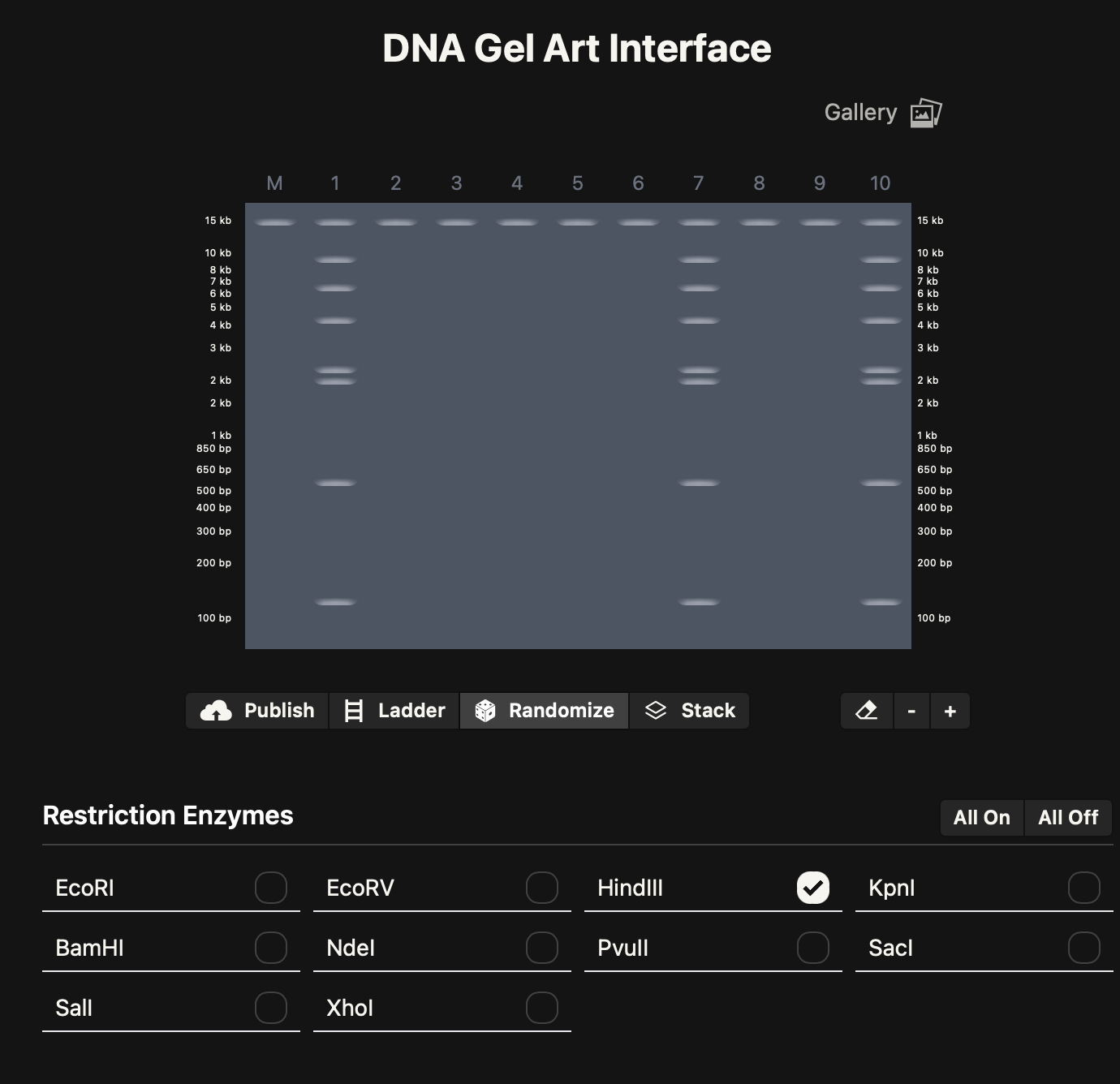
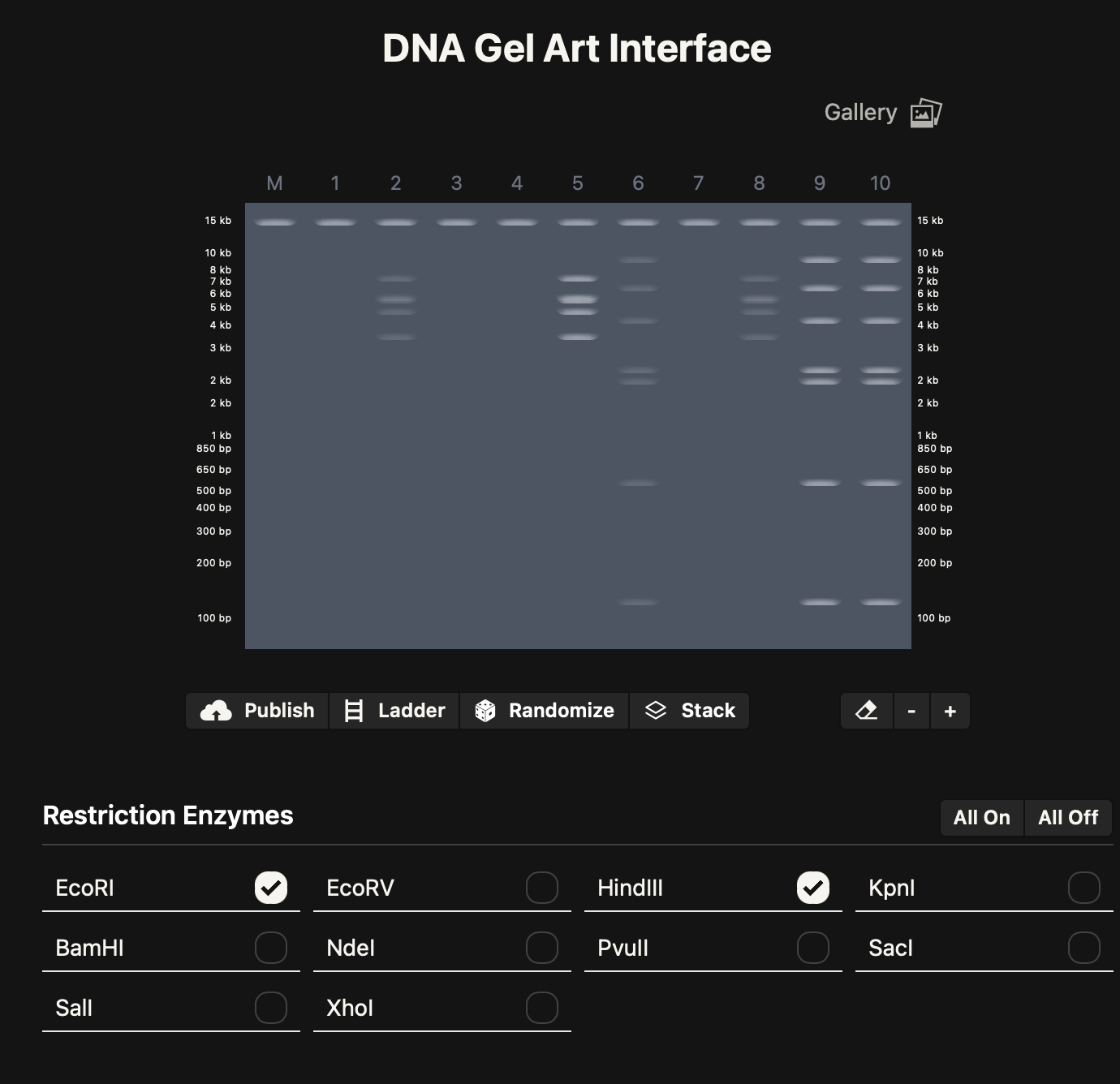
PART 1 BENCHLING RESTRICTION ENZYME SIMULATIONS ON LAMBDA DNA GEL ART DESIGNS
Subsections of Homework
Week 1 HW: Principles and Practices
FINAL PROJECT - EXAMINING WOOL TO CREATE A BIOENGINEERED KERATIN FABRIC TO MIMIC ATTRIBUTES OF POLYESTER.
GOVERNANCE POLICY GOALS
ENVIRONMENTAL PROTECTION - through reduction in use of polyester based fibres for industries.
ENHANCE BIOMATERIAL AWARENESS - through workshops and encouragement of use of biomaterials over traditional fabrics.
TRANSPARENCY FOR CONSUMERS AND RESPONSIBLE BIOSECURITY PROTOCOLS - traceability fo bioloigcal inputs along with standardised definitions which are accessible to the consumers to make it appealing.
END OF LIFE - ensuring that biofabrics don’t lead to further contamination of recycling streams.
GOVERNANCE ACTIONS
-PURPOSE - currently the gap between sythetic and natural fibres is wide and the ground reality is that at its core they both have their negatives. synthetic polyester based fibres relasye microplastics at every step of its production, while on the other hand natural fibres such as wool require large amounts of water and also constribute to global warming via methane release due to unsustaibale farming practices. the purpose remains to find a bridge between the two to combat consumption and production.
-DESIGN - collaborators for this would include major players in the wool industry, such as british wool working with preexisting production facilities to incorporate both sides. the next set of actors involves would be policy makers and leads in the fashion and textile industry to take active methods to use the alternative.
-ASSUMPTIONS- the ability of it being effective enough or cohesively wearale enough of a fibre to use in garments or textiles.
-RISKS OF FAILURE - it might not make any dent in the current production rates and infact might just add on to the waste created.
Does the option:
Option 1
Option 2
Option 3
ENVIRONMENTAL PROTECTION
—
• By reducing polymer based textiles
—
• By reducing production
—
ENHANCE BIOMATERIAL AWARENESS
—
• By helping respond
—
• By promoting applications
—
TRANSPARENCY FOR CONSUMERS
—
• By minimising cost
—
• By helping respond
—
OTHERS
• Minimizing costs and burdens to stakeholders
—
• Feasibility?
—
• End of life material conservation —
• Promote constructive applications
—
PRIORITIES
the prioiritsation for this would fall upon increasing transparency to the consumers paired with environmental protections. this would be ensured through regulatory bodies such as the EU trade commission to set up polyester limits for clothes and working with wool manufacturers to extract raw material in a sustaibale manner so as to no lead to over production. furthermore empahsis on making sure that biomaterials which do more harm than good due to a lack of an end of life recycling system woule be a primary concern to tackle.
FINAL PROJECT
EXAMINING WOOL TO CREATE A BIOENGINEERED KERATIN FABRIC TO MIMIC ATTRIBUTES OF POLYESTER
HOMEWORK QUESTIONS
Professor Jacobson
Nature’s machinery for copying DNA is called polymerase. What is the error rate of polymerase? How does this compare to the length of the human genome. How does biology deal with that discrepancy?
- The error rate is 1:106. The human genome is 3 x 10⁹ base pairs. raw error rate during polymerase would lead innumerable mistakes- this is repaired by proofreading whereto incorrect nucleotide is excised.
How many different ways are there to code (DNA nucleotide code) for an average human protein? In practice what are some of the reasons that all of these different codes don’t work to code for the protein of interest?
- I understand the math that theoretically speaking if the average human protein length is 300 amino acids and each has 3 possible codons that would leave the number as 3^300. in practical reaosns this wouldn’t work as due to prefences of codons whihc can casue misfolding of the protien.
Dr. LeProust
What’s the most commonly used method for oligo synthesis currently?
- solid-phase phosphoramidite method
Why is it difficult to make oligos longer than 200nt via direct synthesis?
- Oligo length increase, leads to losses as each nucleotide addition has a finite failure rate. Therefore the probability of obtaining a full sequence decreases exponentially with length.
Why can’t you make a 2000bp gene via direct oligo synthesis?
- At 2000bp The error rate would not allow for a full length 2000 bp gene to be made
George Church
[Using Google & Prof. Church’s slide #4] What are the 10 essential amino acids in all animals and how does this affect your view of the “Lysine Contingency”?
- lysine, methionine, tryptophan, threonine, valine, isoleucine, leucine, arginine, histidine and phenylalanine
The lysine contingency gets proven as a weak method of biocontantianment as it is abundantly available in the ecosystem and can be replenished despite being held back synthetically.
[Given slides #2 & 4 (AA:NA and NA:NA codes)] What code would you suggest for AA:AA interactions?
- I am a bit lost on this.
Week 2 DNA READ, WRITE, & EDIT
PART 1
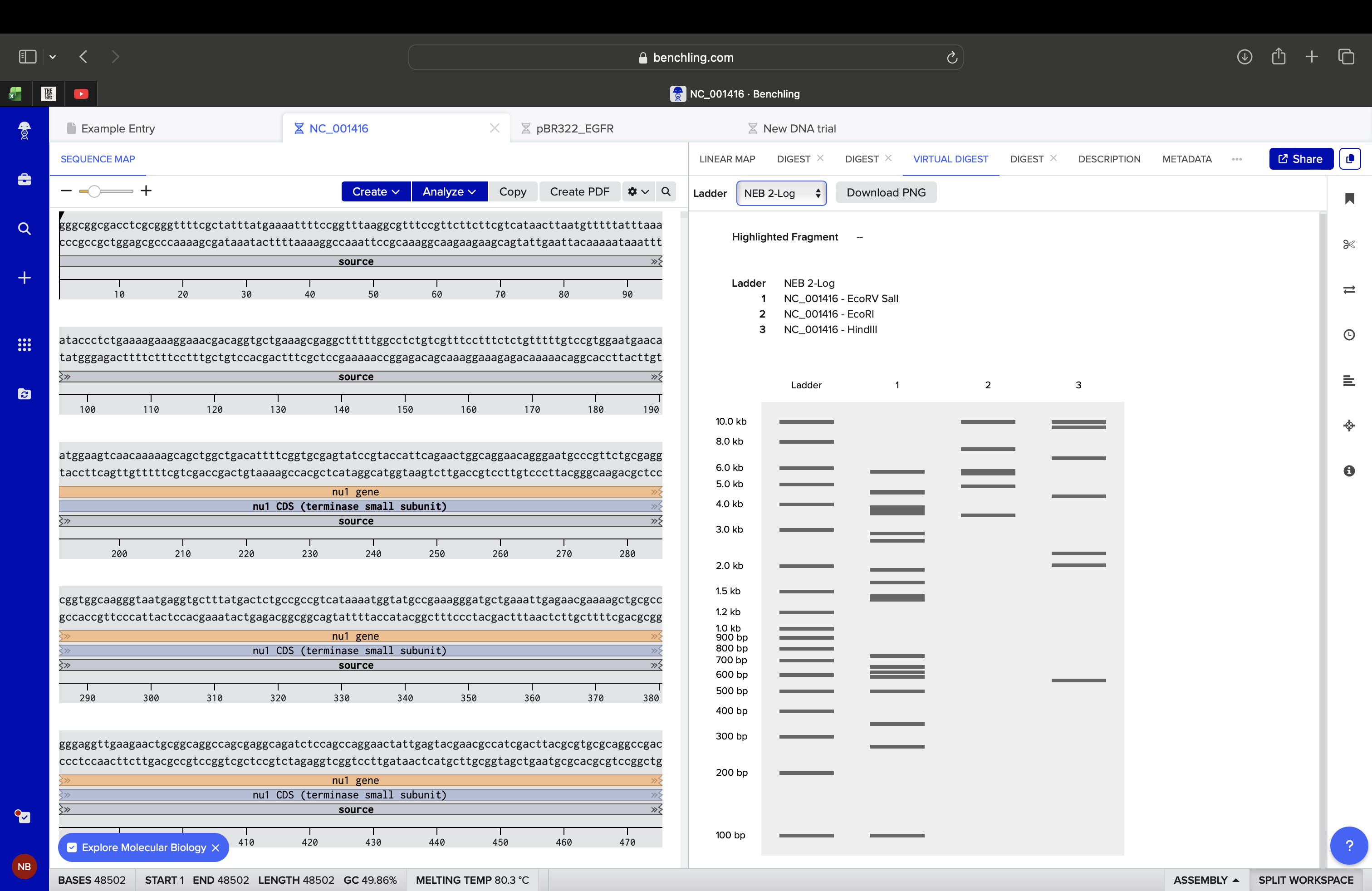
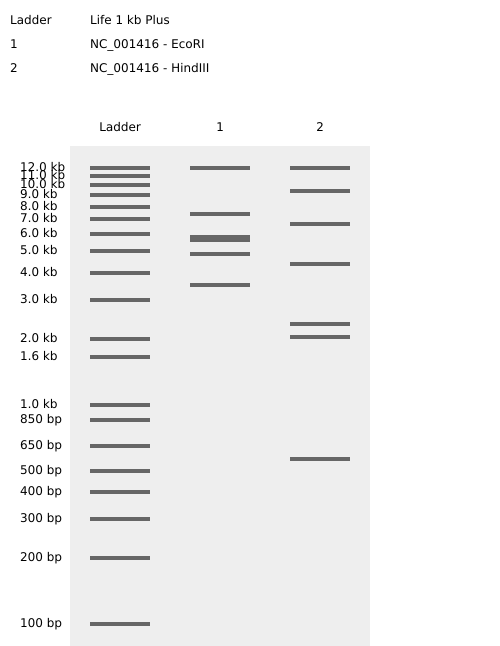
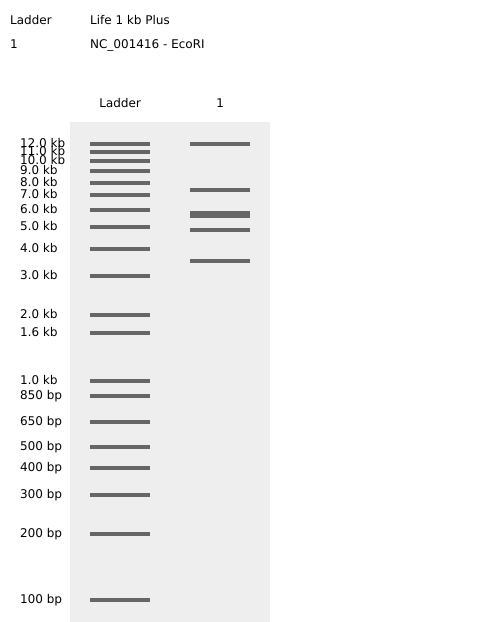
BENCHLING RESTRICTION ENZYME SIMULATIONS ON LAMBDA DNA
GEL ART DESIGNS
DNA Design
3.1
my chosen protein for this was fibroin, which is the protein that constitutes the core silk fiber extracted from Bombyx mori(domestic silkworm) and consists of three subunits,fibroin H chain, fibroin L chain, and fibrohexamerin. specifically the Fib-l - silk fibroin light chain
due to the size and highly repetetive nature of the amino acid sequences, pichia pastoris would be used to express the protein.
3.4 further production factors
for my current project i could follow the traditional route of introducing the host dna into p.pastoris through a plasmid - this could potentially be phase 1 of the project.
however i would like to work towrds using the b.mori itself through crispr/cas9, as a reactor for the protein. this could be done via injecting existing silkworm biroin with edited elements allowing the worm to spin silk within its natural condiitons.
TWIST ORDER
my twist file keeps on crashing im in the process of trouble shooting
5.1 DNA Read
What DNA would you want to sequence and why?
The genome of Bombyx mori (the domestic silkworm), specifically the fibroin heavy chain (fib-H), fibroin light chain (fib-L), and sericin genes — the core genes responsible for silk production.
What sequencing technology would you use?
A combination of Illumina short-read (2nd generation) for accuracy and Oxford Nanopore (3rd generation) for long reads to resolve the highly repetitive silk gene sequences.
Extract genomic DNA from silk gland tissue
For Illumina: fragment DNA (~300–500 bp), perform end-repair, ligate adapters, PCR amplify library
For Nanopore: minimal fragmentation preferred (long fragments >10 kb); ligate motor proteins + sequencing adapters; no PCR needed
DNA write
What DNA would you want to synthesise and why?
synthesise a modified fibroin heavy chain coding sequence
DNA Edit
What DNA would you want to edit and why?
edit the fibroin heavy chain gene with an engineered chimeric silk sequence. This way the transgene is expressed under the native fib-H promoter.