Week 3 HW: Lab Automation
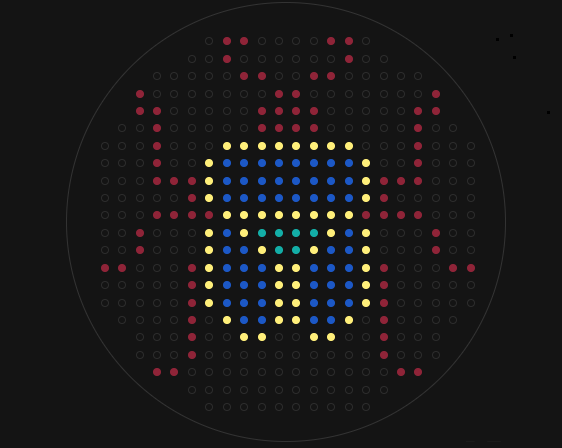
Python Script for Opentrons Artwork
I chose to make the Egyptian Beetle
- The Egyptian scarab beetle Scarabaeus sacer is a dung beetle native to the Mediterranean region and North Africa. Ancient Egyptians considered it one of the most sacred animals, associating it with Khepri, the god of the rising sun, because the beetle’s behavior of rolling dung balls across the ground resembled the sun being pushed across the sky. Scarab amulets were among the most widely produced objects in ancient Egypt, worn by both the living and the dead as protective charms, and heart scarabs were placed on mummies to protect the deceased during judgment in the afterlife. The beetle lays its eggs inside dung balls, and when the larvae hatch and emerge from the ground, Egyptians interpreted this as spontaneous creation, reinforcing the scarab’s association with regeneration and eternal life. Today the scarab remains one of the most recognizable symbols of ancient Egyptian civilization, widely reproduced in art, jewelry, and archaeology.
Inspiration Images:
Artistic design using the GUI
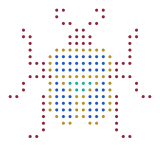
link: https://opentrons-art.rcdonovan.com/?id=1xb86617h0wq061
Following that, I wrote the Python script which draws my design using the Opentrons.
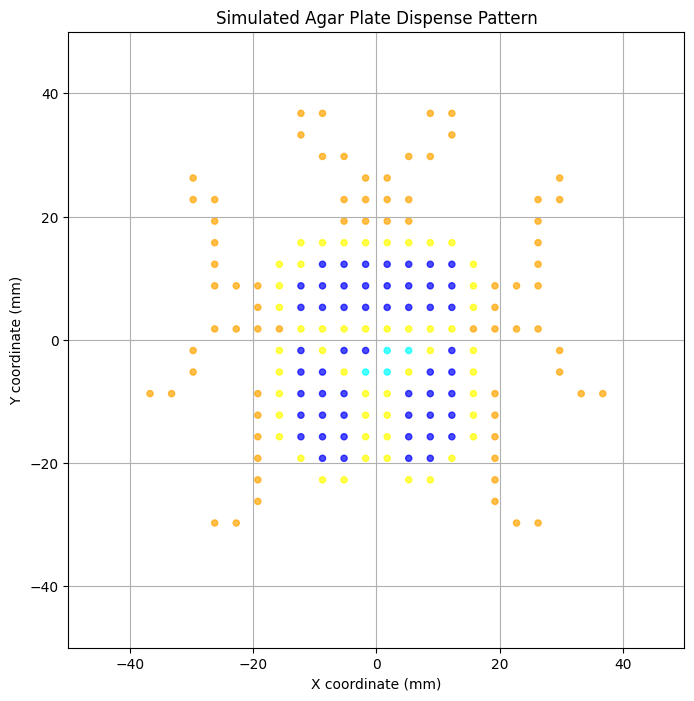
Google Colab link: https://colab.research.google.com/drive/1O8__PXIf_-nn57BUFKG7b7a9N-xvNoNj?authuser=2#scrollTo=pczDLwsq64mk&line=1&uniqifier=1
Post-Lab Questions
- Find and describe a published paper that utilizes the Opentrons or an automation tool to achieve novel biological applications.
AssemblyTron: flexible automation of DNA assembly with Opentrons OT-2 lab robots
This paper presents AssemblyTron, an open-source Python-based automation framework designed to facilitate DNA assembly workflows using the Opentrons OT-2 robotic platform. It integrates outputs from DNA design software (specifically j5) with robotic liquid handling protocols to automate multiple DNA assembly methods, including Golden Gate, AQUA, IVA, and site-directed mutagenesis. The system effectively automates critical steps such as PCR setup, enzyme treatments, assembly reactions, and transformations, thereby reducing manual labor, human error, costs, and training time.
The novel biological application demonstrated is the automated, high-fidelity construction of complex multigene DNA constructs and mutants, exemplified by assembling chromoprotein expression plasmids and performing site-directed mutagenesis with accuracy comparable to manual methods. These capabilities significantly accelerate synthetic biology research, enabling rapid and reliable genetic engineering workflows with minimal manual intervention.
Ref: https://academic.oup.com/synbio/article/8/1/ysac032/6956284
- Write a description about what you intend to do with automation tools for your final project. You may include example pseudocode, Python scripts, 3D printed holders, a plan for how to use Ginkgo Nebula, and more.
A cloud laboratory can be used to perform repetitive steps saving time and energy and increasing reproducibility and accuracy. For the final project (CRISPR-Cas13a based biosensor for Alzheimer’s blood biomarker detection), the following can be used:
- Echo525: for transfering the small volume of gRNA and produced miRNA into the wells.
- ATC: thermal cycler for DNA constructs amplification
- Multiflow: transfer gRNA and produced miRNA different combinations to 96-well
- Inheco: incubate the plate at 37°C for the CRISPR to perform its cleavage activity
- Spark: measure the fluorescence upon binding of the cas13a protein, miRNA and the target biomarker giving insights into the best quantities of DNA parts and designs.
Final Project Ideas
Individual final project idea: