Week 7 HW: Genetic Circuits Pt.2
Part 1: Intracellular Artificial Neural Networks (IANNs)
- What advantages do IANNs have over traditional genetic circuits, whose input/output behaviors are Boolean functions?
- The main advantage IANNs hold over traditional genetic circuits is scalability and the ability to support multilayer networks for complex decision-making. Traditional genetic circuits limitations include poor predictability and the struggle to reliably program multiple functions simultaneously due to inherent scalability limitations. On the other hand, ANNs have good predictability offering improved robustness for complex designs. Because of multiple layers and non-linear activations, neural networks can model complex, non-linear decision boundaries
- Traditional genetic circuits have input/output behaviors that function as Boolean operations. They process discrete signals (ON/OFF, high/low expression) through logic gates like AND, OR, and NOT, producing binary outputs based on truth tables. Moreover, the output layer in the ANNs producing the final prediction may be binary, multi-class or a continuous value.
- Describe a useful application for an IANN; include a detailed description of input/output behavior, as well as any limitations an IANN might face to achieve your goal.
- Application of CNNs: tumor and MSI detection in gastrointestinal cancer
- Convolutional Neural Networks (CNNs) are deep learning models designed to analyze structured grid-like data such as images.
- The CNNs were used as automatic tumor detector to predict MSI (Microsatellite instability) that determines if the patient with gastrointestinal cancer will respond will to immunotherapy. The authors used hematoxylin and eosin (H&E)-stained histology slides as an input
- For tumor detection in gastrointestinal cancer, the authors trained a convolutional neural network with deep residual learning (resnet18)12 model to classify tumor versus normal tissue by transfer learning. Transfer learning means reusing a pre-trained neural network model on a new but related task, instead of training from scratch. For MSI detection, we trained another resnet18 model for each tumor type.
- input/output behavior
- Input: Tiles extracted from digitized histology slides.
- Output: For each tile, a probability score indicating tumor vs. normal or MSI vs. MSS status.
- Behavior: The neural network processes image features within each tile to generate these probability scores, enabling localized tissue characterization and subsequent patient-level molecular classification.
- The mentioned limitations of CNN were:
- Classifying ability is limited to cancer type and ethnicity in the training set. therefore, larger training cohorts are needed to boost classification performance because rare morphological variants can be learned by the network
- The required tissue size. To define its lower limit, they generated ‘virtual biopsies’ and found that performance plateaued at approximately 100 tiles of 256 μm edge length, suggesting that biopsies are sufficient for MSI prediction
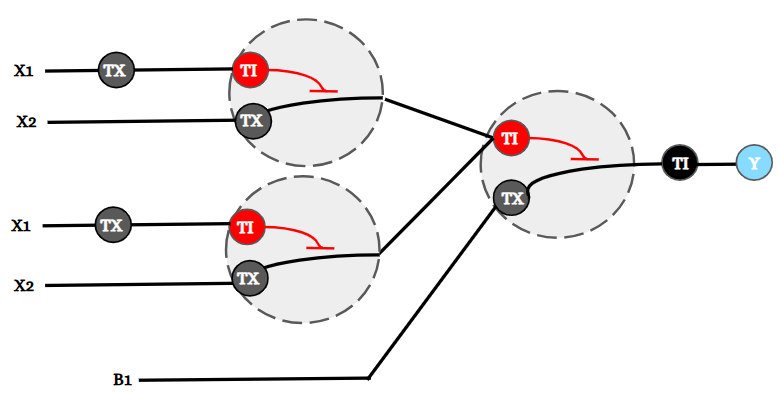
- Below is a diagram depicting an intracellular single-layer perceptron where the X1 input is DNA encoding for the Csy4 endoribonuclease and the X2 input is DNA encoding for a fluorescent protein output whose mRNA is regulated by Csy4. Tx: transcription; Tl: translation.
References
- https://www.geeksforgeeks.org/deep-learning/what-is-perceptron-the-simplest-artificial-neural-network/
- https://www.sciencedirect.com/science/article/pii/S0303264724000492?ref=pdf_download&fr=RR-2&rr=9e292d67be62edc7
- https://www.geeksforgeeks.org/deep-learning/convolutional-neural-networks-cnns-in-r/
- https://pmc.ncbi.nlm.nih.gov/articles/PMC7423299/
Part 2: Fungal Materials
- What are some examples of existing fungal materials and what are they used for? What are their advantages and disadvantages over traditional counterparts?
Rigid fungal composites
- They are created by combining fungi with lignocellulosic fibers or particles, producing materials with varying properties depending on the used finishing method (e.g., hot/cold pressing) , followed by the used substrate, as well as fungal species and strains, particularly the growth behavior and hyphal type, besides substrate nutritional profile and growth conditions
- Disadvantages: their mechanical strength and moisture uptake limit their use primarily to non-weight-bearing applications, such as interior panels and acoustic absorption
- Advantages: biodegradable and have demonstrated potential in architectural designs
- Examples
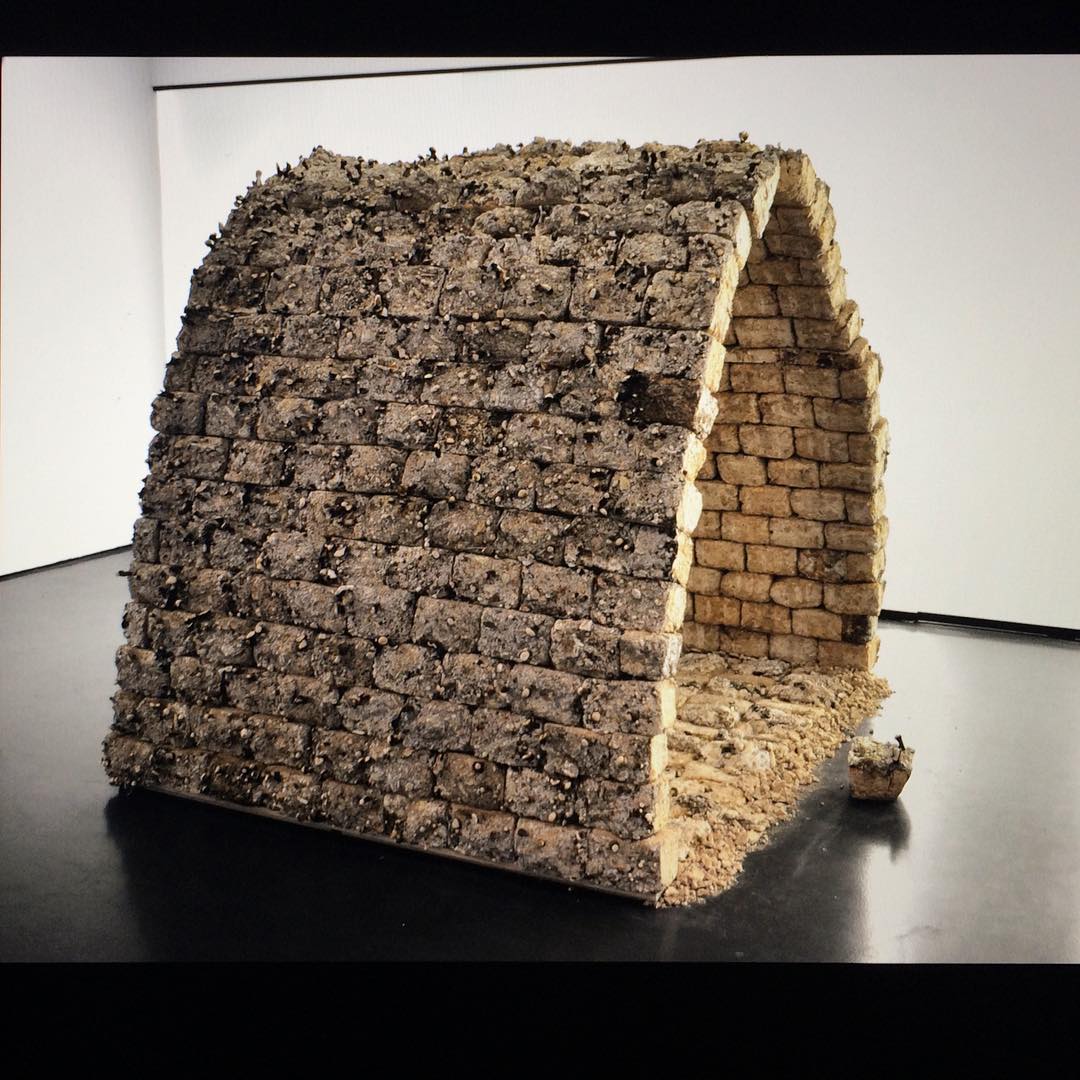
- Mycotectural Alpha (2009): Utilized G. lucidum-bound sawdust for its construction.
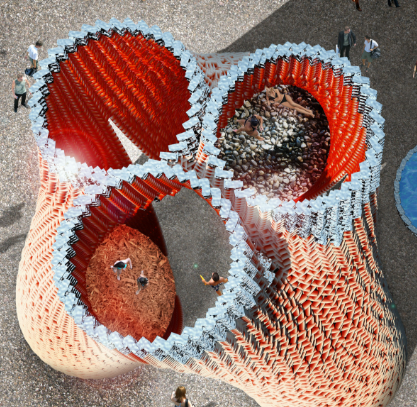
- Hy-Fi (2014): A cluster of circular towers made from mycelium-based bricks.
- MycoTree (2017): Featured mycelium-bound composite blocks in its installation.
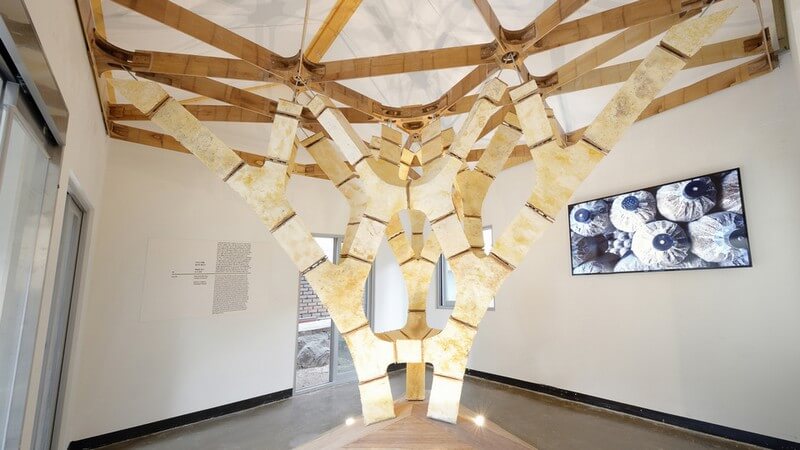
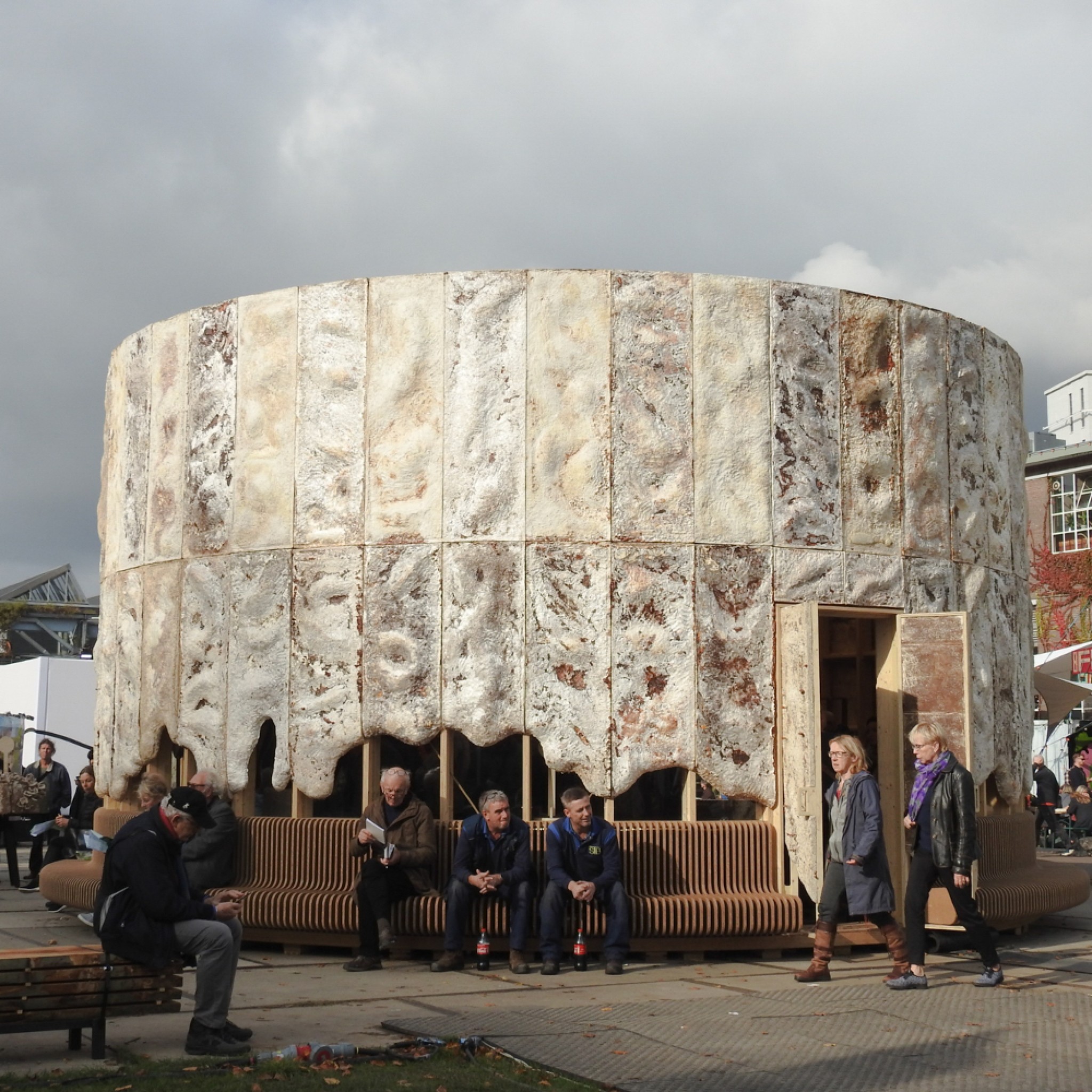
- Growing Pavilion (2020): Incorporated Ganoderma lingzhi mycelium composite panels mounted on wooden frames.
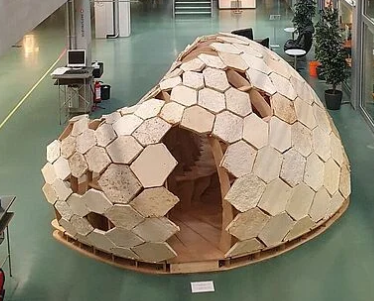
- My-Co Space (2021): Showcased elements of hemp-grown F. fomentarius on a supporting structure.
- Flexible Fungal Materials
- Flexible fungal materials have diverse applications, including fungal wound dressings (e.g., F. fomentarius), medical cell scaffolds, paper like materials, fungal chitin nanomaterials, filters for water treatment, and meat analogs
- Disadvantages: limited availability and fragility
- Advantages: sustainable, biodegradable, and customizable, and their properties depend on the fungal strain, substrate, growth regime, and post-processing techniques (e.g., drying, pigmenting, plasticizing) for enhancing (microbiological) robustness and appearance. Mycelium-based foams and leather alternatives, made from agricultural waste, are cruelty-free and more eco-friendly than traditional materials, as they generate less pollution and use less water. They are lightweight, offer good thermal and acoustic insulation, and require fewer resources to produce
- What might you want to genetically engineer fungi to do and why? What are the advantages of doing synthetic biology in fungi as opposed to bacteria?
Filamentous fungi are considered as unique cell factories for protein production due to the high efficiency of protein secretion and superior capability of post-translational modifications. Therefore, they can be engineered to secrete proteins with higher efficiency.
Genetically engineered fungi have diverse applications across food, industry, medicine, and agriculture due to their eukaryotic biology and secretion capabilities.
Applications:
- Food Prodcution: production of high-protein, meat-like alternatives with enhanced nutrition
- Industrial Biotech: industrial enzymes where fungi serve as cell factories for secreted enzymes like glucoamylase or cellulases used in biofuels, detergents, and food processing
- Pharmaceuticals: where fungi produce secondary metabolites (antibiotics, anticancer drugs)
Both bacteria and fungi have their unique properties in synthetic biology. Synthetic biology in fungi offers key advantages over bacteria, particularly for complex eukaryotic pathways, due to their eukaryotic machinery and natural industrial traits.
Bacteria is a prokaryote with simple cell wall and fast growth rate. they are versatie and easily genetically manipulated. They are extensively used in the production of antibiotics, enzymes, and biofuels.
In agriculture, bacteria serve as biofertilizers and biopesticides, enhancing soil fertility and protecting crops from pests and diseases.
In medicine, bacteria are harnessed to produce therapeutic proteins and vaccines, and they are central to the development of new antibiotics
Fungi is an eukaryote with thick chitinous cell wall and slow growth rate. They have long been utilized in biotechnology for their ability to produce a wide range of metabolites, including antibiotics, enzymes, and organic acids. Fungi grow on cheap, complex substrates like lignocellulose or waste, reducing costs compared to bacteria’s need for purified sugars.
They have applications in many sectors, for example:
Food industry: production of bread, beer, and cheese.
Agriculture: they improve agricultural crop yield and quality by enhancing plant physiology and stress tolerance.
Environmental sustainability: they play a significant role by decomposing organic matter, thus recycling nutrients in ecosystems.
Medicine: they are sources of important pharmaceuticals, such as penicillin, and are being explored for their potential in developing new drugs.
References: