Week 11 HW: Building Genomes

𓃠 Week 11 Homework 𓃠
Part A: The 1,536 Pixel Artwork Canvas | Collective Artwork
I just want to say, this was soooo fun! :D
and i truly love how it changed alot and all the virtual pixel fun wars i’ve had and truces and teamups, it was a really engaging and lovely experience
Here is some screenshots i took.
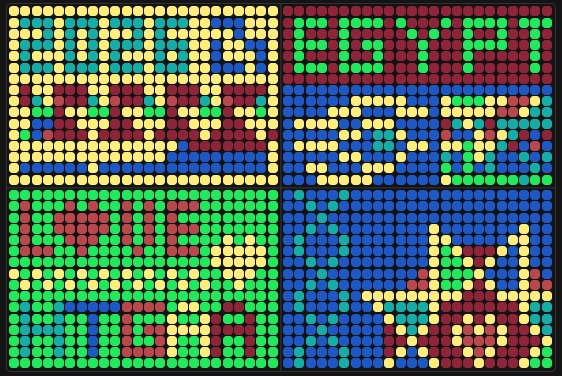
This was 6 hours before the deadline hit, i was responsible for the Big EGYPT section, and it was getting erased constantly and i was trying to rebuild it again and again haha. i also took part helping in the other parts as well like the 2026 and the LOVE HTGAA ones.
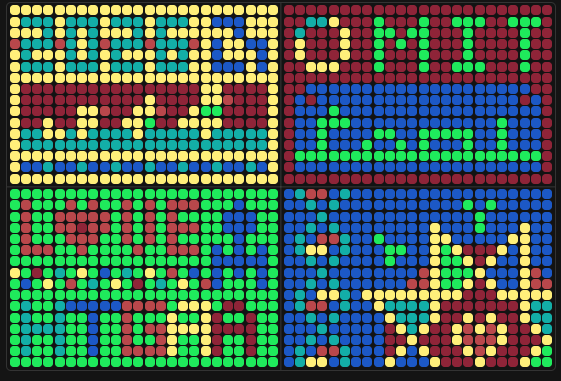
This was a couple minutes before it ended, i was actually asleep because it was 5 am my time, but i set a special alarm to wake up 10 mins before it ends to make sure EGYPT still stands and it wasn’t but in place was MIT and i actually didn’t want to erase that, i love MIT for the HTGAA course, so i decided i’d go on a smaller EGY scale in the lower quadrant
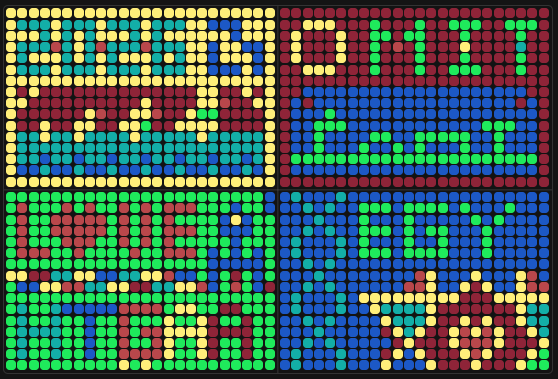
aaaand that was it :D. i really loved it all and to prove that, look at this! :D
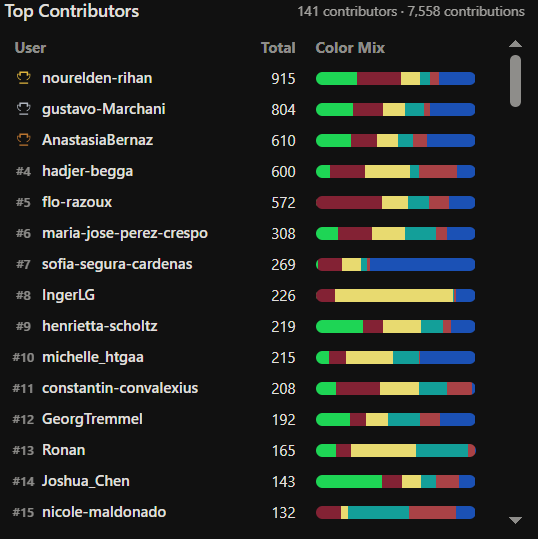
I am the Top 1 Contributor :D, and many thanks to Gustavo and Anastasia, i’ve had so much fun coloring with them at times and against them at other times as well :D it was a very fun experience :D.
Part B: Cell-Free Protein Synthesis | Cell-Free Reagents
Referencing the cell-free protein synthesis reaction composition (the middle box outlined in yellow on the image above, also listed below), provide a 1-2 sentence description of what each component’s role is in the cell-free reaction.
E. coli Lysate:
- BL21 (DE3) Star Lysate: Provides the essential molecular machinery, including ribosomes, tRNAs, and initiation/elongation factors, while the Star mutation enhances mRNA stability by reducing RNase activity. It also contains T7 RNA Polymerase to drive high-level transcription from T7 promoter-based DNA templates.
Salts and Buffer
- Potassium Glutamate: Acts as the primary cytoplasmic salt to maintain osmotic balance and stabilize protein-nucleic acid interactions.
- HEPES-KOH pH 7.5: Serves as a buffering agent to maintain a stable pH for the optimal activity of the enzymes.
- Magnesium Glutamate: Provides ions that act as essential cofactors for RNA polymerase and ribosomes, stabilizing their structures.
- Potassium Phosphate (Monobasic and Dibasic): Maintains pH stability and provides inorganic phosphate, which can assist in the regeneration of nucleoside triphosphates (NTPs) and ATP.
Energy / Nucleotide System
- Ribose and Glucose: Serve as energy sources that can be metabolized to regenerate ATP.
- AMP, CMP, GMP, UMP: Function as the building blocks (mononucleotides) for RNA synthesis and are interconverted into their triphosphate forms (ATP, CTP, GTP, UTP) to power the reaction.
- Guanine: Acts as a precursor for the synthesis of GTP, which is specifically required for the initiation and translocation steps of translation.
Translation Mix (Amino Acids)
- 17 Amino Acid Mix, Tyrosine, and Cysteine: Provide the full set of 20 proteinogenic amino acids required as the fundamental building blocks for synthesizing the polypeptide chain.
Additives and Backfill
- Nicotinamide: Often used as a precursor to NAD+, a cofactor that supports metabolic pathways involved in energy regeneration within the lysate.
- Nuclease Free Water: Used as a “backfill” to bring the reaction to its final volume while ensuring the environment remains free of contaminating enzymes that could degrade DNA or RNA.
Describe the main differences between the 1-hour optimized PEP-NTP master mix and the 20-hour NMP-Ribose-Glucose master mix shown in the Google Slide above. (2-3 sentences)
The main difference between the two systems lies in the energy sources and metabolic pathways: the 1-hour PEP-NTP mix uses high-energy phosphoenolpyruvate (PEP) and pre-formed nucleoside triphosphates (NTPs) for rapid, high-intensity protein synthesis. In contrast, the 20-hour NMP-Ribose-Glucose mix utilizes cheaper nucleoside monophosphates (NMPs) and sugars (Ribose/Glucose) to fuel a slower, sustained reaction that significantly reduces costs by regenerating energy over a longer period.
Bonus question: How can transcription occur if GMP is not included but Guanine is?
Transcription can still occur because the E. coli lysate contains endogenous enzymes (such as phosphoribosyltransferases) that salvage Guanine and convert it into GMP. Once converted to GMP, the energy system further phosphorylates it into GTP, the active nucleotide required by RNA polymerase for transcription.
Part C: Planning the Global Experiment | Cell-Free Master Mix Design
Given the 6 fluorescent proteins we used for our collaborative painting, identify and explain at least one biophysical or functional property of each protein that affects expression or readout in cell-free systems. (Hint: options include maturation time, acid sensitivity, folding, oxygen dependence, etc) (1-2 sentences each)
- sfGFP: Engineered for robust folding and high solubility, it provides a very rapid readout even when fused to other proteins or in less-than-ideal reaction conditions.
- mRFP1: As the first truly monomeric RFP, it features a moderate maturation time (half-time ~50 minutes) but can be less photostable than newer variants, potentially leading to signal fading during long observations.
- mKO2: This orange protein is highly dependent on oxygen for chromophore maturation; under low-oxygen (hypoxic) conditions typical of some sealed cell-free reactions, its fluorescence recovery is significantly slower.
- mTurquoise2: Known for its exceptional brightness and high quantum yield, and requires approximately 66 minutes for maturation.
- mScarlet_I: rapid maturation (half-time ~31 minutes), making it one of the fastest-developing red reporters.
- Electra2: This blue fluorescent protein is designed for high intracellular brightness and exhibits a tendency to form puncta or aggregates in certain environments.
Create a hypothesis for how adjusting one or more reagents in the cell-free mastermix could improve a specific biophysical or functional property you identified above, in order to maximize fluorescence over a 36-hour incubation. Clearly state the protein, the reagent(s), and the expected effect.
my focus is gonna be on Magnesium Glutamate, so basically as Mg²⁺ concentration increases, fluorescence output will rise (more ribosome stability, better translation) until a threshold where excess Mg²⁺ precipitates phosphates out of solution, starving the energy regeneration system of Pi, causing ATP regeneration to collapse and translation to halt (seen as a sharp fluorescence drop) so i want to see at which level of Mg²⁺ can CFPS tolerate before crashing in both sfGFP and mScarlet_I to also know which one of them can tolerate it more
This Flowchart shows basically how increasing the Magnesium Glutamate can crash the protein synthesis by disrupting the energy regeneration pool
flowchart TD
    A[Mg²⁺ concentration too high] --> B[Mg²⁺ binds phosphate ions in solution]
    B --> C[MgPO₄ precipitates out of solution]
    C --> D[Inorganic phosphate pool depleted]
    D --> E[Kinases cannot regenerate ATP from ADP/AMP]
    E --> F[NTP pool collapses - ATP, GTP, CTP, UTP all drop]
    F --> G[T7 RNAP stalls, no mRNA produced]
    F --> H[Ribosome elongation stalls, translation stops]
    G --> J[Less complete protein synthesized]
    H --> J
    J --> K[Lower fluorescence output]
So here is my wells and what i changed in the master mix to test my hypothesis. I picked 4 mScarlet_I wells which are:
Q3-B2(baseline Mg²⁺ - 6.975 mM)Q3-C2(Mg²⁺ - 7.600 mM)Q3-D2(Mg²⁺ - 8.850 mM)Q3-E2(Mg²⁺ - 10.000 mM)
I picked 4 sfGFP wells which are:
Q3-B3(baseline Mg²⁺ - 6.975 mM)Q3-C3(Mg²⁺ - 7.600 mM)Q3-D3(Mg²⁺ - 8.850 mM)Q3-E3(Mg²⁺ - 10.000 mM)
Part D: Build-A-Cloud-Lab | (optional) Bonus Assignment
This is very cool, but i probably did a very bad job haha :D, i will use this chance though to learn more about the different parts of these machines :O