Subsections of Nusrat Jahan Tamanna — HTGAA Spring 2026
Homework
Weekly homework submissions:
Week 1 HW: Principles and Practices
1.Describe a biological engineering application or tool you want to develop and why.
Subsections of Homework
Week 1 HW: Principles and Practices
1.Describe a biological engineering application or tool you want to develop and why.
Hilsa (Tenualosa ilisha), Bangladesh’s national fish, is most famously found in the Padma River, where it migrates upstream from the Bay of Bengal to spawn. This migratory behavior is the main reason Hilsa has been considered extremely difficult to farm unlike carp or tilapia, it does not naturally adapt to closed aquaculture systems. For decades, Hilsa farming was thought impossible, and Bangladesh relied almost entirely on wild catches.
Recent research, however, has started to challenge this assumption. Experimental trials in Bangladesh have shown that juvenile Hilsa can survive and grow in cage culture systems placed in rivers, and large-scale projects are now exploring indoor aquaculture using recirculating systems (RAS). These developments suggest that, while Hilsa farming is not yet widespread, it is becoming scientifically feasible. By applying genetic engineering and marker-assisted selection, researchers could identify traits such as salinity tolerance, faster growth, and disease resistance. Selectively breeding Hilsa with these traits could make aquaculture more reliable, reducing dependence on wild stocks in the Padma and other rivers.
2.Describe one or more governance/policy goals related to ensuring that this application or tool contributes to an “ethical” future, like ensuring non-malfeasance (preventing harm). Break big goals down into two or more specific sub-goals.
The creation of a genetic marker based breeding initiative for Hilsa, particularly due to its reliance on the Padma River ecosystem, demands thoughtful governance to align scientific progress with ethical and sustainable results. Given Hilsa’s cultural significance and vital role as a food source, policy objectives must harmonize ecological conservation, social fairness, and consumer confidence.
Environmental Safeguarding and Harm Prevention: Policies must prevent farmed Hilsa from escaping into rivers like the Padma, where they could disrupt wild populations. This requires ecological risk checks, strict containment, and continuous monitoring to avoid biodiversity loss or genetic mixing.
Fairness and Livelihood Support: Hilsa fishing sustains thousands of small fishers. Governance should ensure aquaculture benefits them through subsidies, training, and cooperative ownership, so gains are shared broadly rather than concentrated among large farms.
Food Integrity and Cultural Confidence: Hilsa is culturally iconic, consumers need assurance that farmed Hilsa is safe and authentic. Clear labeling, certification, and awareness campaigns can build trust and encourage acceptance of aquaculture Hilsa.
3.Describe at least three different potential governance “actions” by considering the four aspects below (Purpose, Design, Assumptions, Risks of Failure & “Success”).
National Hilsa Aquaculture Standards:
- Purpose: To ensure farmed Hilsa are safe for ecosystems and consumers.
- Design: Government sets biosafety, food safety, and environmental rules and farms must pass certification.
- Assumptions: Regulators can enforce effectively.
- Risks of Failure and Success: Weak enforcement may cause ecological harm and heavy regulation could hinder technological development. So, consumer trust need to be acquired and protect biodiversity.
Community Empowerment Programs
- Purpose: Guarantee small‑scale fishers benefit from aquaculture.
- Design: Provide subsidies, training, and cooperative ownership models.
- Assumptions: Fishers will adopt new practices if supported.
- Risks of Failure and Success: Unequal access or poor training could widen inequality. By strengthening rural livelihoods pressure on wild Hilsa could be reduced.
Transparency and Public Awareness Campaigns
- Purpose: To build cultural confidence in farmed Hilsa.
- Design: Labeling schemes, certification logos, and education campaigns.
- Assumptions: Consumers respond positively to transparency.
- Risks of Failure and Success: Weak communication could fuel skepticism. Encourages acceptance, maintains Hilsa’s cultural value, and supports market demand.
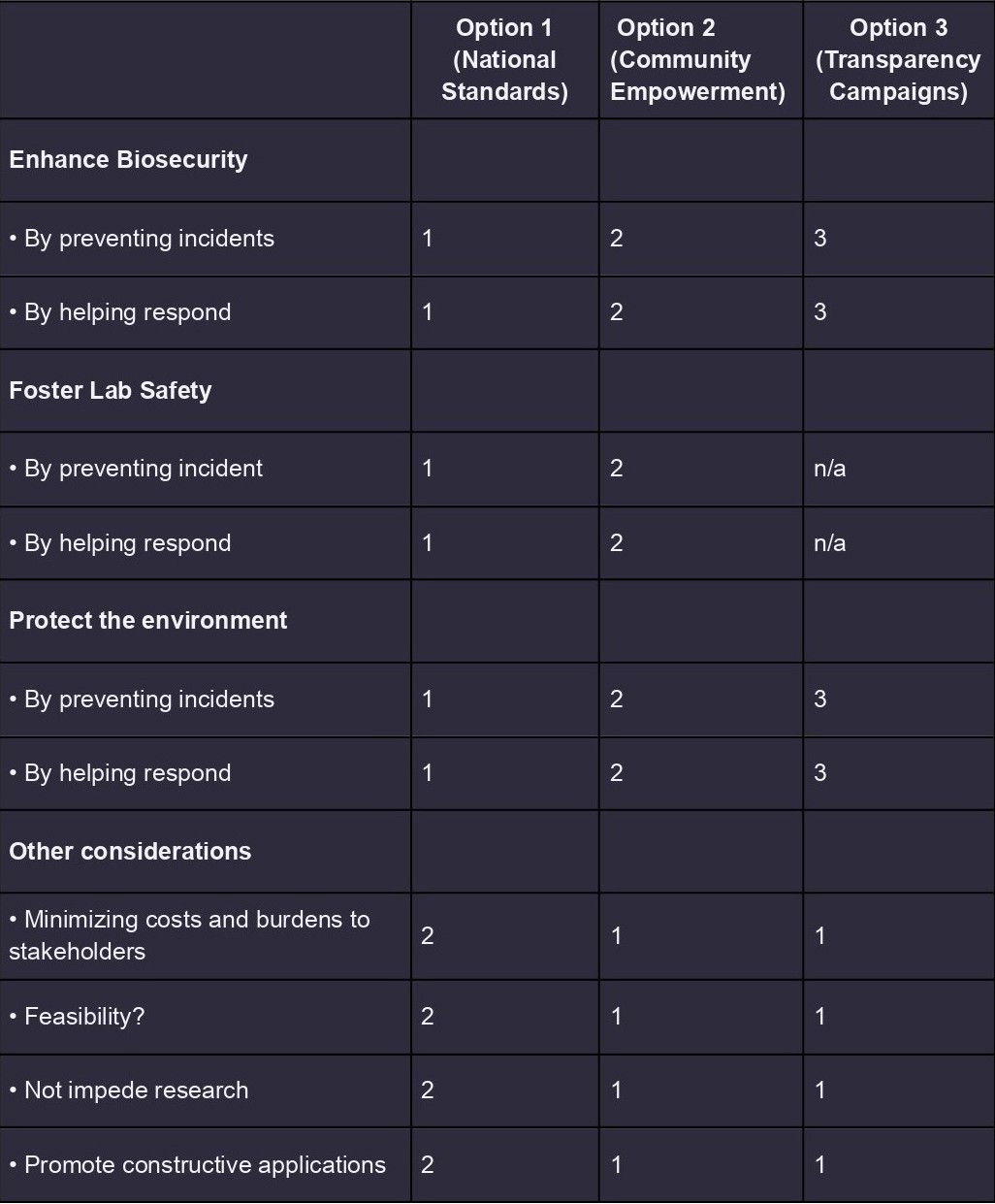
4.Score (from 1-3 with, 1 as the best, or n/a) each of your governance actions against your rubric of policy goals. The following is one framework but feel free to make your own:

5.Drawing upon this scoring, describe which governance option, or combination of options, you would prioritize, and why. Outline any trade-offs you considered as well as assumptions and uncertainties.
The most effective governance approach for ethical Hilsa aquaculture is an integrated framework that combines National Standards, Community Empowerment Programs, and Transparency Campaigns. National Standards provide the regulatory backbone, ensuring biosecurity, lab safety, and environmental protection through certification and monitoring. Community Empowerment Programs guarantee equity and feasibility by supporting small fishers with training, subsidies, and cooperative ownership, thereby minimizing costs and burdens while promoting livelihoods. Transparency Campaigns build cultural trust and consumer confidence through labeling and awareness, reinforcing constructive applications and market acceptance. Together, these three actions balance scientific rigor, social equity, and cultural legitimacy, creating a governance framework that is protective, inclusive, and sustainable.
References: