Group Final Project
Our group (Abhishek Udawat, Tammy Sisodiya, Nour Abdelrahman, Nurlenden Rihan, and I) focused on targeting increased stability as a goal for engineering the L Protein.
- Protein Language Models (ESM2) and the analysis of sequence alignment (BLAST/ ClustalOmega) will identify conserved and variable sites and therefore inform a mutagenesis strategy.
- Analyses of mutated sequences Alphafold-Multimer will reveal a change in pLDDT, ipTM, which may indicate higher stability of the tail.
Engineering Plan
- Review the guidelines.
- Isolate the soluble N-terminus as well as the middle part of the protein, non-overlapping with the coat or the replicase sequence.
- Evaluate the mutational scan in ESM2 to identify candidate substitutions.
- Check BLAST results of sequence alignment (the layout of conserved and variable sites).
- Define a specific strategy (e.g., conservation, creating salt bridges to create a helix, etc.).
- Create several mutants.
- Compare AF-Multimer outputs.
Original Sequence
Soluble N-terminal domain C-terminal domain METRFPQQSQQTPASTNRRRPFKHEDYPCRRQQRSST LYVLIFLAIFLS KFTNQLLLSLLEAVIRTVTTLQQLLT
Variable sites were identified by aligning BLAST results in ClustalOmega (8 in the N-terminus and 4 in the transmembrane domain highlighted):
METRFPQQSQQTPASTNRRRPFKHEDYPCRRQQRSST LYVLIFLAIFLS KFTNQLLLSLLEAVIRTVTTLQQLLT
The strategy that was chosen targeted stabilizing the disordered N-terminal domain by creating salt bridges to introduce an alpha-helix into the disordered domain structure.
Mutated Sequence 1
METRFPRQSQETLESTNRRRPRKHEDYPCRRQQRSST LYVLIFLAIFLSKFTNQLLLSLLEAVIRTVTTLQQLLT
For this mutant, I modified the N-terminal domain, aiming to stabilize the disordered domain. I introduced as many charged pairs as possible in the variable sites (changed 4 out of 8 in the N-terminal domain), and additionally changed one conserved site on the left side of the 2nd pair.
Summary of mutations
Conserved site changed: 13P->L
Variable sites changed: (7Q->R, 11Q->E, 14A->E, 22F->R)
Pairs introduced by changing the 4 variable sites: Pair 1 (R7–E11), Pair 2 (E14–R18), Pair 3 (R22–D26)
 Soluble N-terminal domain                            C-terminal domain
 METRFPQQSQQTPASTNRRRPFKHEDYPCRRQQRSST  LYVLIFLAIFLS  KFTNQLLLSLLEAVIRTVTTLQQLLT  (Original Sequence)
       R---E LE---    R---                                                        (Mutated Sites)
       V   V CV       V                                                           (Conserved / Variable)
 METRFPRQSQETLESTNRRRPRKHEDYPCRRQQRSST  LYVLIFLAIFLS  KFTNQLLLSLLEAVIRTVTTLQQLLT  (Mutated Sequence 1)
Mutated Sequence 2
METRFPRQSQETLRSTNERRPRKHEDYPCRRQQRSST LYVLIFLAIFLSKFTNQLLLSLLEAVIRTVTTLQQLLT
For this mutant, I modified the previous sequence (Mutated Sequence 1), aiming to further stabilize the disordered domain.
I introduced 1 more mutation to a variable site to invert the second pair.
Summary of mutations
Conserved site changed: 13P->L
Variable sites changed: (7Q->R, 11Q->E, 14A->R, 18A->E, 22R->E)
Pairs introduced by changing the 5 variable sites: Pair 1 (R7–E11), Pair 2 (R14–E18), Pair 3 (R22–D26)
 Soluble N-terminal domain                            C-terminal domain
 METRFPQQSQQTPASTNRRRPFKHEDYPCRRQQRSST  LYVLIFLAIFLS  KFTNQLLLSLLEAVIRTVTTLQQLLT  (Original Sequence)
       R---E LR---E   R---                                                        (Mutated Sites)
       V   V CV   V   V                                                           (Conserved / Variable)
 METRFPRQSQETLRSTNERRPRKHEDYPCRRQQRSST  LYVLIFLAIFLS  KFTNQLLLSLLEAVIRTVTTLQQLLT  (Mutated Sequence 2)
AlphafoldServer was used to fold the monomers of Mutated Sequence 1 and Mutated Sequence 2. alfafold2_multimer_v2 was used to fold the multimers. alfafold2_multimer_v2 parameters used:
num_relax: 0
template_mode: none
msa_mode: mmseqs2_uniref_env
Pair mode: paired
num_recycles: 3
recycle_early_stop_tolerance: auto
relax_max_iterations: 200
pairing_strategy: greedy
max_msa: auto
num_seeds: 1
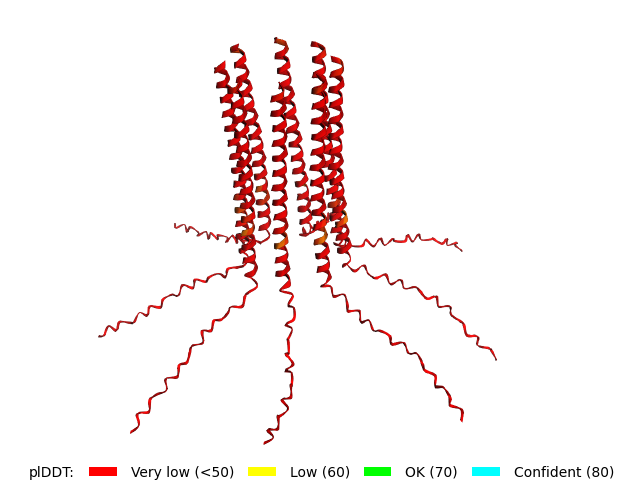 Original Sequence Multimer | 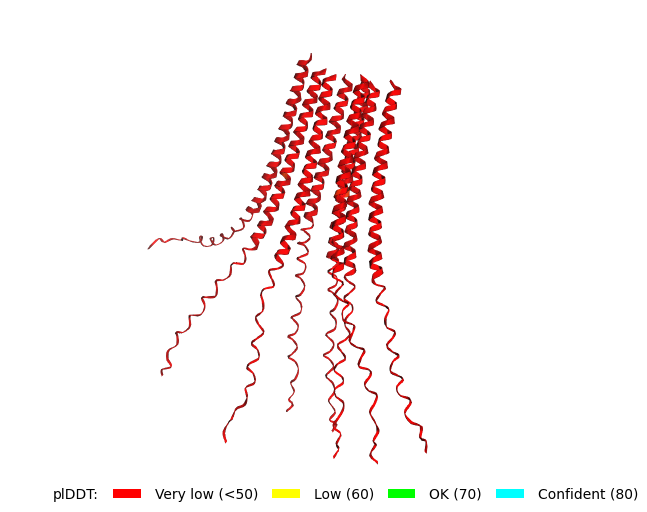 Mutant 1 pLDDT=37.6, pTM-0.189, ipTM = 0.127. 3 pairs/bridges introduced, 1 conserved site changed (13P->L), RRR site kept, (1 conserved and 4 variable sites changed) | 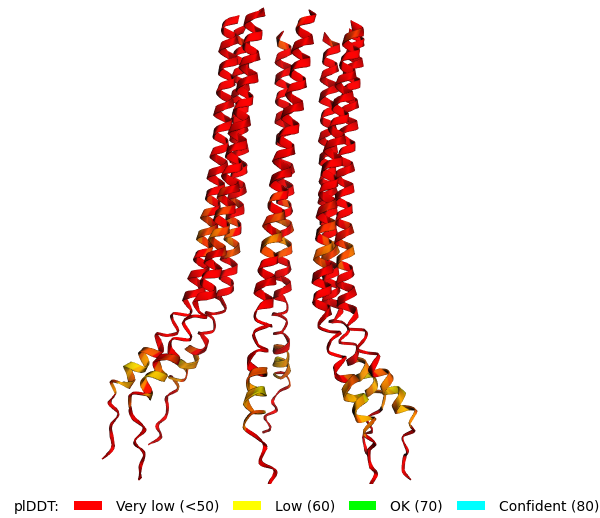 Mutant 2 pLDDT=45.8, pTM-0.187, ipTM = 0.126. 3 pairs/bridges introduced, 1 conserved site changed (13P->L), 2nd pair inverted, no RRR site (1 conserved and 5 variable sites changed) |
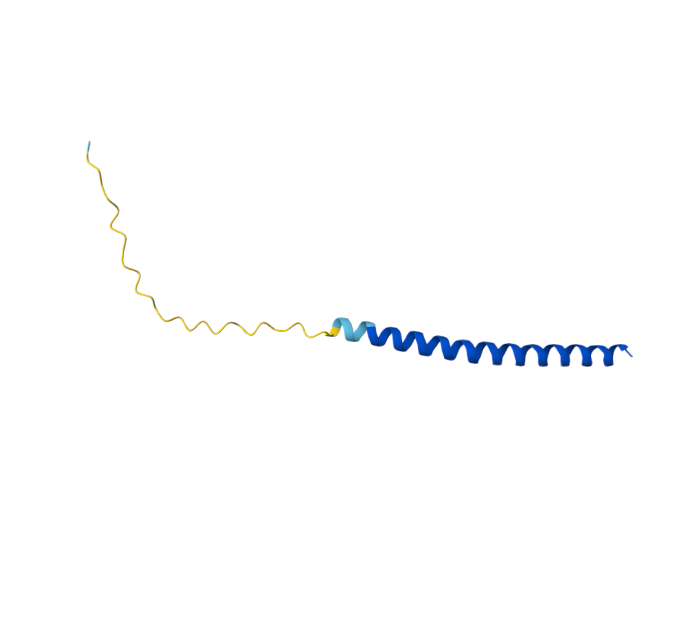 Original Sequence AlphaFold ipTM = -pTM = 0.44 | 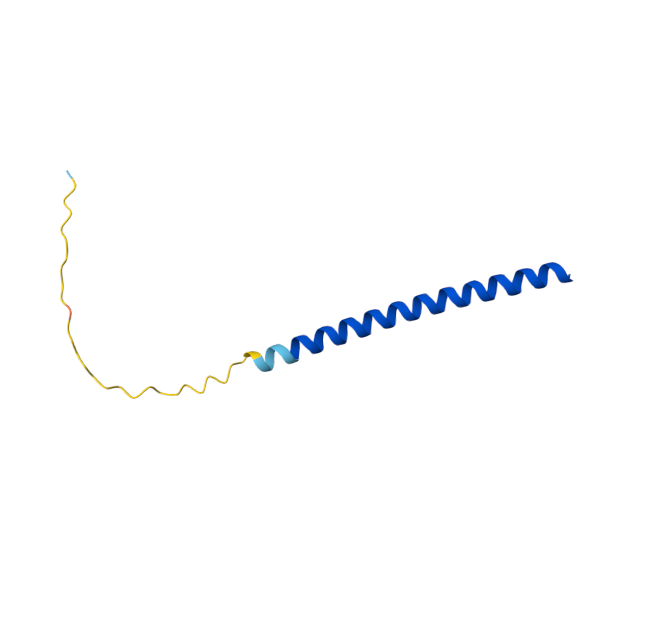 Mutant 1 AlphaFold ipTM = -pTM = 0.43 | 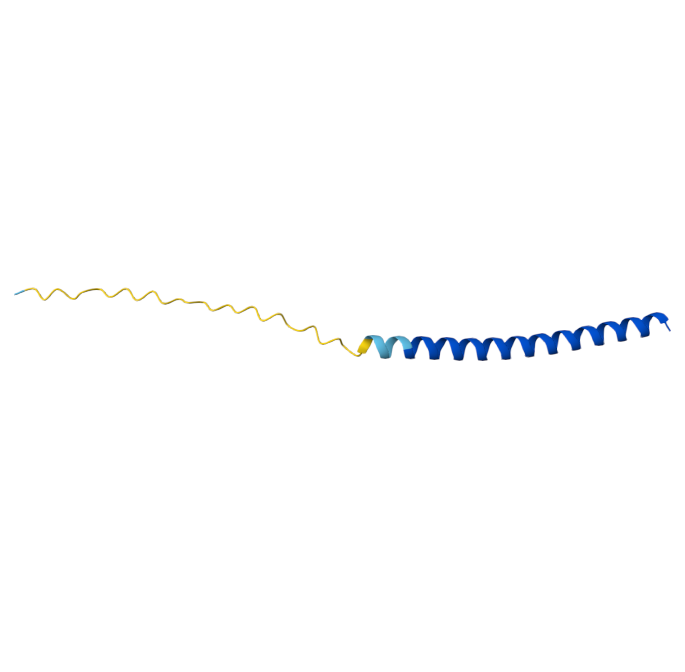 Mutant 2 AlphaFold ipTM = - , pTM = 0.44 |
Mutated Sequence 3
METRFPRQSQETLESTNRRRPRKHEDYPCRRQQRSST LYVLIFLAIFLSKFTNQLLLSLLEAVIRTVTTLQQLLT
This sequence was designed to explore whether changing the conserved site (13P->L) was required to achieve the same structure as that of the Mutated Sequence 1. For that, the mutated conserved site of the Sequence 1 was changed back to the original (13L->P).
Summary of mutations
Conserved site changed: None
Variable sites changed (as in Mutated Sequence 1): (7Q->R, 11Q->E, 14A->E, 22F->R)
Pairs introduced by changing the 4 variable sites (as in Mutated Sequence 1): Pair 1 (R7–E11), Pair 2 (E14–R18), Pair 3 (R22–D26)
 Soluble N-terminal domain                            C-terminal domain
 METRFPQQSQQTPASTNRRRPFKHEDYPCRRQQRSST  LYVLIFLAIFLS  KFTNQLLLSLLEAVIRTVTTLQQLLT  (Original Sequence)
       R---E LE---    R---                                                        (Mutated Sites)
       V   V CV       V                                                           (Conserved / Variable)
 METRFPRQSQETLESTNRRRPRKHEDYPCRRQQRSST  LYVLIFLAIFLS  KFTNQLLLSLLEAVIRTVTTLQQLLT  (Mutated Sequence 1)
             L                                                                    (Reverted site)
             C                                                                    (Conserved / Variable)
 METRFPRQSQETLESTNRRRPRKHEDYPCRRQQRSST  LYVLIFLAIFLS  KFTNQLLLSLLEAVIRTVTTLQQLLT  (Mutated Sequence 3)
Mutated Sequence 4
METRFPRQSQETLESTNRRRPRKHEDYPCRRQQRSST LYVLIFLAIFLSKFTNQLLLSLLEAVIRTVTTLQQLLT
This sequence was designed to explore whether changing the conserved site (13P->L) was required to achieve the helix as in the Mutated Sequence 2. For that, the mutated conserved site of the Sequence 2 was changed back to the original (13L->P).
Summary of mutations
Conserved site changed: None
Variable sites changed (as in Mutated Sequence 1): (7Q->R, 11Q->E, 14A->E, 22F->R)
Pairs introduced by changing the 4 variable sites (as in Mutated Sequence 2): Pair 1 (R7–E11), Pair 2 (E14–R18), Pair 3 (R22–D26)
 Soluble N-terminal domain                            C-terminal domain
 METRFPQQSQQTPASTNRRRPFKHEDYPCRRQQRSST  LYVLIFLAIFLS  KFTNQLLLSLLEAVIRTVTTLQQLLT  (Original Sequence)
       R---E LR---E   R---                                                        (Mutated Sites)
       V   V CV   V   V                                                           (Conserved / Variable)
 METRFPRQSQETLRSTNERRPRKHEDYPCRRQQRSST  LYVLIFLAIFLS  KFTNQLLLSLLEAVIRTVTTLQQLLT  (Mutated Sequence 2)
             L                                                                    (Reverted site)
             C                                                                    (Conserved / Variable)
 METRFPRQSQETLRSTNERRPRKHEDYPCRRQQRSST  LYVLIFLAIFLS  KFTNQLLLSLLEAVIRTVTTLQQLLT  (Mutated Sequence 4)
alfafold2_multimer_v2 was used to fold the multimers of Mutated Sequence 3 and Mutated Sequence 4. alfafold2_multimer_v2 parameters used:
num_relax: 0
template_mode: none
msa_mode: mmseqs2_uniref_env
Pair mode: paired
num_recycles: 3
recycle_early_stop_tolerance: auto
relax_max_iterations: 200
pairing_strategy: greedy
max_msa: auto
num_seeds: 1
Mutant 1 pLDDT=37.6, pTM-0.189, ipTM = 0.127. 3 pairs/bridges introduced, 1 conserved site changed (13P->L), RRR site kept, (1 conserved and 4 variable sites changed) | 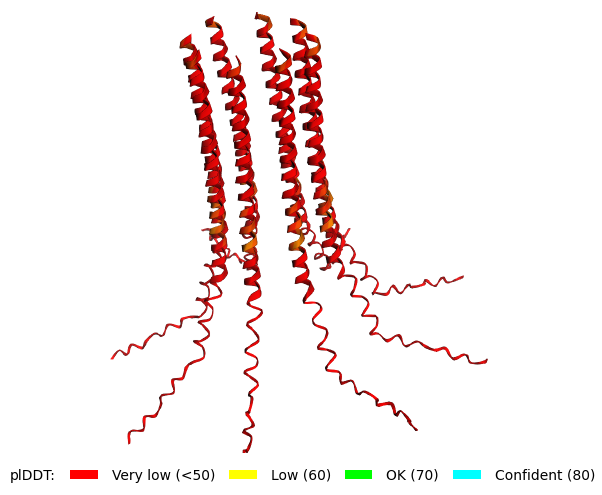 Mutant 3 pLDDT=43.3, pTM-0.188, ipTM = 0.127. Mutant 1 -> the conserved site mutation reverted (13L->P) (4 variable sites of the Original Sequence changed) |
Mutant 2 pLDDT=45.8, pTM-0.187, ipTM = 0.126. 3 pairs/bridges introduced, 1 conserved site changed (13P->L), 2nd pair inverted, no RRR site (1 conserved and 5 variable sites changed) | 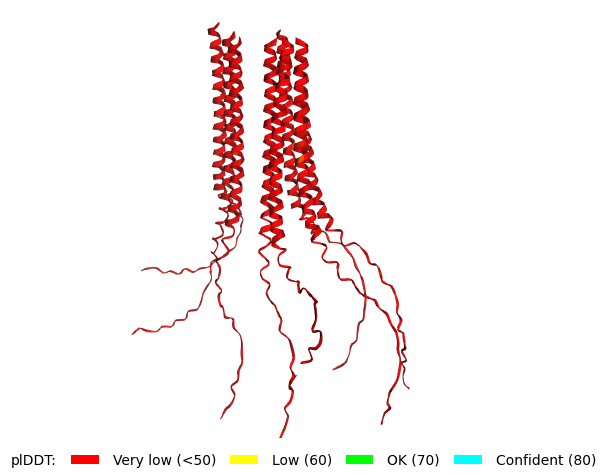 Mutant 4 pLDDT=37, pTM-0.189, ipTM = 0.127. Mutant 2 -> the conserved site mutation reverted (13L->P) (5 variable sites of the Original Sequence changed) |
Further analysis is needed to evaluate whether the mutations affect conserved sites and the folding of the coat protein and the replicase.