Week 03 Homework: Lab Automation

1/Create a Python file to run on an Opentrons liquid handling robot.
This is what I want to do, but I am still working on it. Happy Late Valentines Day!
2/ Find and describe a published paper that utilizes the Opentrons or an automation tool to achieve novel biological applications.
Bryant Jr. et al., 2023 — “AssemblyTron: Automated DNA Assembly Using the Opentrons OT-2.” Synthetic Biology (Oxford University Press).
This paper describes an automated workflow that connects DNA design software to the Opentrons OT-2 liquid-handling robot. Rather than manual pipetting, the robot executes highly standardized molecular biology workflows.The innovation is novel because it is integration of design software and robotic execution. This reduces human error and makes it easier to reproduce experiements. Although this is challening information for me, I can see how it might lower the bar for entry into syn bio experiements and and speed up design cycles. If HTGAA’s mission is to democratize access to cutting-edge bioengineering and synthetic biology education and foster global “biological literacy” by equipping diverse, distributed participants with the skills and laboratory knowledge to design, experiment, and create with living organisms, then this Opentron is a gamechanger.
3/ Write a description about what you intend to do with automation tools for your final project. You may include example pseudocode, Python scripts, 3D printed holders, a plan for how to use Ginkgo Nebula, and more. You may reference this week’s recitation slide deck for lab automation details.
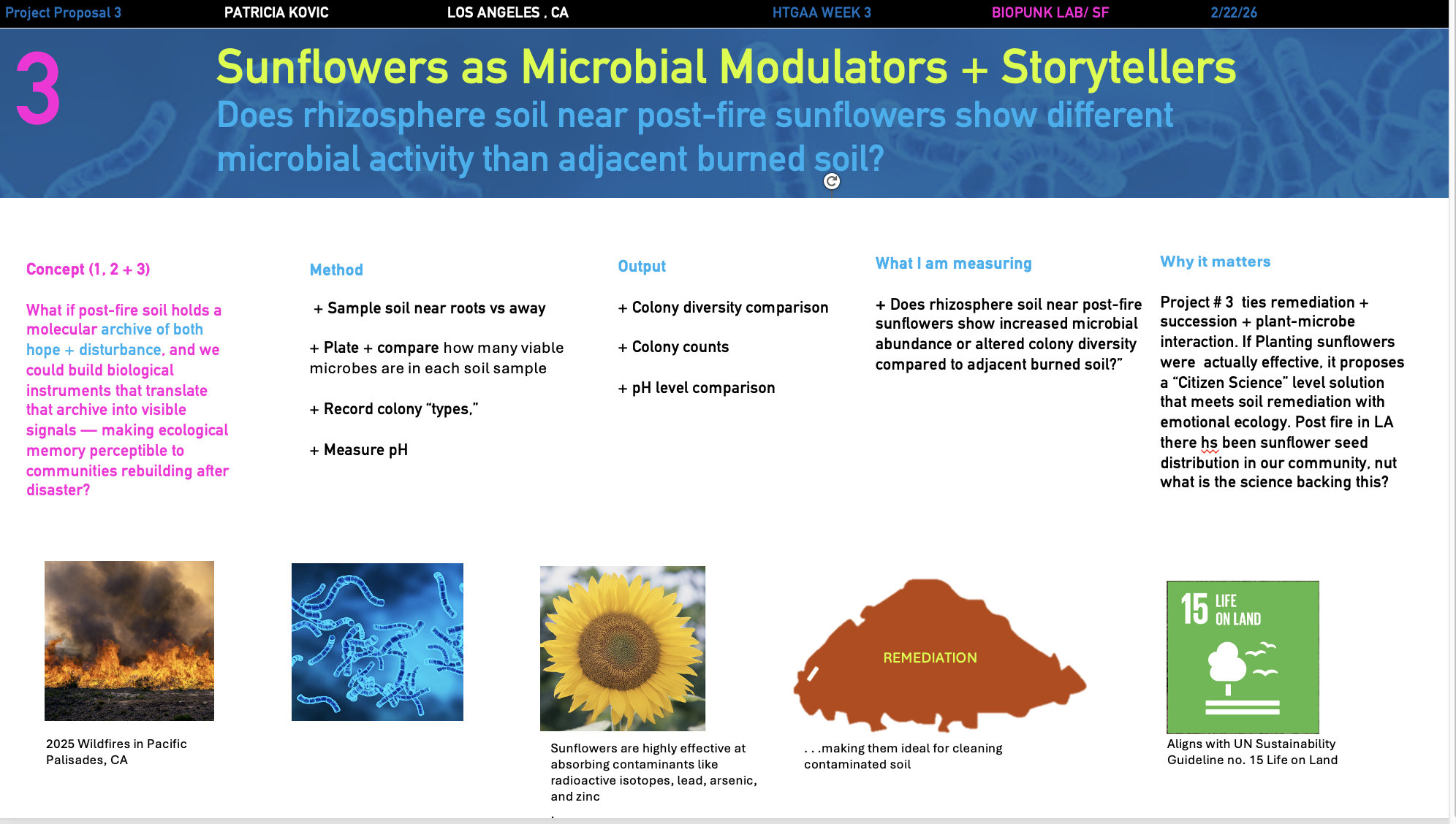
In my wildfire soil project, automation might add rigor to the process of detecting subtle microbial differences in post-fire environments. My samples might be: Burned soil, Unburned soil, Sunflower rhizosphere soil, Adjacent burned soil away from roots. For each sample I will need to: Create standardized slurry. Perform serial dilutions. Plate onto defined media, Record colony morphology and counts, Measure pH
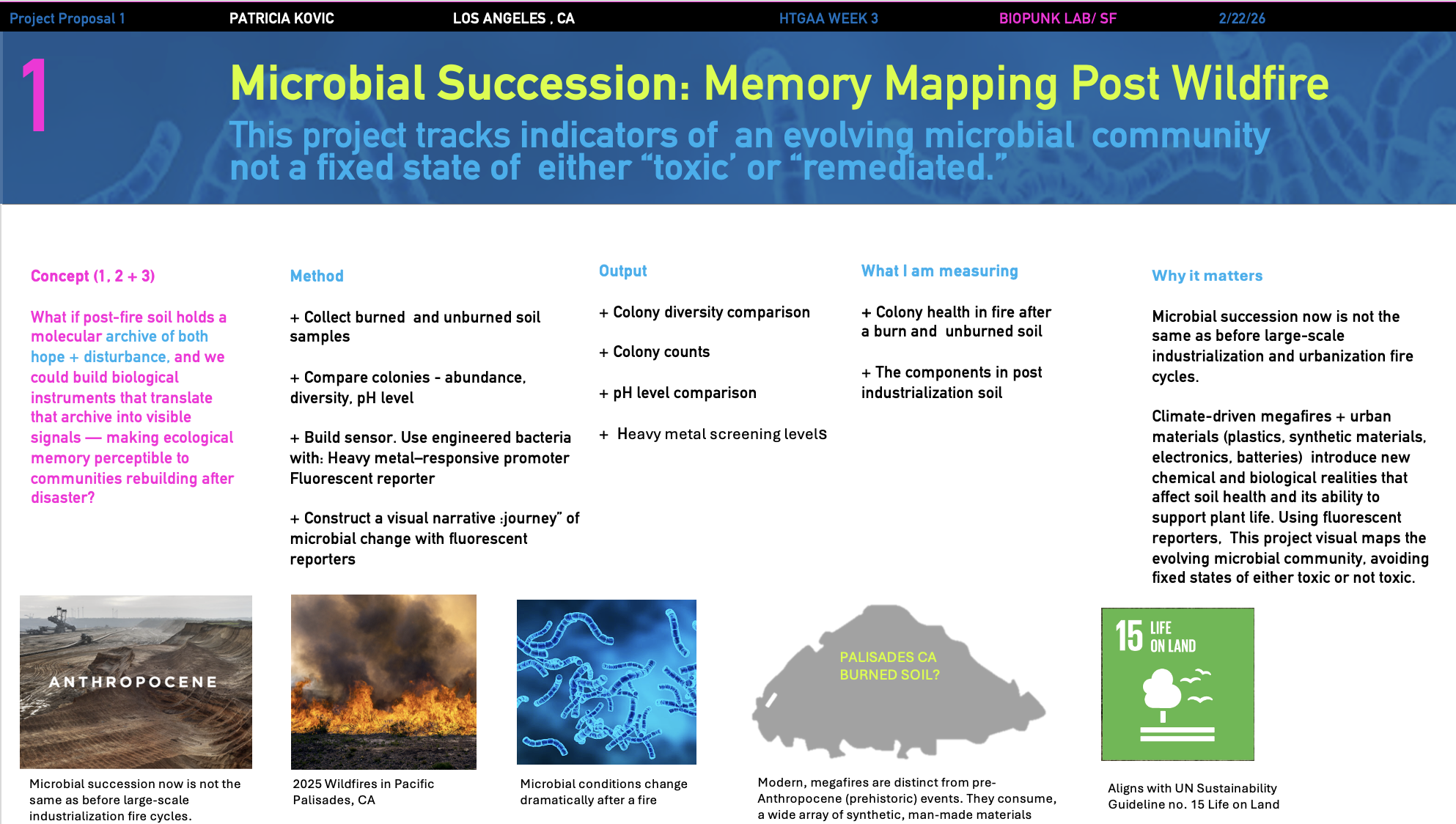
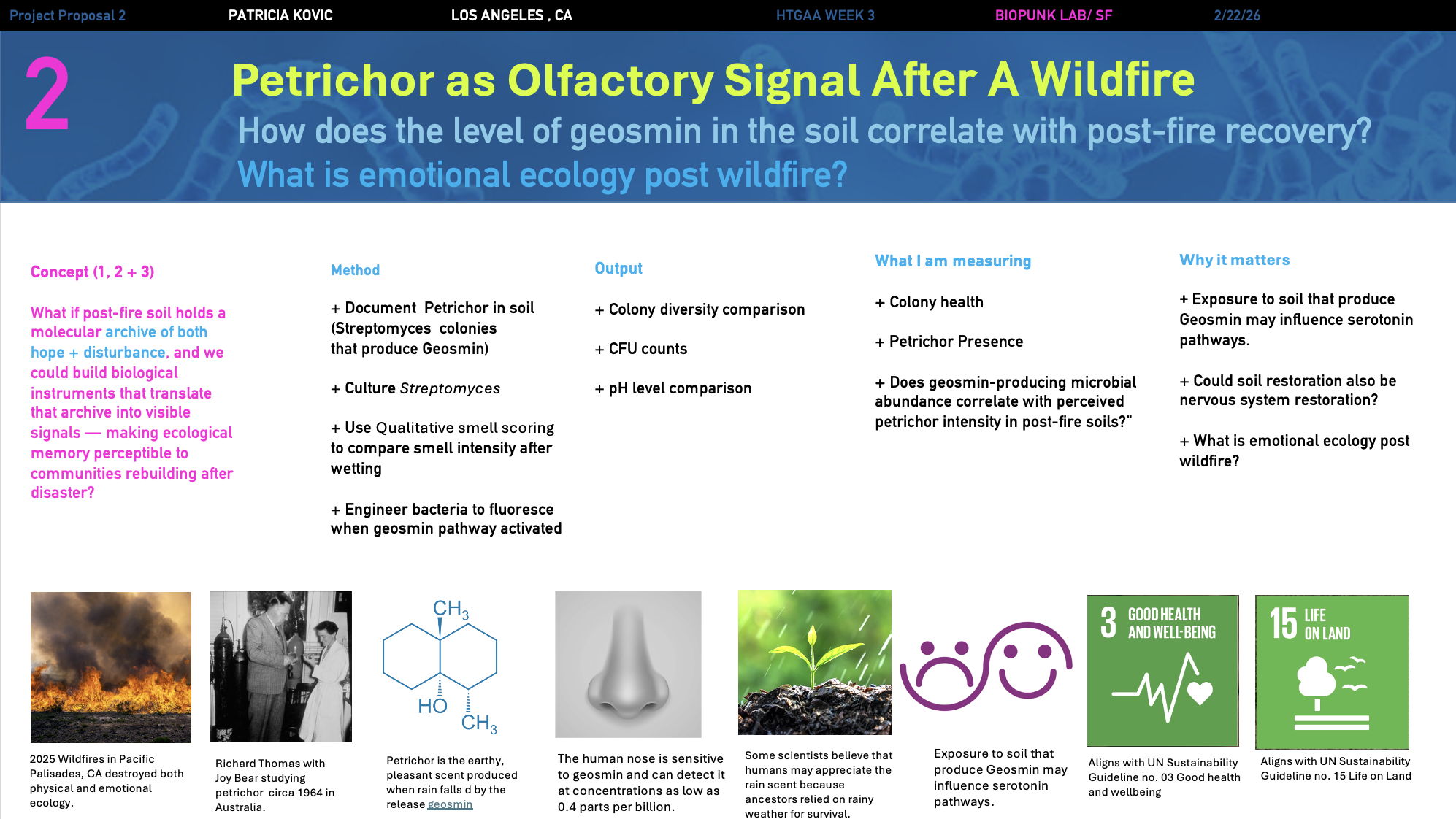
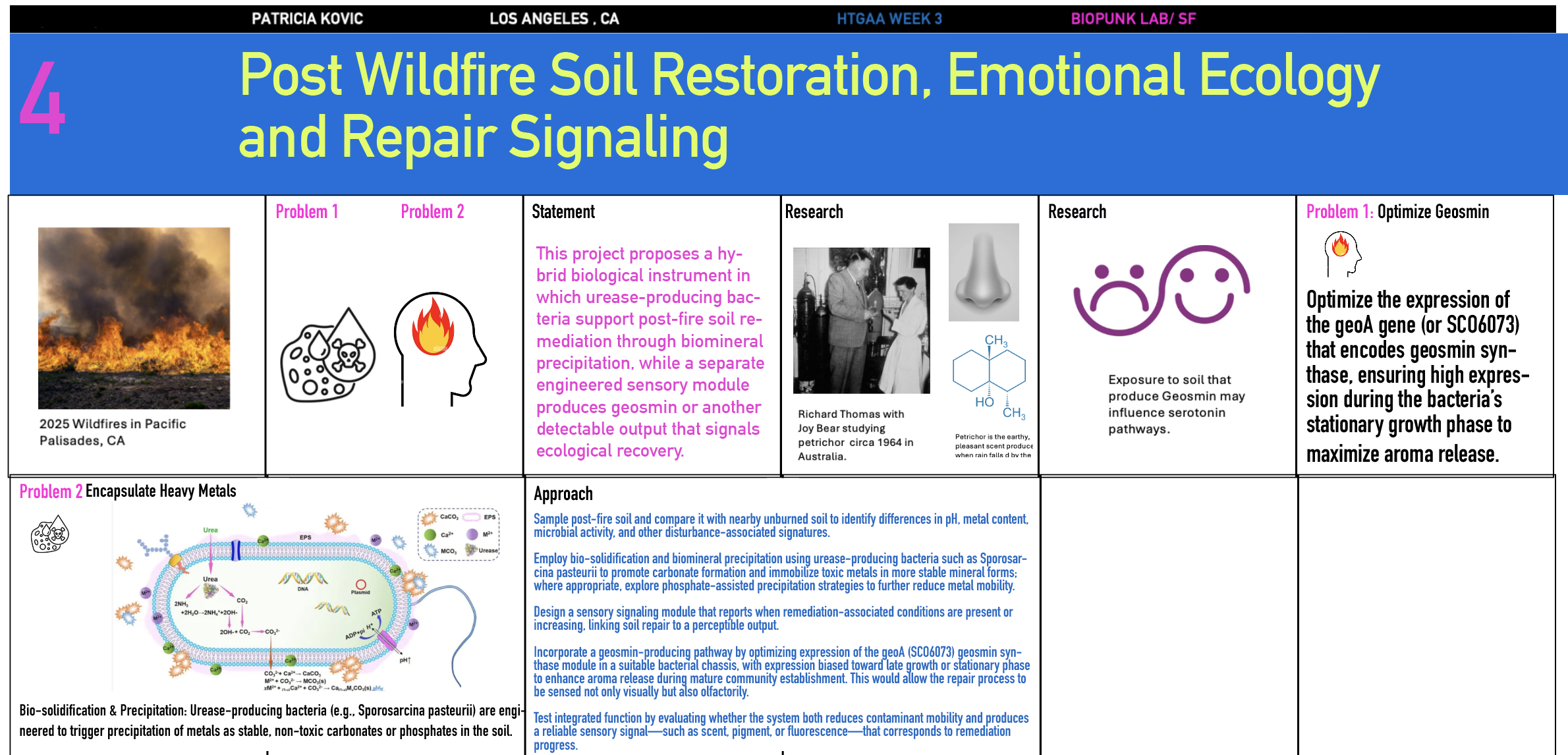
4/ Three Final Project Ideas
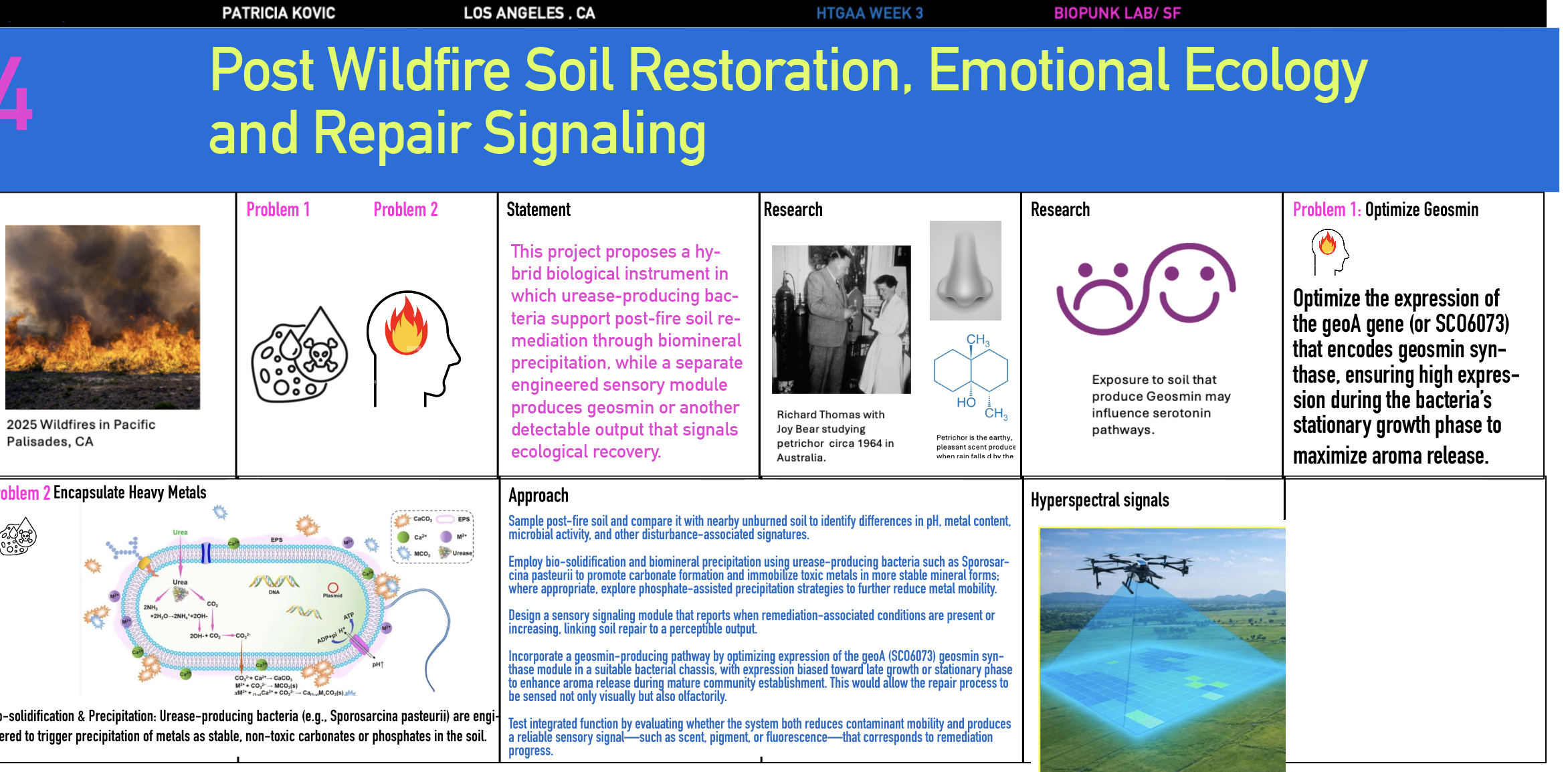
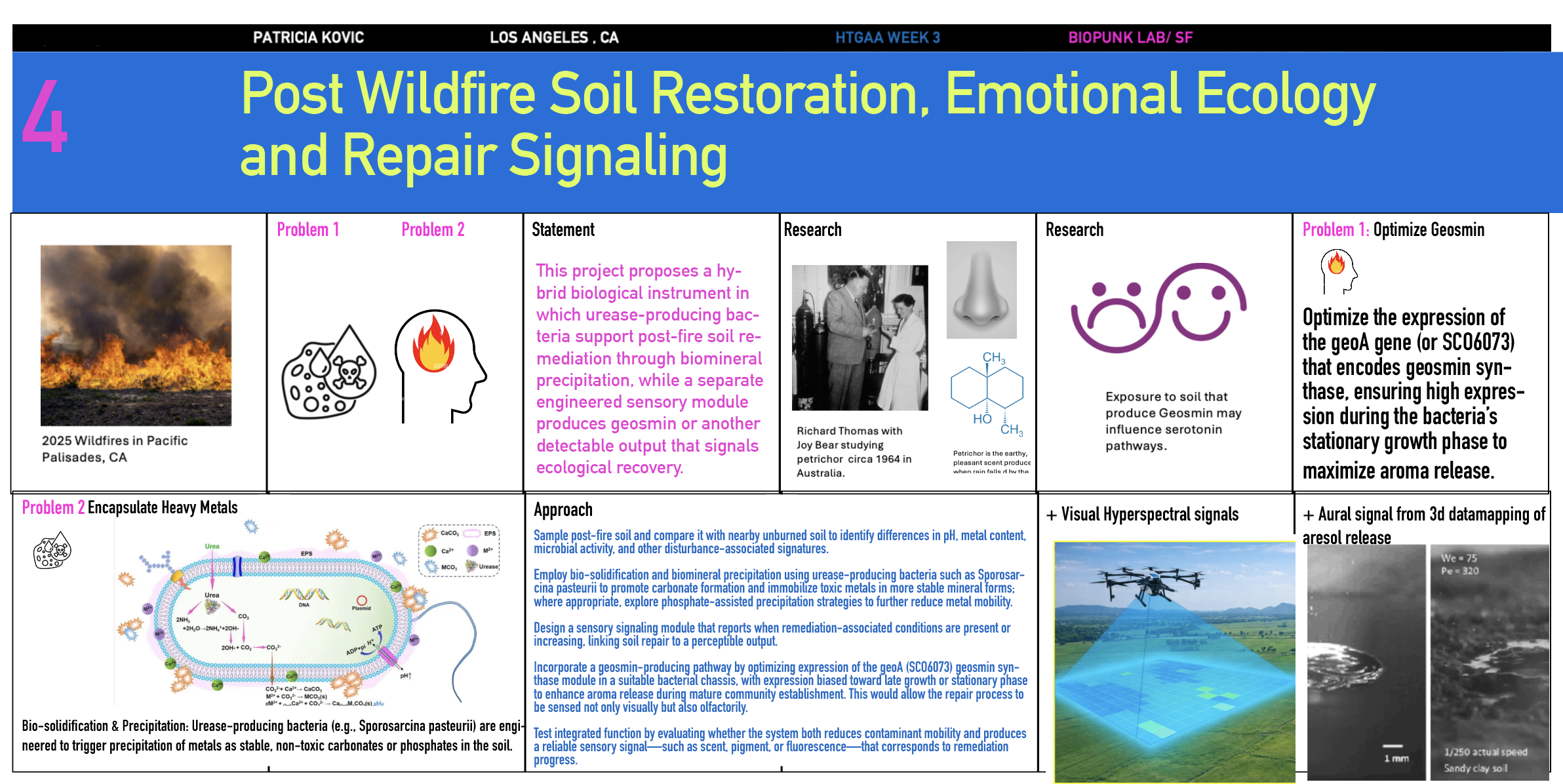
What if post-fire soil holds a molecular archive of both hope + disturbance, and we could build biological instruments that translate that archive into visible signals — making ecological memory perceptible to communities rebuilding after disaster?