Biosensor for Cassava Brown Streak Virus (CBSD) with CRISPR-Cas13a SECTION 1: ABSTRACT Cassava is a plant cultivated annually and widely grown across the subtropical and tropical regions of the world and seen as an important food crop as a souce of carbohydrate for more than 800 million people globally. It is seen as drought resistant, and growm in low nutrient soils. It is cultivated in an area more than 22 million hectares in Africa and Asia. There are yield losses that are experienced due to biotic and abiotic challenges from poor agronomic practices,pest and diseases. Cassava brown streak disease (CBSD) leads to total yield losses in the susceptible varieties by destroying the edible roots while the rest of the plant looks healthy. It is seen as one of the most dangerous threat to cassava production in East, Central and some parts of Southern Africa. Since it is an assymptomatic disease, a cheap and quick way to detect is needed with minimum false positives in detection. CRISPR/Cas13a based detection system
will be used to detect CBSD in plant samples. The sensing of the system will be on recombinase polymerase amplification and Cas13a-mediated collateral cleavage activity. The positive reception can be distinguished after 20 min by a significantly enhanced fluorescence signal. When compared to other detection methods, the sensitivity of CRISPR/Cas13a-based detection system is found that the detection system has limits of detection that reaches 2.26 × 10 2 copies/µl and a 10-fold increase compared with the sensitivity of using RT-PCR to detect the virus. Furthermore, the CRISPR/Cas13a-based detection system has a high selectivity for the CBSD without interference from other viruses. The CRISPR/Cas13a-based detection system can be used to sense the CBSD in samples of cassava leaves.
Subsections of Projects
Group Final Project
Individual Final Project
Biosensor for Cassava Brown Streak Virus (CBSD) with CRISPR-Cas13a
SECTION 1: ABSTRACT
Cassava is a plant cultivated annually and widely grown across the subtropical and tropical regions of the world and seen as an important food crop as
a souce of carbohydrate for more than 800 million people globally. It is seen as drought resistant, and growm in low nutrient soils.
It is cultivated in an area more than 22 million hectares in Africa and Asia. There are yield losses that are experienced due to biotic and
abiotic challenges from poor agronomic practices,pest and diseases.
Cassava brown streak disease (CBSD) leads to total yield losses in the susceptible varieties by destroying the edible roots while the rest of the
plant looks healthy.
It is seen as one of the most dangerous threat to cassava production in East, Central and some parts of Southern Africa. Since it is an
assymptomatic disease, a cheap and quick way to detect is needed with minimum false positives in detection. CRISPR/Cas13a based detection system will be used to detect CBSD in plant samples. The sensing of the system will be on recombinase polymerase
amplification and Cas13a-mediated collateral cleavage activity.
The positive reception can be distinguished after 20 min by a significantly enhanced fluorescence signal.
When compared to other detection methods, the sensitivity of CRISPR/Cas13a-based detection system is found that the detection system has limits of
detection that reaches 2.26 × 10 2 copies/µl and a 10-fold increase compared with the sensitivity of using RT-PCR to detect the virus.
Furthermore, the CRISPR/Cas13a-based detection system has a high selectivity for the CBSD without interference from other viruses. The
CRISPR/Cas13a-based detection system can be used to sense the CBSD in samples of cassava leaves.
SECTION 2: PROJECT AIMS
Aim 1: Experimental Aim:
The first aim of my final project is to have a biosensor that can detect the CBSD in cassava leaves using the CRISPR/Cas13a based detection system.
Aim 2: Development Aim:
Since CRISPR/Cas13a detection has the possibility of detection of viral RNA without a previous amplification step, can prove this in the field and
compare with the other detection methods and see if we can get better detection of the CBSD.
Aim 3: Visionary Aim:
The effects of climate change and the easy movement of goods across the world has led to more virulent plant viruses emerging that lead to food insecurity.
The need for an accurate, efficient detection of viruses is crucial so as to control the spread of diseases and minimize economic and agricultural damage.
The traditional methods of detecting plant viruses are expensive and limited expertise and infrastructure available in the less developed nations.
CRISPR (Clustered Regularly Interspaced Short Palindromic Repeats) has emerged as a transformative
technology in molecular biology and genetics, by offering
unprecedented precision in genome editing and diagnostics since its identification as a prokaryotic adaptive
immune system.
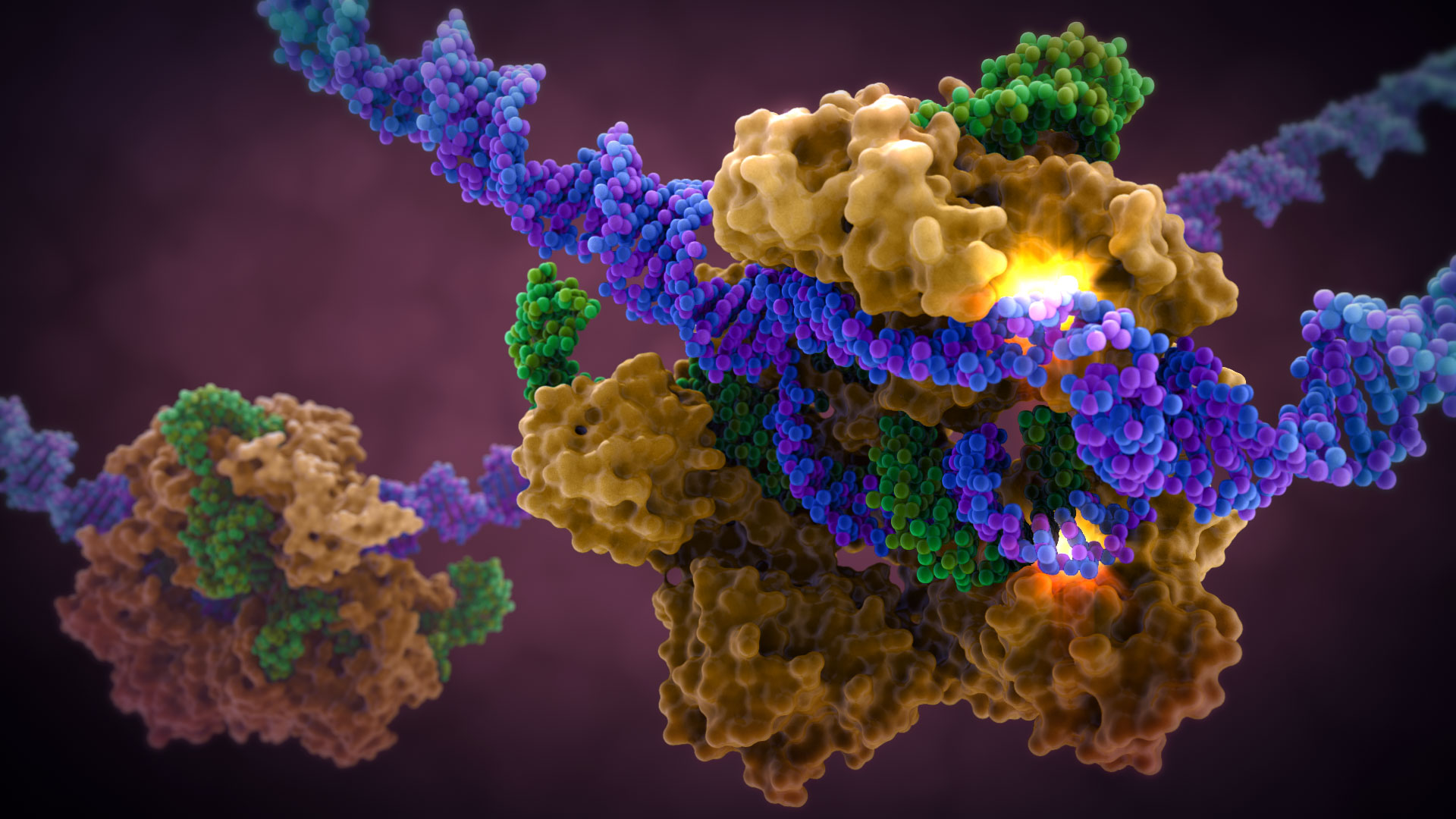
Among CRISPR-associated proteins, Cas13a has gained attention for its RNA-targeting
capabilities, enabling the detection and cleavage of specific RNA sequences with high specificity. This unique
property makes Cas13a particularly suitable for detecting
plant RNA viruses, which are among the most destructive pathogens in agriculture
SECTION 3: BACKGROUND
Background and Literature Context
Plant viruses are seen as a menace in the destruction of crops and CRISPR-Cas13a, a subtype of the RNA-targeting Cas13 family,
has emerged as a transformative tool in the detection of plant RNA viruses with unparalleled precision.
The traditional methods such as RT-PCR and ELISA , are often limited by sensitivity, equipment dependency,
and long processing times, while Cas13a offers exceptional specificity and attomolar-level sensitivity.
Its RNA-guided collateral cleavage mechanism allows signal amplification, making it perfect for field-deployable diagnostics.
The current nucleic acid detection methods for plant viruses are sensitive and rapid, but they require expensive instruments and cannot be used
extensively in the field. The common detection method that uses antigen–antibody reactions can be done without expensive instruments,
although a high amount of time and money is consumed as one comes up with a way to test new viruses. In addition to traditional methods,
isothermal amplification techniques, such as recombinase polymerase amplification (RPA) and loop-mediated isothermal amplification (LAMP),
are also a major way to detect viruses. The use of isothermal amplification technology does not require expensive equipment,
but when agarose gel electrophoresis is used to verify the isothermal amplification reactions, the lower visual resolution and the contamination
caused by aerosol DNA during electrophoresis will affect the sensitivity and specificity of the detection results. Recently, the clustered
regularly interspaced short palindromic repeats (CRISPR) and CRISPR-associated (Cas) systems have been used as important gene editing tools to that
help in understanding viruses while doing viral diagnostics. In the CRISPR/Cas systems, a single CRISPR RNA (crRNA) guides a single protein effector
(Cas protein) to target, cleave, and edit the specific nucleotide. The unique RNA-targeting mechanism of CRISPR/Cas13a systems allows for the sensng
of plant viruses.
The devastation of CBSD in East, Central and Southern Africa has led to a reduction in the yield of Cassava that is highly dependent
by a big population in the continent. The quick detection of the virus will curb the spread of the disease and save many families from hunger and
be able to earn money from the sale of the food. The Cassava plant is also beneficial in industrial products that are needed apart from food and can
be used as an employer and befit the country with foreign exchange. The identification of the virus at an early stage can inhibit the spread of the
diseases and make it easier to understand the way the viruses spread while preventing mutations that could further complicate the inhibition of the
CBSD virus if it happened. The knowledge gained from the project can help in curbing other known diseases in plant and used as a way to educate scientist
on how to eradicate subborn plant diseases.
Since the project will be done on plants there will be minimal invovement of humans or animals as the plasmid will be ordered from Twist Biosciences
but to be cautious. In the lab as we prepare the plasmids and design them a lot of care can be done to make sure humans and animals are not affected by
the experiment carried out. It will be a good idea to notify the authorities like the National Biosafety Authority (NBA) of the intention to visit farms
in areas where the palnt virus is prevalent and get guidance on the best way to extract the plant samples and transport them to the lab to get the
coat protein of the viruses of interest.
The plant samples will be stored in plastic bags enclosed in a cooler bag that is -10 degrees to make sure the viruses are stable during the
transportation and also to make sure no transfer of the viruses to regions along the way by having the bag properly stored in the vehicle. The use of
the cooler bag assumes that you have the viruses secured and cannot leak into the surrounding areas you will be visiting as you take the samples for
the project. It also assumed that when you take the assmptomatic leaves from the farms visited that the virus is present at georeferencing would be
ideal and that once you identify the viruses the local area chiefs will inform the farmers of the prevalence of the disease in their farms.
SECTION 4: EXPERIMENTAL DESIGN, TECHNIQUES, TOOLS, AND TECHNOLOGY
A comprehensive guide to designing a Cas13a-based SHERLOCK biosensor for Cassava Brown Streak Disease (CBSD) targeting the conserved coat protein
(CP) sequences of Cassava brown streak virus (CBSV) and Ugandan cassava brown streak virus (UCBSV), with detailed Benchling assembly protocols,
Twist Bioscience ordering workflows, gRNA/reporter design, experimental timelines, and budgeting below:
Biosensor Design Strategy
The recommended platform is SHERLOCK (Specific High-sensitivity Enzymatic Reporter unLOCKing), which combines reverse transcription-recombinase
polymerase amplification (RT-RPA) with T7 in vitro transcription (IVT) and LwaCas13a collateral cleavage detection .
Workflow:
RT-RPA at 39°C for 20 min: Isothermally amplifies viral RNA from plant extracts into dsDNA with an embedded T7 promoter .
T7 Transcription: Converts dsDNA amplicons into ssRNA targets.
Readout: Fluorescence (plate reader) or lateral flow strips for field deployment .
Why Coat Protein?
The CP gene is the most conserved region in both CBSV (92–100% nt identity) and UCBSV (91–99% nt identity), making it ideal for broad-spectrum detection primers and crRNAs . The 3′-end of the CP shows particularly high cross-species conservation .
Viral Target Sequences & Conserved Regions
Based on published GenBank accessions for full-length CP genes:
• CBSV (isolate TZ:Nal3-1:07): HG965221 (CP: nt 7944–8839)
• UCBSV (isolate UG:T04-42:04): HG965222 (CP: nt 7892–8790)
• Additional reference genomes: GU563327, FJ039520, FN434436
Representative Conserved CP Sequences (Example FASTA)
Note: Before finalizing your order, download the current CP sequences from NCBI GenBank (accessions above), perform a ClustalW/MUSCLE alignment, and
select the most conserved 28-nt regions for crRNA spacers and 80–140 bp amplicons for RPA.
Example CBSV CP Conserved Region (3′-end):
CBSV_CP_conserved_3prime_HG965221
ATGGCTGCTGATGCTGCTCCAGCTGCTGCTGGTGGTGGTGGTGGT
GGTGGTGGTGGTGGTGGTGGTGGTGGTGGTGGTGGTGGTGGTGGT
GGTGGTGGTGGTGGTGGTGGTGGTGGTGGTGGTGGTGGTGGTGGT
GGTGGTGGTGGTGGTGGTGGTGGTGGTGGTGGTGGTGGTGGTGGT
Example UCBSV CP Conserved Region (3′-end):
UCBSV_CP_conserved_3prime_HG965222
ATGGCTGCTGATGCTGCTCCAGCTGCTGCTGGTGGTGGTGGTGGT
GGTGGTGGTGGTGGTGGTGGTGGTGGTGGTGGTGGTGGTGGTGGT
GGTGGTGGTGGTGGTGGTGGTGGTGGTGGTGGTGGTGGTGGTGGT
GGTGGTGGTGGTGGTGGTGGTGGTGGTGGTGGTGGTGGTGGTGGT
(These are simplified placeholders. Use Benchling’s alignment tools with actual GenBank downloads to identify the true consensus.)
gRNA (crRNA) Design
LwaCas13a crRNAs consist of a 5′ direct repeat (DR) and a 28-nt spacer complementary to the target RNA .
LwaCas13a Direct Repeat (DR) Sequence
5′-GATTAGACTACCCCAAAAACGAAGGCGACTAAAAC-3′
(36 nt total; place your 28-nt spacer immediately 3′ of this DR)
crRNA Design Rules
Parameter Specification
Spacer length 28 nt
Orientation Spacer is reverse complement of target RNA sense strand
Target location Within the RPA amplicon, but not overlapping RPA primer binding sites
Secondary structure Avoid targeting regions with strong RNA secondary structure (use RNAfold)
SNP discrimination Place discriminatory nucleotides at position 3 of spacer; synthetic mismatches at position 5 if needed
Example crRNA Sequences (DNA Templates for IVT)
CBSV crRNA (targeting CP sense strand):
CBSV_CP_crRNA_IVT_template
TAATACGACTCACTATAGGGGATTAGACTACCCCAAAAACGAAGGCGACTAAAAC
NNNNNNNNNNNNNNNNNNNNNNNNNNNN
(Replace Ns with 28-nt spacer reverse-complementary to CBSV CP target region)
UCBSV crRNA:
UCBSV_CP_crRNA_IVT_template
TAATACGACTCACTATAGGGGATTAGACTACCCCAAAAACGAAGGCGACTAAAAC
NNNNNNNNNNNNNNNNNNNNNNNNNNNN
Reporter Sequence (“Flare”) Design
The reporter is a single-stranded RNA oligo with a fluorophore and quencher that gets cleaved by activated Cas13a.
Option A: Fluorescence Readout (Quantitative)
• Reporter: 5′-FAM-rUrUrUrUrUrUrUrUrUrU-BHQ1-3′ (Poly-U RNA with FAM and Black Hole Quencher 1)
• Commercial equivalent: RNase Alert v2 (IDT)
• Upon cleavage: FAM fluorescence increases at ~520 nm
Option B: Lateral Flow Readout (Field-deployable)
• Reporter: 5′-FAM-rUrUrUrUrUrUrUrUrUrU-Biotin-3′
• Detection principle:
• Negative: Intact reporter binds streptavidin at control line (C-line only)
• Positive: Cas13 cleaves reporter; free FAM binds anti-FAM gold nanoparticles, captured at test line (T-line)
Benchling Plasmid Assembly Protocol
Construction of two plasmids (one per virus target) containing T7-crRNA expression cassettes, and optionally a reporter plasmid.
Step-by-Step Benchling Assembly
Step 1: Create Project & Import Backbone
In Benchling, create a new Project: CBSD_Cas13a_Biosensor
Import your backbone vector (e.g., pUC19 or a T7 expression vector) via Global Create > DNA Sequence > Import DNA sequences (GenBank or FASTA format)
Step 2: Design crRNA Insert
Create a new DNA sequence: Global Create > DNA Sequence > Create DNA sequence
Name it CBSV_crRNA_Cassette
Type the insert sequence:
• T7 promoter: GAAATTAATACGACTCACTATAGGG
• LwaCas13a DR: GATTAGACTACCCCAAAAACGAAGGCGACTAAAAC
• 28-nt spacer (reverse complement of CBSV CP target)
Repeat for UCBSV_crRNA_Cassette
Step 3: Assembly Wizard (Golden Gate Recommended)
Open your backbone sequence
Click Assembly > Assembly Wizard in the lower right
Select Golden Gate as method
Set Backbone: Select the region of your vector where you want insertion (e.g., between two BsaI sites). Right-click → Invert Selection → Set
from S election
Set Insert: Switch to your CBSV_crRNA_Cassette sequence, select all, click Set fragment
For crRNA IVT templates (typically <300 bp), you may need to order as oligonucleotides or embed in a longer 300+ bp fragment to meet Twist’s 300 bp minimum
Benchling performs synthesis feasibility checks before submission
Submit order; status and tracking remain in Benchling
Alternative: Order RPA primers and reporter oligos from standard oligo providers (IDT, Eurofins) as these are typically <100 nt.
RPA Primer Design
Feature Specification
Amplicon size 80–140 bp
Primer length 25–35 nt
Tm 54–67°C
T7 tag Append 5′-GAAATTAATACGACTCACTATAGGG-3′ to 5′ end of forward primer
Specificity crRNA provides specificity; primers don’t need to be perfectly unique
Example CBSV RPA Primers:
• Fwd: 5′-GAAATTAATACGACTCACTATAGGG-[CBSV-specific 25-30 nt]-3′
• Rev: 5′-[CBSV-specific 25-30 nt]-3′
Example UCBSV RPA Primers:
• Fwd: 5′-GAAATTAATACGACTCACTATAGGG-[UCBSV-specific 25-30 nt]-3′
• Rev: 5′-[UCBSV-specific 25-30 nt]-3′
Detailed Experimental Plan & Timeline
Phase 1: In Silico Design & Ordering (Weeks 1–2)
Task Duration Details
Download CP sequences from GenBank 1 day HG965221, HG965222, GU563327, FJ039520
Sequence alignment & conserved region identification 2 days Use Benchling or ClustalW
Design RPA primers + crRNAs + reporter 2 days Follow parameters above
Benchling plasmid assembly & FASTA export 1 day Use Assembly Wizard
Order from Twist Bioscience + oligo vendors 1 day Gene fragments + primers
Twist turnaround 2–4 business days Express shipping available
Phase 2: Reagent Preparation (Weeks 3–4)
Task Duration Details
crRNA in vitro transcription (IVT) 5 hours or overnight T7 polymerase on DNA template
LwaCas13a protein purification (if not purchased) 5 days E. coli expression
RPA primer validation 2 days Test amplification efficiency
Phase 3: Synthetic Target Validation (Weeks 5–6)
Task Duration Details
Synthesize/ order control RNA targets 3–5 days Corresponding to CBSV/UCBSV CP regions
Two-step SHERLOCK optimization 3 days RT-RPA (20 min, 39°C) → Cas13 detection (30 min, 37°C)
One-pot SHERLOCK optimization 3 days Combine all enzymes in single tube
Sensitivity testing (LOD) 2 days Test serial dilutions (aim for attomolar)
Specificity testing 2 days Test against healthy cassava, CMD, other viruses
Phase 4: Plant Sample Testing (Weeks 7–10)
Task Duration Details
Collect cassava leaf/root samples 1 week Known CBSD-positive and negative controls
RNA extraction 1–2 days Column-based or rapid buffer methods
Field-deployable testing 1 week Lateral flow readout at 37°C
Data analysis & validation vs. RT-qPCR 1 week Correlation analysis
Total estimated time from design to validated assay: 10–12 weeks
Supply List & Budget
A. Synthetic DNA / Oligos
Item Vendor Estimated Cost (USD) Notes
CBSV crRNA IVT template (300 bp gene fragment) Twist Bioscience ~$21 7¢/bp × 300 bp
UCBSV crRNA IVT template (300 bp gene fragment) Twist Bioscience ~$21 7¢/bp × 300 bp
RPA primers (4 oligos, 25–35 nt) IDT/Eurofins ~$40 Standard desalted
Reporter RNA (FAM-PolyU-BHQ1, 10 nt) IDT/Eurofins ~$150 HPLC purified
Reporter RNA (FAM-PolyU-Biotin) IDT/Eurofins ~$150 For lateral flow
Subtotal ~$382
B. Enzymes & Reagents
Item Vendor Estimated Cost (USD) Notes
TwistAmp Basic RT-RPA kit (50 rxns) TwistDx ~$500 Isothermal amplification
LwaCas13a protein (100 μg) commercial/CRO ~$800–$1,500 Or express in-house
T7 RNA Polymerase (5,000 U) NEB ~$150 For IVT
Murine RNase Inhibitor NEB ~$100 Essential for RNA handling
rNTP mix (25 mM each) NEB ~$80
MgCl₂ (1 M) Sigma ~$30
HEPES buffer Sigma ~$40
Subtotal ~$1,700–$2,400
C. Detection & Sample Prep
Item Vendor Estimated Cost (USD) Notes
Plant RNA extraction kit (50 preps) Qiagen/Zymo ~$200
Fluorescence plate reader access Shared/core $0–$50/run Or use portable fluorometer
Lateral flow strips (Milenia HybriDetect) Milenia ~$300/100 strips For field readout
Handheld UV lamp / blue light transilluminator Various ~$150 Visual fluorescence
Subtotal ~$650–$700
D. Miscellaneous
Item Cost
Shipping/import fees ~$100
Contingency (10%) ~$300
GRAND TOTAL ~$3,000–$3,800
Important Notes:
• Always include no-template controls (water) and healthy cassava RNA controls to monitor for RNase contamination and non-specific amplification .
• If multiplexing both CBSV and UCBSV in one reaction, use different fluorophore reporters (e.g., FAM for CBSV, HEX for UCBSV) or run parallel
single-plex reactions.
• For field deployment, consider lyophilizing reagents and using a portable incubator at 37–39°C .
This system leverages the high conservation of the CP gene to provide broad detection of CBSD-causing viruses with attomolar sensitivity, suitable for
both laboratory and field-based diagnostics.
We discussed and practiced various techniques related to synthetic biology throughout the semester. Place a check next to the techniques relevant to your project.
DNA Gel Art
(X)DNA Sequencing
[ ]DNA Editing
(X)DNA Construct Design
[ ]Restriction Enzyme Digestion
[ ]Gel Electrophoresis
[ ]DNA Purification From Gel
(X)Databases (e.g., GenBank, NCBI, Ensembl, and UCSC Genome Browser)
Lab Automation
[ ]Creating Code for Laboratory Automation
[ ]Using Liquid Handling Robots (e.g., Opentrons)
(X)Designing a Twist Order
[ ]Creating a plan to use the Autonomous lab at Ginkgo Bioworks
Protein Design
[ ]Protein Design
[ ]Use of Boltz or PepMLM
[ ]Use of Asimov Kernel
(X)Use of Benchling
[ ]Models and Notebooks
[ ]Databases
[ ]Bioproduction
[ ]Bioproduction
[ ]Chassis Selection (e.g., DH5alpha)
[ ]Registry of Standard Biological Parts
(X)Plasmid Preparation
[ ]Bacterial Culturing
[ ]Quality Control/Analysis
[ ]Bacterial Processing (e.g., Centrifugation, Lysis, DNA Purification)
Cell-Free Systems
[ ]Cell Free Reactions
[ ]Freeze-Dried Cell Free Systems
[ ]miniPCR Tools
[ ]Protein Purification
CRISPR
(X) CRISPR/Cas9
(X) Designing Prime Editing gRNA
Expand upon two techniques you checked in the previous question by describing how you would utilize those techniques in your final project. (min. 4 sentences)
Identify any How To Grow (Almost) Anything Industry Council companies which are associated with your final project (optional)
You are required to validate at least one aspect of your final project aims. This is to ensure that you are able to successfully apply a relevant synthetic biology technique to your project. Include figures if you have them—accuracy is critical in figures, tables, and graphs
Here is a non-exhaustive list of acceptable validations:
Designing DNA relevant to your final project
Performing a PCR reaction using primers relevant to your final project
Performing a Gibson assembly relevant to your final project
Creating and performing a cell-free assay related to your final project
Creating and running code to validate an aspect of your final project
Developing a model or completing a computational analysis relevant to your project
Designing DNA construct(s) that can express at least one gene of interest, ordering it (via Twist), and testing of the expression of the construct(s) (potentially using an Opentrons robot)
What aspect of your final project did you choose to validate? (min. 2 sentences)
I was able to follow the protocol and realized I needed more time to familiarize myself with what was needed to complete the project.
Write down a detailed protocol of how you validated this aspect of your final project. (Numbered list or paragraph is fine)
What synthetic biology techniques did you utilize in validating this aspect of your final project? You can refer to the list of techniques in question 8. (min. 4 sentences)
You must present data as part of your final project and include some analysis of that data. The data may be collected experimentally in the lab or generated as simulated data (e.g., using the Asimov Kernel or another simulation method). (min. 2 sentences)
Did you encounter any unexpected challenge(s) when performing your validation? If so, describe the challenge(s) and strategies to overcome it. If not, discuss potential problems, difficulties, limitations, and/or alternative strategies to overcome challenges in your final project. (min. 4 sentences).
Designing the plasmids was really difficult and more time was needed to costruct,I learnt alot from the Week 9 recictation on Benchling, Snap and Twist Biosciences. With more practice and knowledge I can finish the project.
SECTION 6: ADDITIONAL INFORMATION
References
Analyses of Twelve New Whole Genome Sequences of Cassava Brown Streak Viruses and Ugandan Cassava Brown Streak Viruses from East Africa: Diversity, Supercomputing and Evidence for Further Speciation https://pmc.ncbi.nlm.nih.gov/articles/PMC4595453/