Week 01 HW: Principles and Practices
Class Assignment
1. First, describe a biological engineering application or tool you want to develop and why.
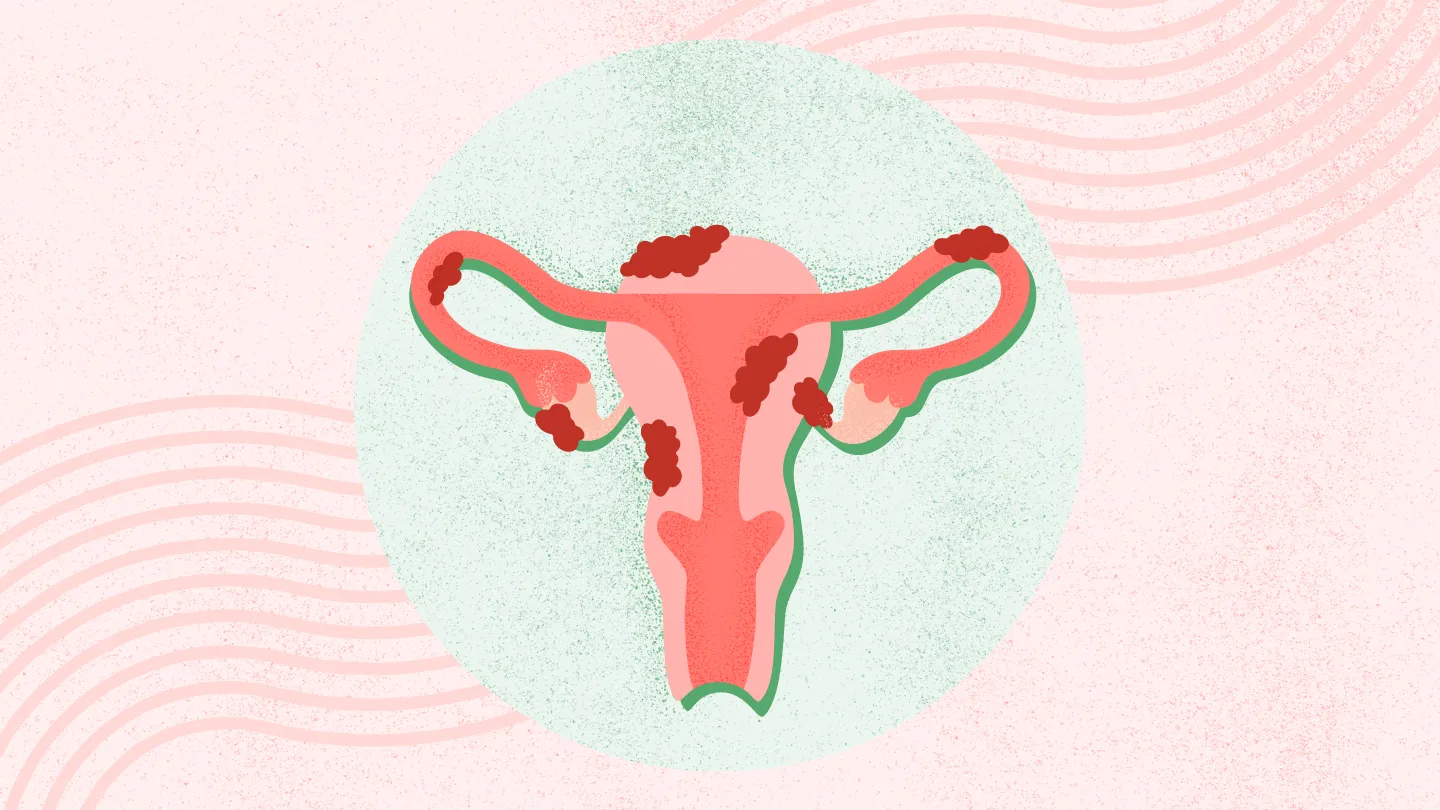
Endometriosis is an inflammatory disease characterized by the endometrial-like tissue growth outside of the uterine cavity. This ectopic growth leads to hormonal imbalances, systemic inflammation, and debilitating pain during menstruation, sexual intercourse, and bodily functions . Although it affects 10–15% of reproductive age women, there is currently no cure and the diagnosis of this diseases remains a clinical challenge [1]. Current clinical management is limited to hormonal suppression, pain control and surgical excision [2]. Consequently, there is a critical need for non-invasive, targeted therapies that can modulate the immune response and minimize recurrence rates without compromising the patient’s reproductive health.
To address these challenges, I propose Endo-Biotics, a vaginal suppository containing probiotic bacteria (Lactobacillus) genetically programmed to deliver bispecific nanobodies that block the IL-17 cytokine inflammatory cascade after specifically anchoring to CD44 receptors.
Nanobodies: Antigen-binding fragments derived from naturally ocurring heavy-chain-only present in the serum of camelids. Their small size, high stability, strong antigen-binding affinity, water solubility and natural origin offers new possibilities for treatment against antibodies that are limited by their large size and poor penetration into solid tissues [3].
Expression host: Lactobacillus is a commensal bacteria found naturally in the microbiota of the female reproductive tract. This natural affinity enables effective mucosal colonization, ensuring the system persists long enough to deliver a therapeutic dose.
Targeting module: Endometrial cells from women with endometriosis overexpress CD44 variants, wich is associated with incresed adherence to peritoneal cells and plays a key role in the development of early endometriotic lesion [4]. Targeting CD44 allows the nanobody to be retained at the lesion site and reduce exposure to surrounding healthy tissue.
Effector module: Elevated levels of IL-17 have been observed in patients during the early stages of the disease. This pro-inflammatory cytokine promotes the proliferation, invasion, and implantation of endometriotic cells by triggering the construction of new blood vessel networks [5]. Blocking IL-17 not only reduces inflammation but also interrupts the development of the blood supply these lesions require to survive and persist outside the uterine cavity.
2. Next, describe one or more governance/policy goals related to ensuring that this application or tool contributes to an “ethical” future.
Biological Containment
- Prevent uncontrolled growth: Bacterial growth should be limited to therapeutic levels and can be stopped by discontinuing use.
- Prevent dissemination beyond the host: The organism should not spread to other individuals or into the external enviromental.
- Limit horizontal gene transfer: Avoid genetically modified elements being transferred to native microbiota or environmental bacteria through horizontal gene transfer mechanisms.
Patient safety
- Minimize off-target effects: Avoid interfering with normal immune functions outside of the tissue affected by endometriosis.
- Microbiome integrity: Prevent genetically modified Lactobacillus from altering the balance of the vaginal microbiome.
- Responsable patient use: Ensure that patients use the therapy correctly, with adequate understanding of benefits, risks, and limitations.
Biosafety
- Laboratory safety: Manufactoring processes follow established biosafety protocols.
- Safe handling and distribution: Ensure appropriate storage, transport, and handling conditions.
- Misuse prevention: prevent unauthorized acquisition, modification, or use for non-therapeutic purposes.
Equitable access
- Affordability: Avoid limiting access to high-income populations only.
- Inclusive clinical evaluation: Clinical trials and tests will consider diverse populations to reduce bias and ensure effective results.
3. Describe at least three different potential governance “actions” by considering Purpose, Design, Assumptions, Risks of Failure & “Success”
Action 1: Kill Switch - Researchers
- Purpose: Prevent bacteria from growing uncontrolled or escaping into the environment.
- Design: bacteria is design to be dependent on a nutrient absent in the body and nature, only present in the vaginal suppository.
- Assumptions: The bacteria will not mutate to acquire another form of subsistence.
- Risks of Failure & “Success: If this fails, the bacteria could colonize the reproductive system. If successful, the synthetic nutrient could increase the cost of production.
Action 2: Chromosomal Integration - Researchers
- Purpose: Avoiding genetically modified elements from spreading to the native microbiota or enviromental bacteria.
- Design: In advanced stages of research, the expectation is to transition from genetic modification using plasmids to incorporating therapeutic DNA directly into the chromosomes of Lactobacillus.
- Assumptions: Chromosomal integration is stable and will not negatively affect the growth or therapeutic efficacy of the strain.
- Risks of Failure & “Success: DNA could still be transferred via transduction or natural transformation. However, risks are significantly reduced with a higher level of security system.
Action 3: Education and Transparency – User
- Purpose: Ensure correct and informed use
- Design: Clear instructions on how to use and contraindications with total transparency for informed decision making.
- Assumptions: patients will read the material and the information system will be accessible to everyone.
- Risks of Failure & “Success: negligent use of treatment is made.
Action 4: Access under prescription - Health regulatory agencies (DIGEMID, INS, SUSALUD)
- Purpose: Avoid unauthorized acquisition, home modification, or use of the therapy for purposes other than the treatment of endometriosis
- Design: Endo-Biotics must be classified as a prescription-only treatment. Only specialist doctors can issue the prescription after diagnosing endometriosis.
- Assumptions: Patients will not try to acquire the product through unofficial channels and specialists are willing to prescribe new therapies.
- Risks of Failure & “Success: High level of patient safety and clinical oversight, but it may limit access for those without easy access to specialists.
Action 5: Financing and Subsidy – Public Health Organizations (ProCiencia and MINSA – Perú | WHO and EndoFound - Internationaly)
- Purpose: ensure the therapy reaches all women regardless of their socioeconomic status.
- Design: locally, we will work to include the therapy in Peru’s National Petition of Essential Medicines (PNME) to enable coverage through MINSA (SIS); internationally, we will partner with NGOs like the Gates Foundation, ensuring lower costs for vulnerable populations in developing regions.
- Assumptions: There is sufficient political will and international funding available specifically for endometriosis, which is traditionally an underfunded area.
- Risks of Failure & “Success: Dependence on external financing or subsidy can make the project unstable. Otherwise, a technology that could improve the quality of life would be accessible to all sectors of the population.
Action 6: Rigorous Lab Protocols - Researchers
- Purpose: To avoid human error and ensure the modified Lactobacillus is produced with total sterility and verified binding ability.
- Design: mandatory “binding assays” to confirm the bacteria actually adheres to the CD44 target and strict sterility protocols to minimize the risk of contamination or environmental release.
- Assumptions: We assume researchers will follow protocols and that everything is perfectly calibrated.
- Risks of Failure & “Success: Small errors could lead to contamination or a batch with incorrect genetic markers. Otherwise, the constant auditing and verification could slow down the production process.
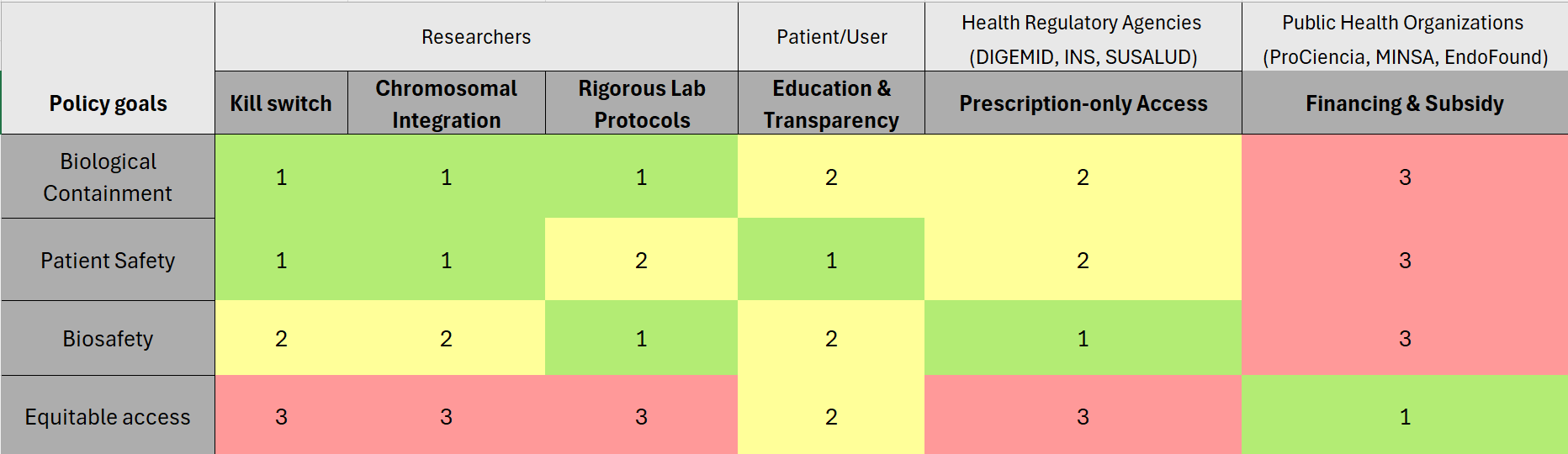
4. Score (from 1-3 with, 1 as the best, or n/a) each of your governance actions against your rubric of policy goals.
5. Last, drawing upon this scoring, describe which governance option, or combination of options, you would prioritize, and why. Outline any trade-offs you considered as well as assumptions and uncertainties.
I would prioritize the Kill Switch and Chromosomal integration, while it is true that this technical decision could increase the complexity and cost of production, Nanobody treatment in an emerging technology that is not yet fully regulated so it is necessary to take all possible precautions. The fundamental goal is to ensure its contribution to the quality of life for patients with endometriosis without the need for invasive treatments or harming their fertility. I am assuming that physicians will be willing to adopt this new bio-therapeutic and Public Health Organizations will maintain long-term interest in funding endometriosis so this treatments can be researched and developed. The biggest uncertainty is being able to achieve biological containment and avoid altering the vaginal microbiota, given that it is such a complex system.
Reflecting on what you learned and did in class this week, outline any ethical concerns that arose, especially any that were new to you. Then propose any governance actions you think might be appropriate to address those issues.
One of the ethical concerns discussed in class was “who has access.” Synthetic biology is emerging as a powerful tool that can improve quality of life and open new avenues for innovation, but it can also be used negligently in ways that may harm people or the environment. For this reason, hearing about “trust” as a central theme in biotechnology made me reflect on the importance of closing the gap between experts and the general public, and on how doing so could open the door to new approaches and perspectives, as long as it is done in an ethical way.
Assignment (Week 2 Lecture Prep)
Homework Questions from Professor Jacobson:
- Nature’s machinery for copying DNA is called polymerase. What is the error rate of polymerase? How does this compare to the length of the human genome. How does biology deal with that discrepancy?
The error rate of polymerase is 1:10^(6) which means that one error is made for every million nucleotides added. The human genome consist of approximately 3 x 10^(9) pb (3,088,269,832 pb [6]) that means that every time a cell divides there would be approximately 3,000 errors. Biology deals with errors with DNA polymerase proofreading during extension and the MutS Repair System.
- How many different ways are there to code (DNA nucleotide code) for an average human protein? In practice what are some of the reasons that all of these different codes don’t work to code for the protein of interest?
Based in Lecture 2 slides, an average human protein is 1036 bp long, since DNA is composed of four nucleotids (A, T, C, G), the number of posible ways to code a protein of this length is 4^1036.
In reality, only a small fraction of these secuences are functional. The reason behind this is that multiple codons can encode the same amino acid, but they are not equally efficient. DNA sequence defines secundary structure formation and high GC content, repetitive sequences, or unfavorable base-pairing energies can lead to unstable secondary structures that interfere with transcription, translation, or synthesis.
Homework Questions from Dr. LeProust:
- What’s the most commonly used method for oligo synthesis currently?
The most commonly used method is solid-phase chemical synthesis using phosphoramidite chemistry, where nucleotides are added one at a time in repeated cycles.
- Why is it difficult to make oligos longer than 200nt via direct synthesis?
Because each step isn’t perfectly efficient. As the oligo gets longer, small mistakes build up, so after around 200 nucleotides the yield drops a lot and many sequences are incomplete or wrong.
- Why can’t you make a 2000bp gene via direct oligo synthesis?
At that length, the error accumulation makes getting a fully correct sequence extremely unlikely. That’s why long genes are made by assembling shorter oligos instead of synthesizing them all at once.
Homework Question from George Church:
- What are the 10 essential amino acids in all animals and how does this affect your view of the “Lysine Contingency”?
The 10 essential amino acids in animals are: histidine, isoleucine, leucine, lysine, methionine, phenylalanine, threonine, tryptophan, valine, and arginine [7].
“The lysine contingency is intended to prevent the spread of the animals in case they ever got off the island. Dr. Wu inserted a gene that creates a single faulty enzyme in protein metabolism. The animals can’t manufacture the amino acid lysine. Unless they’re continually supplied with lysine by us, they’ll slip into a coma and die [8].” —Ray Arnold
It highlights how genetic codes can be engineered to enhance biological containment. I proposed this technique in my biotechnological application as a biological contingency method since it allows stopping the uncontrolled growth of Lactobacillus by designing it to depend on a component absent outside the environment for which it is intended.
Bibliography
[1] M. Sahni and E. S. Day, “Nanotechnologies for the detection and treatment of endometriosis,” Front. Biomater. Sci., vol. 2, Nov. 2023, doi: 10.3389/fbiom.2023.1279358.
[2] “Endometriosis.” Accessed: Feb. 08, 2026. [Online]. Available: https://medlineplus.gov/endometriosis.html
[3] I. Jovčevska and S. Muyldermans, “The Therapeutic Potential of Nanobodies,” BioDrugs Clin. Immunother. Biopharm. Gene Ther., vol. 34, no. 1, pp. 11–26, Feb. 2020, doi: 10.1007/s40259-019-00392-z.
[4] J. F. Knudtson et al., “Overexpression of CD44 is involved in the development of the early endometriotic lesion,” Fertil. Steril., vol. 110, no. 4, p. e390, Sep. 2018, doi: 10.1016/j.fertnstert.2018.07.1090.
[5] J. V. Garmendia, C. V. De Sanctis, M. Hajdúch, and J. B. De Sanctis, “Endometriosis: An Immunologist’s Perspective,” Int. J. Mol. Sci., vol. 26, no. 11, p. 5193, May 2025, doi: 10.3390/ijms26115193.
[6] A. Piovesan, M. C. Pelleri, F. Antonaros, P. Strippoli, M. Caracausi, and L. Vitale, “On the length, weight and GC content of the human genome,” BMC Res. Notes, vol. 12, no. 1, p. 106, Feb. 2019, doi: 10.1186/s13104-019-4137-z.
[7] “Essential Amino Acid - an overview | ScienceDirect Topics.” Accessed: Feb. 10, 2026. [Online]. Available: https://www.sciencedirect.com/topics/pharmacology-toxicology-and-pharmaceutical-science/essential-amino-acid
[8] “Lysine contingency,” Jurassic Park Wiki. Accessed: Feb. 10, 2026. [Online]. Available: https://jurassicpark.fandom.com/wiki/Lysine_contingency