Week 7 HW: Genetic Circuits-part II
Assignment Part 1: Intracellular Artificial Neural Networks (IANNs)
1. What advantages do IANNs have over traditional genetic circuits, whose input/output behaviors are Boolean functions?
In-vivo Artificial Neural Networks provide an analog approach to computation within biological systems, enabling cells to process continuous inputs and generate a gradient and a non-binary output. IANNs can integrate multiple signals and capture more complex, non-linear relationships through distributed gene regulation. IANNs have the ability to capture patterns and complex inputs.
In contrast, traditional circuits based on Boolean logic are a binary system that has an ON/OFF output that responds directly to the inputs given. This gives a limited range of data for processing based on predefined inputs given to the system. It is easier to implement experimentally, but its results are limited and cannot answer complex, continuous, and dynamic signals.
In the chart below, there is a comparison to understand it more:
| Feature | Boolean Genetic Circuits | IANNs |
|---|---|---|
| Response Type | Digital (ON/OFF) | Analog (Graded/Continuous) |
| Logic Type | Exact Logic (AND, NOT) | Non-linear Approximation |
| Complexity | Limited / Simple | Complex / Adaptive |
| Robustness | Low (Noise sensitive) | High (Pattern Recognition) |
| Main Use Case | Switch / Memory | Classification / Processing |
Comparison table made with IA´s help
2. Describe a useful application for an IANN; include a detailed description of input/output behavior, as well as any limitations an IANN might face to achieve your goal.
An interesting application of IANN could be in the production of palm hearts. The proposal would be to optimize its growth by inserting a symbiotic bacterium that sends signals to the plant genes that, in consequence, make the palm produce more or fewer proteins to gain an optimal production of fiber. A conceptual approach to the formula of this would be:
O=0.3M+0.25H−0.2S+0.25G
In which O means the output, M represents the metabolic states (sugar levels), H represents hormone levels, G represents expression related to structural growth, and S represents stress levels. So, in this approximation, when the bacteria detect a different output or the presence of this protein weight, they send a signal to the plant´s DNA so that it starts producing until it reaches a balanced output. This system would be dynamic because the plant’s state will never be a constant state due to environmental causes and internal processes.
Some possible complications would be the complexity of the plant’s system itself, and the variability in each individual, which would expand an infinite proportion of the lectures that bacteria should do, making it an adaptive network. Also, there is no guarantee of the survival of the bacteria within different individuals.
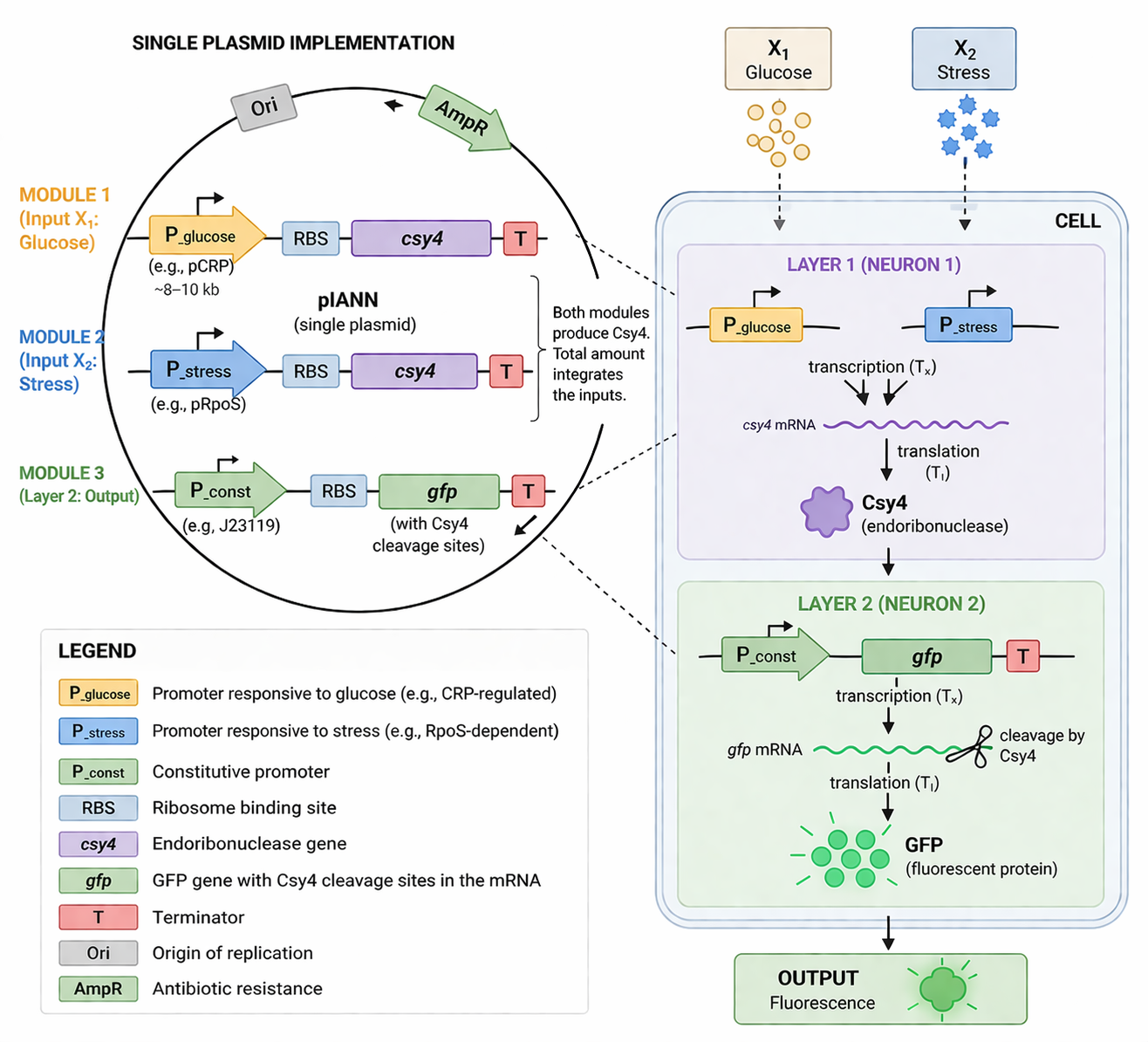
3. Below is a diagram depicting an intracellular single-layer perceptron where the X1 input is DNA encoding for the Csy4 endoribonuclease and the X2 input is DNA encoding for a fluorescent protein output whose mRNA is regulated by Csy4. Tx: transcription; Tl: translation. Draw a diagram for an intracellular multilayer perceptron where layer 1 outputs an endoribonuclease that regulates a fluorescent protein output in layer 2.
For this example, I will use:
- X1: glucose, construct: Promoter (pCRP)+ RBS + Csy4 + T
- X2: stress, construct: Promoter (pRpos) + RBS + Csy4 + T
- Layer 1: mRNA Csy4 = Csy4 w(x1+x2)
- Layer 2: GFP construct: Promoter + RBS + GFP (with cutting site) + T
- Output: Fluorescence in higher or lower quantities.
In the image above, you can see how X1 and X2 determine the amount of Csy4 produced in the cell; then, the amount of Csy4 enzyme will affect the expression of GFP. Therefore, when there is more Csy4, there will be less fluorescence (GFP), and when there is less Csy4, the fluorescence (GFP) will be higher.
Assignment Part 2: Fungal Materials
1. What are some examples of existing fungal materials and what are they used for? What are their advantages and disadvantages over traditional counterparts?
There are so many examples of the usage of fungal materials, but the most interesting and useful ones are:
 * Architecture: specifically with NASA, testing fungal materials to build biosensors for space exploration devices.
 * Biotextiles: the development and commercialization of fungal leather and other types of biotextiles
 * Mycelial wood: for replication of wood, it is lighter, faster, and easier to produce.
 * Food industries: the production of meat and proteins to compensate.
 * Antibiotic researchers
Also, the types of materials developed with fungi are classified as rigid materials or flexible materials. For the rigid ones, materials are created by combining fungi with fibers or lignocellulose particles. The characteristic of each rigid material depends on many factors, such as the type of substrate, the fungi species and strains, the type of hypha, and overall growth conditions. Some examples of rigid materials are related to construction.
For the flexible materials, the variables of material production are similar to the rigid ones, but the difference relies on the final product. In this case, textiles tend to be fragile and limited; that is why they have to be produced with biotechnology, so that their properties can improve. There are some industries that use fungi to produce flexible products like textiles, food, foams, leather, and many more.
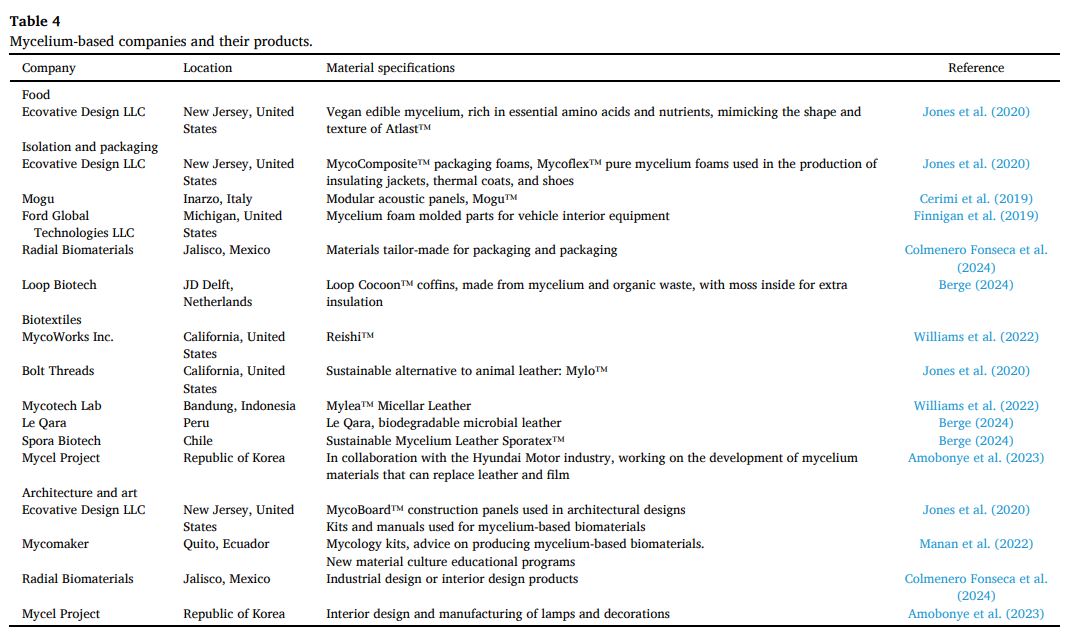
In the chart below, there is a list of various companies that work with mycelium, and the industries they are involved in:
2. What might you want to genetically engineer fungi to do and why? What are the advantages of doing synthetic biology in fungi as opposed to bacteria?
I think it could be interesting to genetically engineer fungi to efficiently convert plant biomass into biofuels such as ethanol, lipids, or energy-rich compounds. Due to their natural ability to degrade complex polymers like cellulose or lignin, fungi can serve as a biological platform for transforming agricultural waste into usable energy sources.
According to the paper “Fungal Innovations - Advancing sustainable materials,” the advantages of doing synthetic biology in fungi rely on the structural and biosynthetic capabilities, in contrast to E.coli or S. cerevisiae, which are the common hosts that have rapid growth and simple genetics, but have some complications with RNA splicing, and complex regulation. Filamentous fungi, to be specific, can fold complex proteins and can drive advancements in better transcriptional regulation tools, genome editing techniques, and rapid DNA assembly methods; therefore, they are powerful biomanufacturing platforms.
Assignment Part 3: First DNA Twist Order
0. Review the Individual Final Project documentation guidelines.
1. Submit this Google Form with your draft Aim 1, final project summary, HTGAA industry council selections, and shared folder for DNA designs. DUE MARCH 20 FOR MIT/HARVARD/WELLESLEY STUDENTS
For this part, I made the submission but forgot to take a screenshot of it. The shared folder can be found in this lik: https://benchling.com/s/seq-kXwSe99jGIKKQLPAx7XC?m=slm-7BhFEtQHpBAKVNKSrK9c
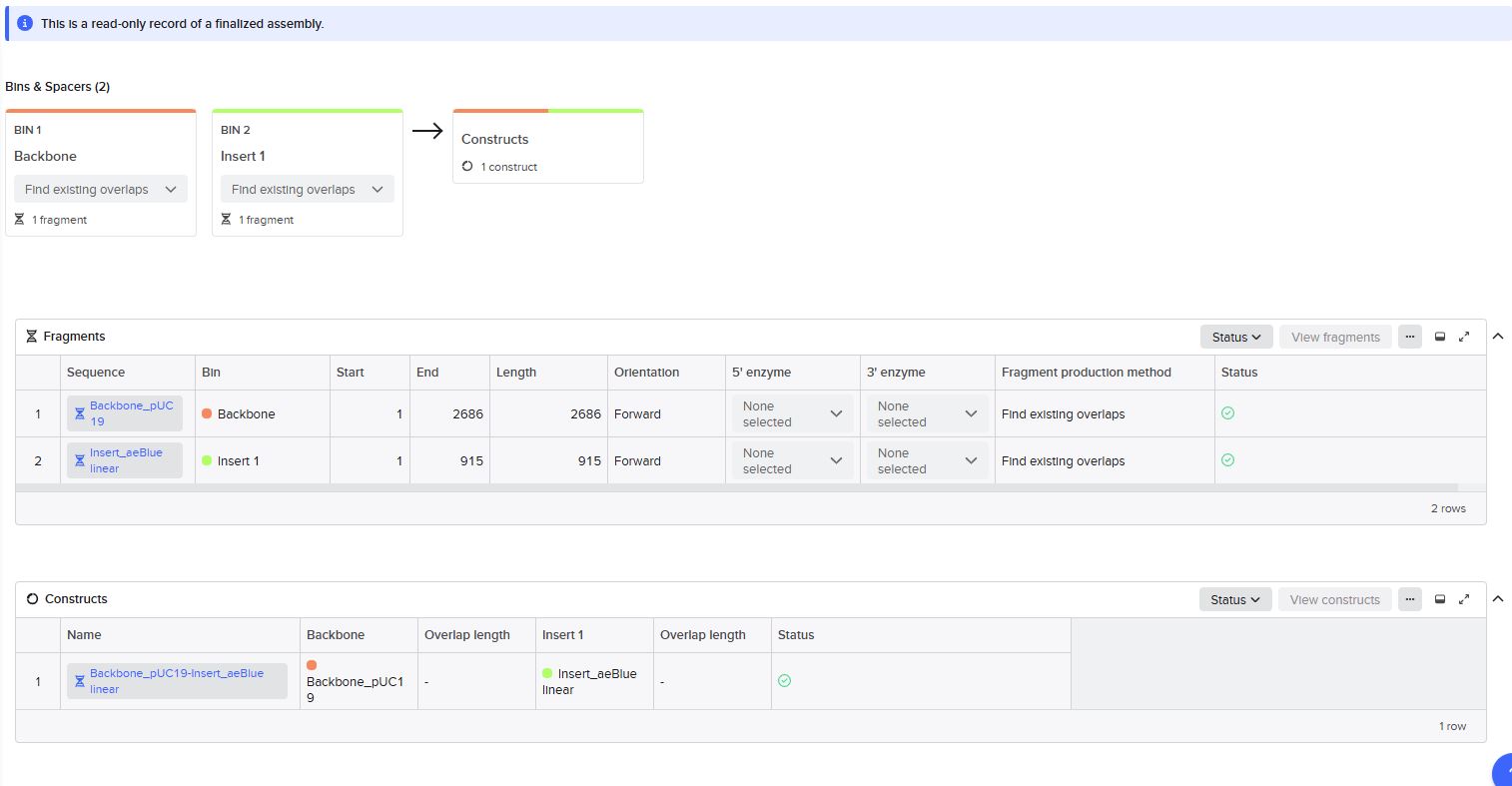
2. Review Part 3: DNA Design Challenge of the week 2 homework. Design at least 1 insert sequence and place it into the Benchling/Kernel/Other folder you shared in the Google Form above. Document the backbone vector it will be synthesized in on your website.
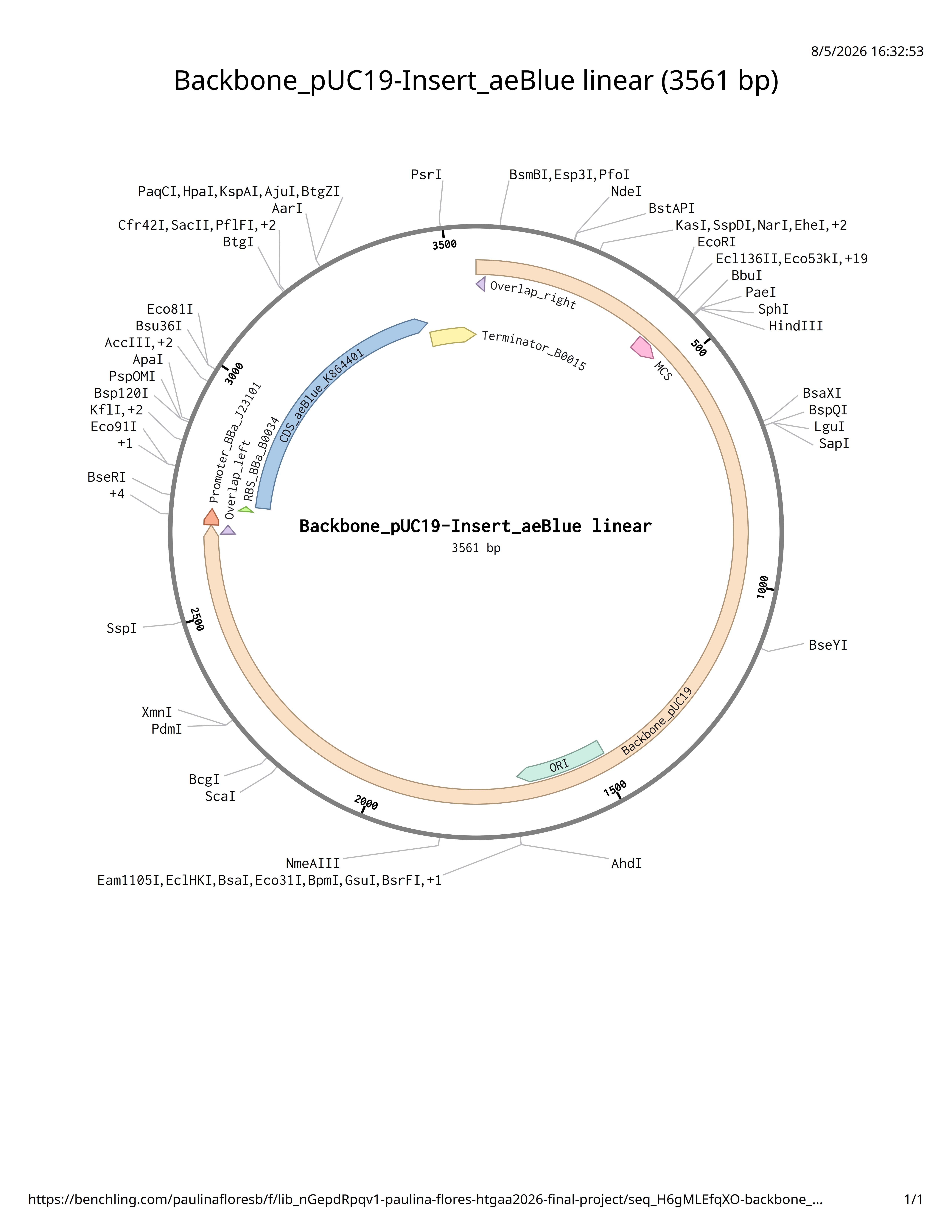
I made an insert for E.coli using aeBlue.
AeBlue is a chromoprotein originally derived from the anemone Actinia equina. This protein is color-dependent and expresses a strong bright blue color. The color palette of the protein goes from pink to bright blue. I chose this chromoprotein because the color intensity of this protein is higher than that of many other chromoproteins, making it specially useful for visualization during co-culture experiments with K. xylinus during cellulose production and a bio-leather formation.
A stronger color expression would make it easier to monitor protein expression and track bacterial distribution throughout the material.
For this insert, I chose to use:
- Constitutive promoter BBa_J23101
- RBS BBa_B0034
- CDS aeBlue K864401
- Terminator B0015
- Backbone: pUC19