Peter Hanna — HTGAA Spring 2026
About me
I’m Peter, a pharmacy student from Egypt with a passion for bridgin biolgoy & chemistry with data science
I’m Peter, a pharmacy student from Egypt with a passion for bridgin biolgoy & chemistry with data science
Week 1 HW: Principles and Practices
Assignment: Python Script for Opentrons Artwork: For this assignment I wanted to draw something that’s representative of me, I really like chemistry, so I wanted to draw a test tube at first :)I thought to myself that it would be so lame to if it was just straight up a test tube, I tried to tilt it a little bit and to add some bubbles using different shades, I realized quickly however that I don’t know how to draw a curve nor a tilted line :(
Daptomycin is the one of the novel lipopeptide antibiotics, that has high clinical relevance, owning to is effectiveness against multidrug resistant (MDR) bacteria, such as vancomycin resistant enterococci (VRE) and methicillin-resistant Staphylococcus aureus (MRSA), establishing its rule as a last resort antibiotic, one of the drawbacks of daptomycin is its expensive price tag, which puts a load on the patient treated and the health system due to the laborious work required with it, I want to decrease the cost for daptomycin by removing some of the genes required for its manufacturing, and using protein engineering to compensate for the removed genes by increasing affinity of one substrate over the other, and finally, design a de-novo enzyme for the lipid tail addition process to daptomycin.
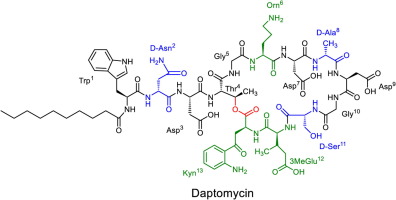
To further clarify my idea, let’s explore together, the structure of daptomycin and how does bacteria naturally produce it, daptomycin is a 13-peptide long molecule, with some amino acids being non proteinogenic (not one of the common 20 amino acids used by the ribosome to create proteins), with a lipid tail attached to the first amino acid, tryptophan, this lipid tail is naturally 13 carbons long, which a problem we will touch upon later on, you might currently be wondering but how does bacteria incorporate non-proteinogenic amino acids using normal protein synthesis pathways? Well, the answer is: by not using normal protein synthesis pathway. https://www.sciencedirect.com/science/article/pii/S0968089616303856?via%3Dihub
Instead of using ribosomes, bacteria use, in this case, a bunch of proteins called non-ribosomal peptide symthetases (NRPSs), which are huge proteins that can use not the only the 20 amino acids, it also has the ability to incorporate 500 different substrates!
They work in modules where each one is responsible for exactly one substrate in the synthesis, each module consists of domains, with the three basic ones being: adenyltation (A), thiolation (T) & condensation (C), the A domain is responsible for the recognition and activation step of the molecule, the thiolation is responsible for anchoring the substrate to the module and passing it between different domains, and the condensation domain is responsible for moving the peptide from one module to the next. (https://doi.org/10.1002/anie.201609079)
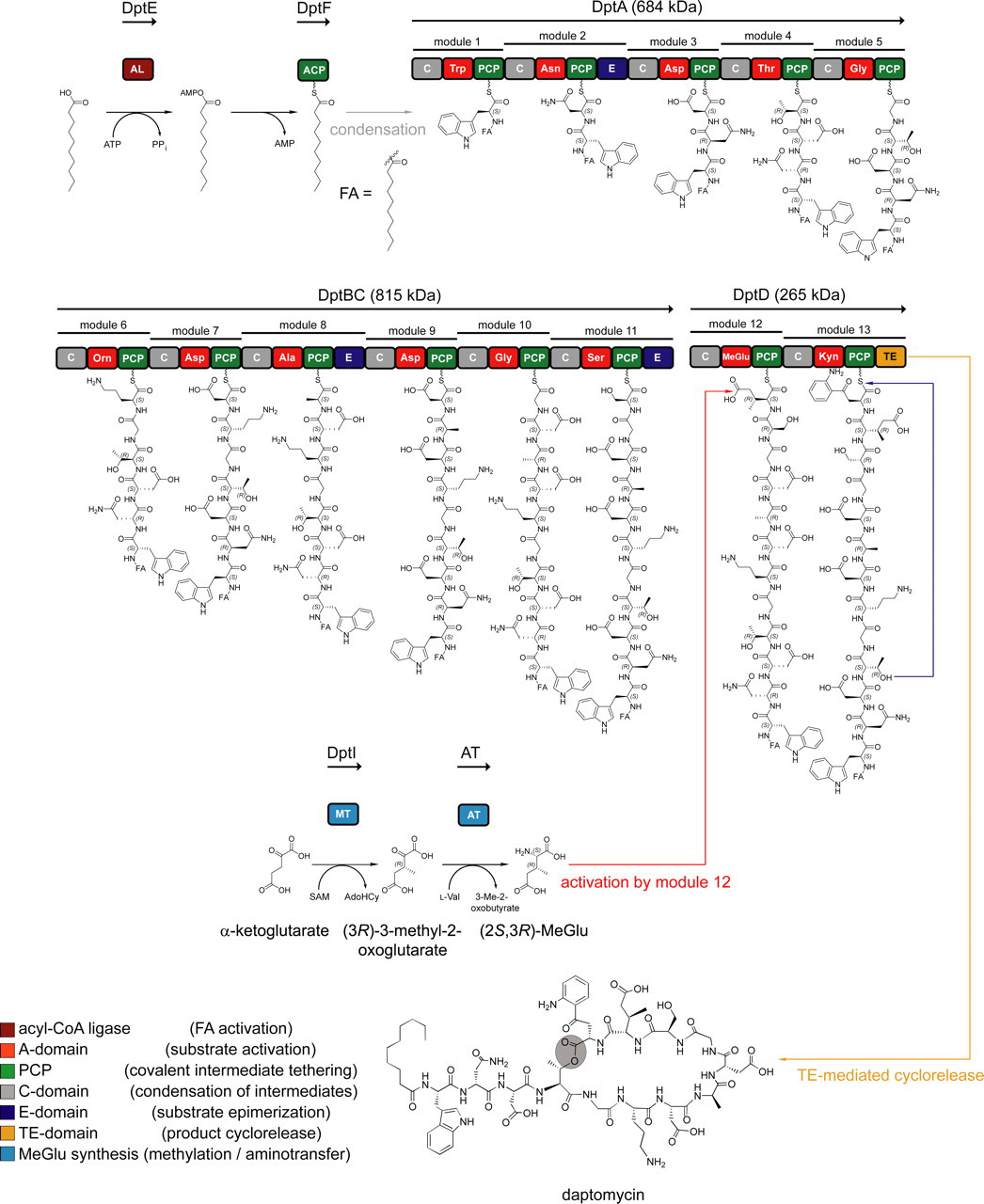
here is an illustration of daptomycin’s gene cluster https://www.jbc.org/article/S0021-9258(19)89079-8/fulltext
The first two modules in daptomycin synthesis (DptE & F) add a lipid tail to tryptophan, which is a must for its anti-bacterial activity, as mentioned above these modules are quite problematic, why is that the case?
Because the lipid tail that gives daptomycin its activity with a tolerable toxicity is C10, this module however can incorporate C11, 12 & 13 because they’re naturally found in the cell of S. roseporous, the bacteria that synthesises daptomycin, the molecules that have a tail rather the C10 are basically discarded as waster after purification using chromatography, in addition to that, decanoic acid (C10) is toxic to the bacterium, which requires very careful addition of this chemical, with exact amounts & rate, slowing down the industrial rate of daptomycin production, additionally, because of daptomycin antibacterial activity, the bacteria has to regularly get the drug outside, through the use of special pumps coded in the ABC transporter pump genes.
Back to the proposed project, how does it address these problems?
I want to remove the DptE & F modules entirely, and engineer the A site of DptA to recognize tryptophan directly, to direct the bacteria to create only the nucleus for daptomycin, which has little to no antibacterial activity, which would allow for the deletion of ABC pump genes too, I would then to create an enzyme responsible for the acylation of nucleus, but this enzyme would have higher affinity for decanoic acid, which would decrease the waste, effectively increasing the amount of drug produced per batch.
Break big goals down into two or more specific sub-goals.
Goal A: ensure safe biological & ecological handling:
Goal B: promote access to more affordable antibiotics:
“Claude and ChatGPT were used for help in the following sections and the answers were thoroughly reviewed by me”
GOVERNANCE ACTION 1: Biosafety Certification for Engineered Production Strains
GOVERNANCE ACTION 2: Technology Transfer Partnership for LMIC Manufacturing
GOVERNANCE ACTION 3: Standardized Kill-Switches and Biocontainment
| Does the option: | Option 1 | Option 2 | Option 3 |
|---|---|---|---|
| Enhance Biosecurity | |||
| • By preventing incidents | 2 | 3 | 1 |
| • By helping respond | 1 | 2 | N/A |
| Foster Lab Safety | |||
| • By preventing incident | 1 | 2 | 1 |
| • By helping respond | 1 | 3 | N/A |
| Protect the environment | |||
| • By preventing incident | 2 | 2 | 1 |
| • By helping respond | 1 | 3 | N/A |
| Other considerations | |||
| • Minimizing costs and burdens | 2 | 2 | 1 |
| • Feasibility? | 1 | 3 | 2 |
| • Not impede research | 2 | 1 | 2 |
| • Promote constructive applications | 3 | 1 | 2 |
Primary Priority: Option 3 (Kill-Switch Standards) - Immediate Implementation I would prioritize developing and standardizing technical biocontainment measures first because:
Secondary Priority: Option 1 (Biosafety Certification) - 3-year rollout After biocontainment tools are available, implement certification requirements because:
Selective Implementation: Option 2 (Tech Transfer) - Targeted pilot Rather than broad implementation, I’d recommend:
Nature’s machinery for copying DNA is called polymerase. What is the error rate of polymerase? How does this compare to the length of the human genome. How does biology deal with that discrepancy?
The error rate of DNA polymerase I is $1:105$, which translates to a wrong base added every hundred thousand bases, the human genome is made of approximately 6.4 Gbp, which would lead to abou 120,000 errors in every cell replication cycle (https://www.nature.com/scitable/topicpage/dna-replication-and-causes-of-mutation-409/) Biology deals with this by several means, first of all, DNA polymerases actually have proofreading capability, that allows them to remove bases that were added by mistake, secondly, biology provides several means DNA repairing mechanisms, such as the mutS repair system & mismatch repairing enzymes, which decreases the mutation to an astonishing $10{-8}$ mutations/bp/generation! (https://book.bionumbers.org/what-is-the-mutation-rate-during-genome-replication/)
How many different ways are there to code (DNA nucleotide code) for an average human protein? In practice what are some of the reasons that all of these different codes don’t work to code for the protein of interest?
On average, a human protein is 476 amino acids, (https://bionumbers.hms.harvard.edu/bionumber.aspx?id=101652) and there is 64 different codon combinations, three of which are stop codons, which leaves us with 61 codes and 20 amino acids, that means on average an amino acid has approximately 3 different combinations; therefore, there is $3^{476}$ (approximately $1.29 \times 10^{277}$)different ways to code for the same protein. I believe one of the reasons this doesn’t work in practice, is because genomes tend to have codon bias, where one has a faster translation rate than the other, causing it to be more common, or for the other to stall the translation; in addition, since biology is just a bunch of random shapes bumping into each other (shoutout to anyone who watches phy the neutrophil) perhaps some of these shapes would stall the translation process
What’s the most commonly used method for oligo synthesis currently? The most common way for oligo synthesis is solid-phase synthesis (https://www.mt.com/sg/en/home/applications/L1_AutoChem_Applications/L2_ReactionAnalysis/oligonucleotide-synthesis.html & https://www.sciencedirect.com/topics/biochemistry-genetics-and-molecular-biology/oligonucleotide-synthesis)
Why is it difficult to make oligos longer than 200nt via direct synthesis? during acid deprotection, depurination side reactions limit the quality and yields of oligonucleotides above 100 nucleotides, efforts has been made in this area and new detritylation process can help with creating 150 nucleotides with high yield.
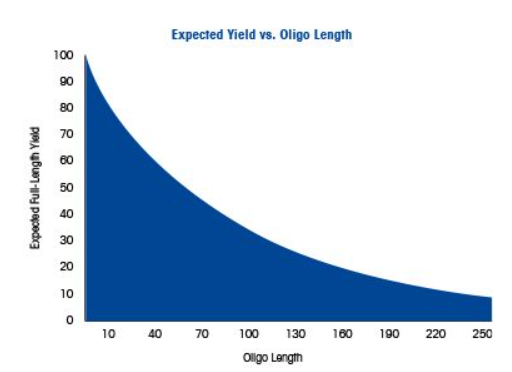
Why can’t you make a 2000bp gene via direct oligo synthesis? because the yield would be so low due to instability and error accumulation.
What are the 10 essential amino acids in all animals and how does this affect your view of the “Lysine Contingency”? The 10 essential amino acids are: histidine, isoleucine, leucine, lysine, methionine, phenylalanine, threonine, tryptophan, valine, and arginine. These amino acids must be obtained from nutrition, because the body can’t normally synthesize them. This renders the lysine contingency pointless, because dinosaurs, as animals, lack the ability to synthesis lysine anyways.
For this assignment I wanted to draw something that’s representative of me, I really like chemistry, so I wanted to draw a test tube at first :)I thought to myself that it would be so lame to if it was just straight up a test tube, I tried to tilt it a little bit and to add some bubbles using different shades, I realized quickly however that I don’t know how to draw a curve nor a tilted line :(
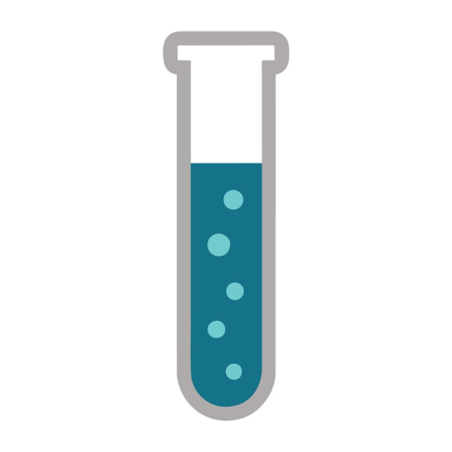
This was the image I tried to use

And this was the closest that I’ve got to what was on my mind, I decided to move on to try another design (rip test tube), but I still wanted something that’s colorful, So, I decided to draw the FC Barcelona logo, and it was wonderful, the art resembled the logo pretty much from the first attempt, but there was room for improvement
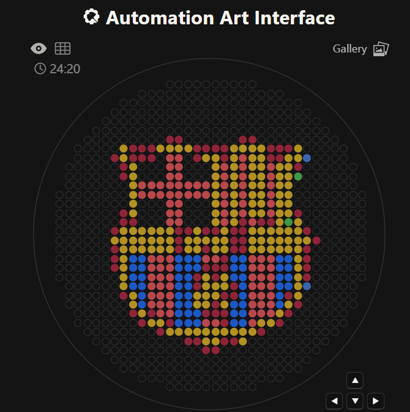
And after some tweaks, this was the final result
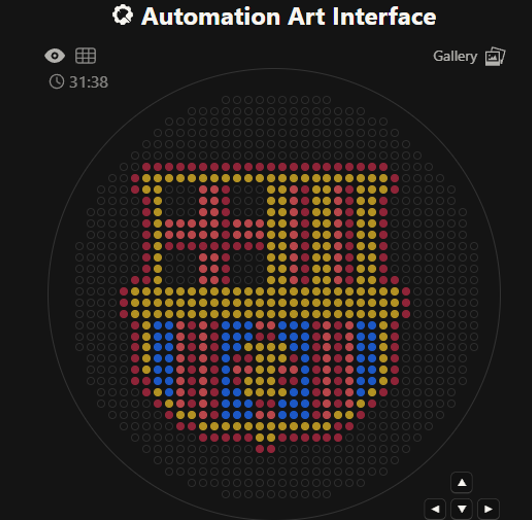
I was satisfied with the result, but I still want to smoothen the curves, and honestly, I was just spamming different shades with no reason, If I were to redo this task, I would look up first how to do proper shadowing, this was really fun which I didn’t think I would enjoy this much!
Now, to the not very fun part, the coding, I tried to use Gemini to help with the code, but it wasn’t very easy, and I started this task late unfortunately, so I had to settle with the script downloaded from the website
Find and describe a published paper that utilizes the Opentrons or an automation tool to achieve novel biological applications.
Write a description about what you intend to do with automation tools for your final project.
For my 2nd and 3rd ideas, I would like to use the automation tools to iterate on my designs, as they allow for the testing of many versions at once
Daptomycin is one of the important drugs for multi-drug-resistant bacteria, its tedious manufacturing process makes it quite expensive, one of these factors is that one of the substrates fed to the bacteria to synthesize daptomycin is toxic, which is its lipid tail, I propose editing the genetics of S. roseporous, the organism used to synthesize daptomycin, to synthesize it without its lipid tail, and to design a new enzyme responsible for the lipidation process of daptomycin in a cell-free system
Diabetes mellitus is one of the most common diseases in Egypt, there are basically two types, DM1 & DM2, where in the first the liver almost doesn’t synthesize insulin anymore, and in the latter, the insulin receptors are not functioning as they should, the second type can be treated with non-insulin medications, which can be taken orally. However, this is not the case for type 1, which requires insulin, a protein that’s broken down in gastric juices, thus, the most common of administration is through injection, I want to create DNA origami, that has an aptamer that attaches it to the FcRn receptors, allowing it to get into systemic circulation despite its big size, another aptamer would be engineered to allow the release of insulin only in case of hyperglycemia. Major problems facing this project are the DNA origami stability in GIT juices, aptamers design, and insulin loss until it reaches the systemic circulation, which could render it a non-viable product due to economic burden.
Carbon monoxide poisoning is called the silent killer, it has no color, no odor, no warning signs, and it can bind to hemoglobin with 200 times the affinity of that of oxygen, I want to design a genetic circuit to detect carbon monoxide