Week 3 HW: Lab Automation
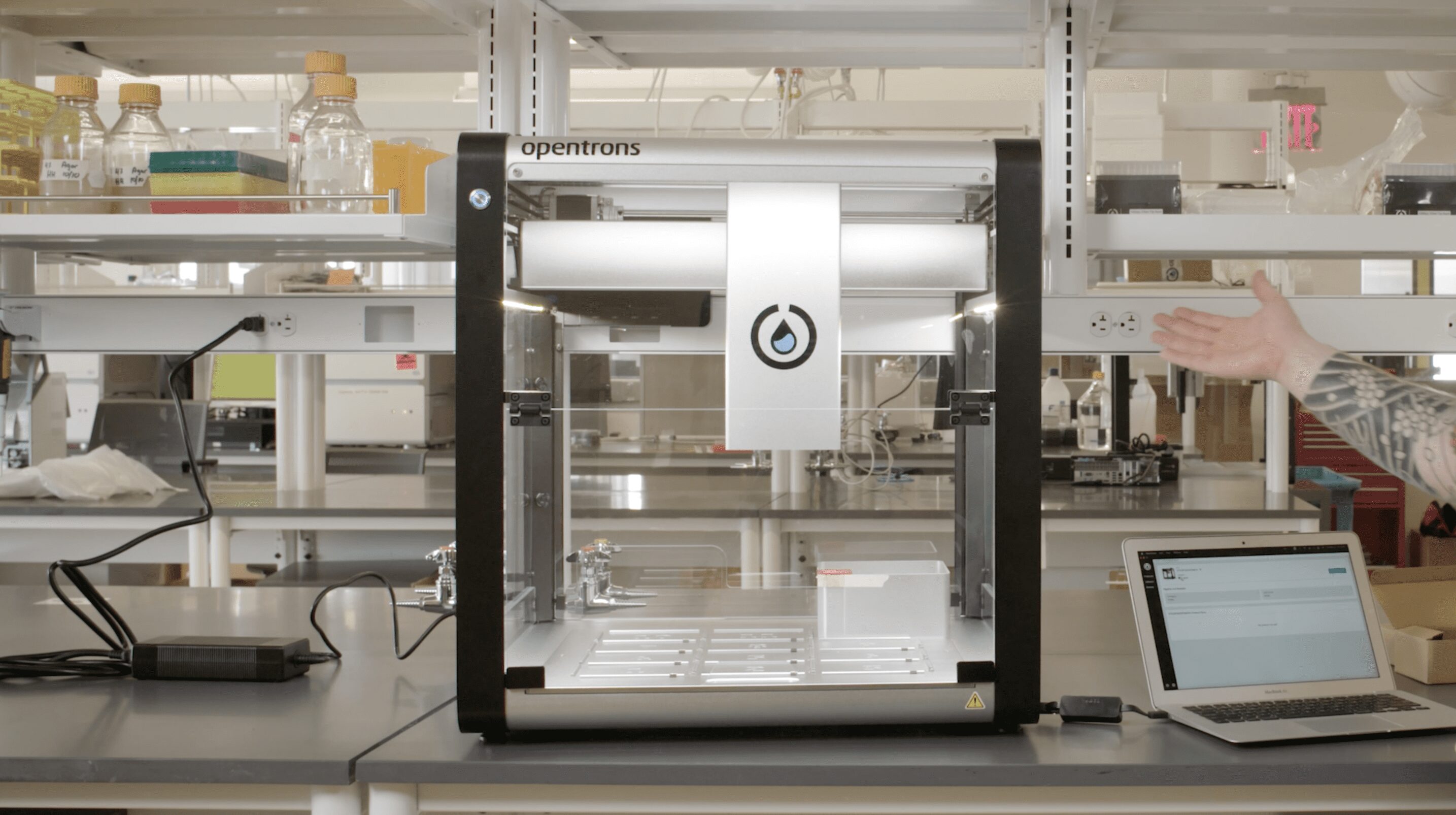
Assignment: Python Script for Opentrons Artwork
This is a link to the code for my Opentrons Artwork.
AI Contributions: I used AI to generate large portions of my code as I am largely unfamiliar with python programming. I used Gemini AI and asked it to integrate my coordinates for my artwork into the code in Colab.
Info
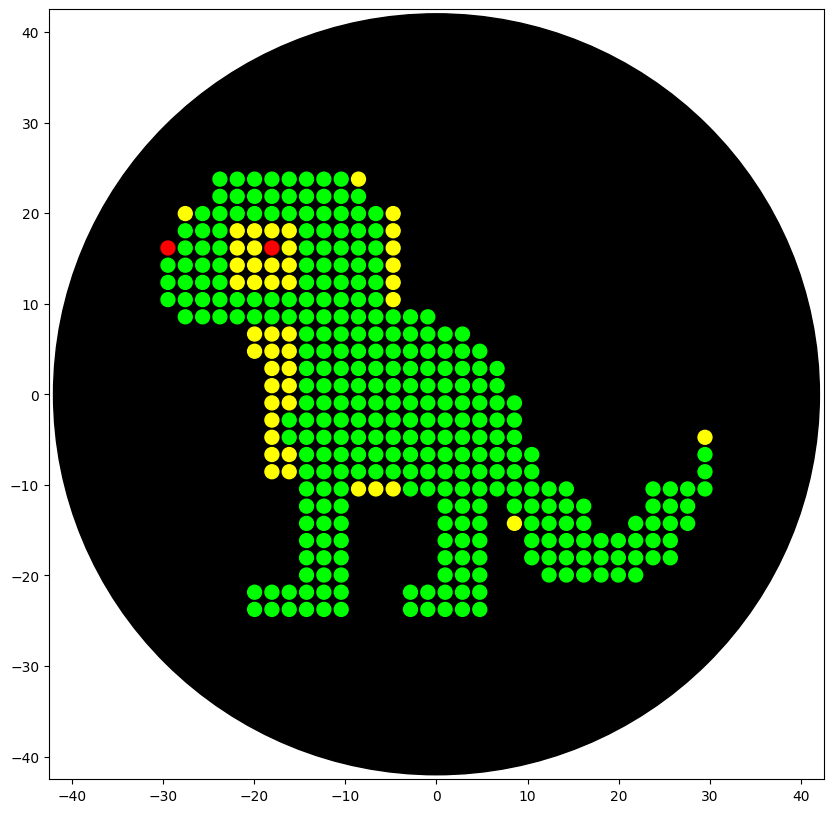
This image is a simulation of the product of my code when ran on the Opentrons robot. It is pixel art of a lizard.
Info
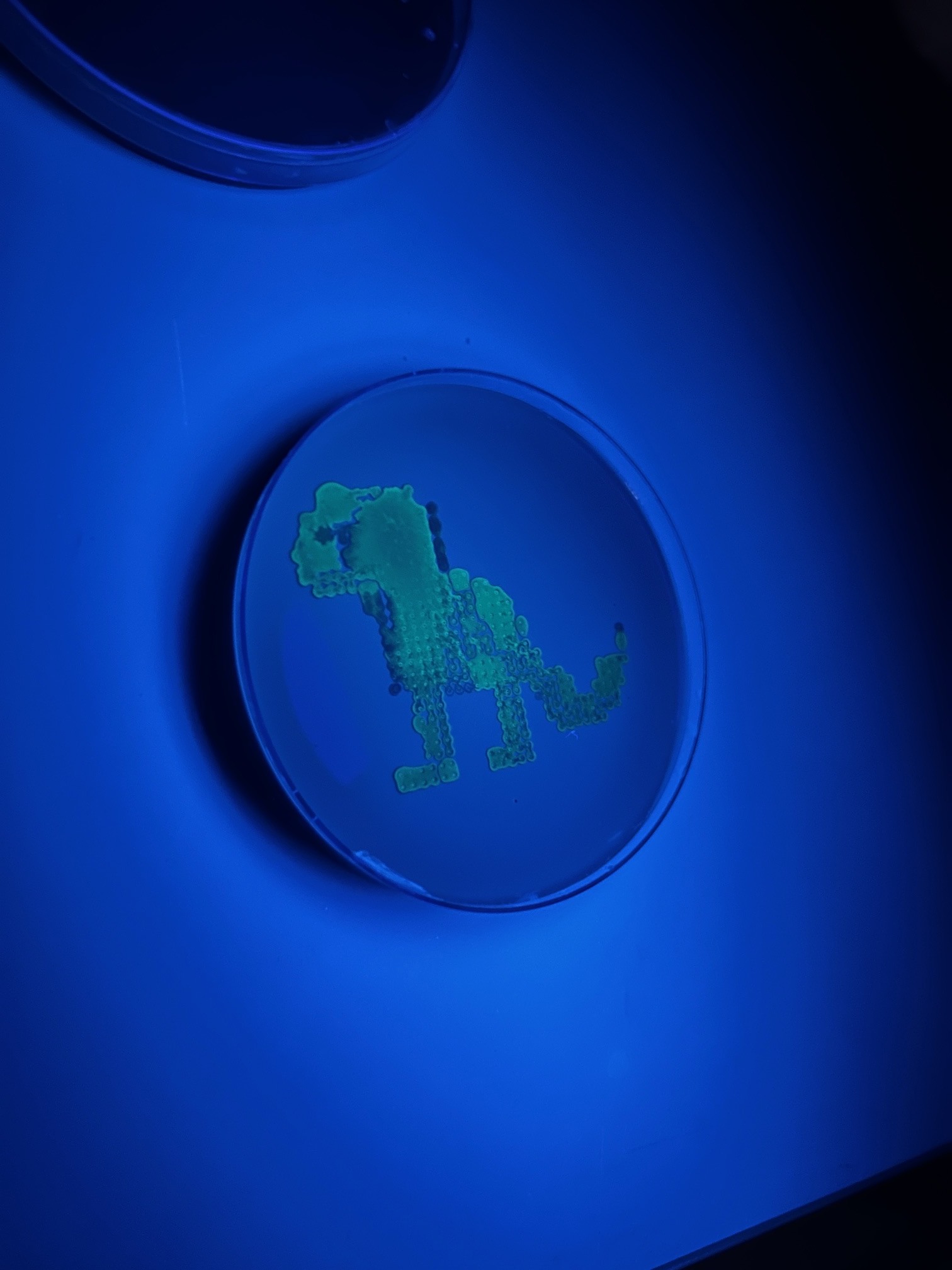
An image of the result of my code being run on the Opentrons robot at William and Mary.
Post-Lab Questions
Find and describe a published paper that utilizes the Opentrons or an automation tool to achieve novel biological applications.
The published paper that I found is titled “Semiautomated Production of Cell-Free Biosensors” (Brown, 2025). In this publication, the researchers develop and demonstrate an automated pipeline using the Opentrons OT-2 liquid handling robot to (mostly) automate and scale the manufacturing of cell-free biosensors. In their pipeline, they used the Opentrons to produce a full 384-well plate of fluoride-sensing biosensors. The researchers had the objective of using the Opentrons OT-2 robot to develop a method capable of high-throughput manufacturing, reduced variability in sensor performance, and accessibility across global labs.
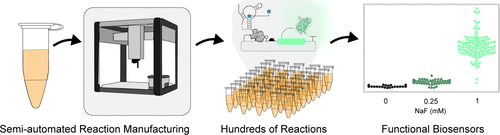
When compared to manually assembled biosensors, the biosensors created by the robot proved to have greater consistency among detection thresholds. This research suggested that facilities or field clinics could use Opentrons robots to assemble diagnostic tests on-demand rather than importing them from outside sources. In addition, the success of this study shows how the cheaper OT-2 robot can be used in replacement of industrial-grade liquid handlers so that the production of synthetic biology-based diagnostics can be done in resource-limited settings.
Write a description about what you intend to do with automation tools for your final project. You may include example pseudocode, Python scripts, 3D printed holders, a plan for how to use Ginkgo Nebula, and more. You may reference this week’s recitation slide deck for lab automation details.
In my final project, I want to use automation tools to reliably produce biosensors and test them. I want to use the Opentrons robot to create multiple samples of protoplast cells altered by CRIPSR/Cas9 to produce a certain biosensor within the cell. These cells would be incubated and grown. Then, in an experiment, the automation tools would expose these cells to pathogens to see if the biosensor is able to reliably detect the presence of the pathogen. The fluoresence created by the biosensor can be measured by PHERAstar.
References
Brown, D. M., Phillips, D. A., Garcia, D. C., Arce, A., Lucci, T., Davies Jr., J. P., Mangini, J. T., Rhea, K. A., Bernhards, C. B., Biondo, J. R., Blurn, S. M., Cole, S. D., Lee, J. A., Lee, M. S., McDonald, N. D., Wang, B., Perdue, D. L., Bower, X. S., Thavarajah, W., … Lucks, J. S. (2025). Semiautomated Production of Cell-Free Biosensors. ACS Synthetic Biology, 14(3), 979-986. https://doi.org/10.1021/acssynbio.4c00703.s001