Week 5 HW: Protein Design Part II
Part A: SOD1 Binder Peptide Design (From Pranam)
Part 1: Generate Binders with PepMLM
This is the human SOD1 sequence containing the A4V mutation:
MATKVVCVLKGDGPVQGIINFEQKESNGPVKVWGSIKGLTEGLHGFHVHEFGDNTAGCTSAGPHFNPLSRKHGGPKDEERHVGDLGNVTADKDGVADVSIEDSVISLSGDHCIIGRTLVVHEKADDLGKGGNEESTKTGNAGSRLACGVIGIAQ
| Binder | Pseudo Perplexity | |
|---|---|---|
| 0 | WHYYATGARWGE | 16.929015 |
| 1 | WRYGAVALELKK | 12.714672 |
| 2 | WRSPAAAARWWK | 9.155765 |
| 3 | WRYPATAAALKX | 4.843841 |
| 4 | FLYRWLPSRRGG | N/A |
Info
The table generated by PepMLM detailing possible peptides to bind to mutant SOD1 along with their pseudo perplexity scores. Peptide 4 is an already known SOD1-binding peptide.
Part 2: Evaluate Binders with AlphaFold3
| Binder | ipTM | Peptide localizes near SOD1 N-terminus? | Engages β-barrel region? | Approaches dimer interface? | Surface-bound/partially buried peptide? | 3D Model | |
|---|---|---|---|---|---|---|---|
| 0 | WHYYATGARWGE | 0.32 | No | No | Yes | Yes | 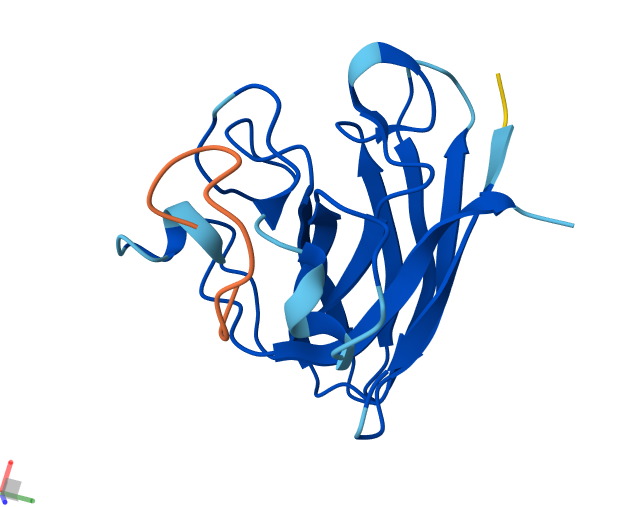
|
| 1 | WRYGAVALELKK | 0.18 | No | No | Yes | Yes | 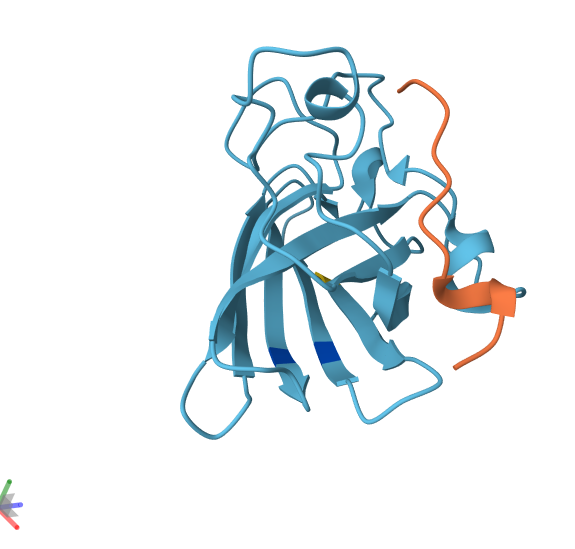
|
| 2 | WRSPAAAARWWK | 0.42 | No | Yes | No | Yes | 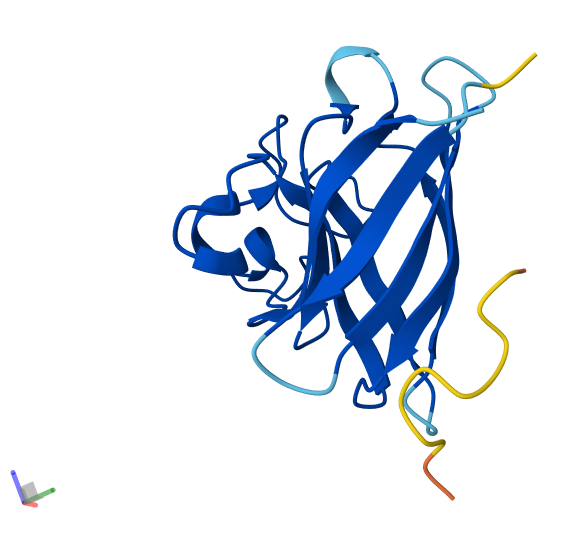
|
| 3 | WRYPATAAALKA | 0.46 | No | Yes | No | Yes | 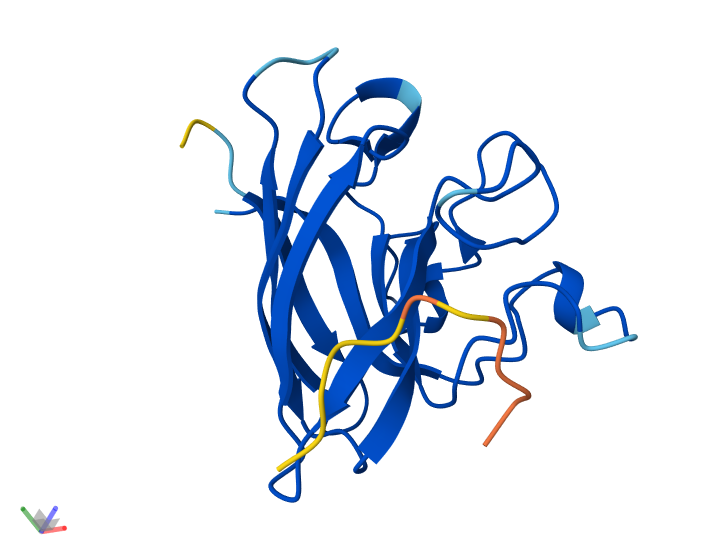
|
| 4 | FLYRWLPSRRGG | 0.29 | No | No | Yes | Yes | 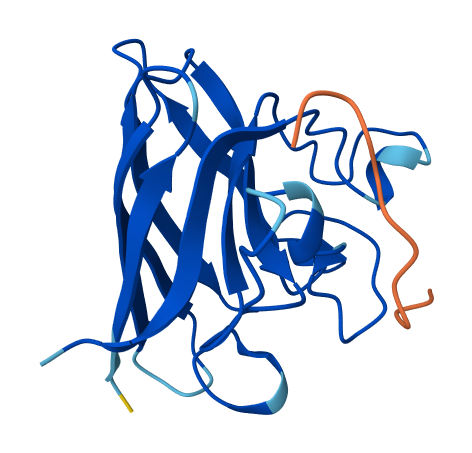
|
Info
Table containing results from AlphaFold3 generations
Peptide generations 0, 1, and 4 contain ipTM scores lower than 0.4, demonstrating no meaningful binding between the peptide and the A4V mutated SOD1 protein. However, compared to the known binder 4, peptides 0, 2, and 3 have greater ipTM values. Peptides 2 and 3 contain ipTM scores significantly greater than the known binder 4 at 0.42 and 0.46, respectively.
Part 3: Evaluate Properties of Generated Peptides in the PeptiVerse
The results from PeptiVerse of the 5 peptides proved to be mostly consistent with the ipTM values in AlphaFold3. Peptides 0, 1, and 4 resulted in weak binding which is consistent with their low ipTM scores in AlphaFold3. However, peptide 2 also resulted in weak binding in PeptiVerse which was unexpected as it had an ipTM score of 0.42 in AlphaFold3. Peptide 3 resulted in medium binding which is consistent with its ipTM score of 0.46. All five peptides were soluable and non-hemolytic so they all had sufficient therapeutic properties. Only peptide 4 balanced predicted binding and therapeutic properties well.
Part 4: Generate Optimized Peptides with moPPIt
| Peptide Sequence | Hemolysis ↓ | Solubility ↑ | Affinity ↑ | Motif Match ↑ |
|---|---|---|---|---|
| GGKKEYYYSRYP | 0.9586 | 0.9167 | 7.21 | 0.1572 |
| EKQYTCDTSTKM | 0.9675 | 0.9167 | 6.18 | 0.8416 |
| KKTTGYGECSYN | 0.9639 | 1.0000 | 5.85 | 0.8290 |
| GTYTCETTYTQW | 0.9728 | 0.9167 | 6.68 | 0.8369 |
Info
Table of results from the moPPIt-v3 Colab using the A4V mutated SOD1 protein.
The peptides generated by the moPPIt-v3 Colab generated stronger binding and motif match results than the peptides generated by PepMLM. In addition, both groups of peptides had high solubility. However, the peptides generated by moPPIt-v3 demonstrated very high hemolysis results, insinuating high risks for red blood cell damage. I would evaluate these peptides to be unready for clinical studies since their hemolytic values are too high. These peptides would be too dangerous to use in therapeutic applications.
Part C: Final Project: L-Protein Mutants
I worked with Jason Ross, Xavier-Lewis Palmer, and Nana Agyei Afrane-Asare to generate mutated proteins to improve the stability of the L-Protein. Our results can be found in this Google Doc.