Week 11 Lab: Introduction to Cloud Laboratories
Info
This week’s lab was effectively part of the Week 11 Homework. Therefore, I copy and pasted my homework on this webpage.
Part A: The 1,536 Pixel Artwork Canvas | Collective Artwork
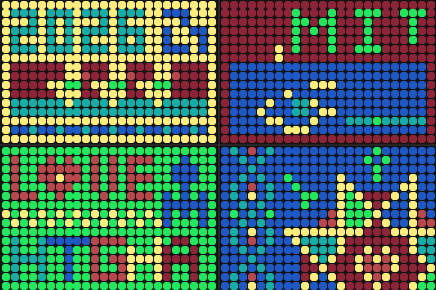
For the artwork, I contributed to four pixels on the DNA strand. I really liked how the whole community came together to work on this one project. It was nice to interact with all the other students in the HTGAA course.
To make this collaborative art experiment better for next year, the art canvas could be made to be bigger.
Part B: Cell-Free Protein Synthesis | Cell-Free Reagents
- Referencing the cell-free protein synthesis reaction composition (the middle box outlined in yellow on the image above, also listed below), provide a 1-2 sentence description of what each component’s role is in the cell-free reaction.
E. coli Lysate
- BL21 (DE3) Star Lysate: Provides the core cellular translation machinery, including ribosomes, tRNAs, and aminoacyl-tRNA synthetases, alongside natively expressed T7 RNA Polymerase to drive robust transcription from T7 promoter-contained DNA templates.
Salts/Buffer
- Potassium Glutamate: Serves as the primary intracellular monovalent salt to maintain optimal ionic strength and osmotic balance required for stable protein-nucleic acid interactions during translation.
- HEPES-KOH pH 7.5: Functions as a zwitterionic biological buffer to maintain a stable, physiological pH profile throughout the duration of the metabolic incubation.
- Magnesium Glutamate: Supplies critical divalent magnesium cations (Mg2+) necessary to stabilize ribosome structure, facilitate codon-anticodon base pairing, and serve as an enzymatic cofactor.
- Potassium phosphate monobasic & Potassium phosphate dibasic: Forms a secondary buffering system that stabilizes pH while supplying an inorganic phosphate pool essential for continuous nucleotide recycling and energy regeneration.
Energy / Nucleotide System
- Ribose: Acts as a fundamental sugar precursor used by the lysate’s salvage pathways to synthesize the ribose rings required for fresh nucleotide generation.
- Glucose: Serves as the primary carbohydrate energy source, fueling endogenous glycolytic pathways within the lysate to regenerate ATP and GTP over extended incubation times.
- AMP, CMP, GMP, UMP: Function as monophosphate nucleotide building blocks that are enzymatically phosphorylated by the system into active nucleoside triphosphates (NTPs) for mRNA transcription.
- Guanine: Provides a supplementary purine nucleobase resource to prevent guanosine nucleotide depletion during long-term transcriptional operations.
Translation Mix (Amino Acids)
- 17 Amino Acid Mix: Supplies the foundational, balanced pool of standard amino acid building blocks required for ongoing polypeptide chain elongation.
- Tyrosine: Added individually to circumvent solubility limits at neutral pH, ensuring sufficient availability of this hydrophobic residue for complete protein translation.
- Cysteine: Supplemented separately to offset rapid chemical oxidation in cell-free systems, preserving the thiol groups necessary for proper disulfide bond formation and protein folding.
Additives
- Nicotinamide: Functions as a precursor and stabilizer for nicotinamide adenine dinucleotide (NAD/NADH) cofactors, protecting the internal metabolic networks driving energy regeneration from degradation.
Backfill
- Nuclease Free Water: Serves as the high-purity solvent matrix to adjust total reaction volumes without introducing foreign nucleases that could degrade DNA templates or mRNA transcripts.
- Describe the main differences between the 1-hour optimized PEP-NTP master mix and the 20-hour NMP-Ribose-Glucose master mix shown in the Google Slide above.
The 1-hour optimized master mix relies on pre-supplied nucleoside triphosphates (NTPs) and phosphoenolpyruvate (PEP) to provide immediate energy and building blocks for rapid transcription and translation. In contrast, the 20-hour optimized master mix switches to simpler, cost-effective precursors—nucleoside monophosphates (NMPs), ribose, and glucose—utilizing endogenous cellular enzymes in the lysate to sustainably regenerate energy and nucleotides over an extended incubation period. Additionally, the 20-hour mix adjusts salt concentrations (such as lower HEPES-KOH and slightly higher magnesium) and eliminates short-term additives like spermidine, cAMP, and folinic acid in favor of nicotinamide to support long-term metabolic stability.
- Bonus question: How can transcription occur if GMP is not included but Guanine is?
Even without pre-added GMP, transcription can still occur because the E. coli lysate contains active, endogenous salvage pathway enzymes. The system utilizes hypoxanthine-guanine phosphoribosyltransferase (HGPRT) to attach a ribose-5-phosphate group from the available carbohydrate pool directly onto the free Guanine base, synthesizing GMP de novo. Once GMP is formed, native nucleotide kinases sequentially phosphorylate it into GDP and then into GTP, providing the necessary guanosine triphosphates required by the RNA polymerase to synthesize mRNA.
Part C: Planning the Global Experiment | Cell-Free Master Mix Design
- Given the 6 fluorescent proteins we used for our collaborative painting, identify and explain at least one biophysical or functional property of each protein that affects expression or readout in cell-free systems. (Hint: options include maturation time, acid sensitivity, folding, oxygen dependence, etc) (1-2 sentences each)
| Fluorescent Protein | Biophysical / Functional Property Affecting Expression or Readout |
|---|---|
| sfGFP | Superfolder GFP features enhanced folding kinetics and structural stability that allow it to mature extremely rapidly and express efficiently even when fused to poorly soluble target proteins. |
| mRFP1 | This first-generation monomeric red fluorescent protein suffers from a relatively slow maturation time and lower quantum yield, often requiring longer incubation periods in cell-free systems to reach detectable signal thresholds. |
| mKO2 | Monomeric Kusabira Orange 2 exhibits strict oxygen dependence for its chromophore maturation, meaning its orange readout can be severely limited in high-density or poorly aerated cell-free reaction drops. |
| mTurquoise2 | This cyan variant possesses an exceptionally high quantum yield and high photostability, providing a very bright and reliable fluorescent readout even at lower protein expression levels. |
| mScarlet_I | Engineered for superior brightness, mScarlet_I features an accelerated maturation rate compared to older red variants, making it ideal for real-time tracking of transcription-translation kinetics. |
| Electra2 | Optimized specifically for rapid-response assays, Electra2 undergoes remarkably fast protein folding and chromophore maturation, allowing almost immediate detection after translation begins. |
- Create a hypothesis for how adjusting one or more reagents in the cell-free mastermix could improve a specific biophysical or functional property you identified above, in order to maximize fluorescence over a 36-hour incubation. Clearly state the protein, the reagent(s), and the expected effect.
Hypothesis: Supplementing the master mix with a 1.5x higher concentration of nicotinamide and slightly increasing the dibasic potassium phosphate ratio to stabilize a higher pH will maximize mKO2 fluorescence over a 36-hour incubation. Nicotinamide will sustain the long-term metabolic energy pathways needed for continuous translation, while the optimized phosphate buffer will prevent reaction acidification. This stable environment ensures the translation machinery remains active long enough to support the slow, oxygen-dependent chromophore maturation required by mKO2.
- The second phase of this lab will be to define the precise reagent concentrations for your cell-free experiment. You will be assigned artwork wells with specific fluorescent proteins and receive an email with instructions this week (by April 24). You can begin composing master mix compositions here.
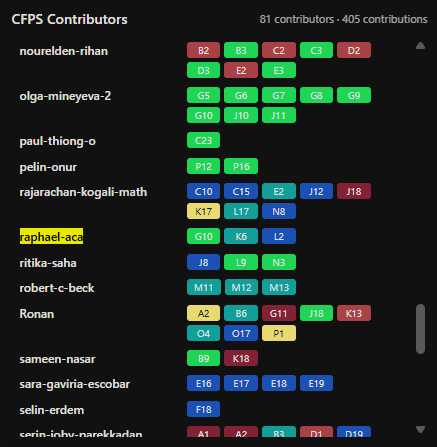
I composed master mix compositions in the given website as shown below.
Part D: Build-A-Cloud-Lab | (optional) Bonus Assignment
This was optional and skipped.