I am a Biodesign Student with a background in Systems & Services design and a minor in Textile design. I love maths and biology. I love eating different kinds of fruits. 🥭 🤍
ENZYMATIC DNA DATA STORAGE Background
The creation of new data has been doubling every 2-3 years with 90% of all data being generated in the last 3 years. However, 60-80% of this is categorised as ‘cold data’ - i.e. information that is rarely accessed, used, or modified, yet must be retained for compliance, legal, or historical purposes. This exponential increase also demands a system for data storage in the form of large-scale data centres that come with a plethora of environmental problems and high resource consumption, as well as a limitation in maintaining the longevity of the storage output.
The creation of new data has been doubling every 2-3 years with 90% of all data being generated in the last 3 years. However, 60-80% of this is categorised as ‘cold data’ - i.e. information that is rarely accessed, used, or modified, yet must be retained for compliance, legal, or historical purposes. This exponential increase also demands a system for data storage in the form of large-scale data centres that come with a plethora of environmental problems and high resource consumption, as well as a limitation in maintaining the longevity of the storage output.
DNA provides an alternative solution for storing these massive amounts of data that the world is accumulating, especially the archival data. The advantages are numerous with - data stored in synthesized DNA lasting for thousands of years, significantly longer than traditional magnetic tapes or hard drives (5–7 year lifespan); A single liter of DNA solution having the capacity to theoretically store up to 60 petabytes, far exceeding current storage mediums; After the DNA polymer being made, it doesn’t consume any energy.
Context
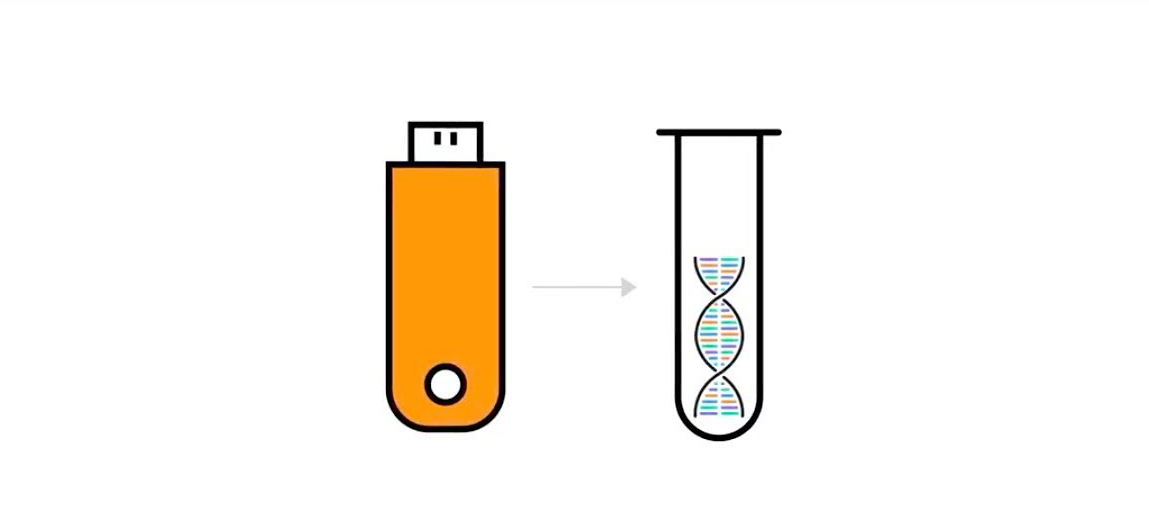
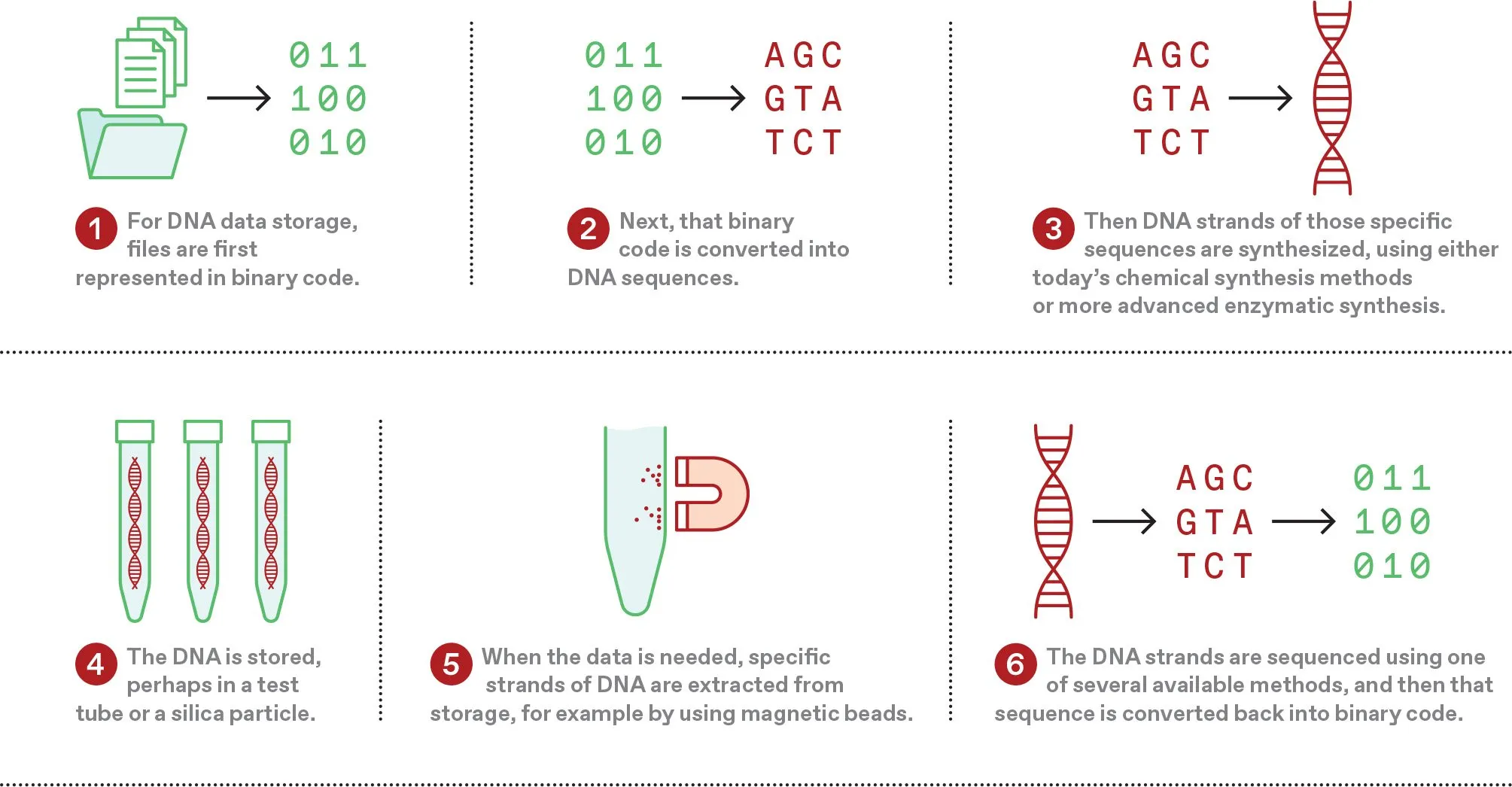
For this assignment, I am curious to explore the viability of DNA storage replacing our present data storage systems (especially for archival storage) in the probable future and the possibility of being utilised for ‘warm data’ application. The latest advancements in the technology offer the method of ‘Enzymatic DNA data storage’ - that uses biological catalysts like polymerases and terminal deoxynucleotidyl transferase (TdT) to synthesize data-encoded DNA strands, offering a faster, cheaper, eco-friendly, and more scalable alternative to chemical synthesis. It enables high-density, long-term storage by writing, editing, and reading binary data through molecular manipulation.
Governance/Policy Goals
I am exploring the aspect of governance and policy impact in application of ‘Enzymatic DNA data storage’ within the geographic context of India. The extraordinary rise of artificial intelligence has turbocharged data centre growth in India, Asia’s third largest economy, projected to surge 77% by 2027 to reach 1.8GW. $25-30bn is expected to be spent in capacity expansion by 2030, according to various estimates.
🚧 While soverign data storage systems are vital for India’s developmental needs, the growth of such energy hungry, water-guzzling infrastructure has profound implications for the country’s decarbonisation plans. 🚧
1. Prioritise responsive and sustainable technology;
India has 18% of the world’s population, but only 4% of its water resources, making it among the most water-stressed countries in the world. India’s data centre water consumption, meanwhile, is expected to more than double from 150 billion litres in 2025 to 358 billion litres by 2030, putting further pressure on its water table. Deviating from the rapid growth metrics for infrastructure development of conventional data centres driven by massive increase in internet and mobile use, the government’s regulatory thrust on hosting user data locally and rapid adoption of AI. Minimise negative impact by adopting alternative technologies.
2. Ensure data soverignity;
India produces approximately 20% of the world’s digital data, yet holds only about 1–3% of global data center capacity, leading to much of it being processed overseas. Data soverinity asks for data to be subjected to the laws and governance of India if collected, stored, or processed there, regardless of company headquarters. It ensures prevention of cross-border risks, ensure national security, protect citizen privacy, and retain economic value from data.
Actions
1. Invest in funding autonomous ‘Research and Development’ facilities;
The process of encoding and synthesising data on synthetic DNA has already been invented. The challenge however is to make is cost-effective and optimise its parallelization speed. It is imperative to establish facilities and organisations under government bodies, which retain their agency and autonomy in conducting research. The R&D should not only focus on the software side: developing codecs, optimizing storage architectures, and refining retrieval algorithms, but also address the real bottleneck of high writing cost.
2. Establish & Implement regulatory bodies:
To maintain a uniformity in standardised processes;
Current DNA data storage systems employ diverse encoding schemes, file formats, and metadata structures, creating significant challenges for data exchange and long-term accessibility. This fragmentation impedes industry growth and limits potential applications across sectors such as archival storage, healthcare, and scientific research. Standardization initiatives aim to create an ecosystem where DNA-stored data remains accessible regardless of the specific technologies used for synthesis or sequencing. This requires forward-compatibility considerations to ensure that data encoded today can be retrieved decades or centuries later, even as technologies evolve. Additionally, standards must balance technical optimization with practical implementation constraints, including cost considerations, synthesis limitations, and sequencing capabilities.The development of these standards represents a crucial step toward realizing DNA’s potential as a sustainable, ultra-dense storage medium for the exponentially growing global data sphere.
For cyberbiosecurity and privacy measures;
DNA sequencing files require various computer software for processing and executing large-scale analysis tasks. Synthetic DNA fragments could be deployed as weapons to target related computer programs during the sequence analysis, creating a new cyber-biological threat as a result of the junction of DNA storage and computer technology. This method of attack leverages the inherent property of DNA molecules as an information medium. DNA can encode and store malicious programs, which can remotely compromise related systems and networks when the “contaminated” DNA is “input” into computer systems. Regulations must be placed on “who” is authorised to synthesize information on DNA. Regular audits and certification renewal/updates must be conducted to ensure compliance of security systems. There must be systems to ensure the reliable retrieval and access of only the intended data, and the ability to delete/erase data. It must accommodate data with distinct privacy standards, originating from different users, or subject to varying security clearance levels necessitates the segregation of such data into separate DNA pool.
3. Provide educational scholarships for higher-level thesis & build accessible biotech infrastructure in educational institutions;
Education infrastructure in India, especially in the public institutions is poor, especially in the research sector. Employment instability often discourages the pursuit of scientific enquiries. However, the development of a large network of accessible labs, research opportunities and educational resources is crucial to boosting the development of new technologies.
Does the action:
Option 1
Option 2
Option 3
Enhance Biosecurity
• By preventing incidents
n/a
1
n/a
• By helping respond
1
Foster Lab Safety
• By preventing incident
n/a
1
3
• By helping respond
1
Promote Public Participation
• By preventing incidents
1
2
1
• By helping respond
1
1
Other considerations
• Minimizing costs and burdens to stakeholders
• Feasibility?
3
3
1
• Not impede research
n/a
n/a
n/a
• Promote constructive applications
1
1
2
#I would prioritise increasing funding for establishing R&D facilities, along with promoting educational infrastructure. This would allow cross disciplinary collaborations as well as invite opportunities for students to easily access the synthetic biology and tech space. I would also merge already established policies on startup funding and network with governmental research affiliations so people can access a wider range of the industry. This is precedental to building regulatory bodies.
References:
Liu T, Zhou S, Wang T, Teng Y. Cyberbiosecurity: Advancements in DNA-based information security. Biosaf Health. 2024 Jun 21;6(4):251-256. doi: 10.1016/j.bsheal.2024.06.002. PMID: 40078663; PMCID: PMC11895033.
Doricchi A, Platnich CM, Gimpel A, Horn F, Earle M, Lanzavecchia G, Cortajarena AL, Liz-Marzán LM, Liu N, Heckel R, Grass RN, Krahne R, Keyser UF, Garoli D. Emerging Approaches to DNA Data Storage: Challenges and Prospects. ACS Nano. 2022 Nov 22;16(11):17552-17571. doi: 10.1021/acsnano.2c06748. Epub 2022 Oct 18. PMID: 36256971; PMCID: PMC9706676.
Anne Trafton | MIT News Office (no date) Could all your digital photos be stored as DNA?, MIT News | Massachusetts Institute of - Technology. Available at: https://news.mit.edu/2021/dna-data-storage-0610 (Accessed: 10 February 2026).
Inamdar, N. (2025) Google, Meta, Amazon: India’s Data Centre Boom confronts a water challenge, BBC News. Available at: https://www.bbc.co.uk/news/articles/cgr417pwek7o (Accessed: 10 February 2026).
Sensintaffar, A. et al. (2025) ‘Advancing archival data storage: The promises and challenges of DNA storage system’, ACM Transactions on Storage, 21(3), pp. 1–34. doi:10.1145/3723166.
Subsections of Week 01 HW: Principles and Practices
Week 01 HW: Week 2 prep
Polymerase
Maintaining sequence integrity of a newly copied DNA strand relative to its template during DNA replication is critical for the accurate transfer of genetic material from one generation of cells to the next. The fidelity of DNA replication, which is the accuracy with which the DNA sequence is copied, is maintained by the action of DNA polymerases, enzymes responsible for adding nucleotides to the new DNA strand. Fidelity comparisons between polymerases can be expressed in absolute terms, often by the number of errors per 1,000 or 10,000 nucleotides.
The human haploid genome is about 3 × 10^9 base pairs long.
To prevent errors, DNA polymerases have evolved mechanisms that allow them to detect and correct mistakes before they become permanent mutations in the DNA. The geometry of the polymerase active site determines selection of the correct incoming nucleotide and aligns the catalytic groups to ensure efficient incorporation. If an incorrect nucleotide does bind in the active site, incorporation is slowed due to the sub-optimal architecture of the active site complex. This lag time increases the opportunity for the incorrect nucleotide to dissociate before polymerase progression, thereby allowing the process to start again, with a correct nucleoside triphosphate.
Oligonucleotides
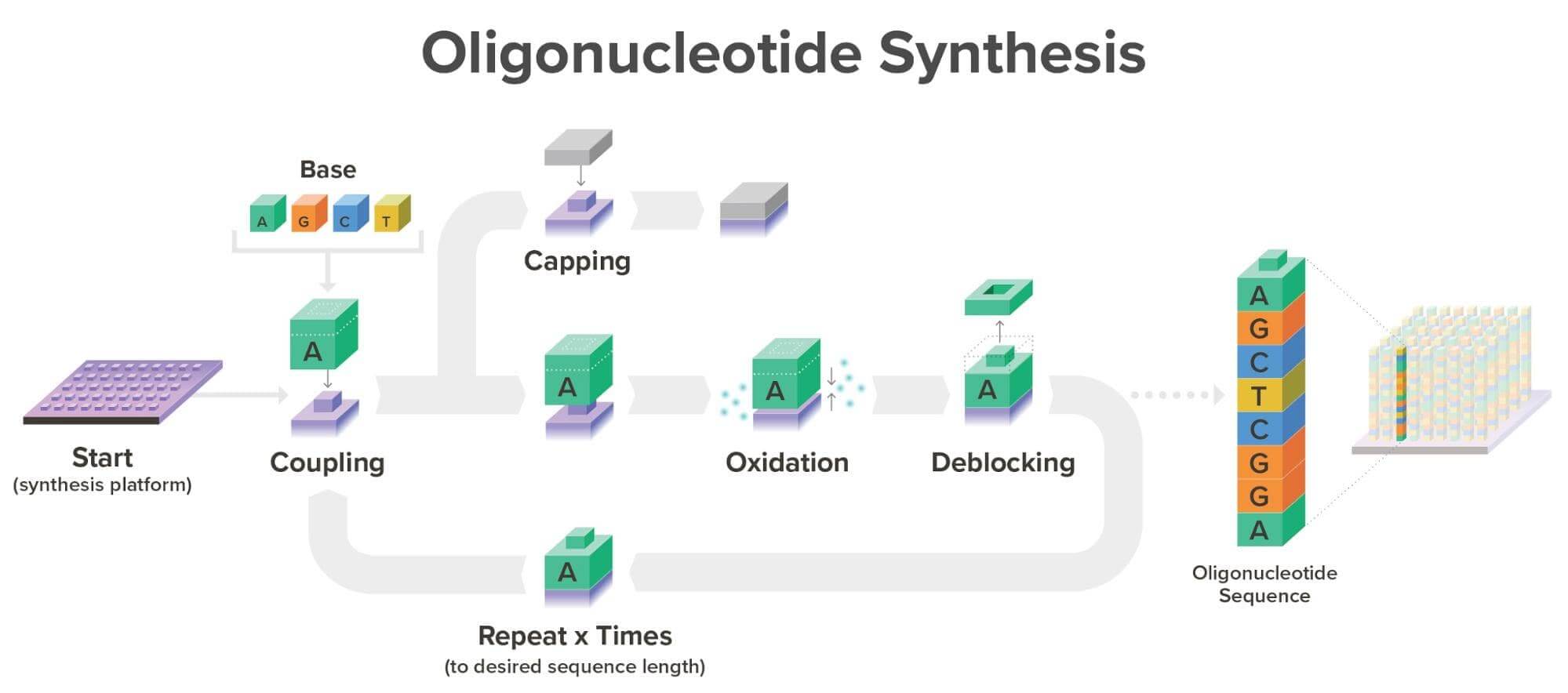
Solid-phase synthesis is widely used in peptide synthesis, oligonucleotide synthesis, oligosaccharide synthesis and combinatorial chemistry. Solid-phase chemical synthesis was invented in the 1960s by Bruce Merrifield, and was of such importance that he was awarded the Nobel Prize for Chemistry in 1984.
Amino acids
I have not watched jurassic park so cant write on the lysine contigency.