Week 2 HW: DNA Read Write and Edit
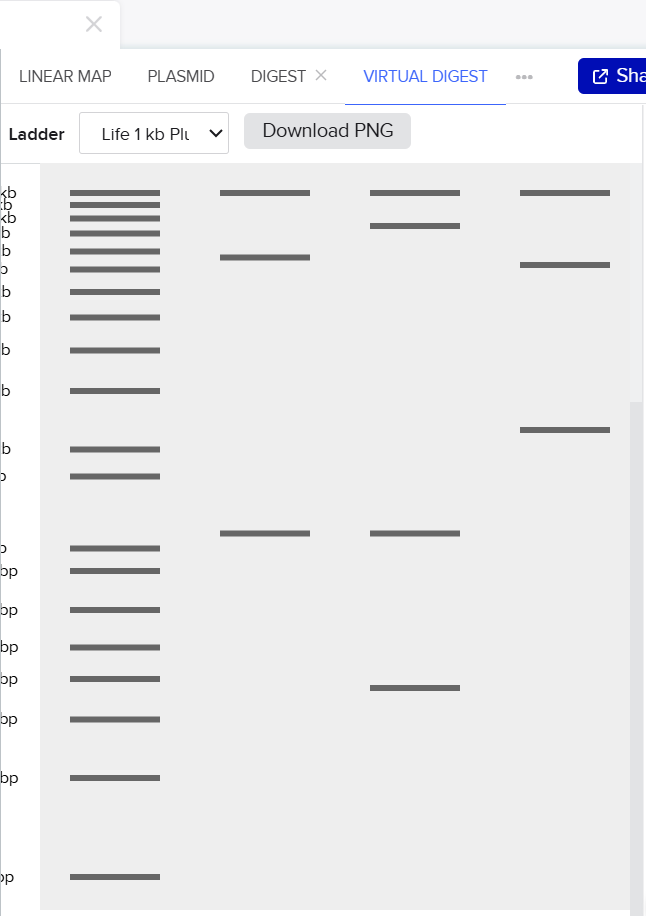
Benchling & In-silico Gel Art
Ladder
Life 1 kb Plus
1
Lambda - SacI XhoI
2
Lambda - PvuI SacI
3
Lambda - PvuI XhoI
4
Lambda - SacI XhoI
DNA Design Challenge
Choose your protein
For this project, I’ve chosen a Curli protein, csgA, as a protein of interest. The protein sequence is below, taken from UNIPROT:
>sp|P28307|CSGA_ECOLI Major curlin subunit OS=Escherichia coli (strain K12) OX=83333 GN=csgA PE=1 SV=3 MKLLKVAAIAAIVFSGSALAGVVPQYGGGGNHGGGGNNSGPNSELNIYQYGGGNSALALQ TDARNSDLTITQHGGGNGADVGQGSDDSSIDLTQRGFGNSATLDQWNGKNSEMTVKQFGG GNGAAVDQTASNSSVNVTQVGFGNNATAHQY
3.2. Reverse Translate: Protein (amino acid) sequence to DNA (nucleotide) sequence.
atgaaactgctgaaagtggcggcgattgcggcgattgtgtttagcggcagcgcgctggcg ggcgtggtgccgcagtatggcggcggcggcaaccatggcggcggcggcaacaacagcggc ccgaacagcgaactgaacatttatcagtatggcggcggcaacagcgcgctggcgctgcag accgatgcgcgcaacagcgatctgaccattacccagcatggcggcggcaacggcgcggat gtgggccagggcagcgatgatagcagcattgatctgacccagcgcggctttggcaacagc gcgaccctggatcagtggaacggcaaaaacagcgaaatgaccgtgaaacagtttggcggc ggcaacggcgcggcggtggatcagaccgcgagcaacagcagcgtgaacgtgacccaggtg ggctttggcaacaacgcgaccgcgcatcagtattaa
3.3. Codon optimization.
GCAACTGGTGCGGCAGCCTGTACCGGCTGTACCGGTGCAGCCGCGGGTACTGGTGGCTGCGGCGGCTGTGGCGCAACCACCGGTTGCGGCGGCTGCGGCGCCACTACCGGCACCGGTACAACCACCGCCGGTTGCGGTGGGTGCGCCGGTTGCGGTTGTGGCTGTACCGGCGGCTGCGGCGGCGGCTGCGGCACCGGCGGTACCGGCTGTTGCGGTTGCGCGGGCACCGCCACCGGTGGCTGCGGCGGATGCGGCGGCTGCGGCGGCTGCGCGGCGTGCTGTGCGACCGGCGGCTGCGGTGGCTGTGGCGGCTGTGGTGGTTGTGCGGCATGCGCCGCGTGCGCGGGCTGTGGCGGTTGTTGCTGCGGCGCCGCGTGTGCGGGTTGTGGAGCGGCCTGCACCGGTGCGGCGTGTGCCACCACCACCGCCACCTGCGCGGGTACCGCGACCGGCGGCTGTGGCGGCTGCGGTGGTTGTGCCGCGTGCGCGGGTTGCGGCTGTGGTTGTACCGGAGGCTGCGGCTGCACGGGCTGCGCCGGCGCCTGCTGCGGCGCGACTGGCTGTGGTTGCGGCTGTGCGGCGTGCGCCGGCTGCGGCGCCACCTGCACCGGCGCGTGTTGTGCCACCACCGCGTGCTGCTGCGCGGGCTGCGCGACCGGCGGCTGCGGCGGGTGTGGCGGCTGTGCGGCGTGTGGTGGCTGTGGCTGTGGTGGTGCGACCGGTACCGGTGGCGGTTGCTGCGCCGGCGGCGGCTGCGCCGGCTGCGGCGCGACCGGCGCGACCGCGGGCTGTGCGGGTTGCGCGACCACGGGTGCGACCTGCACCGGTGCGTGCTGTTGCGCCGGCTGCGGTTGCGGCGGCTGTACCACCACCGGAGGCTGTGCGGCCTGTGCCGGCTGCGGCTGCGGCGCATGCTGCTGCACCGGCGGGGCCACCTGTGCCGGAACCGGTGGCGCGGCGTGTGGCGGTTGTGCCGCGGCGGCAGCCTGCGCGGGCTGTGGCGCGGCGGCCACCGGCGCGTGCTGCGGCACCGGCGCCGCGGCCTGTGCGGGTACGACCACCGGCGGTTGCGGCGGCTGCGGCGGCTGTGCCGCGTGCGGCGGCTGCGGCTGCGGTGGCTGCGGCGGCACCGGCGGCGCCACCTGCGCGGGCGCGTGTTGTGGCTGCGGCGCGGGCTGTGCGGCGTGCGCCGGCTGCGCGGGCTGCGGCACCGGCGCCGCGTGTGGCACCGGCGCGTGCTGTTGCGCGGGTGGCACCGGCGGCGGCTGCACTACCACGGGCGGCTGCGCGGCCTGTGCAGCATGTGGCTGTGGTGCGTGTTGTGGCTGCGGCTGCGCGACGTGTGCGGGCACCGCGACCACAGCGGCCTAA Avoid cleavage sites of restriction enzymes: BamHI EcoRII HindIII NdeI XhoI
DNA Read
(i) What DNA would you want to sequence (e.g., read) and why? This could be DNA related to human health (e.g. genes related to disease research), environmental monitoring (e.g., sewage waste water, biodiversity analysis), and beyond (e.g. DNA data storage, biobank).
My research focuses on cellulose based material and biomaterials, so I would want to read DNA related to cellulose biosynthesis to understand what could affect a higher expression of cellulose in certain strains of acetic acid bacteria. My sequence which I isolated above is the cgsA sequence, so based on this, I would like to sequence he engineered curli genes and other variants to ensure they are being correctly encoded. I would also like to read more about promoter and regulatory sequenes controlling these genes.
(ii) In lecture, a variety of sequencing technologies were mentioned. What technology or technologies would you use to perform sequencing on your DNA and why?
Sanger sequencing is one good option based on what I’ve seen. This is due mainly to the well established protocols and high quality sequence data. I am trying to sequence cgsA, which is about 450 bp. It is small enough for Sanger sequencing and I wont need a high throughput or long- read method for a sequence of this size.
Also answer the following questions:
Is your method first-, second- or third-generation or other? How so?
This method was one of the first developed for reading nucleotide reagions.
What is your input? How do you prepare your input (e.g. fragmentation, adapter ligation, PCR)? List the essential steps.
The input is the cgsA plasmid. In order to prepare it, it should be purified to remove contaminants. Since it is a small sequence that is covered by sanger sequencing, I do not need to fragment it and I can use PCR is the concentration is low.
What are the essential steps of your chosen sequencing technology, how does it decode the bases of your DNA sample (base calling)?
With gel electrophoresis, I can read the sequence.
What is the output of your chosen sequencing technology?
A digital sequence of the DNA fragment
DNA Write
(i) What DNA would you want to synthesize (e.g., write) and why? These could be individual genes, clusters of genes or genetic circuits, whole genomes, and beyond. As described in class thus far, applications could range from therapeutics and drug discovery (e.g., mRNA vaccines and therapies) to novel biomaterials (e.g. structural proteins), to sensors (e.g., genetic circuits for sensing and responding to inflammation, environmental stimuli, etc.), to art (DNA origamis). If possible, include the specific genetic sequence(s) of what you would like to synthesize! You will have the opportunity to actually have Twist synthesize these DNA constructs! :)
I would be interested in synthesizing DNA for enzymes or proteins that would allow for either localization of oxxidative polymerization on cellulose or cellulose binding. I want to be able to express a conductive or redox active protein that can bind or react with a cellulose scaffold in order to create a conductive cellulose composite material. This would allow for polyalanine, a well studied conductive polymer that is used to create conductive cellulose scaffolds, to be able to better or more quickly bind to the cellulose pellicle. My current research focuses on bacterial cellulose and the use of cellulose as a biosensor or potential to be used in wearable device design. I see synthetic biology as a tool in order to be able to create this composite material.
DNA Edit
(i) What DNA would you want to edit and why? In class, George shared a variety of ways to edit the genes and genomes of humans and other organisms. Such DNA editing technologies have profound implications for human health, development, and even human longevity and human augmentation. DNA editing is also already commonly leveraged for flora and fauna, for example in nature conservation efforts, (animal/plant restoration, de-extinction), or in agriculture (e.g. plant breeding, nitrogen fixation). What kinds of edits might you want to make to DNA (e.g., human genomes and beyond) and why?
COntinuing on this same path of researhc, I would want to edit curli genes, cgsA, or cellulose biosynthesis genes. By editing these, I wcould potentially introduce amino acid changes or improve fiber denisty/ mechanical strength of the cellulose that is produced by acetic acid bacteria.
(ii) What technology or technologies would you use to perform these DNA edits and why? Also answer the following questions:
How does your technology of choice edit DNA? What are the essential steps? What preparation do you need to do (e.g. design steps) and what is the input (e.g. DNA template, enzymes, plasmids, primers, guides, cells) for the editing? What are the limitations of your editing methods (if any) in terms of efficiency or precision?
I would be interested in using CRISPR due to its precision and variety. This method would work by designing guide RNAs that direct the nuclease to a specific DNA sequence, which is then repaired using a donor template containing the desired edit. Preparation involves designing gRNAs, donor DNA templates, and expression plasmids, and transforming them into bacterial cells. Limitations include variable editing efficiency, potential off-target effects, and the need to optimize expression for this host organism.