Ritika Saha — HTGAA Spring 2026

Ritika Saha Profile Ritika Saha Profile

About me

Hello! I’m Ritika Saha, a student in HTGAA (Spring 2026).

My interests include:

  • 🧬 Synthetic biology + diagnostics
  • 🤖 Responsible AI for health

Contact info

Let’s connect:


Homework


Labs

Ritika Saha Profile Ritika Saha Profile

I will also share how I adapt lab work to a home setup and translate those workflows into scalable lab or office environments.


Projects


Proposed Idea

Ritika Saha Profile Ritika Saha Profile

I am exploring a project at the intersection of synthetic biology, diagnostics, and responsible AI.

The goal is to design systems that:

  • Enable low-cost, rapid biological diagnostics
  • Integrate AI responsibly into healthcare workflows
  • Improve accessibility of advanced diagnostics in resource-limited settings

This section will evolve as the idea matures through the course.


Follow My Journey

I document my learning, experiments, and reflections here:

More updates coming soon!

Subsections of Ritika Saha — HTGAA Spring 2026

Homework

Weekly homework submissions:

Subsections of Homework

Week 1 HW: LungLite — Principles, Practices, and Governance

🌬️ Project Idea: LungLite (AI + Breath Microfluidics + Cell-Free Synbio)

1) Biological engineering application/tool + why

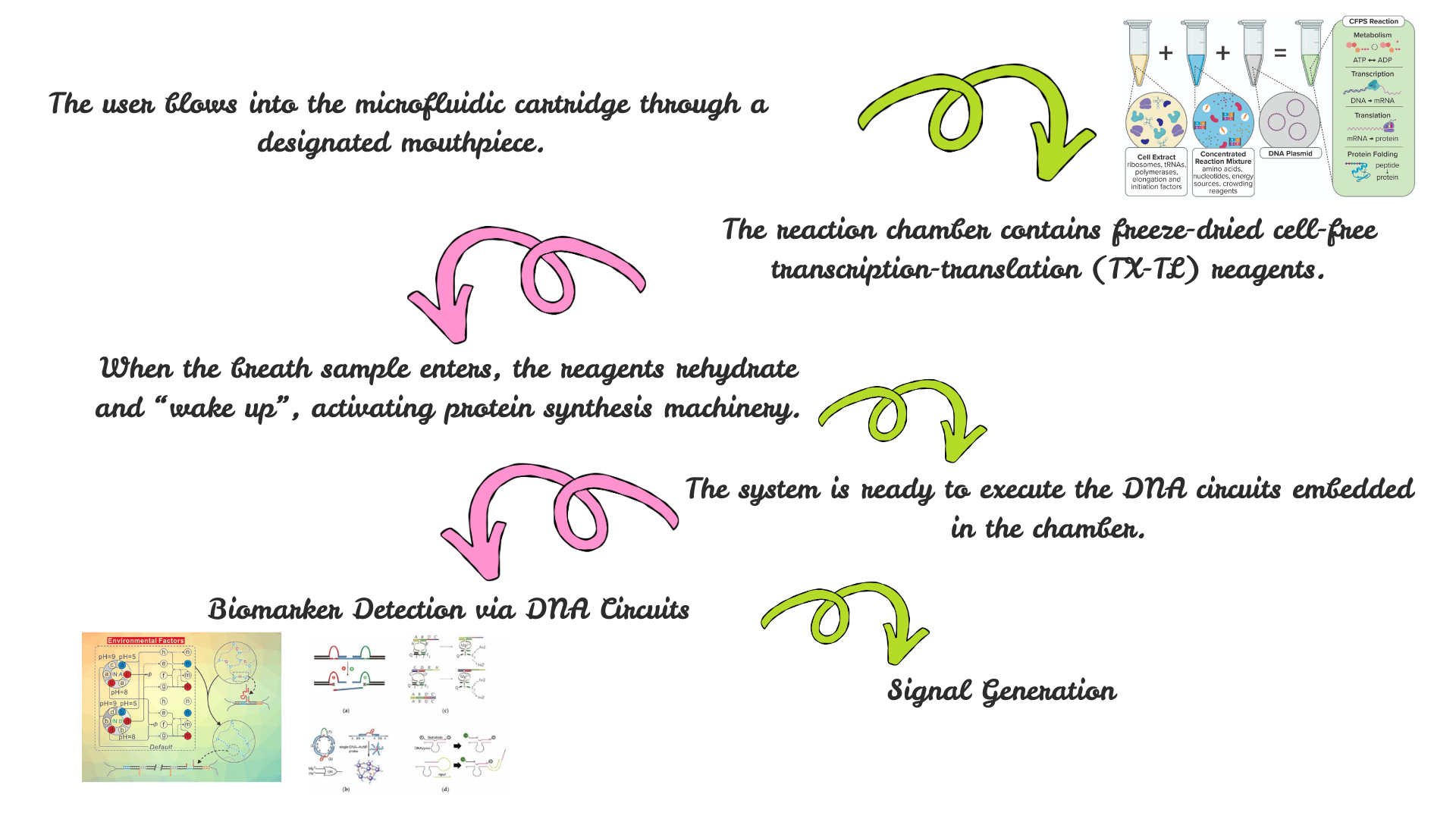
LungLite is a low-cost, noninvasive breath monitoring system that uses a microfluidic disposable cartridge.


The cartridge contains freeze-dried cell-free synthetic biology reactions to detect breath biomarkers associated with airway inflammation and oxidative stress.

A smartphone camera reads the cartridge’s color/fluorescence pattern and an AI model interprets the result.

The tool is intended to help users monitor lung health over time—especially people with asthma, COPD risk, and high pollution exposure—and provide early warning signals of inflammation before severe symptoms appear.

LungLite leverages cell-free synthetic biology to detect breath biomarkers safely and efficiently. Instead of using live engineered cells, it employs freeze-dried transcription-translation (TX-TL) systems with non-replicating DNA circuits that respond to molecules associated with airway inflammation and oxidative stress. When a user exhales into the microfluidic cartridge, these engineered circuits trigger colorimetric or fluorescent signals proportional to biomarker levels. The sealed cartridge design, combined with built-in post-reaction neutralization, ensures safety, while AI algorithms analyze the visual output to provide an accurate, real-time readout of lung health. This integration of synthetic biology, microfluidics, and AI enables a low-cost, noninvasive tool for continuous monitoring, especially in high-risk environments or populations with limited access to traditional respiratory diagnostics.

Why this matters:
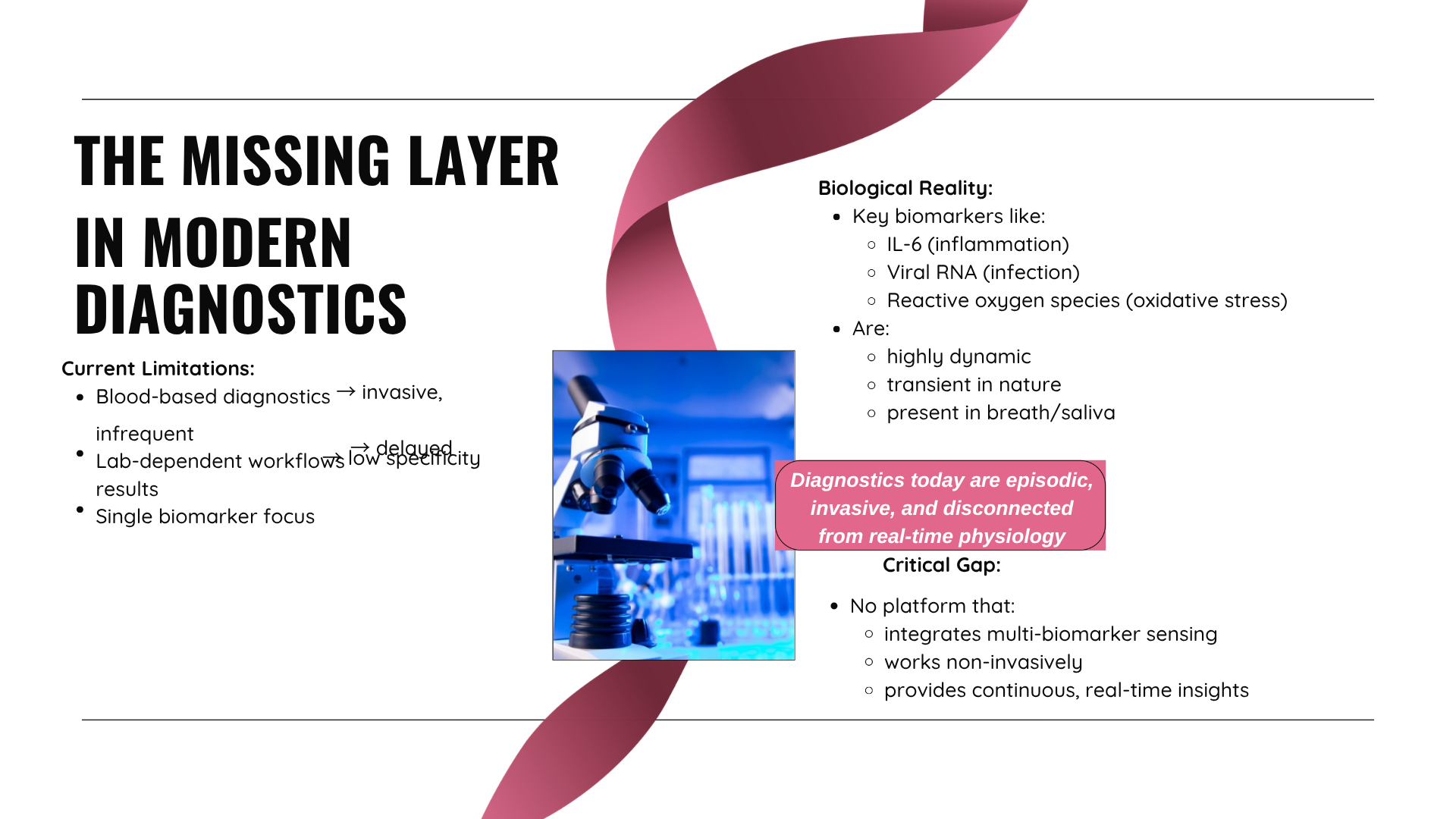
Current lung monitoring tools like spirometers often require strong forced exhalation and are not always accessible, comfortable, or usable for children, elderly people, or individuals in low-resource settings.

This problem is also deeply personal to me because I grew up around severe air pollution in Delhi, where “bad air days” are normal and respiratory symptoms are common. LungLite is motivated by the idea that people in high-exposure environments should be able to track early signs of inflammation easily and affordably—before symptoms become severe.

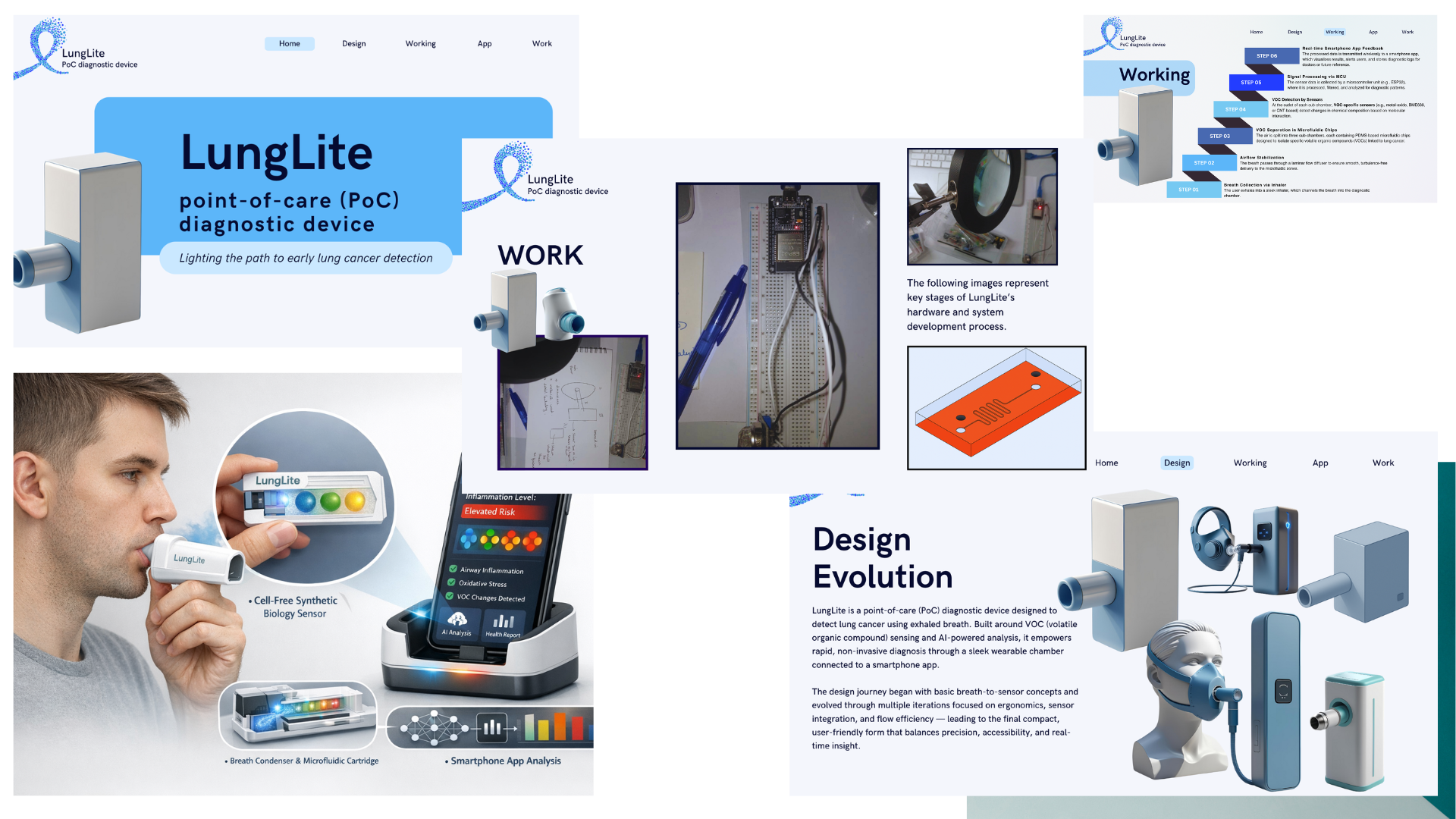
LungLite – Present Idea LungLite – Present Idea

Initially worked on an AI-powered diagnostic tool for lung cancer. During this opportunity, I pivoted the design to focus on the Present Idea: a low-cost, noninvasive breath test that uses a microfluidic cartridge to track early signs of lung inflammation.

LungLite goal:
breathe → cartridge reacts → phone reads

LungLite – Present Idea LungLite – Present Idea

References-

Cell free systems:

DNA Circuits:


2) Governance/policy goals for an ethical future

Because LungLite sits at the intersection of bioengineering + consumer health + AI, it raises issues in biosecurity, lab safety, privacy, equity, and responsible health claims.

The governance goal is to ensure LungLite contributes to an ethical future by preventing harm while promoting constructive public health benefits.

Policy Goal A — Enhance Biosecurity

  • Sub-goal A1: Prevent incidents
    Prevent misuse of cartridge biology (DNA templates, cell-free reagents) for harmful applications.
  • Sub-goal A2: Help respond
    Ensure traceability and safe reporting if unsafe use or distribution occurs.

Policy Goal B — Foster Lab Safety

  • Sub-goal B1: Prevent incidents
    Ensure safe handling, manufacturing, and disposal of cartridges and reagents.
  • Sub-goal B2: Help respond
    Ensure protocols exist for spills, exposure, or improper disposal.

Policy Goal C — Protect the Environment

  • Sub-goal C1: Prevent incidents
    Ensure cartridges and reagents do not introduce living organisms into waste streams.
  • Sub-goal C2: Help respond
    Ensure recall, disposal, and remediation pathways if materials are found to persist or contaminate waste streams.

Policy Goal D — Other considerations

  • Minimize costs and burdens to stakeholders
  • Ensure feasibility for student prototyping and future scaling
  • Do not unnecessarily impede legitimate research
  • Promote constructive applications (public health monitoring, pollution health impacts)

3) Governance actions


Option 1: Technical Safety-by-Design

(Cell-free only + built-in kill chemistry + non-replicating DNA templates)

Idea

Many biosensors rely on living engineered organisms or wet reagents that could survive handling errors. LungLite instead commits to a cell-free-only architecture, using non-replicating DNA and post-reaction neutralization so the cartridge cannot become a biological propagation risk.

Design

Actors: student researchers, academic labs, cartridge designers, manufacturers.

Key elements:

  • Use commercially available or lab-prepared TX-TL cell-free extract
  • Use DNA templates without replication machinery
  • Add nuclease or denaturing reagents in a sealed “waste chamber” that activates after the reaction
  • Design the cartridge as a sealed unit so users cannot access wet reagents directly
  • Provide clear disposal instructions (trash-safe, not drain)
  • Include a QR code for standardized disposal instructions and recall notices

Assumptions

  • Cell-free systems are safe enough for consumer-adjacent use
  • DNA templates cannot be easily repurposed into harmful functions
  • Cartridge sealing prevents tampering and accidental exposure
  • Neutralization chemistry is robust across temperature/humidity variation

Risks of failure

  • Users could physically open the cartridge, mishandle reagents, or bypass neutralization
  • Poor sealing could cause leakage
  • DNA templates could be shared and repurposed outside intended use

Risks of “success”

  • Widespread adoption could normalize at-home “bio reaction kits” without safety literacy
  • Overconfidence in “bio-safe” claims could reduce careful oversight and institutional review

Option 2: Distribution + Supply Chain Controls

(DNA sequence screening + controlled reagent distribution + batch traceability)

Purpose

Even if the platform is designed safely, misuse risk increases when synbio components are distributed widely. This option adds governance at the distribution layer, aiming to prevent malicious acquisition or repurposing of DNA templates and reagents.

Design

Actors: DNA synthesis companies, cartridge manufacturers, distributors, university procurement offices, and potentially regulators.

Key elements:

  • DNA template sequences are screened using existing industry DNA synthesis screening norms
  • Cartridges sold with batch numbers, manufacturer ID, and basic traceability
  • Reagent supply chain restricted to verified vendors

Assumptions

  • Screening reliably catches harmful sequences
  • Vendors cooperate and screening is consistently implemented
  • Traceability meaningfully deters malicious use
  • Legitimate users will tolerate additional friction

Risks of failure

  • DIY synthesis or black-market sources bypass screening
  • Screening could generate false positives and slow benign development
  • Increased cost and friction could reduce adoption in low-resource communities

Risks of “success”

  • Centralization of power in a small number of vendors could limit open science
  • Smaller labs, students, and global south researchers could be excluded due to cost and access barriers
  • Overly broad screening could suppress legitimate respiratory health research

Option 3: Responsible Health Claims + Data Governance

(Limit medical claims + privacy-by-design + transparency)

Aim

Even if the biology is safe, LungLite could still cause harm through false reassurance, panic, biased AI outputs, or privacy breaches. This option focuses on preventing digital harms and misleading health interpretation.

Design

Actors: app developers, product companies, IRBs/ethics boards (if research), privacy regulators, public health agencies, and clinical collaborators.

Key elements:

  • Position LungLite initially as wellness monitoring, not a medical diagnostic
  • Focus on trend tracking rather than absolute disease classification
  • Provide clear disclaimers (“not a diagnosis; seek medical care if symptoms worsen”)
  • Use local-first processing: results computed on-device when possible
  • Require informed consent for any cloud upload or model improvement
  • Provide opt-out for data sharing
  • Publish model limitations and performance across demographics
  • Align product claims with existing regulatory distinctions between wellness tools and regulated diagnostic devices

Assumptions

  • Users understand “monitoring” vs “diagnosis”
  • Privacy measures meaningfully reduce harm
  • AI transparency improves trust and responsible use
  • The model will generalize across different phones, lighting, and populations

Risks of failure

  • Users may treat outputs as diagnoses and delay care
  • Data leaks could expose sensitive health data
  • Model bias could cause false reassurance or false alarms in specific groups
  • Smartphone hardware variability could distort readings

Risks of “success”

  • A widely adopted breath-health dataset could become commercially valuable and exploited
  • Insurers/employers/schools could pressure people to share breath scores (coercive screening)
  • “Wellness” framing could still function as a de facto diagnostic

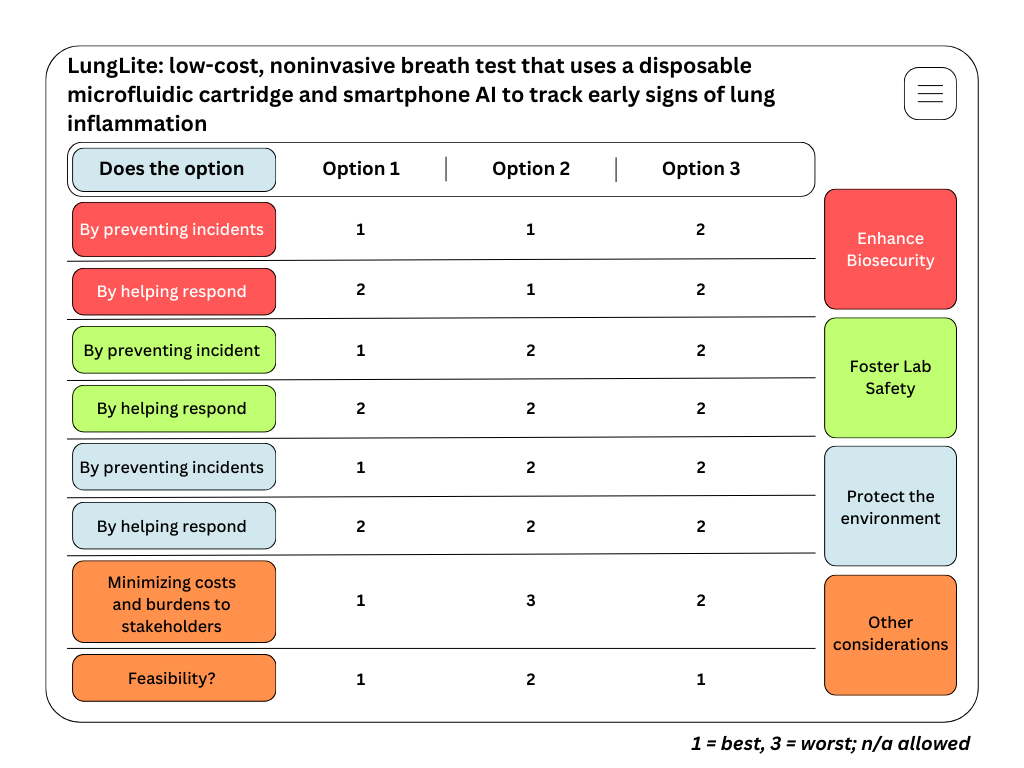
4) Scoring matrix (1 = best, 3 = worst; n/a allowed)

Does the option:Option 1Option 2Option 3
Enhance Biosecurity
• By preventing incidents112
• By helping respond212
Foster Lab Safety
• By preventing incident122
• By helping respond222
Protect the environment
• By preventing incidents122
• By helping respond222
Other considerations
• Minimizing costs and burdens to stakeholders132
• Feasibility?121
• Not impede research131
• Promote constructive applications121
LungLite governance diagram LungLite governance diagram

Figure: LungLite governance scoring matrix

Scoring justification:

  • Option 1 reduces biological risk at the source and does not rely heavily on enforcement.
  • Option 2 is strongest on biosecurity response, but worst on cost, equity, and research openness.
  • Option 3 is strongest for AI/privacy harms but does not fully address upstream biosecurity.

There are few environmental concerns regarding this device like: packaging waste at scale, there might be low environmental risk regarding cell-free extracts, small risks associated with chemicals and dyes. Mitigation can be: minimal-material design, sealed leak-proof cartridge, and take-back/clinic disposal at scale.


5) Prioritized strategy

I believe we should prioritize Option 1 + Option 3 as the core approach now, and adopt a lightweight version of Option 2 only once scaling and commercialization begins.

Why Option 1 is essential

Option 1 addresses the biggest safety and biosecurity concern,i.e, distributing engineered biological systems into homes. By committing to cell-free synthetic biology only, LungLite becomes safer, easier to dispose of, and easier to govern ethically.

Why Option 3 is equally critical

Even if the biology is safe, LungLite can still cause harm through:

  • false reassurance
  • panic from false positives
  • privacy breaches
  • biased AI outputs

Option 3 reduces these risks through responsible messaging, careful AI design, and privacy-by-design.

Where Option 2 fits

Option 2 becomes more important once LungLite is manufactured at scale. Heavy supply chain restrictions too early could:

  • block student prototyping
  • increase costs
  • reduce equitable access
  • slow research innovation

So the staged approach is:

  • Option 1 + Option 3 now
  • Option 2 later (commercialization / mass distribution)

Tradeoffs considered

  • Safety vs accessibility
  • Innovation vs security
  • User empowerment vs medical risk
  • Privacy vs model improvement

Audience for recommendation

This governance strategy is best targeted at:

  • MIT/university lab leadership
  • future consumer product manufacturers
  • public health agencies
  • privacy regulators

6) What I Learned

Ethical concerns that arose

  • Dual-use risk
  • AI harm
  • Privacy
  • Equity
  • Regulatory gray zone
  • Coercion risk (monitoring becomes surveillance)

Governance actions proposed to address these

  • Use cell-free systems only and avoid living organisms
  • Seal cartridges and neutralize biological material post-test
  • Implement privacy-by-design + local-first processing
  • Avoid medical claims until clinically validated
  • Keep manufacturing scalable and affordable
  • Add anti-coercion safeguards (minimize retention, discourage third-party access)

Week 2 Lecture Prep


Homework Questions — Professor Jacobson

1) DNA polymerase error rate, genome comparison, and how biology handles the discrepancy

Nature’s machinery for copying DNA is DNA polymerase. High-fidelity replicative DNA polymerases (with proofreading) have an error rate of approximately:

~1 error per 1,000,000 to 10,000,000 base pairs

Comparison to the human genome

The human genome is approximately:

~3,200,000,000 base pairs

If replication relied only on polymerase accuracy:

  • At 1 error per 1,000,000 bp:
    3,200,000,000 / 1,000,000 = 3,200 errors per genome replication

  • At 1 error per 10,000,000 bp:
    3,200,000,000 / 10,000,000 = 320 errors per genome replication

So even “high-fidelity” polymerase alone would still introduce hundreds to thousands of mistakes each time the genome is copied.

LungLite – Present Idea LungLite – Present Idea

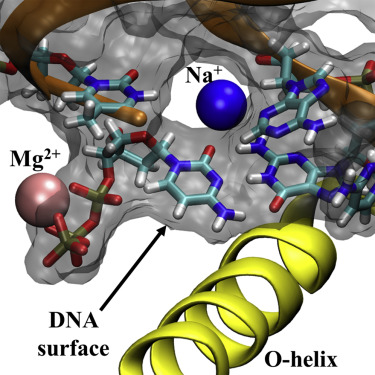
DNA polymerase’s shape precisely fits correct base pairs and uses a conformational “proofreading” motion to minimize misincorporation. https://www.sciencedirect.com/science/article/pii/S0969212615002695

How biology deals with the discrepancy

Biology reduces the final mutation rate using multiple layers of error correction:

  • Polymerase proofreading removes many misincorporated bases during replication.
  • Mismatch repair (MMR) fixes errors missed by proofreading.
  • Base excision repair (BER) fixes chemically damaged bases.
  • Nucleotide excision repair (NER) removes bulky lesions.

Together, these systems reduce the effective mutation rate to roughly:

~1 error per 1,000,000,000 to 10,000,000,000 bp per cell division

That means across one human genome replication, the final result is typically on the order of:

~0.3 to 3 mutations per cell division


🧪 Homework Questions — Dr. LeProust

1) What’s the most commonly used method for oligo synthesis currently?

The most commonly used method is:

Solid-phase phosphoramidite DNA synthesis

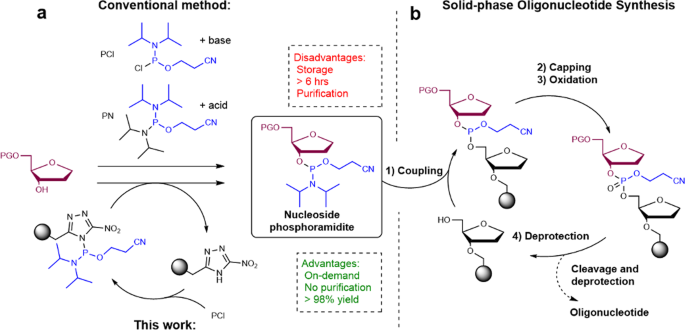
This is the standard chemistry used by most commercial oligo suppliers. It works by building a DNA strand one nucleotide at a time on a solid support (like a bead, column, or array surface) using repeated cycles of:

  • deprotection
  • coupling
  • capping
  • oxidation

LungLite – Present Idea LungLite – Present Idea

2) Why is it difficult to make oligos longer than ~200 nt via direct synthesis?

Direct synthesis becomes difficult past ~200 nucleotides because:

A) The yield drops exponentially with length

Each synthesis step has less than 100% efficiency, so errors compound as the oligo gets longer.Even in an optimistic scenario, most strands are truncated or incorrect.

B) Errors accumulate

Long oligos contain more:

  • deletions (from incomplete coupling)
  • substitutions (from incorrect incorporation)
  • depurination damage (especially A/G under acidic conditions)
  • truncated fragments

C) Purification becomes difficult and expensive

Separating a perfect 200-mer from 199-mer and 198-mer fragments is hard, so cost and complexity increase quickly.


3) Why can’t you make a 2000 bp gene via direct oligo synthesis?

Because the yield would collapse to essentially zero and the error rate would be unusable.

A) Yield becomes extremely low

B) The error rate becomes unacceptable

Even the rare full-length molecules would almost always contain:

  • substitutions
  • deletions
  • truncations
  • damaged bases

So you would not get a clean, correct 2000 bp product.

What is done instead in practice?

Instead of direct synthesis, genes are made by:

  • synthesizing shorter oligos (usually 60–200 nt)
  • assembling them into longer DNA using methods like:
    • Gibson Assembly
    • PCR-based assembly
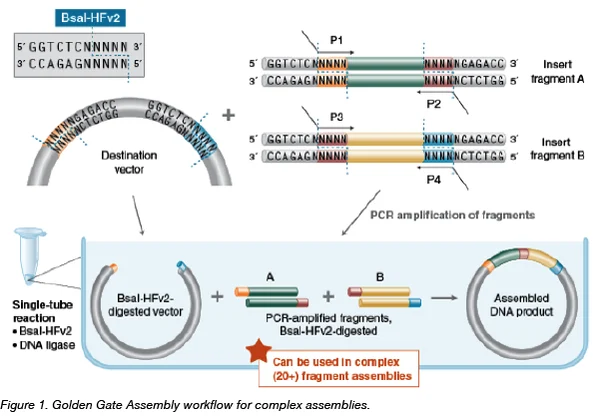
    • Golden Gate
    • Ligase Cycling Assembly (LCA)
  • then sequence-verifying clones to find a correct one

📄 HW by Dr. George Church — Grant Application (Devised)

Project Title

LungLite: A Room-Temperature, Breath-to-Color Microfluidic Cartridge Powered by Cell-Free Synthetic Biology and Smartphone AI for At-Home Lung Inflammation Monitoring

1) Abstract

Chronic respiratory disease affects hundreds of millions globally, yet lung health monitoring remains clinic-centered, effort-dependent, and inaccessible for many populations. Existing tools such as spirometry require strong forced exhalation and proper technique, while lab tests for inflammation and oxidative stress are expensive and slow.

I propose LungLite, a low-cost breath monitoring system that combines breath condensation microfluidics, freeze-dried cell-free synthetic biology, and smartphone computer vision + AI. Users breathe into a disposable cartridge that captures breath condensate and routes it through multiple reaction zones. Each zone contains a freeze-dried cell-free reaction that produces a colorimetric/fluorescent signal in response to oxidative stress and inflammation-associated breath chemistry.

A smartphone reader standardizes illumination, quantifies reaction outputs, and uses machine learning to interpret a multi-zone “fingerprint” into a trend score. LungLite is designed for safe, scalable, room-temperature storage and distribution and aims to enable daily lung health monitoring outside specialized medical centers.


2) Specific Aims

Aim 1 — Engineer a breath-to-fluid microfluidic cartridge
Hypothesis: A passive, low-cost cartridge can consistently convert breath into a defined liquid sample volume and deliver it to reaction zones with minimal variability.
Outcome: consistent fluid delivery across users and breathing conditions.

Aim 2 — Develop a multi-zone freeze-dried cell-free synbio sensing panel
Hypothesis: freeze-dried cell-free reactions can be stabilized at room temperature and produce reproducible outputs when rehydrated.
Outcome: 6–12 zone panel with internal controls and reproducible readouts.

Aim 3 — Build a smartphone reader + AI pipeline
Hypothesis: smartphone imaging + AI normalization improves reliability and interpretability.
Outcome: trend score + confidence + invalid-test detection.


3) Significance

LungLite could enable:

  • noninvasive monitoring
  • high-frequency measurement
  • accessibility for children and low-resource settings
  • room-temperature distribution
  • population-level monitoring during wildfire smoke events

4) Innovation

  • Cell-free synbio in a consumer cartridge
  • Fingerprint sensing rather than single biomarker
  • AI as a reliability layer (normalization + invalid detection + confidence)

5) Technical Approach and Work Plan (12 months)

  • Months 1–2: breath capture + condensation
  • Months 2–4: routing + zone array
  • Months 3–7: freeze-dry stabilization
  • Months 5–8: phone reader + illumination
  • Months 7–10: AI training + invalid detection
  • Months 10–12: validation + usability

6) Expected Deliverables

  • disposable cartridge (6–12 zones)
  • freeze-dried reaction panel + controls
  • smartphone reader dock
  • AI pipeline
  • validation report
  • product pathway plan

7) Risk Analysis and Mitigation

  • biomarkers variable → fingerprint + controls + AI
  • stability issues → sealed packaging + desiccant
  • diagnostic misuse → wellness framing + disclaimers
  • privacy misuse → local-first + opt-in + deletion

8) Safety, Ethics, and Governance Plan

  • cell-free only
  • sealed cartridges
  • built-in neutralization
  • sequence screening at synthesis
  • traceability if scaling begins
  • bias testing + transparency
  • no disease claims until validated

9) Team and Resources

Cross-disciplinary team spanning:

  • microfluidics
  • cell-free synbio
  • optics + computer vision
  • ML
  • product design

10) Long-Term Vision and Commercialization

  • reusable reader + disposable cartridges
  • room-temperature shipping
  • low-cost manufacturing (paper microfluidics)
  • Year 1: wellness monitoring
  • Year 2+: clinical validation + regulated pathway

HW Review Papers — Week Summary Notes


1) DNA Sequencing at 40 (Shendure, J., Balasubramanian, S., Church, G. et al. https://doi.org/10.1038/nature24286)

Idea

DNA sequencing has gone through multiple revolutions and now functions as a universal molecular measurement tool — not just a way to read genomes.

Key points

  • In ~40 years, sequencing scaled from kilobases → first human genome → millions of genomes
  • Sequencing is no longer only for genomes; it is now used to measure:
    • gene expression (RNA-seq)
    • chromatin state (ATAC-seq, ChIP-seq)
    • lineage tracing
    • somatic mutations
    • molecular interactions
  • Costs dropped dramatically due to next-generation sequencing (NGS)
  • Authors argue sequencing’s long-term impact may rival the microscope

Key message

We have become extremely good at reading DNA at massive scale, speed, and low cost.


2) DNA Synthesis Technologies to Close the Gene Writing Gap (2023), Hoose, A., Vellacott, R., Storch, M. et al. https://doi.org/10.1038/s41570-022-00456-9

Focus

We still cannot write DNA as efficiently as we can read it — and this is a major bottleneck for synthetic biology.

Key points

  • Synthetic DNA is essential for:
    • synthetic biology
    • gene therapy
    • DNA data storage
    • nanotechnology
  • Current chemical synthesis struggles beyond ~200 base pairs
  • Long DNA synthesis is expensive and error-prone
  • New approaches aiming to scale DNA writing include:
    • enzymatic (template-independent) synthesis
    • microarray-based synthesis + assembly
    • rolling circle amplification
    • molecular assembly + cloning pipelines
  • As DNA writing becomes easier, regulation and oversight become more important

3) Recombineering and MAGE (2021), Wannier T, et al. Nat Rev Methods Primers, https://www.ncbi.nlm.nih.gov/pmc/articles/PMC9083505/

Core idea

Recombineering and MAGE enable precise, scarless, multiplex genome editing without requiring toxic double-strand breaks (DSBs).

Why traditional editing is limiting

Older editing methods (ZFNs, TALENs, CRISPR with DSBs):

  • rely on double-strand breaks
  • DSBs can be toxic (especially in bacteria)
  • repair often produces unwanted indels
  • low precision for large-scale combinatorial editing

Recombineering solution

  • Uses phage proteins (Redβ, Exo, Gam)
  • Introduces ssDNA or dsDNA with homology
  • DNA integrates at the replication fork
  • No DSB required
  • Editing is highly precise and “scarless”

MAGE (Multiplex Automated Genome Engineering)

  • Introduces many ssDNA oligos at once
  • Creates combinatorial diversity across many genomic sites
  • Enables genome-scale reverse genetics

4) CRISPR Technology: A Decade of Genome Editing is Only the Beginning, Wang, Doudna, et al., https://www.science.org/doi/10.1126/science.add8643

Focus area

CRISPR made genome editing programmable, accessible, and fast — dramatically lowering the barrier to entry.

Main points

  • Cas9 + guide RNA enables targeting by base pairing
  • Enabled:
    • knockouts
    • pooled genetic screens
    • animal models
    • crop editing
    • emerging human therapies

Newer CRISPR-derived tools

  • Base editing: A→G or C→T without DSBs
  • Prime editing: templated edits with higher precision

Remaining challenges

  • off-target effects
  • delivery into cells/tissues
  • limited multiplexing at large scale
  • HDR inefficiency in many systems

Summary

Biotechnology has made DNA reading extremely scalable (sequencing), but DNA writing (synthesis) and DNA rewriting (editing) are still constrained by cost, accuracy, delivery, and scalability.

Sequencing is now a general-purpose measurement tool, while synthesis and editing are rapidly improving — raising both exciting capabilities and new governance needs.


I used artificial intelligence tools, including ChatGPT-5.0, for language refinement, structural organization, and clarity of expression in this documentation. All scientific concepts, design decisions, sequence selections, experimental reasoning, and technical interpretations reflect my own understanding and work. The AI tool was used solely to improve readability, coherence, and presentation quality.

Week 2 HW: DNA Read, Write, Edit — SOD1 Molecular Journey

🧬 Week 2 Documentation

DNA Read → DNA Write → DNA Edit

A Molecular Design Journey

This week was not just a technical exercise. It was an exploration — from abstract sequence to physical plasmid, from conceptual art to molecular execution. Below is the full documentation of my process, including failures, iterations, and insights gained.


🧪 Part 0: Basics of Gel Electrophoresis

Lectures + Recitation

I attended/watched all required lecture and recitation materials.

Conceptual Understanding

Gel electrophoresis separates DNA fragments based on size using:

  • Negatively charged DNA backbone
  • Electric field
  • Agarose matrix
  • Size-dependent migration

Smaller fragments travel further.

🎨 Part 1: Benchling & In-silico Gel Art

Step 1: Benchling Account + Lambda DNA Import

  • Created Benchling account
  • Imported Lambda DNA reference sequence

Step 2: Simulated Restriction Digestion

Enzymes used:

  • EcoRI
  • HindIII
  • BamHI
  • KpnI
  • EcoRV
  • SacI
  • SalI

Initial Failure

My first digestion simulation produced fragmented bands that were too similar in size. The pattern looked visually indistinct.

Iteration Strategy

  • Tested different single and double digests
  • Compared fragment size outputs
  • Adjusted enzyme combinations

Eventually, I selected combinations that produced strong band separation.

Kindly find attach all the simulations carried out for the same task:

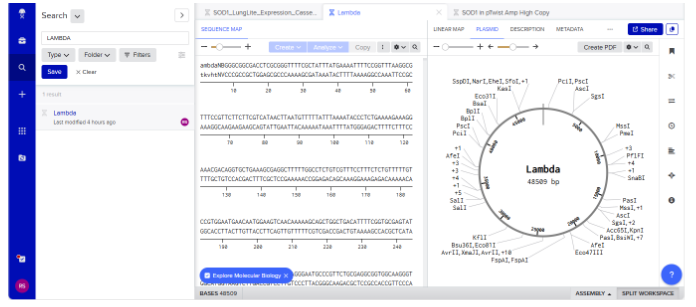
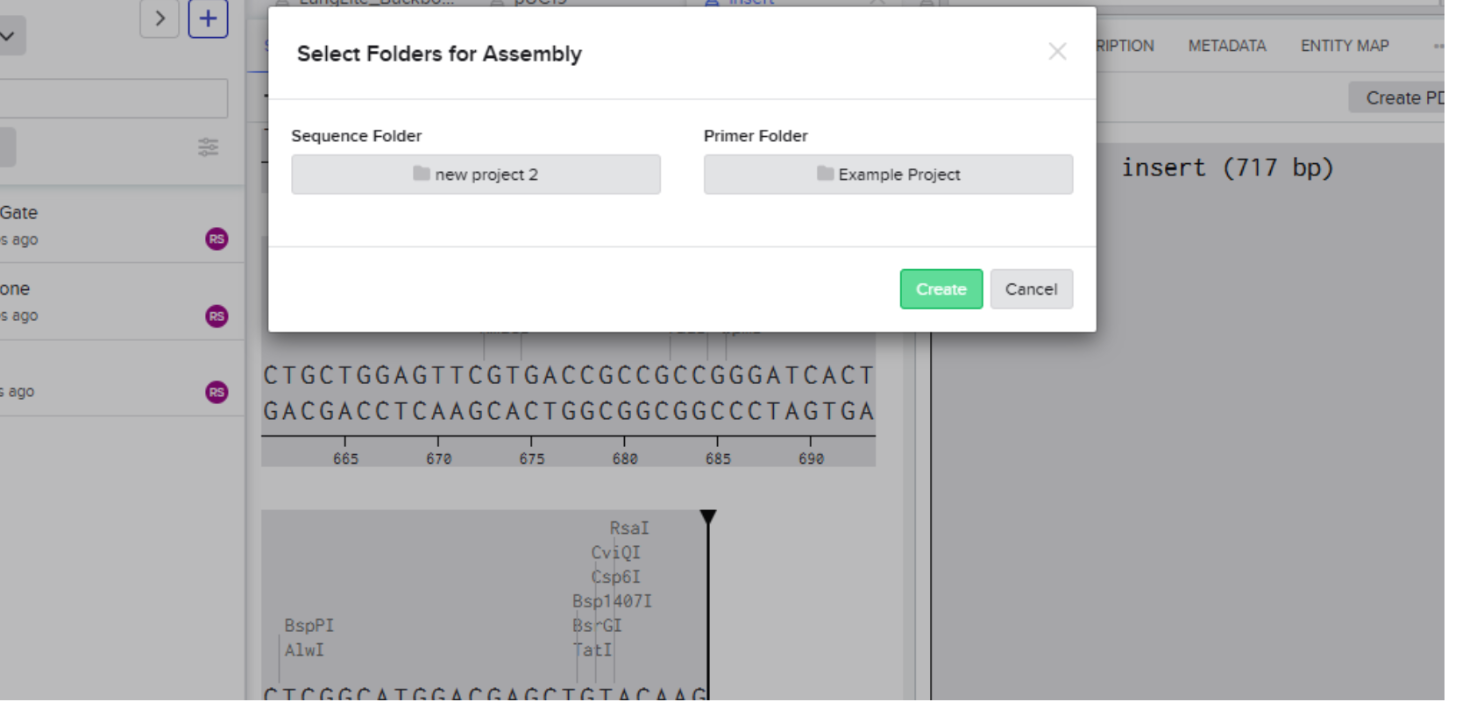
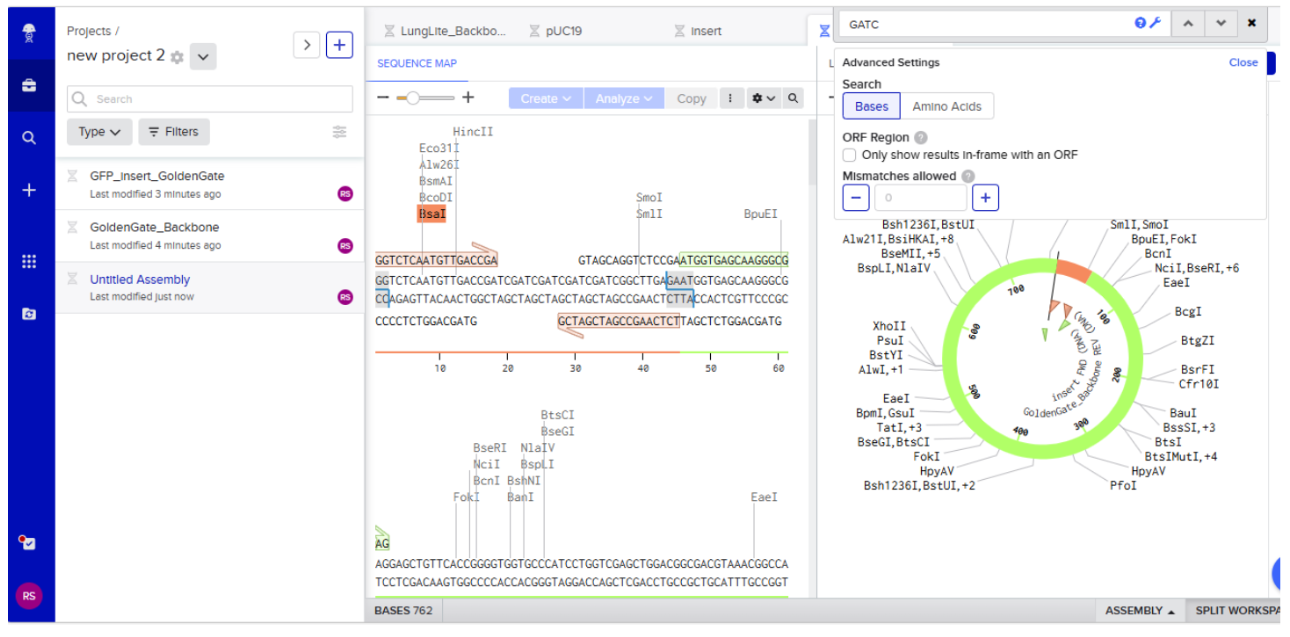
The following image represents setting up the Benchling account and loading lambda sequence, ultimately I was able to visualize as shown here- Figure1 Figure1

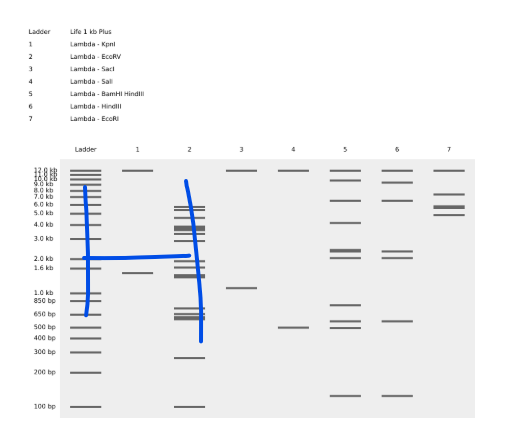
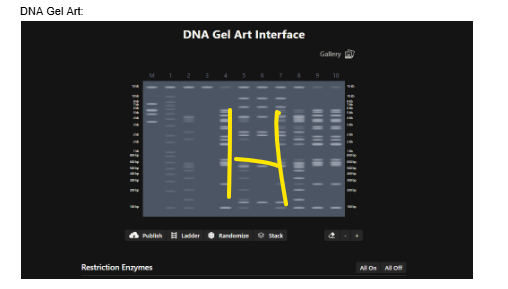
The following image shows the end result after carrying out the digestion process, I worked on a pattern design of “H Letter”, reason being my startup company’s first letter is H! Although, I must say I struggled alot and I intend to re run all of these simulations and tasks at least 5-6 times! Figure2 Figure2


🧪 In-Silico Gel Art

I did try to work out on gel art, but yet again this part of the homework was something I really struggled.

In Silico Gel In Silico Gel

Insight

Never had I imagined that biological mechanisms could generate such striking and beautiful art forms. As someone who once dreamed of becoming an artist but ultimately pursued engineering, I find this intersection deeply exciting. Working with gel patterns and molecular design has rekindled a childhood aspiration I once held close — the dream of opening an art studio.


🧬 Part 3: DNA Design Challenge

3.1 Choose Your Protein

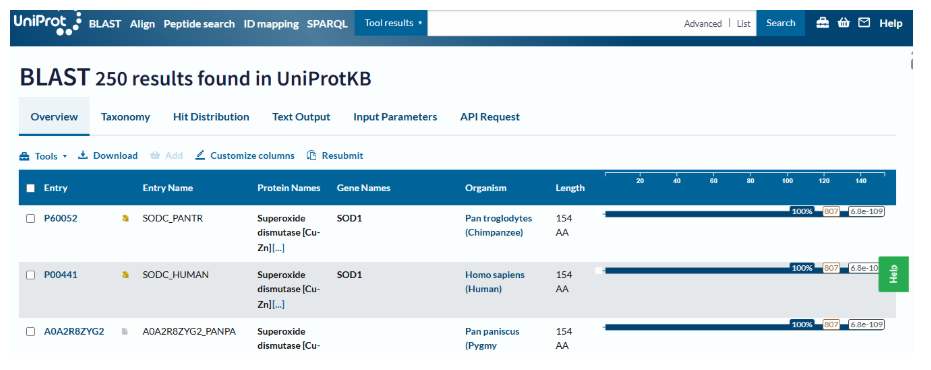
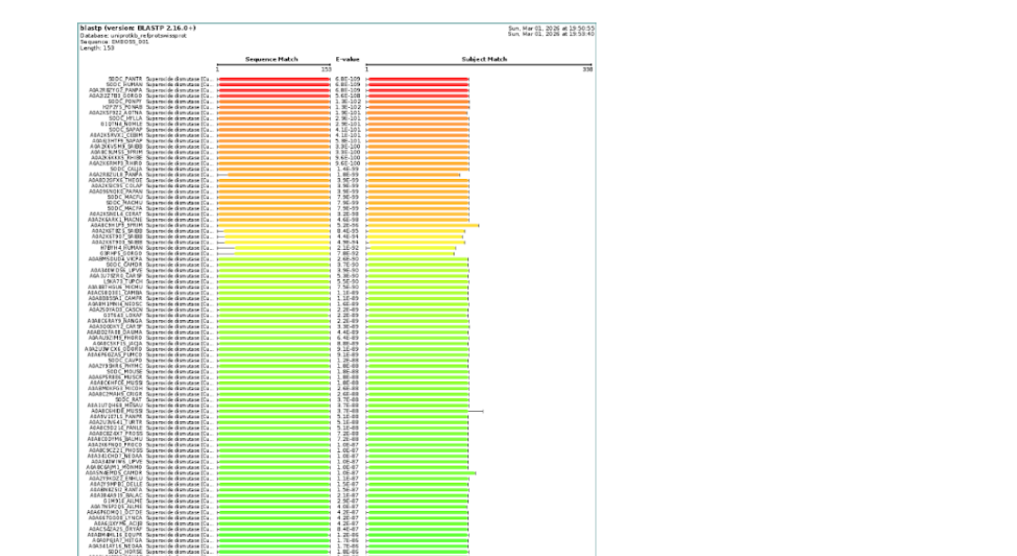
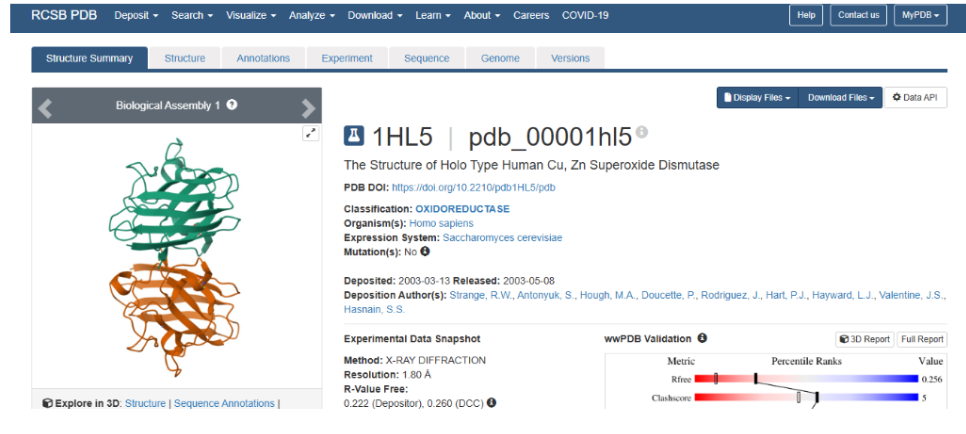
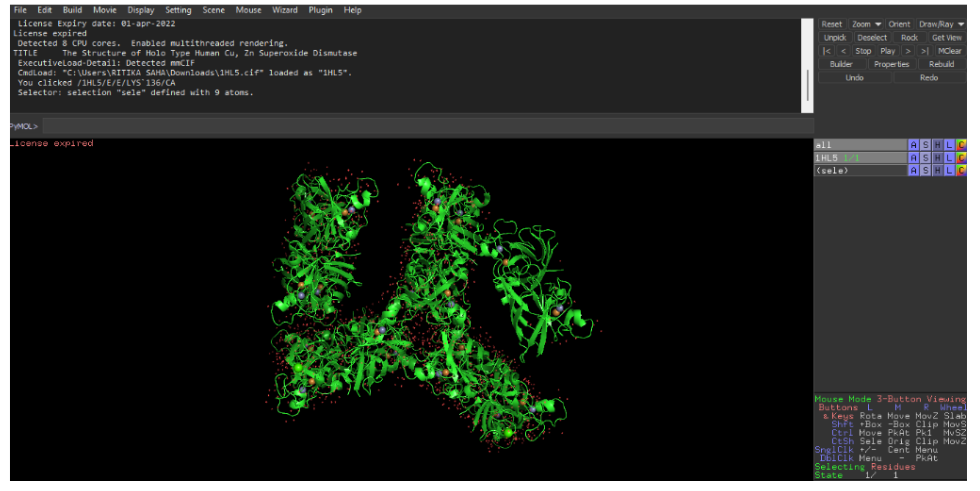
Selected Protein: Human Superoxide Dismutase 1 (SOD1)

UniProt ID: P00441

sp|P00441|SODC_HUMAN
Superoxide dismutase [Cu-Zn]
OS=Homo sapiens OX=9606 PE=1 SV=2

Why SOD1?

SOD1 converts:

O₂⁻ → O₂ + H₂O₂

It protects against oxidative stress and is implicated in ALS.

It also integrates mechanistically with my LungLite platform — serving as a biochemical actuator.

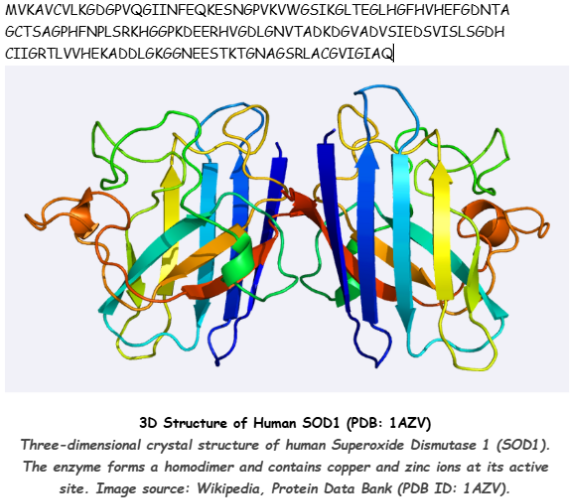
Kindly find attached an image of the protein sequence: 
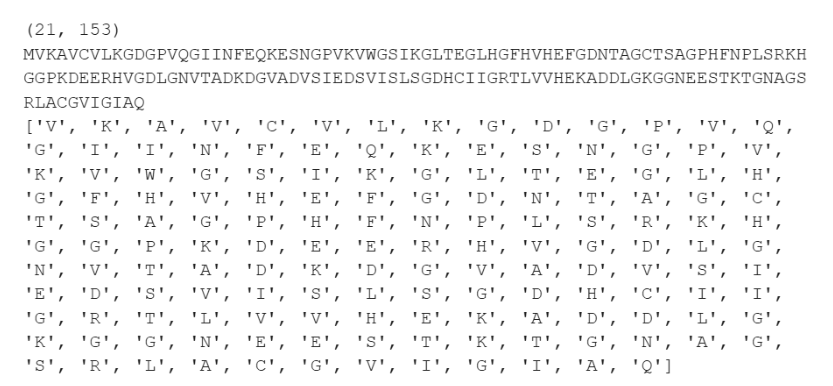
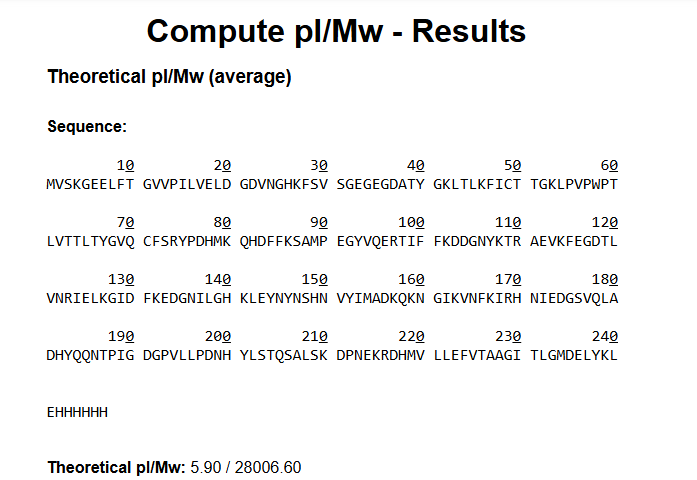
protein protein

Amino Acid Sequence

MVKAVCVLKGDGPVQGIINFEQKESNGPVKVWGSIKGLTEGLHGFHVHEFGDNTA
GCTSAGPHFNPLSRKHGGPKDEERHVGDLGNVTADKDGVADVSIEDSVISLSGDH
CIIGRTLVVHEKADDLGKGGNEESTKTGNAGSRLACGVIGIAQ

3.2 Reverse Translation

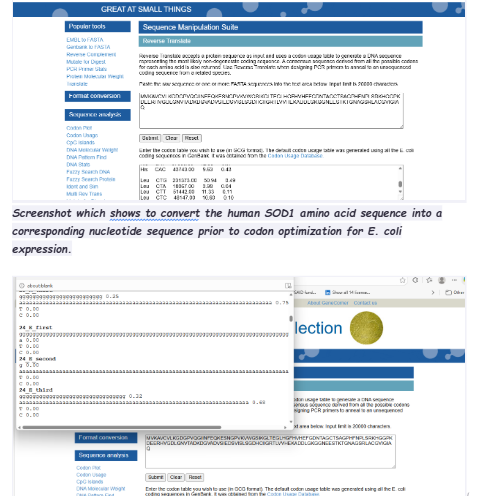
Using online reverse translation tools, I generated a nucleotide sequence.

Failure

Reverse translation produced multiple valid sequences due to codon degeneracy.

There is no single “correct” DNA sequence for a protein.

Resolution

I selected one biologically valid version as a starting template.

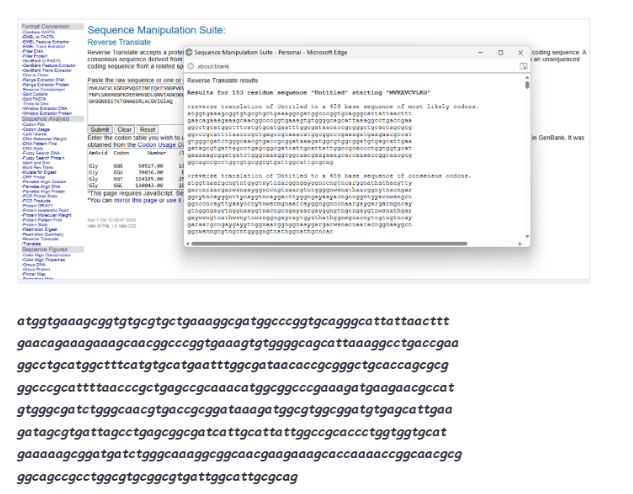
Pre-optimization DNA:

atggtgaaagcggtgtgcgtgctgaaaggcgatggcccggtgcagggcattattaacttt...
Kindly find attached images showing conversion of amino acid sequences to dna sequence (extremely interesting!):
dna dna

dna dna

3.3 Codon Optimization

Why Optimize?

Different organisms prefer specific codons due to tRNA abundance.

Without optimization:

  • Ribosome stalling
  • Low yield
  • Translation inefficiency

Host Chosen: Escherichia coli

Reasons:

  • Fast growth
  • High recombinant yield
  • Standard lab organism

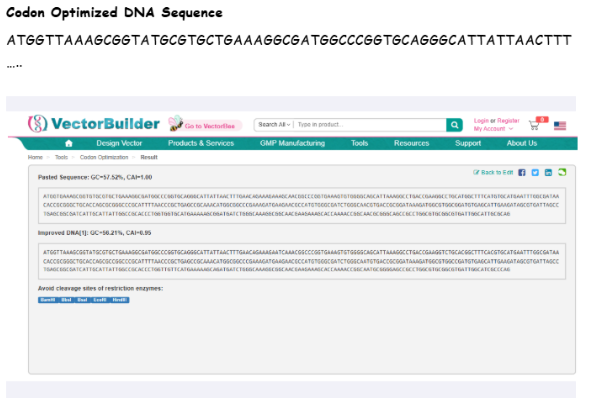
Final Codon Optimized Sequence

ATGGTTAAAGCGGTATGCGTGCTGAAAGGCGATGGCCCGGTGCAGGGCATTATTAACTTT
GAACAGAAAGAATCAAACGGCCCGGTGAAAGTGTGGGGCAGCATTAAAGGCCTGACCGA
AGGTCTGCACGGCTTTCACGTGCATGAATTTGGCGATAACACCGCGGGCTGCACCAGCG
CCGGCCCGCATTTTAACCCGCTGAGCCGCAAACATGGCGGCCCGAAAGATGAAGAACGCC
ATGTGGGCGATCTGGGCAATGTGACCGCGGATAAAGATGGCGTGGCCGATGTGAGCATT
GAAGATAGCGTGATTAGCCTGAGCGGCGATCATTGCATTATTGGCCGCACCCTGGTTGT
TCATGAAAAAGCAGATGATCTGGGCAAAGGCGGCAACGAAGAAAGCACCAAAACCGGCA
ATGCGGGGAGCCGCCTGGCGTGCGGCGTGATTGGCATCGCCCAG
codon codon
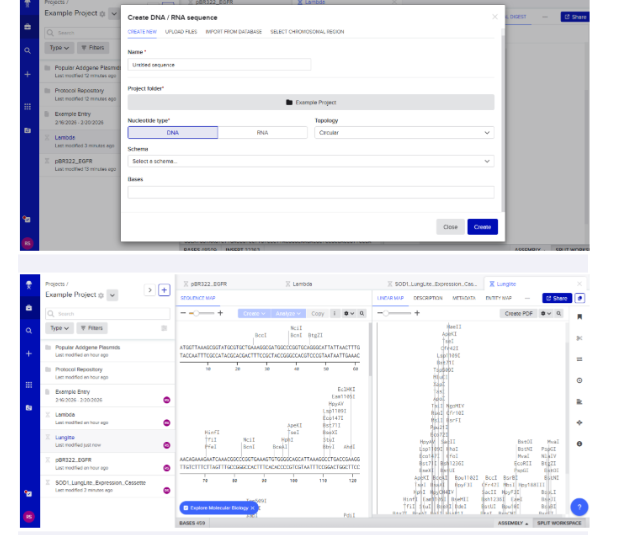
Loading the above sequence directly on benchling platform and visualizing it:
dna dna

3.4 From DNA to Protein

Expression Methods:

Cell-Dependent

  1. Transform plasmid into E. coli
  2. Antibiotic selection
  3. Transcription
  4. Translation
  5. His-tag purification

Cell-Free Option

  • TX-TL system
  • Direct protein production without cells
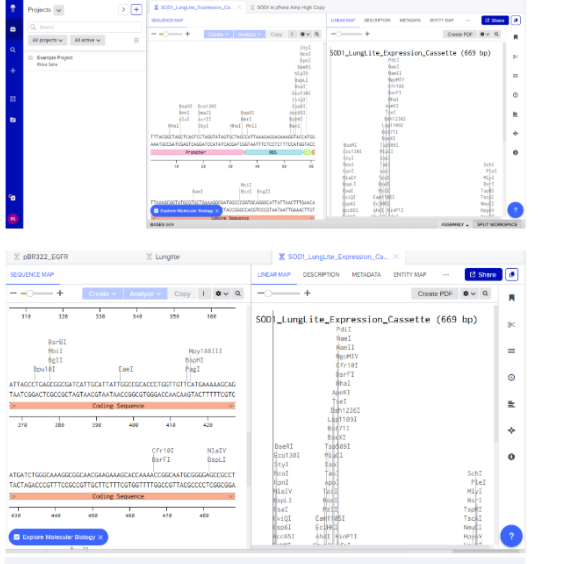
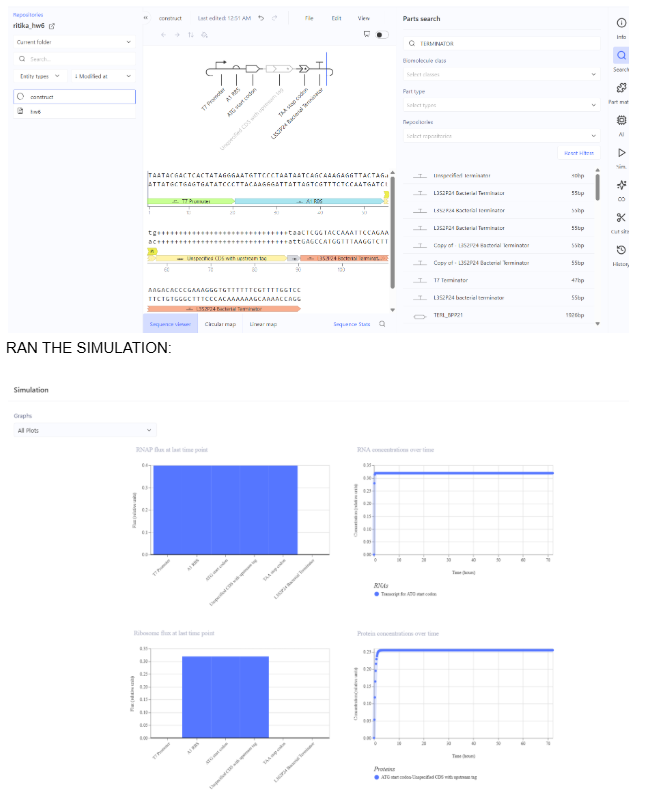
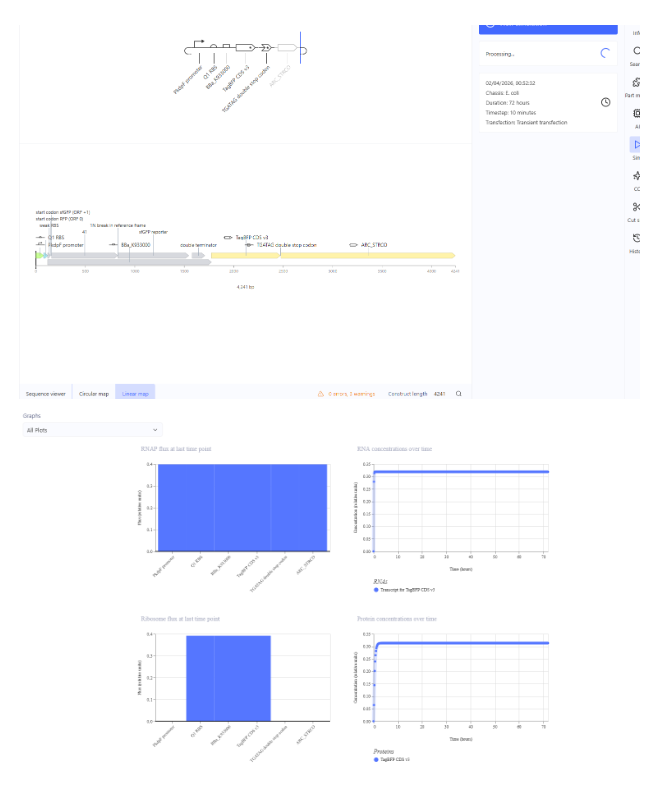
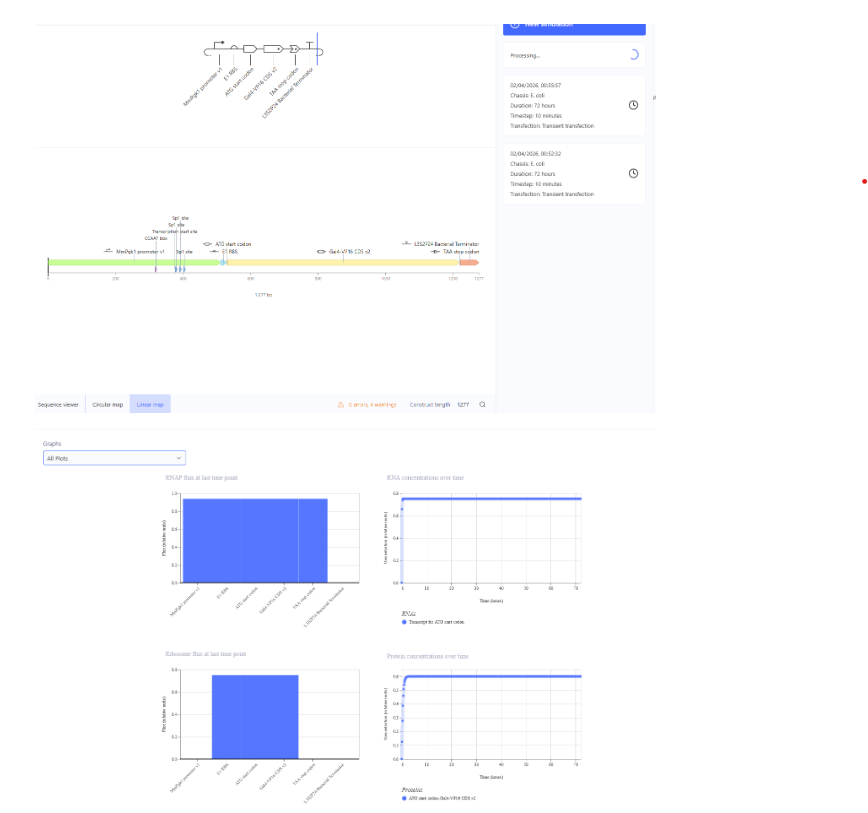
Building the expression cassette:
dna dna
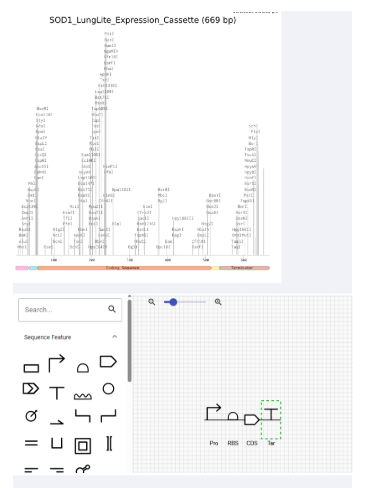
Create a digital diagram of above cassette: 
dna dna

3.5 Central Dogma Alignment

DNA:

ATG GTT AAA GCG

RNA:

AUG GUU AAA GCG

Protein:

Met Val Lys Ala

Each 3 nucleotides = 1 amino acid
T → U during transcription


🧬 Part 4: Prepare a Twist DNA Synthesis Order

4.1 Accounts

  • Created Twist account
  • Created Benchling account

4.2 Build Expression Cassette

Structure:

Promoter
RBS
ATG
SOD1 Coding Sequence
7x His Tag
TAA
Terminator

Failure

Initially forgot to annotate regions in Benchling.

Fix

Annotated:

  • Promoter
  • RBS
  • CDS
  • His Tag
  • Terminator

Verified via Linear Map view.


Final Insert Sequence

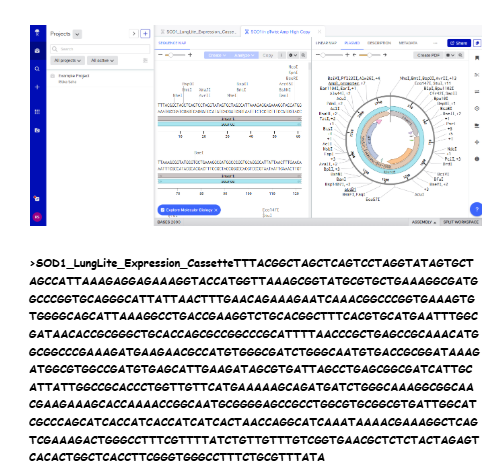
>SOD1_LungLite_Expression_Cassette
TTTACGGCTAGCTCAGTCCTAGGTATAGTGCTAGCCATTAAAGAGGAGAAAGGTACCATG
GTTAAAGCGGTATGCGTGCTGAAAGGCGATGGCCCGGTGCAGGGCATTATTAACTTTGA
ACAGAAAGAATCAAACGGCCCGGTGAAAGTGTGGGGCAGCATTAAAGGCCTGACCGAAGG
TCTGCACGGCTTTCACGTGCATGAATTTGGCGATAACACCGCGGGCTGCACCAGCGCCG
GCCCGCATTTTAACCCGCTGAGCCGCAAACATGGCGGCCCGAAAGATGAAGAACGCCAT
GTGGGCGATCTGGGCAATGTGACCGCGGATAAAGATGGCGTGGCCGATGTGAGCATTGA
AGATAGCGTGATTAGCCTGAGCGGCGATCATTGCATTATTGGCCGCACCCTGGTTGTTC
ATGAAAAAGCAGATGATCTGGGCAAAGGCGGCAACGAAGAAAGCACCAAAACCGGCAAT
GCGGGGAGCCGCCTGGCGTGCGGCGTGATTGGCATCGCCCAGCATCACCATCACCATC
ATCACTAACCAGGCATCAAATAAAACGAAAGGCTCAGTCGAAAGACTGGGCCTTTCGTT
TTATCTGTTGTTTGTCGGTGAACGCTCTCTACTAGAGTCACACTGGCTCACCTTCGGGT
GGGCCTTTCTGCGTTTATA

4.3–4.6 Twist Order

Selected:

  • Genes → Clonal Genes
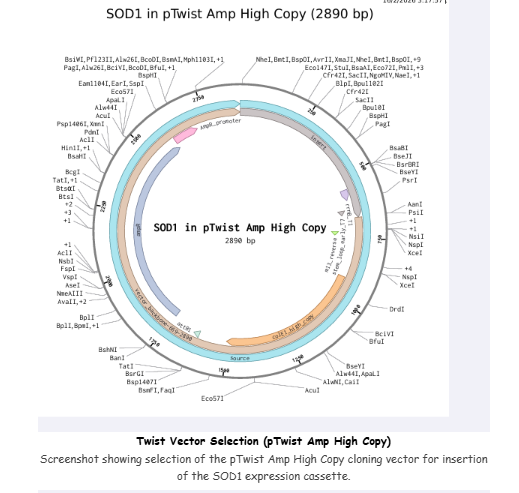
  • Vector: pTwist Amp High Copy

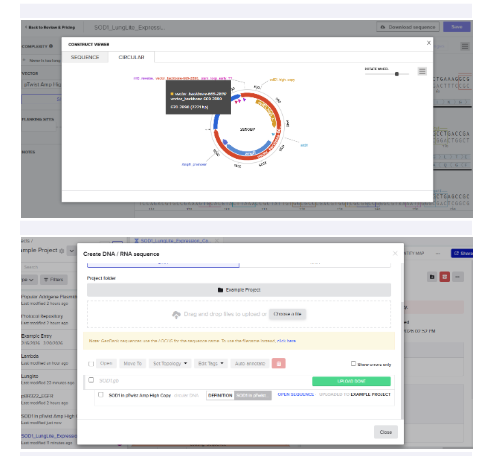
Imported GenBank file back into Benchling to confirm construct.

I built my first plasmid.

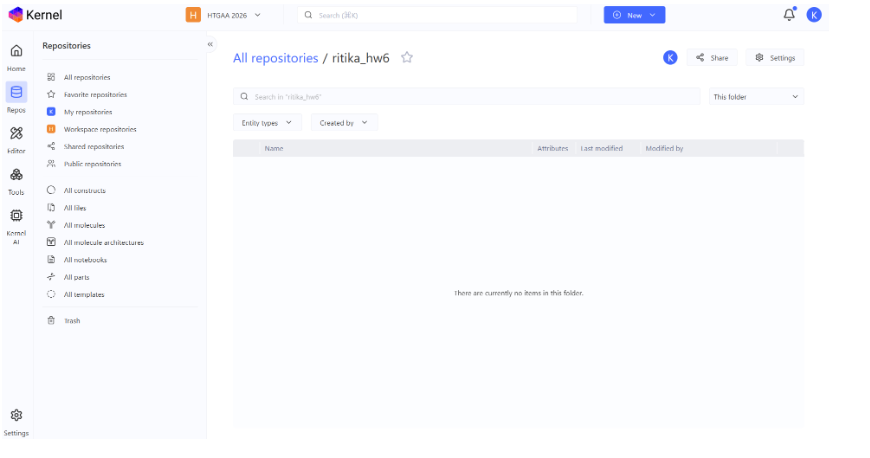
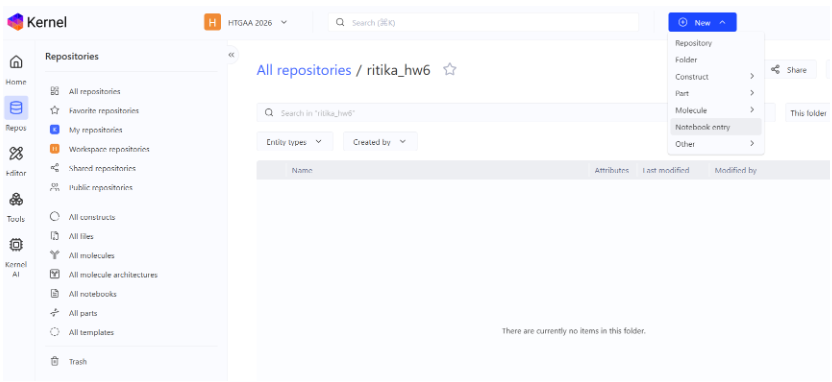
The images document the workflow: exporting a FASTA file from Benchling, creating a Twist Bioscience account, (hypothetically) placing an order by selecting Clonal Gene, downloading the resulting gene construct file (a .gb / GenBank file) from the Twist platform, and then uploading that same file back into Benchling.
final finalfinal finalfinal final

🧬 Part 5: DNA Read / Write / Edit


5.1 DNA Read

What Would I Sequence?

The SOD1 gene sequence to understand its structure, variants, and oxidative stress relevance in lung epithelial biology.

Why This Matters

Superoxide Dismutase 1 (SOD1) is a cytosolic antioxidant enzyme that catalyzes the conversion of superoxide radicals (O₂⁻) into oxygen and hydrogen peroxide. Because oxidative stress is central to airway inflammation, SOD1 represents the molecular boundary between resilience and pathology in lung tissue. Mutations in SOD1 are linked to Amyotrophic Lateral Sclerosis (ALS), and its structure and function are well-characterized, making it ideal for recombinant engineering and diagnostic integration.

Technology Chosen: Oxford Nanopore

Generation: Third-generation sequencing

Input:

  • Extracted DNA containing SOD1
  • Adapter ligation

Mechanism:

  • DNA passes through nanopores
  • Ionic current changes → base calling

Output:

  • FASTQ long reads of SOD1 sequence

Why Nanopore?

  • Long reads allow full-length SOD1 sequencing
  • Detects structural variants and potential regulatory regions
  • Portable and scalable

Limitations:

  • Higher error rate than Illumina
  • Correctable with sequencing depth and consensus alignment

5.2 DNA Write

What Would I Synthesize?

A codon-optimized SOD1 expression cassette and ROS-responsive genetic circuits for LungLite.

Rationale

To integrate SOD1 into LungLite, the gene must be optimized for expression in bacterial or cell-free systems. This enables recombinant production and functional embedding into oxidative stress detection circuits.

Technology

  • Phosphoramidite oligo synthesis
  • PCR assembly
  • Clonal gene insertion into expression vector
  • 7×His tag for purification

Application in LungLite

  1. Biological Amplifier Strategy

    • ROS activates redox-sensitive promoter
    • Induces SOD1 expression in freeze-dried TX–TL system
    • SOD1 converts superoxide → H₂O₂
    • Coupled colorimetric/fluorescent reaction produces smartphone-readable signal
  2. Calibration Standard Strategy

    • Purified recombinant SOD1 embedded in microfluidic wells
    • Known concentrations normalize ROS dye response
    • Enables quantitative oxidative stress scoring

Limitations

  • Length constraints in synthesis
  • Synthesis errors
  • Cost scaling for large constructs

5.3 DNA Edit

What Would I Edit?

Upregulate antioxidant pathways — including SOD1 expression — in lung epithelial cells.

Technology: CRISPR-Cas9

Steps

  1. gRNA design targeting regulatory region
  2. Cas9-induced double-strand break
  3. HDR-mediated repair with enhanced promoter template

Input:

  • gRNA plasmid
  • Cas9
  • Donor DNA template
  • Target lung epithelial cells

Goal

Increase endogenous SOD1 buffering capacity to restore redox balance in oxidative stress conditions.

Limitations

  • Off-target effects
  • Variable editing efficiency
  • Delivery challenges in airway epithelium

🌬 Final Reflection

What began as:

Lambda DNA
→ Restriction digest
→ Gel electrophoresis

Evolved into:

DNA Read → Sequencing SOD1
DNA Write → Engineering ROS-responsive SOD1 circuits
DNA Express → Recombinant protein production
DNA Integrate → Embedding SOD1 into LungLite microfluidic diagnostics

SOD1 is not merely a recombinant protein in this project. It becomes a functional biochemical actuator — translating environmental oxidative exposure into measurable signal output.

Growing up in Delhi, where severe air pollution makes oxidative stress a daily lived experience, reframes SOD1 from an abstract enzyme to a molecular proxy for environmental exposure. LungLite transforms this molecular logic into a portable, AI-integrated, noninvasive public health device.

The DNA Design Challenge is no longer just molecular cloning — it becomes the foundation for a programmable redox-sensing health platform.

I acknowledge that I used artificial intelligence tools, including ChatGPT-5.0, for language refinement, structural organization, and improvement of clarity in this documentation.

All scientific concepts, experimental designs, sequence selections, analytical reasoning, and technical interpretations presented in this work reflect my own understanding and independent effort. The AI tool was used solely to enhance readability, coherence, grammar, and overall presentation quality.

The prompts primarily included instructions such as: “Rewrite the text and correct grammatical errors.”

Week 3 HW: Lab Automation — Opentrons Artwork

Lab Automation and Opentrons Programming


Part 1: Python Script for Opentrons Artwork

Objective

Our first task was to generate an artisitc design using the GUI at opentrons-art.rcdonovan.com.

My inspiration for this design was my dog shiro (although he is an Indian spitz), I ended up designing a dachshund- art art
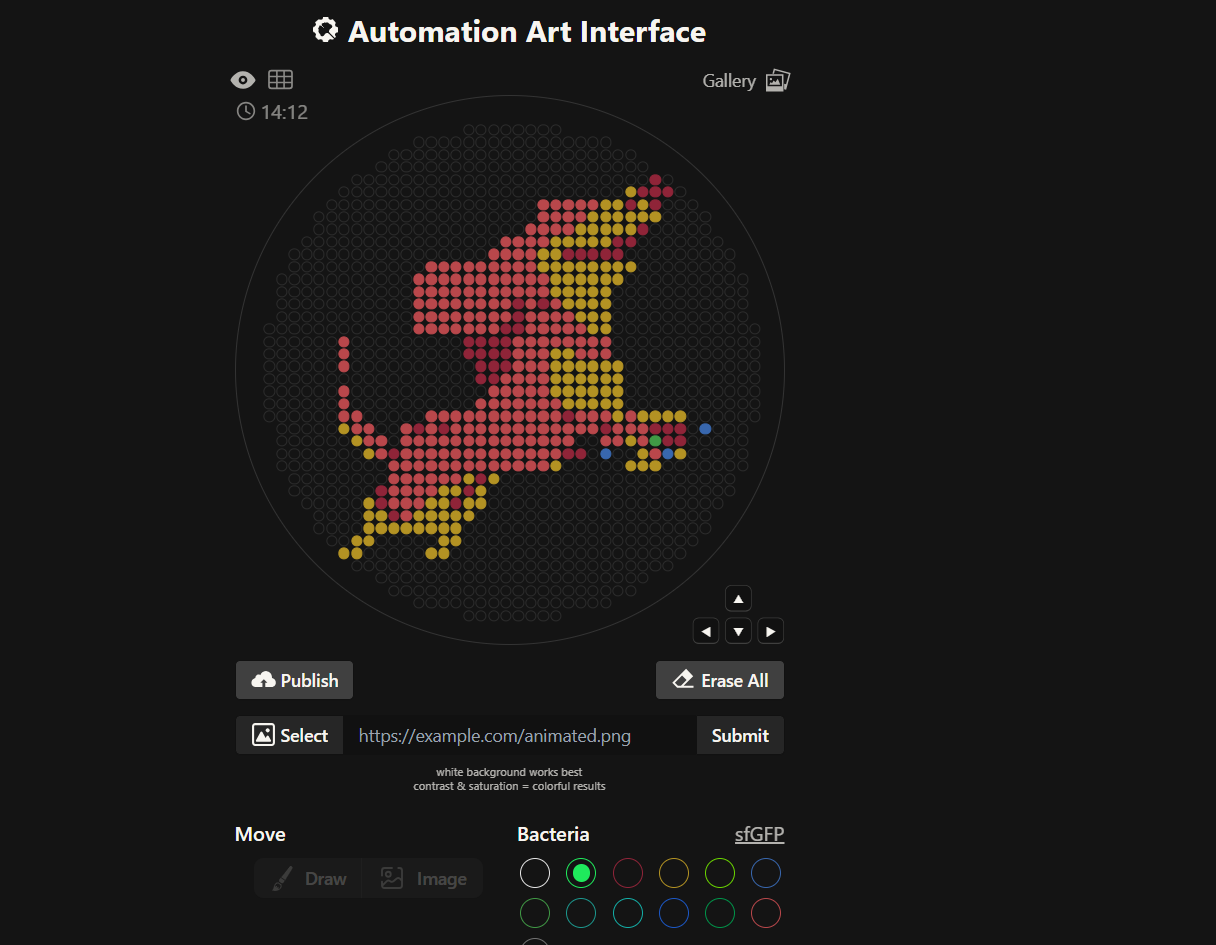
I, then exported the python script directly from the interface, as per the given instructions:

from opentrons import types

import string

metadata = {
    'protocolName': '{YOUR NAME} - Opentrons Art - HTGAA',
    'author': 'HTGAA',
    'source': 'HTGAA 2026',
    'apiLevel': '2.20'
}

Z_VALUE_AGAR = 2.0
POINT_SIZE = 1.25

mrfp1_points = [(23,31), (21,29), (23,29), (25,29), (19,27), (23,27), (21,23), (17,21), (19,21), (9,19), (11,19), (13,19), (15,19), (17,19), (1,11), (5,11), (1,9), (-1,7), (1,7), (-7,5), (-5,5), (-3,5), (-1,5), (-7,3), (-5,3), (-3,3), (-1,3), (-5,1), (-3,1), (-1,1), (-5,-1), (-3,-1), (9,-7), (-15,-9), (-11,-9), (15,-9), (23,-9), (25,-9), (27,-9), (25,-11), (27,-11), (-19,-13), (9,-13), (11,-13), (-5,-17), (-21,-19), (-7,-19), (-21,-21), (-9,-21), (-19,-23)]
mko2_points = [(19,29), (15,27), (17,27), (21,27), (13,25), (15,25), (17,25), (19,25), (21,25), (23,25), (11,23), (13,23), (15,23), (17,23), (19,23), (7,21), (9,21), (11,21), (13,21), (15,21), (5,19), (7,19), (5,17), (7,17), (9,17), (11,17), (13,17), (15,17), (17,17), (19,17), (7,15), (9,15), (11,15), (13,15), (15,15), (17,15), (7,13), (9,13), (11,13), (13,13), (15,13), (9,11), (11,11), (13,11), (15,11), (11,9), (13,9), (15,9), (13,7), (15,7), (7,3), (9,3), (7,1), (9,1), (11,1), (13,1), (15,1), (17,1), (7,-1), (9,-1), (11,-1), (13,-1), (15,-1), (17,-1), (7,-3), (9,-3), (11,-3), (13,-3), (15,-3), (17,-3), (9,-5), (11,-5), (13,-5), (15,-5), (17,-5), (17,-7), (21,-7), (23,-7), (25,-7), (27,-7), (-27,-9), (-25,-11), (19,-11), (-23,-13), (21,-13), (27,-13), (7,-15), (19,-15), (21,-15), (23,-15), (-7,-17), (-3,-17), (-11,-19), (-9,-19), (-5,-19), (-23,-21), (-13,-21), (-11,-21), (-7,-21), (-5,-21), (-23,-23), (-21,-23), (-15,-23), (-13,-23), (-11,-23), (-9,-23), (-7,-23), (-23,-25), (-21,-25), (-19,-25), (-17,-25), (-15,-25), (-13,-25), (-11,-25), (-9,-25), (-25,-27), (-23,-27), (-11,-27), (-9,-27), (-27,-29), (-25,-29), (-13,-29), (-11,-29)]
mscarlet_i_points = [(5,27), (7,27), (9,27), (11,27), (13,27), (5,25), (7,25), (9,25), (11,25), (3,23), (5,23), (7,23), (9,23), (-1,21), (1,21), (3,21), (5,21), (-3,19), (-1,19), (1,19), (3,19), (-13,17), (-11,17), (-9,17), (-7,17), (-5,17), (-3,17), (-1,17), (1,17), (3,17), (-15,15), (-13,15), (-11,15), (-9,15), (-7,15), (-5,15), (-3,15), (-1,15), (1,15), (3,15), (5,15), (-15,13), (-13,13), (-11,13), (-9,13), (-7,13), (-5,13), (-3,13), (-1,13), (1,13), (3,13), (5,13), (-15,11), (-13,11), (-11,11), (-9,11), (-7,11), (-5,11), (-3,11), (-1,11), (3,11), (7,11), (-15,9), (-13,9), (-11,9), (-9,9), (-7,9), (-5,9), (-3,9), (-1,9), (3,9), (5,9), (7,9), (9,9), (-15,7), (-13,7), (-11,7), (-9,7), (-7,7), (-5,7), (-3,7), (3,7), (5,7), (7,7), (9,7), (11,7), (-27,5), (1,5), (3,5), (5,5), (7,5), (9,5), (11,5), (13,5), (15,5), (-27,3), (1,3), (3,3), (5,3), (11,3), (13,3), (15,3), (-27,1), (1,1), (3,1), (5,1), (-1,-1), (1,-1), (3,-1), (5,-1), (-27,-3), (-3,-3), (-1,-3), (1,-3), (3,-3), (5,-3), (-27,-5), (-5,-5), (-3,-5), (-1,-5), (1,-5), (3,-5), (5,-5), (7,-5), (-27,-7), (-25,-7), (-13,-7), (-11,-7), (-9,-7), (-7,-7), (-5,-7), (-3,-7), (-1,-7), (1,-7), (3,-7), (5,-7), (7,-7), (11,-7), (13,-7), (15,-7), (19,-7), (-25,-9), (-23,-9), (-17,-9), (-13,-9), (-9,-9), (-7,-9), (-5,-9), (-3,-9), (-1,-9), (1,-9), (3,-9), (5,-9), (7,-9), (9,-9), (11,-9), (13,-9), (17,-9), (19,-9), (21,-9), (-23,-11), (-21,-11), (-17,-11), (-15,-11), (-13,-11), (-11,-11), (-9,-11), (-7,-11), (-5,-11), (-3,-11), (-1,-11), (1,-11), (3,-11), (5,-11), (7,-11), (9,-11), (15,-11), (17,-11), (21,-11), (-21,-13), (-17,-13), (-15,-13), (-13,-13), (-11,-13), (-9,-13), (-7,-13), (-5,-13), (-3,-13), (-1,-13), (1,-13), (3,-13), (5,-13), (7,-13), (23,-13), (-19,-15), (-17,-15), (-15,-15), (-13,-15), (-11,-15), (-9,-15), (-7,-15), (-5,-15), (-3,-15), (-1,-15), (1,-15), (3,-15), (5,-15), (-19,-17), (-17,-17), (-15,-17), (-13,-17), (-11,-17), (-9,-17), (-19,-19), (-17,-19), (-15,-19), (-13,-19), (-19,-21), (-17,-21), (-15,-21), (-17,-23)]
azurite_points = [(31,-9), (15,-13), (25,-13)]
mclover3_points = [(23,-11)]

point_name_pairing = [("mrfp1", mrfp1_points),("mko2", mko2_points),("mscarlet_i", mscarlet_i_points),("azurite", azurite_points),("mclover3", mclover3_points)]

# Robot deck setup constants
TIP_RACK_DECK_SLOT = 9
COLORS_DECK_SLOT = 6
AGAR_DECK_SLOT = 5
PIPETTE_STARTING_TIP_WELL = 'A1'

# Place the PCR tubes in this order
well_colors = {
    'A1': 'sfGFP',
    'A2': 'mRFP1',
    'A3': 'mKO2',
    'A4': 'Venus',
    'A5': 'mKate2_TF',
    'A6': 'Azurite',
    'A7': 'mCerulean3',
    'A8': 'mClover3',
    'A9': 'mJuniper',
    'A10': 'mTurquoise2',
    'A11': 'mBanana',
    'A12': 'mPlum',
    'B1': 'Electra2',
    'B2': 'mWasabi',
    'B3': 'mScarlet_I',
    'B4': 'mPapaya',
    'B5': 'eqFP578',
    'B6': 'tdTomato',
    'B7': 'DsRed',
    'B8': 'mKate2',
    'B9': 'EGFP',
    'B10': 'mRuby2',
    'B11': 'TagBFP',
    'B12': 'mChartreuse_TF',
    'C1': 'mLychee_TF',
    'C2': 'mTagBFP2',
    'C3': 'mEGFP',
    'C4': 'mNeonGreen',
    'C5': 'mAzamiGreen',
    'C6': 'mWatermelon',
    'C7': 'avGFP',
    'C8': 'mCitrine',
    'C9': 'mVenus',
    'C10': 'mCherry',
    'C11': 'mHoneydew',
    'C12': 'TagRFP',
    'D1': 'mTFP1',
    'D2': 'Ultramarine',
    'D3': 'ZsGreen1',
    'D4': 'mMiCy',
    'D5': 'mStayGold2',
    'D6': 'PA_GFP'
}

volume_used = {
    'mrfp1': 0,
    'mko2': 0,
    'mscarlet_i': 0,
    'azurite': 0,
    'mclover3': 0
}

def update_volume_remaining(current_color, quantity_to_aspirate):
    rows = string.ascii_uppercase
    for well, color in list(well_colors.items()):
        if color == current_color:
            if (volume_used[current_color] + quantity_to_aspirate) > 250:
                # Move to next well horizontally by advancing row letter, keeping column number
                row = well[0]
                col = well[1:]
                
                # Find next row letter
                next_row = rows[rows.index(row) + 1]
                next_well = f"{next_row}{col}"
                
                del well_colors[well]
                well_colors[next_well] = current_color
                volume_used[current_color] = quantity_to_aspirate
            else:
                volume_used[current_color] += quantity_to_aspirate
            break

def run(protocol):
    # Load labware, modules and pipettes
    protocol.home()

    # Tips
    tips_20ul = protocol.load_labware('opentrons_96_tiprack_20ul', TIP_RACK_DECK_SLOT, 'Opentrons 20uL Tips')

    # Pipettes
    pipette_20ul = protocol.load_instrument("p20_single_gen2", "right", [tips_20ul])

    # Deep Well Plate
    temperature_plate = protocol.load_labware('nest_96_wellplate_2ml_deep', 6)

    # Agar Plate
    agar_plate = protocol.load_labware('htgaa_agar_plate', AGAR_DECK_SLOT, 'Agar Plate')
    agar_plate.set_offset(x=0.00, y=0.00, z=Z_VALUE_AGAR)

    # Get the top-center of the plate, make sure the plate was calibrated before running this
    center_location = agar_plate['A1'].top()

    pipette_20ul.starting_tip = tips_20ul.well(PIPETTE_STARTING_TIP_WELL)
    
    # Helper function (dispensing)
    def dispense_and_jog(pipette, volume, location):
        assert(isinstance(volume, (int, float)))
        # Go above the location
        above_location = location.move(types.Point(z=location.point.z + 2))
        pipette.move_to(above_location)
        # Go downwards and dispense
        pipette.dispense(volume, location)
        # Go upwards to avoid smearing
        pipette.move_to(above_location)

    # Helper function (color location)
    def location_of_color(color_string):
        for well,color in well_colors.items():
            if color.lower() == color_string.lower():
                return temperature_plate[well]
        raise ValueError(f"No well found with color {color_string}")

    # Print pattern by iterating over lists
    for i, (current_color, point_list) in enumerate(point_name_pairing):
        # Skip the rest of the loop if the list is empty
        if not point_list:
            continue

        # Get the tip for this run, set the bacteria color, and the aspirate bacteria of choice
        pipette_20ul.pick_up_tip()
        max_aspirate = int(18 // POINT_SIZE) * POINT_SIZE
        quantity_to_aspirate = min(len(point_list)*POINT_SIZE, max_aspirate)
        update_volume_remaining(current_color, quantity_to_aspirate)
        pipette_20ul.aspirate(quantity_to_aspirate, location_of_color(current_color))

        # Iterate over the current points list and dispense them, refilling along the way
        for i in range(len(point_list)):
            x, y = point_list[i]
            adjusted_location = center_location.move(types.Point(x, y))

            dispense_and_jog(pipette_20ul, POINT_SIZE, adjusted_location)
            
            if pipette_20ul.current_volume == 0 and len(point_list[i+1:]) > 0:
                quantity_to_aspirate = min(len(point_list[i:])*POINT_SIZE, max_aspirate)
                update_volume_remaining(current_color, quantity_to_aspirate)
                pipette_20ul.aspirate(quantity_to_aspirate, location_of_color(current_color))

        # Drop tip between each color
        pipette_20ul.drop_tip()

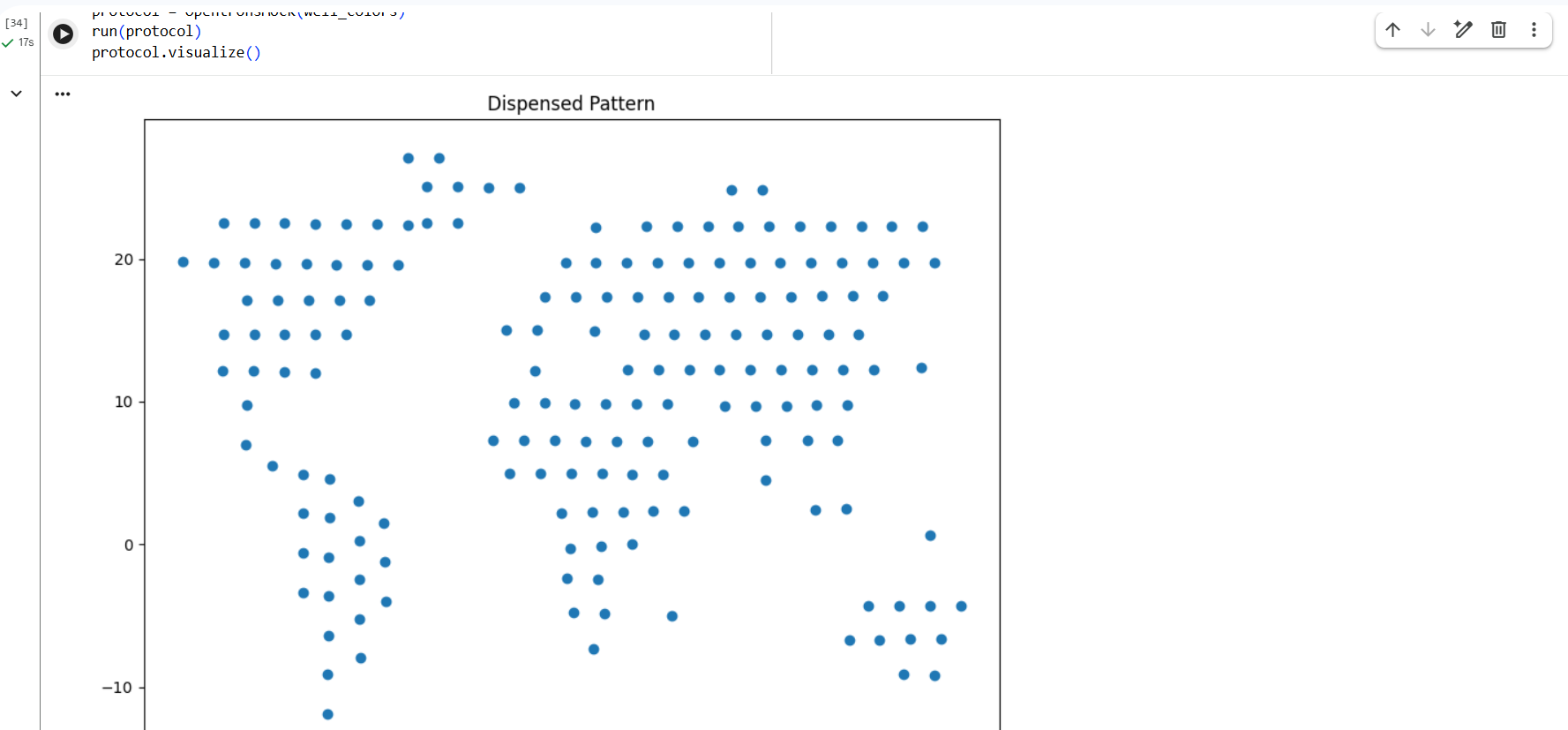
I also experimented with a Google Colab code file, where I worked on generating a design based on an image resembling the Earth. earth earth

Part 2: Post-Lab Questions

2.1 Published Paper Using Automation

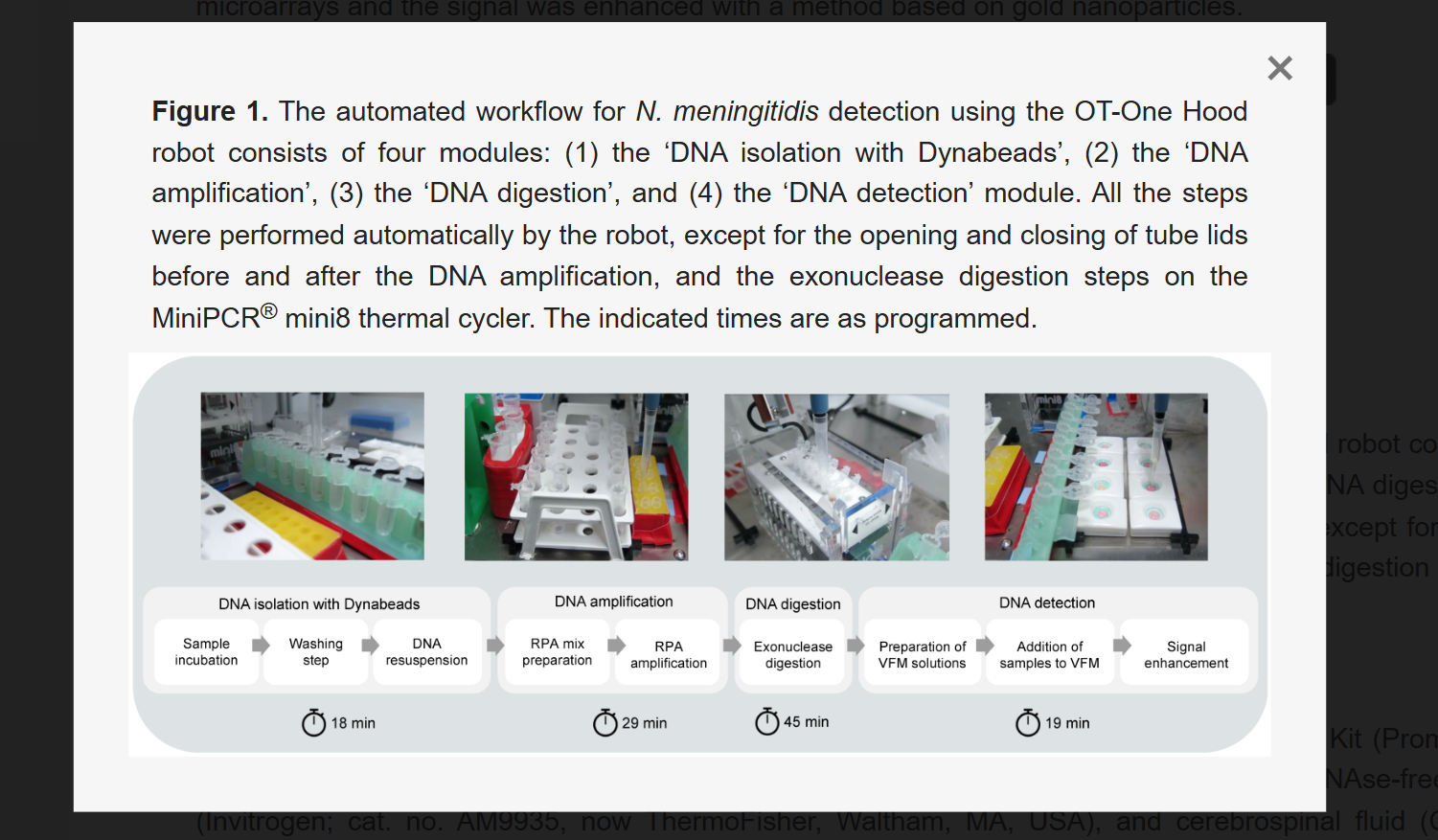
paper paper

Paper Title

An Automated Versatile Diagnostic Workflow for Infectious Disease Detection in Low-Resource Settings

Source

https://www.mdpi.com/2072-666X/15/6/708

Summary

This paper presents an automated diagnostic workflow designed for detecting infectious diseases in low-resource settings. The system integrates microfluidics, biosensing, and automation to process biological samples efficiently. It focuses on creating a scalable and portable diagnostic pipeline that reduces manual intervention while maintaining accuracy.

Use of Automation

The workflow incorporates automation tools to handle multiple steps of the diagnostic process, including sample preparation, reagent handling, and reaction execution. Automated systems ensure precise liquid handling, reduce human error, and enable reproducibility across multiple tests. The integration of microfluidic platforms further enhances throughput and minimizes reagent usage.

Key Contribution

The key contribution of this work is the development of a versatile and low-cost automated diagnostic platform that can be deployed in resource-limited environments. It demonstrates how automation can bridge gaps in healthcare accessibility by enabling reliable and rapid disease detection.

Relevance to This Week

This paper directly relates to this week’s focus on lab automation using Opentrons. It highlights how automated liquid handling and integrated workflows can transform biological experiments into scalable and reproducible systems, similar to how we programmed the Opentrons robot.


2.2 Final Project — Automation Plan

Project Overview

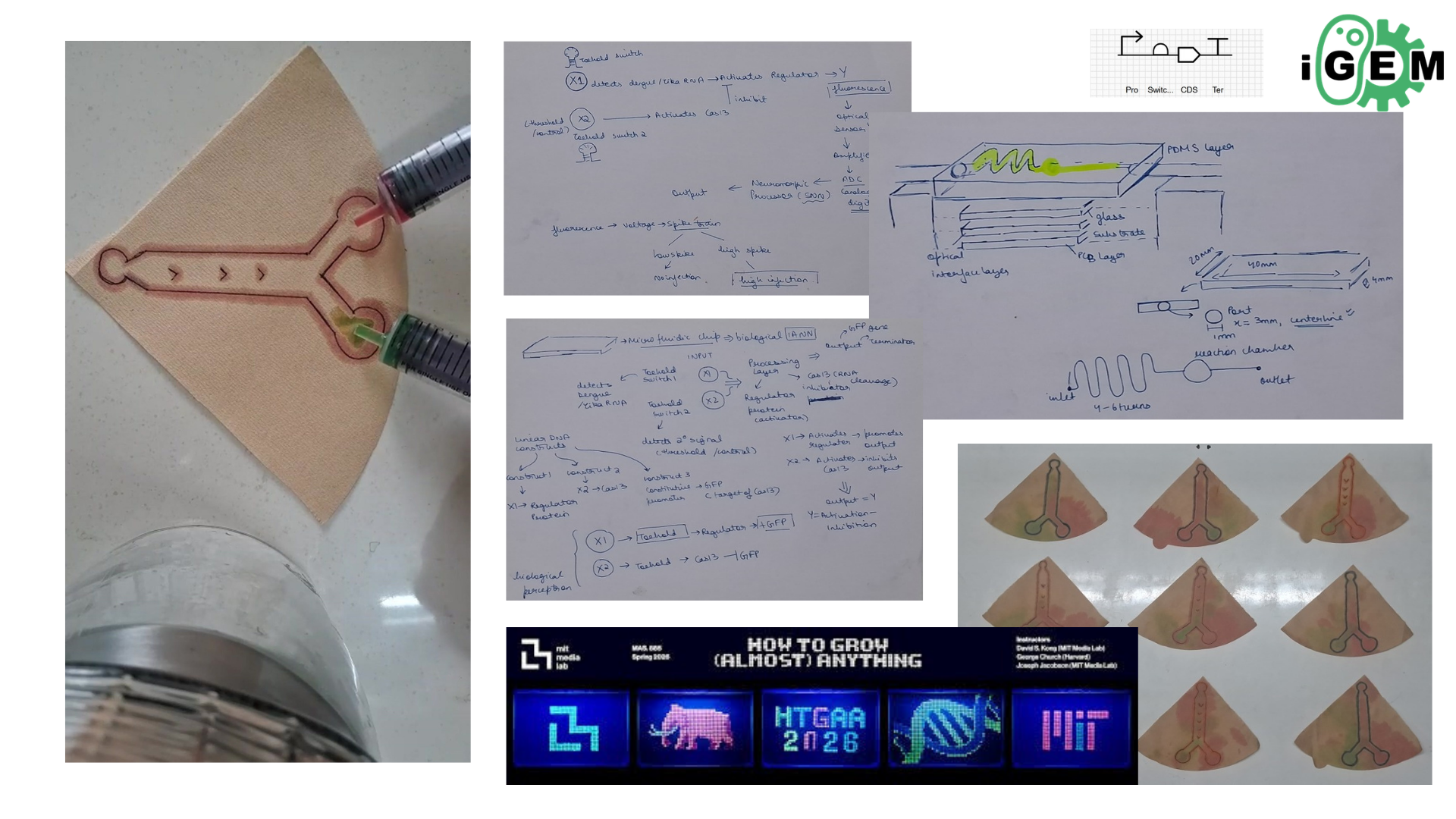
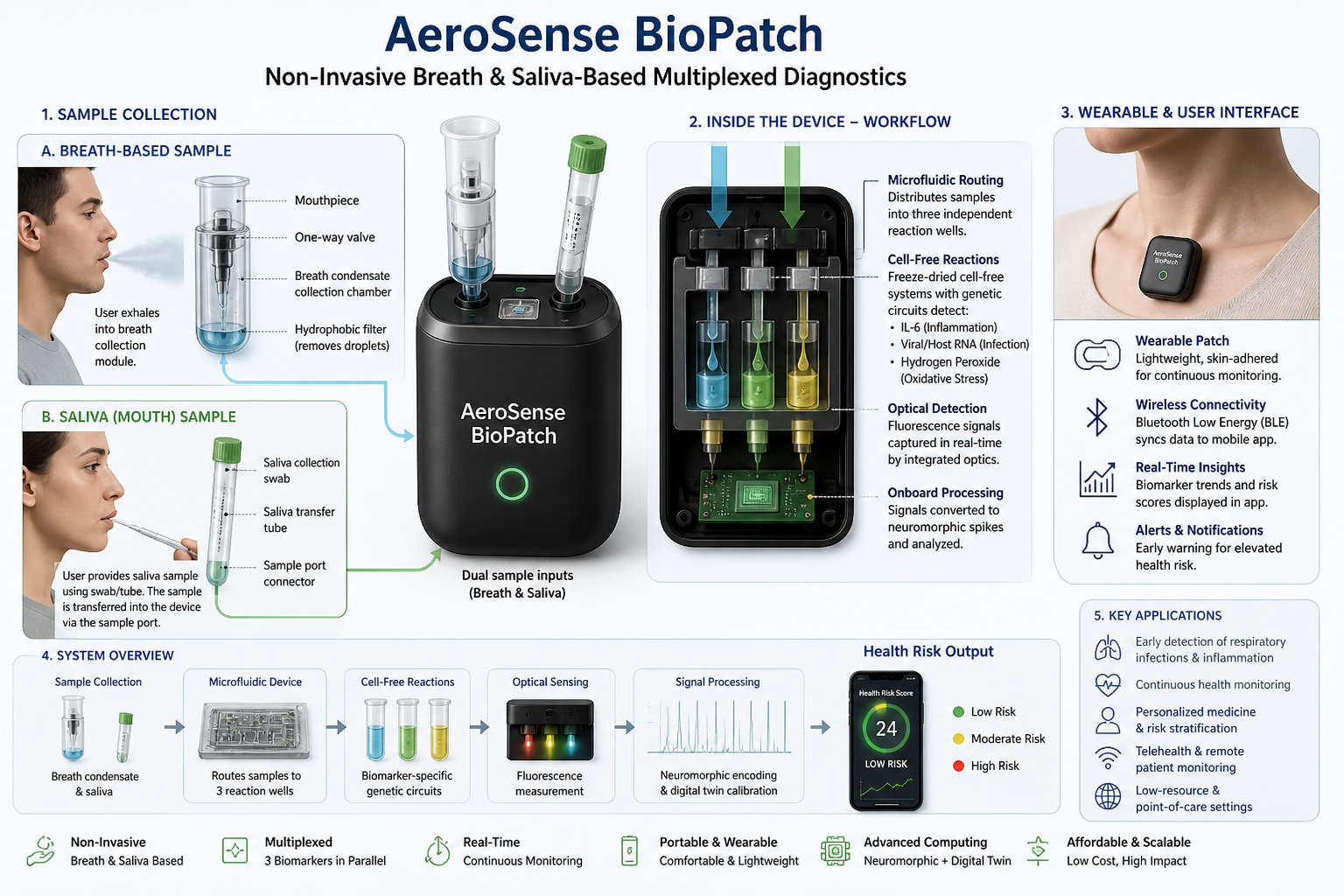
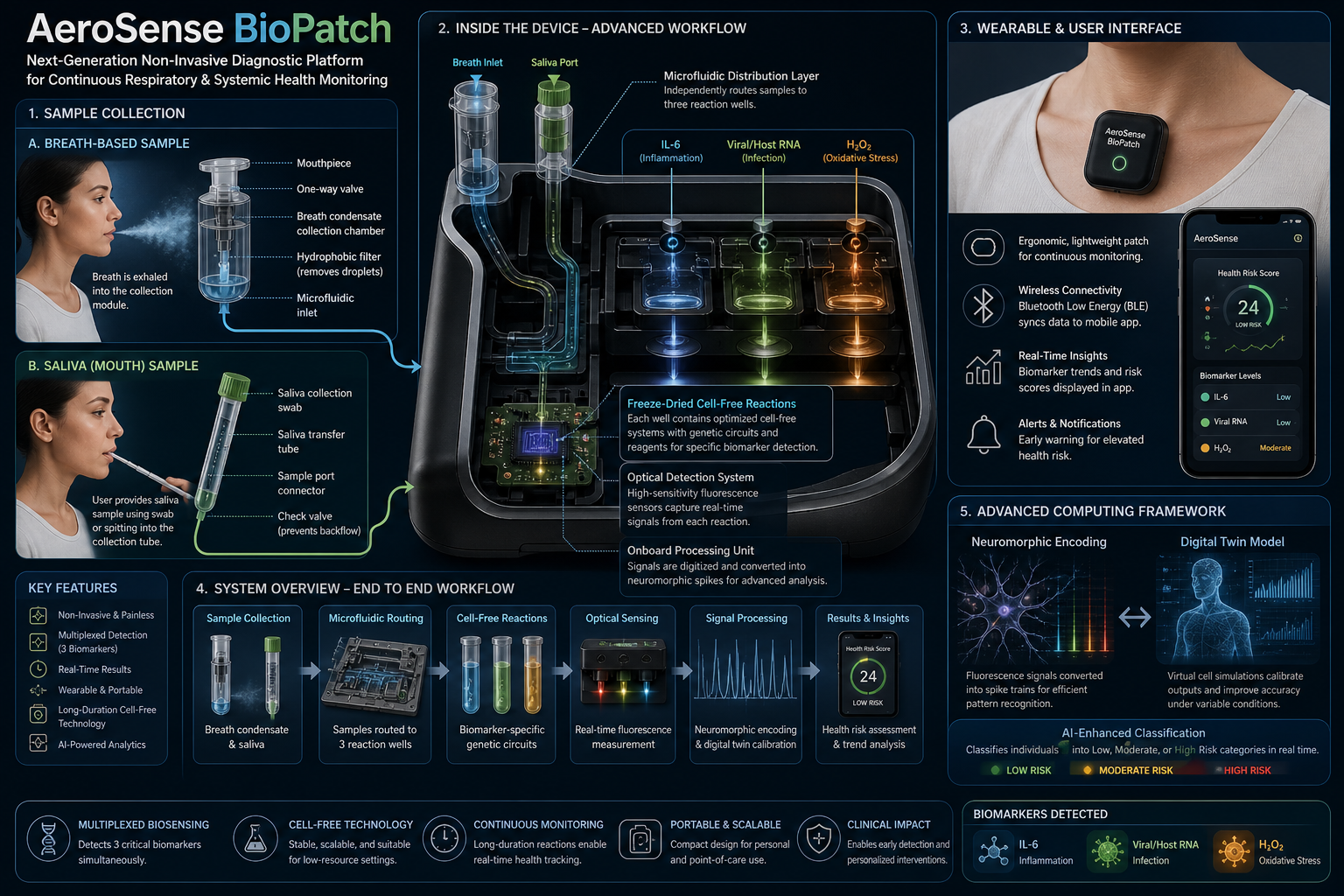
For the final project, I propose developing an automated diagnostic system that detects disease biomarkers from breath condensate samples using a microfluidic and cell-free synthetic biology platform.

Problem Statement

Traditional diagnostic methods can be invasive, time-consuming, and require well-equipped laboratory settings. There is a need for a non-invasive, rapid, and scalable diagnostic solution that can work in low-resource environments.

Proposed Solution

The proposed system will combine breath-based sample collection with automated liquid handling and synthetic biology reactions. Using an Opentrons robot, the workflow will automate sample distribution, reagent addition, and reaction setup across multiple wells.


Workflow Description

def run(protocol):

    # Load labware and pipette
    tiprack = protocol.load_labware("opentrons_96_tiprack_20ul", 9)
    pipette = protocol.load_instrument("p20_single_gen2", "right", [tiprack])

    plate = protocol.load_labware("corning_96_wellplate_360ul_flat", 1)

    # Step 1: Add sample to wells
    for well in plate.wells():
        pipette.pick_up_tip()
        pipette.aspirate(10, plate['A1'])
        pipette.dispense(10, well)
        pipette.mix(2, 10, well)
        pipette.drop_tip()

    # Step 2: Incubation
    protocol.delay(minutes=30)

    # Step 3: Output ready
    print("Reactions complete")

Tools and Technologies

  • Opentrons liquid handling robot
  • Microfluidic chip systems
  • Cell-free synthetic biology platforms
  • Optional cloud lab systems (e.g., Ginkgo Nebula)

Experimental Plan

  1. Collect breath condensate sample
  2. Distribute samples into multiple wells using Opentrons
  3. Add reagents to initiate reactions
  4. Incubate under controlled conditions
  5. Measure outputs (fluorescence or color change)

Expected Outcome

The system will enable rapid, automated, and non-invasive detection of biomarkers with high reproducibility. It will demonstrate how automation can be used to scale biological diagnostics.
Part 3: Final Project Ideas

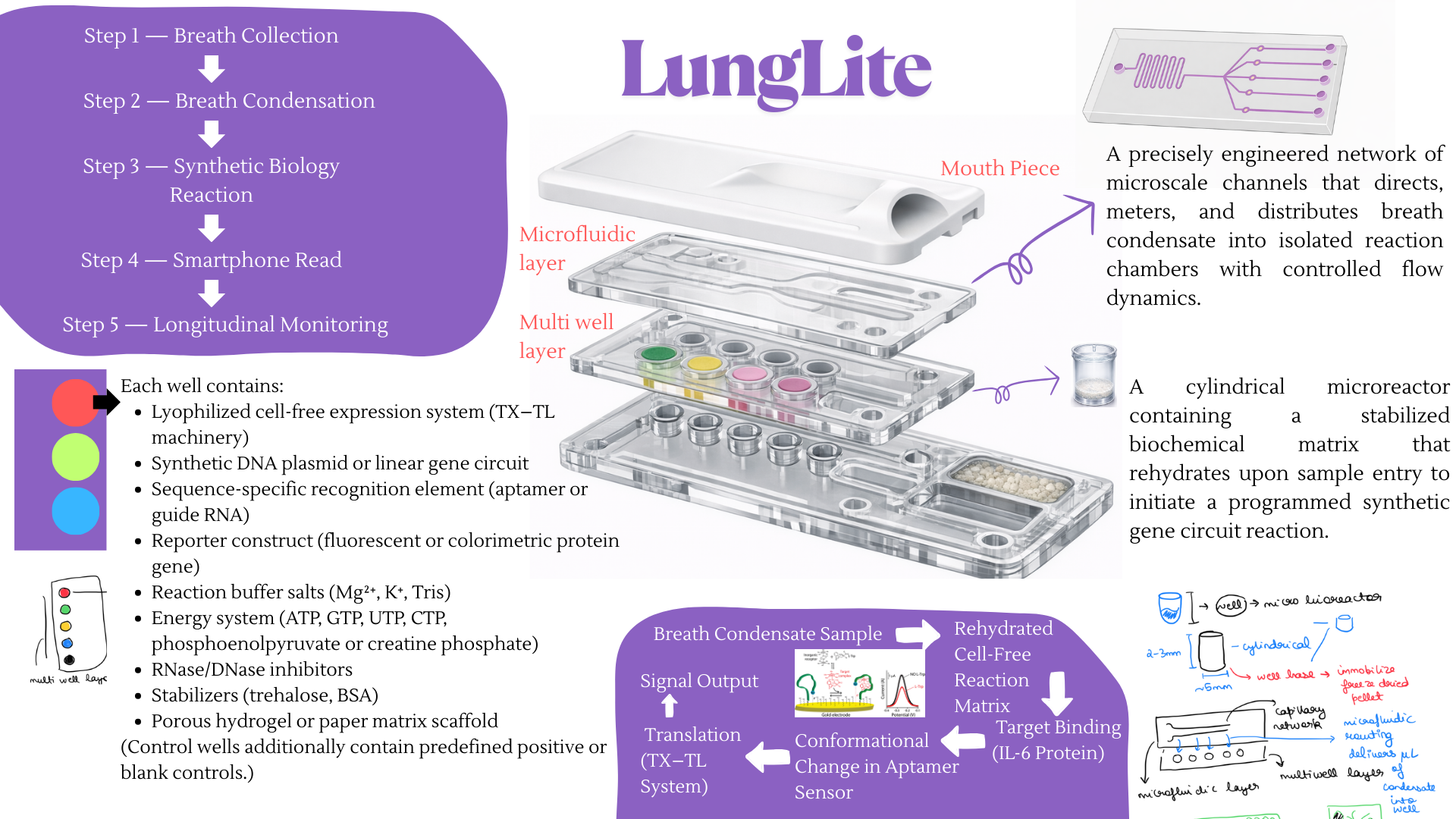
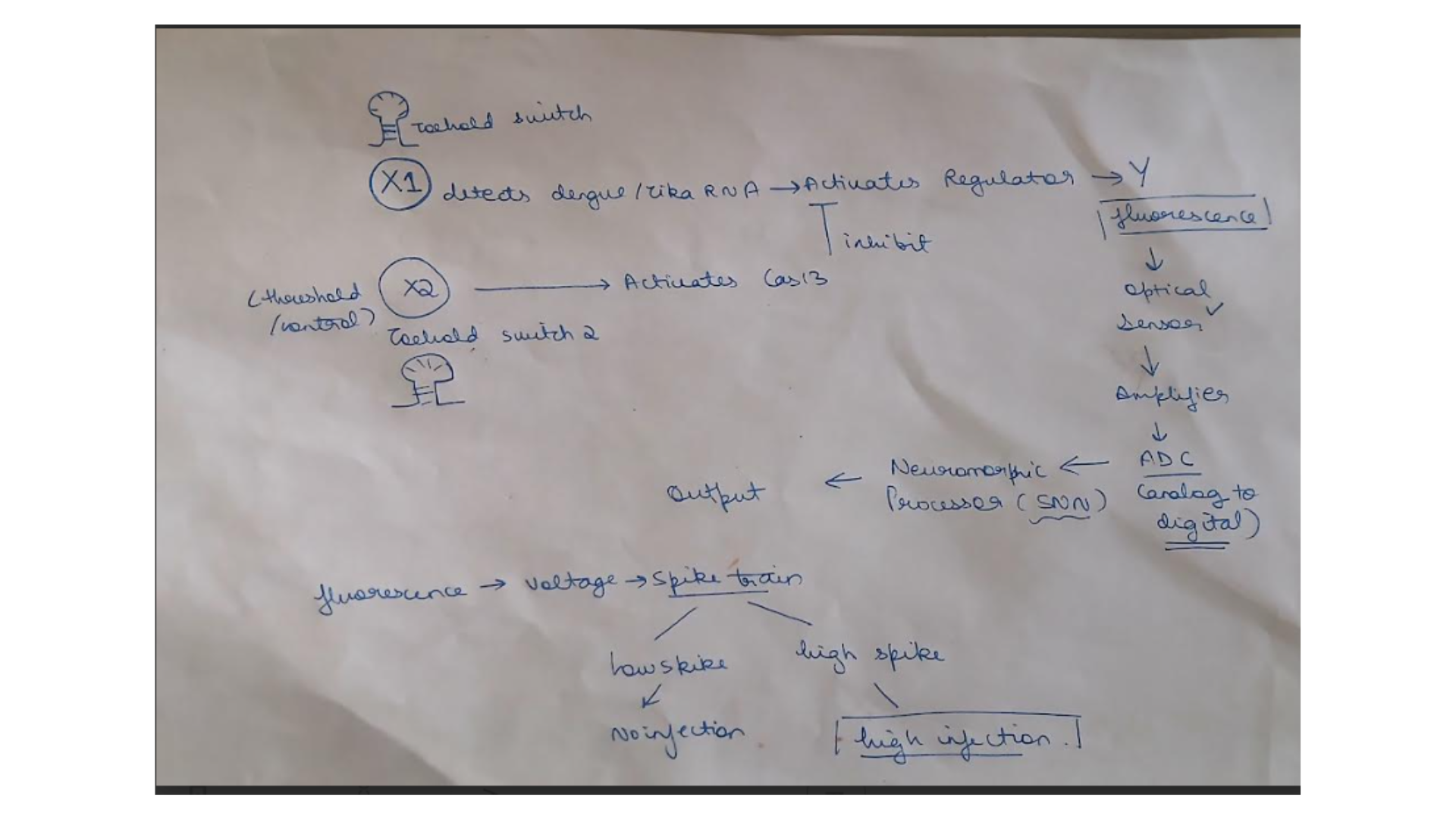
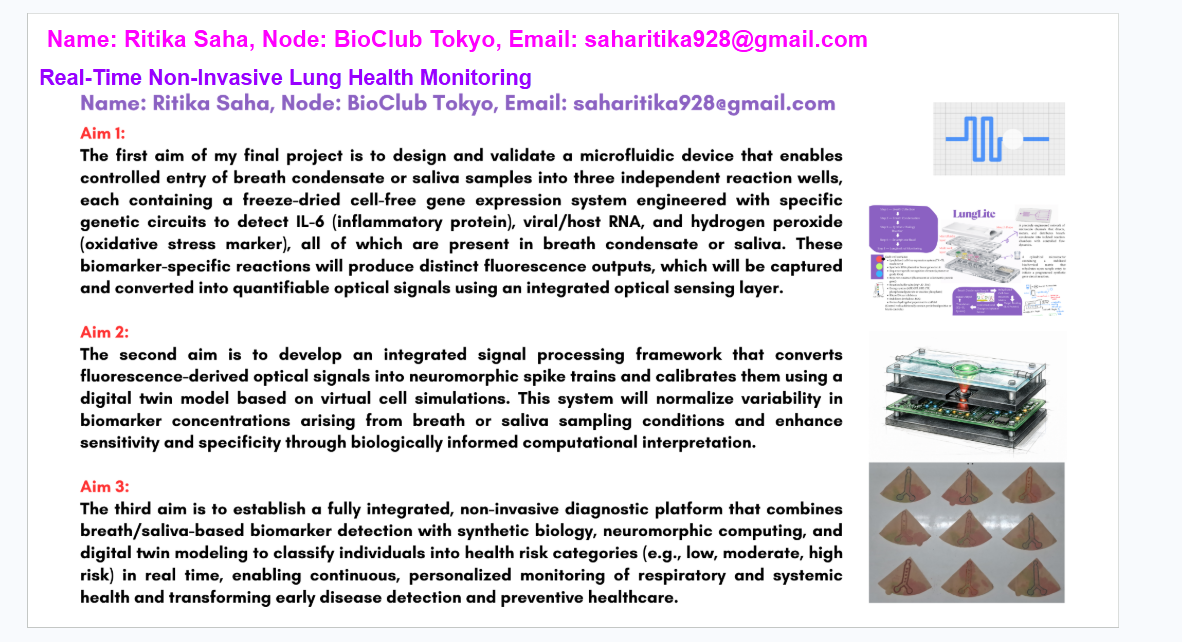
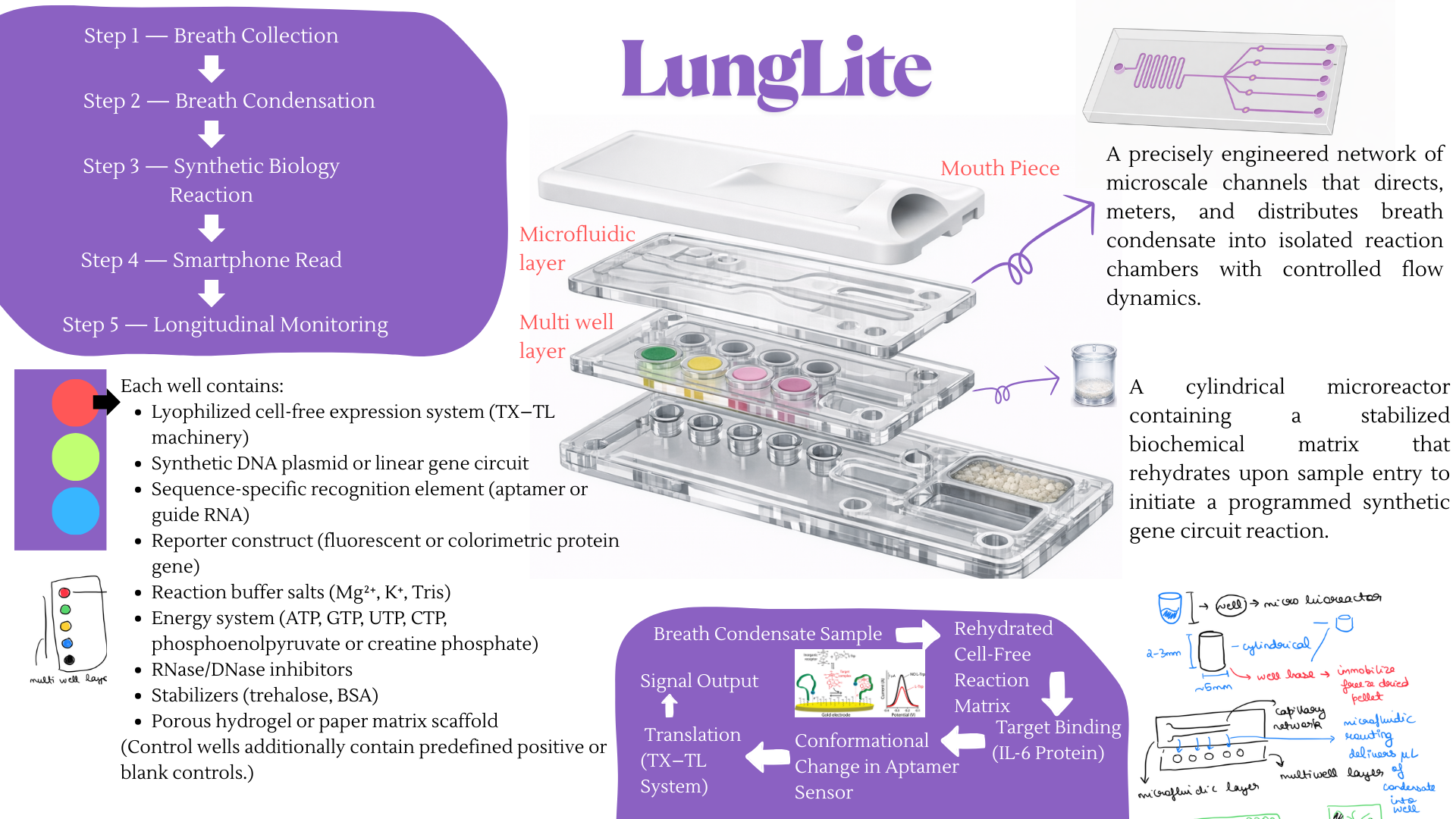
Idea 1 Breathe based diagnositc device

idea idea

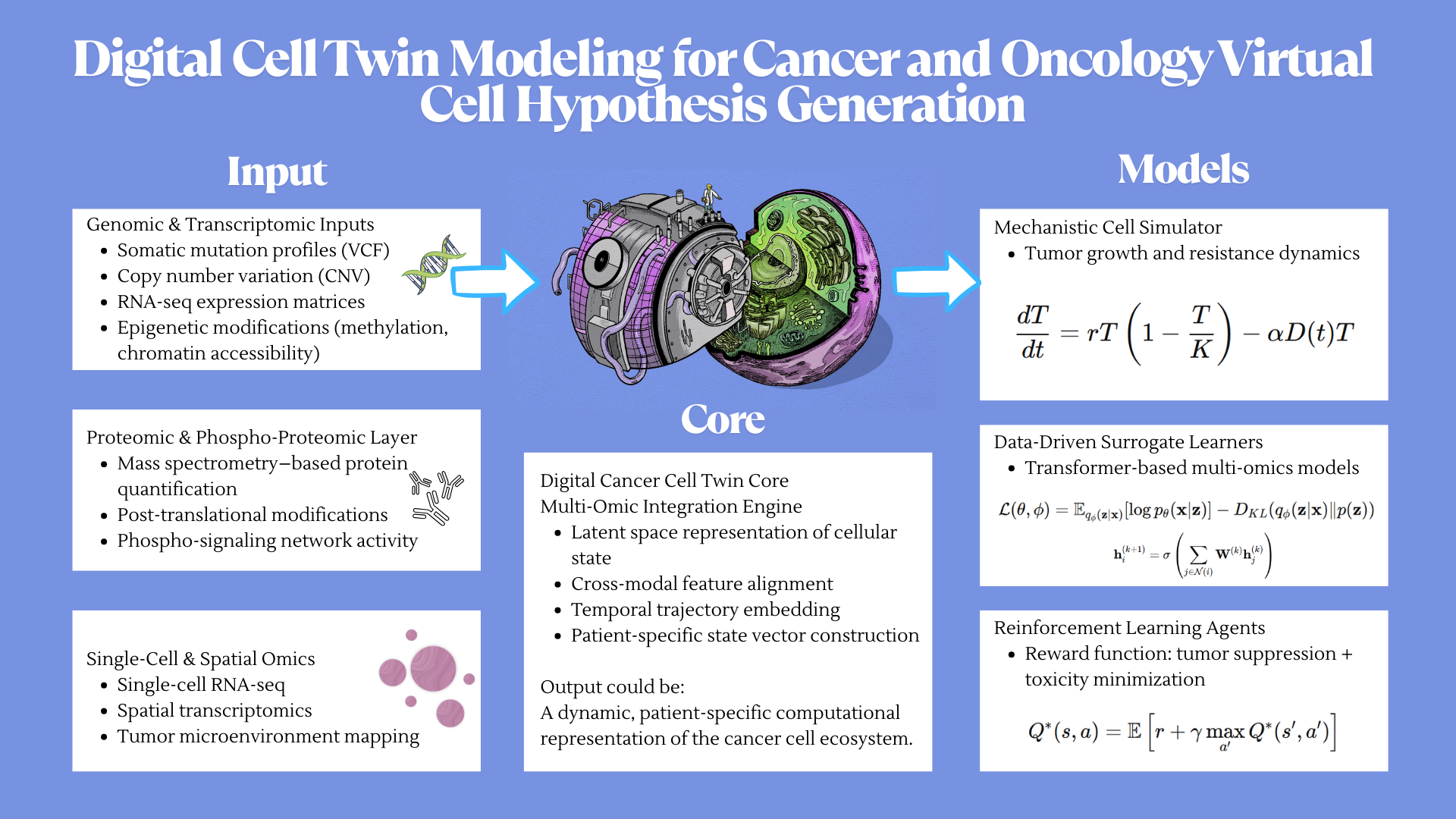
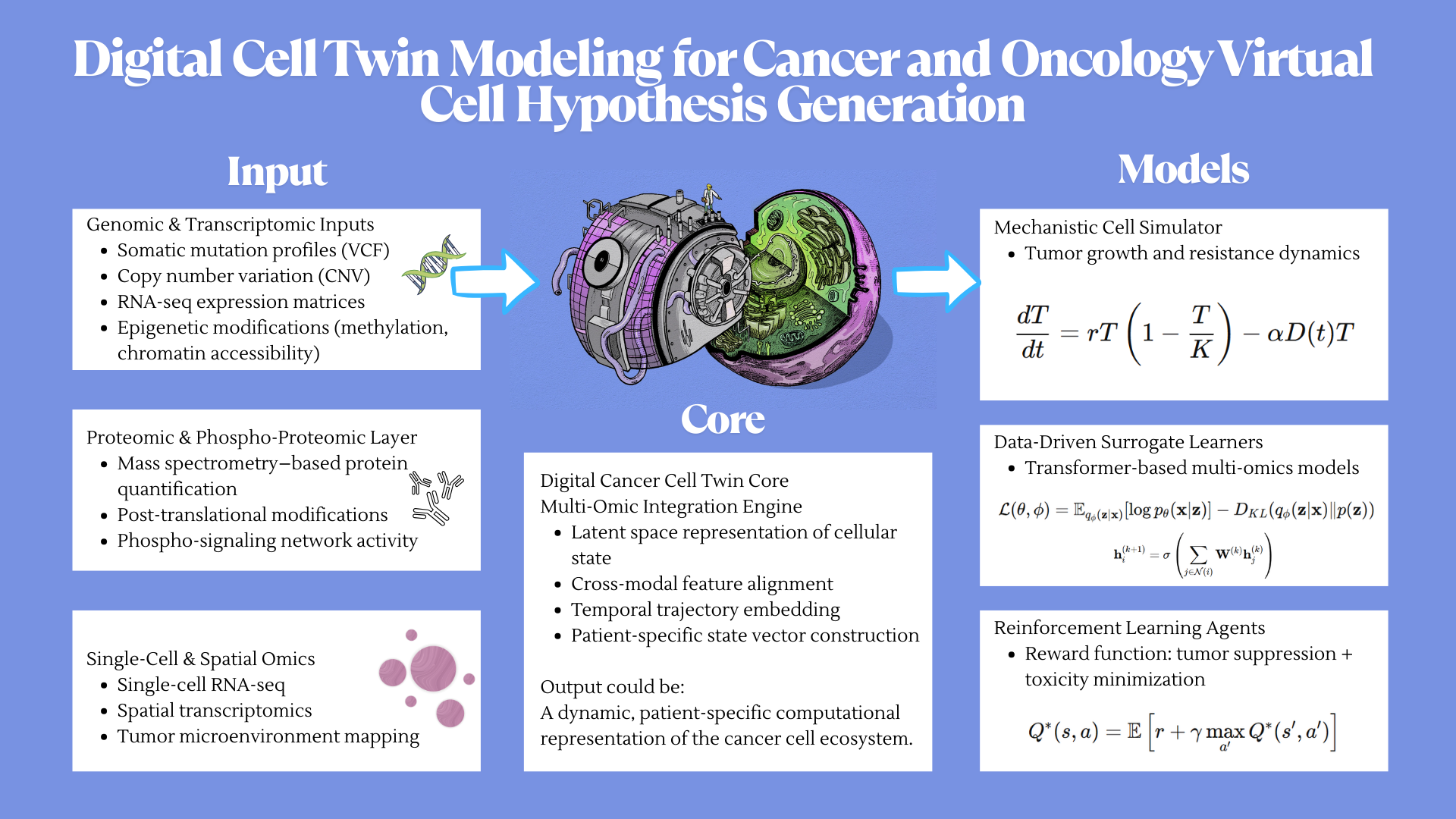
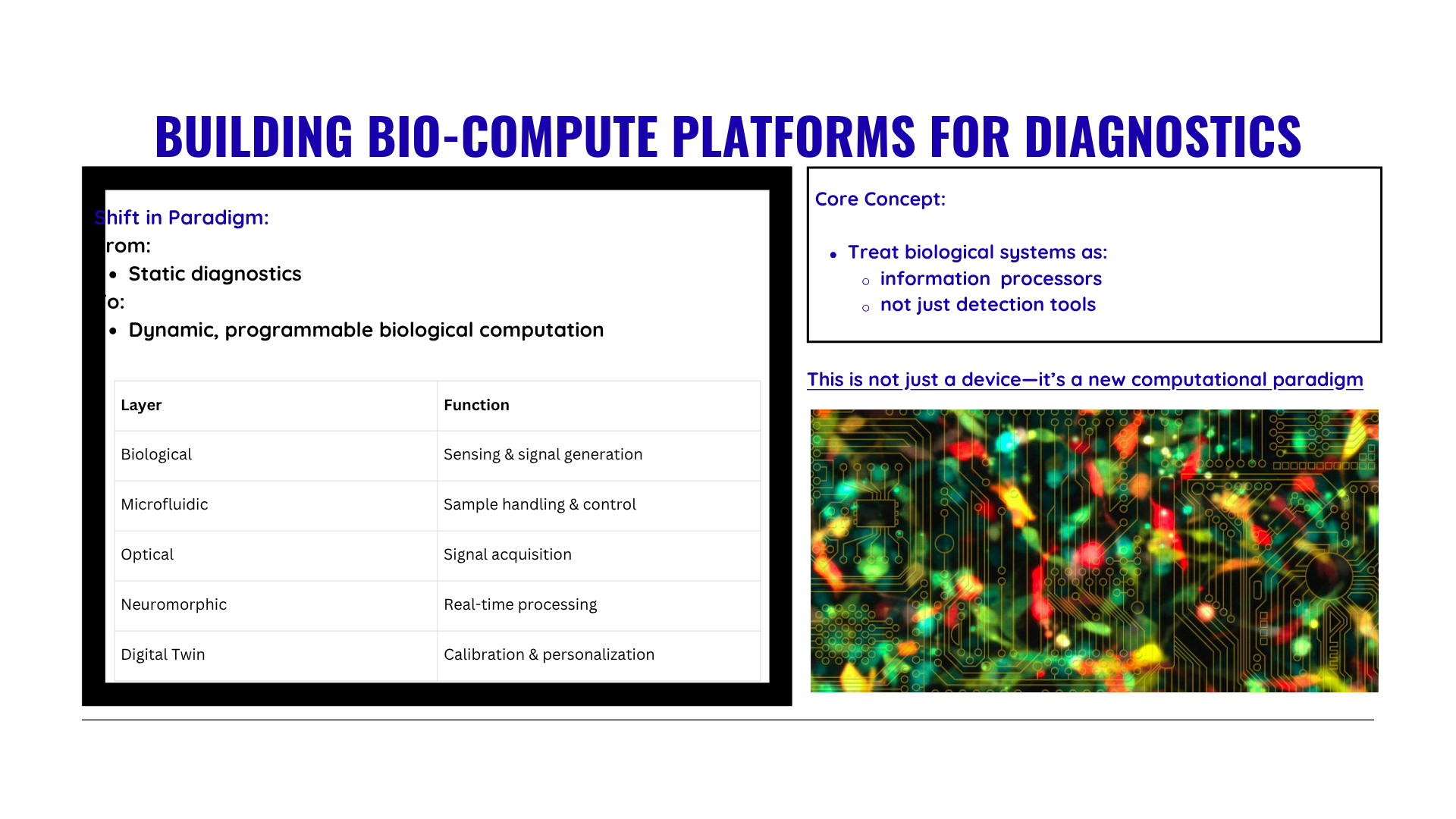
Idea 2 Digital Cell Twin Modeling for Cancer and Oncology Virtual Cell Hypothesis Generation

idea idea

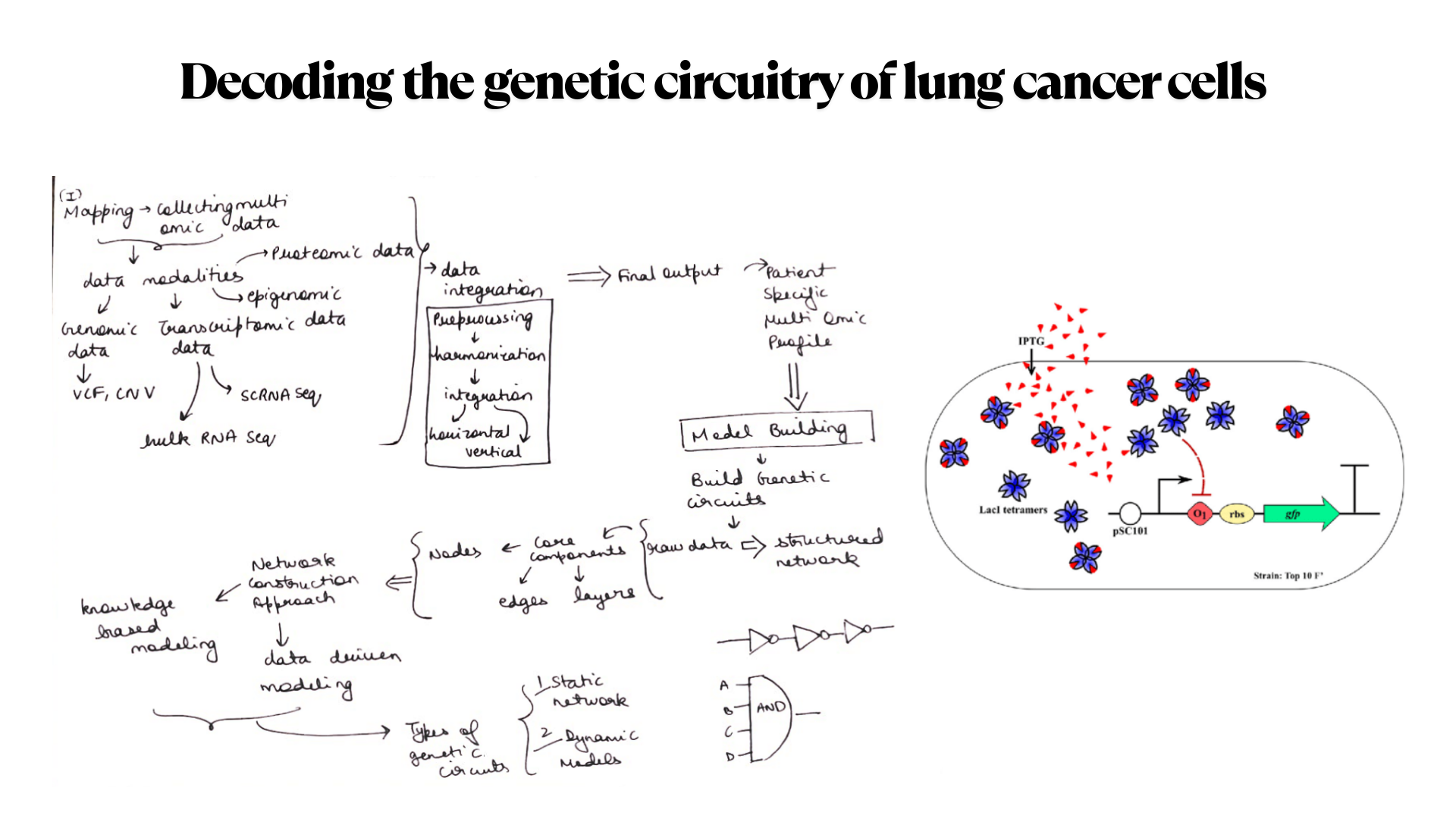
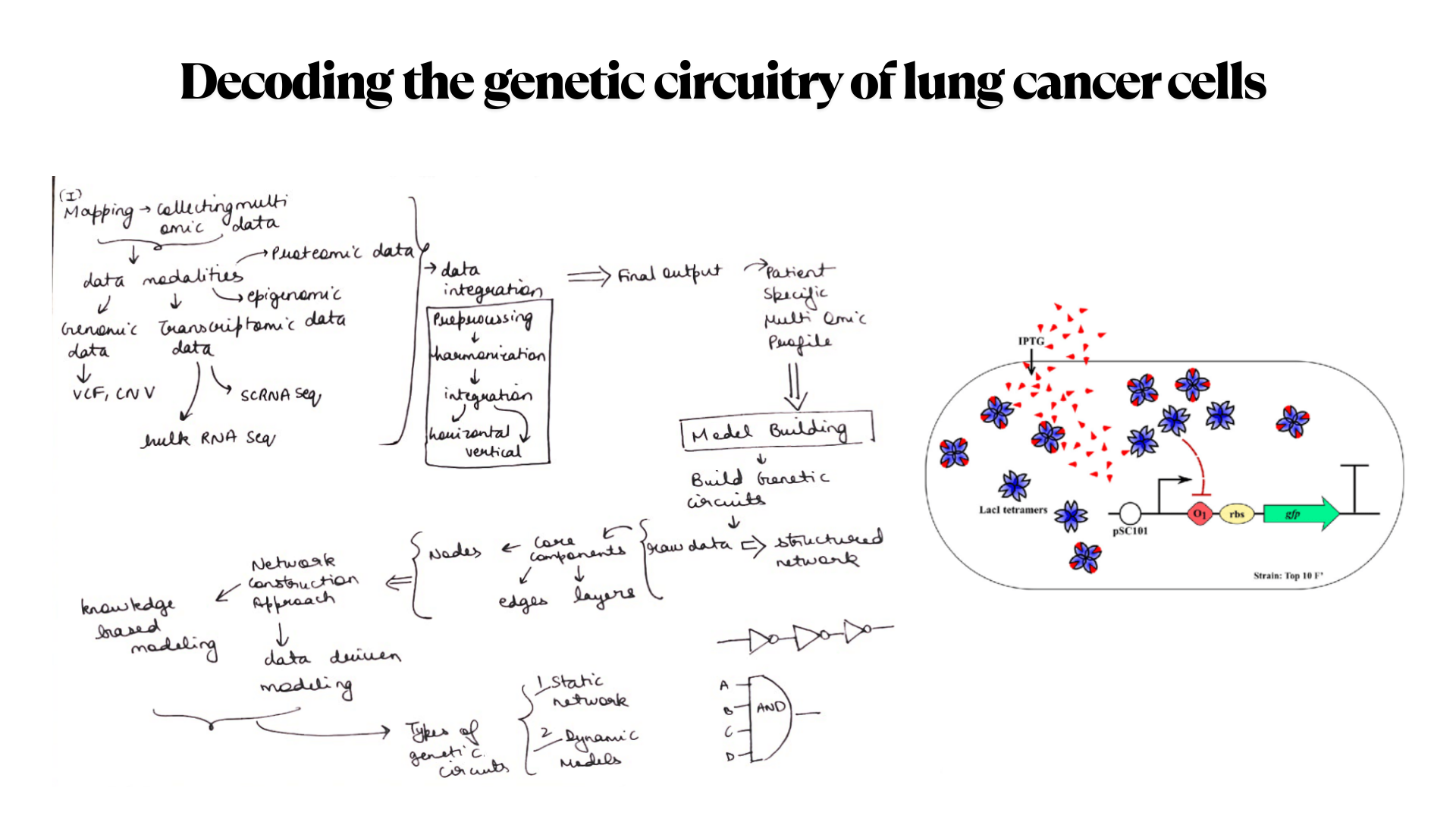
Idea 3 Decoding the genetic circuitry of lung cancer cells

idea idea

Subsections of Labs

Week 1 Lab: Pipetting

cover image cover image

Subsections of Projects

Individual Final Project

cover image cover image

Group Final Project

cover image cover image