Week 7 Genetic Circuits Part II: Neuromorphic Circuits
1.What advantages do IANNs have over traditional genetic circuits, whose input/output behaviors are Boolean functions?
Graded and Continuous Responses:
Unlike a simple ON/OFF switch, IANNs process signals as a gradient. This allows the cell to tune its response level (e.g., producing exactly 50% output) based on the input concentration, which is essential for maintaining homeostasis.
Signal Weighting:
IANNs can assign different “importance” to various inputs. By adjusting promoter strengths or RNA-binding affinities, we can design circuits that prioritize specific biomarkers over others before triggering a downstream effect.
Noise Filtering and Robustness:
Boolean gates often fail due to stochastic “leaks” or spikes in signal. IANNs integrate multiple inputs and apply a non-linear activation threshold, effectively filtering out biological noise and ensuring a more stable, reliable decision-making process.
2.Describe a useful application for an IANN; include a detailed description of input/output behavior, as well as any limitations an IANN might face to achieve your goal.
I propose an IANN designed for the autonomous regulation of protein folding machinery to treat neurodegenerative diseases.
Input Behavior:
The network monitors two primary signals: $X_1$ (intracellular concentration of misfolded Tau protein) and $X_2$ (general oxidative stress markers).
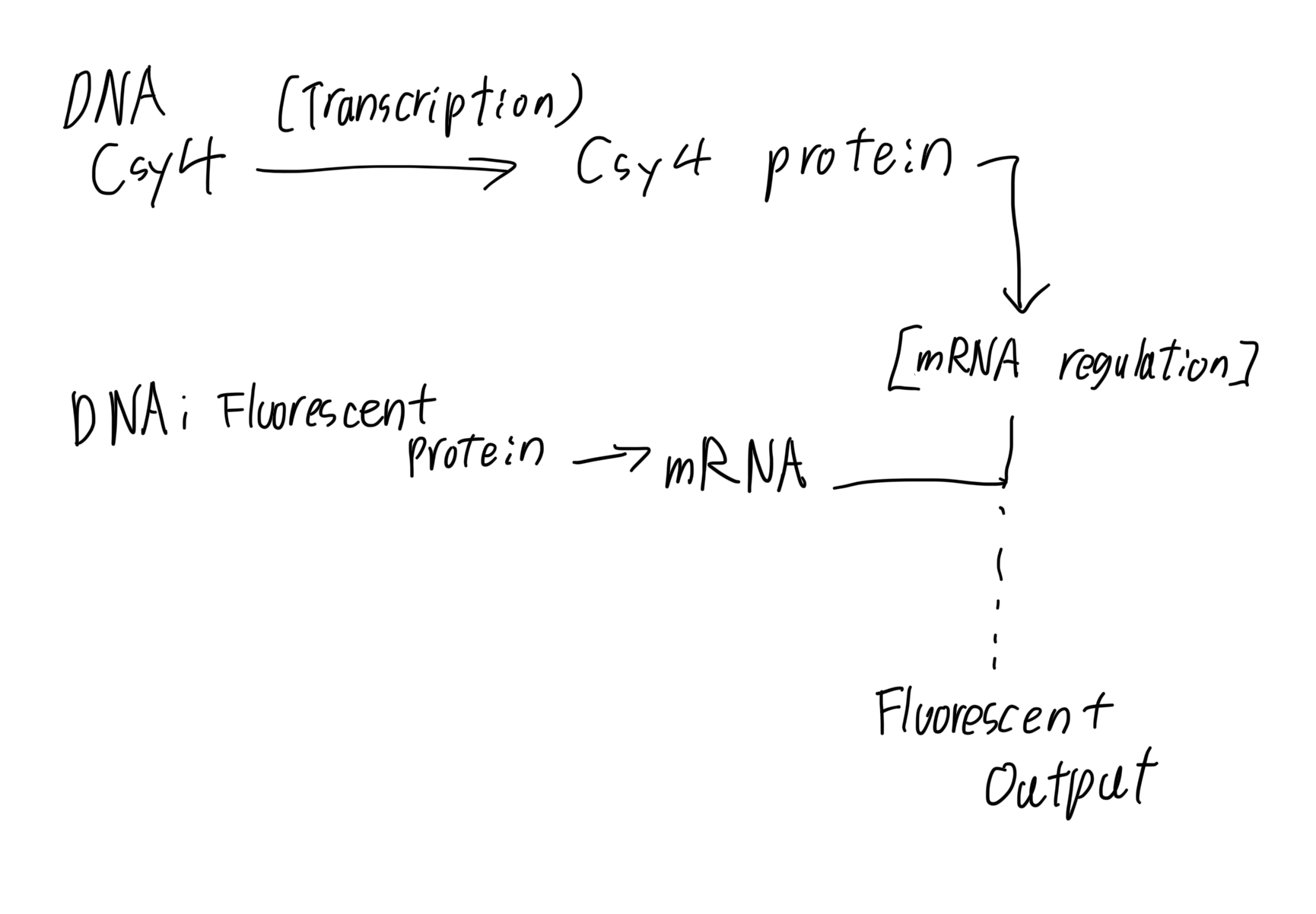
Output Behavior: The IANN calculates a “weighted sum” of these stress signals. If the combined pathological score exceeds a pre-set threshold, it triggers the production of CCT4 (chaperone protein). The amount of CCT4 produced is proportional to the severity of the misfolding, ensuring the cell isn’t overloaded with excess protein when unnecessary.
Limitations:
Metabolic Load:
Building a multi-layered network requires significant cellular resources (RNAP, ribosomes, energy). This can drain the neuron’s metabolism, potentially worsening cell health.
Response Latency:
Genetic “computation” takes time (transcription + translation). The delay between sensing Tau and producing CCT4 might be too slow for rapid-onset proteotoxicity.
Leakage:
It is technically challenging to achieve a “zero” baseline; a small amount of CCT4 may always be produced, which could interfere with normal protein turnover.
3.